


Likes
Comments
Share


Likes
8
Share


@sellem
Follow
Flowering is well under way!
one of the Banana Purple Punches is already kind enough to start purpling!
Rootjuice has been faded out to 0.
Watering on 13/03 with 4 ml/L of terra bloom, 1,4 EC, 1.5L each per plant
Watering on 16/03 with 5 ml/L of terra bloom, 1.6 EC, 1.5L each per plant
Defoliated today, hopefully for the last time. Mainly the insides of every plant where it gets too bushy.
i used the trellis net in the early week of veg just to help me spread the branches out, now im unsure of what to do with it (continue, dont continue etc) since im pretty happy with how the plants turned out training wise. it still functions to hold my humidity sensors i can check over my feed so its not "useless" lol

Likes
88
Share

@Natrona
Follow
White LSD Auto Feminized Seeds by MSNL
👉Sponsored Grow👈
W10 F9 8/31- 9/6
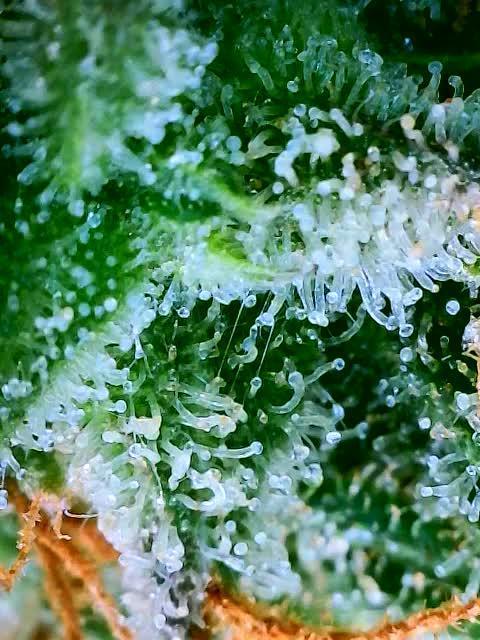
8/31 I did some pics and trichome checks. The trichomes show some amber. I think another week. With the lockout resolved, finally White LSD is developing some pinks and oranges in her buds.
More pics 9/5.
Thank you all for your continued support and encouragement. Your likes and comments motivate me to keep sharing my journey. Let’s continue to learn to grow together!
Stay green, growers love 💚🌿,
💫Natrona💫

Likes
7
Share

@DeepRootsGrowTrees
Follow
STICKY BROCCOLI 🥦 / ZAMNESIA & PLAGRON WEEK #14 OVERALL
WEEK #8 FLOWER
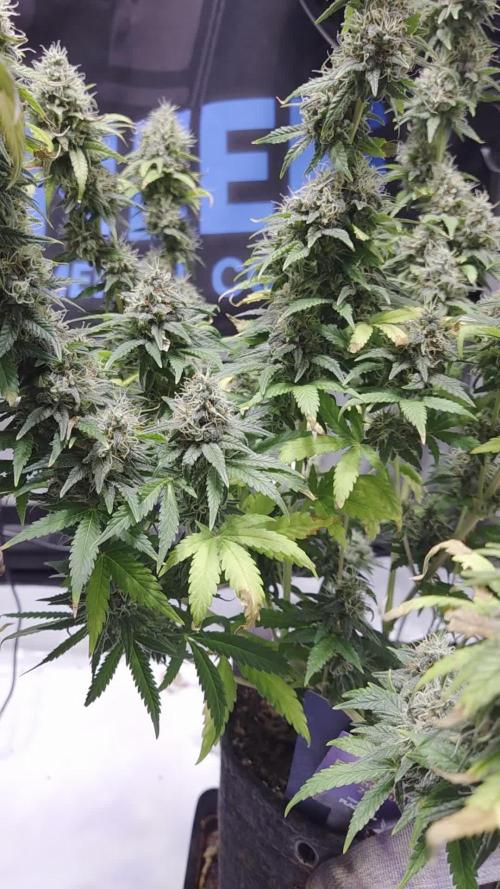
As she's getting closer to the end she's filling in all the space in between her buds it's always an amazing sight. She's sticky buds are frosty and you can definitely smell her. STAY GROWING MY FRIENDS 🧡!!
THANK 😊 YOU FOR STOPPING BY AND TAKING A LOOK IT'S MUCH APPRECIATED!!
THANK YOU 😊 ZAMNESIA and PLAGRON!!
STICKY BROCCOLI 🥦 / ZAMNESIA SEEDS

Likes
31
Share


@THCpapa
Follow
Week 12 in the garden, and it's time for some serious plant pampering! The ladies got a trimming fit for royalty, and even a leafy lollipop treat – because who says plants can't enjoy a little sweetness in their lives?
With the flipping of the plants just around the corner, it's like the calm before the botanical storm. I can almost hear the plants whispering among themselves, "Get ready, folks, it's about to get real in here!"
As I prepare for the flip next week, I can't help but marvel at how far my green companions have come. From tiny seeds to leafy giants, it's been a journey filled with laughter, love, and a whole lot of growth.
So, here's to Week 12 – a week of trimming, lollipops, and anticipation for the flip. Stay tuned for more leafy adventures as we enter the next chapter of the garden saga! 🌿🍭


Likes
3
Share
@sellem
Follow
Here we are again!
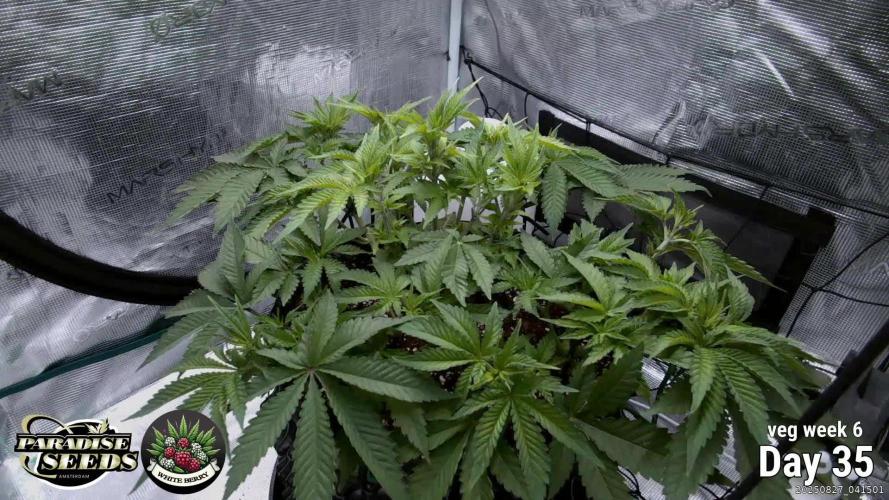
Flower Switch happened on Day 37, so in the middle of week 6, but for simplicity, i will condense the last Days of Veg into this here week 6. So a few days are missing from the final week count as i want to keep flowering weeks seperated from weg. Just keep in mind that she's about 3 days older then the week here would suggest.
Its the end of the first flowering week and we can already spot lots of pistils, and the tops are getting ready to bud up!
I defoliated her once before the flip and once on Day 43 because im scissor happy. Also, she was getting REALLY bushy, as you can see on the timelapse.
Feeding is still the same 6L, around 6.0 PH, 5ml/L Grow and 1ml/L powerrots, will keep that going as long as shes stretching, then ill switch to flower nutes. Happens now every 3 days, though i suspect that it might be every 2 days soon, she is getting hungry. Pot is already somewhat light again and i watered her yesterday at the time of writing 😱😮
Likes
4
Share


@adam_pawloski87
Follow
@twenty20mendocino Ateam R&D Update ~ Let’s go day 91 an these girls are doing amazing! Looking nice an healthy we will let these girls recover for a few more days from the heavy defoliation and on Sunday we will be giving them the big flip , Let’s go flower!! Updates coming soon !
Sangria has been doing her thing , been drying for12 days now so Sunday we will be giving her the trim and jar her up, but updates coming soon yall!! Let’s have an amazing productive day as well as a great safe weekend, peace love an positive vibes to y’all Cheers an blaze on 😶🌫️💨💨💨💨

Likes
60
Share


@Professor_Chaos
Follow
Beginning of week..
I went ahead and bumped the TDS to 1000 PPM this week. I don't think I'm going to go much higher than that. Usually don't have to.. Hopefully that's not too much.. I also started adding a bloom booster from Advanced Nutrients called Kushie Kush.. It works great for all strains tho lol. So the runoff is still acting up.. But it is getting better... Slowly. I emailed General Hydroponics on the issue a few days ago and they have not gotten back to me yet... Ugh. But going in: 1000 PPM.. Runoff: 700 PPM.. That was this morning.. Still have not given her plain water yet.. Just been feeding every watering.. Not really any signs of issues right now. A couple leaves are a little yellow (literally 2).. Another couple have some spots (maybe 4 or 5 leaves).. But other than that she is happy, healthy and smelling like a fucking champion! Seriously fucking delicious.. And to think the smell is supposed to warn off predators.. Hah! Good luck with that!!! Barely 8 days of flowering and she is already stacking so fucking nicely! I can't wait to see what kinda magic this gal is gonna do! So happy and excited!!! The light sits about 18 inches from the canopy right now at 100% power. She is still stretching a little but seems like she may be done with that pretty soon.. Maybe even before this week is over. Clones didn't make it.. I think it was too cold. They all sprouted roots but just stopped and they all yellowed out like a mf'r.. Looked like shit so I took them out back Ol' Yeller style and put them out of their misery 😭.. But it's ok.. The mama needs all the focus on her right now! Lol.. Oh yeah.. I went ahead and pulled a couple of the tallest branches down.. Just a tad.. Brought the ties up a node or so on each and pulled it tight.. Spread her out a little but I was nervous of snapping one off so I didnt try to push it too much.. These branches are tough af!
Later that day..
General Hydroponics finally got back to me.. They said that I'm an idiot for using FloraKleen during transition like that.. Lol jk.. They did say that I should have NOT done that.. And that my runoff should ALWAYS be lower than it is going in due to the ppant taking up the nutrients.. But that just doesn't seem right to me.. Ive ALWAYS had my runoff higher.. Literally ALWAYS.. but without issues. They said that if the runoff PPM is higher, then there's a problem.. Maybe if I was doing frequent fertigation.. But I'm not.. And never will because that just sounds like a waste of nutrients.. But whatever.. Today I learned that FloraKleen is ONLY for pre-harveat flushing.. Or hydroponic reservoir cleaning in between nutrient changes.. But definately not the way I used it lol.. Thankfully she is still doing good 👍... Buuuut whoops lol
Mid week..
Still doing magical things! Lol.. I didn't think she was gonna fill out this tent so nicely! Trichomes are forming nicely.. The purpling is looking amazing also! Some spots on SOME leaves.. But not alot.. Not sure what that is about.. No pests.. No deficiencies as far as I can tell.. Maybe just a mutation? Nothing to worry about tho.. This girl is so fucking gorgeous! I love it!.. Back to feed, water, feed, water, etc. schedule now.. I'm hoping that 1000 PPM isnt going to be too high for her.. But if it is, I will adjust accordingly.
End of week..
Seems to me like the stretching has stopped.. So I'm going to cut out the FloraGro.. Double up on the FloraBloom and later into flower I will bump up the Kushie Kush Bloom Booster. She's doing great! Smells fucking amazing! I thought my ETHOS Early Lemon Berry R1 was gonna be the best strain ever.. Then I grew this girlie! Not just a lemony scent.. But like a very sweetened lemonade.. Incredible! Trichomes are EVERYWHERE! Such an awesome, beautiful strain! Good job FastBuds.. Can't wait to try more of your strains! Too bad you wont even acknowledge my grow journal like you do everyone elses.. But whatev.. Lol.. On to the next week!!!...


Likes
127
Share


@Tropicannibis_Todd
Follow
💩Holy Crap Growmies , we are outdoors and in the Ground and there Doing Great💩
👉It's been another full week 35 days from seed and she's doing great , very nice Growth, considering shes been up against the wind and rain 👈
No problems 😊 so far so good 👍And she's now in full on flowering 😁👈
I GOT MULTIPLE DIARIES ON THE GO 😱 please check them out 😎
👉THANKS FOR TAKING THE TIME TO GO OVER MY DIARIES 👈
👉NutriNPK NUTRIENTS USED FOR FEEDING 👈rain water to be used entire growth👈
👉www.nutrinpk.com right now get 10% off using SPRING2022 as the coupon code👈

Likes
29
Share


@eldruida_lamota
Follow
Vamos familia que viene la sexta semana de floración de las Titan f1 y jodo cómo se notan los cambios de una semana a otra al menos está semana si note buen cambio, las flores se están formando guay y se están poniendo repletas de tricomas.
Es de las cepas nuevas más potentes en thc tengo ganas de probarla.
Pero para autos va guay.
Temperaturas máximas de 30 y mínimas de 25 grados.
La humedad relativa está en torno al 40%
Ya entramos en la recta final a partir de ahora solo agua
Agrobeta:
https://www.agrobeta.com/agrobetatiendaonline/36-abonos-canamo
Mars hydro:
Code discount: EL420
https://www.mars-hydro.com/
Hasta aquí es todo , espero que lo disfrutéis, buenos humos 💨💨.

Likes
7
Share


@OwlGang_Uk
Follow
Weeks 15 - It’s Ready - The 1st Gorilla Glue Is Ready To Be Havrest, I Gave It 3 Weeks Of Flushing And The Trichomes Of The Top Heads Are Most Cloudy With A Few Clear And A Little Amber Trichomes And The Bottom
Buds Are Mostly Cloudy With A Few Clear And The Sceny Is Still At It’s Peak But You could Tell It Was About To Head Over The Morning And Start To Take A Downright Spiral I Will Be Hanging It To Dry For 7-9 Days At A Temperature Of 70 Degrees and 60% Humidity. The Slower It Dries The Better.
Processing
Likes
84
Share


@Hempire
Follow
Im doing a bit of defoliation, moreover the leaves that covering the buds, i cut some small branches on the bot of the plants, to keep energy for the distal parts of the branches.
Every 2 day approximately, to no stress a lot the plants, I pinch the apex of MD1, MD2 and BB1, that my secondary branches go up, until the height of the apex central.
Nutriments :
2,0 mL/L of rhizotonic, 2,5 mL/L of cannazym every watering.
2,0 mL/L of terra vega every 2 or 3 watering in case of they need (N) until the final of the strecht (first 2 weeks of bloom).
I will put 5L every watering (pots of 18L) and I will analysed the drain of every plants to check pH and the fertilizer amount.
Im really proud of theses plants, they are strong, resistant (the trunks are huuuge, moreover the Moby dick from Dinafem) and so healthy !! The MD 3 has reacted really really good with the topping ! Im impressed and quite sure do topping next time ;)
I hope they will give me the best of themselves !!!! Lets wait the final of the strecht 😉


Likes
Comments
Share

@XanHalen
Follow
Week 10: July 31st
Weekly updates:
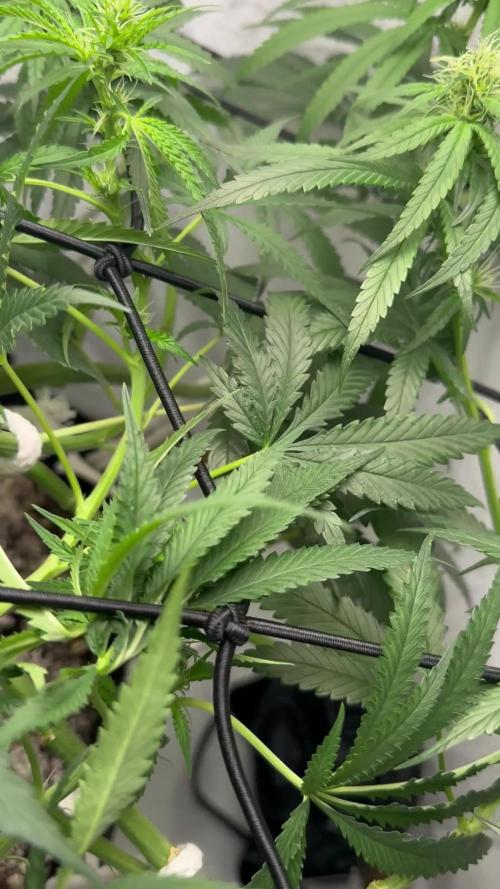
- Stretch is taking off, same with bud formation, no smell really yet, did a good lollipop today, keep finding larf sites.
- when stretch halts I am adding 1/3rd dose of monster bloom to one… maybe both.
Likes
14
Share


@playerkiller69
Follow
More training. And patience for plants to reach the scrog before flipping


Likes
10
Share


@Pechu420
Follow
Very beautiful plant with a delicious aroma. Thick, heavy buds and flowers, branches tied because of the weight. I had a small accident when removing the other plant from the grow, and 3 branches of the highcloud broke because of the weight, but it is resistant and I tied them as you can see in the photo, and the branches recovered, without any major problems. Good genetics, fast and strong.

Likes
2
Share


@PatriciaGant
Follow
err. she keeps short but buds are alredy visible, i mean the start. no big problems, all nutrients are in ger section, if not other mentioned by manufactors instrucktions.
Likes
40
Share


@CampaCavallo
Follow
5ª settimana di fioritura per la nostra bella BISCOTTI 🍪
La benedizione di ZAMNI🗿💙 assieme ai vostri complimenti, stanno facendo diventare i bud delle pallone da golf⛳
Spero gradiate i video 😘
Grazie a tutti di 💚
Likes
34
Share


@SalocinSpecial
Follow
D89 (18/02/2021): Copy paste of last week... I think max one week and she is done 😁 I gave around 2L of tap water. Glue Gelato is dry and in jar since one week. I did not move back Banana Kush in the tent since I was sure it was her last week. At this point I should have move her back in the tent. I think being in the closet might have slow her down since there is no reflective wall but at least the environment conditions are good.
- temp in the closet: 18-21C
- water: 2L of tap water
- RH in the closet: 33-35%
D90 (19/02/2021): I can definitely see more resin gland forming on buds and can also tell that the calyx are swelling nicely.
- temp in the closet: 18-21C
- no water
- RH in the closet: 33-35%
D91 (20/02/2021): I gave 1.75L of tap water.
- temp in the closet: 18-21C
- water: 1.75L, PH7.5
- RH in the closet: 33-35%
D92 (21/02/2021): I checked the trichomes and they are more abundant. It's beautiful to see the buds becoming frostier day by day 😍
- temp in the closet: 18-21C
- no water
- RH in the closet: 33-35%
D93 (22/02/2021): She is starting to show some amber trichomes but not enough. I will let her some days to ripen but she is close to harvest!
- temp in the closet: 18-21C
- no water
- RH in the closet: 33-35%
D94 (23/02/2021): I gave 3L of tap water.
- temp in the closet: 18-21C
- water: 3L, PH7.5, 130PPM
- RH in the closet: 33-35%
D95 (24/02/2021): Trichomes are all cloudy with some ambers. Due to a timing issue, I will need to chop her this weekend in two or three days. Yesterday I did reduce light intensity to 50% power. She will pass 2 days with this light intensity and then 2 days in complete darkness.
- temp in the closet: 18-21C
- no water
- RH in the closet: 33-35%
D96 (25/02/2021): I will not change for week 14 since she is going into darkness tonight for two more days. Trichomes are not exactly where I would like. More ambers would be better but at least they are all milky white with some amber. She's at her peek in term of THC potency.
- temp in the closet: 18-21C
- no water
- RH in the closet: 33-35%
D97 (26/02/2021): 24h into complete darkness is done
- temp in the closet: 18-21C
- no water
- RH in the closet: 35-40%


Likes
12
Share


@Doggy
Follow
Apply a leaf irrigation with vita race, wait a couple of days and start on 12/12😋
Happy growth! 😁😁
Likes
4
Share


@Elguacho420
Follow
Buenas a tod@s... Otra semanita más de flora para estás hermosas niñas... Creciendo un poquitito más, super bien, super fuertes... Ya faltan pocas semanas y la verdad q lo las veo nada mal, absorben muy bien los nutrientes, aumentado el riego a 1lt x planta, no tienen ningún signo malo de nada, todo perfecto, eh tenido que hacer un poco de defoliación ya q habia muchísimas hojas grandes, se nota la buena circulación de aire, la penetración de luz en las partes bajas ( que aunque algunos no les den importancia o digan que esas zonas le quitan fuerzas a la planta, a mí me gusta dejar que crezca todo tal cual, sin problema.) son cogollos pequeños, pero los aceptamos igual, claro q sí... Buenos humos y buena semana para tod@s a seguir trabajando... 🤗👍🏻🙏🏻
💀😎🇦🇷