


@Hyperbunny
Follow
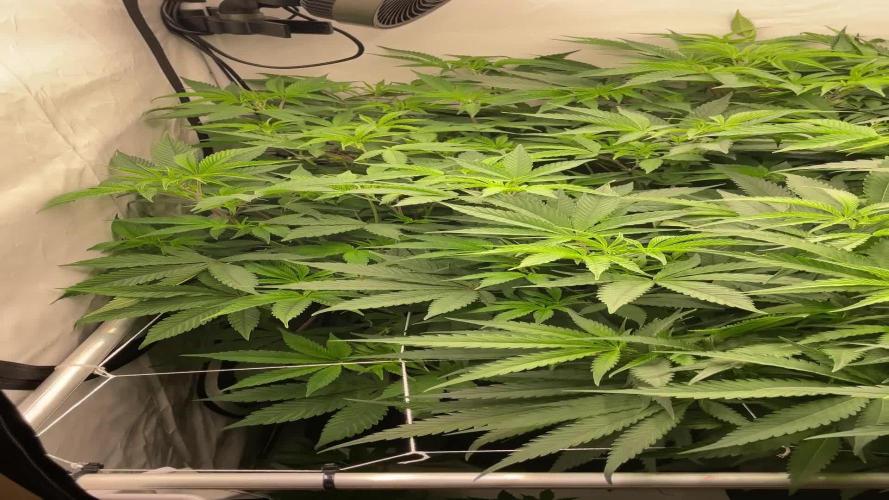
das sind die bilder der letzten ca. 2 wochen… ab jetzt gibts passende infos zu den bildern ;)


@love_2_grow
Follow
Woooo! I kicked off the first week of the flower by mixing together and applying a topdress consisting of worm castings, biochar, insect frass, kelp meal, neem meal, alfalfa meal, mustard meal, soft rock phosphate, malted barley, palm ash, basalt, rock dust, gypsum, and leonardite.
I also added yellow sticky traps to see if there are any bugs around, since I haven’t even seen a single fungus gnat during the entire grow.


@Luv2Grow
Follow
Day 71 - Starting week 11 and this should be her final week, I’m just looking for a little bit more amber to show up in her. Hopefully as she dries out from her last watering, she’ll get to that 30-40%. Her buds are really chunking up and dense as hell too!
Day 72 - And she’s done, she’s gonna get the axe after 48 hours or so of darkness. Haven’t really used the darkness before harvest method before but needed some room in the tent so gonna give it a go. She should be getting chopped on Thursday sometime.


@Truro
Follow
25/12/18 Week 5 Flower
Merry Xmas! All 4 plants are doing well, growth seems to have slowed down so I think the next few weeks are just packing on weight and then ripening. Gonna give them all some pk 13/14 on Friday - had a small problem with fungus gnats in my bathroom which eventually led them into my grow tent. Been waiting extra long between waterings to minimize the chance of them spreading - I know they love wet, mouldy coco. Got some peroxide just incase they become a problem any way. Looking to chop 15th-22nd Jan, depending on how the trichomes are looking. Lots of users commenting on how much weight GZ packs on, really hoping to get some nice dense golf-balls. My previous grow, which was two plants yielded just under 1.5oz, would really love to see a yield around 2.5oz with my current 4 plant set-up. Merry Christmas - more updates in the new year!


@Bread_n_Buds
Follow
Even in the version worked with main lining and sent into flowering a little later, Zamnesia's Tangerine Dream remains one of the fastest plants to flower and is surprising because it is the most solid flower of all, it is a boulder, stone, pure marble.
** We remind all users that we grow two plants per variety, one worked with techniques and the other left to grow freely and beautifully to preserve its speed and the classic Christmas tree shape in height. Below in this diary we have the Main lining plant.
Description // This plant had a fast flowering like its sister left to go without techniques. The phenotype is practically identical, solid flower, excellent resin production even in the great heat, structure of the super thick ones that drive me crazy. The smell is always that of mandarin while it is peeled perfectly in line with that declared I imagine the magnificent taste. Why? I tasted the hash that remained on my gloves and I was going crazy. For citrus lovers who are a bit tired of the forced lemon scent.
Trichomes and maturation // We looked carefully under the 10x microscope (and 10x x 1.6) and noticed a good percentage of milky/clumpy trichomes, still many transparent but also many golden amber. It is mainly sativa, but only 60/40, so guys, if we want to maintain a more sativa effect, we need to harvest with a majority of cloudy/milky trichomes if we want a more indica effect, remembering that THC oxidizes too much, amber is the right color. I use it during the day and therefore I look for a more sativa effect when the plant is sativa.
Fertilizers and soil // We used the Plagron range of organic nutrients the whole time, all the recommended additives and the Pro Mix soil, unfertilized and organic. Calculate the dosage that best suits your needs on the website ------ https://plagron.com/
Nutrients are available in convenient packs on the Zamnesia website
--------- https://www.zamnesia.io/en/11457-plagron-easy-pack-natural.html
I love this strain, I love its mandarin scent and its hard, potent flowers ----
https://www.zamnesia.io/en/10966-zamnesia-seeds-tangerine-dream.html
Zamnesia Short Description // Whether you're new to the fascinating world of cannabis cultivation or an expert, Tangerine Dream by Zamnesia Seeds will give you great satisfaction both in growing and smoking. Carefully selected from G13, Afghan and Neville's A5 Haze clones, this strain boasts a slight sativa dominance of 60% and offers a relaxing yet uplifting effect. She’s also easy to grow and is suitable for both indoor and outdoor growers. As we’ve just seen, Tangerine Dream is a pleasure to grow, but she’s even more enjoyable to smoke. With 25% THC and a pungent blend of exotic terpenes, Tangerine Dream smells incredible, tastes delicious, and delivers a balanced, long-lasting effect. When you open a jar full of these dense, resinous buds, you’ll be hit with a delicious citrus aroma reminiscent of freshly peeled mandarins and grapefruits. With hints of citrus, spice, and incense, each hit is a sensory delight reminiscent of sipping a refreshing juice on a sunny porch. Finally, as the effects kick in, you’ll be treated to a long-lasting, balanced, positive cerebral buzz, followed by a gentle physical relaxation. Perfect for weekends away or social gatherings. Order your Tangerine Dream seeds today and grow this invigorating hybrid.
The whole world of growing and much more is on Zamnesia: take a look at the site and you will find "the best that nature has to offer" in various shapes and colors.
---------------
www.zamnesia.com


@Topshelf_only
Follow
Everything look excellent wishing I had a time machine. Just about run out from first grow can't get enough . hands down best smoke I had all year but I still think there is room for improvement .


@LoganatorDude
Follow
Even though it says 80 Gallon pot, it’s really 400, it just glitches out when I enter 400 and converts to say only 80.
I know she looks bad! I know.
She has only been managing a nutrient lockout with horribly low pH for far too long! The Hydrated Lime has indeed fixed the pH! Resulting in my next inbound set of problems. The original soil from the second 2.3L pot she was in was too strong! She needs to get her roots out into the larger pot, but that only gives her so much more space. Plus in that larger black plastic pot, the hot dry sun at 7,000 ft in elevation, really heats up those pots! When it’s 98F later, that sounds like torture! Maybe it was enough to balance out the more concentrated stuff towards the inside of the root mass. But I don’t want her roots to stop there! The time is now for her to go into the 400!!!
The soil is 6.5 pH through and through. The peas are about to bloom! She has just avoided lockout and is picking up momentum! The 400 gives her a huge diameter for her roots! Something I sincerely hope her genetics will take advantage of. The soil is rich and alive! The temps in 400 will be so much better!
Now I must prepare for my Arch Nemesis!
The Butterfly!!!!!!
Lol
But seriously. They find my plants attractive, and decide to serve my plants as food for their offspring!!!! Not okay! Last year their success rate on my plants was a fat 0!! But they did some serious damage! I am prepared this year!! I will watch with vigilance for any butterflies around my plants specifically. I will spray my plants down regularly with diatomaceous earth! Not too much obviously! I know less is more when spraying that stuff! No mother wants to give her children food with razor blades in it!
And as always there is always next year! I can’t let a phase of mice and men get the better of me. However!!… that’s what I said LAST YEAR!!!! Lol. This year IS next year!
Anyways she looks rough right now on Day 58 but I tell yah what, she has very recently made a dramatic turnaround for the better!!
…I hope!
Happy Growing!
StrongTrees💪🌳


@KushManAdam420
Follow
bit of light stress in the last weeks photos, everything has cleared up
still watering with silica when pot is dry. might just do a plain watering
we have started flowering at day 18 on one of the crinkles , the rest of the room has now followed


@CeeJayy420
Follow
Week 14
Day 1 in BW 9
Day 91
4l Wasser mit:
4ml Bio Grow
4ml Sugar Royal
16ml Bio Bloom
4ml Power Buds
16ml Alga Bloom
4ml Green Sensation
3 ml CalMag
She looks like a WinterWonderLand. Smell is very heavy.



@Ultraviolet_
Follow
Remember that, however you are played, or by whom, your soul is in your keeping alone. Even though those who presume to play you be kings or men of power, when you stand before God, you cannot say, 'But I was told by others to do thus,' or that virtue was not convenient at the time. This will not suffice. Remember that.
Day:18
84°F and 65% RH (VPD) for the vegetative stage. Approximately 1.15kPa(assuming leaf temperature is about 2°F cooler than the air), which falls right into the ideal vegetative sweet spot (0.8kPa to 1.2kPa). At 1.15kPa, plants can draw water and nutrients efficiently without risking stress or wilting. It keeps the leaf pores (stomata) open, allowing for ideal carbon dioxide intake and maximizing vegetative growth. VPD is determined by the leaf's temperature, not just the ambient air. Because leaves usually run 1° to 3°F cooler than room air under bright grow lights, my actual VPD will be slightly lower, closer to the 1.0kPa mark. As she transitions from vegetative growth to flowering, one can gradually lower the humidity (to around 45–60%) and drop temperatures slightly to prevent disease from settling inside dense buds when they appear.
Night:6
At 70°F and 60% relative humidity, Vapor Pressure Deficit (VPD) is 0.86 kPa. This is right on the cusp of whats optimal for the vegetative stage. During the nighttime, plants generally close their stomata and undergo cellular respiration rather than photosynthesis. Transpiration slows to a near stop, making VPD less critical at night than during the day. However, maintaining a nighttime VPD between 0.8 and 1.0 kPa is highly beneficial in that it ensures the air is dry enough to prevent powdery mildew or bud rot, but moist enough to keep the plant from undergoing unnecessary stress. This range keeps the environment comfortable for cellular processes and prevents large atmospheric swings. Keeping it all flowing.
(Not pushing them yet, these are photoperiods)
The optimal soil (root zone) temperature for cellular root respiration and nutrient uptake in cannabis is between 68F & 72F This narrow range balances biological energy production (cellular respiration) with the dissolved oxygen levels in the soil, maximizing plant growth and health. Warmer soils hold significantly less dissolved oxygen. When soil temperature exceeds 74F oxygen depletion occurs, inhibiting cellular respiration almost entirely, At 68-72F root cells generate optimal adenosine triphosphate (ATP) via respiration to power root-tip elongation and the active transport of water and nutrients.
Too Hot (Above 78F) Root respiration increases, demanding more oxygen, while the water's oxygen-carrying capacity drops. This creates a prime environment for anaerobic pathogens and Pythium (root rot).
Too Cold (Below 60F) Root metabolism and cellular respiration slow to a crawl. This severely impairs nutrient and water absorption, leading to yellowing, wilting, and phosphorus deficiencies.
A lot depends on whether it's automatic or photoperiod; with photoperiod, there is not as much of a need to push "hard" as the real countdown only begins once the flower is initiated. Automatics, on the other hand, the chronological "clock" begins ticking the moment the seed germinates. It is of critical importance that the seedling growth gets off to the races, understanding that early growth is like compound interest, which will pay off come harvest. This reality is why getting autoflowers "off to the races" early on yields such exponential benefits. The "compound interest" is directly related to the surface area of the leaves. Larger, faster-growing seedlings process more light and build bigger root networks early on, which translates into an explosion of vertical and lateral growth during their short vegetative window.
The margins for error are so thin with autoflowers; this early-stage momentum depends on several critical practices. Seedlings exposed to increased atmospheric CO2 levels early in life will develop at an increased rate. To effectively "extend" or optimize the capacity of Photosystem II (PSII) for increased photosynthetic efficiency. In standard oxygenic photosynthesis, Photosystem II (PSII) is naturally limited to the red-light spectrum, peaking at 680nm. Extending its light-harvesting capacity past 700nm into the far-red region requires bypassing the natural limits of standard chlorophyll a. Adding 730 nm (far-red) LEDs alongside standard red/blue lights has been shown to increase canopy photosynthesis by 20–30% in several crops by acting synergistically with shorter wavelengths. However, the limitation is that excessive, pure IR/Far-red light (without accompanying red light) can trigger the "shade avoidance response," causing plants to grow tall, weak, and spindly rather than robust. Utilizing infrared light (specifically the 700-750 nm far-red range) is a viable method to boost photosynthetic efficiency. It acts as a bridge to allow PSII to utilize a broader spectrum of light, breaking the traditional 700 nm barrier. UVR8-mediated signaling (often in conjunction with CRY proteins) triggers protective mechanisms that maintain the stability of the photosynthetic apparatus (including LHCII and reaction center proteins), thus ensuring that the efficiency of Photosystem II remains higher in UV-B-exposed plants compared to plants lacking this receptor. ΦPSII indictates the rate of electron transfer from water to plastoquinone, which drives the production of ATP and NADPH. There is a close link between ΦPSII and the true rate of CO2 fixation (Φ*co2).
ETR stands for Electron Transport Rate. It measures the speed at which electrons are moved through the thylakoid membranes in a plant's chloroplasts during the light-dependent reactions of photosynthesis. Infrared light (particularly Near-Infrared or NIR) improves cellular energy by interacting directly with the electron transport chain (ETC) in mitochondria. This process boosts adenosine triphosphate production, which acts as a metabolic coefficient multiplier by accelerating enzyme activity dramatically.
Extend then multiply.
Far-Red photons interact with plant photoreceptors to accelerate the plant’s biological "clock" or trigger a shade-avoidance response. Autoflowers don't use the plant's biological clock, although the IR will initiate a shade avoidance and make them stretchy. You can just add equal measures of 660nm-680nm to negate the shade avoidance effect. Replacing nights' "darkness" with a combination of IR+ and 660nm. Because autoflowers don't require a dark period to flower, many growers just blast them with light. 18/6 24/0. However, this ignores the plant's metabolic rhythms, where daytime photosynthesis (light reactions) must be perfectly balanced with nighttime carbon fixation and assimilation (Calvin cycle) to avoid bottlenecking plant development. Cellular respiration is a 24/7 process, but it can only function while the plant has the free oxidative capacity to do so. A 100% photosynthetically active leaf cannot perform cellular respiration. The viral trend of defoliation of every leaf that isn't "getting enough light" is of great detriment overall, putting 100% of the cellular respiratory "workload" and responsibility on the 0/4/6 hours of darkness in sub-optimal conditions for enzymatic activity. Photosynthesis captures nearly 100% of the initial energy as carbon, while cellular respiration is the process that unlocks 90% of that captured energy into usable ATP so the plant can use it. Respiration is considered roughly 30% to 40% efficient. It captures enough of the potential energy in glucose to synthesize around 30 to 38 ATP molecules per glucose molecule. The remaining 60% to 70% of the energy in the sugar is not captured in ATP; instead, it naturally escapes into the environment as heat, which helps regulate plant temperature. In plants, the primary enzymes of the Electron Transport Chain (ETC) and the ATP synthase complexes are typically adapted to function optimally in warmer temperatures (roughly 25°C to 35°C depending on the specific plant strain). As temperatures rise within this physiological range, molecular collisions increase, speeding up respiration and ATP production. The cannabis plant has a branched respiratory pathway. During heat or cold stress, plants activate Alternative Oxidase (AOX). AOX burns sugars to dissipate energy as heat rather than coupling it to ATP production. This pathway actually functions optimally at elevated temperatures to help protect the cell from the damaging build-up of Reactive Oxygen Species (ROS) during heat stress. Enzyme activity generally scales with heat; there is a strict biological limit. If canopy temperatures in a grow room exceed 40°C, the enzymes and their supporting lipid membranes lose stability. Not saying you need to go crazy, just optimize nights the same as we optimize days.
Phosphorus is the driving force behind early seedling development. It acts as the "energy hub" of the plant, directly driving cell division, robust root growth, and the creation of DNA. Without an adequate, easily accessible supply early on, the plant's overall growth potential and final yield can suffer permanently.
E=MC2 looks like a simple multiplication problem; it describes a fundamental physical truth: mass and energy are the same thing. The equation doesn't just calculate a value; it reveals that mass is effectively "congealed" energy. Energy is just numbers. Energy isn't a physical "substance" you can hold or touch. It is essentially an abstract, calculated number that we assign to a system to predict how it will change, interact, or move. A numerical label we attach to matter to track how it behaves. Because the universe runs on laws of symmetry (specifically, that the laws of physics don't change over time), a single global number must be conserved. We call that number "energy".
We don't grow; we facilitate energy conversion.
How well a seedling grows is essentially down to how much knowledge one can acquire to increase the level of conversion to occur. Applying knowledge effectively requires intuition, which comes from hands-on experience. A seasoned stoner learns to read subtle signs—like a slight change in leaf turgor (stiffness), subtle color shifts, or the specific texture of the soil—before a textbook diagnosis can be made. Ultimately, growing is the application of botanical science blended with active observation. Knowledge dictates your potential, but adaptability and attentiveness to the plant's immediate environment determine your results.
1.618 nature mathematically optimizes quantum energy transfer and light absorption efficiency within the photosynthetic machinery, as it naturally dictates energy scaling hierarchies and resonance dynamics. External vibration or electromagnetic wave that perfectly matches a plant's natural frequency directly influences plant growth. Low-frequency sound waves and targeted electromagnetic fields stimulate cellular processes and boost photosynthetic efficiency
Does it produce better yields?
How long is a piece of string? As long as you cut it. But isssss the juice worth the squeeze? The quantum framework of the IVM seems to think so. Good enough for the quantum firmware, good enough for the DNA software. Genetics are not dictated; they are expressed; the rate of that expression is dictated by the environment in which growth occurs.
Quantum Coherence in Photosynthesis occurs When a photon of sunlight strikes a leaf, the energy it carries must travel to a reaction center to be converted into chemical energy. This process operates at nearly 100% efficiency. If the energy moved in a traditional "bunching" or random hopping manner, a large portion of it would be lost as heat. Instead, plants utilize quantum superposition. The energy particle (exciton) doesn't just take one path; it exists in a wave state and explores multiple pathways simultaneously. It essentially "chooses" the most efficient route to the reaction center simultaneously. Research shows that molecular vibrations and the specific network arrangements of chlorophyll molecules (like the naturally evolved Chlorophyll A & B ratios) actively protect against energy overflow, optimizing light capture across different light intensities. Enzymes are the biological catalysts that speed up chemical reactions within a plant's cells, allowing them to grow, metabolize, and repair. Rather than relying solely on the classical kinetic energy of molecules colliding, plants use quantum tunneling. Subatomic particles like electrons and protons (hydrogen ions) can literally "teleport" through energy barriers that they normally wouldn’t have the energy to climb over. This makes vital metabolic reactions happen far faster than classical physics could ever explain.
Chloryphyll b has peak absorption at 460nm (Blue) and at 647nm(Red). If we take the blue peak wavelength 460nm and a UV-B, UVR8 peak absorption wavelength 285nm, Tryptophan-285 (W285) Sensing protein. 460/285=1.618 Φ If we take chlorypyhll b's Red absorption peak 647nm and a UV-A of 400nm, we get 647/400=1.618 Φ. "Structure of light". The cryptochrome photoreceptor (CRY) is a UV-A/blue light receptor that shares this dual sensitivity with several other biological structures and functions, including significant sequence similarity and a common evolutionary ancestor with DNA photolyase enzymes. These are light-activated enzymes that use blue/UV-A light to repair DNA damage caused by UV-B radiation in plants. Synergistic. But Shhh, it's a secret.
Effective quantum efficiency of photosystem II, often denoted as ΦPSII, represents the proportion of light absorbed by Photosystem II (ΦPSII) that is actually used in photosynthetic electron transport. It is a key indicator of how efficiently a plant is using light for photosynthesis, as opposed to losing it as heat or fluorescence. ΦPSII (effective quantum yield of photosystem II) functions primarily as a "multiplier" (a coefficient of efficiency) rather than an additive factor when estimating the overall photosynthetic electron transport rate (ETR). Multipliers are considered far more beneficial than additions because they generate exponential growth, leverage existing resources to their full potential, and create sustainable, self-multiplying capacity, rather than just incremental, linear increases. This fascinating observation is rooted in the intersection of subatomic geometry, fractal scaling, and quantum dynamics. In specific molecular arrangements—such as in conjugated polymer networks or biomolecular architectures—the Golden Ratio (PHI) naturally dictates energy scaling hierarchies and resonance dynamics. Mathematically tied to the fine-structure constant, which defines the strength of the electromagnetic interaction. The Golden Ratio can be mapped geometrically as the Golden Angle (137.5 degrees) in atomic structures, linking the charge of the electron to fundamental quantum constants like Planck's constant.
Electromagnetic.
The Golden Angle (137.5): This angle is derived from the Golden Ratio (1.618). It is the smaller of two angles created when a circle is divided such that the ratio of the arcs equals the Golden Ratio.


@d0cterstrain
Follow
End of week 4 and they are smelling strong and pumping up. Getting frostier by the day . Max light now and cooler temps through the bulk up .
The slightly smaller pots seem to run out of nutes fast but I’m a livht feeder so there’s some lighter leaves . Still putting out and popping off . Let’s goo



@AumShanti
Follow
ॐ
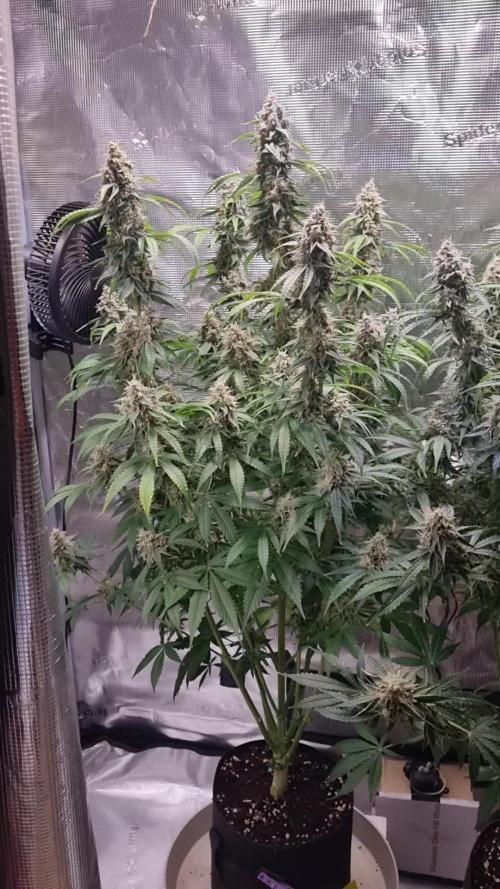
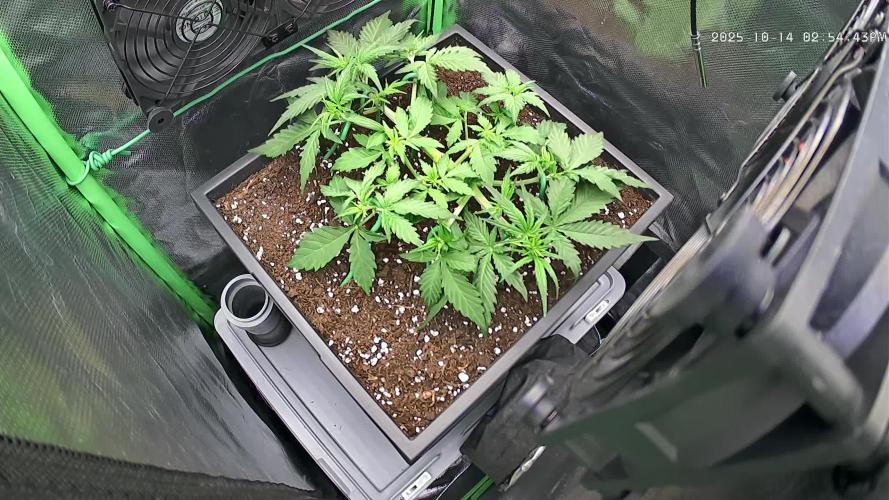
WEMBLEY x MENDOCINO - Pyramid Seeds
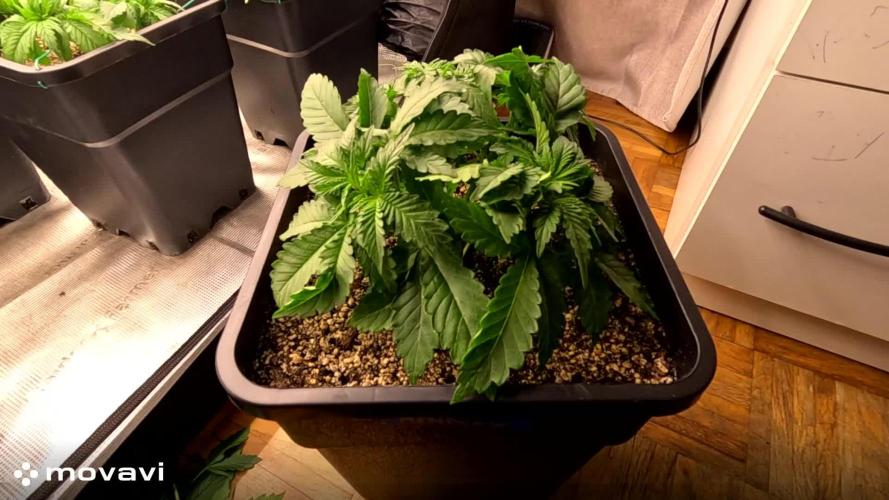
11L pots, 720W led, Remo Nutrients
"Bedroom setup"
These are free seeds which i got as reward...
1 of 5 made it...
3rd week of vegetation from 9.3.2026. to 15.3.2026.
This week i did topping, defoliation, and wireing hehe
and notices that from one branch spot 3 branches coming out (mutant branch)... :)
As days goin im just spreading her and pulling wires every day.
Shes healthy and took topping with no issue.
Take care and much love :)
ॐ





@Nillenium
Follow
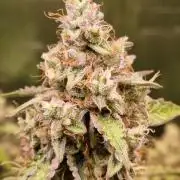
In Woche 5 habe ich via LST probiert die Fläche etwas besser auszunutzen und habe dort, wo junge Triebe verdekt sind, einzelne Blätter entfernt.
Mittlerweile zeigt sie auch ihr Geschlecht, so das ich diese Woche als 1. Blütewoche zähle.


@Enemy61390
Follow
They smell great. Not a hard grow, but not stabilized genetics. 4 different phenos all with differing flowering times. Make it tough when you use your grow tent as a dry tent to contain smell. Had to buy another tent just to dry the ones that were finished instead of risking them herming. 5.8 oz dried and trimmed bud. Didn't weigh larf/trimmings but will be dry sifting it for the press.


@Cockneycultivar
Follow
I’m quite a novice when it comes to growing auto’s but I thought I’d give it a try after seeing the huge colas some people are producing online.
To be honest I’ve never really been too scientific either about growing a bit of bud in the past.
just recently I have been trying to research in order to gaining more knowledgeable information on how to grow big fat buds.
After reading many reviews I decided to give the Hulkberry a try.
Week1:
3rd Nov :Germinate seed sandwiched between cotton pads left on a warm surface.
5th Nov : successful germination. Showing a lovely thick root. Planted in a small pot of normal soil.
7th Nov : She’s popping out the soil. In between the Cotyledons she’s Displaying her first set of true leaves already.
8th Nov : she’s looking beautiful, standing to attention. I placed her on the kitchen window sill to enjoy the morning sunshine. 1.5 cm tall
9th Nov : looking great, placed back on a warm surface. I need to get my tent set up lively at this point.
10th Nov : Got the tent set up. I had a bit of a crazy moment and wanted to experiment a little even with the minimal knowledge I have about it. I used a bit of fresh normal compost, a bit of old used compost, a small amount of worm castings, some chopped up vegetables and around 5/10 red tiger worms from my wormery.
I kinda hope everything will be ok


@valiotoro
Follow
Sooooo impressed with the size & quality of the buds😳
Super dense & sticky✂️
The smell is sweet fruity mix berries🤤🍓


