The Grow Awards 2026 🏆
Likes
Comments
Share
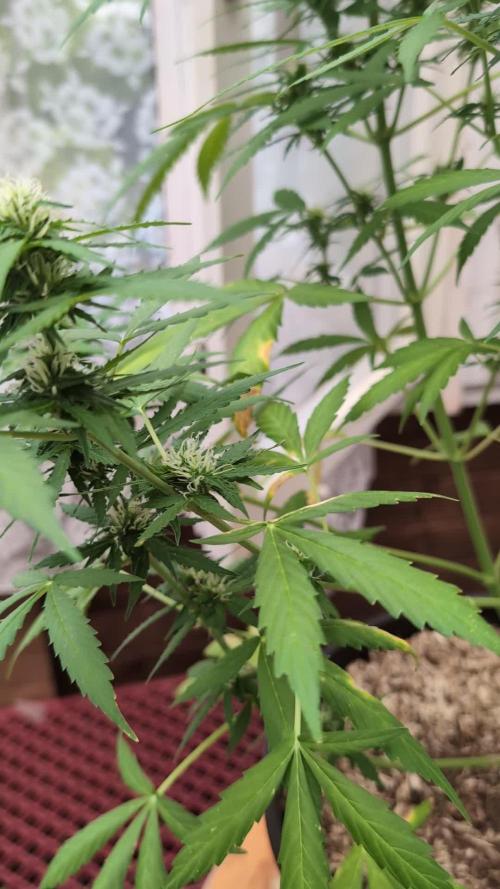
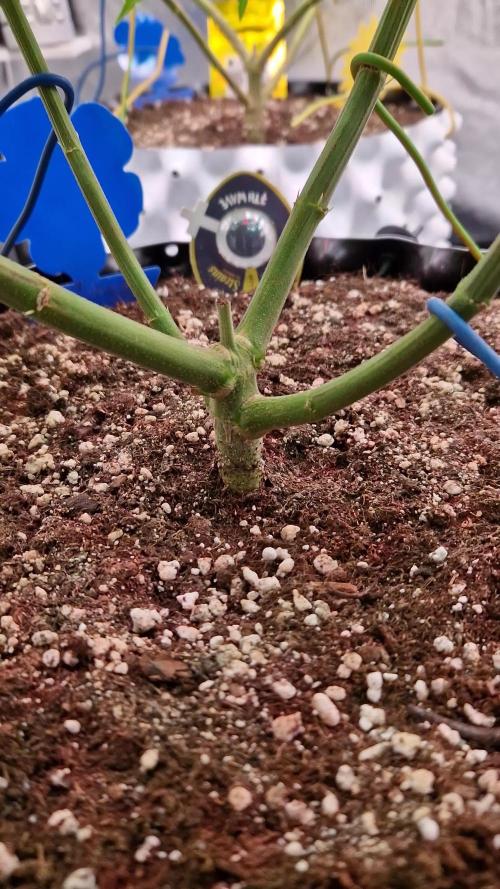
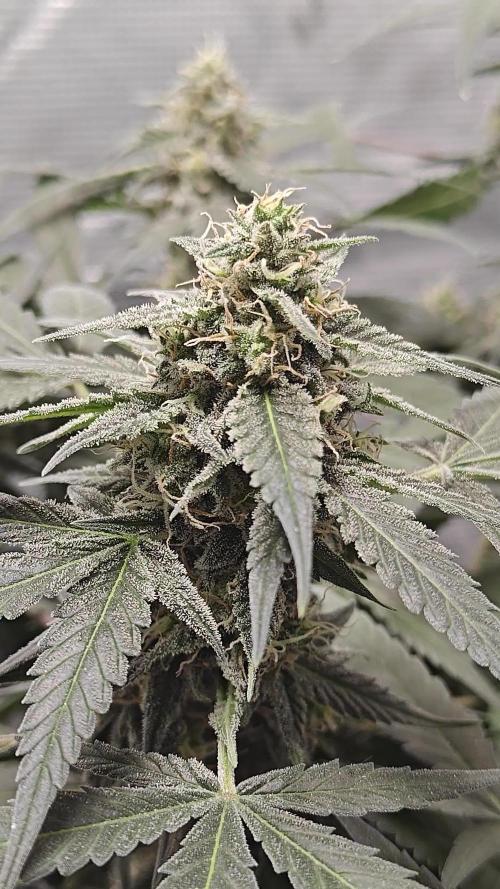
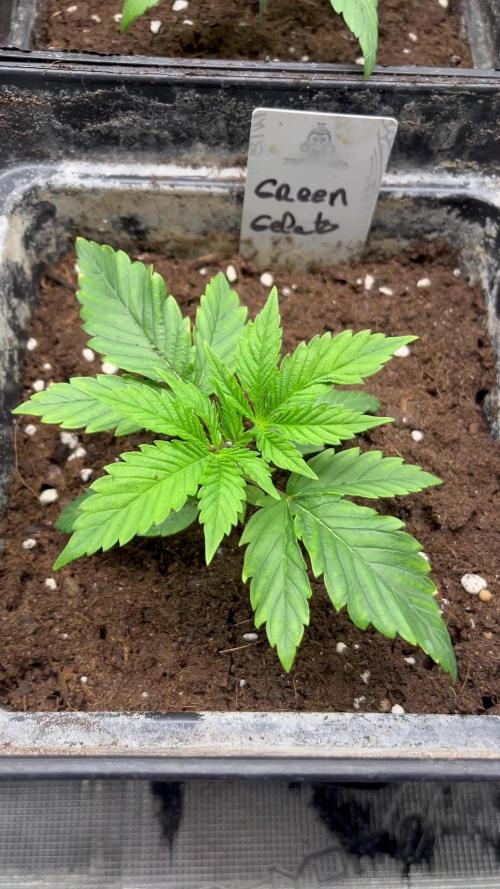
!!!!!!!!!!!!!!!!!!!!!!!!!!!!!!!!!!!!!!!!!!!!!!guckt euch letzen Report an !!!!!!!!!!!!!!!!!!!!!!!!!!!!!!!!!!!!!!!!!!!!!!!!!!!!!! Blüte hat begonnen: Edit:11.05 Die Pflanzen sind innerhalb von 2 Tagen explodiert. Ich habe das Licht nun auf 75 Prozent gestellt und noch einmal Cal-Mag nachgegeben, da die letzte Gabe nur eine halbe war. Die beiden Titan sehen fast identisch aus. Die beiden Epsilon sind circa 3 Tage unterschiedlich, eine ist etwa 5 cm kleiner als die andere und hat noch kaum Blüten. Ich denke, in 3 Tagen wird das der Fall sein. Die Cosmos F1 ist im Umfang circa 50-50 cm, kaum Blüten bisher. Ich hoffe, sie wird nicht noch viel größer, da der Platz langsam eng wird. Ich bin von dem Wachstum dieser Pflanze absolut begeistert. Mal gucken, was die Blüte bringt. Edit ende Ich habe alle Blüten entfernt, die nicht im direkten Licht sind, und alle Blätter, die die Blüten bedecken. Die Pflanzen weisen einen Cal-Mag-Mangel auf, was bei der Blüte normal ist, gerade bei diesem Licht. Ich habe dem Gießwasser etwas Cal-Mag hinzugefügt. Die Pflanzen sind drei Tage älter als im letzten Report. letzte Woche : Die Pflanzen sind seit der Keimung auf diesen Fotos genau 30 Tage alt. Ich habe eine Pflanze ausgetauscht, da es sich um eine Epsilon F1 handelte, die vermutlich Mutationen aufwies. Sie hatte verkümmerte Blätter, die nicht wie die ihrer Artgenossen aussahen, und wuchs deutlich langsamer. Daher habe ich sie nach 2,5 Wochen ausgetauscht. Der kleine Mann(die ausgetauschte Pflanze) leidet natürlich jetzt ein bisschen unter Lichtstress, deswegen werde ich wohl nur eine sehr gestauchte Pflanze erhalten. Aber besser, als die Fläche leer zu lassen. So viel zu dem, was nicht funktioniert hat: Die Sanlight stand die ersten 2 Wochen auf 20 Prozent. Dann habe ich sie teilweise mit dem Dimmer höher gestellt: 2 Stunden auf 25 Prozent. Eine Woche später bin ich auf 30 Prozent und 2 Stunden mit 35 Prozent gegangen. Für Woche 4 habe ich 40 Prozent und 2 Stunden auf 45 Prozent gewählt. Ich erhoffe mir, die Pflanzen so schneller an die starken Lampen zu gewöhnen. Im Nächsten grow soll bei jeder Pflanze die TDS per Infrarot gemessen werden. Da werde ich dann ein Experiment zu machen, wie die Lichtsteigerung am besten umzusetzen ist. Zu den Lampen kann ich bis jetzt nur Positives sagen. Im Gegensatz zur dazugehörigen App, diese ist wirklich nicht sehr gut umgesetzt. Das Menü und die Einstellungen sind teilweise irreführend und nicht sehr durchdacht. Ich muss mir immer wieder die Tutorials in der App ansehen, da diese immer wieder angezeigt werden. Noch dazu hätte ich gerne die Möglichkeit, mehr Einstellungen treffen zu können. Das ist aber Meckern auf hohem Niveau, weil auch die App das macht, was sie soll, nur eben meiner Meinung nach nicht sehr gut umgesetzt. Die Pflanzen wurden von mir mit Klipsen aus dem 3D-Drucker gestützt. Diese Klips kann man Stück für Stück im Winkel verstellen, so dass man die Triebe damit neigen kann. Das habe ich von Tag zu Tag im Winkel verstellt, so dass ich am Ende einen 45-Grad-Winkel habe. Das habe ich insgesamt über 6 Tage gemacht. Die Pflanzen haben an sich ein sehr gleichmäßiges Wachstum. Die Cosmos F1 wächst so optimal, dass kein LST mit den Klipsen nötig ist. Ich habe an den Pflanzen keine Mängel entdecken können und auch keine Anzeichen von Mutationen. Die Pflanzen haben im Durchschnitt eine Höhe von 35 cm, wobei eine etwas stärker abweicht mit 22 cm (wieder eine Epsilon F1). Der Umfang mit LST bei der Cosmos F1 liegt ohne LST bei 20 cm im Durchschnitt, wo wir wieder die Epsilon im Negativen haben mit 14 cm. Die Pflanzen wurden alle entlaubt, das eine Woche vor der Blüte. Morgen werden die Pflanzen erneut entlaubt und ge-lollipoppt. !!!!!!!!!!!!!!!zusätliche infos werden morgen ergänzt + Fotos !!!!!!!!!!!!!!!!!!!!!!!!!!!!!!!! *1. Foto Mutation: Dieses Foto wurde nur 5 Minuten nach dem Umtopfen der Pflanze aufgenommen. Vorher stand sie in einem größeren Topf, in dem sie genauso aussah. Ich habe sie umgetopft, weil ich den Topf brauchte, aber die Pflanze nicht wegwerfen wollte. Der Pflanze geht es gut, aber sie sieht im Moment etwas mitgenommen aus. Bilder folgen
Likes
16
Share
Started a little training, cut down the older fan leaves and topped up. I’m adding a tiny bit of root stimulator cause changed the pot size last week so it will to promote a faster growth. Gotta keep this lady low cause the box is quite small. So excited 😆
Likes
Comments
Share
@mariocave
Follow
Ok so it’s coming along fine see you next week
Processing
Likes
61
Share
@Dunk_Junk
Follow
6cm vertical growth this week but she threw out some nice side growth. Apologies for the timelapse, it starts halfway through the week and finish/start are in the middle of the week 😳
Likes
74
Share
@Mr_Maes
Follow
We are officially in full bloom. The have been enjoying 6-7 hours of sun light per day for about 4 days now, then brought back in under the cobs. The girls are all exploding with growth and stacking what I expect to be huge buds.
Likes
13
Share
@Lazuli
Follow
I dont like how heavy the branches were, i had to spend 2€ on ropes
Likes
Comments
Share
Day 57 and 59, and 62 of 12-12 from seed.
Likes
3
Share
unfortunately we noticed some budrod in the headbud. we cut it generously sb, unfortunately the papaya cookies still need something and the weather is now autumnal cold and rainy. We'll see in 7 days at the latest, but hopefully there won't be any more budrod by then... It's the most beautiful of all the outdoor plants so far.
Processing
Likes
24
Share
9/2 allowin showing colors finally, getting purple I some fanleaves, she's smelling super sweet like berries 9/4 she's getting so so frosty. Shes growing/budding like a typical sativa. Super Long slender nugs with ridiculous amounts of frost/crystals covering all surrounding sugar leaf. Yet still small and slender actual bud formation. I am very impressed by the resin production so far though. (Sativas always look Impressive(crystals) but lack actual bud structure) Watered and introduced beastie bloomz to the mix instead of open sesame. Hoping to pack on extra weight. On a side note: the clone from this plant is flowering as well. I have limited the addition of most nutrients besides what was already in the soil. Its cool to note that the clone that hasnt been fed flowering nutes like the mother plant has, is lacking in smell, color and resin production, in comparison between feeding with open sesame vs not feeding besides water as needed. Its not surprising but i love seeing the proof
Likes
14
Share
@RosQuare
Follow
This Canadian Turkey Day we are thankful for the ability to grow 🔥 at home with access to great products! We are also thankful to GrowDiaries for this invaluable diary function and for the community of helpful gardeners. We are 11 weeks to solstice so this will be the last grow to bring some sunshine into the new year. I grew these strains outside and now we are trying to bring them inside. Our friendship plant has outgrown her pot and ‘pot head’ is ready for a new hairstyle. She’d make an adorable mother with a clone from this grow! Then set up a terrarium for her and train her real pretty. Oct 9: dropped seed in shot glass of water Oct 10: paper towel on plate with seed mat Oct 11: root emerging, paper got a little dry, spritz spritz and fingers crossed Oct 12: roots look good, planted in 2oz cup of organic potting mix that I figured would be fine for the first week, placed under humidity dome, in the terrarium. I instantly hate the potting mix. It’s dusty and heavy. Shit. Big mistake. Oct 14: We have a seedling! Oct 16: She hasn’t grown! And the other is pushing up but still wearing her coat. Oct 17: Our seedlings are not taking off and I’m really annoyed at the substrate I used already, it’s so compact. I’m still waiting on the grow bags that I ordered, arriving tomorrow.. I’m not happy yet with any of the potting mixes I’ve been testing and this is the worst one yet. It’s crucial I figure out a mix I can manage because I’m a chronic overwaterer and I want to give my roots a fighting chance. We are upgrading this grow with a pro-mix cx grow bag and praying it’s a keeper after all these fails. If I like it then I can easily pick up a bail. I know they use these commercially here. But she’s already stunted? Will she make it? 🤨 should I just start over? Spritz spritz. Seed hat is just sitting above the soil also not moving. While I wait for my substrate, I used up all that organic potting soil that I now hate to refresh the friendship plant and for propagating her cuttings. Anything would be better than the 500ml of dried out stuff she had left from 3 years ago! She deserves better but this is exactly the type of crap she thrives on. I’m grateful that she keeps coming back for me and I’m grateful for all the baby plants she lets me share ❤️ and I’m grateful I’ve been buying small bags of substrates thus far. Started 1 original lemon pie seed as a back up since this germination round appears to be a bust. Oct 18: so the girl I had all my hopes pinned on died, spritzed her with water and she lay down. The soil is like wet cement, my fault but an expensive mistake. Lost 10 seeds plus a bunch of other herbs I was starting 😭 Still waiting on delivery of my good soil. Update: pro-mix cx bags arrived and I rehydrated one with about 3 litres of calmag enriched water. There’s about 500ml overflow that I’m recirculating to make sure we are truly hydrated over the next 24 hours while I wait for a new tribute to come forth.. I wasn’t going to bother but decided to transfer the little seedling that was wearing a hat into a pinch of the cx and she seemed to perk up almost immediately once out of that other crap. Wishful thinking? We will know soon. 2 hours later and she’s definitely growing! We have an OG survivor for this grow and can proceed. We are very GRATEFUL
Likes
11
Share
Still maintaining, no defoliation up to this point. There are still some deformed fingers on leaves from the stress but they are doing well!
Likes
23
Share
(Update: 4/20/19) Please stand by while they dry. (Update Everything is going great though! The smell is very strong now; no more cut grass smell. From looking at all three today, I believe that some of the smaller branches will be done drying and ready for trimming and weighing in a day or two. I have one guess for dry weight of Big Lemon, any other guesses?? Remember, the picture of Big Lemon hang drying looks like its two plants, but its all Big Lemon; I had to cut it off to be able to hang it. The amputated branch left of the main plant is bigger than my other two plants alone! (Update 5/2/19) Woah...Okay. So after drying the whole for about nine days, and trimming for four days, Big Lemon's dry weight SO FAR is about 430ish grams of super dense and sticky nugs. Its amazing that I got more big bud than I got popcorn nugs from such a big plant. I have one more 1/2 gal Mason Jar of untrimmed tops to finish, then I'll post pics or a vid of the weigh up and glamour shots etc.. Oh, almost forgot, Little Lemon produced about 40 grams of very nice bud. This surpassed expectations because, although it was planted on the same day as Big Lemon, it was the runt of the bunch because it got pushed out of the main tent that had all the lights and Co2 environment and everything. It spent much of late veg under a very weak light. I remember how limp it was when I gambled on it and chose to switch her over to 12/12. But it was totally worth it in the end! Alight back to work for me. Check back later today for pics, vids! (Final Update: 5219 @11:09pm PT) Its done. Its finally done! I had to trim both plants with my own two hands! So Exhausting, yet so rewarding. So above are several videos of the weighing. Grand total for Big Lemon is 14oz of prime top shelf nugs, and about 3oz of nice popcorn/LARF (they are separated as shown above in a video. Forgive me for not throwing it all together to weigh it, I spent a long, long, very long time trimming and sorting and canning the buds according to their respective grade/quality. I may add one more update to show their respective weights. Oh and little lemon produced about an 1 1/2 oz of prime nuggets and quite a bit of popcorn/LARF, which I haven't gotten around to weighing yet. So, Grand Grand total of Both Lemon OG Candy (amazing job with this beast of a strain, Philosopher seeds) is about 18.5oz, or 1lb 2.5oz for two plants; 15.6oz of which is entirely made up of top-shelf buds 😎 Damn I love SoCal, I didnt even need to run carbon filters because no one be trippin about a lil stink weed. Thanks to those for following this grow! Tell me what yall think! Cant wait to see some comments from all you growers out there. (Update: smoke review after a week or two of cure) This Lemon OG Candy had an extended veg period, about 4 months maybe a little longer, and I harvested her on day 56 of flower (recommended harvest 60-70 days) because of the size/distance to light and her root-bound problems. The results so far, a very uplifting and stimulating quality.
Likes
4
Share
Likes
22
Share
@Fatnastyz
Follow
10/28 This bird is a rockin! Just watching her go! 1-11 Day 41 of flower. Still just water and rotating, to try and even the light.
Likes
6
Share
Привет садоводы Кажется цветок вырос отличный, просто красавица и наверно он уже готов еще несколько дней после полива и финиш
Likes
8
Share
3° Semana- Aeroponía - Mejoría apreciable, las raíces están mucho más sanas, la velocidad de crecimiento comienza a ser mayor, además el área de las hojas que realizan fotosíntesis es mayor. --------------------------------------------------------------------------------------------------------------------------------------------------------------------------------------------------------------------- 3° Week- Aeroponics - Appreciable improvement, the roots are much healthier, the speed of growth begins to be greater. The area of ​​the leaves that carry out photosynthesis is greater.
Likes
10
Share
@Catphish
Follow
Week 16 is starting off nice and strong. Lady is starting to look super frosty, and more hairs are starting to turn orange. Bumped the nutrients back up and will continue feeding accordingly. Starting to put off some nice cakey odors now.
Processing
Likes
13
Share
SUNDAY 5/5: Rearranged the gardens..have 17 plants in the 4 x 5 now...yowsa! MONDAY: Plucked some dead leaves and did a trichrome check on the furthest along. She's ready! I'll start flushing her tomorrow or Wednesday.👍 TUESDAY: I observed some white spots(maybe powdery mildew) on a few leaves here and there throughout the garden, so I sprayed them today with Trifecta Crop Cure, a concoction of a bunch of natural plant oils. I already decreased the humidity in the room to 45% with my new 70L dehumidifier, so I think they'll be fine. I'll spray them again tomorrow and the next day, then I'll have to hope that did the trick, because a couple of these hybrids are already in the harvest window. WEDNESDAY: I flushed one of them and watered the rest today and included a bunch of terpinator, bud candy, bembe, and cha ching. It was possibly their last dose of any nutes...but a couple might get one more dose... THURSDAY: Took a couple of photos and tried installing my new Solacure FlowerPower UVB light, but it was dead on arrival.😢..back to the 15.0 reptile UVB lights for now I guess...
Likes
52
Share
Lacewings seemed to have mostly killed themselves by flying into hot light fixtures. I may have left the UV on which was smart of me :) Done very little to combat if anything but make a sea of carcasses, on the bright side its good nutrition for the soil. Made a concoction of ethanol 70%, equal parts water, and cayenne pepper with a couple of squirts of dish soap. Took around an hour of good scrubbing the entire canopy. Worked a lot more effectively and way cheaper. Scorched earth right now, but it seems to have wiped them out almost entirely very pleased. Attempted a "Fudge I Missed" for the topping. So just time to wait and see how it goes. Question? If I attached a plant to two separate pots but it was connected by rootzone, one has a pH of 7.5 ish the other has 4.5. Would the Intelligence of the plant able to dictate each pot separately to uptake the nutrients best suited to pH or would it still try to draw nitrogen from a pot with a pH where nitrogen struggles to uptake? Food for stoner thought experiments! Another was on my mind. What happens when a plant gets too much light? Well, it burns and curls up leaves. That's the heat radiation, let's remove excess heat, now what? I've always read it's just bad, or not good, but when I look for an explanation on a deeper level it's just bad and you shouldn't do it. So I did. How much can a cannabis plant absorb, 40 moles in a day, ok I'll give it 60 moles. 80 nothing bad ever happened. The answer, finally. Oh great........more questions........ Reactive oxygen species (ROS) are molecules capable of independent existence, containing at least one oxygen atom and one or more unpaired electrons. "Sunlight is the essential source of energy for most photosynthetic organisms, yet sunlight in excess of the organism’s photosynthetic capacity can generate reactive oxygen species (ROS) that lead to cellular damage. To avoid damage, plants respond to high light (HL) by activating photophysical pathways that safely convert excess energy to heat, which is known as nonphotochemical quenching (NPQ) (Rochaix, 2014). While NPQ allows for healthy growth, it also limits the overall photosynthetic efficiency under many conditions. If NPQ were optimized for biomass, yields would improve dramatically, potentially by up to 30% (Kromdijk et al., 2016; Zhu et al., 2010). However, critical information to guide optimization is still lacking, including the molecular origin of NPQ and the mechanism of regulation." What I found most interesting was research pointing out that pH is linked to this defense mechanism. The organism can better facilitate "quenching" when oversaturated with light in a low pH. Now I Know during photosynthesis plants naturally produce exudates (chemicals that are secreted through their roots). Do they have the ability to alter pH themselves using these excretions? Or is that done by the beneficial bacteria? If I can prevent reactive oxygen species from causing damage by "too much light". The extra water needed to keep this level of burn cooled though, I must learn to crawl before I can run. Reactive oxygen species (ROS) are key signaling molecules that enable cells to rapidly respond to different stimuli. In plants, ROS plays a crucial role in abiotic and biotic stress sensing, integration of different environmental signals, and activation of stress-response networks, thus contributing to the establishment of defense mechanisms and plant resilience. Recent advances in the study of ROS signaling in plants include the identification of ROS receptors and key regulatory hubs that connect ROS signaling with other important stress-response signal transduction pathways and hormones, as well as new roles for ROS in organelle-to-organelle and cell-to-cell signaling. Our understanding of how ROS are regulated in cells by balancing production, scavenging, and transport has also increased. In this Review, we discuss these promising developments and how they might be used to increase plant resilience to environmental stress. Temperature stress is one of the major abiotic stresses that adversely affect agricultural productivity worldwide. Temperatures beyond a plant's physiological optimum can trigger significant physiological and biochemical perturbations, reducing plant growth and tolerance to stress. Improving a plant's tolerance to these temperature fluctuations requires a deep understanding of its responses to environmental change. To adapt to temperature fluctuations, plants tailor their acclimatory signal transduction events, specifically, cellular redox state, that are governed by plant hormones, reactive oxygen species (ROS) regulatory systems, and other molecular components. The role of ROS in plants as important signaling molecules during stress acclimation has recently been established. Here, hormone-triggered ROS produced by NADPH oxidases, feedback regulation, and integrated signaling events during temperature stress activate stress-response pathways and induce acclimation or defense mechanisms. At the other extreme, excess ROS accumulation, following temperature-induced oxidative stress, can have negative consequences on plant growth and stress acclimation. The excessive ROS is regulated by the ROS scavenging system, which subsequently promotes plant tolerance. All these signaling events, including crosstalk between hormones and ROS, modify the plant's transcriptomic, metabolomic, and biochemical states and promote plant acclimation, tolerance, and survival. Here, we provide a comprehensive review of the ROS, hormones, and their joint role in shaping a plant's responses to high and low temperatures, and we conclude by outlining hormone/ROS-regulated plant-responsive strategies for developing stress-tolerant crops to combat temperature changes. Onward upward for now. Next! Adenosine triphosphate (ATP) is an energy-carrying molecule known as "the energy currency of life" or "the fuel of life," because it's the universal energy source for all living cells.1 Every living organism consists of cells that rely on ATP for their energy needs. ATP is made by converting the food we eat into energy. It's an essential building block for all life forms. Without ATP, cells wouldn't have the fuel or power to perform functions necessary to stay alive, and they would eventually die. All forms of life rely on ATP to do the things they must do to survive.2 ATP is made of a nitrogen base (adenine) and a sugar molecule (ribose), which create adenosine, plus three phosphate molecules. If adenosine only has one phosphate molecule, it’s called adenosine monophosphate (AMP). If it has two phosphates, it’s called adenosine diphosphate (ADP). Although adenosine is a fundamental part of ATP, when it comes to providing energy to a cell and fueling cellular processes, the phosphate molecules are what really matter. The most energy-loaded composition for adenosine is ATP, which has three phosphates.3 ATP was first discovered in the 1920s. In 1929, Karl Lohmann—a German chemist studying muscle contractions—isolated what we now call adenosine triphosphate in a laboratory. At the time, Lohmann called ATP by a different name. It wasn't until a decade later, in 1939, that Nobel Prize–-winner Fritz Lipmann established that ATP is the universal carrier of energy in all living cells and coined the term "energy-rich phosphate bonds."45 Lipmann focused on phosphate bonds as the key to ATP being the universal energy source for all living cells, because adenosine triphosphate releases energy when one of its three phosphate bonds breaks off to form ADP. ATP is a high-energy molecule with three phosphate bonds; ADP is low-energy with only two phosphate bonds. The Twos and Threes of ATP and ADP Adenosine triphosphate (ATP) becomes adenosine diphosphate (ADP) when one of its three phosphate molecules breaks free and releases energy (“tri” means “three,” while “di” means “two”). Conversely, ADP becomes ATP when a phosphate molecule is added. As part of an ongoing energy cycle, ADP is constantly recycled back into ATP.3 Much like a rechargeable battery with a fluctuating state of charge, ATP represents a fully charged battery, and ADP represents a "low-power mode." Every time a fully charged ATP molecule loses a phosphate bond, it becomes ADP; energy is released via the process of ATP becoming ADP. On the flip side, when a phosphate bond is added, ADP becomes ATP. When ADP becomes ATP, what was previously a low-charged energy adenosine molecule (ADP) becomes fully charged ATP. This energy-creation and energy-depletion cycle happens time and time again, much like your smartphone battery can be recharged countless times during its lifespan. The human body uses molecules held in the fats, proteins, and carbohydrates we eat or drink as sources of energy to make ATP. This happens through a process called hydrolysis . After food is digested, it's synthesized into glucose, which is a form of sugar. Glucose is the main source of fuel that our cells' mitochondria use to convert caloric energy from food into ATP, which is an energy form that can be used by cells. ATP is made via a process called cellular respiration that occurs in the mitochondria of a cell. Mitochondria are tiny subunits within a cell that specialize in extracting energy from the foods we eat and converting it into ATP. Mitochondria can convert glucose into ATP via two different types of cellular respiration: Aerobic (with oxygen) Anaerobic (without oxygen) Aerobic cellular respiration transforms glucose into ATP in a three-step process, as follows: Step 1: Glycolysis Step 2: The Krebs cycle (also called the citric acid cycle) Step 3: Electron transport chain During glycolysis, glucose (i.e., sugar) from food sources is broken down into pyruvate molecules. This is followed by the Krebs cycle, which is an aerobic process that uses oxygen to finish breaking down sugar and harnesses energy into electron carriers that fuel the synthesis of ATP. Lastly, the electron transport chain (ETC) pumps positively charged protons that drive ATP production throughout the mitochondria’s inner membrane.2 ATP can also be produced without oxygen (i.e., anaerobic), which is something plants, algae, and some bacteria do by converting the energy held in sunlight into energy that can be used by a cell via photosynthesis. Anaerobic exercise means that your body is working out "without oxygen." Anaerobic glycolysis occurs in human cells when there isn't enough oxygen available during an anaerobic workout. If no oxygen is present during cellular respiration, pyruvate can't enter the Krebs cycle and is oxidized into lactic acid. In the absence of oxygen, lactic acid fermentation makes ATP anaerobically. The burning sensation you feel in your muscles when you're huffing and puffing during anaerobic high-intensity interval training (HIIT) that maxes out your aerobic capacity or during a strenuous weight-lifting workout is lactic acid, which is used to make ATP via anaerobic glycolysis. During aerobic exercise, mitochondria have enough oxygen to make ATP aerobically. However, when you're out of breath and your cells don’t have enough oxygen to perform cellular respiration aerobically, the process can still happen anaerobically, but it creates a temporary burning sensation in your skeletal muscles. Why ATP Is So Important? ATP is essential for life and makes it possible for us to do the things we do. Without ATP, cells wouldn't be able to use the energy held in food to fuel cellular processes, and an organism couldn't stay alive. As a real-world example, when a car runs out of gas and is parked on the side of the road, the only thing that will make the car drivable again is putting some gasoline back in the tank. For all living cells, ATP is like the gas in a car's fuel tank. Without ATP, cells wouldn't have a source of usable energy, and the organism would die. Eating a well-balanced diet and staying hydrated should give your body all the resources it needs to produce plenty of ATP. Although some athletes may slightly improve their performance by taking supplements or ergonomic aids designed to increase ATP production, it's debatable that oral adenosine triphosphate supplementation actually increases energy. An average cell in the human body uses about 10 million ATP molecules per second and can recycle all of its ATP in less than a minute. Over 24 hours, the human body turns over its weight in ATP. You can last weeks without food. You can last days without water. You can last minutes without oxygen. You can last 16 seconds at most without ATP. Food amounts to one-third of ATP production within the human body.