Likes
Comments
Share


@BudGardener420
Follow
Currently checking daily and tying away branches/leaves to give the buds more light and watering when the soil is dry. Currently my plants drink exactly 1,5L a day. I have the feeling that the right plant is lacking a bit of potassium. I'll leave everything as it is for now because the left plant (fresh new soil) is growing well. Since the right plant is quite bushy anyway, I'll defoliate it again later and remove any lower shoots. I started adding the Bio PK booster towards the middle of the first week of flowering, 2ml per liter of water; as the pH value drops too much, I correct it upwards with Biobizz pH up - from pH 5.5 to 6.5 for 3L, I add a total of 39 drops. My water is mixed as follows: 3L osmosis water, plus 6ml CalMag, 6ml BioPK 5-8 and 39 drops of pH + BioBizz.

Likes
4
Share

@eldruida_lamota
Follow
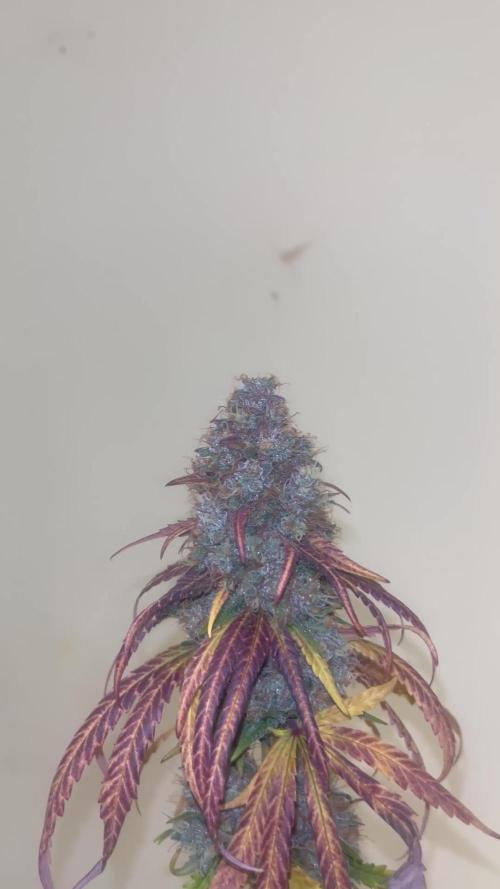
Venga familia ya viene la cosecha de estas Runtz de MSNL, que ganas que tenía ya de darles tijera.
Para empezar es buena variedad un poco tardía de lo que dicen pero me encantó cultivarla , aún con la plaga de trips que sufrí las 2 últimas semanas aguantaron y sacaron unas flores alucinantes.
Las flores aparte se ven resinosa y tienen colores llamativos.
La planta pues si creció vigorosa, no es muy frondosa y es resistente.
Fue una genética con la que disfruté bastante y es bastante fácil de cultivar.
Agrobeta:
https://www.agrobeta.com/agrobetatiendaonline/36-abonos-canamo
Mars hydro:
Code discount: Eldruida
https://www.mars-hydro.com/
Hasta aquí es todo , espero que lo disfrutéis, buenos humos 💨

Likes
11
Share


@Herroqitti
Follow
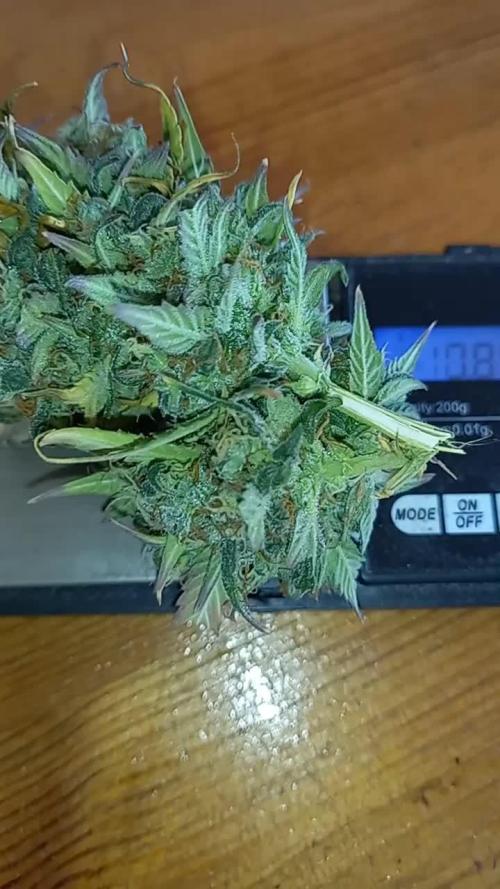
Some kind of deficiency going on. Threw some organic nutes at it and good ol cal mag plus. Trimmed those nasty leaves. She looks better, time will tell.


Likes
68
Share


@Theia
Follow
My god this girl is getting big for an outdoor stealth grow. I've snapped her once in half and she has doubled up since that. I think another break is gonna have to happen and I will have to pull her long instead of tall.
She still gets nothing special. Cats seem to be keeping snails off her.. I know that sounds mad but I swear they sit at night next to her and I've not had any more snails on her since...🤔🤔🤔
Still not giving anything special. The run off from the flower room gets poured on the beds apart from that just rain which is in no short supply.
That's all this week from the scarey outdoors.
Until next week stay safe 😷😷
Grow well 🌱🌿🌱🌼
Likes
6
Share

@Pompeyblue
Follow
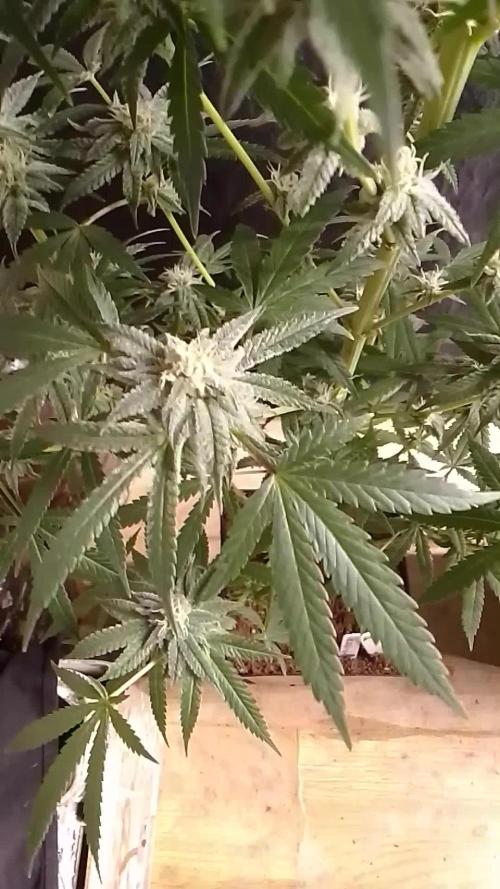
Day 32F
Going great now getting nice and frosty and also now putting on some weight



Likes
16
Share


@Tipton
Follow
Lots of smells have become their own... The fried banana has this crazy skunk smell with a real earth dirt smell once the skunk fades... The orange cake NO kidding, smells like a fresh peeled orange and some kind of batter smell... It's nuts...
The big Z has the immediate Skittles blast with a earthy afternote... And the paint is just like the last one and smells real chemical like! When u say the name it makes u smell the paint... Is that just me???? Hahaha anyways... Thats what I got .. everything is going amazing and for day 37 I think they've filled out real nice... Now hopefully they fatten up in the next 20-30 days!!!!

Likes
74
Share


@GROWitALL
Follow
All around took every nutrient like a champ. Dense, Stinky , Sticky Buds! Add these to your Sativa Arsenal
1LOVE
:)


Likes
6
Share


@ZeroKnown
Follow
i noticed some good signs of flowering so i started feed her with bio bloom and top max
Likes
41
Share


@JacareGrows
Follow
Hey guys.
For this week i upload some videos 1 video per plant.
I am not giving any more the bio nova autoflower supermix, i m thinking on let them going only with water until the end, but lets see.
Plant 5 is close to harvest i think on the end of this week.
Plant 1 and 4 are doing good on flowering.
Plant 2 is slowly flowering
Plant 3 is still in middle of the transition to flowering, is going very slow. I think she probably is blocked because of the size of the pot and light .
When i harvest plant 5 the others will have more space, and i can bend some branches to increase the bud quality.
The big question is, when harvest? its the first time im doing this and i am afraid of doing that wrong.
Hope the videos can help someone to help me :D
I have also made a video of plant 5 on a more close look, not to much quality but for now its what i can get , sorry
28/05 day 69
small trichome update of plant 3,4 and 5. Plant 1 and 2 still on pre flowering
analysing the trichomes, i would say,
Plant 3 and 4 need almost 2 more weeks
Plant 5 - probably only 1 week more, so up to almost week 12
plant 1 and 2 - will take much time as fotoperiodic LOL


Likes
19
Share


@BoboLacetti
Follow
This is my biggest and healthiest plant I've ever had!
I'm so incredibly amazed by Deepwater Culture that I'm thinking about not growing in the ground anymore and instead setting up 6 DWC systems in the tent.
Tody i defoliate the plant :)
Likes
32
Share


@CHILLING_RACOONS
Follow
✅WEEK NOTES: 20/01 LIGHTS OFF! Some days in the dark and cold box are great to increase flavors and potency
✅ 🌱GERMINATION🌱 01/10/2023 SEED IN THE SOIL 03/10/2023
🔝 10th NOVEMBER 1st FLOWERING DAY🔝
🔝 10° FLOWERING WEEK🔝
📅20/01/2023 LIGHTS OFF 📅
💡💡💡Viparspectra xs2000 at 75% Power + QUANTUM BOARD AT 75% POWER💡💡💡
💉🔍Fertilization schedule:🔍💉
ONLY PLAIN WATER
🧐 🤓 Alien OG DATA SHEET 🧐 🤓
• THC%:Over 25%
• Flowering Time:8-10 Weeks
• Outdoor harvest:Early October
• Yield:400-500gr/m²
• Indica/Sativa:Indica Dominant
• Height:Medium: 100cm-180cm
• Difficulty:Medium
• Climate:Tropical, Sub Tropical, Warm
• Medical Conditions:Anxiety, Arthritis, Insomnia, Migraine, Pain, PTSD, Stress
• Seed Type:Feminized
• Genetics:Alien Kush x Tahoe OG Kush
• Effects:Calming, Relaxing, Uplifting
• Taste:Herbal, Peppery, Citrus
• Terpene:Limonene , Myrcene , Beta-Caryophyllene
💸💸💸💸💸 Buy ALIEN OG FEMINIZED BY MSNL: https://www.marijuana-seeds.nl/alien-og-feminized-seeds
_______________________________________________________________________
🔧💡OUR SET UP FOR THIS GROW CYCLE💡🔧
✔️ 💲💲💲VIPARSPECTRA 🚀🚀🚀🌕🌕
ViparSpectra®️ XS2000 240W Infrared Full Spectrum LED Grow Light:
Excellent ratio between wattage and ppfd, excellent light penetraton, perfect light spectrum (it also has IR 🤩) and it has the best build quality on the market. You can touch that quality. Materials are really strong, excellent driver and the best leds on the market. Heat dissipation is perfect, the lamp is never too hot and it has a passive dissipator so you will have zero noise. It also has IP65 certification. I like that this lamp is bigger than others, so the 240w of power are well distribuited on the space. Viparspectra has an awesome customer service, and shipping was incredibly fast!
This awesome brand also offers 3 years warranty.
This lamp has no rivals.
A special thanks Viparspectra ❤️❤️❤️❤️
HERE YOU CAN BUY THIS PROFESSIONAL LIGHT: https://www.viparspectra.com/products/xs-series-xs2000 or https://amzn.to/3dyUoJl
and here you can buy other awesome stuff: https://www.viparspectra.com
💣Quantum board - 480w - 4x120w Boards
Samsung LM301B 288 led/board 3000K 0dB noise
+24led/board led Osram 660nm
Efficiency 2.6 umol/J 220 lm/w
Driver: Meanwell HLG-480H-36B
-ESTRACTION FAN:
Blauberg 125 Turbo Pro Series
Maximum air flow: 430-560 m³ / h 50W 32-44 dBA
💊💉💊FEEDINGS
TOP CROP:
-DEEPER UNDERGROUND: to stimulate roots system
-TOP VEG: for an excellent growth in the vegetative phase
-GREEN EXPLOSION: to promote creation of bud sites and to allow a faster growth
-MICRO VITA: bacterias for equilibrate the soil and to make the plant healty
-BIG ONE: to stimulate bud sites and to stimulate resin production
-TOP BLOOM: to achieve excellent big and hard buds
-TOP CANDY: to feed the buds with molasses for a tastier smoke and to gain weight
-TOP BUD: to enlarge buds and to gain weight
PLAGRON: PK 13-14 to have big and hard buds and to feed plants with lower effort
ADVANCED NUTRIENTS: Sensi Cal-Mag Extra- for cal mag deficiency
GROTEK: CAL MAG for cal mag deficiency
HESI: PowerZyme to clean and balance the soil. It feeds the plant cleaning the soil.
GHE: - Final Part (ex Ripen) accelerate the final flowering phase, dissolves minerals in excess
- Flash Clean to flush the plant and to be sure that all excesses are out from plant and pot
These two products improve A LOT the smoke of our babies
-PURPINATOR to stimulate flavonoids and to have a better taste and smell.
-BIOBIZZ: CAL-MAG, great product to correct deficiencies without Nitrogen!
____________________________________________________________________________________________
🙏❤️ THANK YOU FOR BEING HERE ❤️🙏
Please leave a comment with your opinions, it is very important to us to have a comparison.
If you like our job, tap the weed button and follow us. It will be really appreciated.🙏
We want to thank again everyone that help us in our project. You support us to support our dream. ❤️
SPREAD THE LOVE OF THIS PLANT ALL AROUND THE WORLD
🌿Thank you again🌿
❤️Sweet hugs❤️
👨🌾CHILLING_RACOONS👩🌾
Likes
2
Share


@ao_grows1978
Follow
Week 3 for the solo is officially complete. She's been growing with no trouble. Root development has been excellent. As you can see, I decided to mainline. Seeing as she's in a solo cup, I'm not too worried about stunting. I'm horrible at measuring the water intake, but the cup needs to be watered daily. It's as lite as a feather everyday.
Processing
Likes
8
Share


@Stick
Follow
Gorgeous dense & sticky buds, her smell is fruity/sweety, she is 100% healthy. Close to the finish line, this run was pretty easy! I still don't know the name of this strain but I already know I'll drop some more seeds 👌

Likes
25
Share


@Ratch33
Follow
Outside Temps are plummeting - Entering Winter
Running Fan Heater at night.
First Dew Frost on the 1st of June
Added min-max hygrometer
There's still damages, pruned affected leaves
New growth looking normalised.
Budding is slow

Likes
28
Share


@Esoteric_growing
Follow
I have been training this one for a while, this is a rare lemonade pheno of strawberry lemonade which is totally leaning to the lemon side but not like a lemon skunk or lemon haze. It’s very lemon/diesel/sweet. Probably the nicest lemon type terp I have seen and can’t wait to get this one to the finish line
Likes
16
Share


@DreamIT
Follow
-Sponsored by:
🎭ZAMNESIA SEEDS🎭-💡VIPARSPECTRA💡-💐GREEN BUZZ LIQUIDS💐-🛠️WEDRYER🛠️
8/7 After several days of Growdiaries making it difficult for me to write and respond to comments, I found that I can still update the journals. I apologize to everyone for the non-replies but I have replaced the main email and the email to confirm the account never arrives, and Growdiaries' customer service seems to be non-existent.
10/7 everything is going well, nothing special to add🤘🦄
12/7 all good, things are going great
__________________________________________
Personal advertising (contains affiliate links)
__________________________________________
🦄Zamnesia boasts the most complete and accurate site where you can find everything related to cannabis and the "psychedelic" world. Autoflowering, feminized seeds, mushrooms, salvia divinorum, afrodisiacim of everything, and more! ( no affiliate link)
✅https://bit.ly/Zamnesiaseeds
__________________________________________
Did you know that Green Buzz Liquids fertilizers are 100% vegan? A complete line of products ready to give the best to each of your plants! Visit the site and see my journals to see how they work 🦄
🤯 And with the code "dreami t" you will immediately receive a 15% discount on your purchases
✅https: //bit.ly/GreenBuzzLiquidsPro
__________________________________________
👀 Are you looking for a good lamp to start with? 👀
🌞Viparspectra has something more than the others, take a look at their site.
⏩ Use "GDVIP" for an extra discount or "DREAMIT3" for an extra 5 %% discount
👀 Search for it on Amazon
✅Amazon USA: https://amzn.to/30xSTVq
✅Amazon Canada: https://amzn.to/38udUVe
✅Viparspectra UE: bit.ly/ViparspectraUE
✅Viparspectra USA: bit.ly/ViparspectraUS
______________________________________________
🌈 Tired of blowing on your weed hoping it dries quickly? Check out the Wedryer website! You will find a well-made accessory that will help your weed dry in just 8-10 days without the annoying risk of finding mold or other annoyances! (no affiliate links)
✅https: //bit.ly/Wedryer_
______________________________________________
📷🥇Follow the best photos on Instagram 🥇📷
https://www.instagram.com/dreamit420/
Backup
https://www.instagram.com/dreamit4200/
🔻🔻Leave a comment with your opinion if you pass by here🔻🔻
🤟🦄💚 Thank you and good growth 💚🦄🤟

Likes
1
Share