


Likes
Comments
Share


@GorkedOut
Follow
Smells of STRAIGHT GAS. Bit of a skunk smell but the gas smell is overwhelming. Can't get enough of it.
143 grams (roughly 2.55 ounces per plant of good buds). Hoping the quality is amazing..

Likes
12
Share

@Bncgrower
Follow
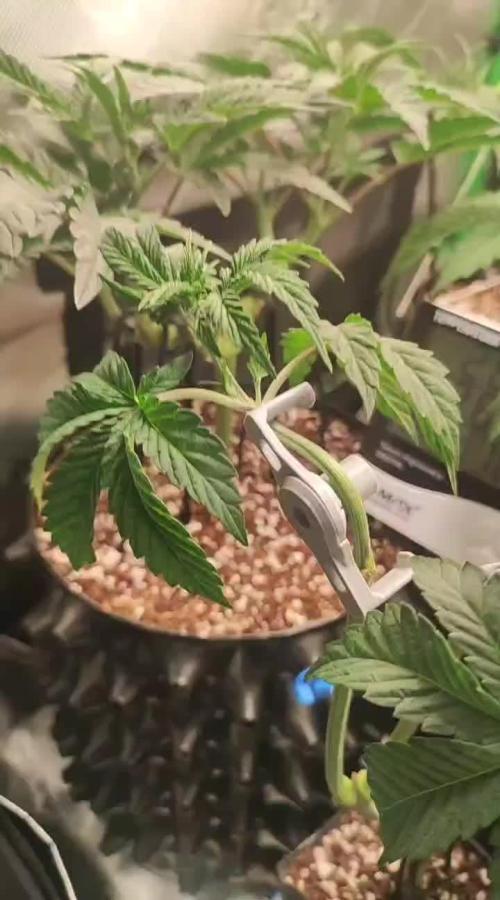
Sorry, I'm a bit behind on my updates... Everything is going according to plan 💪🌿




Likes
3
Share


@samuraifroggig
Follow
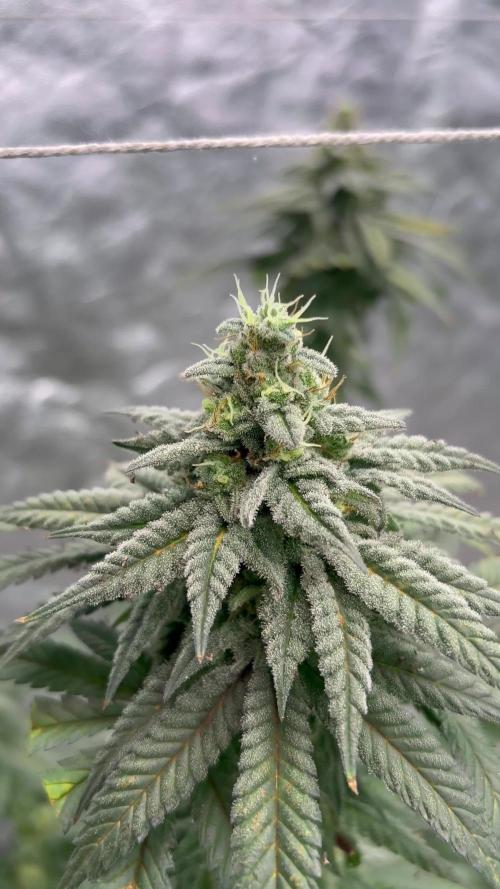
She got to big for the 2x2x4 so I had to move it to a bigger 2x4x5 that has a new never before used 320w kingbright so this whole grow is evolving as it goes I had no clue that hydro and 200w in veg would make the plant this big. Temps are much easier to control now in the bigger setup. the 7 gallon res. is loseing about 1 gal a day I top it off and check PH/EC once a day it almost never needs adjusting so that is really nice.

Likes
36
Share


@MadeInGermany
Follow
Hey everyone 😃.
Due to the lack of space in the flower tent at the moment, I decided to use a delayed LST for the 2 women 🙂.
So I can let them grow again in the next 30 days until there is room in the flower tent 😄👍.
I'm curious to see how they will recover, and I think that growth will continue in the next 48 hours 👌.
I wish you a lot of fun with the update, stay healthy 🙏🏻 and let it grow ☘️🍀
You can buy this Strain at :
https://sweetseeds.es/de/sweet-skunk-f1-fast-version/
Type:
Sweet Skunk F1 Fast Version
☝️🏼
Genetics:
Sweet Skunk Auto (SWS34)
X
Early Skunk
👍
Vega lamp:
2 x Todogrow Led
Quantum Board 100 W
💡
Bloom Lamp :
2 x Todogrow Led
Cxb 3590 COB 3500 K 205W
💡💡☝️🏼
Soil :
Canna Coco Professional +
☝️🏼
Fertilizer:
Green House Powder Feeding
☝️🏼🌱
Water:
Osmosis water mixed with normal water (24 hours stale that the chlorine evaporates) to 0.2 EC. Add Cal / Mag to 0.4 Ec Ph with Organic Ph - to 5.5 - 5.8 .

Likes
12
Share

@MindFlowers68
Follow
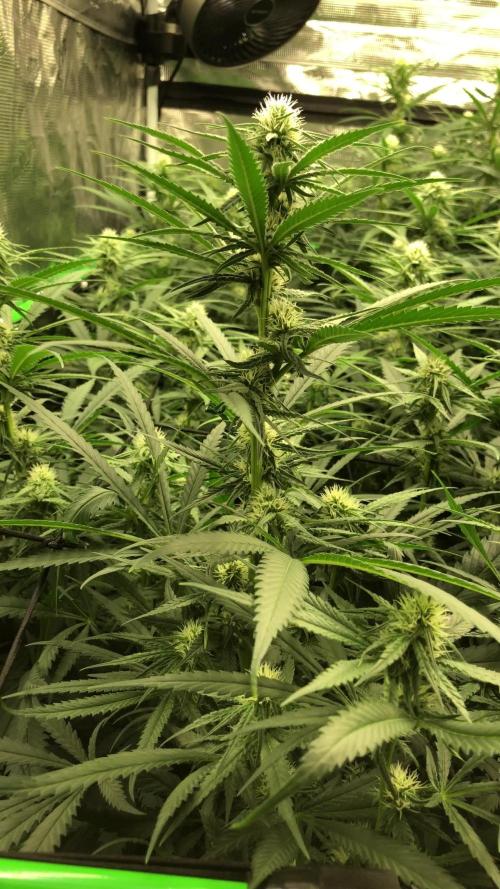
Critical Purple Kush is drinking like theirs no tomorrow. I had to give her own own extra watering this week. It drank 8 gallons that time. The amount of big colas forming is impressive. Maybe in the triple digits. It is really dense but the new leave are staying small an the plant is still getting good light penetration and airflow. Has been a little impossible to get humidity any lower at the moment dude tot he amount of transpiration happening. but i will start to water a littles each week and let the sill maintain a lower average moisture to try y to help a little
They were still stretching a lot this week ,but at the end of the week are slowing down some. Got my temps dialed a little cooler while having lights going full blast because the plants seem to be handling it well. They stretch themselves right into the canopy where is reading over 1400 PPFD. I'm running the light so intense the lower buds at the top of the first net are growing almost the same rate as one closer to the top of second net. The plants have been drinking a ton. I watered at least 3 times about 7 gallons each time. I wanted to give them some compost tea last week, but they were drinking so quickly, I didn't have a day in between to let my water air/bubble to get it prepared for my brew. I was able to get and extra day in between and a nice dry back followed by a top dress of rock dust watered in with my compost tea with a little bit of everything I got. Each plant received top dress each 1 cup azomite,1/2 cup glacial and basalt, and 1/4 cup Langbeinite. Plants got another trim everything below the first net beforehand. I took out a few leaves between the two nets but for the most part left the plants untouched except for the a few of the oldest leaves.

Likes
41
Share


@negrowsoil
Follow
Starting week 6
this bitch needed some magnesium and phosphorus
Now she starting to get swole

Likes
22
Share


@GreenHouseLab
Follow
Crazy stretch, amazing structure looking fwd to see some 🌲🌲🌲
🤟🤟🤟
GHL

Likes
22
Share


@Rabidreject
Follow
Update - 4th July 2021
Just still flushing away. The colours that are coming out are crazy. I have edited some pics but not videos and the videos dont really pick up the colour. Its strange that it started completely green and then went darker and darker until it reached purple buds covered in trichomes.
I am planning on harvesting both this plant and the purple punch today or tomorrow depending on when i can be bothered lol
Tbh, its not hard because i dry trim so it's just a case of plucking off the fan leaves and hanging it in different branches.


Likes
38
Share


@LittleBigTrees
Follow
Pulled a few fan leaves, had a house inspection so I had to move them all outside , they went from 26°c to -2°C for ten hours they also had their dark cycle interrupted during the course of moving them.
The smell is very strong now from all 6 pheno

Likes
51
Share


@eldruida_lamota
Follow
Bueno resumiendo cookies gelato es una variedad híbrida muy fácil de cultivar pero ojo, cuidado con los últimos riegos si no queréis perder cosecha por moho. Lo demás de 10 pegada heavy sabor increíble, cogollos duros como rocas y bañados de una gran capa de polen.
El ambiente del secado se mantuvo en 23 grados de media y la humedad estuvo por debajo de los 45% en todo momento.
Poco más la verdad estuve encantado de poder cultivar una genética tan potente .
Un saludazo que paséis un final de año increíble y por supuesto buenos humazooos💨💨💨.

Likes
49
Share


@masterofsmeagol
Follow
6/1 I'm anxious to get my plants in their final homes. Another 90 degree day today and then it will be cooling off with some showers. I plan to take advantage and utilize that to make the transition. I have some small burns on a couple plants bit considering the weather we've had its nothing. Temperature swings 50 degrees. I hope these girls do OK outside. I was tired and stoned last night and I accidently topped a plant I had already FIMed. Oh well. Transplants soon. Supports screwed in after the heat. Plants have been handling this weather like a champ. Big thick healthy stalks.
UPDATE PUT THE PLANTS IN AROUND 730. Cutting down on light hours I'm poverty close to where we are. It was 95 today. Plants have suprisingly little burning. My fan was taken so they go without that tonight too. In the next few days it's going to cool down and that's when I'll transplant. Only thing left before transplant is sanitizing trellis and supports. Easy peezy. Especially if it's supposed to be in the 50s. And people dent climate change lol. I'm hoping that all this adversity makes my flower a higher quality. I'm glad to have the quantity to pick the best phenos for the BIG POTS. Im trying to stay excited but it's just so dumb hot. Oh well. If the plants can do it so can I. I'm planning to give them some kelp me kelp you next watering and may start some light organic nutes.
6/2 Phone doesn't like uploading my videos. Broke record high temp yesterday 95 and tomorrow we will break the record low 50. Plants withstood the heat well and are doing great. Transplant soon. They were a little light but I held off on the water. Plan on it tomorrow. May transplant tomorrow. I have several videos that haven't uploaded. I thought they did but I was wrong. Oh well.
UPDATE: Forgot to water. Some were light and others could've held off. Did the half a powerade bottle ahain. A litt ke less on the heavier ones. However I'm looking to transplant into final homes tonight and into this weekend. I sanitized a fifty and a forty so my bags and two pots are sanitized. Cage is sanitized and ready and pallets are sanktized and in place. The 40 and 60 fit PERFECT in the small space left from the pallets. Plus the plants always lean the opposite direction so things should go smooth. Only thingvleft is sanitizing stakes, bamboo, plastic garden stakes and all the other plastic training stuff. I'll just soak it while I transplant. Gotta mix the soil first too though.
UPDATE. Heat went higher than expected and hit 90. I figured I'd go back around three and screw in suppirt stakes and begin getting everything ready for transplant (i.e. supports, mix soil, sanitize trellis) before I transplanted tomorrow MORNING was what I had planned. Unfortunately we got a huge thunderstorm with a shot ton of rain and it's gonna continue throughout the night. I think this is God's way of telling me to take a break. I can get up early and get those support stakes screwed in. Then when I get back from the wife's doctor's I can do the transplants. I'm trying to break the labor up into manageable chunks. Looking at my other diaries I can see that my plantscare fine in their three gallon homes. It'd a little disheartening seeing such big clones that I started so much earlier on the other diaries. However I always was fighting SOMETHING (usually more than one thing) and last year was a shit show. At least this year I stay away from anyone else's cannabis any clones and I'm extremely cautious. I've seen my cousin out perform me multiple times with healthy plants like this I'm excited to see how it goes. I really needed the break anyway but tomorrow morning the stakes will be in. Hopefully they'll be outside.
6/3 Broke the record for low days after breaking record for highs. I saw it 94 yesterday and the day before. On the way to my grow at 6am it was 44 degrees and it's not warming up much. Fifties at best. Rainy. I left the door closed. The big door on the otherside got opened as the other end of the garage neededcto he used. If the rain let's up I'm going to set up the grade stakes so I can transplant in the morning and throughout the day. I think I'm going to light dep a couple of them and leave them in the 3's. We'll see.
UPDATE: At 12:30 the temp today was 44. Yesterday it was 94. I can't believe this. Plants are doing great though and are in the garage under lights for the day. The BIG door was open part of the day. Didn't take any pictures (or even enter the grow area) as I sanitized the last 40 gallon pot and a bunch of grade stakes. I drilled the grade stakes to the pallets in the front. The first row is done. Just need to sanitize the plastic trellis itself and finish attaching the other grade stakes. I don't need the fill trellis up by transplant. I just need the bags to not knock over and have SOME support. I'll be back over there either to tonight to put more supports in or tomorrow when I actually plan to start transplanting. I'm getting excited. After dealing witb the stiff that I sanitized I didn't dare go fuck with my plants so I looked through the window. I'll finish sanitizing the net tomorrow. These plants look great. I'm wondering if doing the two diagonal I poles with zipties actually works. It would save me some kone for sure. I'll definitely update in the morning.
6/4 It's warmed up to a balmy 44 degrees. My plantsxare in the garage still. Weather sucks this whole week but after this heavy rain it should be perfect weather to transplant these girls. A little to chilly but it will warm up and I need to get this shit done. I'm trying to do to much at once. I need to just out dirt in bags and get them outside. I'm glad I waited until after this craziness. Breaking temp records for high one day then breaking it for low the next can't be good for the plants. I'll update what gets done today. I may mix soil or I might wait until tomorrow. It will let up some then. Plants still look fabulous 👌
6/5 50 degrees still raining like hell. Rain until Friday. Plants are inside under the onecworking light. Lots of indirect light through the massive windows though. I'm planning on mixing soil today and tomorrow and getting bags and pots half filled. Just trying to break the labor up into manageable pieces. It's probably a good thing I didn't put them in their huge containers before all this rain.
UPDATE: MIXED SOIL 1/3 of each (FOX FARM OCEAN FOREST, HAPPY FROG, AND ROOTS ORGANIC 707). I prepared I believe 11 containers for transplant. I need to sanitize two more containers and I'm good. I got a lot done. Might go back over. Set up extra cams too. I'm excited. Talked to my commercial buddy amd he motivated me. No reason my plants can't handle this shit. I've just had massive personal shit going on. Friday is the next GOOD day but these girls might go out earlier. I'm checking the forecast. I'll sanitize the other containers in the morning and fill them.
6/5 Today is usually my watering day but shit still seems heavy so I'm going to hold off. Despite that i need to transplant. I think they're wet enough. I could do it today. Plants are looking good and weather takes a better turn Friday. It's not raining hard though. It's just sprinkle right now. I may transplant some today depending on how things go. I'll keep the diary updated.
UPDATE: I went back over with the intent to just mix soil and let it acclimate. I decided to try to transplant one. I grabbed a 10th planet and started to go. I had done a bunch of manual labor already so i wasn't thinking. Of course the fucker was dry and didn't wanna come out ofcthe pot and the root ball pretty much decintigrated in my hand so I'm not sure how that will go. Tried again with the Blueberry Cheese Cake. I thought the roots just might not have been rootbound abdcthat could've been the case. After having another rough transplant I recognized I was tired, all the hard stuff is done and it's gonna keep raining until Friday. I wanted to transplant three and put them outside but with the wind and rain and the difficult transplant I let them sit under the light in the garage in indirect light. I had the doors open for a while. Should be open now but i don't want to have to go back over and shut it. Plus I'm not to keen on getting water on my light. Let's hope for a better day tomorrow. This was the only thing I had going good. Phrple punches are still behind. I've decided I'm oing to light dep ttwo of the plants in the 3 gallon pots. The two shittiest or smallest plants (probably purple punch will be light deped.
WENT BACK OVER AT FIVE AND IT APPEARS EVERYTHING IS ALRIGHT. WILL HAVE CHECK IN MORNING. Vid won't upload. Tried multiple times. I'll try again tomm.
6/6 Waiting for a doctor's appointment when I should be transplanting buy whatever. Everything is looking really good. Despite me disint9grating the rootball in my hands the two transplants look great! When I get back I'm planning to get some more work done. It's still lightly raining off and on but the door is up. I'm lettingvthe soil mix acclimate a little bit too. Hard labor is mostly done. Now the intricate part. Wish me luck. Not sure if it will be today bit I'm hoping.
WENT BACK OVER CAUSE IT WASNT RAINING BUT AS SOON AS I WAS CLOSE IT STARTED POURING SO THE PLANTS ARE UNDER THE ONE WORKING 150HPS AND THE AMBIENT LIGHTING FROM THE WINDOWS. TOMORROW IS TRANSPLANT DAY. I WONT HAVE A VEHICKE SO IT WILL BE TRICKY BUT IM GONNA MAKE IT HAPPEN. Opened doors at 530. Video still didn't upload
6/7 Still raining. It's off and on and a nice rain though. It's 53 degrees at noon. I transplanted two 10th planet's into 20 gallon pots. I transplanted these two a little differently. I put the bags in there final spot I side my cage andctransplanted in the misting rain. The first one came out and seemed to be heavier on the bottom and broke off. I tend to "throw" them in the hole before they collapse. With my anxiety I suck at transplanting. Plus these plants haven't filled the 3 gallon pots with roots yet but i want hem in their final homes and its time to go outside. I transplanted the other two plants indoors and let them have days in the garage with the door open and the light on then protection from the elements at night. I've been doing this for awhile. They would all be outside if the weather wasn't so shitty. This rain is supposed to stop. I'm curious as to what will be the fate of the two plantsci transplanted and left outside. I'm praying and hoping for the best. I also put my back tarp up so I have a wind break between rhe buildings. I stopped working because I didn't want to fuck anything up. Anxiety disorders suck. TOOK A BUNCH OF VIDS BUT THEY WONT UPLOAD. GOES FROM 9% TO 65% BUT ALWA7S TURNS RED "FILE FAILED TO LOAD". I'LL KEEP THE DIARY UPDATED. ESPECIALLY IF I GO BACK OVER. WAS ABLE TO LOAD A COUPLE VIDEOS. I GUESS ITS NOT AS BAD AS I THOUGHT. AT LEAST I HOPE. WENT BACK OVER AT 3 AND CHECKED THINGS OUT. THE TWO REXENT TRANSPLANTS I LEFT OUTSIDE SEEMED TO BE IMPROVING. DESPITE THE FACT I DUMPED A SHIT TON OF SOIL ALL OVER ONE OF THEM. IT SNAPPED A LITTLE BRANCH CLOSEST TO THE SURFACE. ITS STUFF I'LL REMOVE ANYWAY BUT STILL. IM REALLY CROSSING MY FINGWRS AND PRAYING THESE GIROS WILL MAKE IT. With everything i have going on tjis is my respite.IM GOING TO TRY TO SEE WHAT I CAN ACCOmplish TOMORROW. SOME OF THE PURPLE PUNCHES ARENT READY FOR TRANSPLANTING THOUGH. I ALSO ADDED TEO TARPS TO THE CAGECTO COVER THE WIND TOWER BETWEEN THE TWO BUILDINGS. THIS IS GOING TO BE A GOOD YEAR! Shut the door at seven. For some reason the two 10th planet's I transplanted (that fell all over the plant and I thought mightve broke it) look awesome lol. Despite the ridiculous pouring rain. It's going to let up soon and we are do fir some good weather. I'm trying to get everything (that isn't getting light depoed) into the cage. Four transplanted. Ten (I mean 8 more) to go.


Likes
92
Share


@DogDoctorOfficial
Follow
Harvest Notes ✂️
• Harvest Timing: Papaya Zoap was harvested at day 63, with select buds taken earlier at day 56 due to mold concerns.
• Drying: After careful trimming, the buds were dried for 12 days. The quality and aroma during drying hinted at the stellar smoke to come.
• Density & Yield: Buds were rock-solid, delivering an excellent yield with perfect density for storage and enjoyment.
Terpene Profile & Aromas 🍋
• Primary Aromas: A tropical explosion with sweet papaya upfront, complemented by creamy, soapy undertones that make her truly unique.
• Complexity: As the buds cure, a hint of citrus zest and exotic fruit emerges, creating a full-bodied terpene profile that’s simply irresistible.
Cultivation Experience 💡
• Highlights: Her uniform growth, heavy trichome production, and response to super cropping made her a delight to grow. She thrived under careful spectrum adjustments and defoliation, showcasing her adaptability and vigor.
• Challenges: The dense bud structure made her more prone to mold, especially in a high-humidity environment. However, proactive monitoring and swift action mitigated the spread.
Verdict: 🌟🌟🌟🌟🌟🌟🌟🌟🌟🌟 (9.8/10)
Papaya Zoap is a strain that commands attention with her beauty, aroma, and unstoppable growth. While her susceptibility to mold required extra care, her overall performance, yield, and quality were nothing short of exceptional. A grower’s dream and a frosty masterpiece!
Stay tuned for their individual harvest reports, smoke reviews, and more as we wrap up this epic series!
Discount Codes so you can save big on your next check out 💚💚💚
Kannabia - DOGDOCTOR 30% off
SeedsmanSeeds - DOGDOCTOR 10% off
CannaKan- DOGDOCTOR 15% off
terpyz.eu - DOCTOR 15% off
The Neutralizer - PORKIT5-DOG 15% off
Fast Buds - DOGDOCT 15% off
As always thank you all for stopping by, for the love and for it all , this journey of mine wold just not be the same without you guys, the love and support is very much appreciated and i fell honored and so joyful with you all in my life 🙏
With true love comes happiness 💚🙏 Always believe in your self and always do things expecting nothing and with an open heart , be a giver and the universe will give back to you in ways you could not even imagine so 💚
Friendly reminder all you see here is pure research and for educational purposes only
Growers Love to you all 💚💚💚


Likes
3
Share


@Miketama
Follow
Quick update on Northern Lights!
This week:
• Stretching phase complete ✅
• Flower development and bulking up nicely
• Fed with Thicker & Bigger Flowers at 1/3 dose
• Light defoliation - keeping it wild and natural
• Climate control stable with open Tent (door stays open 24/7 as always)
• Light leaks during dark period? Don’t care! 😎

Likes
13
Share


@smokeycropping
Follow
segunda semana de cultivo las luces son muy muy brillantes
la primera semana usando diodos samsung 120w dimmer a 50%
segunda semana aumentamos a 75% dimmer del panel
se rego 1 vez ala semana humedad del suelo duraba y se retenía muy bien,
300cc agua reposada midiendo
plantas sanas todo marcha ok
Processing
Likes
13
Share


@GrowGuy97
Follow
Just got the new 8x4 setup and got some new seeds in from Seedsman so let’s see how this run goes! 5x5 is week 2 of flower going strong!


Likes
57
Share

@squalino
Follow
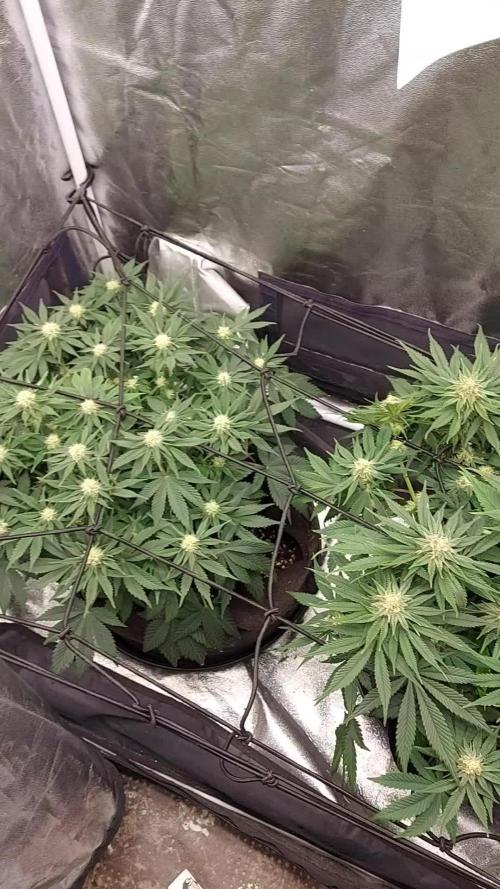
🌿 Journal de Culture : Cherry Cola (Auto)
Date : 18/03/2026
Âge : 55 jours (Semaine 8)
Phase : Pleine floraison (Explosion des trichomes)
📊 Paramètres de mon espace
Température : 24,5°C (Jour) / 20°C (Nuit).
Humidité : 50%.
Éclairage : Pure LED 240W réglé à 75% d'intensité, positionnée à 73 cm.
💧 Nutrition & Arrosage (pH 6,3)
Plante #1 (La Grande - 40 cm) : 1,5 Litre d'eau + 5 ml de PK 5-8 (BioTabs).
Plante #2 (La Petite - 30 cm) : 1 Litre d'eau + 2 ml de PK 5-8 (BioTabs).
📏 Travaux & Évolution (SCROG)
Retrait du LST : J'ai enlevé les fils rouges de palissage. Les branches sont maintenant bien rigides et la structure est parfaitement fixée. Le LST est une réussite totale.
Mise en place du filet : J'ai installé le filet (type SCROG) pour bien soutenir les têtes qui commencent à s'alourdir et homogénéiser la canopée.
🔍 Mes observations
C'est là que ça devient sérieux ! En manipulant la Plante #1 pour l'installer sous le filet, j'ai été surpris : mes doigts ressortis complètement collants. La production de résine est massive.
Niveau odeur, c'est un régal : ça sent déjà très fort le sucré, comme un bonbon. On a bien envoyé le profil terpénique de la Cherry Cola qui se met en place. La santé est au top, les feuilles sont d'un vert parfait et les têtes commencent à prendre une belle densité.
on peut remarquer que quelques feuilles commencent à perdre un peut de vert foncer très bon signe cela veut dire qu'elle puise l'azote des feuilles .et quelques légères pointes brûlées mais rien d'inquiétant cela me le fait a chaque fois lors de la transaction. mais à surveiller quand même.
22/03
ddonné 9,5 litres d'eau PH 6,3 .surface très sec .
merci à tous et à bientôt MUSIQUE DIAPO FAST BUD


