


Likes
Comments
Share


@jmsky
Follow
Permanent Marker was the last one standing and got the chop at day 75 of flower, nearly 11 weeks. The trichomes were still not very amber anywhere except the top sugar leaves, but it was about 90% milky white, and the leaves were all drying out.
I bagged 36g of larfy buds and trimmings, 20.5g top buds, and 12g small buds. 32g smokable is not bad.
I will update with smoke report in a couple weeks, but initial tests were promising. Strong chemical taste not far off from its namesake, with a KO strength punch.



Likes
3
Share


@NocturnalGardner44
Follow
Caught up... things are going well, Bruce stretched like crazy and has evened up its canopy to the others idk if it's that big bud in it or what. Lilac has looked a solid week and half ahead of the others since flower, she looks wicked though, trichromes are starting to build. I've done my last training, I usually go hard on thinning but I'm trying to be conservative and only uncover buds under leaves. Still same feeding routine.. looking forward to the finish line but know this is an important time with terms and trichromes beginning to resonate... I sick at this guy's but I want to get better at chronicling my grows.. so hourly I will improve in the process of Journaling.


Likes
1
Share


@MaestroBud
Follow
The little one has put the turbo on. After a perfect germination, the vegetative phase has begun: the first few days are always a mix of excitement and attention to detail.
The real leaves have peeked out, nice and wide and of a healthy green that gives hope for what is to come. It is adapting well to the Light Mix, and the initial combination of Dynamyco + Extreme Garden Root is proving, as always, a winning choice.
I am keeping the nutrition light, watering with distilled water and Cellmax Rootbooster, so as to encourage a robust root system before moving on to the full regime.
The humidity and temperatures are under control, the box is stable and ready to welcome the green explosion that awaits us.
Eyes open and hands light. The road is long but the direction is the right one 🚀

Likes
30
Share


@RastaMouse
Follow
Ok after the first hiccup of seeds not cracking now we have a full bed. Unfortunately 3 are a week behind the first. Bit frustrating. But all happy and plodding along nicely. One thing I would like to say i m a little peed off with advanced nutrient, ph perfect my ass. Still having to ph down.


Likes
24
Share


@TerpTurtle
Follow
14 day dry | Curing in Grove bags, filled 7 QP bags & got 56g of keif out the trim bin from only 2 plants!
More pictures coming! STAY FROSTY GROWMIES


Likes
8
Share


@TheHonestGrower
Follow
dutch passion, please add this to your strain list. it is a legitimate strain you have bred. I don't really feel good about adding this diary as a custom breeder because it isn't.
Likes
8
Share

@Arcadium
Follow
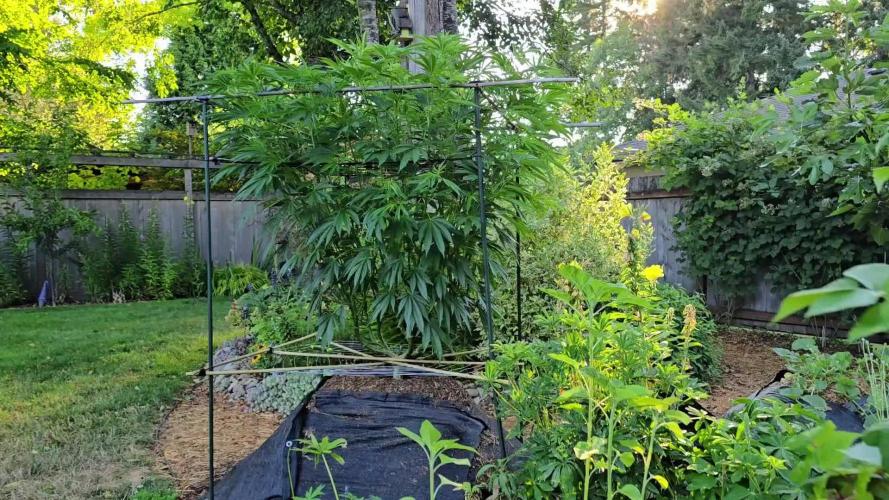
Super hot the last week 32c, coming along, no issues. Some light LST using bud clips, light defoliating on growth tips below canopy. Drip irrigation, top dress of Gaia Green 50/50 AP/PB and spray of LCPT.


Likes
22
Share


@CanarianGrow92
Follow
After the transplant and some food the girls are looking great, nice and green 💚
Cant wait to start flowering 😁

Likes
81
Share


@Hou_Stone
Follow
Let's remember, in week 6 one of my king's tart had been broken in 2 because of the tension due to my bad LST.
This plant grows much taller than the others. I'm trying to lower his height by doing HST. Currently she does not seem to complain about it.
I preferred to remove my net this week, to more easily access my plants and water them. I hope the branches will hold
I cut a lot of leaf this week. I hear different opinions that say it's beneficial others not... At least it will have the advantage of lowering the humidity.
---------------------------------------------------------------------------
- Water: tap water at 300 PPM, I add 0.7G of Hybrid powder and 0.3g of booster PK+ per liter to reach 950PPM and I adjust the PH to 5.8. I watered daily until water drained from the pot (to release nutrients from previous waterings) and I take a 3-4 day watering break to let it dry out before resuming a daily watering schedule.
-Daytime temperature: 22-26°C
-Night temperature: 20-24°C
-Humidity: 50-75% ( Too high but it's hard to lower it... I need advice please contact me if you have :) )
-Lamp: Mars Hydro FC3000. intensity 90% at 35cm from the top leaves
-Room: Mars Hydro 100x100x180cm
-Extractor: Mars hydro 402 CFM Max. power 3/10
-Substrate : 70% coco, 25% perlite, 5% vermiculite.
My instagram : https://www.instagram.com/p/CuMhQ_BsjRP/?utm_source=ig_web_copy_link&igshid=MzRlODBiNWFlZA==
Looking for MarsHydro equipment for your crop? 🔥
You can use my promo codes! 🙏😻
"houstone3" for: TS LED Grow Light, Tent, Ventilation for 3% off
"houstone5" for: FC&FC-E&SP LED Grow Lights; Grow Tent Kits for 5% off
https://www.mars-hydro.com/?acc=hou-stone
Likes
48
Share

@German_GrowLab
Follow
Einen wunderschönen guten Tag, liebe Grow-Community, und herzlich willkommen zur Woche 16 und damit BW 4 – Season Vol. 2 meines kleinen Outdoor-Projekts 2026.
Und das ganze Telleraufessen scheint doch Früchte zu tragen. Mit Temperaturen in den mittleren Zwanzigern, einer guten Portion Sonne und der Aussicht auf einen goldenen Herbst blicke ich mit großer Zuversicht auf das Ende dieser Saison. 😎Und nach dem Wetter-Desaster letztes und vorletztes Jahr muss ich doch sagen:
Verdient!!😝
Die Ladys sind nun durchweg in der „Massephase“ angekommen und entwickeln Stück für Stück ihre unterschiedlichen genetischen Traits.
Also allerhöchste Zeit für ein Mid-Flower-Geruchsupdate:
Ocean Storm (Emergen-C x Ocean Fruit) – Robin Hood Seeds:
Diese steht noch relativ am Anfang, aber Stand jetzt wird es ein fruchtiger Mix, welcher sich noch etwas genauer charakterisieren muss.
Medellin Fog 1:1 – Aficionado French Connection:
Hier muss ich sagen, wurde die Terp-Beschreibung wirklich gut getroffen. Ein angenehmes Vanillearoma (ähnlich wie bei einem Vanille-Zigarillo, nur ohne das Tabakaroma), gefolgt von einem dezenten Zitronen-Diesel-Abgang.
Peach and Gas S1 (OSG Peach Slush ’90 x Road Dawg) – Karma Genetics / El Sombrero Loko:
Da diese noch eher ein Spätzünder ist, lässt sich noch nicht genau sagen, in welche Richtung wir hier terp-technisch gehen. Ich bilde mir ganz dezente Pfirsicharomen ein, die komischerweise von einem alten Bekannten begleitet werden: Haze.
Strawberry Cookies (Thin Mint Cookies x Strawberry Cough F1) – Super Sativa Seed Club:
Und hier wurden meine Gebete doch glatt erhört! Definitiv ein Erdbeertraum, obwohl der Wuchs doch eher in die Cookie-Richtung geht.
Zoapaya (Zoap x Papayadawg) – Grounded Genetics:
Hier lassen die Terps noch etwas auf sich warten, aber es lassen sich bereits leichte seifige Aromen vernehmen.
Habibi (Zkittlez x Moroccan Peaches) – Purple City Genetics:
Hier kommen eher die marokkanischen Traits durch (erdig, hashig) und weniger die Zkittlez- oder gar Peach-Noten. Aber das kann sich ja noch ändern!
Blueberry Muffin (Razzleberry x Purple Panty Dropper) – Humboldt Seed Company:
Ein wahres Terp-Powerhouse! Ein stechend-frischer Blaubeergeruch, der einem direkt in die Nase steigt. Gefolgt von einer teigigen Note, die an frisches Hefegebäck erinnert.
Pink Guava F1 Fast Version (Pink Guava x Red Gorilla Girl XL Auto) – Sweet Seeds:
Ein tropischer Mix aus Guave und Orange.
Also ein großes Potpourri an Gerüchen, die von Tag zu Tag prägnanter werden. Ich bin wirklich mehr als gespannt auf den Outcome.
Aber die Damen wollen schließlich auch umgarnt werden, um ihre volle Pracht zu präsentieren.😇
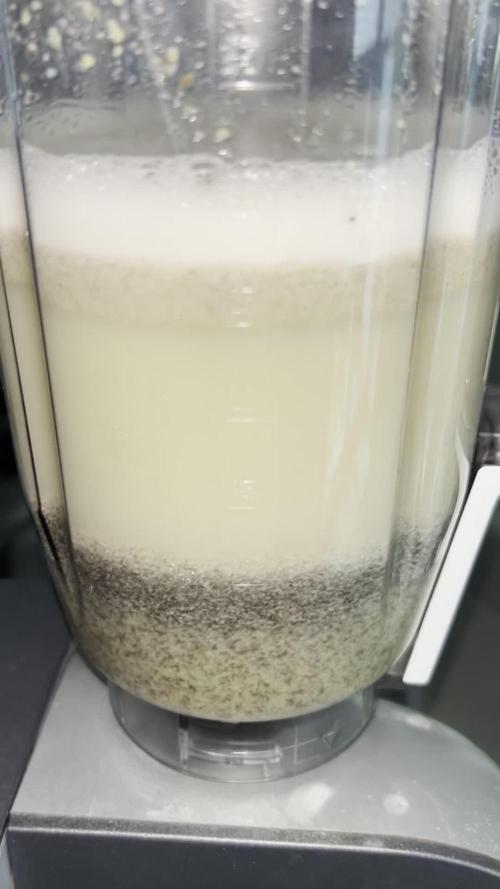
Also ab in die Küche mit mir und den beim letzten Mal angeteaserten Seed Sprout Tea angesetzt. Dieser basiert, wie schon angekündigt, auf einem Rezept vom lieben Flo.
Das Ganze mal kurz heruntergebrochen:
Hierfür wurden zunächst Maiskörner für etwa 24 Stunden eingeweicht und anschließend 24–48 Stunden im Dunkeln angekeimt. Die Maiskeimlinge wurden danach in einem zweistufigen Verfahren zunächst bei ca. 50 °C und anschließend bei 65 °C für jeweils 20 Minuten erhitzt.
Im ursprünglichen Rezept werden 35 g Linsenkeimlinge, 20 g enzymaktives Gerstenmalz und ca. 25 g frische Maiskeimlinge mit 700 ml Wasser püriert und anschließend 20 Minuten stehen gelassen.
Allerdings hatte ich kein Malz mehr und die Brauerei meines Vertrauens konnte leider auch keines liefern. Also habe ich die Menge an Malz durch mehr Linsen ersetzt, um das Kohlenstoff-Stickstoff-Verhältnis nicht in Schräglage zu bringen und dadurch nicht zu viel Stickstoff im Boden zu binden.
Das fertige Endprodukt kann dann entweder direkt mit 10 L Wasser verdünnt und sofort gegossen werden (700 ml auf 10 L Wasser). Oder man mischt 200 ml mit 100 ml melassestabilisiertem LAB, füllt das Ganze mit Wasser auf einen Liter auf und fermentiert es für ca. eine Woche.
Ich habe mich für Ersteres entschieden...
Durch das zweistufige Erhitzen der Keimlinge auf etwa 50 °C und 65 °C wird die Proteasen und Amylasen gezielt aktiviert . Diese spalten Proteine und Stärke teilweise in kleinere, wasserlösliche Verbindungen wie Peptide, Aminosäuren und Zucker auf, die den Bodenmikroorganismen leichter als Nährstoffquelle zur Verfügung stehen können.
Zu guter Letzt bekommen die Kleinen jede Woche ihre Wellnesskur in Form von 1,5 g Bittersalz auf 10 L Wasser (bei jedem Gießen). Das hat sich in den letzten Anwendungen bewährt und die Pflanzen stehen deutlich satter und vitaler da.
Einmal die Woche gibt es dann noch Siapton zur Unterstützung der Stresstoleranz (Kälte, Regen etc.). Dazu gesellen sich noch eine wöchentliche Gabe Humic Acid und ein Topdress Silikat. Letzteres sollte laut Hersteller nicht unbedingt mit anderen Nährstoffen in einer Nährlösung verabreicht werden, weswegen ich mich für die Topdress-Option entschieden habe.
Zu guter Letzt noch 10 ml auf 10 L meines WSC (Water Soluble Calcium), welches ich bei jedem Gießen verabreiche.
Zu guter, guter Letzt würde ich euch jetzt noch gerne stolz berichten, dass noch 1 ml/L von meinem schönen Bananen-FPJ hinzukommt. Dieser ist mir aber ein weiteres Mal gottlos weggeschimmelt. Keine Ahnung, was ich da immer falsch mache.😫
„You can’t win them all.“ 😅
Alright, das war's mal wieder für diese Woche. Ich bin wirklich unnormal hyped, wie das hier zu Ende gehen wird. Bis jetzt läuft es wirklich wie am Schnürchen.
Ich wünsche euch ein schönes, sonniges Wochenende und einen fantastischen Start in die nächste Woche!
Peace!


Likes
5
Share


@TJHeadley
Follow
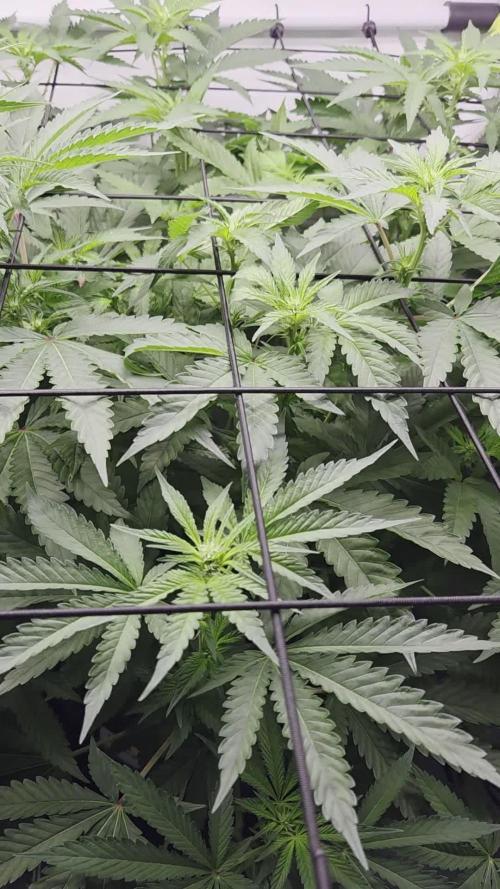
This week was a little late due to the holiday. This is the week RSQ Wedding Cake flipped to flower. I accidentally super cropped her when trying to bend a branch over. After that she started drinking a whole lot more (hence the underwatered pictures)

Likes
16
Share

@Borberad
Follow
Woche 9
Sie wächst dicht und knubbelig wie eine kleine Eiche, nur mit noch mehr Ästen. Mal sehen welche der Triebe der Lichtdurchflutung zur Liebe später weichen müssen.
Tag 62
Leichte Aufhellung in den Blättern
Magnesium Mangel? Es gibt mal zusätzlich etwas Epomersalz. Wichtig, wir bleiben mit unserer Düngung unter 800myS um das Bodenleben nicht zu stark zu irritieren.

Likes
4
Share


@DeepRootsGrowTrees
Follow
CHERRY 🍒 COLA by FASTBUDS
Week #8 Overall
Week #3 Flower
This week she's doing good towards the end of the week she started to her some burn on her leaves from the heat this summer☀️ ⛱️ she's in the middle of flower and the temp got hotter not idea but she's stinky and she's got nice trichomes on her buds. Stay Growing!!
Likes
11
Share


@Willy_Balls
Follow
23.08
These girls with co2 and so much light exploded in growth and are really packed in the tent. Never had such density. I will defoliate hard after this week and hope it will turn out fine.
Fingers crossed cause the yield can be huge.

Likes
10
Share


@bcuzZ
Follow
Haben 3 Nächte Abwesenheit überstanden.
Nochmal kräftig entlaubt und schon partiell lollipopped.
Die kleinen Abfall Triebe mit Blüten im vaporizer probiert und ES WIRKT schon bisschen!! :D
Likes
17
Share


@STAYINGONMYMAINCBATORUNTWO
Follow
I’ll start by saying I’m NOT using both bud blood and bud ignitor in one solution, I am using bud blood on the rear wedding gelato plant and bud ignitor on the front one to test the outcome of them individually to see the best results! I tied down and defoliated twice in the week and have switched to 12-12 yesterday so they’re transitioning now and should be in bloom by week 7! I made some extract them made some gummies successfully I might add and added the photos in the diary!
Likes
48
Share


@TheIceCreamParlour
Follow
What a pleasure these Pinapple are to grow.
I couldn't be happier with the way they are filling out the scrog net.
My only question is how bushy is too bushy? I've had to trim out a serious amount of undergrowth and large central fan leaves. I think a combination of great genetics and the complete spectrum the 315s output is causing the canopy to be so so dense. I'm just hoping the buds fatten up too! I'm trying to leave them alone as much as possible and I'm no longer tucking them under the net. I'll leave them to recover from today's defoliation and do some more plucking next weekend. I've got a feeling this tent is going to look very different in 7 days time!
Now on everyday watering. Keeping the EC below 2.0 and fluctuating PH from 5.7 to 6.1 throughout the week to uptake as many nutrients as possible.
Mid week edit:
Please check out my last 5 photos added at day 52. One of the 2 Pineapple Express I have in the tent is looking really tired and droopy. I cant seem to figure out what is causing it as the other Pinapple is happy and praying. I also have 2 Six Shooter and a Cream Cookies and both of those are happy and stacking on the bud. Temps are solid at 29 degrees light on and 21 dark. Feeding when required. They just look like they are lacking something. Some of the oldest fan leaves have brown rusty patches on them too. I've given each plant a Biosys Microbe tea today in place of a regular feed. Ive also emptied and scrubbed out my water tank and watering can. Hopefully that brings them round but any suggestions would be greatly appreciated.
Day 53, I've turned the blurple LED off in the centre and also reduced to 18/6 light cycle. They just look so lifeless. Almost like they are sick of the light. If she recovers I'll try turning the LED back on next week.
Likes
Comments
Share


@LokalGrenz
Follow
Day 36 1/13/25
I think she is taking to the location okay so far and after the first cut I did I’m not sure what I’m doing I’m just doing my own little mainline thing experimenting I guess I’m using APSU super soil and a little bit of build of soil 3.0 left from last grow and it’s a 7 gal pot als
1/14 day 37
Did second and final topping going allow about two weeks to bounce back and allow more growth and LST then flower