Likes
8
Share
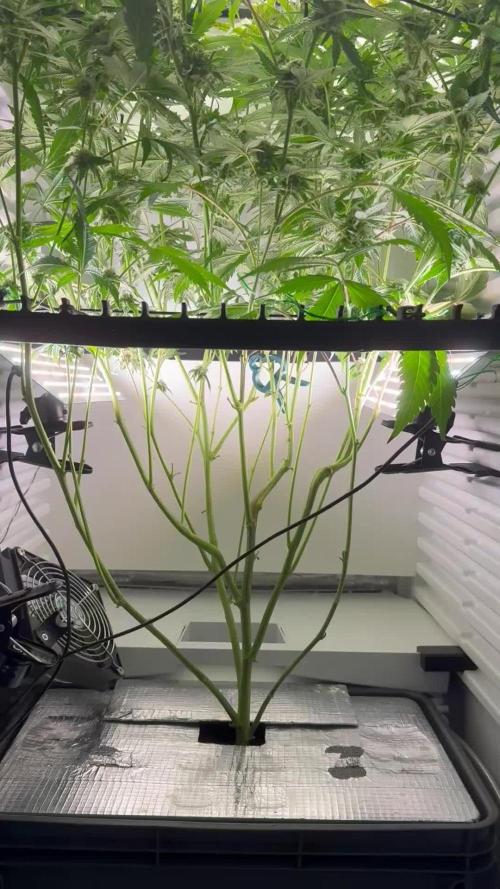
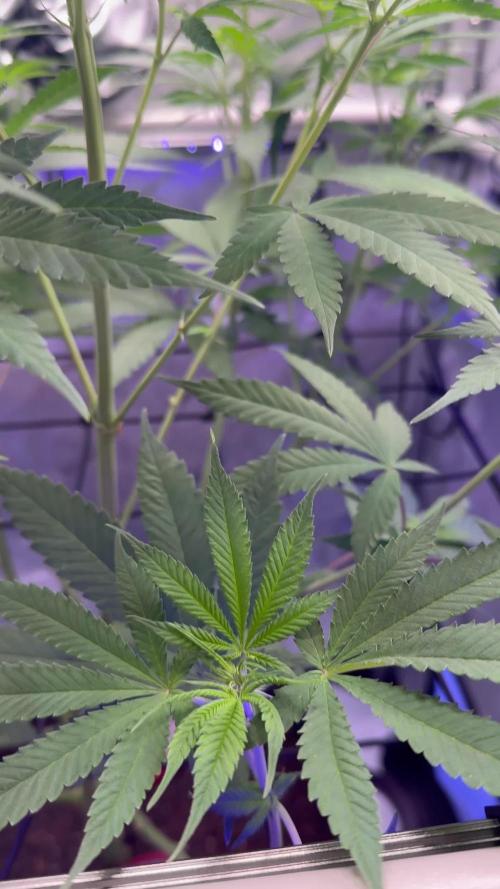
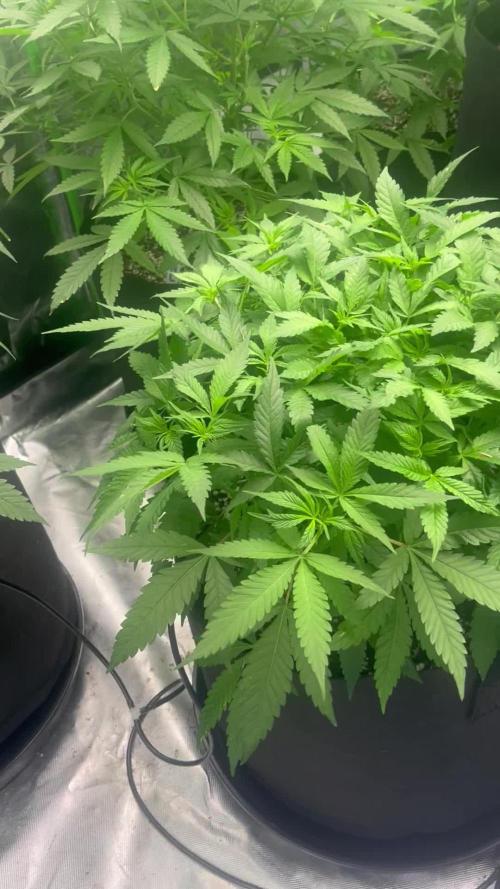
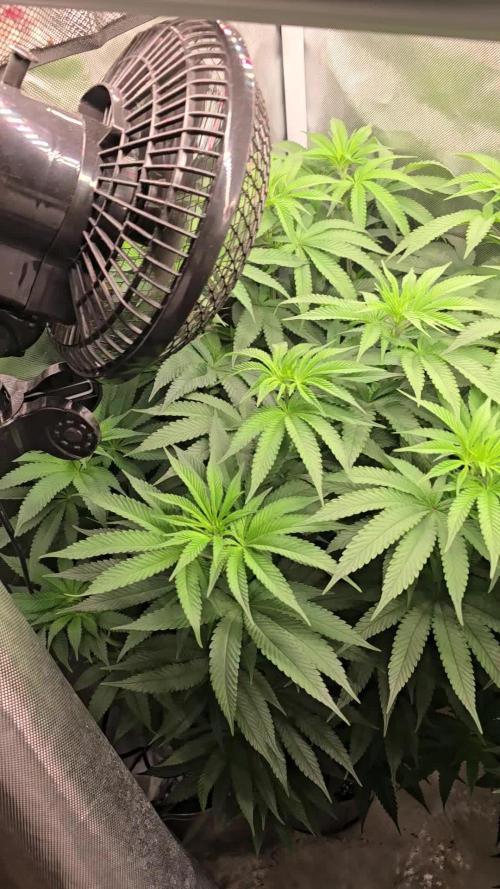
Pretty solid week, raised the light and cut back on some watering, they really started to grow since the change. Started some lst training as well so wish me luck
Processing
Likes
9
Share
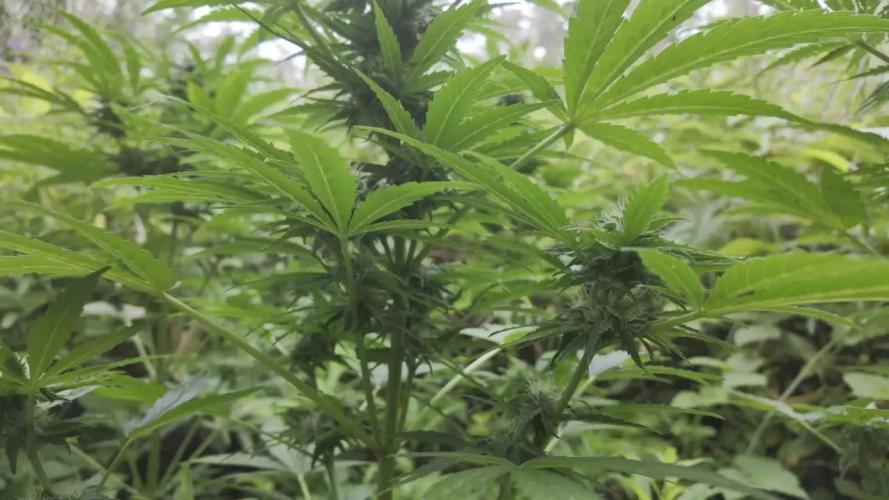
5th week of flower everything still looking good. Nugs getting bigger. 9/8 Middle of week 5 some of the buds are starting to flower and just thc everywhere. Will have plenty of trimmings for concentrates. Still wondering about the yield??? But see a little burn on edges of leaves. Probably go water only anyway cause still have organic toil soils working. Smells so good!! Last day of week 5 looks amazing so much THC everywhere. Looking forward to them fattening up in next week or two.
Likes
25
Share
@Snaak
Follow
This week ill try to switch over to an English diary because the translation is absolutely crap and i might learn a thing or two about the English terms in growing, also because the American and Canadian researchers extended the growing knowlegde in an absolute insane tempo and i would probably get most of my information from them. I don't have a spelling-check on this pc, therefore i apologize in advance ;). I uploaded some photo's with crappy lighting (Next grow ill switch day-night rythm and should give me better opportunities for photo's, but we'll get to that in the future) but also i short video of some notes which i will elaborate below: Last week on saturday i turned off the carbon vent because i could not get the humidity level right and i was still waiting for my humidifier. I placed a big fan inside the tent for air circulation and besides that i installed a small vent-filling fan in in front for clean-airflow. Last weekend i closely watched what the humidity and temperature did and started playing with the setup. All the changes i made in the tent last week are: 06-02: - Shut down carbon vent - Added rotation fan inside - Added small front-fan for clean airflow 07-02: - Added humidifier (setting 55%) - Dropped HPS 600W about 15 cm's to 110 cm height 08-02: - Humidifier setting 60% 09-02: - Dropped HPS 600W about 20 cm's to 90 cm's height 10-02: - Front fan on 2 instead of 1 11-02: - No changes because all is stable 12-02: - Placed humidifier at the back instead of the side of plants - Dropped HPS 600W 15 cm's again to 75 cm's height - Moved the inside fan more to the top-back of the tent (more facing downwards) - Opened up a vent-hole in the top of the tent for a little warmth release From the moment i turned off my carbon vent last week the sprouts started flourishing, especially when i added the humidifier. All the changes, noting, and looking at them how they pose, reading blogs and learning have brought me to the point that i think i stabelized it. Allthough i am going to turn on the carbon vent sooner or later (i might do this tomorrow) i need to pay attention again because i'm predicting it will drain the humidifier in a higher speed and that means i have to refill approx. 15 liters in 2 days? The tank is 5.5 liter and at the moment i refill it every evening, so thats already 11 liters in 2 days. I'm really expecting it to increase significantly i ill keep my notebook ready. :p I'm also a bit worries it will be so warm in my tent because the outside temperature is pretty cold, and that might also be the reason the temperature doesen't go above 28 degrees anymore. Okay enough about the tent setup changes. Lets talk plants. After the transplant last week to their end-pot these auto's started to grow immediately and i think they did really well this week. Since the humidifier got added to the tent, every morning the plants praise their "Hallelujah" pose which is really pleasing to watch... **Last weeks's first time watering in the big pots:** 06-02 around 09.00: - 750ml around the side - 750ml around the middle area - 750ml with nutrients spreaded around the pots All is equally divided through 4 plants. This week's watering and nutrients: 08-02 around 16.00: - 750 ml around the pot - 750 ml with nutrients 11-02 around 10.00: - 500ml around - 500ml around - 500ml with nutrients 12-02: - Sprayed Vita Race first time 4ml in 750 ml and sprayed about 15% of it on the leaves, no drups, mostly nebula. The vita race really made the leaves shine, also within 1,5 hours all moist was took in or evaporated, Today probably again around 1600 ill water them again but ill hold the next vita race for tomorrow or something. as long as the plants shine the same i don't know if it's neccasary? Okay, last but not least.... This week on wednesday i kinda mis-read some shit on internet and topped 3 of my 4 plants. I think it went okay, because they don't seem to stressed about it. They still flourish and hallelujah on! Still i'm pretty worried because i made the cut right next to the nodes which isen't the best thing (learning phase :p)...... The reason i topped 3 outta 4 because i wanted to see if i diden't stress the smallest one, he would out-grow the others, but that does absolutely not seem to be the case. Also i think it's a great way to learn by not stressing one plant to see the differences, i want this first grow not to be about end results but more about learning and developing my own personal experience and point of view. Oh PS, i also drilled all the holes to prepare for LST, but i think they were kinda to small on 10-02 when i drilled it. I'm going to watch the recovery from the topped plants closely coming week and maybe start with LST. Stay tuned while this noob messes around with Auto Critical Orange Punch of Dutch Passion.
Likes
2
Share
Les températures extérieurs ont bien augmenté la semaine dernière (25/30°c). Et ça devrait continuer ! J'ai enlevé les serres pour que les plantes profitent du soleil 😍 On arrive sur la dernière ligne droite pour les 3 automatiques Mazar x2 et l'Afghani#1 Les pistils virent au orange, les fleurs vont grossir encore 2-3 semaines. Le rinçage approche selon moi. Qu'en dites vous ? La Sinaï a 1 ou 2 semaines d'avancent sur la Libanaise. Ce soir, je leurs ai mis 3 ml de biobloom et 2 de biogrow Les odeurs sont bien marquées pour chaque plante. miam miam
Likes
253
Share
@Hologram
Follow
Sticky is almost done! You can see i have been feeding her like crazy, colour of her leaves are almost Luminous Green! 😁👏 (i am flushing her RN👍) She is done but her bud needs at least 2 more weeks(maybe one, if she gets enough solar power..) becouse of the lack of sunshine.. ..but i know she will get them done!👊 Sticky has proven 2 b boss again, so many pests, bugs and bad weather she had.. and very few hours of daylight.. but she has been budding very nicely!👊 (and smelling so sweet!) cant wait till i can get my fingers sticky😁... Today finally a sunny day again today (few sunny moments😳....lets not get ahead of ourselves) now we can see very well how sticky she has become 😎👌 And dont forget: FOR ALL MY GROWBRETHREN/SISTREN IS A DISCOUNT CODE: ZAMMIGD2023 Happy growing for all✊
Likes
17
Share
@BLAZED
Follow
Week 9 (27-3 to 2-4) 27-3 Temperature: 25 degrees (lights on) 18.9 degrees (lights off) Humidity: 63% (highest) 55% (lowest) Added 15L to the reservoir. 28-3 Temperature: 25.1 degrees (lights on) 18.5 degrees (lights off) Humidity: 64% (highest) 56% (lowest) 29-3 Temperature: 27.2 degrees (lights on) 19.4 degrees (lights off) Humidity: 67% (highest) 48% (lowest) As you can see on the pictures, the Chemdog #2 has a flat stem. I dont know how, but the same happened with the grow before this one, but to a Biscotti from a different seed bank. I never seen this before, so i am really surprised to see this happening back to back. Does anyone know if its just coincidence or can lightstress or LST/HST cause this? 30-3 Temperature: 25.3 degrees (lights on) 20.5 degrees (lights off) Humidity: 65% (highest) 54% (lowest) 31-3 Temperature: 25.8 degrees (lights on) 20.8 degrees (lights off) Humidity: 62% (highest) 56% (lowest) Today i decided to turn of the reservoir/autopots. I think the plants are overwatered, and because of that probably have light stress and other problems. Also, it can be that i underfeeded them, and that the PH was too high. I turned the light down to 40% strength aswell. 1-4 Temperature: 23.6 degrees (lights on) 20.6 degrees (lights off) Humidity: 62% (highest) 57% (lowest) 2-4 Temperature: 22.6 degrees (lights on) 19.8 degrees (lights off) Humidity: 62% (highest) 56% (lowest) No pictures.
Likes
4
Share
We'll go to the last week of veg , this week 2ml of terra grow plagron and stress whit cropping
Likes
1
Share
Remember that, however you are played, or by whom, your soul is in your keeping alone. Even though those who presume to play you be kings or men of power, when you stand before God, you cannot say, 'But I was told by others to do thus,' or that virtue was not convenient at the time. This will not suffice. Remember that. Day:18 84°F and 65% RH (VPD) for the vegetative stage. Approximately 1.15kPa(assuming leaf temperature is about 2°F cooler than the air), which falls right into the ideal vegetative sweet spot (0.8kPa to 1.2kPa). At 1.15kPa, plants can draw water and nutrients efficiently without risking stress or wilting. It keeps the leaf pores (stomata) open, allowing for ideal carbon dioxide intake and maximizing vegetative growth. VPD is determined by the leaf's temperature, not just the ambient air. Because leaves usually run 1° to 3°F cooler than room air under bright grow lights, my actual VPD will be slightly lower, closer to the 1.0kPa mark. As she transitions from vegetative growth to flowering, one can gradually lower the humidity (to around 45–60%) and drop temperatures slightly to prevent disease from settling inside dense buds when they appear. Night:6 At 70°F and 60% relative humidity, Vapor Pressure Deficit (VPD) is 0.86 kPa. This is right on the cusp of whats optimal for the vegetative stage. During the nighttime, plants generally close their stomata and undergo cellular respiration rather than photosynthesis. Transpiration slows to a near stop, making VPD less critical at night than during the day. However, maintaining a nighttime VPD between 0.8 and 1.0 kPa is highly beneficial in that it ensures the air is dry enough to prevent powdery mildew or bud rot, but moist enough to keep the plant from undergoing unnecessary stress. This range keeps the environment comfortable for cellular processes and prevents large atmospheric swings. Keeping it all flowing. (Not pushing them yet, these are photoperiods) The optimal soil (root zone) temperature for cellular root respiration and nutrient uptake in cannabis is between 68F & 72F This narrow range balances biological energy production (cellular respiration) with the dissolved oxygen levels in the soil, maximizing plant growth and health. Warmer soils hold significantly less dissolved oxygen. When soil temperature exceeds 74F oxygen depletion occurs, inhibiting cellular respiration almost entirely, At 68-72F root cells generate optimal adenosine triphosphate (ATP) via respiration to power root-tip elongation and the active transport of water and nutrients. Too Hot (Above 78F) Root respiration increases, demanding more oxygen, while the water's oxygen-carrying capacity drops. This creates a prime environment for anaerobic pathogens and Pythium (root rot). Too Cold (Below 60F) Root metabolism and cellular respiration slow to a crawl. This severely impairs nutrient and water absorption, leading to yellowing, wilting, and phosphorus deficiencies. A lot depends on whether it's automatic or photoperiod; with photoperiod, there is not as much of a need to push "hard" as the real countdown only begins once the flower is initiated. Automatics, on the other hand, the chronological "clock" begins ticking the moment the seed germinates. It is of critical importance that the seedling growth gets off to the races, understanding that early growth is like compound interest, which will pay off come harvest. This reality is why getting autoflowers "off to the races" early on yields such exponential benefits. The "compound interest" is directly related to the surface area of the leaves. Larger, faster-growing seedlings process more light and build bigger root networks early on, which translates into an explosion of vertical and lateral growth during their short vegetative window. The margins for error are so thin with autoflowers; this early-stage momentum depends on several critical practices. Seedlings exposed to increased atmospheric CO2 levels early in life will develop at an increased rate. To effectively "extend" or optimize the capacity of Photosystem II (PSII) for increased photosynthetic efficiency. In standard oxygenic photosynthesis, Photosystem II (PSII) is naturally limited to the red-light spectrum, peaking at 680nm. Extending its light-harvesting capacity past 700nm into the far-red region requires bypassing the natural limits of standard chlorophyll a. Adding 730 nm (far-red) LEDs alongside standard red/blue lights has been shown to increase canopy photosynthesis by 20–30% in several crops by acting synergistically with shorter wavelengths. However, the limitation is that excessive, pure IR/Far-red light (without accompanying red light) can trigger the "shade avoidance response," causing plants to grow tall, weak, and spindly rather than robust. Utilizing infrared light (specifically the 700-750 nm far-red range) is a viable method to boost photosynthetic efficiency. It acts as a bridge to allow PSII to utilize a broader spectrum of light, breaking the traditional 700 nm barrier. UVR8-mediated signaling (often in conjunction with CRY proteins) triggers protective mechanisms that maintain the stability of the photosynthetic apparatus (including LHCII and reaction center proteins), thus ensuring that the efficiency of Photosystem II remains higher in UV-B-exposed plants compared to plants lacking this receptor. ΦPSII indictates the rate of electron transfer from water to plastoquinone, which drives the production of ATP and NADPH. There is a close link between ΦPSII and the true rate of CO2 fixation (Φ*co2). ETR stands for Electron Transport Rate. It measures the speed at which electrons are moved through the thylakoid membranes in a plant's chloroplasts during the light-dependent reactions of photosynthesis. Infrared light (particularly Near-Infrared or NIR) improves cellular energy by interacting directly with the electron transport chain (ETC) in mitochondria. This process boosts adenosine triphosphate production, which acts as a metabolic coefficient multiplier by accelerating enzyme activity dramatically. Extend then multiply. Far-Red photons interact with plant photoreceptors to accelerate the plant’s biological "clock" or trigger a shade-avoidance response. Autoflowers don't use the plant's biological clock, although the IR will initiate a shade avoidance and make them stretchy. You can just add equal measures of 660nm-680nm to negate the shade avoidance effect. Replacing nights' "darkness" with a combination of IR+ and 660nm. Because autoflowers don't require a dark period to flower, many growers just blast them with light. 18/6 24/0. However, this ignores the plant's metabolic rhythms, where daytime photosynthesis (light reactions) must be perfectly balanced with nighttime carbon fixation and assimilation (Calvin cycle) to avoid bottlenecking plant development. Cellular respiration is a 24/7 process, but it can only function while the plant has the free oxidative capacity to do so. A 100% photosynthetically active leaf cannot perform cellular respiration. The viral trend of defoliation of every leaf that isn't "getting enough light" is of great detriment overall, putting 100% of the cellular respiratory "workload" and responsibility on the 0/4/6 hours of darkness in sub-optimal conditions for enzymatic activity. Photosynthesis captures nearly 100% of the initial energy as carbon, while cellular respiration is the process that unlocks 90% of that captured energy into usable ATP so the plant can use it. Respiration is considered roughly 30% to 40% efficient. It captures enough of the potential energy in glucose to synthesize around 30 to 38 ATP molecules per glucose molecule. The remaining 60% to 70% of the energy in the sugar is not captured in ATP; instead, it naturally escapes into the environment as heat, which helps regulate plant temperature. In plants, the primary enzymes of the Electron Transport Chain (ETC) and the ATP synthase complexes are typically adapted to function optimally in warmer temperatures (roughly 25°C to 35°C depending on the specific plant strain). As temperatures rise within this physiological range, molecular collisions increase, speeding up respiration and ATP production. The cannabis plant has a branched respiratory pathway. During heat or cold stress, plants activate Alternative Oxidase (AOX). AOX burns sugars to dissipate energy as heat rather than coupling it to ATP production. This pathway actually functions optimally at elevated temperatures to help protect the cell from the damaging build-up of Reactive Oxygen Species (ROS) during heat stress. Enzyme activity generally scales with heat; there is a strict biological limit. If canopy temperatures in a grow room exceed 40°C, the enzymes and their supporting lipid membranes lose stability. Not saying you need to go crazy, just optimize nights the same as we optimize days. Phosphorus is the driving force behind early seedling development. It acts as the "energy hub" of the plant, directly driving cell division, robust root growth, and the creation of DNA. Without an adequate, easily accessible supply early on, the plant's overall growth potential and final yield can suffer permanently. E=MC2 looks like a simple multiplication problem; it describes a fundamental physical truth: mass and energy are the same thing. The equation doesn't just calculate a value; it reveals that mass is effectively "congealed" energy. Energy is just numbers. Energy isn't a physical "substance" you can hold or touch. It is essentially an abstract, calculated number that we assign to a system to predict how it will change, interact, or move. A numerical label we attach to matter to track how it behaves. Because the universe runs on laws of symmetry (specifically, that the laws of physics don't change over time), a single global number must be conserved. We call that number "energy". We don't grow; we facilitate energy conversion. How well a seedling grows is essentially down to how much knowledge one can acquire to increase the level of conversion to occur. Applying knowledge effectively requires intuition, which comes from hands-on experience. A seasoned stoner learns to read subtle signs—like a slight change in leaf turgor (stiffness), subtle color shifts, or the specific texture of the soil—before a textbook diagnosis can be made. Ultimately, growing is the application of botanical science blended with active observation. Knowledge dictates your potential, but adaptability and attentiveness to the plant's immediate environment determine your results. 1.618 nature mathematically optimizes quantum energy transfer and light absorption efficiency within the photosynthetic machinery, as it naturally dictates energy scaling hierarchies and resonance dynamics. External vibration or electromagnetic wave that perfectly matches a plant's natural frequency directly influences plant growth. Low-frequency sound waves and targeted electromagnetic fields stimulate cellular processes and boost photosynthetic efficiency Does it produce better yields? How long is a piece of string? As long as you cut it. But isssss the juice worth the squeeze? The quantum framework of the IVM seems to think so. Good enough for the quantum firmware, good enough for the DNA software. Genetics are not dictated; they are expressed; the rate of that expression is dictated by the environment in which growth occurs. Quantum Coherence in Photosynthesis occurs When a photon of sunlight strikes a leaf, the energy it carries must travel to a reaction center to be converted into chemical energy. This process operates at nearly 100% efficiency. If the energy moved in a traditional "bunching" or random hopping manner, a large portion of it would be lost as heat. Instead, plants utilize quantum superposition. The energy particle (exciton) doesn't just take one path; it exists in a wave state and explores multiple pathways simultaneously. It essentially "chooses" the most efficient route to the reaction center simultaneously. Research shows that molecular vibrations and the specific network arrangements of chlorophyll molecules (like the naturally evolved Chlorophyll A & B ratios) actively protect against energy overflow, optimizing light capture across different light intensities. Enzymes are the biological catalysts that speed up chemical reactions within a plant's cells, allowing them to grow, metabolize, and repair. Rather than relying solely on the classical kinetic energy of molecules colliding, plants use quantum tunneling. Subatomic particles like electrons and protons (hydrogen ions) can literally "teleport" through energy barriers that they normally wouldn’t have the energy to climb over. This makes vital metabolic reactions happen far faster than classical physics could ever explain. Chloryphyll b has peak absorption at 460nm (Blue) and at 647nm(Red). If we take the blue peak wavelength 460nm and a UV-B, UVR8 peak absorption wavelength 285nm, Tryptophan-285 (W285) Sensing protein. 460/285=1.618 Φ If we take chlorypyhll b's Red absorption peak 647nm and a UV-A of 400nm, we get 647/400=1.618 Φ. "Structure of light". The cryptochrome photoreceptor (CRY) is a UV-A/blue light receptor that shares this dual sensitivity with several other biological structures and functions, including significant sequence similarity and a common evolutionary ancestor with DNA photolyase enzymes. These are light-activated enzymes that use blue/UV-A light to repair DNA damage caused by UV-B radiation in plants. Synergistic. But Shhh, it's a secret. Effective quantum efficiency of photosystem II, often denoted as ΦPSII, represents the proportion of light absorbed by Photosystem II (ΦPSII) that is actually used in photosynthetic electron transport. It is a key indicator of how efficiently a plant is using light for photosynthesis, as opposed to losing it as heat or fluorescence. ΦPSII (effective quantum yield of photosystem II) functions primarily as a "multiplier" (a coefficient of efficiency) rather than an additive factor when estimating the overall photosynthetic electron transport rate (ETR). Multipliers are considered far more beneficial than additions because they generate exponential growth, leverage existing resources to their full potential, and create sustainable, self-multiplying capacity, rather than just incremental, linear increases. This fascinating observation is rooted in the intersection of subatomic geometry, fractal scaling, and quantum dynamics. In specific molecular arrangements—such as in conjugated polymer networks or biomolecular architectures—the Golden Ratio (PHI) naturally dictates energy scaling hierarchies and resonance dynamics. Mathematically tied to the fine-structure constant, which defines the strength of the electromagnetic interaction. The Golden Ratio can be mapped geometrically as the Golden Angle (137.5 degrees) in atomic structures, linking the charge of the electron to fundamental quantum constants like Planck's constant. Electromagnetic. The Golden Angle (137.5): This angle is derived from the Golden Ratio (1.618). It is the smaller of two angles created when a circle is divided such that the ratio of the arcs equals the Golden Ratio.
Likes
4
Share
@Weed_420
Follow
Sieht gut aus dir Dame, immer noch keine Mangelerscheinungen (gibt immer noch nur Wasser). Letzten Tage war es gut warm… merkt man ordentlich im Zelt. Verkraftet sie aber auch wunderbar, gibt halt einfach nur bissel mehr Wasser.
Likes
57
Share
! this is my current status, gonna upload my last veg weeks within the next week - got a bit busy around Spannabis - thank you for your understanding! 💚 Welcome to Bud Boutique Grow Diary - really appreciate all your love and support :) Dont forget to check out my other current grows! 🗓️ This Week: - both Phenos are super strong and transition (bud sight development) going great - more than healthy Thank you for still staying with me 💚 ___________________________________________ --- 🌱 Strain (Sponsor) 🌱 --- 🏷️ PEACH GIRL by Art Genetix https://www.artgenetix.world/product-page/peach-girl --- 🥗 Nutrients and Feeding (sponsored by APTUS: APTUS Ambassador) --- 🍸 APTUS: full nutrient schedule extreme -- Regulator, N-Boost, P-Boost, CaMg-Boost, K-Boost, Allin1 Liquid, Startbooster, Topbooster, Enzym+ every feeding -- Fulvic-Blast, NutriSpray as Foliar each once a week 🔗 https://aptus-holland.com/ --- ♻️ Grow Control (Sponsor) --- TROLMASTER: TENT-X + LM14 Light Adapter to dim/sunrise/sunset lights + Temp & rH Sensor all remote on App 🔗 https://www.trolmaster.eu/ --- 🏭 Grow Setup --- 💡LUMATEK Zeus Pro 600 * 🏠🌿 Indoor: Homebox 120x120x200cm (4x4) * 📐🌀 PrimaKlima exhausting Fan 1180m3/h (running on 60-80%) * 🌀 Can Light Filter 800m3/h & 1x Fanbox 1x Dyson fan for Air circulation 🔗 https://lumatek-lighting.com/zeus-600w-pro-29/ 🔗 https://primaklima.com/de/shop/ventilatoren-de/ec-ventilatoren/pk160ec-tc/ 🔗 https://canfilters.com/products/filters/ All Likes and comments are highly appreciated!!! 👨‍🌾 don't forget to check out my Instagram for daily educational content: budboutiquee - Bud Boutique
Likes
15
Share
@BlaKX
Follow
Möge die Macht mit euch sein Growmies, Cookies Terpene mit Zitrone liegt wahrlich in der Luft. Das minimale bud bleaching scheint genetisch bedingt zu sein da ich den Abstand zur Lampe erhöht habe und jetzt laut photone 980-1000ppfd oben an der Spitze. Die Alderaan Cookies Automatic von V-Buds ist bis jetzt einfach ein wunderschönes gesamt Paket und einfach schön anzusehen nachdem ich mir die Trichomen angeschaut habe würde ich sagen 1 eher noch 2 Wochen damit sie ausreifen kann da ich bevorzugt Ernte wenn alle Trichome milchig sind und vereinzelt bernstein. Bin echt gespannt wie lange sie braucht hoffentlich purpelt sie noch als Sahnehäubchen aber wenn nicht auch egal.
Likes
7
Share
🌿 Nectar Drip – Week 4 Report Early Vegetative Phase (12/12 from Seed) Zamnesia Seeds x TICAL – Pack #268 🌱 Growth Overview – Entering Structure This week marks Week 4 since germination (often considered Week 3 in growth rhythm), and the plants are now clearly transitioning from early establishment into structural development. All plants are healthy, vibrant, and responding beautifully to the environment. Growth remains steady rather than explosive — exactly what’s expected when running 12/12 from seed. What’s most exciting this week is that we’ve officially begun training, and with it, the first real divergence in plant architecture. ⸻ 🌡️ Environment – Gradual Shift, No Shock We’ve started to gently guide the environment toward a more “grown” climate, without rushing anything. • Relative Humidity: ~65% (slowly lowered from previous weeks) • Day Temperature: ~26 °C • Night Temperature: ~18 °C • CO₂: ~666 ppm • Lamp Distance: ~1.70 m from canopy • Substrate Temperature: ~22 °C • Solution Temperature: ~22 °C Airflow is still kept soft, but this week we’ve begun increasing movement slightly. The goal is to start encouraging stem strength and plant responsiveness, preparing them for the phases ahead while keeping stress close to zero. ⸻ 💡 Lighting – Raising the Bar, Naturally Light intensity continues its progressive increase, following plant demand rather than forcing development. • Previous Weeks: ~400–500 PPFD • Current Week: moving from ~500 toward 600 PPFD The plants are clearly growing into the light, which is exactly what we want to see. This gradual ramp-up will continue week by week, allowing the canopy to adapt naturally as structure and leaf mass increase. ⸻ Substrate & Containers • Medium: ProMix • Containers: 15 L plastic bags Root activity is clearly accelerating now. Even though top growth remains compact, internal development is well underway — something that becomes very apparent once training begins. ⸻ Nutrition – Consistency Over Reaction Nutrition remains unchanged and stable, reinforcing the idea that plants don’t need constant adjustments when they’re already happy. Current inputs: • Plagron Terra Grow • Power Roots • Pure Zym • Sugar Royal • Vita Race (foliar application) This balanced organic–mineral approach continues to deliver excellent results: lush green color, healthy leaf posture, and no signs of deficiency or excess. As always, the philosophy here is simple: don’t fix what isn’t broken. ⸻ ✂️ Training Focus – Low Stress, High Intention This week, we introduced Low Stress Training (LST) on one selected plant. Using long clips, the main stem is gently bent and guided almost parallel to the ground, opening the plant structure and allowing light to reach the lower growth sites. Leaves are carefully repositioned to expose side branches without damaging tissue or creating stress points. This technique: • Breaks apical dominance • Encourages lateral branch development • Keeps the plant shorter and wider • Promotes a more even canopy later on The trained plant is currently the shortest of the group, but already showing strong response. She’s entering her fourth node, and lower branches are clearly waking up and pushing upward. The other plants remain untrained for now, growing naturally. This will allow us to directly compare structure, stretch, and expression later on — same genetics, same environment, different guidance. What to Expect: • Slower vertical growth on the trained plant • Increased side branching • A more compact, bushy structure What Not to Expect: • Immediate explosive growth • Stress reactions • Delays in overall health This is guidance, not force. ⸻ 🍃 General Observations • Leaf color remains deep, healthy green • Growth is compact and intentional • Plants are calm and responsive • Training response is already visible • No signs of stress or imbalance Videos included this week show the entire room and all plants, giving a full-picture view of how the Nectar Drip is progressing as a group. ⸻ 🔮 Reflections on 12/12 From Seed This week reinforces why I’m really enjoying the 12/12 from seed approach. Growth may be slower on the surface, but structure, balance, and root development feel extremely solid. The plants are building themselves quietly — and that patience usually pays off later. ⸻ 🤝 Gratitude & Community Huge thanks once again to: • Zamnesia Seeds • TICAL • Plagron • Future of Grow for supporting this run and making this collaboration possible. And thank you to the community — supporters, critics, newcomers, and long-time followers alike. Everything shared here reflects my personal experience and opinion, including my choices, lessons, and mistakes. It’s a privilege to share this journey openly so we can all learn together. ⸻ 🌟 Week 4 Summary • Environment gently shifting • Light intensity rising naturally • First training introduced • Plants healthy and responsive • Structure beginning to form The Nectar Drip is no longer just settling in — it’s taking shape. More to come. Growers love always 💚 FOR DISCOUNT CODES AND MORE JUST FOLLOW THE LINK https://website.beacons.ai/dogdoctorofficial 📲 Don’t forget to Subscribe and follow me on Instagram and YouTube @DogDoctorOfficial for exclusive content, real-time updates, and behind-the-scenes magic. We’ve got so much more coming, including transplanting and all the amazing techniques that go along with it. You won’t want to miss it. GrowDiaries Journal: https://growdiaries.com/grower/dogdoctorofficial Instagram: https://www.instagram.com/dogdoctorofficial/ YouTube: https://www.youtube.com/@dogdoctorofficial ⸻ Explore the Gear that Powers My Grow If you’re curious about the tech I’m using, check out these links: 🔆 Lighting & Environmental Control • Future of Grow — Advanced LED lighting technology https://www.futureofgrow.com/ DISCOUNT CODE: DOG20 • Lumiflora — Under-canopy LED lighting https://lumiflorade.com/ • TrollMaster — Environmental controllers and automation gear (past collaboration) ⸻ Genetics • Zamnesia Seeds — Genetics used in this project https://www.zamnesia.com/ ⸻ 🌱 Soil, Substrates, Boosters & Root Support • Plagron — Substrates, bio mixes, and supportive products https://plagron.com/en/ ⸻ 🎒 Storage, Curing & Preservation • Grove Bags — Curing and storage solutions https://grovebags.com/ ⸻ 📸 Photography Equipment & Tools (Not sponsors, but part of my creative toolkit) • Sony A6700 • Sony full-frame macro lens + few more • Stacking photography workflow - learning • iPhone (for behind-the-scenes shots) We’ve got much more coming as we move through the grow cycles. Trust me, you won’t want to miss the next steps, let’s push the boundaries of indoor horticulture together! As always, this is shared for educational purposes, aiming to spread understanding and appreciation for this plant. Let’s celebrate it responsibly and continue to learn and grow together. With true love comes happiness. Always believe in yourself, and always do things expecting nothing and with an open heart. Be a giver, and the universe will give back in ways you could never imagine. 💚 Growers love to all 💚 📸 P.S. – The Eye Behind the Lens All photos in this diary (for now — except for the ones showing the camera, which I took with an iPhone) are taken with a Sony A6700 paired with a Sony full-frame macro lens and a few more. Photography is part of the story — it’s how we share the fine textures, the glow, and the quiet details that words can’t always capture. I’ve also started experimenting with photo stacking — a technique where multiple images, each taken at a slightly different focus point, are layered together to create one perfectly sharp image from front to back. It’s not digital enhancement or AI; it’s pure photography — a way to reveal the plant’s beauty in microscopic depth, from trichome to petal. You’ll even see a few shots of "ghost me" capturing the shots — camera, lens, setup — because every grow deserves not just to be cultivated, but documented like art. FOR DISCOUNT CODES AND MORE JUST FOLLOW THE LINK https://website.beacons.ai/dogdoctorofficial NEW DISCORD - Official Server Invite Link : https://discord.gg/ksjAkA5T74
Processing
Likes
8
Share
@Kroppa
Follow
Week 4 veg in a 4L pot looking nice and bushy another couple of weeks then they getting their ass transplanted in bigger pots. The Topping and LST tranning working pretty well i see 😉It allows the lower heads to raise up and benifit from the light exposure.
Processing
Likes
7
Share
Beautiful looking seedling, very healthy and developing at a fair pace, let's see what awaits us in this diary!! She's developing super fast each day just like her sisters in this run, let's see how she keeps developing! I only use pure water and watch them grow thanks to the amazing living soil blend that I'm working with called FLO Living soil blend, very recomended to all the organic gardeners out there!! I have Transplanted this big girl after just 17 days since she was planted, she is very well developed and so ai took the decision to transplant her and all her sisters in this run, let's see how she performs! 💚❤️💛👨‍🌾🔝
Likes
4
Share
🌱 Day 1 of Week 3 Flowering 🌸 Week 3 of flowering has officially begun, and everything is going great! 🌿 The plants are hitting their stride, and the early bud development from last week is starting to pick up momentum. Pistils are becoming more prominent, and you can see the flowers beginning to take shape—it’s a beautiful transformation. Maintaining a consistent environment remains a top priority. Light levels are steady, nutrients are dialed in, and humidity is staying in the optimal range to support healthy growth. 💡💧 Airflow is spot-on, keeping the canopy fresh and ensuring no excess moisture builds up around those forming buds. 🌬️ The plants are strong, vibrant, and progressing exactly as they should at this stage. It’s exciting to think about how much they’ll develop in the coming days as we move deeper into the flowering stage. Stay tuned for more updates as these beauties continue their journey! 👀 #GrowDiary #Day1Week3Flowering #CannabisCultivation #FloweringStage #BudDevelopment #GardeningJourney 🌱
Likes
6
Share
🇩🇪2.9.25 - sie sind alle oberhalb des Substrats.🎉 die Papaya Cookies hat es eilig und war als erstes da die Frost Banger kam als nächstes und die beiden Z-Ups waren gestern Abend und heute Morgen auch am Start. Passend dazu war es zum dritten Tag an dem sie in der Erde stecken nach dem angießen heute auch wieder Zeit zum Gießen es gab etwas mehr diesmal gute 200ml pro Topf, möglicherweise etwas viel aber das verteilt sich im Topf ja gut und ich möchte auch vermeiden das die Wurzelen auf trockenes Substrat treffen. 8.9.25 - ❌Abbruch nachdem ich bemerkt habe das ich mich nicht ordentlich genung vorher über coco als Substrat informiert habe, dementsprechend hab ich zu wenig gegossen und nach 5-6 Tagen schon bemerkt das etwas nicht stimmt und sie auch nicht mehr großartig retten kann. Werde Ende September wieder auf Erde mir einem light mix neu starten.💛🏼 🇬🇧 9/2/25 - they're all above the substrate.🎉 The Papaya Cookies are in a hurry and arrived first. The Frost Banger came next, and the two Z-Ups were also in action yesterday evening and this morning. On their third day in the ground, it was time to water them again today. I added a little more this time, a good 200ml per pot, perhaps a bit much, but it distributes well in the pot, and I also want to avoid the roots coming into contact with dry substrate. 😅💛 9/8/25 - Cancelled after realizing I hadn't done enough research beforehand about coco as a substrate. As a result, I watered too little. After 5-6 days, I noticed something was wrong and couldn't really save it. I'll start again at the end of September on soil (light mix). 💛🏼