


@eurorack
Follow
A good week's growth, they are drinking more and I've started to feed, and I think they enjoyed the nutes as they clearly stretched over this last 24 hours.


@Smokeitup091191
Follow
Ztrawberries= as you can see from the pic and video these girls are skyrocketing climbing almost an inch a day. Showing good signs of pre flower, very impressed with dominant heads coming through on all these ladies 👌🏽
Tropicana cookies = These girls are just showing off there stretch rate match that of the ztrawberries and it’s and impressive spectacle to watch also showing good signs of pre flower
Cherry Cola = These girls seem a week slower than the rest none of the less they are showing a decent amount of heads just no signs of any stretch.
O.N = Ztrawberries and Tropicana Cookies have had some defoliation not really touched Cherry Cola so I don’t cause any unnecessary stress. EC increased from 1.1 to 1.3. Very happy this week!!


@Tweak
Follow
So I finished my slow transition to flower yesterday, I increased “night” by 20 min everyday over 21 days to get from 18/6 to 11/13. She’s def stretching but less then would be expected with this strain if it was an abrupt switch. Enjoy and give me a like!!


@Djeregueijhoson
Follow
Primeira semana de flush, varias folhas estão começando a mudar de cor, vou continuar só com água …


@eldruida_lamota
Follow
Que pasa familia, vamos con la primera semana de floración de estas GG4 Sherbet Fast Flowering, de FastBuds.
Agradezco a Agrobeta todos los kits obtenidos de ellos 🙏.
Vamos al lío, El ph se controla en 6.2 , la temperatura la tenemos entre 21/24 grados y la humedad ronda el 50%, 7 litros de sustrato. Iremos viendo cómo avanzan.
Agrobeta:
https://www.agrobeta.com/agrobetatiendaonline/36-abonos-canamo
Hasta aquí todo, Buenos humos 💨💨💨







@LokalGrenz
Follow
Just going say today July 15th is day 1 lol they popped couple days ago just not sure what day


shorts_status_processing



@Hempcules
Follow
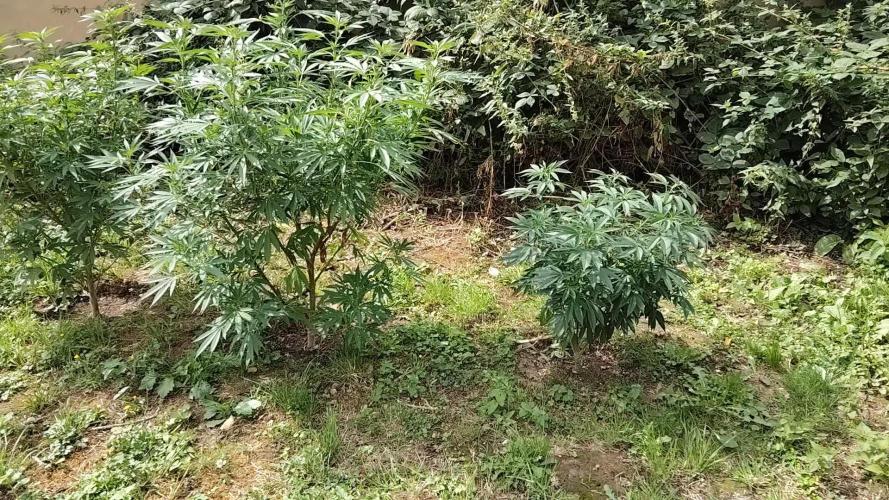
I harvested on the last day of week 13. I didn't water for 3 days before harvesting and hung the branches to dry without trimming. I let them hang for 5 days, then trimmed them and am now curing the buds for another 4 weeks.




@Mati_86
Follow
blütewoche 2...man sieht blütenansatz und alle sind gewachsen..sehen sehr schön aus...musste den stamm mit nem stock stützen wegen dem wind...sind sehr buschig durch LST. bin sehr zufrieden bis jetzt...hatte mit bio beeren dünger gedüngt...ist trocken dünger ähnl. wie greenhouse feeding...im dünger ist mycorrhiza.. gieße nur mit calmag von terra aquatika..ec 0.375..ph 6.4..✌️✌️

shorts_status_processing


@Ferenc
Follow
Day 24: 600 W LED Light schedule 24/6, ventilation is the same +15 min after the lamp switches off. Water: 50ml per plant so 2x 25 ml per day per plant. Fertilization with bat guano and the same amount of water on Tuesday, Thursday, Saturday. They grow nicely! Someone commented that it looks more magnesium deficiency problem instead of burning so suggested me to add Epsom salt to the water. I ordered Epsom salt so I will give it a go! Thank you! I still believe that I put too close the lamp so it was related to it also but I can see spots on the lower leaves so there is magnesium problem here as well. By the way, they look now beautiful! Blue Sherbet S1 is slower a bit but it is Sativa. Day 25: They started growing rapidly. Day by day they are getting bushy and growing nicely. Day 26: Epsom salt has arrived. I will start feeding them with it. I will mix one tablespoon with 50 ml water 2x a day and I will do it on Monday, Wednesday, Friday. Day 27: As I mentioned in my other diary the last 3 days was crazy hot especially today in London 38 degrees. In my tent, there are 32-32.5 degrees. Luckily, I have direct ventilation on the plants so they won't feel that much heat, but it is crazy... anyways They are getting really bushy and keep growing. I can see some yellow pots but started feeding properly them with Epsom salt and bat guano. Day 29: I retrained (LST) they so tried to spread the sides and bend more the main stamp and also changed their position so I placed them to a different corner. Day 30: It looks like that the Epson salt is good they look better green also now I just damage some leaves as I retrained them. Tomorrow starts the 5th week where I will do some Topping to them except to the Blue Sherbet S1 because it is quite small for that. I will use only LST and FIMing for her.


@SlickCityOrganics
Follow
I wished that I could've done things a little different but the end result was fiiire! Taste like Peaches when you give it a nice 4 week cure. Wish that I could've yielded more. But experience will overcome all my flaws. But it will only get better.


shorts_status_processing


@SmylinPupil
Follow
I figured I’d rock a decent update now what I don’t have anymore plants on the go. These were neglected from the start, although they seem to be making some pretty sweet buds. Tricombs are increasing, and starting to get cloudy. This is going to be my first sativa harvest so hopefully it turns out ok. I went a bit hard on the nutes the other day, I may have to give them a flush. The leaves are starting to curl and get brown. I’ll see how it looks in a few days. That’s it for this week, now get out there and enjoy the last of summer.
Cheers.


@MWHomegrow
Follow
Vegetationswoche 6
Tag 50: Heute wurden unten die ersten Triebe rausgenommen , welche es nicht über die Lichtgrenze kommen und insgesamt eine etwas größere Entlaubung, um noch mal schön Licht an die kleineren Triebe zu lassen.
Dann noch je 2l ph 6.1 Wasser in die Bewässerungsbasen pro Pflanze.
Tag 51: heute in Vorbereitung auf einen Kurzurlaub je 3l Wasser mit ph 6.2 ins Reservoir 😊
Tag 52: Urlaub
Tag 53: Urlaub
Tag 54 Rückkehr vom Urlaub,Ladys extrem gewachsen(65cm) Alle 3l Wasser mit ph 6.3 und 0,5ml/l Calmag gegossen und Wechsel in die Blüte 😊
Ende der Vegetation


@Smokwiri
Follow
Almost finished
Amazon: http://url-9.cn/0y9i
Amazon US: https://amzn.to/3e0P2bk
Amazon CA: https://amzn.to/3bTnEJC
Amazon discount Code:
it10smokwiri XS1000 10%
XSsmokwiri XS1500 8%
it20smokwiri XS2000 5%
it40smokwiri XS4000 5%
ViparSpectra 8% DISCOUNT CODE on the viparspectra websites (.com/.eu)
RUFFSELEKTAH


@Bluemels
Follow
Die letzte Woche hat die Cookie Gelato sich sehr gut erholt 😘
Die Idee mit den Tütchen über den Stummeln war so mittelprächtig. Einige Triebe sind tatsächlich am nächtsten Tag grüner geworden, doch bei einigen anderen sind die Blättchen feucht geworden und hatten braune Spitzen 😬 also schnell ab mit den Tütchen die Luftfeuchtigkeit leicht erhöhen und die Pflanze in Ruhe lassen.😴
Und die Gute hat sich erholt!
Wenn nun alles gut läuft, morgen wollte ich nochmal etwas entlauben 😨 aber dieses mal ganz wenig, schicke ich sie in 4 Tagen in die Blüte.
Sofern ich nicht wieder in einen Schnippelwahn verfalle 😬😈
Heute ist mir beim biegen ein Ast gebrochen 😭
Glücklicherweise ist er nicht ganz durch gewesen, habe ihn mit Zahnstocher und Klebeband repariert 😜
Hoffe mal dieser sich noch wieder erholt 😬
Der Ast hat sich leider nicht erholt 😢
Ich habe den Ast daneben getoppt und aus Einen Zwei gemacht 😌



@Ultraviolet
Follow
Removed autoflower and put her in her own pot outside the tent.
Foliars applied in strong blue 430nm with 4000Hz tone. 20-minute dose prior to application.
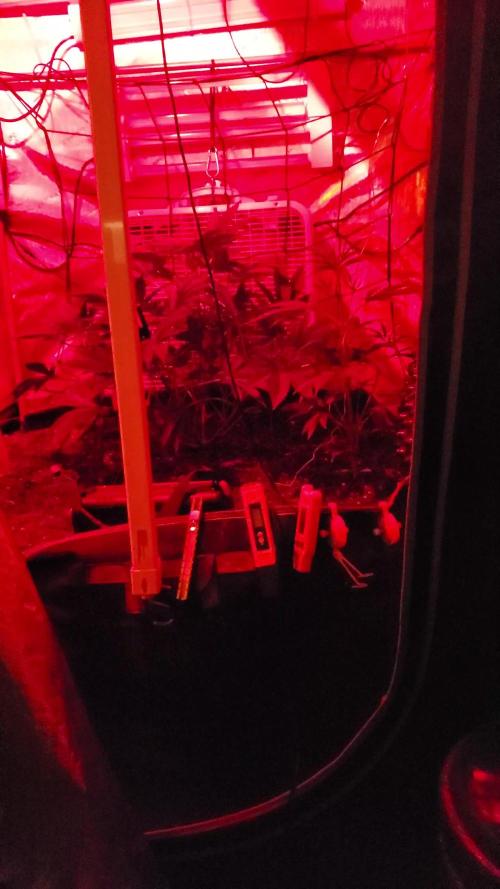
In essence, you're seeing a combination of the infrared light reflected by the plant, which the camera perceives as red, and any residual visible blue light the plant reflects, which results in a purple hue.
I was doing more stretching of the stems, adjusting weights, just a little too much, and it snapped almost clean. I got a little lucky in that it was still connected, wrapped her almost instantly while holding her in place with yoyo's. The core framework is now in place.
If your soil has a high pH, it's not ideal; you want a pH of 6.4, 6.5, or 6.6, which is ideal. If you are over a pH of 7, you have no hydrogen on the clay colloid. If you want your pH down, add Carbon. If you keep the pH below 7, you will unlock hydrogen, a whole host of new microbes become active and begin working, the plant will now be able to make more sugar because she has microbes giving off carbon dioxide, and the carbon you added hangs onto water. Everything has electricity in it. When you get the microbes eating carbon, breathing oxygen, giving off CO2, those aerobic soil microbes will carry about 0.5V of electricity that makes up the EC. The microorganisms will take a metal-based mineral and a non-metal-based mineral with about 1000 different combinations, and they will create an organic salt! That doesn't kill them, that the plant loves, that the plant enjoys. This creates an environment that is conducive to growing its own food.
Metal-based: Could include elements like iron, manganese, copper, or zinc, which are essential nutrients for plants but can exist in forms not readily accessible.
Non-metal-based: Examples like calcium carbonate, phosphate, or sulfur are also important for plant growth and potentially serve as building blocks for the organic salt.
Chelation in a plant medium is a chemical process where a chelating agent, a negatively charged organic compound, binds to positively charged metal ions, like iron, zinc, and manganese. This forms a stable, soluble complex that protects the micronutrient from becoming unavailable to the plant in the soil or solution. The chelate complex is then more easily absorbed by the plant's roots, preventing nutrient deficiency, improving nutrient uptake, and enhancing plant growth. Chelation is similar to how microorganisms create organic salts, as both involve using organic molecules to bind with metal ions, but chelation specifically forms ring-like structures, or chelates, while the "organic salts" of microorganisms primarily refer to metal-complexed low molecular weight organic acids like gluconic acid. Microorganisms use this process to solubilize soil phosphates by chelating cations such as iron (Fe) and calcium (Ca), increasing their availability.
Added sugars stimulate soil microbial activity, but directly applying sugar, especially in viscous form, can be tricky to dilute. Adding to the soil is generally not a beneficial practice for the plant itself and is not a substitute for fertilizer. While beneficial microbes can be encouraged by the sugar, harmful ones may also be stimulated, and the added sugar is a poor source of essential plant nutrients. Sugar in soil acts as a food source for microbes, but its effects on plants vary significantly with the sugar's form and concentration: simple sugars like glucose can quickly boost microbial activity and nutrient release. But scavenge A LOT of oxygen in the process, precious oxygen. Overly high concentrations of any sugar can attract pests, cause root rot by disrupting osmotic balance, and lead to detrimental fungal growth. If you are one who likes warm tropical high rh, dead already. Beneficial, absolutely, but only to those who don't run out of oxygen. Blackstrap is mostly glucose, iirc regular molasses is mostly sucrose. Sugars, especially sucrose, act as signaling molecules that interact with plant hormones and regulate gene expression, which are critical for triggering the floral transition. When sucrose is added to the growth medium significantly influences its effect on floral transition.
Probably wouldn't bother with blackstrap given its higher glucose content. Microbes in the soil consume the sugar and, in the process, draw nitrogen from the soil, which is the same nutrient the plant needs. Glucose is not an oxygen scavenger itself, but it acts as a substrate for the glucose oxidase (GOx) enzyme, effectively removing oxygen from a system. Regular molasses (powdered if you can), as soon as she flips to flower or a week before, the wrong form of sugar can delay flower, or worse. Wrong quantity, not great either. The timing of sucrose application is crucial. It was more complicated than I gave it credit for, that's for sure. When a medium's carbon-to-nitrogen (C:N) ratio reaches 24:1, it signifies an optimal balance for soil microbes to thrive, leading to efficient decomposition and nutrient cycling. At this ratio, soil microorganisms have enough nitrogen for their metabolic needs, allowing them to break down organic matter and release vital nutrients like phosphorus and zinc for plants. Exceeding this ratio results in slower decomposition and nitrogen immobilization, while a ratio below 24:1 leads to faster breakdown and excess nitrogen availability.
Carbon and nitrogen are two elements in soils and are required by most biology for energy. Carbon and nitrogen occur in the soil as both organic and inorganic forms. The inorganic carbon in the soil has minimal effect on soil biochemical activity, whereas the organic forms of carbon are essential for biological activity. Inorganic carbon in the soil is primarily present as carbonates, whereas organic carbon is present in many forms, including live and dead plant materials and microorganisms; some are more labile and therefore can be easily decomposed, such as sugars, amino acids, and root exudates, while others are more recalcitrant, such as lignin, humin, and humic acids. Soil nitrogen is mostly present in organic forms (usually more than 95 % of the total soil nitrogen), but also in inorganic forms, such as nitrate and ammonium. Soil biology prefers a certain ratio of carbon to nitrogen (C:N). Amino acids make up proteins and are one of the nitrogen-containing compounds in the soil that are essential for biological energy. The C:N ratio of soil microbes is about 10:1, whereas the preferred C:N ratio of their food is 24:1 (USDA Natural Resource Conservation Service 2011). Soil bacteria (3-10:1 C:N ratio) generally have a lower C:N ratio than soil fungi (4-18:1 C:N ratio) (Hoorman & Islam 2010; Zhang and Elser 2017). It is also important to mention that the ratio of carbon to other nutrients, such as sulfur (S) and phosphorous (P) also are relevant to determine net mineralization/immobilization. For example, plant material with C:S ratio smaller than 200:1 will promote mineralization of sulfate, while C:S ratio higher than 400:1 will promote immobilization (Scherer 2001).
In soil science and microbiology, the C:S ratio helps determine whether sulfur will be released (mineralized) or tied up (immobilized) by microorganisms.
A carbon-to-sulfur (C:S) ratio smaller than 200:1 promotes the mineralization of sulfate, when the C:S ratio is low, it indicates that the organic matter decomposing in the soil is rich in sulfur relative to carbon. Microorganisms require both carbon and sulfur for their metabolic processes. With an excess of sulfur, microbes take what they need and release the surplus sulfur into the soil as plant-available sulfate
A carbon-to-sulfur (C:S) ratio higher than 400:1 will promote the immobilization of sulfur from the soil. This occurs because when high-carbon, low-sulfur materials (like sawdust) are added to soil, microbes consume the carbon and pull sulfur from the soil to meet their nutritional needs, temporarily making it unavailable to plants.
200:1 C:S 400:1: In this range, both mineralization and immobilization can occur simultaneously, making the net availability of sulfur less predictable.
This dynamic is similar to how the carbon-to-nitrogen (C:N) ratio regulates the availability of nitrogen in soil. Just as microbes need a certain amount of nitrogen to process carbon, they also require a balanced amount of sulfur. Both mineralization and immobilization are driven by the metabolic needs of the soil's microbial population.
Sulfur is crucial for protein synthesis. A balanced ratio is particularly important in relation to nitrogen (N), as plants need adequate sulfur to efficiently use nitrogen. A severely imbalanced C:S ratio can hinder the efficient use of nitrogen, as seen in trials where adding nitrogen without balancing sulfur levels actually lowered crop yields.
Maintaining a balanced carbon-to-sulfur (C:S) ratio is highly beneficial for plant growth, but this happens indirectly by regulating soil microbial activity. Unlike the C:N ratio, which is widely discussed for its direct effect on nutrient availability, the C:S ratio determines whether sulfur in the soil's organic matter is released (mineralized) or temporarily locked up (immobilized).
Applied 3-day drought stress.
Glucose will hinder oxygenation more than sucrose in a solution because glucose is consumed faster and has a higher oxygen demand, leading to a more rapid decrease in oxygen levels. When cells respire, they use oxygen to break down glucose, and this process requires more oxygen for glucose than for sucrose because sucrose must first be broken down into glucose and fructose before it can be metabolized.
In a growth medium, glucose is a more immediate and universal signaling molecule for unicellular and multicellular organisms because it is directly used for energy and triggers a rapid gene expression response. In contrast, sucrose primarily acts as a signaling molecule in plants to regulate specific developmental processes by being transported or broken down, which can be a more complex and slower signaling process.
Critical stuff.
During wakefulness (DC electric current) life can not entangle electrons and protons. During the daytime, the light is sensed as multiple color frequencies in sunlight. Coherence requires monochromatic light. Therefore, at night, IR light dominates cell biology. This is another reason why the DC electric current disappears during the night. The coherence of water is maintained by using its density changes imparted by infrared light released from mitochondria in the absence of light. This density change can be examined by NMR analysis, and water is found to be in its icosahedral molecular form. This is the state that water should be in at night. This is when a light frequency is lowest and when the wave part of the photoelectric effect is in maximum use.
3600