The Grow Awards 2026 🏆 






Likes
Comments
Share
@Clemo
Follow
After 20 days in seedling stage.
I stopped watering.
Planted into bigger pots using new organic soil.

Likes
13
Share
@poloq_mauriceloetel
Follow
*Growdiaries deleted this section (don't ask me why). So everything in this week is from the top of my head (like 2 weeks later):
_Environment
This week, I went back to watering (gently) to get the soil used to a ‘normal’ assimilation rate again. As a result, the temperature dropped slightly, while the relative humidity increased at the same time (which was of course elevated by the fact that I removed the sand at the end of last week).
_Plants + Training
Gentle defoliation continued this week. However, it became apparent that Mimosa Cake Auto requires significantly more attention than Gorilla Z Auto, as it grows incredibly densely and intertwines. It also seemed like the Mimosa Cake Auto was about to crack due to the high forces (no space to bend and stretch because everything is just nodes and side branches).
*Gorilla Z Auto was ??? cm tall, Mimosa Cake Auto ??? cm.
_Organisms
As you can see, microbial life is still in full swing. Numerous springtails can be seen (yellow sticky traps), Oribatida are decomposing organic material, etc.
_Living Soil
To check the most important indicator of healthy soil life, I carried out a pH test this week. This showed a value of 7, which is slightly too high but definitely within an acceptable range. [Living soil should be between 6 and 7, ideally 6.4–6.6.]
_(Pre)Flower
Mimosa Cake also started showing its first pistils (it seems like both plants are 5 - 10 days apart).


Processing
Likes
1
Share
@Mr_nugs_lover_David
Follow
She's stinky as hell,very powerful aroma, so sweet and floral, loving her so far, hope I can grow this strain many more times, that smell it's hard to forget. Hope you enjoy, I put my heart on every plant! 💚 🌱 ✌️ 💎

Likes
48
Share
@Rodamis_Prime
Follow
Just starting week 6 and These girls are starting to get some smell finally . This is the same strain as my other big plant but I learned that this strain doesn't like to be over fed so I have been feeding these 4 plants a light feeding but the two plants in the back are showing they are hungry so this feeding today I upped their food . Checked the soil ph and it was in at 6.4 . Defoliated a few of the big fan leaves that were blocking the buds down the stalks and its looking pretty fat. Also the trichome production is much farther ahead then my big plant at this stage . The small leaves are covered in them . Still have about 4 to 5 weeks to go .


Likes
Comments
Share
@Sn3ak92
Follow
Jan 7: Beginning of the week
Light @ 150w (raised it from 24 to 32 inch)
Jan 8: began a brew of compost tea and will feed tomorrow.
Jan 10: Topped the two C&C
Jan 13: Began training the plants (LST) and cut all the big leaves for better light exposure
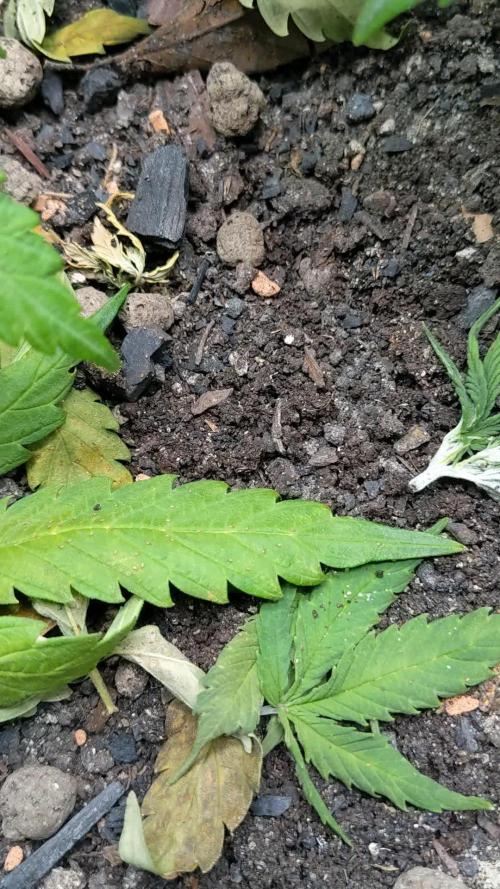
Slight discoloration on some leaves I removed... Not sure what it is...
Compost tea recipe:
2 gal dechlorinated tap water
1 tbsp Wholesome Molasses
2 tbsp GaiaGreen Kelp meal
2 tbsp GaiaGreen Alfalfa meal
1 tbsp GaiaGreen 444
2 tbsp Bat guano 842


Likes
105
Share
@Tropicannibis_Todd
Follow
💩Holy Crap Growmies , we are outdoors and in the Ground and there Doing Great💩
👉It's been another full week and she's almost ready to be chopped down , just a few more days 👈
So due to horrific weather as of late , I've had to deal with some slight bud rot 👈 removed it , and hopfully we are good to go 👊
I GOT MULTIPLE DIARIES ON THE GO 😱 please check them out 😎
👉THANKS FOR TAKING THE TIME TO GO OVER MY DIARIES 👈
👉NutriNPK NUTRIENTS USED FOR FEEDING 👈rain water to be used entire growth👈
Likes
50
Share
@HerbalEdu
Follow
expected flowering: 7-8 weeks
Germination method: cotton disc with tap water with 4ml/l root juice and 1ml/l acti-vera
Tent: BlackBox Silver 90x60x180cm (3'x2'x6')
Extractor: 220 m³/h
Soil: Biobizz All-Mix
SF-2000 @85cm @50%
germination: 10/11 They took a little longer than usual to open up, all but one seem to grow vigorously enough afterward.
sprout: 9/10 ; 9 transplanted in soil at first then another one transplanted 36H later i may transplant the last one if the root finally start to grow. First two are showing 20h after transplant. 35h after transplant 7 are showing. 42H after transplant 9 are showing and seem to form their first set of true leaves normally. Last one showed a little later but doesn't seem to form it's first true set of leaves.
Likes
13
Share
@smokeycropping
Follow
Ahora le dí un inoculo de papa y humato las nenas cmo comen el. Micelio proliferan excelente y se ven sanas y con unos terpenos increíbles nunca tuve problemas plagas ni nada
Likes
7
Share
@Cultivatorcarlos
Follow
everything in the second week of flower went well. she really stretched and the buds quickly started getting fat. also every watering i would notice a very strong odor of weed.
december 22nd 2021: gaver her last half of gallon used in last feeding. also nothing was tested. ph tested at 6.6 last feeding and it usually comes out a little higher after a few days.
january 1st 2022 i noticed the first trichomes.
Processing
Likes
49
Share
@leafy
Follow
day 43 : start of week 7 . i did some heavy defoliation in 2 rounds (yesterday and today) . i also did some more lst . i tied the secondary branches with some shoe laces :) all is good . i see more and more white pistils on top i think she finally entering flowering stage :D will update soon

Processing
Likes
62
Share
@OwlGang_Uk
Follow
Week 2 - The Plants Are Loving Their Environment. I Think The Coco Soil Have The Gorilla Glu & Stardawg Thinking They’re Coconut Trees. Lol I’m Experimenting Trying To Create My Own Foliation Spray And Nutrient Additive To Go With A Base Nutrient And It Seems To Be Working. Overall The Girls Are Happy & Healthy And I’m Very Satisfied With Week 2. #OwlGang #AGrowingEmpire


Likes
3
Share
@Kushizlez
Follow
Day 47-54 (June 7th - June 14th)
(Day 49) Pots are now drying out at a fast pace. I’m watering a solo cup or more everyday depending on the weight of the container.
(Day 50) Jack Herer’s are really starting to show their sporadic structure. The buds are nearly all foxtail. The chunky BAOGC pheno is really fattening up now. It will definitely be the thickest main cola.
(Day 51) My other tent is just about finished now. I will chop that down on the 21st along with whatever is ready in here. TWOG might be the only strain finished by day 60.
(Day 52) All the plants are starting to get deficiencies except for twog and black garlic. TWOG is actually starting to fade out with a weird interveinal dark purple color.
(Day 54) Solid week. All plants look happy and growth is on point. Can’t wait for harvest. One more week!!!

Likes
57
Share
@BudBoutique
Follow
Welcome to Bud Boutique Grow Diary - really appreciate all your love and support :)
Dont forget to check out my other current grows!
🗓️ This Week:
- Day 52: the end is near
- Day 53: Trichomes check from #1 and #2 - looking super good almost all cloudy, a few amber and clear. perfect point to chop
- Day 54: this one is finished, let's chop them both #1 & #2 !! ✂️✂️✂️
- both phenos got still super purple beautiful leaves
- now its time to dry inside the tent at about 60%rh and less than 20°C/68°F trying to get it even lower for the next 10-14 days
Thank you for still staying with me 💚
___________________________________________
--- 🌱 Strain (Sponsor) 🌱 ---
🏷️ PEACH GIRL by Art Genetix
https://www.artgenetix.world/product-page/peach-girl
--- 🥗 Nutrients and Feeding (Sponsor) - (APTUS Ambassador) ---
🍸 APTUS: full nutrient schedule extreme
-- Regulator, N-Boost, P-Boost, CaMg-Boost, K-Boost, Allin1 Liquid, Startbooster, Topbooster, Enzym+ every feeding
-- Fulvic-Blast, NutriSpray as Foliar each once a week
🔗 https://aptus-holland.com/
--- ♻️ Grow Control (Sponsor) ---
TROLMASTER: TENT-X + LM14 Light Adapter to dim/sunrise/sunset lights + Temp & rH Sensor all remote on App
🔗 https://www.trolmaster.eu/
--- 🚿 PetraGrow (Sponsor) ---
CannaFogger Foliar Spray
🔗 https://www.petratools.com/product/petragrow-cannafogger-atomizer-new-mini-fogger
--- 🏭 Grow Setup ---
💡LUMATEK Zeus Pro 600
* 🏠🌿 Indoor: Homebox 120x120x200cm (4x4)
* 📐🌀 PrimaKlima exhausting Fan 1180m3/h (running on 60-80%)
* 🌀 Can Light Filter 800m3/h & 1x Fanbox 1x Dyson fan for Air circulation
🔗 https://lumatek-lighting.com/zeus-600w-pro-29/
🔗 https://primaklima.com/de/shop/ventilatoren-de/ec-ventilatoren/pk160ec-tc/
🔗 https://canfilters.com/products/filters/
All Likes and comments are highly appreciated!!!
👨🌾 don't forget to check out my Instagram for daily educational content: budboutiquee
- Bud Boutique

Likes
15
Share
@AloeLover
Follow
Defoliation definitely happened. She was getting very bushy. However, it's hard for me to NOT defoliate LOL. I want to see her true colors. I'm hoping my swollen nodes isn't telling me it's the opposite sex from seed..
Likes
5
Share
@Bread_n_Buds
Follow
Our King Louis Automatic are truly those plants with a great desire to grow, the one in main lining is perfect.
Remember that we are growing 1 Plant worked with the techniques and one left to grow without cutting techniques to preserve its speed.
In this diary we find the plant that is growing normally, nice and straight just with a little cleaning and LST at the bottom only on the branches and not on the main stem. The plant had a moment of over at the end of the vegetative phase when it was time to move into flowering it had a manifestation of rusty spots on the sunbathing leaves but now at the beginning of flowering everything seems fixed. In my opinion it is a lack of K but yes
The comparison is the salt of the experience so the plant in the other diary will be worked very differently go and see it to compare them.
We have started the Plagron fertilization program, we are in 100% organic configuration, the soil is recycled Promix + 1/3 fresh soil + 10% Perlite + RQS Mycorrhiza Mix (4 g in the mix, 1 g under the small fiber pot).
We are administering // 1 ml/l Power Roots - 1 ml/l Pure Zym - 1 ml/l Sugar Royal - 3 ml/l Alga Grow
We have sprayed Vita Race Foliare 3 ml/l.
https://plagron.com/en
The doubts about the compatibility between Pure Zym and mycorrhizae have been dispelled, they can get along according to Plagron experts. If someone tells you that enzymes eat mycorrhizae, which in principle may seem possible, explain to them that it is not true.
https://www.royalqueenseeds.it/growing/452-easy-roots-mix-di-micorrhize.html
Love this strain perfect for main lining! ---- https://www.zamnesia.io/it/11238-zamnesia-seeds-king-louis-automatic.html
Brief description of Zamnesia // Say hello to true royalty with King Louis Auto, an autoflowering version of the original King Louis. Bred from OG Kush, LA Confidential and a premium ruderalis cutting, King Louis Auto delivers premium bud fit for a king just a few weeks after germination. As if that wasn't enough, her small size and vigor make her great for almost any grow environment. Incredibly efficient
King Louis Auto has inherited the best traits of her photoperiod cousin, all wrapped up in a fast and easy-to-grow seed. With good soil and adequate watering, King Louis Auto seeds will quickly grow into robust and vigorous plants. Once fully mature, these plants will not exceed 80cm indoors, meaning they can easily fit into even the smallest of grow spaces. Likewise, outdoor plants will only reach 100cm, making this strain ideal for guerrilla grows or other environments where discretion is key. And if that wasn't enough, King Louis Auto only takes 9–10 weeks from germination to harvest, after which she'll reward you with yields of up to 300g/m² indoors and 150g/plant outdoors. With its pungent terpenes and high THC levels, King Louis Auto offers a fragrant and relaxing experience. When you open your jars of buds, you'll immediately notice intense scents of pine, damp earth and fragrant wood. After inhaling her equally complex smoke or vapor, you'll be hit with a deep, relaxing body stone that's perfect for those moments of well-earned rest and relaxation. With 24% THC, King Louis Auto hits hard and takes effect within minutes, working every muscle in your body to relax. Perfect for evenings, weekends or any time you want to unwind. Buy your seeds now and experience the king of sweet strains.
You can find the entire world of growing on Zamnesia and more, just take a look at the site and you will find "all the best that nature has to offer" in various shapes and colors.
The new strains are fantastic and the old ones are no exception...
--- // www.zamnesia.com

Likes
18
Share
@capogino
Follow
I probably won't grow this strain again, just due to the growing difficulties, short lifespan, and low yield, although the bud is definitely quality. I learned a lot as this was my first grow, and the next I'm hoping for better yield quantities.
