


Likes
Comments
Share


@pifflestikkz
Follow
Day 98
Day 63 Flower
30/05/24 Thursday
Finally the time has come!!
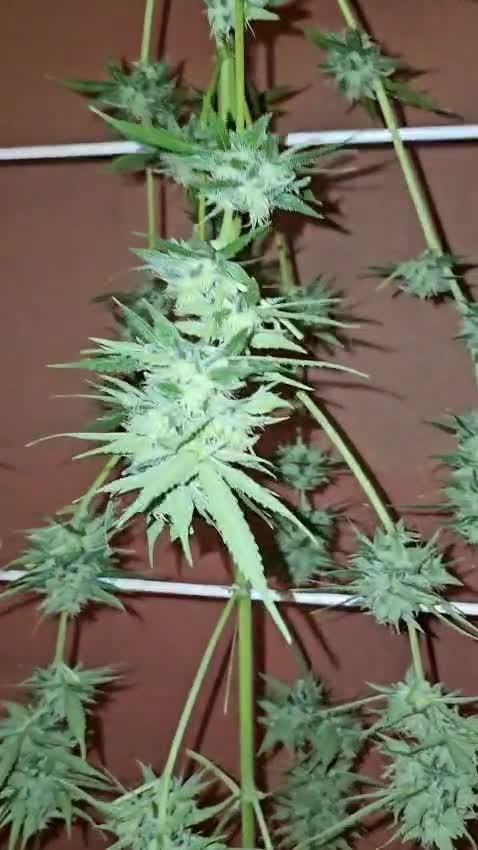
The fox tails aren't a issue for me as it's Percy smoke, and to be fair, there decent fox tails 😍😂.
The plant is huge for a auto.
I have wet trimmed,
Removed all excess stem.
Wet bud weight is 587g
Wet trim is 35g
I will update dry weight and smoke report 👌
Thank you to everyone who liked, commented and followed 🙌
Love for the grow 💚
Till next time ✌️

Likes
19
Share

@UnorthadoxDude
Follow
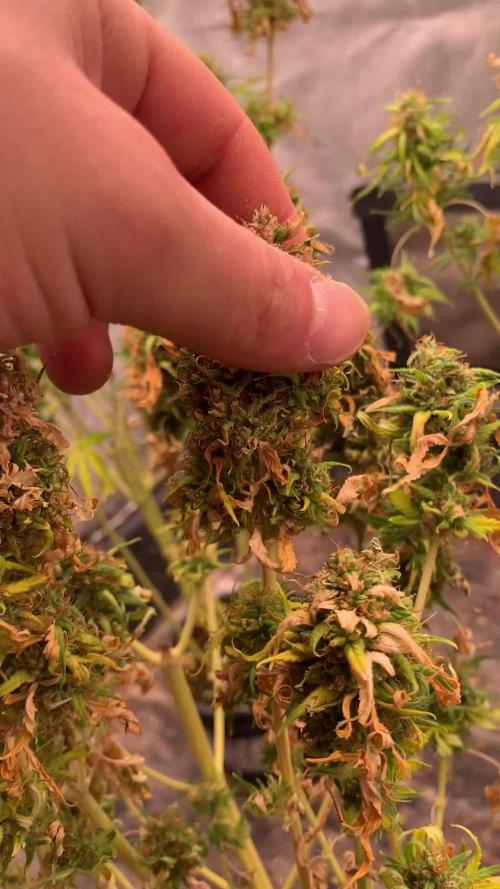
So the final week was week ten, and onyl just a few days in. I will be interested to see how this dries and cures out.
I will be back in six weeks with a proper smoke report.

Likes
4
Share

@EVD420
Follow
Harvest
• Plants #2, #3 and #8 were harvested last week after spending one week on pure water.
All were pollinated:
• one crossed with Diesel
• one within the line
• Plants #4 and #7 were harvested this weekend, allowing them additional time to mature.
Phenotypic Observations
No particularly standout traits were identified in this run.
• Semi-dense flowers
• Weak aroma profile
• Mature trichomes present, but without exceptional expression
Result
The cycle is completed.
While the current run did not reveal strong phenotypic highlights, the line remains promising for further work.
Next Step
In the next cycle, focus will shift to more targeted selection and refinement of this line.
Likes
22
Share


@BoboLacetti
Follow
I'll add pictures when it's timed and dried. It's just hanging in the dark


Likes
1
Share


@Pestitel
Follow
Amazing experience with the Mix Pack, I will try it again next summer for sure. Love the variety.

Likes
52
Share

@ZariRat_Grow
Follow
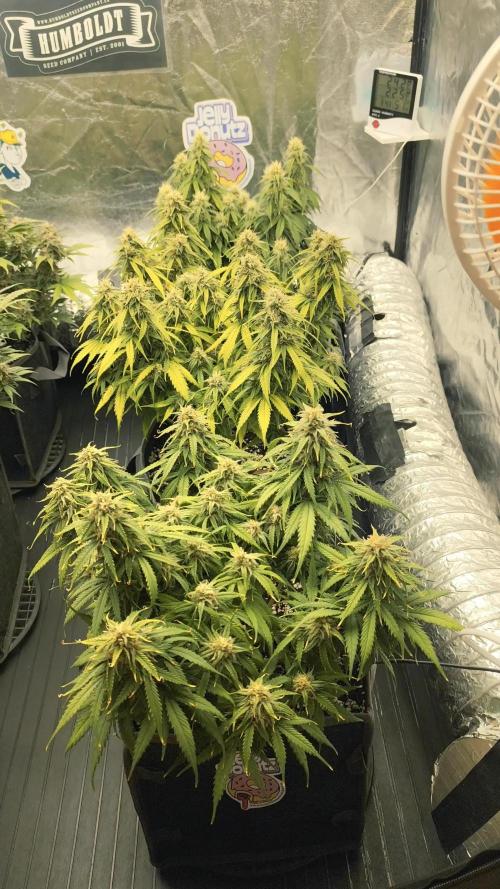
Seguimos avanzando en esta pequeña historia de nuestras Jelly Donutz, y esta semana ya se empieza a notar que las protagonistas han decidido ponerse serias con la producción de flores. 🌿🌺
Después de comparar con la semana 4, el cambio es bastante evidente: los cogollos están más gordos, más formados y mucho más cargados de resina. Los tricomas empiezan a hacerse realmente protagonistas y cada semana se nota más el potencial de estas tres pequeñas glotonas.
🍓 Sprinkles sigue avanzando con muy buen ritmo. Comparada con la semana pasada, se aprecia más volumen en los cogollos y bastante más resina. Las flores están ganando cuerpo y empiezan a tener ese aspecto compacto y escarchado que estábamos esperando.
Se mantiene muy cargada de puntas y parece estar aprovechando muy bien esta fase de floración. 🍓✨
🍁 Maple está haciendo su camino, aunque esta semana hemos detectado algo que merece atención: se empieza a notar una falta de nitrógeno, especialmente en el follaje.
No parece haber frenado el desarrollo floral, ya que los cogollos continúan engordando y acumulando resina, pero queremos corregir esa carencia y ajustaremos el aporte de nitrógeno en el próximo riego para intentar mantenerla equilibrada mientras continúa llenando las flores.
Por lo demás, la evolución respecto a la semana 4 es muy buena: más tamaño, más estructura floral y más resina. 🌸
🍰 Glaze va un poquito más lenta que sus hermanas. Se nota que todavía necesita algo más de tiempo para alcanzar el mismo nivel de desarrollo, aunque también está formando buenos cogollos y progresando semana a semana.
Las plantas han decidido que necesitan tener personalidades diferentes. 😂
La diferencia respecto a la semana anterior existe, pero en Glaze el engorde está siendo algo más pausado. Seguimos observando su evolución sin perder de vista que todavía queda floración por delante.
La evolución general es muy positiva:
- 🌸 Cogollos más gordos y definidos.
- ✨ Mayor cantidad de resina visible.
- ? Los tricomas empiezan a destacar muchísimo más.
- 🌿 Las flores están adquiriendo cada vez más estructura y densidad.
- 🍓 Sprinkles mantiene un ritmo muy bueno.
- 🍁 Maple presenta una ligera carencia de nitrógeno que corregiremos en el próximo riego.
- 🍰 Glaze continúa algo más lenta, pero sigue desarrollando flores.
🌡️ Parámetros de esta semana
Temperatura: 24 °C
Humedad: 50 %
EC: 1.8
Foco: 70 % a 70 cm
En resumen, la semana nos deja muy buenas sensaciones. Las tres están avanzando, los cogollos están engordando y la resina empieza a cubrirlas cada vez más. Sprinkles y Maple están especialmente llamativas en esta etapa, mientras que Glaze se toma las cosas con un poco más de calma.
Semana a semana, el armario se va llenando de auténticos Jelly Donutz. 🍩🌸✨
Seguimos con paciencia, observando cada cambio y dejando que hagan su trabajo.
Saludos y buenos humos amigos growers 🐭💚

Likes
9
Share


@Wakesk8
Follow
6 week flowering stage for those babies!! Looks good but I found some thirps and I’m fighting with water/garlic and but of neem oil. Hope everything will be good till the end. Let’s bit how many grams I will make for my self with those 4 babies!!


Processing
Likes
3
Share


@Simon_Says_Smoke
Follow
3 November
Sunset Sherbet
Well by the week this cupboard is just getting smellier, danker and bushier.
Vey good I’d say, most of all the branches had reached the scrog net and most of the branches has already been threaded through to maintain the same height.
While flipping to flower I noticed that the Sunset-Sherbet is making a lot more pistols due to this but not as fast as the Do-Si-Wine plant is making pistols.
( biggest leaf 17cm 😵 )
Do-Si-Wine
This lady while growing vigorously to the top has thin stems which it makes more prone to bending / snapping but luckily haven’t had that problem het of a side branch bending while threading it through the scrog, but I did notice that the branches are a bit more fragile.
This lady is making pistols like no tomorrow, every cola / node I can see is making pistols and this lady just wants to go full throttle. On the site it said that this is moderate growth difficulty and yes it is, thin branches, fragile and long lengthy branches.
( biggest leaf 14 cm )
Likes
21
Share

@ArtisticGrown
Follow
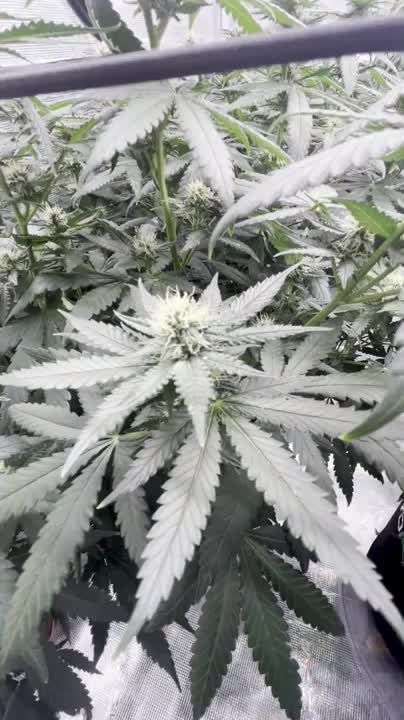
This weeks been great besides the heat 😬 had some good cooler days that allowed me to really cool down the tent and get a good vpd reading at night. I’ve been trying to hold the humidity roughly round 35, 40% but it’s hard in this dry heat. Been learning to balance temperature and humidity for the best vpd reading. The og kush is showing some yellowing of the tips of the leafs. I’m thinking it’s from the heat. I am like the signs of purple in the one og kush plant. Crazy how they are 2 same og kush seeds and they are both growing similar and different at the same time haha! I love seeing the recovery of the tops and the reward for all the work put into veg! Gonna keep going strong the next 4 weeks! Been doing about 6.20 6.10 for ph. Also keeping the water cooler to keep them roots cool! Great week headed into week 4 after week 4 no more big bud on nutrients. Super excited 🔥 also wanna talk about how well all these strains are growing! Super proud the pineapple chunk is doing great the 2nd plant in the back is a bit shorter but she’s growing strong many tops! And doing well in flowering a little burnt tips on the fan leaves but nothing major! Happy growing yallll!!


Likes
4
Share


@GREENPHOENIX6262
Follow
* 10/22 -Cherry Cherry Cola Auto - 10/22 - 9.5 Inches *
Thus far no concerns and she is growing vigorously, switched out Myco (Using Myco+ from Element) and increased nute and clean water feeds to 1 gallon per day offsetting the clean water and nute water feeds. Lite LST with bend clips applied yesterday (10/21).
* End of Week - Veg week 5 - 10/28 - Thus no issues or deficiencies, slight increase of veg dose - Defoliation will begin next week.


Likes
22
Share


@chupacabra80
Follow
1
glue gelato
120 cm
начал цвести в
34- 35 дней
2
runtz
90 cm еще не начал цвести.
вот вот расцветет
3
weedding cake
120 cm
начал цвести
40-41 день
4
do si dos
130 cm
начал цвести
40-41 день
5
Gorilla glue
120 cm начал цвести
40-41 день
сегодня я промыл
2 мл/1 л
floraClean,
Gorilla glue , wedding, do si dos поели по 3 литра, glue gelato 2.5 литра,
runtz меньше 2 литров,
runtz
мало ест и пока тормозит)))), в основном все нормально,я максимально не трогаю растения хочу посмотреть полный потенциал,я срезал лишь пару листьев и все,думаю это не проблема,


Likes
44
Share


@Cogollo_eu
Follow
**Encontrarás la traducción a español al final de la descripción**
From/Desde: 19/04/19 || To/Hasta: 25/04/19
From day/Desde día: 57 || To day/Hasta día: 63
You can find the Money Maker Diary here:
** Podéis encontrar el diario de las Money Maker aquí:**
https://growdiaries.com/diaries/25667-gorillamakingmoney-gorilla-vs-money-m
-----IMAGES & VIDEOS-----
1 - Before defoliation
2 - Defoliation
3 - After defoliation
-----WEEK SUMMARY-----
(Following text was translated with tools and reviewed, sorry for mistakes, misspellings or nosense things)
As you can see I've done a defoliation this week. Yes, I have really gone over the top, I have removed many more leaves than I had, and the tails of the plants has not come to join at all due to the failed defoliation.
Being the first defoliation I do, I did not really know what I was doing and I went crazy. Now that it has been several weeks since I made this defoliation, I realize that I should not have removed the leaves from the nodes of the tails, because they have stopped growing and have not joined with their superior parts. Anyway, the plants are beautiful today and although they could be much better I feel very happy with them.
I know I've made 2 fatal mistakes in this grow
- The first has been the massive defoliation badly done, defoliation yes, but with head ... do not follow my example.
- The second failure that I see today, is that I did not leave enough growth time (18/6) after having made the last pruning and that has made the tails have been a length much less than what would have been desired, I think that 2 more weeks of growth would have been perfect.
-----WATERING CALENDAR-----
20/04/19 - 1,250 ml with Sensizym, Silica, Rhino Sk, Bud Ignitor, Big Bud, Bud Candy & Bud Factor-x @ PH6.4 & 1.2 E.C.
23/04/19 - 1,250 ml with All week nutrients - (Silica, Sensizym & Bud Ignitor) @ PH6.5 & 1.5 E.C.
*****ESPAÑOL*****
-----IMÁGENES Y VÍDEOS-----
1 - Antes de la defoliación
2 - Defoliación
3 - Después de la defoliación
-----SUMARIO SEMANAL-----
Como podéis ver esta semana he hecho una defoliación. Si, efectivamente me he pasado de listo, he quitado muchas más hojas de las que debía y las colas de las plantas no ha llegado a unirse del todo debido a la fallida defoliación.
Al ser la primera defoliación que realizo, no sabía muy bien que hacía y me lancé a lo loco. Ahora que han pasado varias semanas desde que realicé esta defoliación, me doy cuenta de que no debí de haber quitado las hojas de los nodos de las colas, pues estos han dejado de crecer y no se han unido con sus partes superioras. De todas maneras, las plantas están preciosas a día de hoy y aunque podrían estar mucho mejor me doy con un canto en los dientes.
Se que he cometido 2 errores gordos en este cultivo
- El primero ha sido la defoliación masiva mal realizada, defoliación si, pero con cabeza.... no sigáis mi ejemplo.
- El segundo fallo que yo veo a día de hoy, es que no dejé suficiente tiempo de crecimiento (18/6) después de haber realizado las últimas podas y eso ha hecho que las colas hayan quedado de una longitud muy inferior a la que hubiera deseado, creo que 2 semanas más de crecimiento hubiera sido perfecto.
-----CALENDARIO DE RIEGO-----
20/04/19 - 1.250 ml con Sensizym, Silica, Rhino Sk, Bud Ignitor, Big Bud, Bud Candy y Bud Factor-x @ PH6.4 & 1,2 E.C.
23/04/19 - 1.250 ml con todos los nutrientes semanales - (Silica, Sensizym y Bud Ignitor) @ PH6,5 & 1,5 E.C.

Likes
56
Share


@AsNoriu
Follow
Day 79. This Sunday they fall !!!
What an amazing colours and grande type bud structure from GSCA !!! In love !!!
NL SBG is ready too and caught up some weight, but Bob is so behind ... Give good contrast in photos tho ..... ;)))
Mars light delivered as always !!! My friend will be chopping and in my tent it's only middle of flower ... All girls were planted on same day, just under SP3000 they develop a lot faster !!!
Next time I will try bigger amount of dry amendments and will hope for no hickups ...
Happy Growing !!!

Likes
14
Share


@vavaro
Follow
04/02/2024 - All the plants are looking healthy but Im suspecting that one of them is a hemafrodite, i would like to read your opinion about it, guys.

Likes
1
Share


Likes
10
Share


Likes
2
Share

@Oldwied
Follow
Light Power: 60%
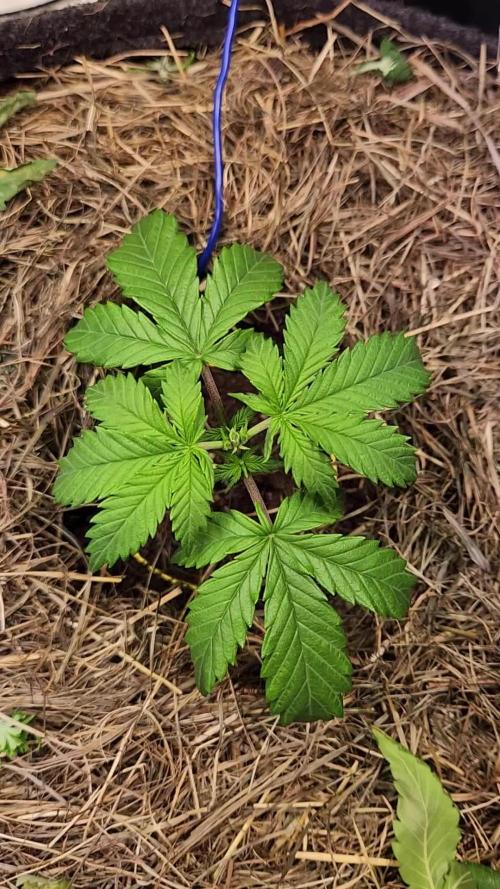
To slow down the faster growth compared to strawberry cola. I filmed it at the beginning of the week. Five days later, it was topped and repotted.
Every other day I sprayed and watered with fresh LAB. I store the LAB in the refrigerator for over a week and dilute it before use.
Thanks to budtrainers, your budcups work great.
Day 20
Photoshooting
Fimming
Day 22
Photoshooting
Topping
Day 25
Photoshooting
Transplantation