Likes
Comments
Share


Likes
86
Share


@DogDoctorOfficial
Follow
Greetings, fellow growers and cosmic adventurers! As we bid farewell to Week 10, we find ourselves at the culmination of an extraordinary journey with our beloved Apolo F1. Join me as we embark on a retrospective voyage through the highs and lows, the triumphs and challenges, of this cosmic odyssey.
Our journey with Apolo F1 began ten weeks ago, a small seedling filled with potential and promise. From those humble beginnings, she grew and flourished under our watchful gaze, unfurling her leaves and reaching for the stars with each passing day. Through meticulous care and nurturing attention, we witnessed her transformation into a true botanical queen.
Throughout her growth cycle, we employed various techniques to coax the best from our cosmic companion. From LST to topping, we shaped and sculpted her canopy, encouraging lateral growth and maximizing light penetration. As a result, Apolo F1 flourished, her branches reaching skyward in a testament to the power of cultivation and the wonders of nature.
Central to Apolo F1's journey was the nourishment provided by Aptus Holland, our steadfast companion and sponsor. With their nutrient lineup, we crafted a symphony of minerals and organic compounds, tailored to her specific needs at each stage of growth. From seedling to harvest, Aptus Holland's nutrients fueled her cosmic voyage, ensuring robust health and abundant yields.
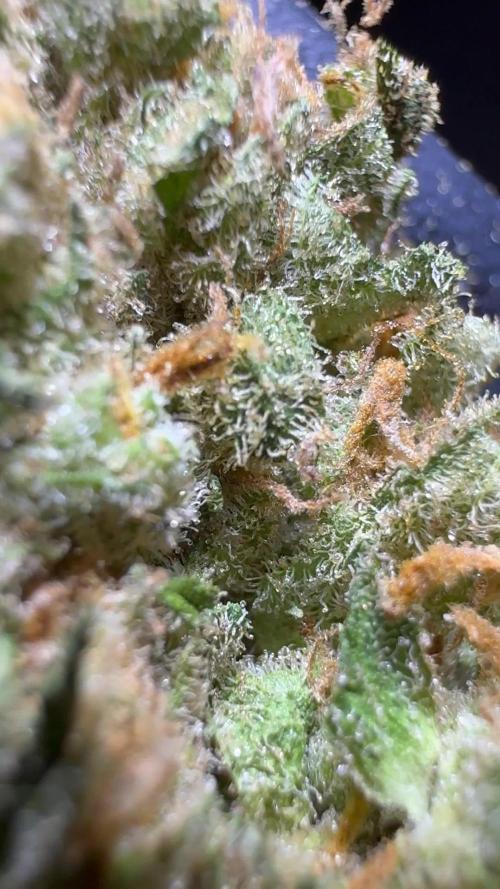
And now, the moment we've all been waiting for: the harvest. With bated breath and eager hands, we carefully snipped each bud from the canopy, marveling at their dense, resinous beauty. Apolo F1 had exceeded our wildest expectations, her compact stature yielding a bounty of cosmic goodness. As she hangs upside-down, her buds curing in the cool darkness, we reflect on the journey that brought us here—a journey filled with wonder, growth, and boundless possibility.
Before we bid adieu, let us extend heartfelt thanks to Royal Queen Seeds for crafting the genetic marvel that is Apolo F1. Their dedication to excellence has brought joy and inspiration to growers around the world, and we are grateful for their contributions to our green adventures. Likewise, a shoutout to Grow Diaries and the entire community for their unwavering support and camaraderie. Together, we have cultivated a garden of dreams, and the harvest is sweeter for it.
As we gaze upon Apolo F1, our cosmic queen, we are filled with a sense of pride and accomplishment. She is more than just a plant—she is a testament to the power of cultivation, the wonders of nature, and the boundless potential of the human spirit. Until we meet again, may your gardens flourish and your green adventures be ever cosmic.
Genetics -Apolo F1 @rqs_esp @royalqueenseedssp @rqsglobal
Food - @aptusholland @aptus_world @aptus_es @aptus_portugal @aptusbrasil @aptusplanttechaus @aptus_thailand @aptusplanttechnz @aptususa_official
LES @lumatekeu
Controls - @trolmaster.eu @trolmaster.agro @trolmaster.support
As always thank you all for stopping by, for the love and for it all , this journey of mine wold just not be the same without you guys, the love and support is very much appreciated and i fell honored and blessed with you all in my life
With true love comes happiness , Always believe in your self and always do things expecting nothing and with an open heart , be a giver the universe will give back to you in ways you could not even imagine so
#aptus #aptusplanttech #aptusgang #aptusfamily #aptustrueplantscience #inbalancewithnature #trueplantscience #rqs #ApoloMission #MoonHarvestAdventure #playwithlego #lego #legotime #legovideo #tothemoonandback
More info and complete updates from all my adventures can be found Link in the profile description
Friendly reminder all you see here is pure research and for educational purposes only
Growers Love To you All

Likes
4
Share


Likes
1
Share


@DrGL_Thumb
Follow
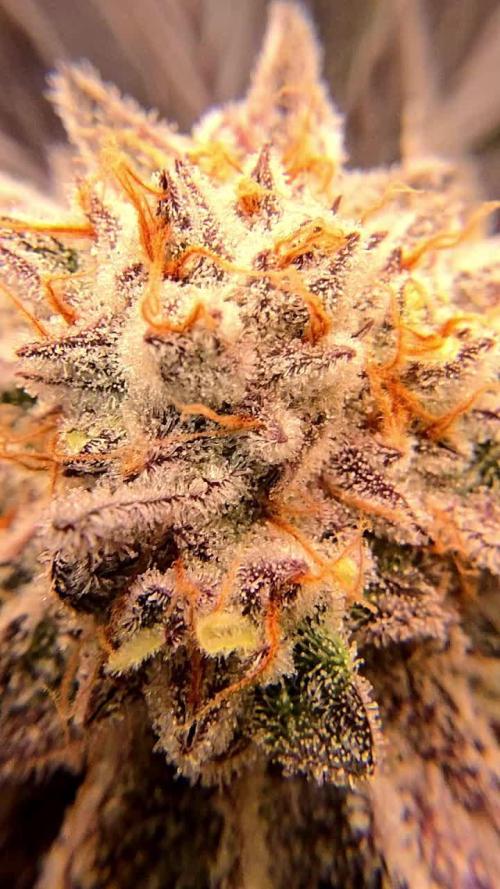
Dropped the 3 seeds in water bath with a little HESI rooting mix, little mycorrhizae.
On a heat mat, covered for complete darkness. 24 Hr soak -
then seeds moved into own Seed Germinator - Karl’s Bubatz Popper 😂
24 hrs after 22 degrees and 90-95% humidity seeds developed long enough roots to hit the soil. To avoid any chance of damage the cotton pads hit the soil too.

Likes
6
Share


@xmackobox
Follow
Hola amigos arrancamos nuevo cultivito, por ahora os traigo los videos que subo a YT como ya sabéis le estoy dando caña al canal, buscarme allí, me llamo como aquí, xmackobox.
Poco mas, se empezaron a germinar el día 14/02/24. Algunas se pasaron a maceta el día 16, otras en 17 y se terminaron de plantar en maceta definitiva de 11 L el día 18/02/24.
Para la primera semana de crecimiento ya meto fotos detalle de todas.
**ACTUALIZADO**
26/02/24 llevamos 12 días desde que se empezó a germinar, todas brotadas perfectas excepto 1 que como veis parece atrofiada o con algún problema, no desarrolla el ojo principal es decir su punta apical.
Esperaremos a ver que hace esta plantita :D


Likes
11
Share


@Budking420
Follow
This ladies without a doubt one of the easiest growing strains for me. She has not wilted or showed even a little bit of fatigue despite the 20 hour light cycle. Her friend on the other hand seems to do that every few days. The smells wonderful already very strong & smells almost a lot like the classic strawnana. I'm so excited to see how she grows this next week!!!!! Her trichomes are really beginning to spread and thicken. I hope you enjoy! Check back next week to see just how fast she flowers & dont forget its 4:20 somewhere!
Likes
10
Share

@Vio_La_Grow
Follow
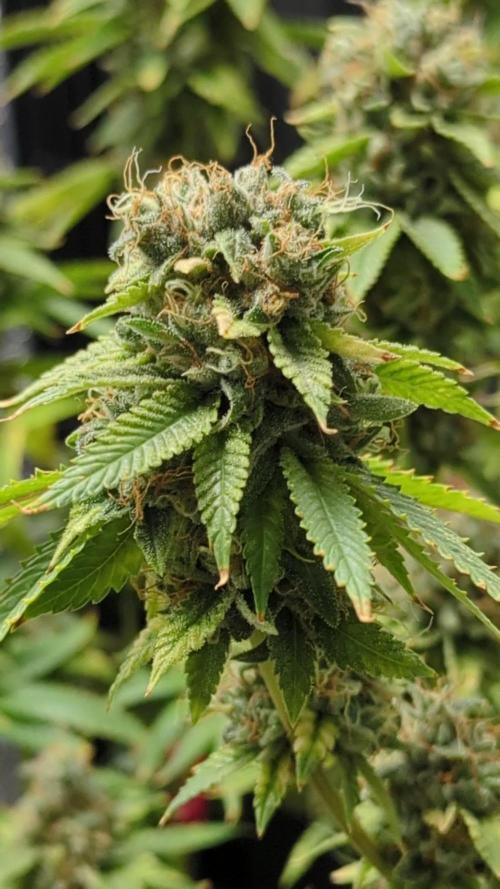
Final week 10 and a half harvest and the nugs are fully plumped up and very crystally the decent bit of yellowing as well I think the double dream is definitely going to yield a decent bit and we're going to drive for five days after our flush for six days. Attached to some of the root pictures from the harvest which just shows the massive amount of a root ball that you can see for the left side on double dream.


Likes
8
Share


@Hempcules
Follow
WEEK 9
Wuhuuu 🙂 Things really took off this week with my Diablo Delights XL. The buds have bulked up significantly and are now filling out almost the entire plant. I think it’s going to end up as one big bud ball 😅 She’s absolutely stunning to look at, even though she stayed relatively short in height. You can already start to pick up on the flavor, and the smell is downright delicious. I’m really looking forward to the tasting. If she keeps up this pace, I don’t think she’ll need another four weeks.
I did a bit more defoliation and removed a few weak shoots since she was still a bit too bushy for my liking.
This week, I ran the light at 800 PPFD and watered once with plain water and once with nutrient solution.
Likes
30
Share


@SAC87
Follow
Day 8 Flower
Hi growers, the end of week one has arrived. The plants seem to be happy. They’re starting to shoot up, new growth has that light green color, old growth is still dark green. I fed with Remo transition feed and and added green planet rezin. I think I may have been under watering as I realized there’s way more than 20% perlite…maybe closer to 45%. I’m going to start watering every 2 days, more coco style rather than soil with a dry back like I normally do. I think that could be the reason for the slower growth in veg regardless of light height and intensity with optimum environment and vpd.
I was going to weave the new growth into the open squares, but historically it has caused those tops to be shorter at the end. So if they grow tall, I’ll add another level of trellis net and fill the squares of the upper net. Until then I’m just tucking the leaves on this very leafy plant. Heavy Defo will be on day 14.
She has got a stank to her already. When watered or manipulated she has this skunky sour smell that I’m already intrigued by. Still have 2 months and 1 month of cure to wait ugh…..patience 👎🏻
I am having a bit of difficulty dialing in the Vipar Spectra XS2000. It seems very powerful for my setup especially in veg, I’ll try 50% in veg next time. You can see how stacked the buds are in the pics. I’ve raised it up 6” from the top of the tent to hopefully get some stretch. It’s heat output is good at keeping my tent at 77-81 at 100%. I am very interested to see how it grows the FastBuds autos once the SLH is done. That tent will have the XS2000, FastBuds Autos grown with Gaia Green Organics. I’m thinking that will be a solid hand. 🤞
Happy Growing 🌱
#Viparspectra
#XS2000

Processing
Likes
66
Share


@DrGreenThumb95
Follow
This week I have fed my girls for the last time (feed-water-water-feed) and I think they are ready to go into a flush, I know one of them really needs it but I shall not name and shame 😂 but overall been a pretty boring ass week, although last week I said I didnt care about the deficiencies something is getting worse and I want to know why to stop it getting g worse a d prevent this happening again I shall ask the question down below, thanks for dropping In and giving this a read,
Happy Growing!👊👍

Likes
16
Share


@the_medicine_grow_uk
Follow
All done and dusted on this bad boy. Nice big bushy auto that did its job from the beginning. It was always harder work than the Do Si Dos and with what I’ve hung up to dry I don’t think it’ll have a larger harvest either. The smell is super strong and very fruity and will give an updated the final smoke and weight. 🙌🏼

Likes
25
Share


@Ratch33
Follow
Outside Temps are plummeting - Entering Winter
Running Fan Heater at night.
First Dew Frost on the 1st of June
Added min-max hygrometer
There's still damages, pruned affected leaves
New growth looking normalised.
Budding is slow
Likes
244
Share

@DogDoctorOfficial
Follow
So here is my week report on the fabulous Supafreak by HiElevation Genetics. Buckle up, because this girl is a wild ride!
Oh my, let me tell you about this Supafreak. She's like no other girl I've ever grown before. From the moment she sprouted, I knew she was something special. Her unique characteristics and unruly growth had me hooked from day one.
Now, we're approaching her final days, and it's time to make some crucial decisions. I've decided to stop all feedings and switch to just watering with Aptus Holland Fluvic Blast. Why, you ask? Well, let me break it down for you.
First, let's talk about this Fluvic Blast. It's like a secret weapon for plant health. Fluvics are organic compounds that enhance nutrient uptake and stimulate plant growth. It's like giving my Supafreak a supercharge of awesomeness. And let me tell you, she's responding to it like a champ.
One of the reasons I've chosen to go this route is because I believe in reutilizing my soil for future grows. It's like giving back to Mother Nature and keeping the soil alive and kicking. Fluvic Blast helps to replenish essential nutrients and promotes soil health, ensuring that my future plants will have a solid foundation to grow upon.
Now, let's talk about her close-up shots. Oh boy, the trichome production is out of this world! It's like she's showing off her bling, sparkling with potency and beauty. I can't wait to see how she develops in these final days.
And the smell, oh my goodness! It's unique and peculiar in the most delightful way. It's like a symphony of aromas that tickle the senses. I can't even put it into words, but trust me when I say, it's a scent that will linger in my memory forever.
So, my friends, there you have it—my joyous, knowledgeable, and fun report on the magnificent Supafreak. She's one for the record books, and I'm grateful to have experienced this journey with her. Stay tuned for the grand finale, where we'll uncover the full extent of her freakiness. Until then, keep growing and keep smiling!
As always thank you all for stopping by , for the love and for it all, i fell blessed to have you all with me for one more love journey, and a different one form the rest i did so far <3 <3 <3 Thank you Thank you Thank you , you guys are great and have been amazing , thank you for everything <3<3<3
#aptus #aptusplanttech #aptusgang #aptusfamily #aptustrueplantscience #inbalancewithnature #trueplantscience #dogdoctorofficial #growerslove
With true love comes happiness , Always believe in your self and always do things expecting nothing and with an open heart , be a giver and the universe will give back to you in ways you could not even imagine so <3 <3 <3
<3 <3 <3 Growers love to you all <3 <3 <3
Here are the words from this peace of art from nature creator Shapeshifter's @ HI-ELEVATION GENETICS <3 <3 <3
"FREQUENTLY ASKED QUESTIONS
Q. How did you create/breed Freakshow?
A. Methodical selection, line breeding, and culling is the short answer. Read our About page for more details.
Q. Is it an indoor or outdoor type?
A. Everything I've ever worked has been outdoors, including of course Freakshow. It has been our experience that outdoor (or sun grown, as it's recently being referred to) cultivars seem to perform extremely well under artificial conditions. This is true of seed starts or clones made from seed starts. The opposite is not always true; indoor clones often give an outdoor grower headaches because they don't always make the transition smoothly. This is due to light spectrum, temperature, and/or photoperiod changes. Yes, Freakshow will do exceedingly well indoors, and will thrive and mature just fine in a wide variety of natural environments as well, so it's definitely both and I think might even prove to be more resilient to those sorts of transitions.
Q. What are the potency and terpenoid levels?
A. Average 18-20% THCa, THC; negligible CBD, CBN with terps variable, averaging 2.5-3.5, primarily limonene and pinene, but this is variable, there was a lot of diversity in terp combinations and compositions in all the prior generations, it's just something that was left "as is" for now. The different parallel lines that we are developing can be directed in a few different pathways flavorwise.
Q. Why are the seeds white?
A. Why is the sky blue? No, the mature seeds are shrouded by a rice paper thin membrane which has coloring and mottling on it, but it's so fragile that it disintegrates in the process of shucking. Stripped of the outer layer the seeds are very pale, nearly white. It came as no surprise that this plant would have abnormal seeds.
Q. Is it a GMO?
A. Wow...? Well, it's seriously "modified" and the modifications are definitely genetic, and it is an organism. (Genuinely Modified Organically!) Uh, no. No radiation, no recombinant DNA, no gene splicing or editing, no TALEN or CRISPR! These biotechnologies don't belong in the food and medicine plant industries. Sadly, in the near future it will become commonplace and widespread in cannabis and other medicinal plants as it is already is with food crops and ornamentals. I'll avoid discussion on this topic for now, but we hope some people enjoy consuming Frankenbud!
Q. What's the floral period length?
A. 8-9 wks, finishes early Oct. at most latitudes and elevations.
Q. Is it a big producer?
A. Freakshow will produce nice, fat, dense colas (see gallery) with remarkable trichome coverage, and you can expect yields according to your veg. time, root space, and general knowledge and expertise as a gardener. The same set of variables apply to expected outcomes regarding cannabinoid levels and terpene profiles.
Q.What is the lineage?
A. (Bigbud x Skunk#1) x (Big Sur Holy Weed x Banana Kush). NLD("Sativa") dominant, but the afghanica influence is apparent. I'm pretty sure that Freakshow contains some Trainwreck and some Maui Wowie based on some research I did on the origins of the Pineapple Express. Interestingly Big Sur Holyweed, OG Kush, Banana, Trainwreck, and Maui Wowie are all of unclear origins. We have to remember that these are all just names and that they don't really mean much. The exact heritage of any cultivar today is impossible to determine accurately. Also, considering the amount of continuous shameless hybridization that has occurred in the last 40 yrs., any modern kind could easily contain over 40 kinds. In the case of Freakshow, it's much more limited because the ancestry is largely older "Sativas" that didn't go through as much outcrossing. In the 70s in Santa Cruz, Haze was a favorite among surfers for the pure energy and I still have (greatly improved) stock of it around, simply because even when I made hybrids with it I always kept the original in pure form for obvious reasons.
Q. What is the psychoactive effect like?
A. Like the flavors, many people have commented that the "buzz" is somewhat different than other mainstream types out there. It's not entirely out of the scope of imagination that given that this strain has new alleles in so many other respects, that it could also contain new, unique cannabinoids, as well as new and unique terpenoids, some of which may not even be among the standard 16 or so that the average lab is testing for. Aside from the up, cerebral, energetic boost, some report a mild time/space warp effect. Creativity and idea induction should be mentioned, for sure. Freakshow has the pure energy effect and greatly alters perception to the positive side, so definitely destroys depression. Appetite suppression is a side effect, but the enjoyment of food is enhanced. I personally will attest to all of the above. We all have different receptor profiles, so these are just generalizations. Couch unlock.
Q. Is it pest and mildew resistant?
A. Indeed it is. On many occasions in the last few years, it has been observed that when pest and mildew issues were affecting other plants adjacent to in the vicinity of Freakshow plants, for unknown reasons the freaks remained entirely unaffected. This includes 0botritis, PM, various mites and insects, soil fungus, etc. We haven't heard any complaints along those lines so far, so if anyone has any problems, especially with a rigorous IPM regimen in place, we would like to hear about it. And if anyone can attest to the extreme level of resistance it seems to have we'd love to hear about that as well.
Q. Does it contain web-leaf genetics?
A. I thought I better clarify this because there are a few people thinking that because of an article "Growing Marijuana that Doesn't look like Marijuana" that mentions that I had worked web-leaf types years ago and had eventually turned that into Freakshow. This is incorrect and I'm needing to get ahold of the writer to have him change it. When I read the piece and saw the mistake I figured it didn't matter that much, that the actual method of breeding could just remain a "trade secret". Recently, I noticed online that a posting, "Freakshow only exists because of duckfoot" by Curious Cannabis Connoisseur, where he explains how I developed Freakshow using Duckfoot. Let me explain, about 20 yrs. ago a friend gave me a jar of seeds labeled "BC Bigbud" and I sprouted flats of hundreds to look for oddities and had found one web-leaf pheno which we named Webster. It was a female so I bred it to a normal leaf male and began selecting and stabilizing a line of Webster. About 5 or 6 generations later I had nailed it to 100% webs and had also stabilized it for a deep purple color and a nice "gingerbread" terp profile. I was busy working other lines at that point so I put Webster in the library. Also, I was having a hell of a time getting a pheno of it that flowered to my satisfaction. (it seemed to finish with a limited number of calyxes). I knew I would have to outcross it to something with a big tasty bud and restabilize it for web-leaf, and I no longer had the original BC Bigbud. I still have the Webster seeds, and trust me the thought has crossed my mind to make the cross with Freakshow, but why? Why mess around crossing things just to create something even weirder? I have heard that the "Duckfoot" also doesn't bud up well so maybe there's a correlation there. Anyway, people can do what they want to and I will too, but crossing Freakshow with some low-THC crap like ABC is in my opinion idiotic. I worked extremely hard stabilizing and perfecting a beautiful new subspecies and I believe it should be kept pure. I won't go on a rant here about the rampant crossing and the lack of line-breeding in the cannabis world in the last several decades, or where this will eventually lead us, but I will say that it's not in a good direction. Bottom line....Freakshow has no web-leaf genes, it was made using top-grade tropical narrow-leaf drug (NLD) cultivars.
Q.Why is Freakshow patented?
A. Although I and most others (including all the folks at HSC) believe in and subscribe to the concept of "open sourcing" because sharing in cannabis genetics was always the cultural norm, it was decided that Freakshow should be protected (1) because it is a novel and unique, not a preexisting strain (or even subspecies), (2) To keep the greedy corporate big boys from exploiting it, (3) To maintain control of the genetic refinement of it in all future generations. We really can't wait to share it with the entire collective world of cannabis enthusiasts and invite experimental breeding for personal use and curiosity."
source https://freakshowcannabis.com

Likes
19
Share


@adam_pawloski87
Follow
Let’s go!!! Today is day 52 from seed , and we are officially in bloom stage😍!!! Not much of a change for this bloom schedule, everything will stay the same but instead of 3 tsps of grow and 1 tsp of bloom , we just turn that around to 3tsp of Bloom and 1 tsp of veg an we are good to go!!! Now we get to watch em stack up over the next few weeks Let’s grow lol ladies let’s grow!!! Hope you all enjoy and have an amazing productive day as well as the week. Peace, love, an positive vibes to all y’all Cheers 😶🌫️💨💨💨💨💨🤙🏻if there’s any questions please ask , more then happy to help anyone out!!!!

Likes
2
Share


@High_Grade_Dadli
Follow
Both plant are doing well for the lil that is being done....going to take one or two cutting in the upcoming week so they can live up to the mothership name n allow more vertical branches

Likes
30
Share


@XperencdGmanXG
Follow
Pretty resistant to wpm but still susceptible. I'd like to breed in more resistance but that may lower cbd content. So we will see what she taste like and go from there and
Likes
5
Share

@Growfather1
Follow
Hello everyone,
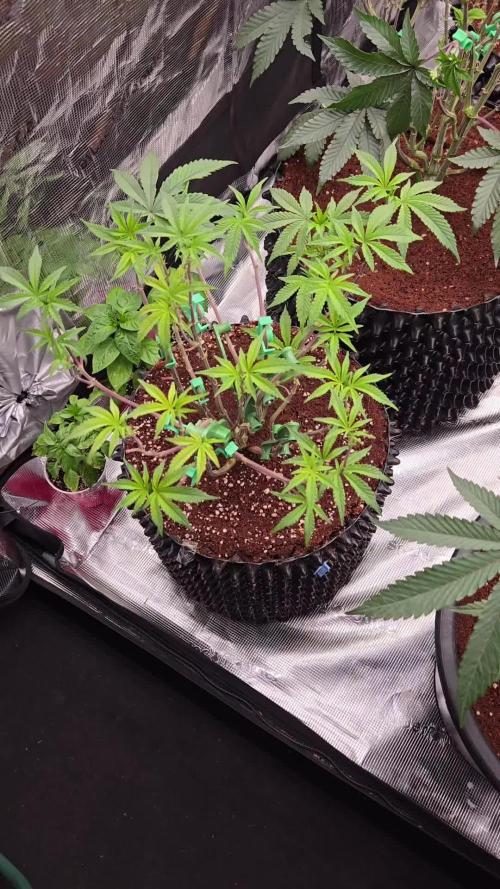
The 3 plants are okay a little nutrient deficiency because the ph meter was 0.3 ph to high.
The plants are almost ready for flipping to flower 7 days more in veg is enough.
Thanks for stopping by and have a nice day.
Best regards,
Growfather

Likes
99
Share


@BudXs
Follow
Huge surprise in the mail today. Big shout out to @BeanswithPork and all the good people oit here being real in a crazy world.