


Likes
Comments
Share


@TerpTurtle
Follow
15 Day dry then trimmed using the Trim Bin.
Curing with Grove bags, first harvest filled 3, 1/4lb grove bags.
*Updating with clone pictures of this pheno in late flower labeled in diary as you look through


Likes
1
Share

@YoyoDE
Follow
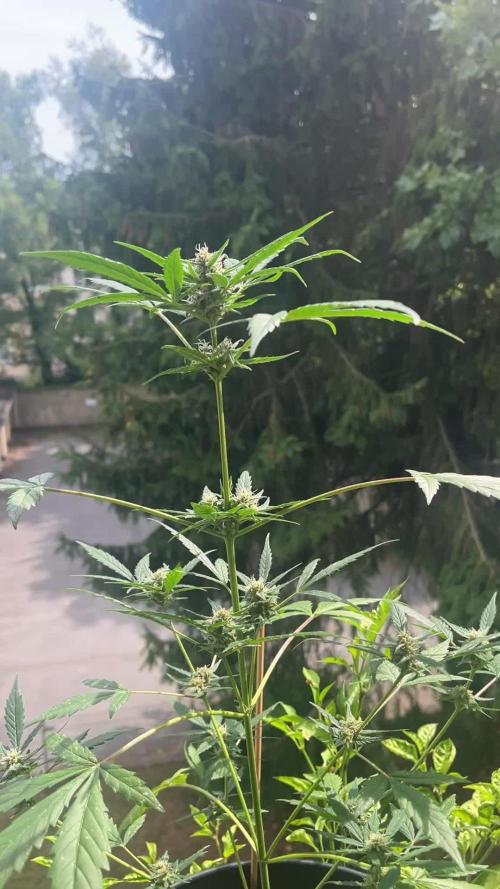
Trotz des schlechten Wetters sind die kleinen Buds etwas größer geworden. Die Pflanzen im Ganzen sind aber nicht gewachsen. Sie bekommen gerade etwas Neemlösung, da die einige der großen Blätter stark angepiekst sind. Die nächste Zeit wird das Wetter ja wieder prima, das gibt hoffentlich nen guten Schub
Likes
1
Share


@Dr_Med_Rasen
Follow
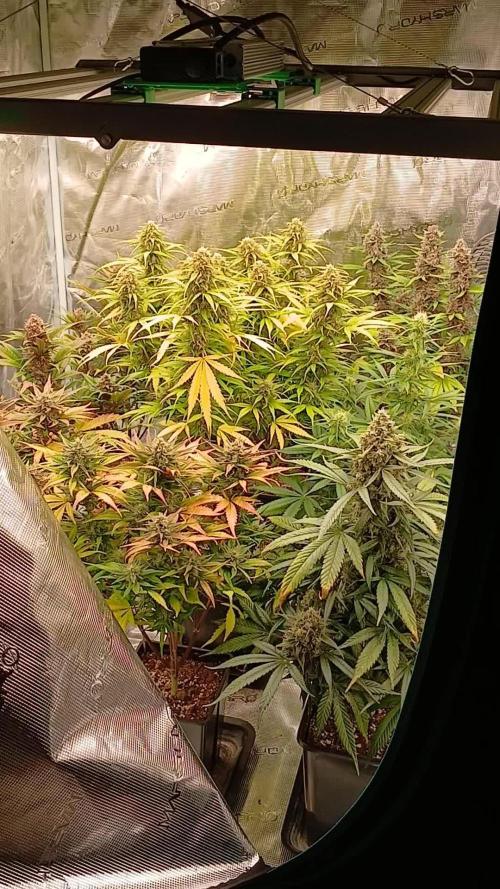
🗓️ Week 5 – Nutrient Refresh, Net Adjustment & Light Optimization
Arrived in week 5 with a complete nutrient solution refresh. This time using 2.5 ml/L Plagron Hydro A & B and 1 ml/L Plagron CalMag Pro, mixed into a total of 13 liters of water (the bucket turned out to be bigger than expected, according to the Amazon specs 15L). pH adjusted to 5.5 using Hesi pH-.
During the water change, I lifted the SCROG net briefly to check on the roots – they’re looking great: bright, healthy, and strong. Net was repositioned afterward.
The light is now running at level 8 out of 10, delivering around 800 PPFD in the center and about 700 PPFD at the edges, with a distance of 35 cm to the canopy – everything’s well dialed in!
—————
🗓️ Woche 5 – Nährlösung, Netz & Licht-Feinschliff
In Woche 5 gab’s ein frisches Nährstoff-Update: Die komplette Lösung wurde ausgetauscht – diesmal mit 2,5 ml/L Plagron Hydro A & B sowie 1 ml/L Plagron CalMag Pro auf insgesamt 13 Litern Wasser Eimer misst mehr als gedacht – laut Amazon-Beschreibung 15L. Der pH-Wert wurde auf 5,5 eingestellt mithilfe von Hesi pH-.
Beim Wasserwechsel habe ich das Scrog-Netz kurz nach oben gezogen, um den Wurzelzustand zu checken – sehen super aus: hell, kräftig und gesund. Danach das Netz wieder sauber positioniert.
Die Lampe läuft nun auf Stufe 8 von 10, was etwa 800 PPFD in der Mitte bringt. Am Rand sind’s ca. 700 PPFD, bei einem Abstand von 35 cm zur Pflanzenspitze – also alles gut im grünen Bereich!



Likes
15
Share

@El-Ecko
Follow
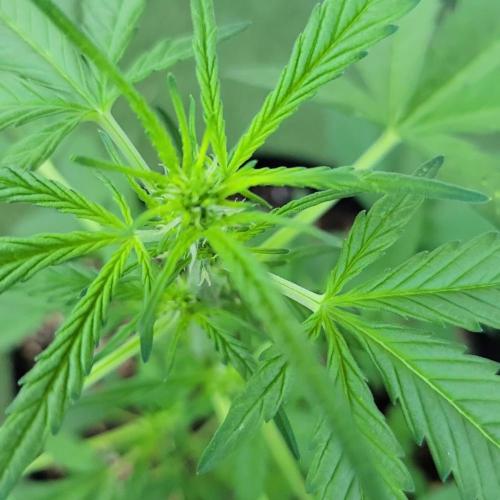
Week 2 of Flowering
Little Pearl is doing wonderfully.🤩 Despite her slow start, she’s now thriving 🔝🥦
The week began with relatively cool temperatures and humid conditions... but by the middle of the workweek, the weather turned noticeably more summery again, which certainly did the plants a world of good.☀️👌

Likes
3
Share


@fabialien
Follow
Foto del dia viernes 9 de agosto en su 4 semana de vida esta Auto Gorilla GLUE de BSF seeds.


Likes
8
Share

@jellyjelly
Follow
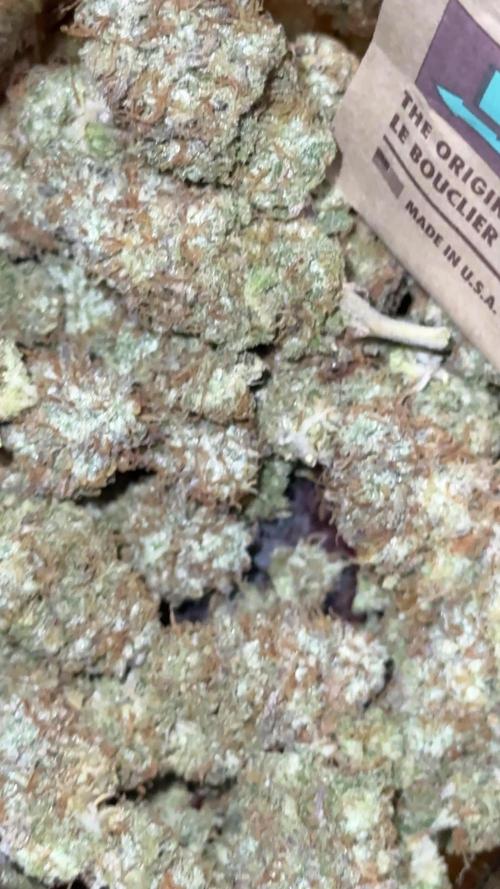
Harvest + Cure complete ✅
Smells like tart, berry on the with later hints of creamy gas.
Tastes like berry with an after taste of like gassy fruit cocktail.
My grow issues definitely led to some less amazing bud this time around and embarrassing yield, but I’m really content how terpy it still is!

Likes
4
Share


@AustinRon
Follow
OG 4Q24 Flower Week 4 (Plant Week 7)
Orangegasm (Fem) [ IRIE Genetics ]
12/12 @ Bolt (Day 21)
Germination: 20 November 2024
#3A Earliest Harvest Date: 9 February 2025
#3B Latest Harvest Date: 19 February 2025
_________________________________________
Start of Week: [Wed Jan 3,
2024 CR2 4Q24 22:F:4:1]
End of Week: [Tue Jan 9, 2024 CR2 4Q24 28:F:1:7]
OrangeGasm Fertigation: Max EC: [ 2.4, mS]
_______________________________________
RLA Hydro - Auto Irrigation
(RLA Primer A&B ONLY - No Silica Skin. While Silica Skin is largely Reservoir stable, One WILL NOTE a brown Patina on lines in a few days - eventually causing clogs across any irrigation small orifices.
FEED Application - Dehumidifier Reclaim: (EC: 0.0, pH: ~7)

RLA Hydro Auto-Fertigation (1 Gal), EC: 2.4:
- Primer A: [ 18, ml, gal]
- Primer B: [ 18, ml, gal]
- Mammoth-Silica: [ 4, ml, gal]
- Photosynthesis Plus: [ 6, ml, gal]
- Quillaja 60 Powder (Surfactant): [~scant~]
Feed Application FILTERED TAP WATER, pH ADJUSTED: EC: [ 0.3, mS/cm], pH: 7 (Phosphoric Acid Amended)
__

RLA Hydro Auto-Fertigation (1 Gal), EC: 2.4:
- Primer A: [ 15.8, ml, gal]
- Primer B: [ 15.8, ml, gal]
- Mammoth-Silica: [ 4, ml, gal]
- Photosynthesis Plus: [ 6, ml, gal]
- Quillaja 60 Powder (Surfactant): [~scant~]
Wed Jan 1, 2025 # Happy New Year!!!
OG 4Q24 22:F:3:1
Runoff: 1 pt, ec: 2.0
- [x] Post Grow Diary - Week 5
Check Reservoir
- [x] Rough Amount: [ 4, gal]
- [x] Temp: [ 58, °F]
Harvest Dehu:
- [x] Amount: [ 5.7, l]
1. Count the Nodes (From TOP)
2. Remove Fan Leaves From Lowers ( 3 Nodes
Defoliation: # Remove Each Plant From Tent - Defoliate, Replace
- [x] Remove Large Stem FAN Leaves BELOW Canopy of Spread Flowers (Nodes 3-6)
- [x] Remove Fans originating FROM and BETWEEN the TWO Stems of each plant, AT and BELOW Spread Flowers. (We NEED Airflow WITHIN Each Plant)
The Rainbird XeriBird contains a FINE FILTER, which is largely clogged after a few runs. It seems to develop a film over the screen, that washes off/out with difficulty.
Will replace Today.
If Clogging Continues - I will REMOVE filter from XeriBird - and monitor the emitter lines.
This is the biggest challenge right now - maintaining consistent fertigation.
__
Thu Jan 2, 2025
OG 4Q24 23:F:3:2
- [x] How are the girls AFTER Wednesdays Defoliation?
- Tbd
- [x] Readjust Light Distance to 19.5”: Reset to ~20.5” to Tallest Stem.
- [x] Consider raising to 77%: RAISED
Harvest Dehu:
- [x] Amount: [ 5, l]
Runoff:
- [x] Amount: [ 1, gal]
- [x] EC: [ 2.4, mS/cm]
Loaded Dehu in Res - Had to Augment with Filtered/pH Remediated Tap Water.
EC: [ 2.5, mS/cm]
REPLACED µFilter in Xeribird, washed and soaking in k. Vinegar.
I Do Not Think we can run with this filter - It clogs DAILY.
Need to evaluate long term


__
Fri Jan 3, 2025
OG 4Q24 24:F:3:3
Environment:
- TempRange: [ 79, 82, °F]
- RH: [ 64, %]
- VPD: [ 1.0, kPa
- Light Intensity: [ 770, µMol/m2/s]
Xeribird Filter
- The issue with the Xeribird is the micron filter pre-manifold. It has clogged on each of the past 3 days.
- Creates a film that is DIFFICULT to remove - Have used Kombucha Vinegar & Phosphoric acid to soak.
- Mechanical Cleaning (Nail scratching the surface of the screen) removes SOME of the brown build up.
- Possible Causes:
- RLA Silica Skin (Eliminated from Feed)?
- Quillaja 60 Powder (Surfactant)?
- Mammoth Silica?
- Predicate between Primer A&B?
We’ll eliminate ALL BUT Rooted Leaf Primer A&B, Microbelife Hydro Photosynthesis Plus, and SLF-100 (Enzymatic root cleaner).
- If we’re clogged again at Lights On - Need to
- [ ] Dump Tank
- [ ] Clean Surfaces
- [ ] Assure Pumps are CLEAN
- [ ] Assure NO Precipitates in bottom of res.
Harvest Dehu:
- [x] Amount: [ 1, gal]
@1900
Runoff:
- [x] EC: [ 2.7, mS/cm]
- [x] Amount: [ 1, gal]
- [x] Replace Filter - Assess ‘Clog’
__
Sat Jan 4, 2025
OG 4Q24 25:F:3:4
EC: 2.7
LightDistance: 19” From Tallest Top - NOT INCREASING (We’re almost at the Vertical Limit of the Tent)
Irrigation Maintenance: @1939:
Cleaned Xeribird Filter.
- Contains Orange/White coagulated Goo after 24 hrs
- We’ve 30% ‘Clear’
- Will Monitor DAILY
- Is the Orange from Primer B, Photosynthesis Plus, Silica Skin, or NATIVE Orange Yuck?


If we have LESS than 100% Clog after 24 Hours, Continue to monitor CHANGE IN AMOUNT of precipitates in filter. (Perhaps weigh the filter pre-cleaning.
@1900
Runoff
- [x] Amount: [ 0.5, gal]
- [x] EC: [ 2.7, mS/cm]
- [x] Replace Filter - Assess ‘Clog’
__
Sun Jan 5, 2025
OG 4Q24 26:F:3:5
Dehumidifier Reclaim
- 1.6 Gal, 2.7 EC
- Refreshed Reservoir
- PrimerA&B: [ 30.5, ml]
- Photosynthesis Plus: [ 9, ml]
- SLF-100: [ 7.5, ml]
Runoff
- [x] Amount: [ 0.25, gal]
- [x] EC: [ 2.7, mS]
- [x] Inspect/Clean Xeribird Filter
We’ve got about 1/3 to 1/2 the Crud of Yesterday.
Feeding only RLA Primer A&B, Photosynthesis Plus, and SLF-100


Measure Light Intensity
- [x] Tops: [ 510, µMol/m2/s]
- [x] Main Canopy: [ 730 , µMol/m2/s]
Stretched ANOTHER 2” overnight AM NOT CHANGING LIGHT Distance - In Fact, Raising Dimmer to just more than 3 o’clock.
__
Mon Jan 6, 2025
OG 4Q24 27:F:3:6
INPUT EC: 2.7
PPFD TOPS: [ 844, µMol/m2/s], DLI: [ 36.4, mol/m2/s]
PPFD Main Canopy: [ 585, µMol/m2/s], DLI: [ 25.3, mol/m2/s]

Objective: Optimal Light
- Keep Dimmer @ 92%
- AFTER STRETCH Reduce Light Distance 2 clicks/ day until TOPS are At ore Below 4” from Light
Light Distance
- Stretchers: [ 15 ,in],
- The Rest: [ 25, in]
Measure Light Intensity
- [x] Tops: [ 510, µMol/m2/s]
- [x] Main Canopy: [ 730 , µMol/m2/s]
- [x] Runoff
- [x] Amount: [ 0.25, gal]
- [x] EC: [ 3.0 , mS/cm]
- [x] Runoff Delta: [ tbd, mS/cm]
- If at ANY POINT we BREACH 0.4 mS/cm - Increase Watering DURATION ~20%
- [x] Check and clean Xeribird Filter (As Needed)
- Similar or Less residue to YESTERDAY.
Reclaim Dehu
- [x] Amount: [ 1, gal]
Refresh Res:
- [x] 1 Gal, EC: 2.7
Primer A&B: [ 20, ml]
SLF-100: [ 5, ml]
Bypassing Photosynthesis Plus to see if that’s the cause of the precipitate/film in the irrigation filter daily.
__
Tue Jan 7, 2025
OG 4Q24 28:F:3:7
INPUT EC: 2.7
Tallest: 32.5”
Shortest: 20”
Light Distance: 14” To Tallest (Lowered 3 Clicks @ 92% Dimmer)
Runoff
- [x] Amount: [ 0.33, gal]
- [x] EC: [ 3.2 , mS/cm]
- [x] Runoff Delta: [ 0.6, mS/cm] # CAUTION LEVEL
- Increased Fertigation Duration 5 Seconds
- Watered about 2 minutes extra.
- Need to bring Runoff Delta to ≤ 0.4, mS/cm
Reclaim Dehu
- [x] Amount: [ 0, L]
Defoliation:
- [x] Remove LARGE FANS Covering SMALLER PLANTS

Likes
21
Share


@Smokey89
Follow
So we are in week 2 of flower I ran out of Dutch pro and my hydro shop didn't have any in stock so I had to swap to canna 450ml A&B I've also added some bud blood.
So today I did some defoliation to anything below my scrog net and tucked some of the bigger fan leaves to expose the new bud sites. I also raised my light a few inches to allow the ladies to grow into it.
21/5/21
The girls are growing fast I did some defoliation 2 days ago and I had to repeat today
26/5/21
Took some fan leaves off that where blocking bud sites only a small handful needed to be removed, I gave them a feed ppm 946 ph 6.3, bud sites are looking nice and healthy I've got plenty of air flow throughout my tent, have yet to notice any aroma but still very early days.
That's all for now gays and gals happy growing and pleasant smoking ;)

Likes
23
Share


@MotasKush
Follow
The highest quality resin for making hashish incredibly sprinkled buds really frosty! When lysing the smell of dried bananas, literally! The largest giant plant I've ever had. Grow Your Own!

Likes
151
Share


@yan402
Follow
🌸🍊✨🍭🌸🍊✨🍭🌸🍊✨🍭🌸
Back at it with Kannabia — huge thanks for the NEW EXCLUSIVE Upcoming Kannabia's seed Launch 🙏🍨🍊
Grateful for the trust and for everyone following along, I’ll run her clean and showcase what she can do.
Dessert-party goals: berry–citrus sherbet terps, creamy finish, tight stacks, easy trim, zero drama.
Veg 24/0, clean manifold + LST, flip on a happy, even canopy.
Coco’s fresh, seed goes in now. 🚀
Added on 12.10.2025
🌞 Light conditions: Limited direct light for the first 4 weeks — ~4 h/day on weekdays and ~10–11 h on weekends due to tent sharing and work schedule.
🌸🍊✨🍭🌸🍊✨🍭🌸🍊✨🍭🌸
💭❗💭❗💭❗💭❗💭❗💭❗💭
❗Events & thoughts worth noting❗
💭❗💭❗💭❗💭❗💭❗💭❗💭
10.08.25 GW1 Sowed seed, soaked starter pot with #1
12.08.25 GW1 Seed popped hip hip hurray
28.08.25 VW2 Stopped using GreenBuzzBloom, took it out of the schedule.
01.09.25 VW3 TriPartMicro 10→30ml, TriPart bloom 10→30ml
12.09.25 VW4 Applied nemadodes against thrips and fungus gnats.
20.09.25 VW6 topped and trained for first time, decided against a full manifold as I lost a few weeks already.
26.09.25 VW7 Topped her one more time for 8 mains
27.09.25 VW7 Topped up the pot with perlite instead of clay pebbles this time, just trying things out, TriPartMicro 30→40ml , TriPartBloom 30→20ml
10.10.25 VW9 have her a haircut, umm be trimming the side shoots tomorrow, rest in the video 📹
12.10.25 VW9 done some extra trimming to clean up a bit and chose two extra side shoots to nurture info mains, so kept the 8 original mains plus 2 rest in the video 📹
17.10.25 VW9 FfJ/fpj fish mix 30 → 60 ml
20.10.25 VW10 Feed tweak: added 3 g Calcium Nitrate/ 30 L (≈ 15 ppm N + 10 ppm Ca)
24.10.25 VW11 did a defoliation and trimming session 📹
27.10.25 VW11 Epsom Salt 0 → 2.5, Calcium Nitrate 3 → 9 g
01.11.25 VW12 CalMag 60 → 30ml, TriPartBloom 20 → 30ml, Magnesium 2.5 → 3.5g
02.11.25 VW12 Did a cleanup in preparation for flowering, rest in the video 📸
12.11.25 VW13 Did another cleanup in the tent 🎥, also switched to the FERMAKOR PK Micro schedule, (10.11.25) added Phosphoric acid as a pH down in preparation for flowering
14.11.25 FW1 FERMAKOR PK Micros 40 → 50 ml
🌱💦🌱💦🌱💦🌱💦🌱💦🌱
🌿 Day to day tasks & actions 🌿
🌱💦🌱💦🌱💦🌱💦🌱💦🌱
14.11.25 VW13 – Fed 5l of FERMAKOR PK → 2l runoff
15.11.25 FW1 – Fed 5l of #1 → 2l runoff
16.11.25 FW1 – Fed 5l of #1 → 2l runoff
17.11.25 FW1 – Fed 5l of #1 → 2l runoff
18.11.25 FW1 – Fed 5l of #1 → 2l runoff
19.11.25 FW1 – Fed 5l of #1 → 2l runoff
20.11.25 FW1 – Fed 5l of #1 → 2l runoff
21.11.25 FW1 – Fed 5l of #1 → 2l runoff
(*RUNOFF reused for tomato plants)
🍶💧🍶💧🍶💧🍶💧🍶
💧 Nutrients in 30 L #1 Veg — FERMAKOR
🍶💧🍶💧🍶💧🍶💧🍶
💧 Calcium Nitrate (Calcinit / Nitcal): 45 → 40 g
= 1.33 g/L → 207 ppm N + 253 ppm Ca
🍶 PK Concentrate (FERMAKOR Base): 30 → 40 ml
= 1.00 → 1.33 ml/L → balanced 1:1 P:K + light micros (from extract)
💧 Home-made FFJ/FPJ (Fish + Veg): 30 ml
= 1.00 ml/L
🍶 Epsom Salt (MgSO₄·7H₂O): 8 g
= 0.27 g/L → 26 ppm Mg + 35 ppm S
💧 Fetrilon Combi 1 (Micros): 0.5 g
= 0.017 g/L → Fe 0.7 ppm • Mn 0.7 ppm • Zn 0.3 ppm • Cu 0.3 ppm • B 0.1 ppm • Mo 0.02 ppm
🍶Phosphoric Acid (pH down) + Citric Acid (chelation): as needed
→ First set pH with phosphoric acid, then add a little citric only if you want extra chelation
💧 Target pH: 5.8 – 6.0 (drop test yellow-green)
📦 TOTAL: 60 → 70 ml / 48.5 g inputs per 30 L
= 2.00 → 2.33 ml/L + 1.62 g/L
⚙️✂️⚙️✂️⚙️✂️⚙️✂️⚙️
✂️ Tools & equipment ✂️
⚙️✂️⚙️✂️⚙️✂️⚙️✂️⚙️
✂️ 2× MarsHydro SP3000
⚙️ MarsHydro 150mm ACF Ventilator
✂️ Trotec dehumidifier (big unit)
⚙️ Mini no-name dehumidifier
✂️ Kebab skewers (LST – stainless)
⚙️ Wire + roast skewers (LST assist)
✂️ Scissors (HST)
⚙️ Vacuum (for spills & cleanup)
✂️⚙️✂️⚙️✂️⚙️⚙️✂️⚙️✂️⚙️✂️⚙️
---
🍊🍧🌬️🍬🍊🍧🌬️🍬🍊🍧🌬️🍬 Mystery seed (Kannabia Seeds) — NEW EXCLUSIVE
🍊🍧🌬️🍬🍊🍧🌬️🍬🍊🍧🌬️🍬
Species: Hybrid (GF / swift-flowering line)
Genetics: TBA (breeder sheet pending)
THC: TBA
Effect: Euphoric, relaxed, creative (target profile)
Flavor: Berry–citrus sherbet, sweet candy, creamy finish
Flowering (indoors): ~6–7 weeks target (GF)
Resistance: High (aim: no drama)
Indoor yield: TBA
Outdoor yield: TBA
Structure: TBA
Notes: Brand-new exclusive from Kannabia’s GF line — I’ll update specs when the breeder card drops. Goal is rich sherbet terps (berry–citrus + cream), low leaf-to-calyx, easy trim. Stage harvest stays on the table if tops finish early.
YouTube Link: https://youtube.com/-m8h?si=A7x4Zlr2kj-_ga31

Likes
Comments
Share

@3rnest
Follow
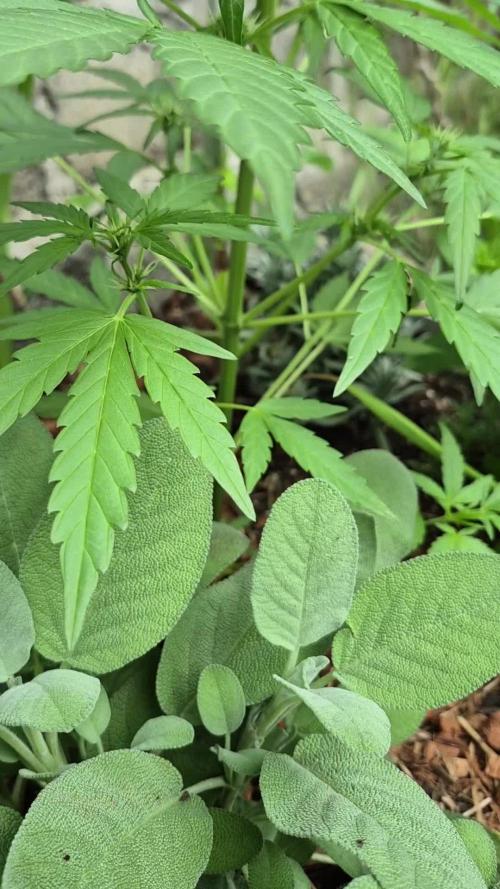
Die Pflanze streckt sich schön und die Blüten bilden sich.
Hätte nur nach der Beschreibung gedacht, dass die Blüten etwas schneller wachsen.

Likes
Comments
Share


Likes
3
Share


@Unculti_responsable
Follow
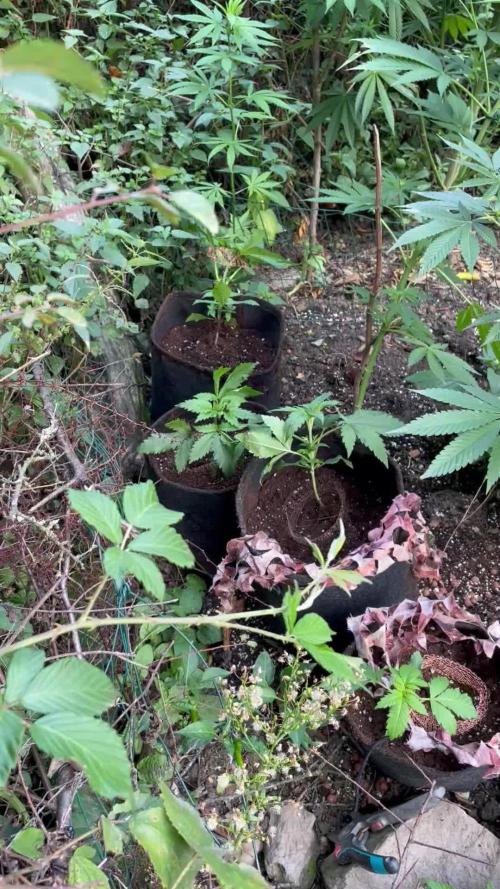
La verdad que viene creciendo muy bien , todos los días veo que mejora , ya estan asomándose las primeras raíces por abajo de la maceta , la voy a dejar colonizar todo el pan de sustrato , para trasplantar , vamos a fertilizar con nitrógeno, micorrizas y un poco de guano en riegos !!

Likes
75
Share


@Sider79
Follow
Pure distilled h20 for her last week ..It got pretty chunky over the last two weeks.


Likes
13
Share

@NSABND
Follow
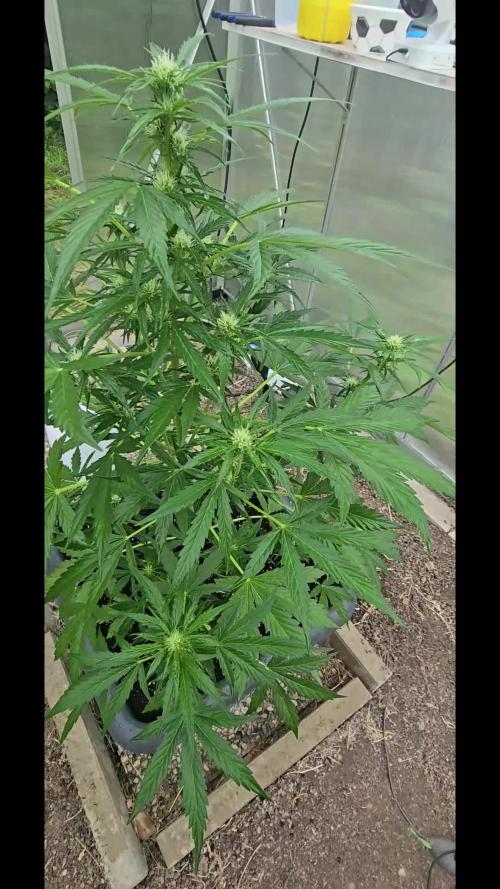
Let´s start a new week 😎👌
Day36 very sunny and warm... "Hilde 2.0" goes well 😎👍🙏
Day37 starts with massive cloudy weather but later it turns into a sunny afternoon 😏🙏
Day38 was cloudy and rainy and not so much sun around here 😳😵
Day39 damn cloudy and rain....wth is this summer doing 😵😧
Day40 wth is wrong with this summer 😡 cloudy and rain and no sun 😵😨
Day41 little bit summer came back 🙏 cloudy but with some nice sunny times 😎👍
Likes
6
Share


@FRENCHPASSIONFARM
Follow
🌸 Week 1 – Flowering Phase Begins
After a solid preflower prep, I’ve officially flipped the grow to flowering!
I’m now running 3 phenotypes in bloom:
🔹 #36
🔹 #38
🔹 #45
Pheno #40 has been isolated due to potential signs of hermaphroditism — nothing confirmed yet, so I’ll keep a close eye on it over the next couple of weeks before making a final decision.
Structurally, things are getting interesting:
🔸 Two phenos are showing a tall, US-style stretch, with wider internodal spacing — just like what I’ve seen in modern cultivars I’ve grown in the past.
🔸 The other two are more old-school in structure, shorter and stockier, with tighter node spacing.
🌱 All 4 phenos have been successfully backed up in a DWC cloner for preservation — the hunt continues!
Really excited to see how these girls develop over the next few weeks 🙌
Let’s bring out those peachy gassy terps !


Likes
37
Share


@AutoCrazy
Follow
Well has been it’s. This fine looking Mango saw a pot upgrade. I moved her into a 45 gallon pot of my custom super soil mix. The 10 gallon pot she came out of looked so tiny when I took the root ball out and put her in the 45 😂😂
She has taken well to her bigger home and I expect her to really start packing on some size in the coming weeks.
I have been doing a lot of defoliation of the inner and lower portions. I will likely do another round of topping and more LST to really spread things out and maximize the canopy structure.
Onward!!
😎🍿🍻
