


Likes
Comments
Share


@4Haut
Follow
Hi@ALL,
it's the end of the second flowering week, unfortunately, I’m dealing with fungus gnats. As a countermeasure, I’ve used nematodes. The challenge is that during the flowering phase, I prefer to let the soil dry out completely before watering. However, nematodes require consistently moist conditions to survive. Additionally, I’ve read that nematodes can take three to four weeks to eliminate all the eggs – quite a long time. I might also try neem oil.
Also, I’ve noticed that the tips of 20%-25% of the leaves have turned brown and become crispy. This occurs both at the top and bottom of the plant. I suspect I’ve provided too much light. My biggest challenge currently is finding the right light intensity. I’m using an AC Infinity Ionframe EVO3 with 280W. According to the instructions, I should operate it at 100% intensity during the flowering phase when it’s 30 centimeters away. However, that feels like a full-blown laser show for the plant. (supposedly around 1600 PPFD). Now I’ve positioned it at 45 centimeters and 70% intensity. According to the Photone App, the upper part of the plant receives approximately 900-1000 PPFD. Unfortunately, I can’t fully trust my smartphone an the app… well, that’s what happens when you turn everything into science 😅
And one more thing caught my attention: the smell. It’s not there. I can hardly smell anything. My GG#4 is three weeks old and fills the entire room with its strong odor, but the L.A. Amnesia simply doesn’t smell like anything. Somehow, that worries me a little 😩
Overall, the plant seems "healthy" and does its thing, but I’m unsure whether to prune the lower branches. Although they receive light, they’re about 10-15 centimeters below the upper ones 😓
Wish you a nice day. 👋😀👍
GrowHard.GoPro. 💪

Likes
55
Share


@Reyden
Follow
Devo dire che le due Gorilla RQS sono contente e stanno bene nei loro nuovi vasi da 11 L ed in confronto a settimana scorsa sembrano più sane e in forma, purtroppo sono stato quasi una settimana senza misuratore PH perché mi dava problemi e quindi per una volta non ero effettivamente sicuro quanto era bilanciata la soluzione ma penso di non aver fatto danni…andiamo avanti, ieri ho sciacquato solo con acqua a PH 5.9/6 e ora aspetto che asciuga bene questa volta salgo con EC e arrivo intorno a 1250…vediamo come reagiscono 🧐😶🌫️

Likes
8
Share


@Cannabis_Sativa
Follow
the Germination process was very easy and had no problems to sprout in paper towel. After she first touched water it needed 5 day to get root and open shell with her tiny white baby leaf and next I put it in to the pot in coco coir it was already watered and i just put the cup on top next day she was fully green and strong stem with little hairs <3

Likes
Comments
Share

@Seabass
Follow
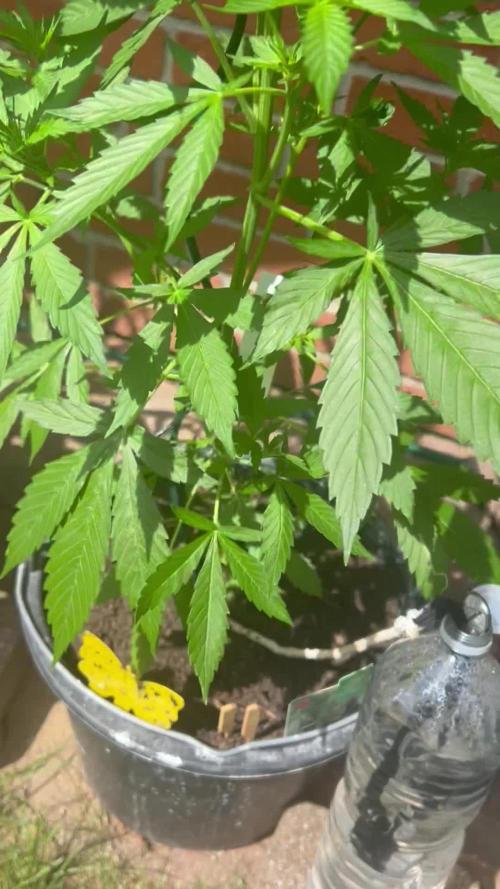
29.6.
30++ grad dieser Woche
Florfliegen Eier gegen Läuse. Bisher kaum Befall.

Likes
4
Share


@The_Projexx
Follow
Welcome to week 3 of flower for these fine ladies! As the stretching period comes to and end in about a week or so I'm excited to see the plant's develop their flowers. Some of the plants have already developed quited the frost for their age and as the cycle continues its just going to get more pronounced. Some of the plants are giving off a faint smell now mostly the Banana Smoothie smelling of cream and bananas so far. Overall I'm really pleased with what's going on so far and can't wait for further development of the flowers!
Huge shout out to both Hidden Vault Genetics as well as @MarsHydroLED for all the work they put in to make growing a breeze
Extra special shout out goes to all my followers and people who stop into the diary alike. Keep inspiring to grow!
-The Projexx
Day#15F Ladies continue their stretching, will be looking to remove some leaves to open the plants up soon.
Day#16F Watered ladies 4L each at 550PPM. Things are moving along as the plants keep stretching like crazy
Day#17F Ladies are producing more and more size on their cotton balls while stretching up and stacking hard.
Day#18F Ladies are producing quite the frost levels for their age. Watered 4L each at 550PPM.
Day#19F Pictures N/A. Plants continue to stretch and stack.
Day#20F Ladies look like their slowing down on their stretch hopefully haha. Watered ladies 4L each at 550PPM.
Day#21F The plants are still stretching abit while putting mass on their flowers slowly. Wont be long till we see some giant flowers covered in trichomes!
Recap: Things went very well this week, some of the plants are starting to put out a smell and everyone's pumping trichomes like crazy! With about a week or so left on the stretching period I will be looking to place my secondary nets very very soon. I'm looking forward to seeing
what the plants smell like and how they continue to develop their flowers!
Likes
19
Share


@Naujas
Follow
I finally came back from vacation, and I already visited it:) it doesn't look bad, a few higher branches look like the leaves are on fire, a lot of leaves were cut off yesterday so that the plant would devote more energy to the flowers:) I think the flowers will burst and expand within a week:)

Likes
2
Share


@CalGonJim
Follow
6/9 MONDAY 12am. Looks good. Using distilled water in a spray bottle for now, did a light mix of Grow Con .5ml per L ONE TIME...good.
6/10 weed good. In a kit stickers temperature indicators too hot icon shows hot face or something. without power like fishtanks sticker thermometer. 3pm BPP Picture today Analog special effects lost a day to lighting and special effects all practical im also a tiny bit demonic it adds to the character.
4pm look up fluid dispersal in root medium
6/13 5am everyone looks good medium lights. Now to try the fiberglass cubes.... tired of bugs hope I dont regret this...
6/14 1230pm looking good. no problems. very tired. found a little pair of unicorn slippers from a long time ago. probably headed to another Leaving Las Vegas melt down so who knows.
1pm
6/15 245am BPP is hard to grow. so its good for a small container grow since it seems to be a smaller plant, bigger containers dont make that much of a difference. It's this one is growing great setting 5 on AC Humidity dome now, with blue & red as well full power. Going to try fiberglass for all this time.
1053am IVE SEEN THINGS YOU PEOPLE WOULDN'T BELIEVE ....BECAUSE I CANT UPLOAD MY PRECIOUS PHOTOS... I CANT SPELL BELIVE...GOT DAMNITO

Likes
4
Share

@HanzzCZ
Follow
What’s uppp! Week twelve (fourth in bloom) is behind us.✌️🌼
This week, she didn’t grow any taller and stayed at the same height.
Two days after defoliation, I lowered the light to 25 cm. I think she handled it just fine. 👌
She doesn’t seem to be lacking anything or showing any signs of issues. 😎
The buds are starting to get frosty, gaining volume, and they smell like wild strawberries. 🍓
Good luck every one! ✌️
Any tips or advice are always welcome 😂🔥
CZ
____________________________________________________________________________________________________________________________________________________
Servus, dvanáctý týden, čtvrtý týden v květu, máme za sebou. ✌️🌼
Holka ten to týden už do výšky nešla. Dva dny po DEFO jsem snížil světlo na 25cm. Myslím si, že to pobrala v pohodě. 👌
Nevypadá, že by ji něco chybělo nebo vadilo.😎
Šišky začínají cukrnatět, nabírají na objemu a voní po lesních jahodách. 🍓
Ať se daří! ✌️kdyby měl někdo nějaký typy/rady uvítám váš komentář. 😂🔥

Likes
6
Share


@I_Identify_As_A_Dan
Follow
Week 9 for GMO 8 by atlasseed
The indoor smaller plant is really starting to bulk up on the flower size for sure seems like maybe it has another week maybe 2 before being done. While the other plant is now outdoors because i ran out of room indoors & the bud on the outdoor one looks completely different likely because of the 40+ degrees sun outdoors ATM but doesn't have any burn leaves so that's great. Actually looking forward to seeing how she smokes... maybe she gets ran again in a few weeks? 😎

Likes
29
Share


@yvet_te
Follow
Waited a little long to top the three shorties. Made a little time lapse from weeks 4.5 and 5.5, kind of cool to watch them puff up and grow! They’re coming along nicely!
Likes
12
Share


@Tanjalope
Follow
Been busy starting back at work, not had as much time as I would of liked to keep an eye on the garden especially now they are all flowering.
I thought I may have harvested a plan or 2 by now but the girls are still doing their thing.
The original Russian is going to be the first over the line though. Lovely smell coming off her is unreal.
Hope everyones gardens are doing well. Peace 🍁


Likes
7
Share


@Cannasino9
Follow
now it's time to see really what's King Kong... all this week only with PK, no more C4 :)

Likes
6
Share

@Radagast_
Follow
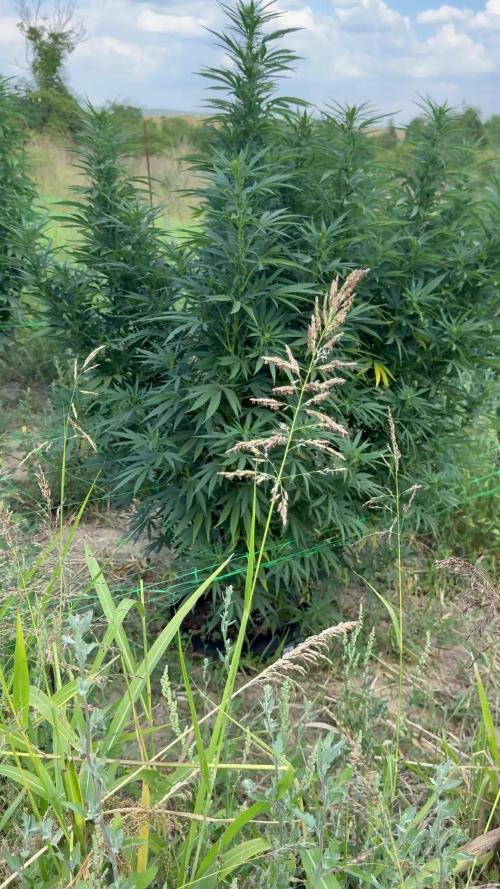
17.08.
OG KUSH
Day 114# Flowering Day 6#
The plant was at the end of its 16th week 2 days ago.
The flowering has begun.
Video and photos are from yesterday.
Stay High and Keep Growing!!!
Likes
29
Share


@Jjthejetplane79
Follow
This has been one of my better autoflower runs. Much love to fastbuds for hooking me up with these fine autoflower genetics. One love canna-fam
Likes
5
Share

Likes
Comments
Share


@JamieKnolliver
Follow
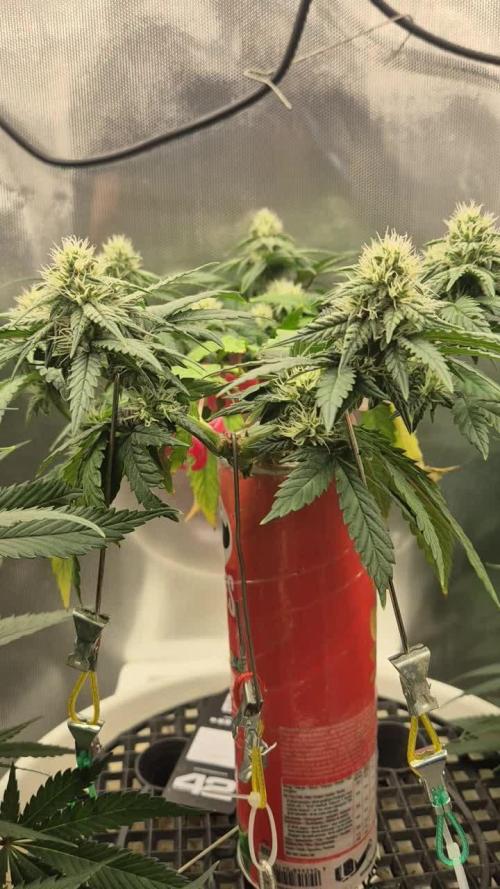
Eine Knospe der Mac1 hat etwas entwickelt, das ich zuvor noch nie gesehen habe.
Nach einer Recherche hat sich herausgestellt, dass sie ‚Resin Bleed‘ hat, was bedeutet, das Harz tritt aus den Knospen aus und hat sich zu einem zähen Tropfen gesammelt.
Wir stehen etwa 3 Tage vor der Ernte.
Ich habe heute das letzte Mal Wasser gegeben und werde sie morgen für 2 Tage im Dunkeln stehen und werde sie dann ernten.





Likes
38
Share


@J_diaz420
Follow
Encantado de la oportunidad de crecer estás variedades, sin duda, llenaron todas mis espectativas 🍀😍🤩
Likes
10
Share


@Lazuli
Follow
I just defoliated her one last time, no clue how much longer she needs now
Likes
2
Share


@Mr_nugs_lover_David
Follow
The nuggets are very sticky and compact, they are frosty as hell and the aroma is very strong already. I loved this strain. She's such an amazing autoflowering strain. Very powerful.
