


Likes
Comments
Share


@420DeepGrow
Follow
Gracias al equipo de Seedsman y XpertNutrients sin ellos esto no sería posible.
💐🍁 Bubba Cheescake:
Bubba Cheesecake es un cruce de Bubba Kush anterior al 98 con Cheese Cake (Wedding Cake x Exodus Cheese). Se trata de un híbrido 70% índica con muy buenos rendimientos, alto en THC y bajo en CBD. Bubba Cheesecake prospera en interiores y exteriores. En interior se aconseja un corto periodo de crecimiento vegetativo debido a la cantidad de estiramiento que presentan las plantas. Las plantas pueden crecer hasta una altura de 250 a 350 cm. cuando se deja crecer naturalmente al aire libre. En interior, la floración dura entre 60 y 65 días, con rendimientos entre buenos y altos, de 400 a 550 gr/m2. Las plantas de exterior son capaces de producir entre 700 - 800 gr. peso seco. En las latitudes norteñas, en exterior, los productores pueden esperar cosechar a principios de octubre. Los cogollos son grandes y duros como piedras. Las plantas maduras muestran atractivos colores púrpuras y azules y brillan con una resina pegajosa que cubrirá las manos del cultivador si no tiene cuidado. El componente Wedding Cake agrega dulzura al sabor del regaliz y el aroma es terroso y musgoso. La producción de THC es muy alta con un nivel bajo de CBD. El efecto es intensamente narcótico, fuerte y duradero.
🌻🚀 Consigue aqui tus semillas:
🍣🍦🌴 Xpert Nutrients es una empresa especializada en la producción y comercialización de fertilizantes líquidos y tierras, que garantizan excelentes cosechas y un crecimiento activo para sus plantas durante todas las fases de cultivo.
Consigue aqui tus Nutrientes:
https://xpertnutrients.com/es/shop/
📆 Semana 12:
Ultima semana de crecimiento antes de pasar a floración tras el solsticio de verano.
He aprendido mucho sobre el cultivo de exterior, el próximo año será diferente....
Continuo con las dosis de fertilizantes recomendada por el fabricante. 📆 Semana 12:
Ultima semana de crecimiento antes de pasar a floración tras el solsticio de verano.
He aprendido mucho sobre el cultivo de exterior, el próximo año será diferente....
Continuo con las dosis de fertilizantes recomendada por el fabricante.

Likes
17
Share


@Naujas
Follow
it's amazing, this growth looks much better than my first attempt, my decision was to put a smaller pot and change the light - the girl really liked it, FastBuds goriilla cookies with a small space manage perfectly:).

Processing
Likes
2
Share


@Squaregrouper
Follow
She is pre flowering enter phone ring I would imagine this week.... I expect a pretty nice sized tree

Likes
20
Share


@CanaryGrow
Follow
i was away from week 4 - 6, they have been only watered 3 times and sprayed couple of times, was also first time leaving them outside thru the night and strong winds.
Some more aggressive LST and first serious defoliation, they needed a week to really start growing again, then they exploded,

Processing
Likes
89
Share


@biggreens420
Follow
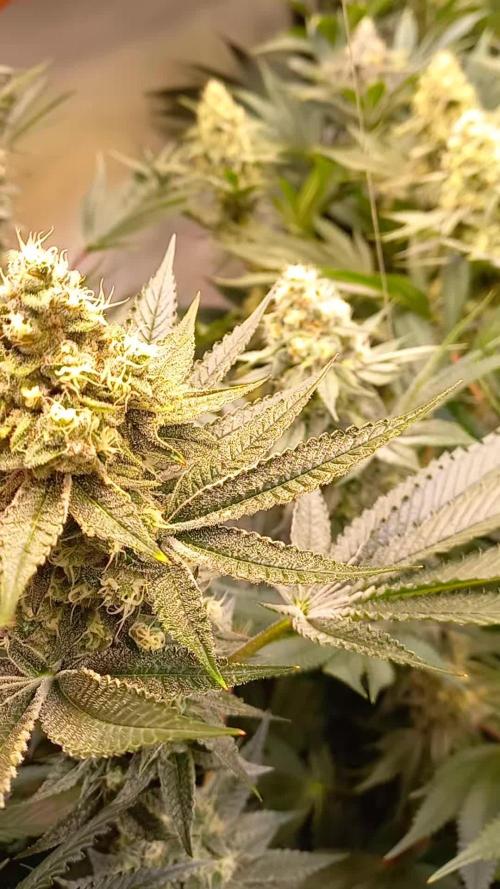
Shes chunky as nugs are solid shes got a nice fade leaves dropping and turning yellow been in flush since 17/11 ran 8l through her and will be watering with 2ml of terpinator to 1l water at 2l per day for the next 10/14days she smells really sweet a little earthy aswell really pungent now trichs are near enough all cloudy with some ambers should be nice by the time flushing ends . tied a few of the top buds up for support during flush will get some better pics first plant in the video is the cut the next is 2 gorilla then blue mystic two further to the right are gsc and another cut last one in the vid is the critical thought id put a little vid of the whole room thanks for reading happy growing guys




Likes
26
Share


@KingSalomonsWeed
Follow
Duftet. DUFTET hervorragend. Total irre. Caramel Schokolade, vanille süß.
KLEBRIG. ALLES!
GRINS
BUD MACHINE!
Day 51 laut breeder fertig. Ok noch 5 tage.
Aber fertig, ja. Defenitiv. Lasse sie trotzdem noch im Reaktor, denn sie dürfen gerne noch ein wenig reifen. Heute nochmal mit dünger. Den Rest ihrer Zeit dann nur noch Wasser.
19.09.16 16? Ok 17? Egal.
TRICHOME CHECK was successfull..
Har har ok mostly milky. A lot of trychomes not ready.. Buds re not rock hard. Like you touch a dog. Not the fat ones i mean.
And they grow up. Everyday. The buds. I mean theyre not the biggest. But i saw gelato buds spend in dispenserys
(www). Who re smaller than mine.
They grow up in height, tall and weight. Trichomes re the same as always... 😛
Har har.. GANJA THERE EVERYWHERE.
STEAM.
SOME LEAVES(heavy you can see there where she eats aphids. NO JOKE.(@sugarleaves)
First trichomes surrounded it. Than one day later you see them stuck in some trichoms. Than Abracadabra NO JOKE after a few days and nights only some darker trichomes left there. By the time they go brighter again as the others, but bigger).
Sticky smell girl. Mjam
HALLEJUULIA 13 FINGERS A LEAF!
Ganjaloveriamtobringsomedelicious GELATO41FASTfromSEEDSTOCKERStomyworld.
Im satisfied :)
Day 54 of flower. Anything going well.
Did a little pre chop. 3 buds like( with milky trichoms) because of room problems.
They hang dark inside the tent.
And switched my blue light off.
Now only white and red. For faster ripening
20.09.,growing growing growing.
21.09 trichomes re ready. Milky most but ready. 8 weeks of flower, and they're ready. GOOD WORK SEEDSTOCKERS
But i will give her1or 2 more weeks.
Because this strain is so
OUTSTANDING..
She DESERVES a little more time because of some inaccuracies from me......................
And i really want this indica Punch.
For this is better to become some amber trichoms... And weight.. 😛 💪
DAY 58 OF FLOWER.
She is ok. Ripening.
But the aphids.
NOW ITS TIME TO GO TO WAR
☣️ ☣️ BIO LOGICAL WEAPON ☣️ ☣️
BASIL WATER
B weapon for aphids.
Day 59 of flowwring: in progres.
And found the first trichoms going amber.!!!!!!! YES.!!!!!
Day 61. Nuggets or Buds? BUDS!
Day 63. Waiting.
Day 65 Chop of Buds the Rest needs more time. Where re my buds? Fallen, washed, now about to dry.


Likes
15
Share


@DRO420
Follow
Coming into the final weeks of flower . Buds are fattening up and the hairs are changing color. Leaves are wilting and or changing color like they do in Fall. Looking very nice

Likes
44
Share


@MadeInGermany
Follow
Info:
Unfortunately, I had to find out that my account is used for fake pages in social media.
I am only active here on growdiaries.
I am not on facebook instagram twitter etc All accounts except this one are fake.
Hey everyone :-)
Another nice week goes by and it is slowly becoming a bush from training 😊.
This week it was poured 2 times with 1 l each time (For nutrients, see the nutrient table above).
She was trained once again with topping.
You still have some time until it blooms until space is free :-).
Otherwise everything was checked and cleaned like every day.
Have fun with the update and stay healthy 🙏🏻
You can buy this Nutrients at :
https://greenbuzzliquids.com/en/shop/
With the discount code: Made_in_Germany you get a discount of 15% on all products from an order value of 100 euros.
You can buy this Strain at
https://www.amsterdamgenetics.com/product/super-silver-haze/
Type:
Super Silver Haze
☝️🏼
Genetics:
Haze x Skunk #1 x Northern Lights
Type:
70% Sativa – 30% Indica
👍
Vega lamp:
2 x Todogrow Led
Quantum Board 100 W
💡
Bloom Lamp :
2 x Todogrow Led
Cxb 3590 COB 3500 K 205W
💡💡☝️🏼
Soil :
Canna Coco Professional +
☝️🏼
Nutrients :
Green Buzz Liquids :
Organic Grow Liquid
Organic Bloom Liquid
Organic more PK
More Roots
Fast Buds
Humic Acid Plus
Growzyme Big Fruits
Clean Fruits
Cal / Mag
Organic Ph - Pulver
☝️🏼🌱
Water: Osmosis water mixed with normal water (24 hours stale that the chlorine evaporates) to 0.2 EC. Add Cal / Mag to 0.4 Ec Ph with Organic Ph - to 5.8


Likes
9
Share


@LilCeeDaWeedGod
Follow
Week 11
April 23
- stretch seems to be over and I’ve raised the light to max height so let’s hope
-looking good so far no deficiencies other than a bit of light burn/bleach because lights were to close
-will be top dressing later this week before a watering
-no smells just yet and thankfully as I need to get the temp down in the tent before later in flower
Likes
12
Share


@ELPIRATA
Follow
Ya se han notado un monton de avances en cuanto a maduracion de flores,
se ha tomado la decesion de esperar a secar las 4 plantas al mismo tiempo por motivos de espacios.
4 plantas con lavado de raices, se lograra el objetivo de 50 g por planta ?
+se ha perdido parte de la visualizacion del seguimiento por tiempo personal.


Likes
1
Share


@undermink
Follow
I stopped giving them nutrients at all since it's almost harvest time :) I guess about two weeks or so to go. I watch her trychomes all the time :) Some of them seem to get brownish :) They look and smell amazing!
Likes
62
Share


@masterofsmeagol
Follow
9/5 PREVENTATIVE SPRAY OF 1TBSP POTASSIUM BICARBONATE AND 1/4 TBSP DAWN TO TREAT WPM. Foggy this morning and rained again last night. Weather hasn't been the greatest. Not seeing much PM unless it advanced so much that it just killed all the leaves. I still have yellowing leaves that die. It's probably septoria and I probably should've used a copper fungicide but I'm in flower. Ice cream cake and a couple seedlings are far behind but everything else seems like it will finish. This weather has been getting me down. I may feed later today or I might wait until tomorrow. I also need to add a few more supports. Wet buds are heavy. I'm getting there. Slowly but surely.
9/6 FED TWO GALLONS TO GARDEN
PLANNED TO USE BEASTIE BLOOM BUT COULD ONLY FIND CHA CHING. Rained heavy all night. I came back to hanging branches but no damage. I added some supports quickly and tied up a hanging branch. Ran a couple strings across the frame but I have more work to do. I took some pics and a video. At least now I'm seeing buds. Walking down there is like getting slapped in the face with a wet bud (which happened today). It's a super strong smell. Trichomes are developing at various stages. This is when things get paranoid but it's also fun. I can't wait until fall.
9/7 Plants we're wet this morning so I gave them a good shake. Defoliated what needed it and added a couple more supports. I don't like these leaves falling like this. Didn't have time to work on the ice cream cake that's growing into the fence. Now it's a race with the weather. Things are looking pretty good but I'm getting antsy. Also I'm not sure what caused all this weird damage from earlier and if I should just cut off useless branches. I'm hesitant as I don't want to create an open wound for more fungal infections.
9/8 Rained like crazy. Super heavy at times. I added a video I took yesterday. and took some pictures. Defoliated some dead stuff but it's hard to work in the pouring rain. Forecast said three inches. Plants are booming thoughgh
9/9 Still raining. Hard. No damage. Defoliated what I could and added supports where needed. I do need to say the plants I'm growing are some resilient girls. They've taken a beating and come back kicking butt. If we can get a few good days in a row shit will really start taking off. Need to spray BT and do another k bicard spray or switch it up with peroxide. I've checked the tops of my plants with a ladder and things look good so far. I'm super excited.
9/10 Poured like crazy. I fucked my diary up a bunch of times so I'll probably have to upload vids/pics again. Cannabis gods heard my cries and at noon time it's all sunshine. Was able to defoliate what needed it. Plants are just exploding. I'll do pics tomm. BT and K Bicarb spray needed. YEAH IM MISSING A BUNCH OF PICS AND A VIDEO. WILL HAVE TO FIX LATER
9/11 Beautiful sunny day. Found my beastie bloom and fed two gallons to the garden. I started low but I'll increase if it seems to benefit. Continued with only 1tbsp of grow big. Then if I like it I'll move on to cha ching. One plant will be ready VERY shortly. I took out my scope to check things out. In the bright sun ours easy to spot little pm patches. Oh well. I'll spray tonight. Everything looks so amazing. Also found more moth eggs it's time for a BT spray. Defoliated and added more supports as it's windy af out here


Likes
18
Share


@GYOweed
Follow
My @greenpointseeds Orange Blossom Special was a male so i deleted it here but left it outside since it was healthy and had a spicy sharp tangerine smell so ill get some pollens from it.
Did slight defoliation. They too pretty!
Any1 got pollens? NV USA
Drinking 1/4gal a day each for 5 gallon is normal right?
You can see the suttle differences. Tw is more lanky, more stretchy, zesty, more narrow fingers. Bruce is bushy, strong stems no wires needed, wider finger fan leaves. Just interesting to me.


Likes
2
Share

@Thedibber
Follow
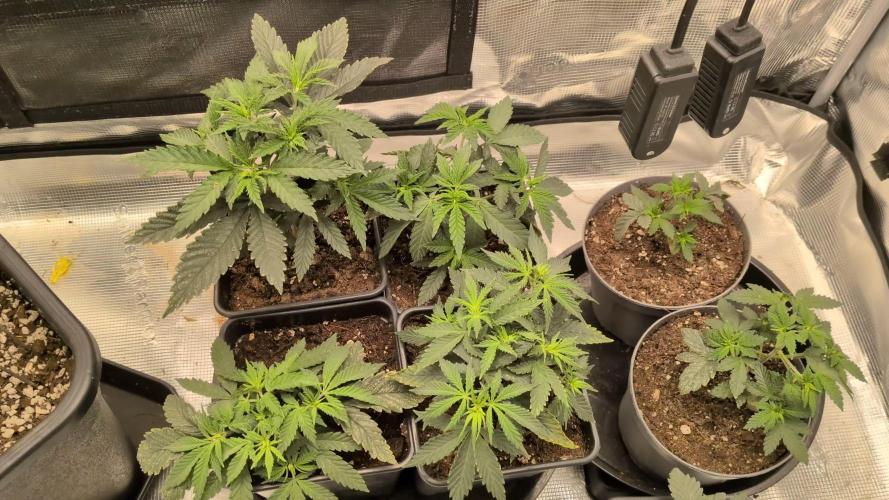
Weekly feed of microben terra actus looking healthy all took topping well
Likes
17
Share


@Drtomb
Follow
5 days away from trim. Flush is over 15 days in and the leaves are showing it. Smell is extremely potent snd crystals are sitting with about 5% amber.

Processing
Likes
5
Share


@Major
Follow
muy, muy buena semana, las flores se están formando cada vez más y cada vez más grande. Tenía una docena de hojas que se han vuelto amarillas. Creo que espero demasiado para que la tierra se seque. 60cm en algunas plantas hasta ahora está bien va👌👌👌✌️👍👍


Likes
10
Share


@I_Identify_As_A_Dan
Follow
Week 11 for White Widow by Greenhouseseedco
She filled out nicely after her defoliation, just strengthening the branches daily now for her to be able to hold more weight when it comes to flower time.
Because of the messed up light schedule + massive shifts of temps from 28+ to 6... outside the tent so really for 7 hours their growth is completely stunted, but I'm making due with what I have 😂
