The Grow Awards 2026 🏆
Likes
Comments
Share
@Ninjabuds
Follow
I wish they didn't make me do this to get a smileI wish they didn't make me do this to get a smileI wish they didn't make me do this to get a smileI wish they didn't make me do this to get a smileI wish they didn't make me do this to get a smileI wish they didn't make me do this to get a smile
Likes
13
Share
Likes
154
Share
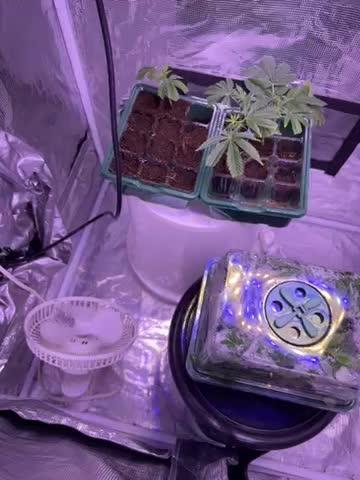
@FAST_BUDS, Hi all the happy people here in GrowDiaries. This is my second cultivation ever and it will be fun to try a bigger space than my closet grow. First, I'm just going to say I'm done with the construction of my new growroom. I put some pictures on the construction here in week one. The room is 2.14 meters by 1.7 meters and has a ceiling height of 2 meters. It provides a floor area of ​​3.6 square meters. I use a 54 Watt Lightwawe T5 for germination and 2 Pcs 400 Watt HPS lamps. I have a channel fan that replaces the room air about 40 times an hour to get a comfortable environment in the room, the air enters a fresh air intake from the outside. The air is purified through a carbon filter to then leave the room to the rest of the basement. Then I use that heat to heat the rest of the basement. I will use 8 pcs 15 liter Autopots to grow with and a 100 liter water tank that supplies the pots of water and nutrition. I will grow completely organically in soil and will watercure my buds to get the best possible medicine for me. But there are no cultivation rooms to be displayed here, so I continue with what is most important. Today I have put my seeds in my moisture dome and hope the seeds have germinated within a few days. I am very excited to see how the new growroom will work and how this new secret CBD plant from @FAST_BUDS, will turn out. .............................................................................................................................................................................................................................................................................................................................................. Update 2017-08-15. Both seeds have germinated and planted in small pots inside the humidity dome. I'm so glad it worked so well and now it's just hoping they'll start growing and become 2 big healthy girls :) ............................................................................................................................................................................................................................................................................................................................................... Update 2017-08-16. I have mixed my own soil today. Its 40% sieved peat harrow H2-H4 0-30 mm, 45% sieved peat harrow H4-H6 0-30 mm. 5% sand and 10% of compost soil. And i use 15% of perlite and mix it all together. .................................................................................................................................................................................................................................................................................................................................................... 2017-08-21 The 2 sisters are doing great, Nr2 is a bit after Nr1 . Some new pics. ............................................................................................................................................................................................................................................................................................................................................................................ 2017-08-23. Transplanted from humidity dome and the small germinating pots to 15 liter autopots. ................................................................................................................................................................................................................................................................................................................................................................................ 2017-08-27. The girls have settled in to there new home of the 15 liters autopot after a little transplant chock. Now the real week 1 starts for me and the girls. 4 new pics. --------------------------------------------------------------------------------------------------------------------------------------------------------------------------------------------------------- 2017-08-29. New movie of the girls. Its no water for 3 days now so the roots develop more and match the plant above the soil. The temp controlled fan is awesome, its easy to set what temp you like to have in the room. Right now its 28 celcius. And humidity is 56%. -------------------------------------------------------------------------------------------------------------------------------------------------------------------------------------------------------------------------------------------------- 2017-08-29. Hello to you who read my diary, I just want to say that I am pleased that you have chosen to check in with me and in my diary. I just want to say that I do this for myself and for a steady flow of my medicine. Everything you read and see in my diary is 100% honest and I will never distort or beautify anything here. I document my crops so that I can learn from my mistakes and also to look back at those different crops. I try to update with pictures every day and with text if something special has happened in the garden. This is my strainhunt for the best medicine and the beginning of my journey with cannabis and the cultivation of it. ----------------------------------------------------------------------------------------------------------------------------------------------------------------------- 2017-08-30. Cleaned the room this morning, just vacuuming and cleaning with chlorine solution. Im testing the fan to control temp and humidity, it works great. Added some pics with measurements and a movie. Everything is looking great right now. ----------------------------------------------------------------------------------------------------------------------------------------------------------------------------- 2017-08-31. New video of the girls. ------------------------------------------------------------------------------------------------------------------------------------------------------------------------------- 2017-09-01. New pics and videos. Gave each of the girls with 2 ml Alg-A-Mic, 4ml Bio-Grow, 4ml Bio-Heaven and 10 ml Formulex mixed in 2 liters of water. I hope they like it :) ------------------------------------------------------------------------------------------------------------------------------------------------------------------------------------------------------------------------------------------- 2017-09-02. New pics and the girls liked the water and nutrients yesterday. ----------------------------------------------------------------------------------------- 2017-09-03. Video of the girls this morning. Kl 16.00. Did some defoliation on the girls. Videos added. KL. 23.00. New video.
Likes
2
Share
Likes
55
Share
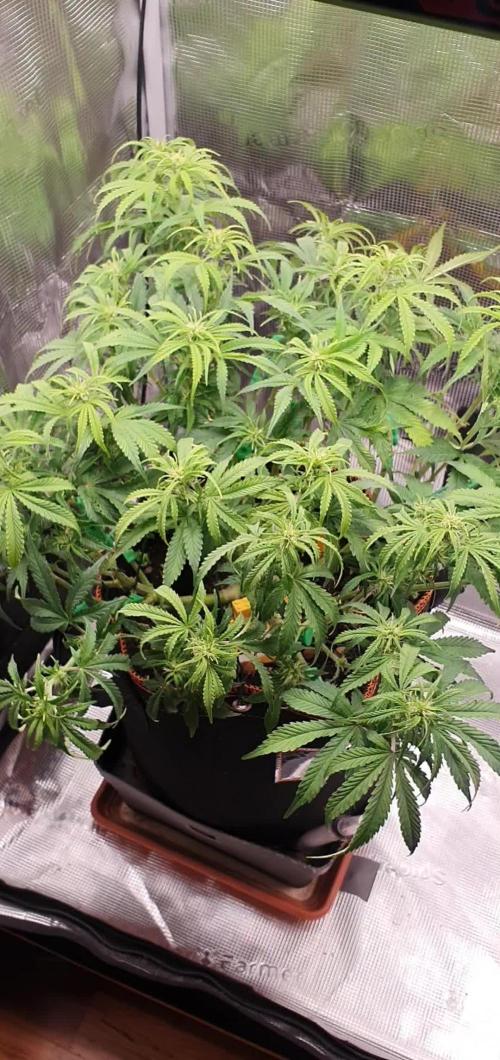
What's in the soil? What's not in the soil would be an easier question to answer. 16-18 DLI @ the minute. +++ as she grows. Probably not recommended, but to get to where it needs to be, I need to start now. Vegetative @1400ppm 0.8–1.2 kPa 80–86°F (26.7–30°C) 65–75%, LST Day 10, Fim'd Day 11 CEC (Cation Exchange Capacity): This is a measure of a soil's ability to hold and exchange positively charged nutrients, like calcium, magnesium, and potassium. Soils with high CEC (more clay and organic matter) have more negative charges that attract and hold these essential nutrients, preventing them from leaching away. Biochar is highly efficient at increasing cation exchange capacity (CEC) compared to many other amendments. Biochar's high CEC potential stems from its negatively charged functional groups, and studies show it can increase CEC by over 90%. Amendments like compost also increase CEC but are often more prone to rapid biodegradation, which can make biochar's effect more long-lasting. biochar acts as a long-lasting Cation Exchange Capacity (CEC) enhancer because its porous, carbon-rich structure provides sites for nutrients to bind to, effectively improving nutrient retention in soil without relying on the short-term benefits of fresh organic matter like compost or manure. Biochar's stability means these benefits last much longer than those from traditional organic amendments, making it a sustainable way to improve soil fertility, water retention, and structure over time. Needs to be charged first, similar to Coco, or it will immobilize cations, but at a much higher ratio. a high cation exchange capacity (CEC) results in a high buffer protection, meaning the soil can better resist changes in pH and nutrient availability. This is because a high CEC soil has more negatively charged sites to hold onto essential positively charged nutrients, like calcium and magnesium, and to buffer against acid ions, such as hydrogen. EC (Electrical Conductivity): This measures the amount of soluble salts in the soil. High EC levels indicate a high concentration of dissolved salts and can be a sign of potential salinity issues that can harm plants. The stored cations associated with a medium's cation exchange capacity (CEC) do not directly contribute to a real-time electrical conductivity (EC) reading. A real-time EC measurement reflects only the concentration of free, dissolved salt ions in the water solution within the medium. 98% of a plants nutrients comes directly from the water solution. 2% come directly from soil particles. CEC is a mediums storage capacity for cations. These stored cations do not contribute to a mediums EC directly. Electrical Conductivity (EC) does not measure salt ions adsorbed (stored) onto a Cation Exchange Capacity (CEC) site, as EC measures the conductivity of ions in solution within a soil or water sample, not those held on soil particles. A medium releases stored cations to water by ion exchange, where a new, more desirable ion from the water solution temporarily displaces the stored cation from the medium's surface, a process also seen in plants absorbing nutrients via mass flow. For example, in water softeners, sodium ions are released from resin beads to bond with the medium's surface, displacing calcium and magnesium ions which then enter the water. This same principle applies when plants take up nutrients from the soil solution: the cations are released from the soil particles into the water in response to a concentration equilibrium, and then moved to the root surface via mass flow. An example of ion exchange within the context of Cation Exchange Capacity (CEC) is a soil particle with a negative charge attracting and holding positively charged nutrient ions, like potassium (K+) or calcium (Ca2+), and then exchanging them for other positive ions present in the soil solution. For instance, a negatively charged clay particle in soil can hold a K+ ion and later release it to a plant's roots when a different cation, such as calcium (Ca2+), is abundant and replaces the potassium. This process of holding and swapping positively charged ions is fundamental to soil fertility, as it provides plants with essential nutrients. Negative charges on soil particles: Soil particles, particularly clay and organic matter, have negatively charged surfaces due to their chemical structure. Attraction of cations: These negative charges attract and hold positively charged ions, or cations, such as: Potassium (K+) Calcium (Ca2+) Magnesium (Mg2+) Sodium (Na+) Ammonium (NH4+) Plant roots excrete hydrogen ions (H+) through the action of proton pumps embedded in the root cell membranes, which use ATP (energy) to actively transport H+ ions from inside the root cell into the surrounding soil. This process lowers the pH of the soil, which helps to make certain mineral nutrients, such as iron, more available for uptake by the plant. Mechanism of H+ Excretion Proton Pumps: Root cells contain specialized proteins called proton pumps (H+-ATPases) in their cell membranes. Active Transport: These proton pumps use energy from ATP to actively move H+ ions from the cytoplasm of the root cell into the soil, against their concentration gradient. Role in pH Regulation: This active excretion of H+ is a major way plants regulate their internal cytoplasmic pH. Nutrient Availability: The resulting decrease in soil pH makes certain essential mineral nutrients, like iron, more soluble and available for the root cells to absorb. Ion Exchange: The H+ ions also displace positively charged mineral cations from the soil particles, making them available for uptake. Iron Uptake: In response to iron deficiency stress, plants enhance H+ excretion and reductant release to lower the pH and convert Fe3+ to the more available form Fe2+. The altered pH can influence the activity and composition of beneficial microbes in the soil. The H+ gradient created by the proton pumps can also be used for other vital cell functions, such as ATP synthesis and the transport of other solutes. The hydrogen ions (H+) excreted during photosynthesis come from the splitting of water molecules. This splitting, called photolysis, occurs in Photosystem II to replace the electrons used in the light-dependent reactions. The released hydrogen ions are then pumped into the thylakoid lumen, creating a proton gradient that drives ATP synthesis. Plants release hydrogen ions (H+) from their roots into the soil, a process that occurs in conjunction with nutrient uptake and photosynthesis. These H+ ions compete with mineral cations for the negatively charged sites on soil particles, a phenomenon known as cation exchange. By displacing beneficial mineral cations, the excreted H+ ions make these nutrients available for the plant to absorb, which can also lower the soil pH and indirectly affect its Cation Exchange Capacity (CEC) by altering the pool of exchangeable cations in the soil solution. Plants use proton (H+) exudation, driven by the H+-ATPase enzyme, to release H+ ions into the soil, creating a more acidic rhizosphere, which enhances nutrient availability and influences nutrient cycling processes. This acidification mobilizes insoluble nutrients like iron (Fe) by breaking them down, while also facilitating the activity of beneficial microbes involved in the nutrient cycle. Therefore, H+ exudation is a critical plant strategy for nutrient acquisition and management, allowing plants to improve their access to essential elements from the soil. A lack of water splitting during photosynthesis can affect iron uptake because the resulting energy imbalance disrupts the plant's ability to produce ATP and NADPH, which are crucial for overall photosynthetic energy conversion and can trigger a deficiency in iron homeostasis pathways. While photosynthesis uses hydrogen ions produced from water splitting for the Calvin cycle, not to create a hydrogen gas deficiency, the overall process is sensitive to nutrient availability, and iron is essential for chloroplast function. In photosynthesis, water is split to provide electrons to replace those lost in Photosystem II, which is triggered by light absorption. These electrons then travel along a transport chain to generate ATP (energy currency) and NADPH (reducing power). Carbon Fixation: The generated ATP and NADPH are then used to convert carbon dioxide into carbohydrates in the Calvin cycle. Impaired water splitting (via water in or out) breaks the chain reaction of photosynthesis. This leads to an imbalance in ATP and NADPH levels, which disrupts the Calvin cycle and overall energy production in the plant. Plants require a sufficient supply of essential mineral elements like iron for photosynthesis. Iron is vital for chlorophyll formation and plays a crucial role in electron transport within the chloroplasts. The complex relationship between nutrient status and photosynthesis is evident when iron deficiency can be reverted by depleting other micronutrients like manganese. This highlights how nutrient homeostasis influences photosynthetic function. A lack of adequate energy and reducing power from photosynthesis, which is directly linked to water splitting, can trigger complex adaptive responses in the plant's iron uptake and distribution systems. Plants possess receptors called transceptors that can directly detect specific nutrient concentrations in the soil or within the plant's tissues. These receptors trigger signaling pathways, sometimes involving calcium influx or changes in protein complex activity, that then influence nutrient uptake by the roots. Plants use this information to make long-term adjustments, such as Increasing root biomass to explore more soil for nutrients. Modifying metabolic pathways to make better use of available resources. Adjusting the rate of nutrient transport into the roots. That's why I keep a high EC. Abundance resonates Abundance.
Likes
4
Share
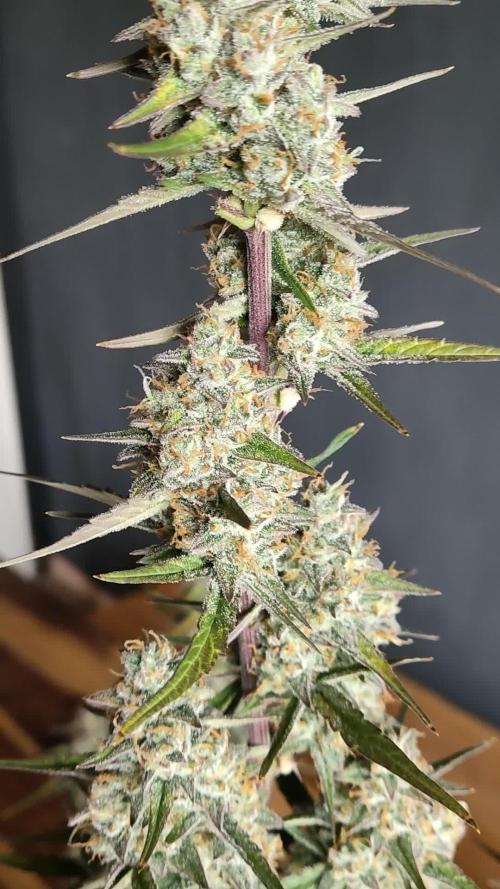
She did not get very big but she has produced very compact and sticky nuggets, she has given 31,2g of high quality buds
Likes
6
Share
Likes
128
Share
@PapaNugs
Follow
Transplant time! Got thesw girla into a three gallon container with added mycos and bacteria. My custom mix is coco and perlite with added amendments, worm Castings and purple cow soil. I add dolomite lime on top and mix it in. They got a small watering.
Likes
11
Share
after not being happy on how it was on week 13, i decided to push it this far. I'm more satisfied than i was, but I remain disappointed in apera instruments for screwing me over on IP67 warranty promise. They said after this replacement they wont do it again. total bs.
Likes
8
Share
@Tontsekz
Follow
13/11 - Watered with 2ml/L Soil A & B each, 0.5 grams of Kraken Roots 16/11 - Watered with 2ml/L Soil A & B each, 1.0 gram of Kraken Roots 18/11 - Watered with plain water - PH 6.2 - started LST 20/11 - Watered with 2ml/L Soil A & B each, 1.0 gram of Kraken Roots 13/11 - So far this week the plants are taking off - loads of growth under 20/4 lighting. Plant 3 in particular is growing super strong! 18/11 - Applied LST, wasnt sure if maybe it was too early? Seems to have quite a few nodes but my plants seem pretty short/compact. 20/11 - Plants went a little down hill since LST - removed the LST and watered them - found lights were ~50cm from the plants so moved to 61cm - reduced hours from 20/4 to 18/6.
Likes
27
Share
Hi Growmies I hope your week had been as productive and fun as mine and that your flowering is progressing. It has been a very easy week to manage their needs. Nicely set and with lots of light per plant , we have a lot of clusters of pistils throughout their whole structure. Keeping the humidity lower now is helping to reduce the risk of bud rot with so much vegetation and fresh pistils to feed it. It will also help raise the oils needd within the girls to keep them supple amd attractive to those buzzy friends they hope to attract. The smell of sweet pineapple is so strong in the room now and their stickiness from resin is really starting to show itself now. It is evident that the plagron products have had a substantial effector the progress now with so.mamy sets of flowers lower in the canopy too. Seeing other grows of the Biscotti not using the products , there is a difference in node lengths between flowers without doubt. The flowering plants are nice and stocky compared to most of my previous grows sonit has been easier to keep them well within the lights sweet spot With just 2 weeks left that will hopefully be the adding weight and second flowering sets kicking into play too , a good yield could be on the cards. I do seem to have 2 phenotypes off the Biscotti running so it will be interesting to see how they differ at the end for yield etc.. I have added a small greenhouse heater to bring the temp up a little and help with the humidity control too as we are experiencing a very cold snap again in good old Blighty. All in all a great week with a more to follow hopefully. 😀 Be lucky and stay safe among the chaos unfolding.......
Likes
11
Share
This week has been time to put on weight!! They are getting so heavy glad put in secondary scrog net. Have only been doing water so plants can just pull what they want our the soil they are starting to fade on their own. They have some amazing kinda blue tent to the buds. They have a gassy sweet smell to them! This will be the last week I feel but still see some clear heads and no amber so shall see over next week!!
Likes
296
Share
@StarLorr
Follow
Welcome to my Ðivine ØĠ Ķush diary. In this diary: Seeds: sponsored by Ðivine Șeeds Media: Promix HP Nutrients: Advanced Nutrients, Diablo Nutrients, Gaia Green Power Bloom. Light and Weather: Şun☀️and Mother Earth.🌎 ___________________________ Wet Weight: 1391 grams ___________________________ Wet Trimming with my trimming bowl was a humongous time saver!! ______________________________ Took me about 6 hours to wet trim. ______________________________ I wanna Thanks Ðivine Seeðs for the Opportunity to grow and smøke your Ðivine Plants👊🏼😉 ______________________________ Thanks for stopping by, likes and comments are appreciated!👊🏻😎 Keep on growin! Keep on tokin!!! 😙💨💨💨💨💨
Likes
248
Share
@mcflow
Follow
Yielded way more than i thought! Great strain, i planted the seedlings in their final pot right away and it worked like a charm! Had a little problem with gnats but the nematodes i used made that problem go away really fast. The smell of the buds are awsome, im looking forward to smoking some
Likes
18
Share
So it's the end of week 2 Veg and I can't believe it but I transplanted 3 of the girls already! I don't think I have ever transplanted that early, usually it's at least another week or more. Guess that's the difference of starting under T5 bulb vs starting under full spectrum LED. Incorporating microriza into starting soils helped also I'm sure! By day 18 they were looking a little sad, water didn't help so figured they're probably short on space and craving their new 2 gallon fabric pots. Took them out of the solo cups and as they pics show they were ready indeed! Roots for days, nice and thick/healthy/white roots. When prepping soil I use a 100L bin. I always make sure to wash my hands and wear a face mask as the dry amendments get into the air during mixing and you really don't want to breath that. I mix the soil with worm castings to an 80/20 ratio then add my dry amendments and mix well. As well as incorporating Dynomyco into the soil at the recommended rate of 15ml per 10L I also sprinkle it into the transplant hole. Since using this stuff I've never had transplant shock and they just seem to grow faster and thrive more 💪. Light has been at 30" and have lowered to 25"@50%. Goal is to reach 17.5" which should give a spread of 450-500 umol/s according to PAR tests. Can't wait to see the growth this week! 🤞👍🙏
Likes
19
Share
They looked thirsty today so i gave em water! Starting to flower now to 🤘🏾
Likes
55
Share
So she got the chop 2 weeks prior to what I wanted, but I did not lollipop enough doing this Scrog and suffered high humidity, lack of airflow and as a result lost 4 tops... Out of 16 big ones. But I have harvest, wet trimmed and left to hang dry in a room on clothes drier. Room circulation fan on low, and temp is 22c with 51% humidity. Aiming for a 10day dry it maybe sooner. Then we will smoke test and cure then re test 🙌💚 Thank you all for following along this LONG and heartbreaking breaking Journey
Likes
2
Share