




Likes
17
Share


@andrewkeed
Follow
Sprayed 2 times with Delta10 and added some Epson Salts. one more week for 1st 'to the bone' defoliation. keep watching🎥🙆♂️🏻


Likes
11
Share


@MarsHydroLED
Follow
👋🏼💚 so we have spent all morning doing low stress training on our girls good old benders and pipe cleaners 👌🏼 all opened up and looking beautiful 🤩
4 weeks +1 day old.
under the marshydro FCE 3000’s
being fed plantmagic nutrients the silicon is doing wonders so soft and bendy 🔥👏🏼
Tent size is 4x4. Thanks @ the_green_team_2020

Processing
Likes
6
Share


@Ferenc
Follow
Day 61: I left them in darkness for 3 days and just switched on the lamp for 12/12 with today the foirst day of the 9th week.
Fertilization goes on the same days with the nutrients above and water intake approx 250 ml per plant per day.
Nice green color comes they always look nice after darkness :) Lets' go.
Day 66: Growing growing growing...


Likes
6
Share

@kevxyn
Follow
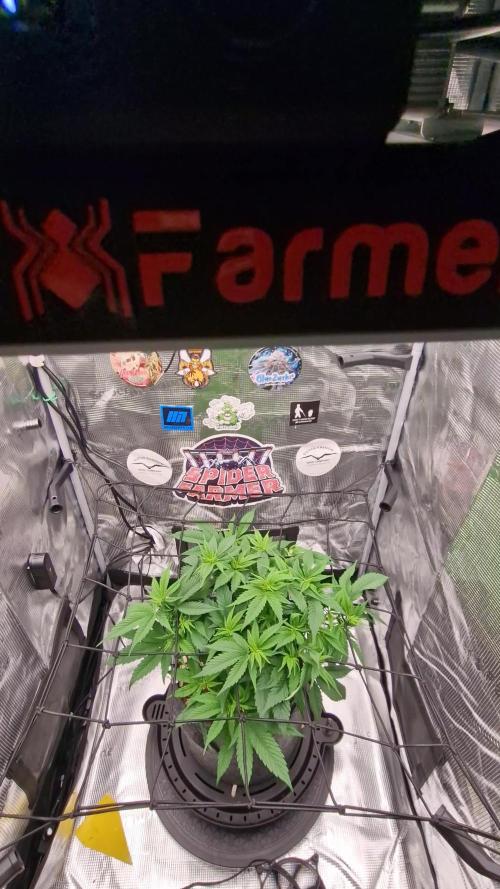
Die Kleine hat sich nach der Entlaubung letzte Woche wieder super gemacht! Ich lass sie noch 'ne Weile schieben, dann geht's in die Blüte 😎🌱
Die Blüte ist seit 5.11. Eingeleitet.
Likes
2
Share

@CheeRz
Follow
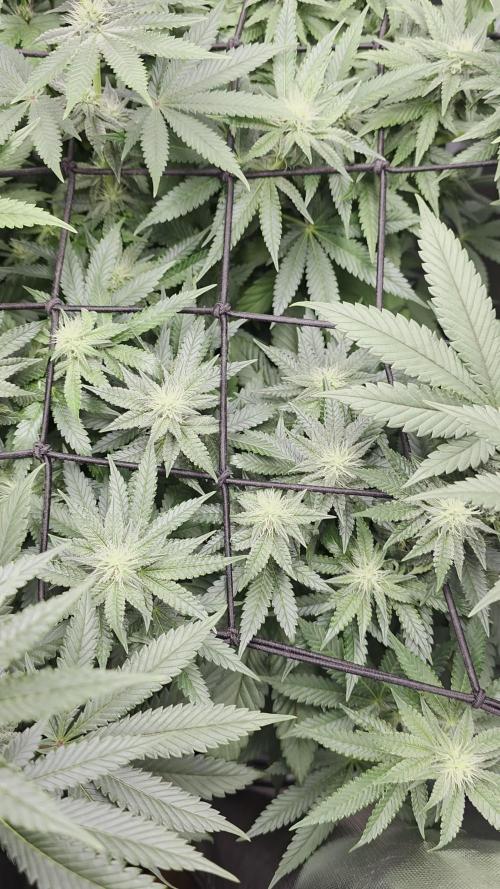
It's week five of flowering, and the buds are developing very well. I'm very happy with how this run has gone so far. Let's hope for buds as big a lemons 🍋🍋🍋

Likes
410
Share


@Rock_n_Roll_Randy
Follow
It's been 68 days of flower now and they only got another week or week and a half left. I have been flushing them for 10 days now. Almost there 🤘🤘. I'm very happy how they have turned out, the color, the smell, the crystals 👍. Very proud of what I created. VERY IMPRESSED with the fc4800 and I was already very happy with the tsw2000 👍
The gals are still loving the new fc4800, TSW2000 and their new 8x8 mars hydro grow tent as much as I do👍 leaves are sticking straight up towards the light. Love how easy the zippers are to open and close. Nice and strong and guaranteed to last. It has extra material on the backside of the zipper that helps for light leaksand enough ports and vents for anything you need in it👍. the tsw2000 is still going strong and is also a very good light. Its been going almost nonstop for 6 months and still working the same as when I got it👍. not much heat off both lights but the fc4800 is alot cooler and the heat-sinks work extremely well. I have it daisy chained to the tsw2000 and 1 dimmer controls the other and i don't need to be reaching in too far to dim the other light, it's awesome and I can't wait to buy more lights to daisy 4 together👍. I would recommend this light to everyone that grows with leds and have trouble with temperatures getting too high. Even if you grow with HPS lights I think any mars hydro light is a MUST TRY. I like how heavy both lights are because I know it means they are built soild and strong 💪. Very good sign with the frost they are starting to get thanks to bith mars hydro lights. I can notice more frost under the fc4800 and I'm thinking it's from the UV DIODES they put on the fc4800 👍. 2 days ago they all smelt like my nuken, sweet marshmallows. But now I can smell the monkey dough and gorilla glue and skunk monkey coming through👍. I touched a bud on the gorilla and monkey fingers smelt like fruit loops👍 really pleasant smell. Lingered on my fingers for atleast 30 min. I'm glad mars hydro is under priced compared to some brands and for how popular they are. usually companies would charge more. Thanks mars you guys are awesome 🤘🥁🎸. I'm getting a new exhaust fan soon. An 8 inch that will work alot better than my 4 inch lol. Wayyy to small for a 8x8 Grow Tent. Dehumidifier is going almost non stop to try and get the humidity down. I love how both lights on 100% power only raise my temperature 2 or 3 degrees 👍. You can rest your hand on the lights and not much heat comes off them. Obviously there is some heat but for the brightness of the lights and only raising the temp that much is awesome 👌. And if I wanted to I could remove the driver from the fc4800 and run it on the outside of my tent because the cord is so long but 2 or 3 degrees is barely nothing👍. The girls are starting to bulk up abit now and only 3 weeks of flowering, these lights are awesome 👌. My last run of monkey dough and gorilla glue didn't start showing alot of crystals until week 4. These were only 2.5 weeks and I started noticing some frost. Next week I will be able to tell more about what these custom bred seeds will be like. I love how the smell is changing now. Didn't want all them to smell like nuken marshmallows lol. It's awesome that I can get right inside the tent to do any work i need👍. Even if I wanted an 4x8 tent. I'd rather this 8x8 because it's so easy to work with the plants and have so much room to move around and massive headroom when I'm in there chillin with the gals🤣🤘.
FOR EVERYTHING MARS HYDRO VISIT:
www.mars-hydro.com
PROMO CODE: rocknroll
VISIT THE ALIEXPRESS STORE:
@marshydro_aliexpress2
Instagram: @marshydropenny
https://youtube.com/channel/UChU5ZWwNi-DvnO3oWVU3ceA
Thanks for taking the time to read and check out my shit🤜🤛
GET THE MAX FROM MARS👍: Welcome one of the newest members of the Mars Hydro family🤜🤛🤘. The Mars Hydro FC 4800 480W LED Grow Light can accommodate up to a 4' x 4' area for flowering. It has OVER 2000 LED chips consisting of the best selling Samsung LM301B diodes which has a Luminous Efficacy of: 220 lm/W
0.2 W, 3 V mid power,
Osram 660nm Diodes, Infrared light and UV LIGHT👍. It boasts the incredible efficiency of 2.8 µmol/J, maximum 2.5gram yield per watt with 30% higher Average PPFD. This High-intensity spectrum is beneficial for plants at all stages - from veg to bloom, and creates Big dense Buds👍. achieve 50% higher yields & quality compared with the old lights! Only consumes 480W for 4x4ft personal grows, and 3x3ft for commerical grow. It comes with a dimmer and daisy chain function with a maximum of up to 15 lights, the master light controls the rest👍. Wide 6-bar design offers even & wide canopy coverage and can maximizes your grow space. slim 180° FOLDABLE DESIGN... YES I SAID FOLDABLE🤘🤣 , making it compact and easy to install, it's IP65 WATERPROOF and will give you no worries while growing in a humid environment and makes it a flexible high performance commercial grow light for enormous SUPER FROSTY yields.😛😛😛. MARS GETS EM FROSTY BOYS👍
AWESOME HEAT DISSIPATION: The Low energy consumption FC4800 growing light has 6 passive-cooled bars and an aluminum heat-sink a removable driver you can upgrade later or have it outside your tent. with zero noise you can save up to 50% in your electricity bill compared to HID's or HPS lights!
It also has a removable driver so you can upgrade it in the future or have it outside your grow space for better heat control in your growroom👍
UPGRADED FULL SPECTRUM: Yield Max Spectrum with enhanced red (Top-Bin Samsung 3000k-5000knm, Osram 660nm Deep Red), speed up blooming & fruiting, perfectly suited for full-cycle growing. The FC4800 LED grow lamp was born for Big Buds, perfect for commercial, grow tent, grow room, hydroponics, and all soil grows.👍
THE BEST SAMSUNG DIODES: THE FC4800 has Top Bin genuine Samsung Osram Diodes, combined with remarkable 2.8 µmol/J Efficacy, 30% higher Average PPFD, 50% less energy consumption, to maximize your yields. They give you a TRUSTED 3 years warranty 100% Satisfactory guaranteed!!!
The MARS HYDRO 8x8 Grow Tent interior is made of a unique diamond design mylar which is highly reflective. (Other companies mylar and reflective rate is as low as 50%, and it won't provide efficient light. They use thick 1680D oxford canvas, and being double stitched, it is tear proof and perfect for locking in the light. Their grow tent keeps 100% of the light inside the tent and helps your plants absorb more light. EXTRA-THICK material means No light leaks or rips at all.👍
Strong Stable metal corner adapters and poles are the trustful supporters of the tent. It's very sturdy, neither rusting or paint flaking off. quick and easy tool-free setup. They use heavy-duty metal zippers, with double layer black lining, by far the best on the market which creates a light-proof seal.
The Easy observation windows are made by double layers of cloth. Observe the growing conditions of your plants without opening the tent and avoid disturbing your plants. The observation windows also serves to dissipate heat and ventilate the air.
The tent includes 2 removable waterproof floor trays to hold soil and water. The removable tray can be taken out to wash easily.
They guarantee the grow tents are easy to install even if you've never done something like this before. Clear Instructions and no tools needed! They also offer 30-day unconditional refunds for quality problems. Just contact their friendly 24 hours customer service 👍
Likes
14
Share


@Weedbadk
Follow
Día 1 y todas geminaron vamos a usar lst a todas y algunas lst y poda apical
Día 5 desde puesta en sustrato
Solo pulverizó

Likes
7
Share


@Pjm70
Follow
She seems to be doing well. Her buds get fatter and more smelly each day.
Weather turned a bit cooler. Temps in the day are mid 70s to mid 60s. Nights are in the high 40s mid to upper 50s.
So nights would be cold for her. Plus she was getting severe mornings dew. So I bring her in the the garage at night.
The temperature in the garage is 70. So she is going to have a warmer night than day. This goes against nature. For some reason I think she will like it.
Today I took off all of her LST ropes. My thinking is, she may see the tension as weight. Probably should have taken them off sooner.
Bruce Banner strain is a 9 or 10 week flower strain. So I figure she is about half way through flower. Day 100.
She has a lot of lower leaves yellowing and falling off. The yellow is starting to move up the branches.
This plant is almost all tops. Most coloas are top and 2 nodes under it. There are a few that have 4 or 5 nodes under the top, but they get the light for it.
This strain requires a lot of food. This I read from a lot of reviews on the strain. I should have read up the Bruce Banner strain much earlier. Although I think I did a great job with her, considering this was my first serious grow.
I did some gorilla growing in my younger days. However I had no idea what I was doing. I use to plant them, give them some water. Then in a few weeks top them and check on them every few days to few weeks. If they were lucky they got some Miracle-Gro. There was not a lot of information on how to grow. I was harvesting way too early.
9/23 1 gallon of water PH 6.2. It's not as hot, so I don't think she needs 2 gallons everyday anymore. Day 100
9/24 Fed 4 tablespoons Foxfarm Big Bloom, 12 ml Foxfarm Tiger Bloom, half a teaspoon Foxfarm Beasti Bloom, 2 tablespoons of Foxfarm Kelp me Kelp you, per 2 gallons of 6.4 PH water. Day 101
9/25 Cloudy day, no need for food or water. Day 102
9/27 Sunny. Made a tea worm castings, poop, some powder baby food and black strap molasses. Also 24 MLs Foxfarm Tiger Bloom, per two gallons. Day 103.
Day 103 I see her first orange hairs, just a few. She smells great. She is making some beautiful buds. Very exciting time, she is getting close.
She is a short plant, if she were in the ground, she would be about 3 feet tall. She is about 3 and 1/2 feet wide. I had her tied down most of her life.
My goal was to keep her as short as I could. I prefer the neighbors not see her.
This grow was by design, I wanted her to have as many tops as possible. I bent her branches and did not let them grow straight up. Not sure if I would get more or less if i let the plant grow up. She sure is going to give me many top buds.
Either way Im going to have very nice buds. So if there is a weight difference in growing styles I have no way of knowing, until this plant finishes and I grow another style.
The weight does not really matter. This will be more bud than I need, for a while.
Likes
9
Share


@pascal_dop
Follow
So meine kleine Kofferprinzessin befindet sich nun in der zweiten Blütewoche (im Video sage ich Growwoche, das ist natürlich quatsch) und ich glaub alles ist soweit gut. Ich habe die kleine ein bisschen mit Draht von der Lampe weggebogen und hoffe das hilft irgendwie. PS Ich benutz nie wieder so n whackn Growkoffer :/
Likes
1
Share

Likes
42
Share


@MrJoint
Follow
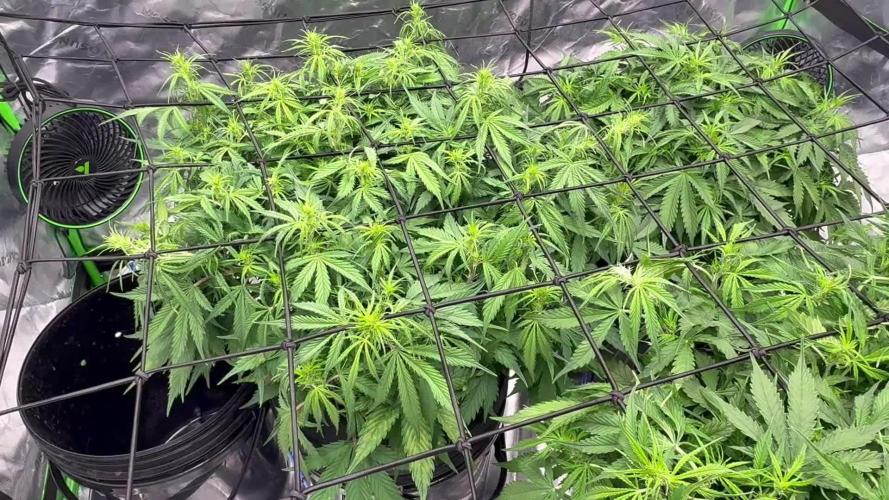
✂️ Last defoliation for more light input.
⚰️ Start watering with Ripen.
✌️🎃 Thank you for checking my cultivation.




Processing
Likes
27
Share


@Hawkbo
Follow
This week they are all just putting on some weight still a few weeks left to go. Pics were taken on Monday video on Tuesday. The aromas are pretty strong in the tent in general.
Shes a struggler but it's too late to turn back now just gunna let it finish.
Likes
14
Share


@SunshineBud
Follow
Wow this week has been crazy, I think the LST I did on plant 4 really helped spread it out... I'm at a loss as to how to treat plant 1, 2, and 3. 3 is still kickin, she little but she's growin buds! Some Log entries...
1/28: Fed with week 7 noots, trimmed a few dead leaves and did some LST on #4 tryin to get all buds on same program.
1/31: Watered with sledgehammer flush later on at night.

Likes
4
Share


@SuperGluedGrow
Follow
This week was also uneventful, growth has been slow and I'd say its half my fault with PH issues and over feeding which I'm correcting moving forward; and two unstable genetics. I dont have much info on growth patterns for this strain but its supposed to look a beautiful dark purple so I'm gonna breed a male and female hopefully. I'm also looking forward to the fourth phenos straits, I kind of hope its different just to have fourth completely unique phenos.
Likes
19
Share


@Tommy716
Follow
The buds are really packing in the weight and resins. There so heavy the head buds are starting to drop. Switched to overdrive and cut all other nutes in half. They are holding up well. No stress signs at all. It's looking like they want a few more weeks of flowering. I'm watching them and listening to the signs they show.Everything is going great. Can't wait to taste these lovely ladies.
Likes
12
Share


@BrMarijuana
Follow
Plantas saudáveis, ótima qualidade, estão reagindo muito bem a alimentação, regas todos os dias e alimentação todos os dias,.cheiro doce

Likes
27
Share


@adam_pawloski87
Follow
This week went really well ! Today we are at day 79 from seed an looking beautiful! One Forbiddin Runtz got chopped an hung to dry out an the rest are still flushing out through the rest of this week! Very nice looking fades coming along on the fan leafs from purple to green , so beautiful ! So happy with these genetics from @fastbuds_genetics! Super sticky an smell is so amazing, room full of purple punch’s an Forbiddin Runtz the smell you can’t beat, so many berries!!! Well stay tuned for next week! Cheers y’all


Likes
14
Share


@Mr_nugs_lover_David
Follow
Another beautiful pheno of Larry bird kush by zamnesia, looks like a clone of her sister however she's a bit shorter than her sister, let's see how this lady performs after this 3 weeks of veg! Can't wait to see how this lady is going to develop when she gets Transplanted into her definitive home!
