


Likes
Comments
Share


@DatGuyGrows
Follow
Soil level is a bit low after the transplant so getting ready to add some in. Took domes off and did first Nute feed on day 12. Using a FloraTrio mix with a touch of Cali-Magic and epsom salt

Likes
20
Share


@the_curious_grower
Follow
no signs of pests during the grow. only one time i had ants trying to infest one plant but easily got rid of them by using cinnamon around the stem. she grows easy and is fun to train, you don't have to be an expert.
in the late flowering i got some budrot in both plants and stalled the harvest by inspecting and cutting it away daily, haven't lost a lot due to it.
i would recommend this strain as she is a high trichome producer, big yielder and easy to grow plant that gives nice buds with a good smell and greath high.
she is a strain that makes you talkative, giggly and euphoric and is surely gonna give you a good sleep. be sure to go easy on her as she is a strong breed.
an amazing strain to grow. she creates colourfull purple buds filled with trichomes that is really good for the chilling occasions, be sure not to have to go somewhere as she will last long and prepare for a joyfull evening with lots of laughing and good talks. i'll post more pictures after the drying process!

Likes
112
Share


@Dunk_Junk
Follow
Day 100 - (yes I know it's late) She is getting near the end now. Loosing a few leaves. Trichomes milky but not amber yet. Pistils still white in places.
I added a 500ml Monster can for scale 😂 hope it's allowed............ 😋

Likes
46
Share


@Roberts
Follow
Drunken bitch Slap is growing good under the Hortibloom Solux 350. I pruned her roots and also did some lst on her. I accidentally broke a branch while lst ing her. I propped it back in place, and hopefully it heals if not I will ben the other two closer that way to close the gap. I have added nothing, but water since start. My nutrition mix was a bit strong in the start up. Everything has been good with this plant so far. Thank you Aeque Genetics, and Hortibloom. 🤜🏻🤛🏻🌱🌱🌱
Thank you grow diaries community for the 👇likes👇, follows, comments, and subscriptions on my YouTube channel👇. ❄️🌱🍻
Happy Growing 🌱🌱🌱
https://youtube.com/channel/UCAhN7yRzWLpcaRHhMIQ7X4g

Likes
9
Share


@Ign33l
Follow
It was rough waiting and knowing that i did not defoliate and started seeing bud rot almost at the end.
Ended up cleaning everything and throwing half a harvest away, BUT A GOOD WELL PAID LESSON.


Likes
19
Share


@emeraldlabs
Follow
The struggle is real as we continue limping to the finish line... A few more feedings this week and then on to the flush. Struggles aside, she smells great and is packing on.
Photos/video taken 119 days after breaking soil, day 42 of flower.

Likes
43
Share


@hinterhofgrower
Follow
🌱: LST on Day 15, 17, 18, 19, 20, 21 removing shadowing/shadowed leaves constantly
💧 : 2l, SIP 6l
💡 : Dli 35 mol/m²/d
🤔:
Likes
Comments
Share

@Growfather1
Follow
Hello everyone,
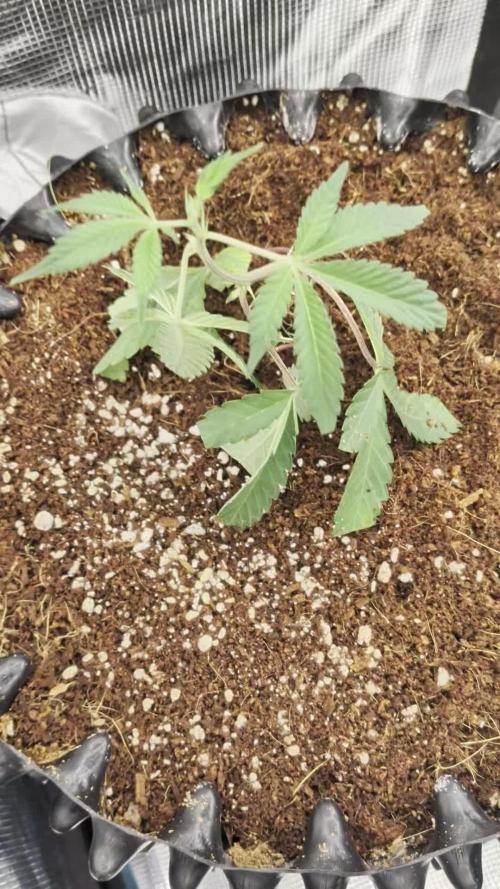
I'm kicking off a new diary with two clones taken about three weeks ago from my absolute best plant, the MAC 1 F1 Hybrid.
I've got them settled into their new homes with one in a 10-liter air pot and the other in a 15-liter air pot.
There isn't too much action yet as they're still small and taking their time to establish themselves.
I'm keeping it simple with the nutrients for now, just feeding them 4 ml of Canna Rhizotonic per liter of water to really get those roots going.
This MAC 1 strain is just beautiful and such a joy to grow that it practically fusses over itself.
Thank you for stopping by and have yourself a great day.
Best regards,
Growfather.

Likes
17
Share


@CanadianFillmore
Follow
Howdy growfessors! Welcome to week 7F in the 4x8 theatre. The ladies are hungry, I've been increasing their feeding and they still want more!
Defoliation performed, removed a lot of small dead or dying leaves from the lower branches.
Not much else to say, thanks for stopping by growfessors 👽🌳💚


Likes
13
Share


@Nyabinghi420
Follow
After not growing for almost a decade, it’s absolutely nostalgic and somewhat of an emotional moment to finally finish a grow again.
I never thought I’d ever be able to do it again, But it feels really good after all this time and I appreciate all you joined me on this journey.
I’ll be back soon; very soon! Stay tuned :)

Likes
422
Share


@Crashoverite
Follow
Hi all 🧑🌾
Welcome to my 🍌💜👊 week update.
Hope everyone keeping well and having a great week😁
Thank you so much for so much support on this bananas ride 🙏💜💚💜💚
Everything still going pretty well. Girls are developing and stretching like crazy. Athena currently Dec 14 90cm and main stem of Xena is not far of this height either. Unfortunately noticed first signs of calcium deficiency(my opinion) on Athena. Thankfully started feeding both girls with calmag weeks back but the dosage wasn't not enough for Athena. Started small treatment very next day on Dec 11 (see description below) I belive got my baby back on right track.
Week 9
Dec 11-17
Dec 11
Watering was planned for Tuesday but due to calcium deficiency decided for a little treatment. Watered both girls with mixture of reduced content of growth nutes by 50% calmag at 1.2 ml per ltr. Reduced solution PH to 6.2 as apperently it's ideal for calcium consumption. Over period 4h I have watered Athena with 5ltr with couple runoffs. Xena 3ltr. Total of 7-10 leaves affected mainly at top colas close to the light.
Dec 12-13
Purely observation and all looking well. Of course all affected leaves will progres of showing signs but good news is that growth and development booming and don't see any new leaves with symptoms.
Very nice trichomes development in recent days and more and more colours.
Dec 14
Second watering for this week 6.5l Increased calmag to 1.4ml per ltr and if still things will be looking well reduce to 1 or 1.2 on next feeding.
Dec 15
Very nice respond on yesterday feeding. They definitely fatten over night and getting more and more frosty. Will need to remove some foliage soon as getting extremely bushy again.
Dec 17
Xenas main stem top cola almost touched the light today. Tied her to left side of the cabinet, applied selective defoliation on both girls, tied few branches to netting and on the end of this busy day a third watering for this week. 7 ltrs beetwen both. Runoffs Xena PH6.4 Athena 6.3.
Very nice week have to say. I belive that calcium deficiency on Athena is no longer a case here and both girls developing very nicely. Both are still stretching, buds are gaining in size and both girls started exploding with trichomes,
Thank you all again for such amazing support 🙏peace and love brothers and sisters ✌️💚💜💚💜💚
Stay tuned for new week update 😉🧑🌾✌️💚
Likes
23
Share


@Bossy_Marmalade
Follow
(Update: 4/20/19)
Please stand by while they dry.
(Update
Everything is going great though! The smell is very strong now; no more cut grass smell. From looking at all three today, I believe that some of the smaller branches will be done drying and ready for trimming and weighing in a day or two.
I have one guess for dry weight of Big Lemon, any other guesses?? Remember, the picture of Big Lemon hang drying looks like its two plants, but its all Big Lemon; I had to cut it off to be able to hang it. The amputated branch left of the main plant is bigger than my other two plants alone!
(Update 5/2/19)
Woah...Okay. So after drying the whole for about nine days, and trimming for four days, Big Lemon's dry weight SO FAR is about 430ish grams of super dense and sticky nugs. Its amazing that I got more big bud than I got popcorn nugs from such a big plant.
I have one more 1/2 gal Mason Jar of untrimmed tops to finish, then I'll post pics or a vid of the weigh up and glamour shots etc..
Oh, almost forgot, Little Lemon produced about 40 grams of very nice bud. This surpassed expectations because, although it was planted on the same day as Big Lemon, it was the runt of the bunch because it got pushed out of the main tent that had all the lights and Co2 environment and everything. It spent much of late veg under a very weak light. I remember how limp it was when I gambled on it and chose to switch her over to 12/12. But it was totally worth it in the end!
Alight back to work for me. Check back later today for pics, vids!
(Final Update: 5219 @11:09pm PT)
Its done. Its finally done! I had to trim both plants with my own two hands! So Exhausting, yet so rewarding.
So above are several videos of the weighing. Grand total for Big Lemon is 14oz of prime top shelf nugs, and about 3oz of nice popcorn/LARF (they are separated as shown above in a video. Forgive me for not throwing it all together to weigh it, I spent a long, long, very long time trimming and sorting and canning the buds according to their respective grade/quality. I may add one more update to show their respective weights.
Oh and little lemon produced about an 1 1/2 oz of prime nuggets and quite a bit of popcorn/LARF, which I haven't gotten around to weighing yet.
So, Grand Grand total of Both Lemon OG Candy (amazing job with this beast of a strain, Philosopher seeds) is about 18.5oz, or 1lb 2.5oz for two plants; 15.6oz of which is entirely made up of top-shelf buds 😎
Damn I love SoCal, I didnt even need to run carbon filters because no one be trippin about a lil stink weed.
Thanks to those for following this grow! Tell me what yall think! Cant wait to see some comments from all you growers out there.
(Update: smoke review after a week or two of cure)
This Lemon OG Candy had an extended veg period, about 4 months maybe a little longer, and I harvested her on day 56 of flower (recommended harvest 60-70 days) because of the size/distance to light and her root-bound problems. The results so far, a very uplifting and stimulating quality.


Likes
9
Share

@MrGrowDiarie
Follow
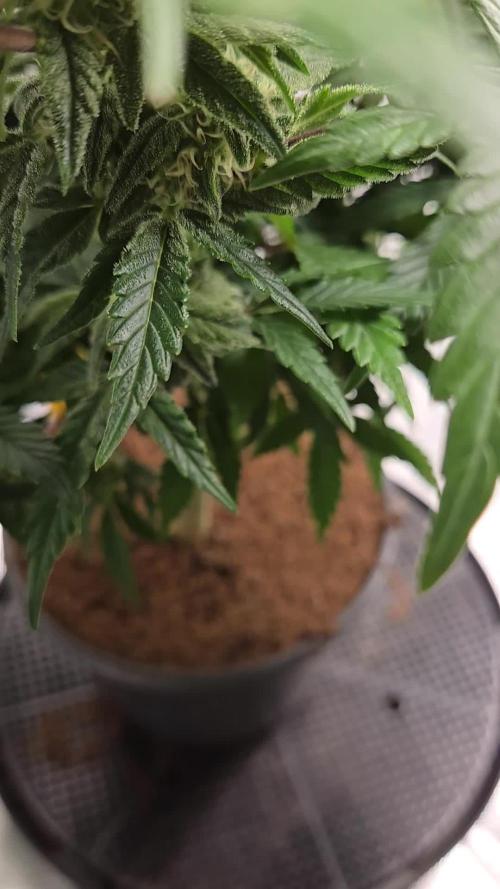
Day 57
The leaves are a deep, rich green, indicating good nutrient health. There's minimal sign of deficiency or stress; only very slight tip burn on a few leaves, which could be from nutrient intensity or light exposure but nothing concerning. The plant structure is compact and bushy, suggesting effective training earlier in the grow (possibly some LST or topping).
The growing environment looks clean and well-maintained - reflective walls help maximize light efficiency, and there's a good airflow setup visible in the background. The pot and tray system seem to be managing runoff effectively.
Likes
2
Share


@Ninjabuds
Follow
Man, it's been a crazy week. These past few days have been brutal – seriously cold with this crazy humidity. I don't know about you, but I'm sick of the chills and the way my skin feels all sticky. It's been a struggle, but I'm finally getting on top of things. I think I've figured out a good routine to dry things out around here, so hopefully, I'll be feeling a lot more comfortable soon.
My three Bubble OG plants are looking awesome. Two of them are super tall, and it's gonna be crazy when they're done. I can already tell they're going to have huge buds. The little one might be short, but it's so dense, it looks like it's just stacked with buds all the way down.

Likes
4
Share


@Trinidad
Follow
23.04.2025 Day 51. God Dang these ladies are beginning to pack a punch. In the past week the chemdawg has strected. No smell yet on chemdawg. As for the others, the flower are terping up. The struggling one has begun showing some nice purple flowers and smells like bubblegum. Another one smells sour like a green or unriped mango and the next one just smells sweet like candy. Flowers are swelling and begun to put on weight. During the past week I topped up reservoirs with nutrient solution but today i changed out reservoir with fresh nutrient solution. No training was done This week.
Likes
11
Share


@420Paddy
Follow
Small update, starting week 4, 22 days. Tying down and training a lot. I've learned so much, I'm excited more for my next grow than this harvest.
In the past week no major changes, Gelato finally start budding, it was last. Drinking around 7-10 litres a day now. Mainly just filling res and training/pruning here and there. Sooo bushy especially Gelato.
Around the halfway mark after this week so hoping everything stays as is. Temperature here has dropped out side now about 5°C on avg, so leaving tent temps right down 16-17°C at coldest lights off point. Needed an hours heat to boost at lights on some days to push to 21°C after that the lights will bring to 24-27 and maintain. Humidity in the tent jumps but the air is a consistent 45-50% so not worried at this stage if seeing readings high. I'll be moving dehumidifier inside the tent towards the end.
Video uploaded at end of pics.

Likes
47
Share


@Mz876
Follow
Week 7 since flipping to Flower 🌺 . I was able to see the trichomes some through my camera abs they are mostly clear from what I can see. I have a microscope coming in the mail today so excited to get a better look at the trichomes soon . The smell is amazing and smells exactly how I remember when I first smoked MK Ultra .
Likes
12
Share


@brosef_b_baggin
Follow
Week 4: Started adding Humboldt Secret Golden Tree at 600 ppm. The plant started bushing out from the LST so I defoliated whatever green wasn't getting any light and to expose light to smaller nodes. I was planning on topping this week but to my surprise the plant had created a third axil/node and axillary branch.