The Grow Awards 2026 🏆 









Likes
Comments
Share
@MalinaGrow
Follow
Soaked the seeds in water with hydrogen peroxide 10 drops per 200 ml. GHS gave root first both varieties, CG waited 3 days and decided to add a second seed, after 24 hours both gave root :)
Solucion - local Argentinian manufacturer.
Coconut substrate - Plagron.
Water : 110 ppm + 0.5 (HV+HM+HM)=350 ppm.
Wanted to twist the sprout with a Lemon Orange spiral because it stretched out, but broke it in half :(
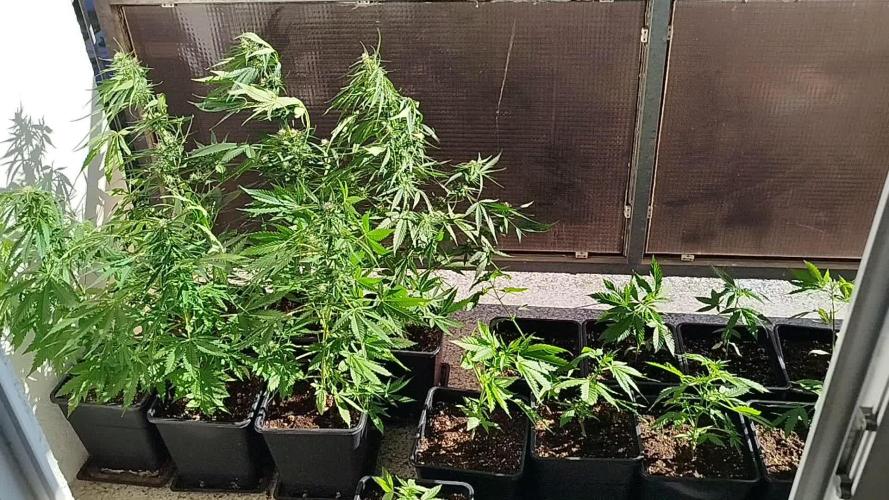
26.06 - 2 Marshmallow and Milky Dreams.
P.S. the biggest one is Milky Dreams.
Puse las semillas en remojo en agua con peróxido de hidrógeno 10 gotas por 200 ml. GHS dio raíz primero ambas variedades, CG esperó 3 días y decidió añadir una segunda semilla, después de 24 horas ambos dieron raíz :).
Solucion - productor local argentino.
Sustrato de coco - Plagron.
Agua : 110 ppm + 0,5 (HV+HM+HM)=350 ppm.
Quise retorcer el brote con una espiral de Naranja Limón porque se estiraba, pero lo rompí por la mitad :(
2 Marshmallow y Milky Dreams.
PD: el más grande es Milky Dreams.
Замачивал семена в воде с перекисью водорода 10 капель на 200 мл. GHS дал корень первым оба сорта, CG ждал 3 дня и решил добавить вторую семечку, через сутки оба дали корень :)
Solucion - местный Аргентинский производитель.
Кокосовый субстрат - Plagron.
Вода : 110 ppm + 0.5 ( HV+HM+HM)=350 ppm
Хотел скрутить росток спиралью Лемон Оранж, потому что он вытянулся, но сломал его пополам :(
2 Marshmallow и Milky Dreams
P.S. самый большой это Milky Dreams


Likes
6
Share
@Scottydarkmoonbuds
Follow
This blueberry and the jack herrer were the two little plants that I had in front of my two bigger plants (OG kush & white widow
Likes
4
Share
@Nookandplant42o
Follow
An immediate feeling of high something relaxing in the eyes, the body becomes active for activities or work. Brings Up Old Thoughts Reflection Watching movies is a great thing to stay focused and better save something sweet to eat. Undoubtedly, the high comes with hunger, something good even for those who have a lack of appetite. Strong sweet and citrus aroma, mild flavor bringing a light guava sweetness. 🤗

Likes
15
Share
@MG2009
Follow
02/10/2021
I supper cropped the top 4" down toward lower level to promote auxins to redistribute, also starting 12-12 light cycle should be 8-9 weeks of flowering🙏 if she more than doubles in stretch,then I will need to switch to LED lights to finish
Likes
6
Share
@vyndalin
Follow
I just bend 2 of them to be more stealthy. I'm proud of them, but the milky way - it's shitty. No feed this week, just water, summer is still broken, no much sun, just windy and cloudy


Likes
15
Share
@SweetheartOG
Follow
Started the girls with some LST to see how they all coped and they bounced back well.
Likes
51
Share
@eldruida_lamota
Follow
Otra semana más , última semana de crecimiento , eso si , e impresionante el ritmo y el tallo que están tirando estas cookies gelato.
El color que tiene deja ver lo Sanas que están, AgroBeta es una gran marca de fertilizantes, solo hay que ver cómo andan estas niñas.
.
La humedad anda al 50% la temperatura está entre 20/22 grados , y como siempre el ph , ya que es de lo más importante,está en 5,8/6,0.
.
AgroBeta:
1 ml x L Growth black line , vía radicular.
0,2 ml x L Tucán , vía radicular.
0,2 ml x L Flash Root , vía radicular.
0,05 ml x L Gold Joker, vía radicular.
.
Hasta aquí todo gente, espero que os este gustando , un saludo y buenos humazos 💨💨💨.


Likes
9
Share
@Skinnytalls420
Follow
Day 16-27/12/21 doing well!!! Day 20-31/12/21 plant is looking good!!!! Waiting to move half of them to another tent!!!!

Likes
1
Share
@Dailydabs420
Follow
Growing well so far. This week I added some LST to encourage outward growth. Things started to get a little wonky towards the end of the week bit once she starts to stretch out i think she will look a little neater.

Likes
69
Share
@Crazyweedpt
Follow
(The numbers of this harvest are from a single plant) I ended REAL ORGANIC and let plants dry by themselves on their pots outside the tent and gradually day after day i was picking and selecting dry buds from the branches 2 smoke m all! This particular diary gave me a sense of adventure, and a lot of fun, i´ll always remenber that made my quareentine a lot easier to live, by that time i felt i was prepared even for the end of the times if it comes to that 😂
Likes
52
Share
@Ultraviolet
Follow
You don't become confident by shouting affirmations in the mirror, but by having a stack of undeniable proof that you are who you say you are, outwork your self-doubt.
Nitrogen fixation is a chemical process by which molecular nitrogen (N2), which has a strong triple covalent bond, is converted into ammonia (NH3) or related nitrogenous compounds, typically in soil or aquatic systems but also in industry. The nitrogen in air is molecular dinitrogen, a relatively nonreactive molecule that is metabolically useless to all but a few microorganisms. Biological nitrogen fixation or diazotrophy is an important microbe-mediated process that converts dinitrogen (N2) gas to ammonia (NH3) using the nitrogenase protein complex (Nif).[2][3]
Nitrogen fixation is essential to life because fixed inorganic nitrogen compounds are required for the biosynthesis of all nitrogen-containing organic compounds, such as amino acids and proteins, nucleoside triphosphates and nucleic acids. As part of the nitrogen cycle, it is essential for agriculture and the manufacture of fertilizer. It is also, indirectly, relevant to the manufacture of all nitrogen chemical compounds, which include some explosives, pharmaceuticals, and dyes.
Nitrogen fixation is carried out naturally in soil by microorganisms termed diazotrophs that include bacteria, such as Azotobacter, and archaea. Some nitrogen-fixing bacteria have symbiotic relationships with plant groups, especially legumes.[4] Looser non-symbiotic relationships between diazotrophs and plants are often referred to as associative, as seen in nitrogen fixation on rice roots. Nitrogen fixation occurs between some termites and fungi.[5] It occurs naturally in the air by means of NOx production by lightning.[6][7]
All biological reactions involving the process of nitrogen fixation are catalyzed by enzymes called nitrogenases.[8] These enzymes contain iron, often with a second metal, usually molybdenum but sometimes vanadium.
Green clover (Fixation)
White clover (Fixation)
Red Clover. (Fixation)
Yellow Clover. (Fixation, deeper roots)
Sweet Thai Basil. (Terpenes)
Italian Basil. (Terpenes)
Chamomile.(Oil production)
Borage.(Pest attraction taste)
Lavender.(Pest attraction smell)
Marigold(Pest attraction visual)
Mycorrhizae are beneficial associations between mycorrhizal fungi and a plant’s root system. Mycorrhizal fungi spores germinate in the soil, creating filaments (hyphae) that penetrate the root cells, thus establishing a symbiotic relationship. This collaboration leads to the development of both intra-radical and extra-radical networks of filaments, enabling efficient exploration of the soil for enhanced access to nutrients and water. Consequently, these vital resources are transferred to the plant, resulting in numerous benefits for crop cultivation.
Various mycorrhizal products are available in diverse formulations (powder, granular, and liquid), concentrations, and qualities. Ongoing advancements in products, technologies, and research are reshaping our understanding of mycorrhizae. Despite these positive developments, certain misconceptions persist. In the following discussion, we aim to clarify the truths and dispel the myths surrounding mycorrhizae products.
MYTH #1
A HIGHER NUMBER OF MYCORRHIZAE SPECIES MEANS BETTER RESULTS.
Contrary to common belief, having a higher number of mycorrhizae species in a product does not translate to better results; in fact, it often yields the opposite outcome. A plant can sustain only one association with a particular mycorrhizal fungi species. Introducing multiple species creates competition among them, which is not advantageous for the plant. The initial colonizer does not ensure the highest success; instead, it gains precedence. It is recommended to select a product with a concentrated presence of a single mycorrhizae species known for its effective performance, rather than opting for a product with multiple species at lower concentrations.
MYTH #2
ECTOMYCORRHIZAE ARE EFFECTIVE FOR CANNABIS PLANTS.
Although ectomycorrhizae can colonize five to ten percent of plant species, cannabis is not among them. Ectomycorrhizae do not penetrate the root cells; instead, they develop around the roots and on the exterior. For cannabis plants, it is essential to seek out endomycorrhizae. Endomycorrhizae are capable of colonizing 70% to 90% of plant species, including cannabis. Unlike ectomycorrhizae, endomycorrhizae penetrate the root cells, forming structures like arbuscules for the exchange of nutrients and water with the plant.
MYTH #3
WHOLE INOCULANT (PROPAGULES) PERFORM BETTER THAN ONLY VIABLE SPORES.
The propagule count specified on most mycorrhizae products indicates the presence of spores (viable and unviable), hyphae, and root fragments. However, it is crucial to note that only viable spores, those with the capacity to germinate, can successfully colonize a plant’s root system. Spores are to mycorrhizal fungi what seeds are to cannabis plants—a fundamental component enabling fungi reproduction. Consequently, even if a mycorrhizal product boasts millions of propagules, its effectiveness hinges on the presence of viable spores. Without viable spores, the product will not contribute to plant development. Therefore, the genuine value of a mycorrhizal inoculant lies in the quantity of viable spores it contains, as only viable spores can efficiently initiate symbiosis.
MYTH #4
ALL METHODS OF APPLICATION YIELD IDENTICAL RESULTS.
To establish the symbiosis, mycorrhizal fungi spores must be close to the plant roots. The optimal recommendation is to directly apply mycorrhizal inoculant to the roots, either in powder, granular or slurry form. This method ensures maximum proximity between the spores and the roots, facilitating a rapid establishment of symbiosis. Particularly with crops like cannabis, which have a short growing cycle, employing this technique is the most effective way to obtain optimal benefits. Alternatively, techniques such as blending the inoculant with the soil are effective, but there may be a delay in the establishment of symbiosis. This is because the roots need to grow and come into contact with the dispersed spores throughout the growing media.
MYTH #5
MYCORRHIZAE CAN ONLY BE GROWN ON LIVING PLANTS.
While the predominant method for commercially producing mycorrhizae involves growing them on the root systems of living plants (in vivo production), it is not the exclusive nor the optimal technique. In fact, this production approach has notable drawbacks that the “root organ culture” method just does not have (in vitro production). In vitro production occurs in meticulously controlled, aseptic laboratory conditions, allowing for the consistent generation of products that are viable, highly concentrated, species-specific, and free from pathogens. Achieving such precision and quality is impossible when relying on the cultivation of mycorrhizal fungi on plants exposed to external conditions.
In conclusion, it is crucial to take all these factors into consideration when choosing the appropriate product for your crop to fully harness the wide array of benefits provided by a high-quality mycorrhizal product.
STRONGER PLANT – Stress resistance.
FASTER GROWTH – Improve plant structure and shorter veg time.
INCREASE YIELD – Overall more biomass.
IMPROVED QUALITY – Increase cannabinoids and terpenes content.

Likes
3
Share
@midnitrtoker
Follow
They’re chopped we will be checking in again in 7-10 days and start the the whole weighing process. They have beautiful color they got dark now I see the why the name lol. I’m glad I was able to keep her and give her a proper grow. Make sure to check out the other diary we are at week 3 of Veg and we flip to flower next week.


Likes
105
Share
@PEAKYPLANTERS
Follow
Respect for all of you, brother farmers! masters and beginners! thank you again for gathering on the pages of my diaries! we carry out our work with dedication and live on ambition! Come on guys!🙌👽🙌
WE WANTED TO CELEBRATE WITH YOU
OUR 3 YEARS OF AGRICULTURE ON THE PLATFORM.
GREETINGS TO THE FRIENDS OF @GROWDIARIES WHO MADE THIS POSSIBLE!

Likes
1
Share
@Leonardo_DaGrower
Follow
Very happy with this weeks progress. The stretching has stopped and now it’s time for bud growth. She looks happy and healthy.
What do you think?


Likes
5
Share
@Bluethum94
Follow
Transplanted and separated into a 4x8 and 5x5 started to get deficiencies I think either cal or mag maybe even a little of both I flushed the soil in case ph was off in the soil then a couple had nitrogen deficiency so I gave them a tea last night will see how they look tonight when I’m off work once they are healthy I’ll flip to flower
Likes
42
Share
@Ginger_gnome
Follow
Holy crap can you say rocket ship hahaha. Thing grew over 10" I 7 days. I've only got 6" of grow space left before my light is completely maxed out soooo yea fingers crossed lol. She's got tones of buds growing all over and is looking amazing. She has filled this tent out better then my last few grows in this tent.
The temp has been holding around 25 to 26.5 light on the last week and humidity has been jumping back and forth between 50% and 60%.
I've jumped up to a gal of water a day plus a extra 500ml every other day for run off. My run off gas been between 50 and 100 above my input so that's good.
Plants looking happy so I'm happy
Well that's all
Happy growing everyone!!!!


