The Grow Awards 2026 🏆
Likes
Comments
Share
@LSchnabel
Follow
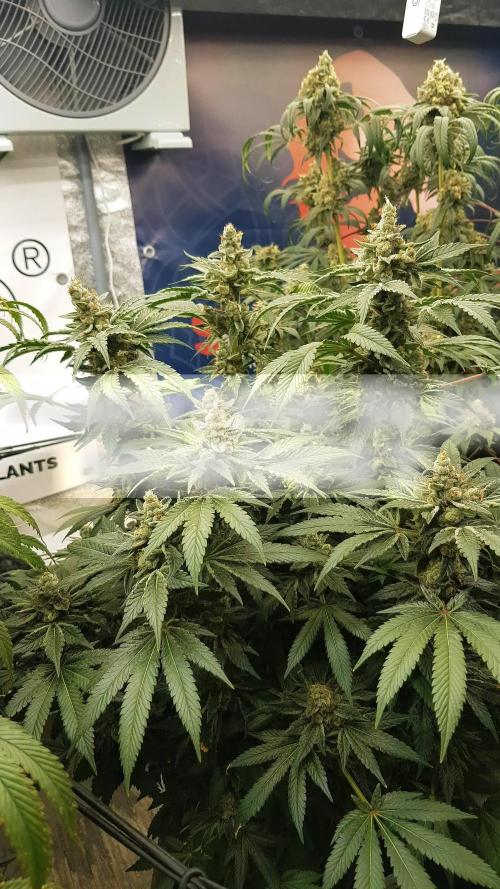
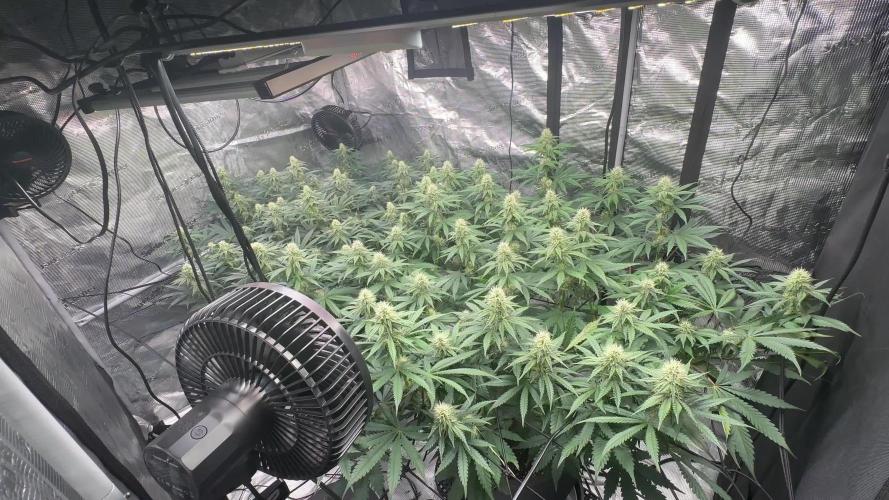
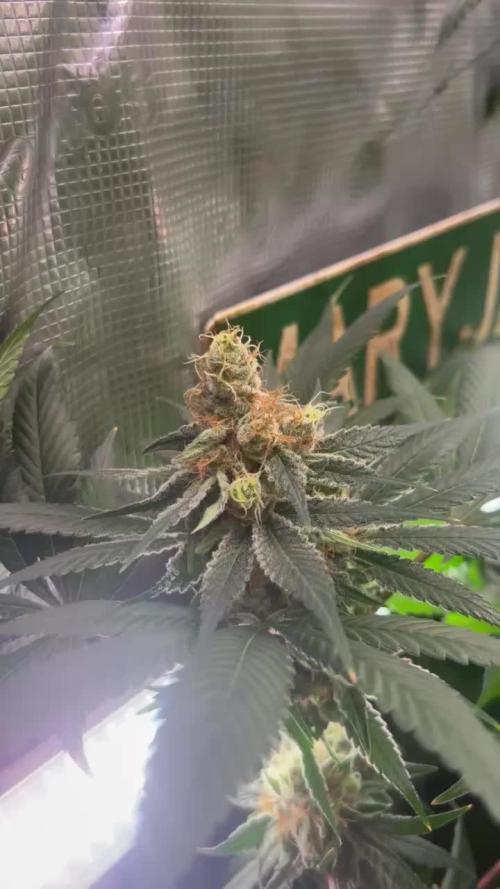
Week five in flower and not much change. The buds are starting to bulk up and get fat. I have noticed a color shift in the bud as well. They are developing a pink/purple hue with a gray undertone. It’s an unusual color because it’s very pastel looking. Frost production is still on high, these things are coated like crazy already. Magnesium issue has now stopped, I’ve been adding 1/16 teaspoon of magnesium sulfate to the water every time to keep up with the demand for this large plant. Smell is very strong and hits you hard when you open the tent. When rubbing the bud I pick up a fruity pebbles smell. So far watering every other day and she is sucking down about a gallon a day of water. Run off pH was reading 6.5 which has been spot on this entire grow so far.
Likes
170
Share
@Hologram
Follow
Runtz melonade is enjoying the 'late summer' we are having this week!😎👌 Im glad she is getting so fat bc she seems 2b very psychoactive and as a psychonaut, i cant wait to vape my ass of with this! I always love to grow and vape Runtz, she supports me in what ever i do👍 she is so nicely balanced, i can vape her in the daytime and also at night, to put me to sleep💤 But i have never tried Melonade Runtz.. but if i know Runtz, think its gonna be a hell of a trip!👽👊 happy growing for all✊ PS i have been seeing traces of caterpillers all around.. but where are you?? 😠✊
Likes
39
Share
@KitaKush
Follow
Week 13 harvest! The girls are getting 12 hours of darkness before the hang! I can’t control my humidity yet when it’s completely dark otherwise I would’ve gone for a bit longer. My stinkiest frostiest prettiest plants yet…very excited to jar them up!!! And i’ll clean my fan soon too hahaha
Likes
18
Share
Привет друзья. Моей растихе сегодня 60 дней. Начал применять LST технику на 19 дне и продалжаю применять её через день, а 18 августа добавил ДЕФОЛИЗАЦИЮ С 20.08 ДЕФОЛИЗАЦИЮ делаю каждые 3,4 дня С 20.08 LST технику делаю каждые 4.6 дней На сегодняшний день влажность 60% 15 дней назад заметил высокий Ph 7.9 С 48 дня Ph не ниже 5.8 На сегодняшний день Ph 6.0 Начал кормить с 60 дня Canna Terra Vega PPM 550 Погладитель влажности, выполняет свои функции. Посмотрю на динамику. Всем мира и добра! https://t.me/smail_seeds #Smail_Seeds
Likes
16
Share
@Andres
Follow
last day ... harvest day ...
Likes
16
Share
It is day 30 and we are finally seeing some growth starting after a few days of being locked out due to what I believe is from nutrient burn. Won’t go as heavy next top dress. I have ordered a soil ph pen which will be arriving tomorrow so that I can’t test my soil ph and the run off. Until then I have ph'd the water to 6.0 to hopefully stimulate more growth before flower. These plants are very short but stacked! I can’t wait to see how big they are at pre flower. After it’s 3rd week stretch. Reach for the skies bitches! Watering less aswell. I believe iam overwatering because I go days without seeing these girls. Exhale c02 bag doing well. Resembles mould at the moment. I want to take a moment to thank everyone who’s visited my diary. I hope to bring you great content! Always open to helpful suggestions. Stay tuned! Day 34 and we are at pre flower. See those hairs comin. Now they all gonna streeeeeetch. Drop a comment, like, or just offer me some advice. We’re all family here ✌️. Doin a little LST now that the space between the nodes are far enough for me to feel comfortable doing so. There was no where to put them no matter how slow I tried haha. Also have each girl in something that resembles the cross face chicken wing from the WWE. Little fan on fan action. It’s like the leaves were meant to stuck together. The knotches in the leaves interlock I mean. I stretch the upper fan leaf to the one directly below it. Opening up both shoots. Hope they made sense lmao.
Likes
1
Share
@Chucky324
Follow
Hello. This is the start of flowering for these Best Clones. I use the Critical OG and the Blackberry Moonrocks... Indicia's, for my medical needs. Found some spider mites and bought some predatory mites to combat them. See the pics. Took clones yesterday and flipped them to flowering last night. Things are going well in here. Next trim up is just before 3 weeks into flowering. OK. Keep Growing Straight. Chuck.
Likes
31
Share
@Sider79
Follow
Didn't get the potential. Very happy with the look of the finished product , so far I'll give this particular strain 9.3. In it's best stability this would be my go to phenotype cause of the overall potential and ratio. Very happy for it being my first auto grow experience now I'm hooked. Definitely would suggest this bad girl for a first time auto enthusiast and for the connoisseur . I've been looking into that Purple Lemonade by Fast Buds and very excited to purchase also that Black Berry cause they remind me of the Blue Dreams large flower to plant ratio. For now and my next auto grow will beee......🥁 FB.Six Shooter, VS.Super Xtra Skunk, Seedsman's Northern Lights Seedsman's Limited Edition Strawberry Cheesecake. I decided to do multiples this time because of finish times I feel will never be the extact either way I'll try to get a rotation going .😃
Likes
6
Share
@Piupao
Follow
Buds are full and beautiful a little bit dark purple color.Waiting for drying. Wet buds with stems are 450gr. Will update effect and weight after drying.
Likes
5
Share
These pretty ladies are stacking up beautiful!! Gonna be an amazing yield! My first grow with Kc Brains, and so far, I couldnt be happier. Fantastic fruity smell, and bright colored pistils! There are 6 of these beautiful ladies in this run! Feeding heavy and they are eating it up! Showing no signs of deficiency or problems! Some of the prettiest plants you will see!
Likes
113
Share
@Natrona
Follow
Hey Abby and SeedSupreme NYC Diesel Auto W3 10/5-11 Day 17-21 First time adding nutrients to feeding: PH 5.74, PPM 574, EC 1146,Temp 64.2 480 ml plus spray around the rim of the pot to wet the outer soil. Aptus regulator 1.5ml/2.5 gals (10ltr) Aptus Starter Booster 2.5ml/2.5 gals Grow Time 7.5/gal Bloom Time 0/g Recharge 2.5ml/gal Cal Mag 15ml Fox PH Down Thank You @daggaDNA for sharing the Aptus Believers kit and testing my math skills on your birthday. Gotta stay sharp. My birthday is Sunday 12th but I wont put your math skills to test as it requires calculus 😊 Notes on the Hey Abby Grow Box Monday morning, the door to the box would not open. I do not use the child lock so I was confused. I opened the app and the box is offline. I do not know when this happened during the night. That is the reason the door would not open. I had to use the key that I used to open the box initially after shipment. So keep your key. Response time regarding the offline issue was over 5 hours as they are in California.  Resolution was to delete the app and reload. However, it took 3+ days for the resolution. They kept sending me the startup, how to connect by Wi-Fi, Customer support is lacking. The box had been working for 10 days. Fortunately, the app reset with the same data regarding the grow cycle and nothing was lost. Also good thing I checked the settings, I found that switching from germination to autoflower, the light cycle changed from 16/8 to 12/12. I usually run autos on 18/6. I decided to run at 16/8 for now.  The calendar within the app has scheduled daily tasks that indicate what to do when, which includes watering, LST, trimming, adding amendments etc. I created a grow plan based on the scheduled tasks in the calendar. It is downloadable in Excel if you want to create a grow plan for yourself. Note, i easnt able to ioload excel. When you complete them, you check off the calendar. All the highlights in orange are the calendar prompts for tasks.  The blogs indicate the Abby Button should show the environmental stats. Mine does not so I asked if I should get a new button or is my model the basic one without that feature. Mine is the basic version and the button does not show stats. However, if I say Hey Abby it makes a tone as if expecting voice commands. Stay green, growers love 💚🌿 💫Natrona💫
Likes
34
Share
Yellow butterfly came to see me the other day; that was nice. Starting to show signs of stress on the odd leaf, localized isolated blips, blemishes, who said growing up was going to be easy! Smaller leaves have less surface area for stomata to occupy, so the stomata are packed more densely to maintain adequate gas exchange. Smaller leaves might have higher stomatal density to compensate for their smaller size, potentially maximizing carbon uptake and minimizing water loss. Environmental conditions like light intensity and water availability can influence stomatal density, and these factors can affect leaf size as well. Leaf development involves cell division and expansion, and stomatal differentiation is sensitive to these processes. In essence, the smaller leaf size can lead to a higher stomatal density due to the constraints of available space and the need to optimize gas exchange for photosynthesis and transpiration. In the long term, UV-B radiation can lead to more complex changes in stomatal morphology, including effects on both stomatal density and size, potentially impacting carbon sequestration and water use. In essence, UV-B can be a double-edged sword for stomata: It can induce stomatal closure and potentially reduce stomatal size, but it may also trigger an increase in stomatal density as a compensatory mechanism. It is generally more efficient for gas exchange to have smaller leaves with a higher stomatal density, rather than large leaves with lower stomatal density. This is because smaller stomata can facilitate faster gas exchange due to shorter diffusion pathways, even though they may have the same total pore area as fewer, larger stomata. Leaf size tends to decrease in colder climates to reduce heat loss, while larger leaves are more common in warmer, humid environments. Plants in arid regions often develop smaller leaves with a thicker cuticle and/or hairs to minimize water loss through transpiration. Conversely, plants in wet environments may have larger leaves and drip tips to facilitate water runoff. Leaf size and shape can vary based on light availability. For example, leaves in shaded areas may be larger and thinner to maximize light absorption. Leaf mass per area (LMA) can be higher in stressful environments with limited nutrients, indicating a greater investment in structural components for protection and critical resource conservation. Wind speed, humidity, and soil conditions can also influence leaf morphology, leading to variations in leaf shape, size, and surface characteristics. Small leaves: Reduce water loss in arid or cold climates. Environmental conditions significantly affect gene expression in plants. Plants are sessile organisms, meaning they cannot move to escape unfavorable conditions, so they rely on gene expression to adapt to their surroundings. Environmental factors like light, temperature, water, and nutrient availability can trigger changes in gene expression, allowing plants to respond to and survive in diverse environments. Depending on the environment a young seedling encounters, the developmental program following seed germination could be skotomorphogenesis in the dark or photomorphogenesis in the light. Light signals are interpreted by a repertoire of photoreceptors followed by sophisticated gene expression networks, eventually resulting in developmental changes. The expression and functions of photoreceptors and key signaling molecules are highly coordinated and regulated at multiple levels of the central dogma in molecular biology. Light activates gene expression through the actions of positive transcriptional regulators and the relaxation of chromatin by histone acetylation. Small regulatory RNAs help attenuate the expression of light-responsive genes. Alternative splicing, protein phosphorylation/dephosphorylation, the formation of diverse transcriptional complexes, and selective protein degradation all contribute to proteome diversity and change the functions of individual proteins. Photomorphogenesis, the light-driven developmental changes in plants, significantly impacts gene expression. It involves a cascade of events where light signals, perceived by photoreceptors, trigger changes in gene expression patterns, ultimately leading to the development of a plant in response to its light environment. Genes are expressed, not dictated! While having the potential to encode proteins, genes are not automatically and constantly active. Instead, their expression (the process of turning them into proteins) is carefully regulated by the cell, responding to internal and external signals. This means that genes can be "turned on" or "turned off," and the level of expression can be adjusted, depending on the cell's needs and the surrounding environment. In plants, genes are not simply "on" or "off" but rather their expression is carefully regulated based on various factors, including the cell type, developmental stage, and environmental conditions. This means that while all cells in a plant contain the same genetic information (the same genes), different cells will express different subsets of those genes at different times. This regulation is crucial for the proper functioning and development of the plant. When a green plant is exposed to red light, much of the red light is absorbed, but some is also reflected back. The reflected red light, along with any blue light reflected from other parts of the plant, can be perceived by our eyes as purple. Carotenoids absorb light in blue-green region of the visible spectrum, complementing chlorophyll's absorption in the red region. They safeguard the photosynthetic machinery from excessive light by activating singlet oxygen, an oxidant formed during photosynthesis. Carotenoids also quench triplet chlorophyll, which can negatively affect photosynthesis, and scavenge reactive oxygen species (ROS) that can damage cellular proteins. Additionally, carotenoid derivatives signal plant development and responses to environmental cues. They serve as precursors for the biosynthesis of phytohormones such as abscisic acid () and strigolactones (SLs). These pigments are responsible for the orange, red, and yellow hues of fruits and vegetables, while acting as free scavengers to protect plants during photosynthesis. Singlet oxygen (¹O₂) is an electronically excited state of molecular oxygen (O₂). Singlet oxygen is produced as a byproduct during photosynthesis, primarily within the photosystem II (PSII) reaction center and light-harvesting antenna complex. This occurs when excess energy from excited chlorophyll molecules is transferred to molecular oxygen. While singlet oxygen can cause oxidative damage, plants have mechanisms to manage its production and mitigate its harmful effects. Singlet oxygen (¹O₂) is considered a reactive oxygen species (ROS). It's a form of oxygen with higher energy and reactivity compared to the more common triplet oxygen found in its ground state. Singlet oxygen is generated both in biological systems, such as during photosynthesis in plants, and in cellular processes, and through chemical and photochemical reactions. While singlet oxygen is a ROS, it's important to note that it differs from other ROS like superoxide (O₂⁻), hydrogen peroxide (H₂O₂), and hydroxyl radicals (OH) in its formation, reactivity, and specific biological roles. Non-photochemical quenching (NPQ) protects plants from damage caused by reactive oxygen species (ROS) by dissipating excess light energy as heat. This process reduces the overexcitation of photosynthetic pigments, which can lead to the production of ROS, thus mitigating the potential for photodamage. Zeaxanthin, a carotenoid pigment, plays a crucial role in photoprotection in plants by both enhancing non-photochemical quenching (NPQ) and scavenging reactive oxygen species (ROS). In high-light conditions, zeaxanthin is synthesized from violaxanthin through the xanthophyll cycle, and this zeaxanthin then facilitates heat dissipation of excess light energy (NPQ) and quenches harmful ROS. The Issue of Singlet Oxygen!! ROS Formation: Blue light, with its higher energy photons, can promote the formation of reactive oxygen species (ROS), including singlet oxygen, within the plant. Potential Damage: High levels of ROS can damage cellular components, including proteins, lipids, and DNA, potentially impacting plant health and productivity. Balancing Act: A balanced spectrum of light, including both blue and red light, is crucial for mitigating the harmful effects of excessive blue light and promoting optimal plant growth and stress tolerance. The Importance of Red Light: Red light (especially far-red) can help to mitigate the negative effects of excessive blue light by: Balancing the Photoreceptor Response: Red light can influence the activity of photoreceptors like phytochrome, which are involved in regulating plant responses to different light wavelengths. Enhancing Antioxidant Production: Red and blue light can stimulate the production of antioxidants, which help to neutralize ROS and protect the plant from oxidative damage. Optimizing Photosynthesis: Red light is efficiently used in photosynthesis, and its combination with blue light can lead to increased photosynthetic efficiency and biomass production. In controlled environments like greenhouses and vertical farms, optimizing the ratio of blue and red light is a key strategy for promoting healthy plant growth and yield. Understanding the interplay between blue light signaling, ROS production, and antioxidant defense mechanisms can inform breeding programs and biotechnological interventions aimed at improving plant stress resistance. In summary, while blue light is essential for plant development and photosynthesis, it's crucial to balance it with other light wavelengths, particularly red light, to prevent excessive ROS formation and promote overall plant health. Oxidative damage in plants occurs when there's an imbalance between the production of reactive oxygen species (ROS) and the plant's ability to neutralize them, leading to cellular damage. This imbalance, known as oxidative stress, can result from various environmental stressors, affecting plant growth, development, and overall productivity. Causes of Oxidative Damage: Abiotic stresses: These include extreme temperatures (heat and cold), drought, salinity, heavy metal toxicity, and excessive light. Biotic stresses: Pathogen attacks and insect infestations can also trigger oxidative stress. Metabolic processes: Normal cellular activities, particularly in chloroplasts, mitochondria, and peroxisomes, can generate ROS as byproducts. Certain chlorophyll biosynthesis intermediates can produce singlet oxygen (1O2), a potent ROS, leading to oxidative damage. ROS can damage lipids (lipid peroxidation), proteins, carbohydrates, and nucleic acids (DNA). Oxidative stress can compromise the integrity of cell membranes, affecting their function and permeability. Oxidative damage can interfere with essential cellular functions, including photosynthesis, respiration, and signal transduction. In severe cases, oxidative stress can trigger programmed cell death (apoptosis). Oxidative damage can lead to stunted growth, reduced biomass, and lower crop yields. Plants have evolved intricate antioxidant defense systems to counteract oxidative stress. These include: Enzymes like superoxide dismutase (SOD), catalase (CAT), and various peroxidases scavenge ROS and neutralize their damaging effects. Antioxidant molecules like glutathione, ascorbic acid (vitamin C), C60 fullerene, and carotenoids directly neutralize ROS. Developing plant varieties with gene expression focused on enhanced antioxidant capacity and stress tolerance is crucial. Optimizing irrigation, fertilization, and other management practices can help minimize stress and oxidative damage. Applying antioxidant compounds or elicitors can help plants cope with oxidative stress. Introducing genes for enhanced antioxidant enzymes or stress-related proteins over generations. Phytohormones, also known as plant hormones, are a group of naturally occurring organic compounds that regulate plant growth, development, and various physiological processes. The five major classes of phytohormones are: auxins, gibberellins, cytokinins, ethylene, and abscisic acid. In addition to these, other phytohormones like brassinosteroids, jasmonates, and salicylates also play significant roles. Here's a breakdown of the key phytohormones: Auxins: Primarily involved in cell elongation, root initiation, and apical dominance. Gibberellins: Promote stem elongation, seed germination, and flowering. Cytokinins: Stimulate cell division and differentiation, and delay leaf senescence. Ethylene: Regulates fruit ripening, leaf abscission, and senescence. Abscisic acid (ABA): Plays a role in seed dormancy, stomatal closure, and stress responses. Brassinosteroids: Involved in cell elongation, division, and stress responses. Jasmonates: Regulate plant defense against pathogens and herbivores, as well as other processes. Salicylic acid: Plays a role in plant defense against pathogens. 1. Red and Far-Red Light (Phytochromes): Red light: Primarily activates the phytochrome system, converting it to its active form (Pfr), which promotes processes like stem elongation and flowering. Far-red light: Inhibits the phytochrome system by converting the active Pfr form back to the inactive Pr form. This can trigger shade avoidance responses and inhibit germination. Phytohormones: Red and far-red light regulate phytohormones like auxin and gibberellins, which are involved in stem elongation and other growth processes. 2. Blue Light (Cryptochromes and Phototropins): Blue light: Activates cryptochromes and phototropins, which are involved in various processes like stomatal opening, seedling de-etiolation, and phototropism (growth towards light). Phytohormones: Blue light affects auxin levels, influencing stem growth, and also impacts other phytohormones involved in these processes. Example: Blue light can promote vegetative growth and can interact with red light to promote flowering. 3. UV-B Light (UV-B Receptors): UV-B light: Perceived by UVR8 receptors, it can affect plant growth and development and has roles in stress responses, like UV protection. Phytohormones: UV-B light can influence phytohormones involved in stress responses, potentially affecting growth and development. 4. Other Colors: Green light: Plants are generally less sensitive to green light, as chlorophyll reflects it. Other wavelengths: While less studied, other wavelengths can also influence plant growth and development through interactions with different photoreceptors and phytohormones. Key Points: Cross-Signaling: Plants often experience a mix of light wavelengths, leading to complex interactions between different photoreceptors and phytohormones. Species Variability: The precise effects of light color on phytohormones can vary between different plant species. Hormonal Interactions: Phytohormones don't act in isolation; their interactions and interplay with other phytohormones and environmental signals are critical for plant responses. The spectral ratio of light (the composition of different colors of light) significantly influences a plant's hormonal balance. Different wavelengths of light are perceived by specific photoreceptors in plants, which in turn regulate the production and activity of various plant hormones (phytohormones). These hormones then control a wide range of developmental processes.
Likes
30
Share
It's exciting to start a new journey! I started by trying to germinate 2xF.Bs. Unfortunately only one made it, so I started one more and this third one made it at well 👌 This time I washed and buffered the coco with CalMag and mixed it with a good amount of Perlite for better drainage and aeration. This time around I’m challenging myself to get up to 200 likes, quite a high aim I know, let’s see if me and Fat Banana can make it. If you have something in mind you would 👉 Like 👈 to see or learn, be so kind and let me know ;) Big Plant Science Power House Part A 200ppm/ml/l Calcium Plus Part B 150ppm/ml/l Stimulus 30ppm/ml/l Aroma Boost 80ppm/ml/l
Likes
30
Share
@TightNugs
Follow
Some good progress this week,plant 1 now starting to stack,plant two now showing proper pistils. Never had a plant flower so quick as plant 1,only around 15 days since first signs, owing to the new Voost VST 240 https://voost.com/ top L.E.D at unbeatable prices for such high spec,trust me😉 😎 Happy growing Nugz 🤞🏴󠁧󠁢󠁷󠁬󠁳󠁿🍁 🍁🍁🍁🍁 Breeder-White label purple bud 🍁🍁🍁🍁 Light-Voost VST 240 https://voost.com/ (code TightNugs 7.5% off orders over £200 excludes any sales.
Likes
19
Share
@Organic_G
Follow
Ansich gute Sorte, in der Blüte ein leckeren Zitrus Candy Geruch, leider beim Rauchen nicht so exotisch… man macht zar wenig verkehrt mit der Sorte, aber einmal grown reicht für mich, bin leider Pheno Hunter ;)
Likes
16
Share
Comenzando semana 7 de estás nenas, aun las mantengo en 1L y hoy le hicimos su primera defoliación masiva, ahora a esperar que se recuperen para hacerle trasplante a maceta de 3,5L. La verdad no eh tenido muchos problema, todo sigue igual siguiendo el mismo orden de nutrientes, bacterias y hongos benéficos una vez por semana, enzimas ahora se las estoy dando día por medio o cada 3 día. Ya logramos sacar los primeros clones de la watermelon, punch y cookie y la thc bomb. la dss aun la tenemos tirando fuerza que no va mal pero no tenia espacio para más clones. Saludos
Likes
56
Share
Everything is going pretty smooth. Twisted helix is still looking rough and the leaves are dying. Other than that everyone is looking happy. Just packing on some trichomes and building some buds. Excited to see what these girls do over the next couple weeks. This sugar cane has the same mutation as the last one. Ovules growing out in the open not protected by a calyx. These ovules shriveled up and pretty much disappeared on the last plant. Didn't notice them in the buds at all.
Likes
3
Share
Der PH wert von meiner Abfluss flüssigkeit lag bei unter 5.0 und der EC wert war üder 3.6 Nach 3-4 litern wasser PH 7,5 und Canna flush liegt der PH wert bei 5,5 und es sind noch 400ppm im abfliessenden Wasser. Nach 6 litern wasser Ph 7,5 Hat das abfliessende Wasser einen Ph wert von 6 und noch 250ppm