


Likes
Comments
Share


@Still_Smoq
Follow
#seedsman420growoff and #SeedsmanSeeds
📆 Week 9, 22-28 June 2024
22 June - Observed and let the plant grow.
23 June - Defoliated
24-28 June - Observed and let the plant grow.
📑 Defoliated all large lower and damaged leaves from plant.
Checked TDS PPM on 24 June, the reading originally started at 1290, was now 455, so I decided to change solution earlier than scheduled.
Checked TDS PPM on 27 June and the reading was 390. So the nutrient solution was changed again.
Larger plants consume much more nutrients and may require a modified feeding schedule. I’ll just observe and see how she does. Some plants are sensitive to this. Again I’m talking about DWC specifically.
Her smell has intensified this week, defined by a pineapple scent! It truely does! She seems to have (so far) taken well to the early solution change.
🍶 24, 27 June nutrient solution changed
🍽️ 24, 27 June feeding schedule updated
💧 Using reverse osmosis water with EC/TDS at 0
🐉 Nutrient Solution EC 2.6 at 73 degree F
🔆 Light power at 75%, DLI 45 canopy coverage at 12hrs
😤 Using General Hydroponics, HGC728040, Dual Diaphragm Air Pump, 320 GPH
That is it for this week. Thanks for the look, read and stopping by.

Likes
25
Share

@SkunkyDog420
Follow
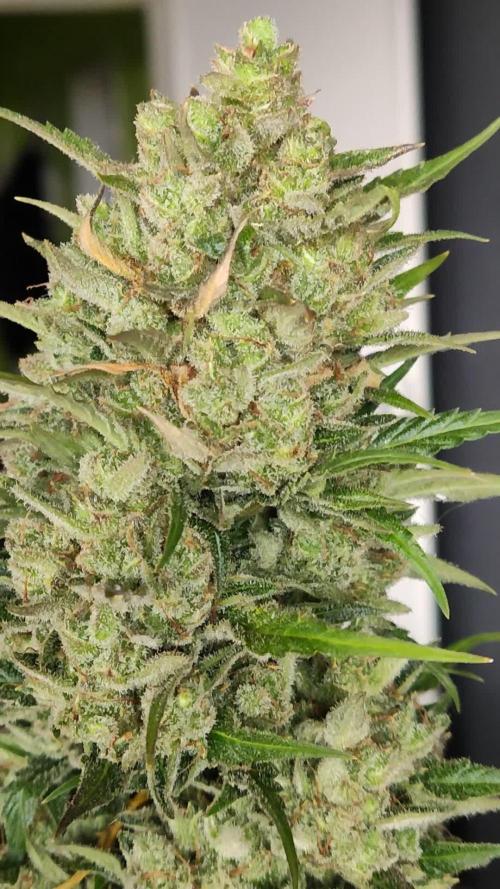
Hallo zusammen 🤙.
Habe sie heute geerntet . Wir sehen uns in 3 Wochen mit dem Erntebericht.

Likes
15
Share


@UDUDUDUDU
Follow
A little early I think to post.
This seed grew into a plant & broke soil 2 days ago.
Now to watch this beauty grow up into a full sized big slice of cheese :)

Likes
34
Share


@Gorrilla420
Follow
This week we’ve had abit of growth not as much as I’d hoped, most of the side nodes have been ate my snails so must have stunted her a lot, I topped her few week ago and both new heads started to come out then the slugs had ate one so I’m back to 1 head and no side branches, hoping now I’ve dealt with them and won’t get attacked again and she can do her thing. We will see, was hoping to get a net over her soon to spread her out but not looking promising with no side branches left just a main head again.
That’s all this week, happy growing 🌱

Likes
11
Share

@Phaleg
Follow
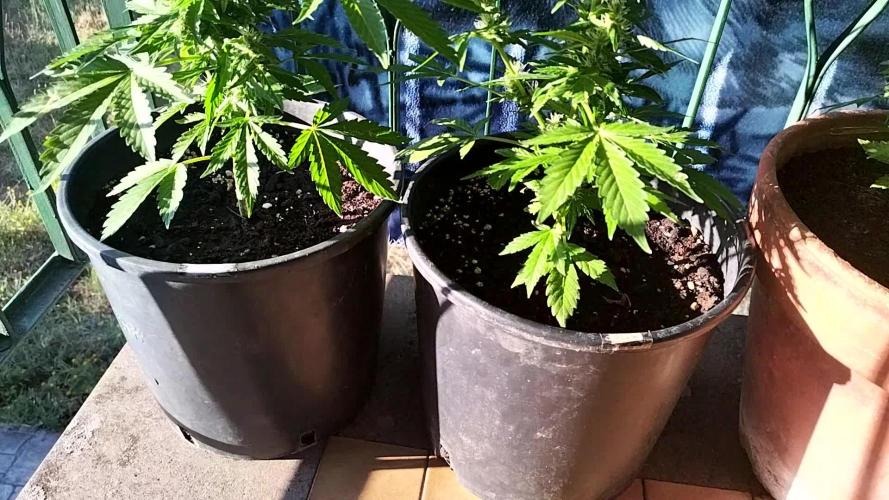
Plants are flowering and their height stays stable.
I noticed that their leaves are really dark and smaller compared to other strains that I cultivated.
2x Night Queen Automatic : 41cm and 47cm (same as last week)

Likes
48
Share

@CCSAUTOGROW
Follow
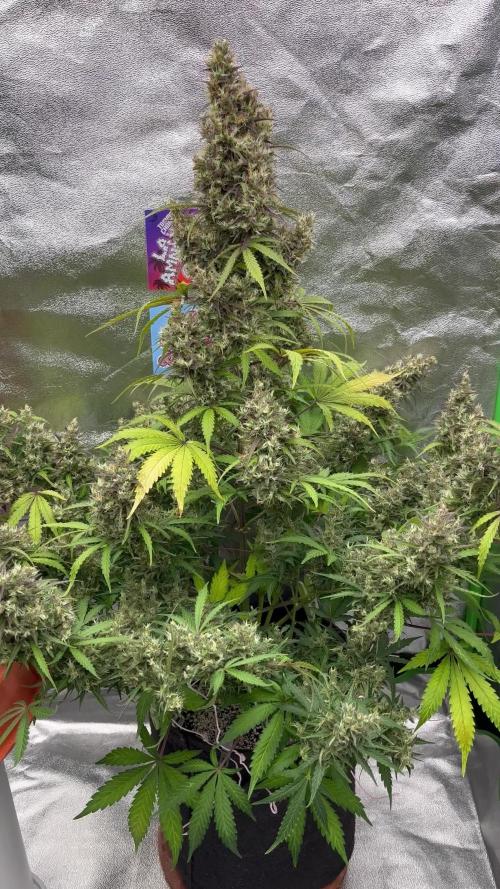
Oh yeah!!!! Apple Strudel is finishing strong 💪. Her buds have swollen up nicely, are a beautiful lime green & super frosty. She smells really potent! Started to flush her a couple days ago so she'll be getting the chop here in a few days. Excited to see how she taste after a dry & cure.


Likes
3
Share

@Lvnsource
Follow
Feed Log:
D: 86 - 10L - [ph 6.1] SI[0ml] ,Vega[0ml] , Flores[20ml],Ca/Mg[2.5g & 1.5g ] INPUT; [1.02 EC] OUTPUT; 4.7L ,6.3 pH , 1.7 EC Previous irrigation: D:83
She’s doing much better now: the lower EC and exclusion of vega should stop the fox-tailing. The buds are also starting to get dense which is nice
Likes
32
Share


@MadeInGermany
Follow
Unfortunately, I had to find out that my account is used for fake pages in social media.
I am only active here on growdiaries.
I am not on facebook instagram twitter etc All accounts except this one are fake.
Flowering day 35
since time change
to 12/12 h.
Hi everyone :-) .
We got lost in the middle of bloom.
The buds are developing really well 😁.
The scent gets stronger every day when you open the tent .
I watered it twice this week with 1.2 l each time (see table for nutrients).
Almost every leaf was examined for animals and diseases.
Everything looks great 👍.
I'm really looking forward to the coming weeks and I wish you all a lot of fun until the next update.
Stay healthy 🙏🏻
You can buy this Strain at :
www.Zamnesia.com
Type:
Runtz
☝️🏼
Genetics:
Zkittlez x Gelato
👍
Vega lamp: 2 x Todogrow Led
Quantum Board 100 W
💡
Bloom Lamp : 2 x Todogrow Led
Cxb 3590 COB 3500 K 205 W
💡💡☝️🏼
Soil : Bio Bizz Coco
☝️🏼
Nutrients : Green House Seeds Company Powder Feeding Bio
☝️🏼🌱
Water: Osmosis water mixed with normal water (24 hours stale that the chlorine evaporates) to 0.2 EC. Add Cal / Mag to 0.4 Ec Ph with Organic Ph - to 5.8
Likes
27
Share


@DeepRootsGrowTrees
Follow
GELATO-K BY KANNABIA
Week #21 Mar.29-Apr.5th
Week #10 Flower
Checked trichomes they are about 60% clear 40% milky so this was the last week for feeding. Stay Growing!! Thank you for taking a look at the diary!!

Likes
33
Share


@Ferenc
Follow
Hi, I will grow 5 Cup Winner Auto Feminized Strains in this diary, mostly Indica dominant strains.
LSD-25 Auto Feminized Seeds By FastBuds:
LSD-25 Auto Feminized Seeds are another addition to FastBuds ever-growing range of automatic genetics. A cross of LSD and FastBud’s own in house Ruderalis, creating another high THC and low CBD automatic purple strain. This indica dominant hybrid has strong scents of earthy pine and wood. A short life cycle of only 8 weeks makes this genetic one of the quickest flowering seeds by FastBuds, without compromising in yield size. This strain can be treated with no extra care so can be great for beginners, but if trained correctly yields can improve massively.
Auto Glueberry OG Feminized Seeds by Dutch Passion:
Auto Glueberry OG Feminized Seeds are another cup winning genetics, awarded 3rd Prize Autoflower Highlife Cup Netherlands 2017. This strain stems from Dutch Passions Glueberry OG, a cross of (Gorrila Glue x OG) x Auto Blueberry, to ensure the same attributes as her photoperiod sister. This versatile Sativa dominant hybrid can be used for SOG as well as SCROG. Due to the Sativa dominance, you can expect large yields whatever climate with a flowering period of 77 days. Another great automatic strain from Dutch Passions USA Special Range.
Northern Light Automatic Seeds By Royal Queen Seeds:
Northern Light Automatic Seeds are a great strain for growing both indoors and outdoors in most climates. A mostly Indica strain due to its Afghani genetics. A nice, sweet taste with a comfortable physical effect, a great strain for medicinal uses. Ready for harvest in only 9 to 10 weeks the plant starts growing and producing flowers almost immediately. Northern Light Automatic has a very generous harvest and may be one of the highest-yielding autoflowering strains available today. Growing to a height of around 90-120 cm, it is quite a large plant for an autoflowering variety.
Auto Colorado Cookies Feminized Seeds By Dutch Passion:
Auto Colorado Cookies Feminized Seeds are a high yield, indica dominant Automatic hybrid. An original fruity USA flavor with a Dutch Passion yield in automatic form. A cross of the sought after Auto blueberry by Dutch Passion and an exceptional Girl Scout Cookie from Colorado. This strain has some incredible aromas as well as strength to match. With a complete life cycle of 70 to 77 days you can gain as much as possible when it comes to yield. This amazing Automatic Hybrid is yet another great addition to Dutch Passion’s collection in collaboration with USA Genetics.
Auto Blackberry Kush Feminized Seeds By Dutch Passion:
Auto Blackberry Kush Seeds are another cup winning genetic by Dutch Passion, placing 2nd in Autoflowers, Highlife Cup, Netherlands 2018. A cross between Dutch Passions Original Blueberry and a Kush Hash-Plant has created an indica dominant hybrid with a sweet fruity taste. Dominance from the Blueberry tends to give to a sweeter characteristic, combined with an indica dominance from the Kush. Expect Vigorous growth as well as great dark purple hues from this hybrid later in flower. Average height of 0.75-1m when on 20/4 and all complete within 70 days from sprout.
24 hours light schedule, 90 percent humidity, trigger spray, no fertilization.
15th of August: I prepared the seeds and tonight I will place them to be in water for at least 12 hours. 15th of August: I placed them to the water. Auto BlackBerry Kush straight submerged. Wao....:D 16th of August: I placed them between damp paper towel. Northern Light Auto is the quickest she has already sprouted out.:) 17th of August 2019: All of them are fine the LSD-25 was the slowest and the Northern Light is the fastest seed that germinated. They are ready to be planted tomorrow ;) Day 1: I have planted them. 60 W LED for 5 plants 98 percent humidity, daily water 5ml per plant plus a lot of triggering to keep the humidity very high all the holes are closed, 24 hours light schedule. I just need to wait to them to be out :) Day 2: The winner is Blackberry Kush she is the first out. :) Rest of them still not out but I think by tomorrow most of them will be. Day 3: Super Skunk is not viable. The seed isndead all were out I checked she stopped growing but I didn't not find any broken part or the seed was not even dried or something like that. It has never happened to me the seed just stopped its life:( I will grow this strain next time. I replaced with Glueberry OG. All out by the way :)❤️
Day 5: All of them grow quick, 4-5 cm already, they are so fragile ❤️
Day 6: LSD-25 and BlackBerry Kush is 10 cm long they are the tallest gamers. Rest of them are fine with 6-7cm.

Likes
2
Share

@Growcilla
Follow
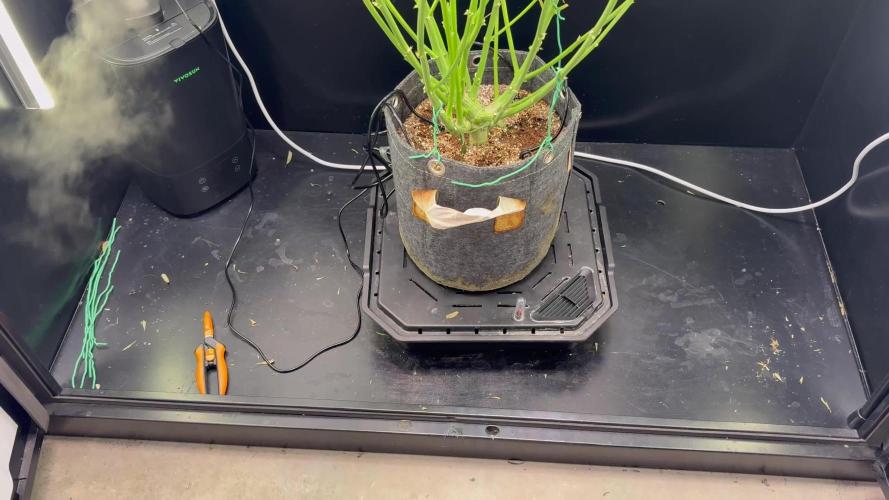
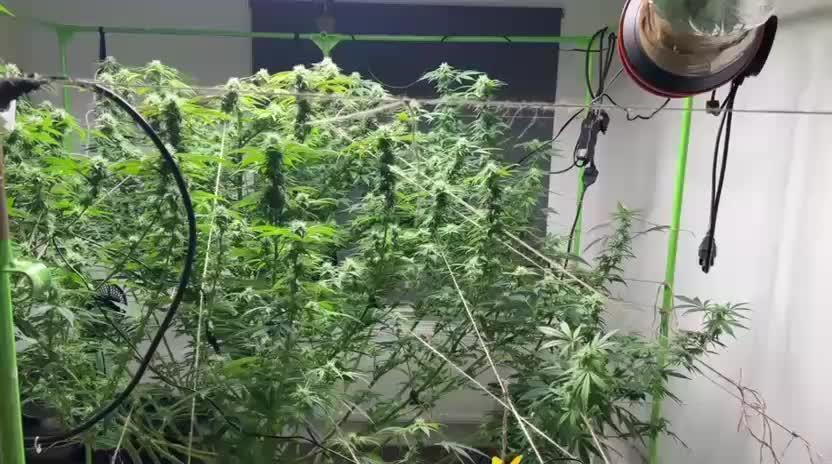
So wie man in diesem Video sieht, der Raum hat 12 m² das Gestell von dem Zelt ist 2 M mal 2 M mal 2 M. Und die Pflanze ist entlaubt, gebunden und gebogen. Und sie geht schon in die Blüte ?😁?

Likes
43
Share

@GERGrowDesigns
Follow
Welcome to my Dutch Passion Diaries Competition 2025 entry!
For this competition, I’ve chosen the Indoor Feminized strain: Orange Bud 2.0
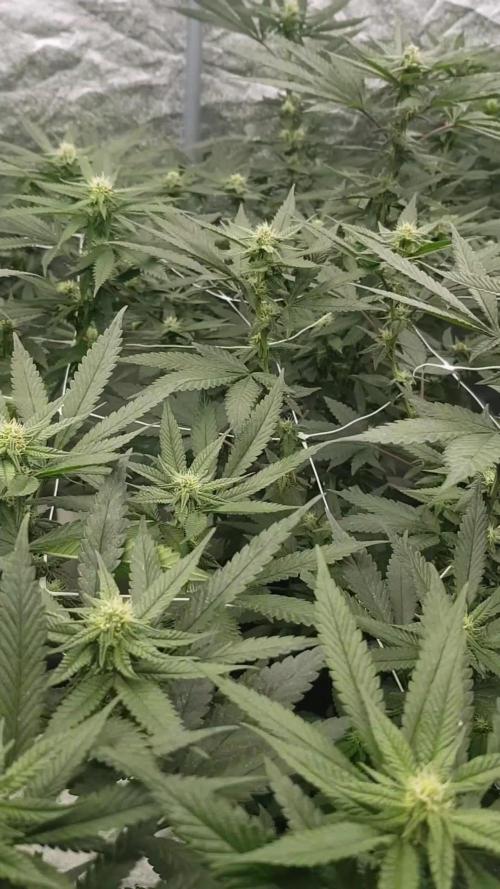
Media from Week 13 or Flower week 2-3 After Moving into the New Tent for the flower weeks. Stage.
Here’s what I’m working with for the Final Tent after Moving for the Flower time in the Future :
• 🌱 Tent: 220x150x150
• 🧑🌾 Breeder Company: Dutch Passion
• 💧 Humidity Range: 50
• ⏳ Flowering Time: 8W-10W
• Strain Info: 20-25%THC, Sativa
• 🌡️ Temperature: 26
• 🍵 Pot Size: 0.5l
• Nutrient Brand: Narcos
• ⚡ Lights : 720W x 2
Dimmed to 400w Each at the Moment. Because of Heatwave ⭐
A huge thank you to Dutch Passion for allowing me to be a part of this amazing competition and for supporting the grower community worldwide! Your genetics and passion speak for themselves!
Curious to try these strains for yourself?
You can check them out and support me at the same time through my personal link:
https://dutch-passion.com/?a_aid=GGD
I would truly appreciate every bit of feedback, help, questions, or discussions – and of course, your likes and interactions mean the world to me as I try to stand out in this exciting competition!
Let’s grow together – and don’t forget to stop by again to see the latest updates!
Happy growing!
Stay lifted and stay curious!
Peace & Buds!
Likes
6
Share


@Gardens_of_Of
Follow
Green House Feeded one is enjoying life and growing big health buds. She received her last lollipoping.
Advanced Nutrients one is still struggling. I am increasing the feeding per Advanced Nutrients supports suggestion. Let’s hope she recovers.

Likes
4
Share


@AustinRon
Follow
OG 4Q24 Seedling Week 2
Orangegasm (Fem) [ IRIE Genetics ]
12/12 @ Bolt (Day 21)
Germination: 20 November 2024
#3A Earliest Harvest Date: 7 February 2025
#3B Latest Harvest Date: 17 February 2025
_________________________________________
Start of Week: [Mon Dec 2, 2024 CR2 4Q24 15:S:1:1]
End of Week: [Sun Dec 8, 2024 CR2 4Q24 21:S:1:7]
OrangeGasm Fertigation: Max EC: [ 2.4, mS]
_______________________________________
Week 2 Objectives
- Continue to root out Seedlings
- WHEN We’ve ROOTS AT THE BOTTOM - Up Plant to 1 GAL and Flip
- Restart EC Ramp (from 1.0 mS/cm2) WHEN ALL Seedlings are standing up STRAIGHT.
- Maintain Environment
Feed Schedule:
- RLA Hydro Chart, Max EC: 2.4
- RLA Foliar (Veg, No add’l PK)
- Weekly: Cytoplus or TM-7: [ 1.25, ml, gal] Through Bolt III
- Wetting Agents
- Dr Bronner’s Hemp Soap: [ 6, drops, gal]
- Quillaja 60: [ 1.25, ml, gal]
- Biology
- Photosynthesis Plus
- Mammoth-P
RLA Foliar through BOLT III
- Monday: Silica Skin, Solar Rain
- Wednesday: CalMag Fuel, Lush Green
- Friday: Solar Rain
Environment, Rooting Cuts, Week 0
- ECRange: [ 1.1, 1.7, mS]
- TempMax: [ 82, °F]
- RHMax: [ 69, %]
- VPD: [ 0.85, ±0.05, kPa]
- LightIntensityRange: [ 410, 530, µMol/m2/s]
- LightPeriod: [ 18/6] # Light Hours, Continuous Dark
Lighting Notes:
- @19.5” Canopy Distance, the dimmer shows 10% of the PPFD Delivered, i.e. 100% = 1000 µMol/m2/s, therefore we’ll maintain light distance (19.5”) and control Light Delivery from the Dimmer. Max will be 85% ( 850 µMol/m2/s)
__
Mon Dec 2, 2024
OG 4Q24 15:S:2:1
- Foliar: Silica Skin, Solar Rain
- TM-7: [ 1.25, ml, gal]


__
Tue Dec 3, 2024
OG 4Q24 16:S:2:2
- Let’s Resume EC Ramp: EC: [ 1.1, mS/cm]
- AM: Watered 50 ml/pot
- All seedlings have ‘Popped,’ Good turgidity, stems firming, big leaves . . .

Photosynthesis Plus: [ 3, ml]
Quillaja 60 Powder (Surfactant): [ 0.625, tsp]
TM-7 (BioAg, µNutrients): [ 0.625, tsp]
Starting with 9.4 EC, Diluted GH pHDown 50:1, and applied 4.2 ml. Reduced to 6.9pH. Took EC from 0.3 to 0.4. We DON’T need additional Phosphorous when phDown’g.
__
Wed Dec 4, 2024
OG 4Q24 17:S:2:3
- Foliar: CalMag Fuel, Lush Green
Ordered ph UP to address acidic Dehu Water.
Fertigation: 2024-12-04T09:32:20-0600: 50 ml/pot

Foliar:
- [X] CalMag Fuel: [ 2.5, ml, pt]
- [X] Lush Green: [ 0.625, ml, pt]
__
Thu Dec 5, 2024
OG 4Q24 18:S:2:4
EC: 1.3
After Foliar (CalMag Fuel/Lush Green), ‘mutant’ is filling in color.
We may have TWO ‘Jagged’ Girls - Serrated/Funky Leaves, TACO Leaves (Natural Fold)
Fertigation @ 1000, 50ml/pot


If so - This is Golden Goat Leaning, Frosty as Hell, Moderate Yielder

Per 0.5 gal feed water:
- [x] Primer A&B: [ 3.4, ml]
- [x] Silica Skin: [ 2.0, ml]
- [x] CalMag Fuel: [ 2.0, ml]
- [x] Lush Green: [ 1.4, ml]
- [x] Root Anchor [ 1.4, ml]
- EC: [ 1.3, mS]
__
Fri Dec 6, 2024
OG 4Q24 19:S:2:5
Foliar:
- CalMag Fuel: [ 2.5, ml]
- Lush Green: [ .0625, ml]
Fertigation:
- EC: [ 1.4, mS]
Per 0.5 gal feed water:
- [x] Silica Skin: [ 2.2, ml]
- [x] CalMag Fuel: [ 2.2, ml]
- [x] Lush Green: [ 1.5, ml]
- [x] Primer A&B: [ 3.7, ml]
- [x] Root Anchor [ 1.5, ml]
- [x] Photosynthesis Plus: [ 3, ml]

Wet Run Irrigation - 8 Emitters | Measure to assure relatively even delivery . . .
__
Sat Dec 7, 2024
OG 4Q24 20:S:2:6
- [ ] Assemble and Wet Run Irrigation
- [x] EC: 1.6

0.5 Gal Feed-water: EC: [1.5, mS]
- [x] Primer A&B: [ 4, ml]
- [x] Silica Skin: [ 2.5, ml]
- [x] CalMag Fuel: [ 2.5, ml]
- [x] Lush Green: [ 1.6, ml]
- [x] Root Anchor: [ 1.6, ml]
- [x] TM-7 (µNutrients): [ 1/8, tsp]
- [x] Photosynthesis Plus: [ 3, ml]
- [x] Quillaja 60 Powder: [ 0.125, tsp]
__
Sun Dec 8, 2024
OG 4Q24 21:S:2:7
440 x 4: 3520 ml/day (Less than 1 Gal)
EC: [ 1.6, mS/cm]


Likes
13
Share


@Canadian
Follow
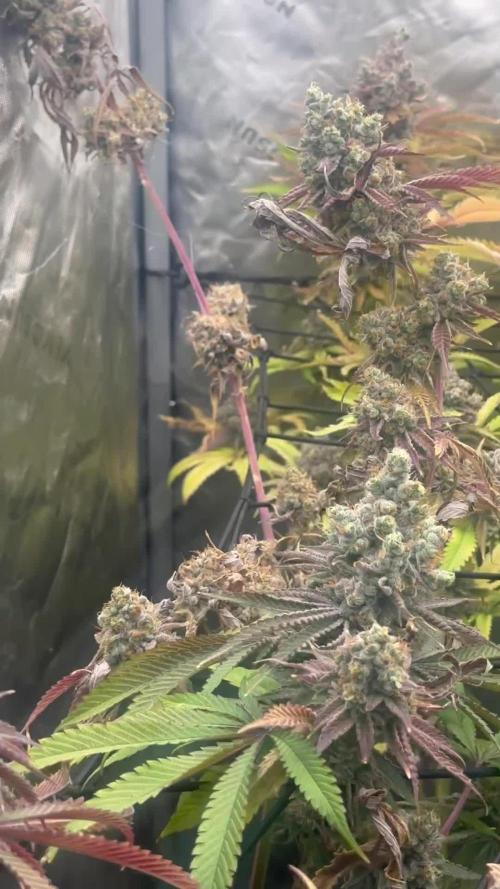
The plants seem to be growing very fast very strong.
thank you for reading I will continue to update have a happy grow





Likes
28
Share


@TheHighentist
Follow
Week 6 of to a good start!
They look happy and healthy. Time to flip to flower soon!
👽👉3/10
Climate is automated and working accordingly to my adjusted VPD settings.
Happy and healthy, actually surprised they've grown so much lately.
👽👉4/10 Waiting for their complete recovery, so they can be flipped to flower (Defoliation the 30/9, im giving them about a week)
👽👉5/10 Water day* Plain ph balanced water.
Need Runoff PH and EC down a little bit.
👽👉6/10 I applied the SCROG net.
👽👉7/10 Doing some minor tweaks to the setup + VPD settings(from 1.0 to 1.1). Approaching the flip to flower, so VPD
Did a bit of defoliation before the flip next week
👽👉8/10
Today, i learned from research on biobizz nutrients https://www.thcfarmer.com/threads/biobizz-nutrients-answers-from-biobizz.78899/ (Direct answer from biobizz)
With the answers, my view on feeding biobizz changed a bit, and i was luckily about to switch up the nutes. Good timing.
Waterday*
PH6.2
Introducing Biobizz CalMag(0.5ml/l) + BioBloom(0.25ml/l)+Topmax(0.25ml/l)+Rootjuice(0.25ml/l)
Still 2ml/L Fishmix+BioHeaven(Fishmix will be switched out with BioGrow)
👽👉 9/10 Last day of the week for my plants and last day in veg! They look fantastic and well recovered at lights on! (Look at the before/after lights vids/pics)
Raised VPD by 0.1: VPD settings(from 1.1 to 1.2)


