The Grow Awards 2026 🏆 









Likes
57
Share
@Silverback_Guerilla
Follow
12/15:
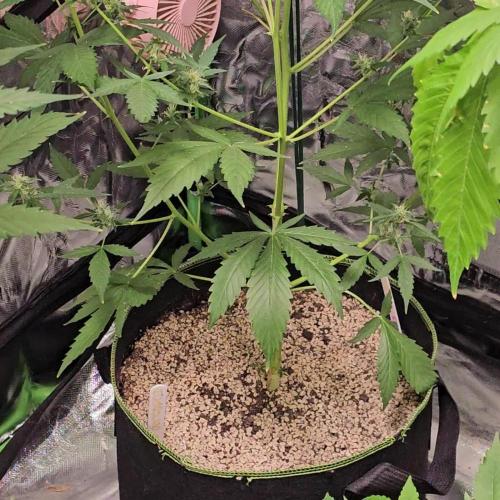
Some plants are taking too long to transition and stretching beyond my space constraints, so I dialed the photoperiod back to 12/12.
12/16:
Fed today and rotated edge plants. Added another 150w of 3000k below the canopy.
12/17:
Worked on ventilation...no A/C necessary now, as I'm using another AC Infinity 6" fan to intake outdoor air into the closet whenever temps reach 75f..and it's been cold as hell outside.👍
The final trick will be to replace the 6" exhaust fan with an 8" so as to be able to fully exchange the closet air faster ...but that's gonna have to wait til next season.

Likes
5
Share
@hi_bengal
Follow
Everything in the 2x2 is looking good! Started some LST to open the plants up and get light to all the lower spots. Humidty around 60 to 65 percent bottom watered for the first time in the earthbox. Filled it up until it ran out of the overflow with Springwater. Will water again when chamber goes dry to prevent any root issues so far I am loving the earthbox!

Likes
43
Share
@TheCannaProphet
Follow
~ GG4 SHERBET FAST FLOWER by FastBuds ~
Well fam, here we go again with another epic strain from FastBuds Fast Flowering stable. After having such tremendous success growing their Gorilla Cookies Fast Flower outdoors last year, I've decided to run another of their fast flowering strains outdoors this year... GG4 Sherbet Fast Flower!
The best description of this awesome cultivar comes directly from my friends at FastBuds which is as follows:
"Bred from extremely potent and flavorful Gorilla Glue and Orange Sherbet genetics, GG4 Sherbet FF (Fast-Flowering) takes all the best traits to the next level, offering a high-yielding strain that can produce up to 600 g/m2 in a 7-week flowering time. This super resilient Indica-leaning hybrid thrives indoors and outdoors, and in all types of climates while producing mouth-watering sweet, fruity, spicy and earthy terps that translate into a delicious sugary hazelnut aroma. Expect an extremely relaxing and overall happy effect that’ll leave you with a huge smile from ear to ear. It’s the perfect strain for growers of all levels of experience seeking low-maintenance yet highly productive photoperiod varieties that deliver quality and quantity without extra effort.
GG4 Sherbet FF grows chunky buds with long dark orange hairs and spade-shaped calyxes that get encrusted with trichomes by harvest time, giving them a gorgeous silvery-white appearance. This medium-sized photoperiod can reach up to 200 cm in height and yields up to 650 g/m2 while developing that typical hybrid structure. GG4 Sherbet FF grows with a stocky, bushy appearance, developing one sturdy main cola and fat side branches that support huge yields without much effort. This super-fast variety produces distinctive light-green buds with a high bud-to-leaf ratio, making your trimming sessions a breeze. It’s a top-notch resin producer that doesn’t need much maintenance and will thrive in almost every climate, rewarding growers of all levels with extremely flavorful resin that makes for outstanding hash end extracts."
________________________________________________________________________________________________________________________________________________________________________________________________________________________________________________________________________________________________________________________
The Setup:
This is going to be an outdoor grow, but I have started the GG4 Sherbet Fast Flower indoors as our weather is still too cold to put her outside (nighttime temp's dipping regularly into the 30's℉).
The plan is simple... let her grow inside under a 19/5 light schedule until the nighttime temperatures stay above the mid 40's℉, at which point she'll be moved outside and transplanted into the soil which I have already setup and inoculated with beneficial microbes, and then let the fun begin!🤪💚
________________________________________________________________________________________________________________________________________________________________________________________________________________________________________________________________________________________________________________________
Weekly Updates:
6/7- Well, here we go into Week Ten from seed for the FastBuds GG4 Sherbet Fast Flower and I have to say she's really beginning to look like she will be a beautiful example of this strain!
6/9- Our weather is beautiful now with daytime high temp's in the 80's F without a lot of rain so I am watering her daily at sundown with approximately 3-5g of well water straight from the garden hose.
6/11- The FastBuds GG4 Sherbet FF continues to sprout new growth daily now, and I have been training her branches throughout the trellis net. I was going to install a second trellis net, but decided to just use the single net and do some HST on her to keep her canopy opened up.
6/13- I gave the GG4 Sherbet FF a good watering today at sundown via the garden hose with straight well water.
I am planning on top dressing her in roughly 7-10 days from now with a blend of 4-4-4 and 2-8-4 along with some worm castings in anticipation of the start of flowering in the near future.
There's another week chalked up and it won't be long until the real excitment begins when this lady begins to go into flower!
Thank you for checking out my diary, your positive comments and support make it all worthwhile! 💚Growers Love!💚😎🙏

Likes
57
Share
@Grow4Releaf
Follow
**Mar-23rd added a couple random photos to end the week. Will start the 3rd week of flower the 24th**
**Added a few new photos till the new week update starts.Mar22nd**
Found out some info on this thing figured I'd share.
Here's a link that will make it easier if interested about the Fascation mutation.
LINK - https://www.cannabisbusinesstimes.com/columns/cultivation-matters/article/15693251/funky-stems
This things a sight still.
Not a single clue what she's doing up there, the stem is oddly wide aswell. All around a strange form going on with a ish ton of side branches trying to plop out.
Had to defoliate quite a bit with the amount of leafs that were laying onto of each other wasn't great just dropped a few REALLY don't wanna stress this one at all.
She's been doing well tho, she's been moved into the 4x4 with her sisters to get alil more room since the vaderade and Gary plants are taking over the 3x3.
This one's interesting tho, can't wait to see this in another 2 or 3 weeks.
Really appreciate anyone checking these things out , hope ur all doin well !!

Likes
5
Share
@0xcrlt
Follow
- June 19th - 10 days after planting the seedling - the plant is developing very well - the first shoot is emerging
- Day 13 - today the lady was watered with 0.8 ml of BioBizz Bio-Grow mixed in a total of 400 ml of water
Likes
31
Share
@Alex8o
Follow
Added 2 scoops x plant of Bat guano for preventing any deficiency and feeding supersoil since i used Big Bud (i was scared about deficiency before understanding was a light stress). Now they're very thirsty ,i'm watering Every 2 days with about 1liter per plant.


Likes
42
Share
@Jackweed77
Follow
18/05/21 giorno 57 tutto procede bene le ragazze sono delle vere bombe! Anche in questa ultima settimana stanno continuando a ingrassare e gettare fuori resina...l odore e molto intenso...per fortuna il filtro fa bene il suo lavoro...💚
21/05/21 giorno 60 messo nei serbatoi acqua a ph regolato inizia il lavaggio 💚🌻🌻🌻non vedo l'ora di raccogliere i frutti del mio lavoro...💨😋
24/05/21 raccolto!👍🌱💚🌻 messo il tutto a asciugare...attendiamo con ansia di provare il risultato....🥁

Likes
28
Share
@Kirsten
Follow
Blackberry Moon Rocks has done really well this week.
She has grown a little bit. I think that was the final stretch.
The buds are looking very nice. There is tight internal stacking, and the buds probably will be quite dense.
Overall, this week, I'm very happy with the progress that we have made, and I'm excited to see what comes next!
Here's what I did this week.
19.8.25:
I watered with 4L of dechlorinated water PH'd to 6.0 with;
💜 1ml Trace
PH: 6.0
PPM: 340
Thanks for checking out my diary for this week and hanging out in the comments 😁💚✌️🌱🤞
Likes
80
Share
@Mrs_Larimar
Follow
Friday, March, 5th
Today I cleaned them alittle up, ( bottom Area)
They got their first Feeding with N too
and I gave them Silica as Todressing
Because they are very bendy and smooth
This will be last Week in Vegetation... Maybe i take them the next days in Flower ( remember its aSativa)
and i wanted to take them early into Flower, but after the Dogcropping last Week they had to recover
A little LST is going to come and done....


Likes
13
Share
@WeedM8
Follow
Hello m8 welcome to this journey with me in this diary will have very interesting strains hope u find something useful
Persi
- [ ] 1st week Veg: germinated in substrate lighting very close so it jets medium high humidity after the 3rd day they started sprouting
- [ ] 2nd week Veg: this week my ventilator broke down and as the temperature stayed very warm nothing developed much
- [ ] 3rd week Veg:fortunately this week i had fixed the ventilation and the temperature has go down a bit allowing the little plants to develop and reinforce
- [ ] 4th week:very good developments in this week I already started feeding a bit two times but i didn’t have to…once was enough
- [ ] 5th week Veg:this week they were very strong green i only had to water them good and keep the ventilators going no stop .They have good hight already ,but as i have to strains together. I want to transplant them when the hight of the other one have stretched… I’m thinking to transplant next week if not the next one
- [ ] 6th week Veg: this week it went great fortunatly i dont have pests that eat my buds i’ve givven a fed once the substrate is very rich already the plants streached very well i will transplant today so be ready m8 i cant wait to show you the progress
- [ ] 1st week Fl:they started stretching and looking very healthy just transplanted
- [ ] 2nd week Fl this week I’ve been away i had a friend taking care of them they stretching very well i hope that she starts putting energy into the flo
- [ ] 3rd week Fl:they are streaching very well ..getting the light very well
- [ ] 4th week Fl:there we aree guys the good stage is heree good high hope dosent effect de prod
- [ ] 5th week Fl:pumping very good this week a lot of changes started already being frosty
- [ ] 6th week Fl:this diaries its not daily updated this week its going’s so great we are close to harvest between next week and the other one . Ill harvest them at diffrent time just because they are not all at the same point of flowi
- [ ] 7th week Fl: im so satisfied from the way that this is going they didnt had any particular stress just that its 29 degrees during light and its going good so farr I haven’t constantly fed like on the peach g and pcr i hope for better taste at the end

Likes
20
Share
@Cultiuherba
Follow
Fase de engorde de los cogollos, todo parece ir bastante bien.
Pongo la luz al 100%.
Sin problema.🤟🤟
Se distinguen al menos 3 fenotipos en 7 plantas.
Likes
13
Share
@40Plug
Follow
Whats up everbody,
the plants turned into flower and looking great so far.
The scOG is doing its work. Love it.
SOG needs so much effort, more than just 2 or 3 Plants. Thats insane. I hope its worth it.
Likes
Comments
Share

Likes
6
Share
@The_Holy_Herb
Follow
This week started with flowering.
The lst was a bit too agressive and one little branch broke but I save it.
I applied more lst to the plant this week.
The plant doubled the size within a week.
I had a pH problem that im fixing, the soil at one point due to nutes hit 4.8, way too low.
The flowering is in full power now, I did a flush to adjust the pH and tomorrow will add new nutrients and control the pH.
All good for now, a little of stress is visible on the leaves, is due to pH and strong light.
For the rest everything else is going fine.
See you next week.
Processing
Likes
19
Share
@NeedOner
Follow
Good vibes.
In this week i tray to make a clon. I hope it goes well.
This is last veg week.
In this seventh I saw considerable improvements I am very enthusiastic and hopeful


Likes
43
Share
@GODSGIFT_2005_JM
Follow
🍼Greenhouse Feeding BioGrow & Bio Enhancer
⛺️MARSHYDRO
The ⛺️ has a small door 🚪 on the sides which is useful for mid section groom room work. 🤩
☀️ MARSHYDRO FC 3000 LED 300W
☀️Also special thanks to VIPERSPECTRA P2000 (200W) & XS2000(240w) LED growlights
🌱 FastBuds 420