The Grow Awards 2026 🏆
Likes
Comments
Share
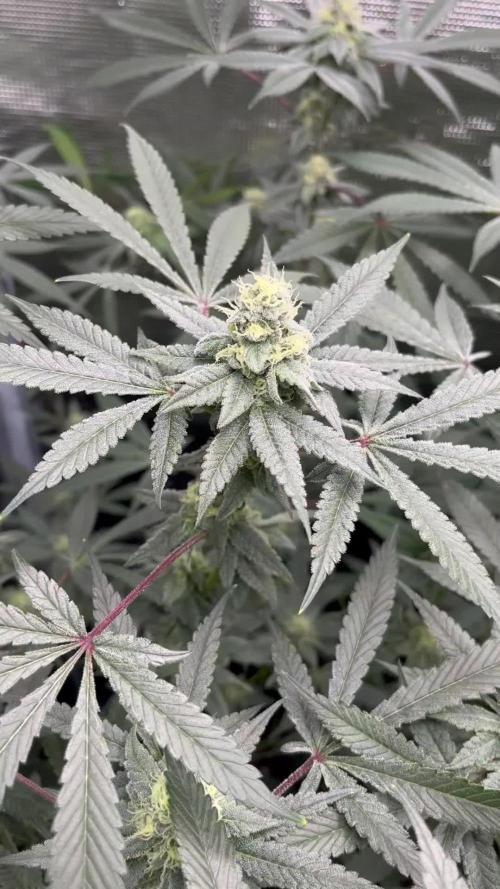
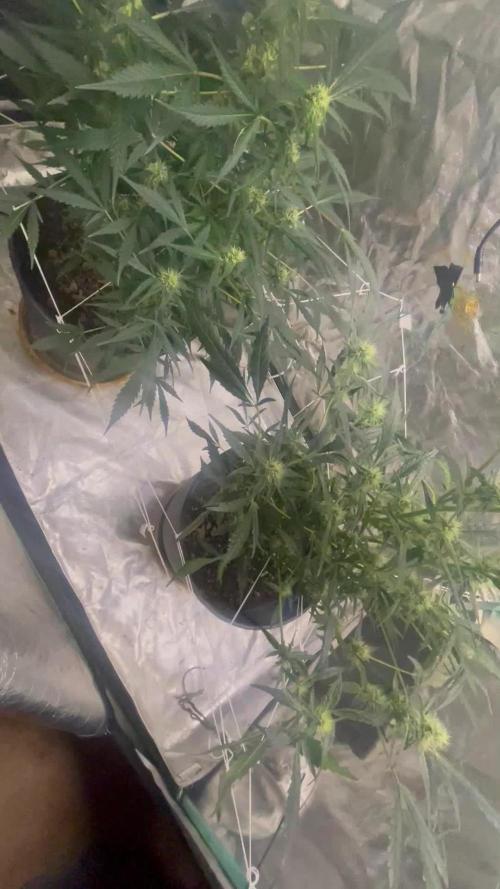
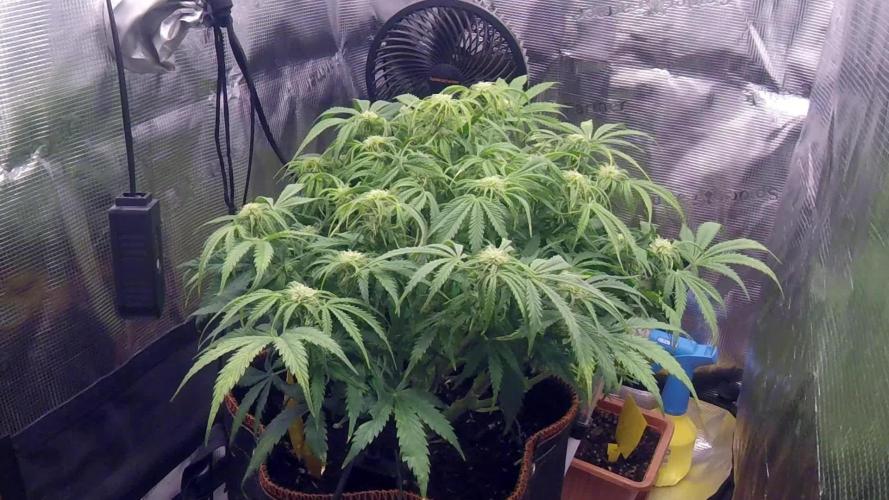
Summer is happening at full speed so a short entry here. Getting close anyways so wont be too much to cover. 7/15/2024 Day 55 Temp: 70.3 F RH: 64.3% VPD: 0.89 kPa Plant #1 Height: 37” inches Plant #2 Height: 31” inches Light distance 10” & 16” I’m going to water 2.5 gallons an hour before the lights come on tonight I’ve already prepared my water jug with a half a teaspoon of bio-phos, about five ML actually put a little more of the elixir in today and then the Q so I put all those things in the water and will give it to him before the lights come back on. 7/17/2024 Day 57 Temp: 81.8 F RH: 63.7% VPD: 1.31 kPa Plant #1 Height: 37” inches Plant #2 Height: 31” inches Did some work in the tent to try and alleviate some of the heat stress. Bent over the main cola to even out the canopy. Fed the regular feeding and some Oly Mtn Fish Compost.
Likes
7
Share
Welcome back looks like the topping went well these ladies are going 70s porn "so bushy" the blue dream haze i will leave as is and just lst on the scrog as they grow into it. lolly popped the 3 Strawberry ice and LST them with some foam wire and clips. the reboot looks like it might be an different phenotype by the look of its leaves. just a CAL MAG watering this week one more week of veg and I will flip these into flower. I have watched a you tube video on transition and it has been stated that 36 hrs. of dark will trigger a hormone response in the plant and help it flower faster? GD peeps please chime in and let me know your thoughts. till then stay safe stay happy and stay lifted.
Likes
109
Share
Day 80 Looks better than last week. Fed her more to get her going again. Lovely citrus smell coming from her pistols. She's going to go on alot longer than the others so need to think of a game plan. Hoping loft will be cool enough for cure otherwise this will have to go outside or in the house as I need the air con for the other girls. They have priority %100 🌱💚 Decided to lower temps on advice so will see how it goes Happy growing gang 👍🏻
Likes
17
Share
@Kayotic
Follow
Decided to trim and chop after 29 hours ( don't ask.)Really messed up the stem this time. Haven't done that before. Happy with her, gotta keep eye on temp and rh. Second time growing this one, simple grow. Not sure why it took 104 days this time! Thinking basement may be too cold and realized I've probably had the lights too close on all of them. Now I know! It's a great strain, highly recommend. Didn't top this time, but she handled it well last time. Will grow again. Took me a lot longer to trim than expected, but was supposed to just do the fan leaves. Changed my mind halfway through.... Will update with weights and such when I can 3/9) Started dry trimming last night, finished this morning. Very sticky! Got more than I was expecting.
Likes
63
Share
Removed autoflower and put her in her own pot outside the tent. Foliars applied in strong blue 430nm with 4000Hz tone. 20-minute dose prior to application. In essence, you're seeing a combination of the infrared light reflected by the plant, which the camera perceives as red, and any residual visible blue light the plant reflects, which results in a purple hue. I was doing more stretching of the stems, adjusting weights, just a little too much, and it snapped almost clean. I got a little lucky in that it was still connected, wrapped her almost instantly while holding her in place with yoyo's. The core framework is now in place. If your soil has a high pH, it's not ideal; you want a pH of 6.4, 6.5, or 6.6, which is ideal. If you are over a pH of 7, you have no hydrogen on the clay colloid. If you want your pH down, add Carbon. If you keep the pH below 7, you will unlock hydrogen, a whole host of new microbes become active and begin working, the plant will now be able to make more sugar because she has microbes giving off carbon dioxide, and the carbon you added hangs onto water. Everything has electricity in it. When you get the microbes eating carbon, breathing oxygen, giving off CO2, those aerobic soil microbes will carry about 0.5V of electricity that makes up the EC. The microorganisms will take a metal-based mineral and a non-metal-based mineral with about 1000 different combinations, and they will create an organic salt! That doesn't kill them, that the plant loves, that the plant enjoys. This creates an environment that is conducive to growing its own food. Metal-based: Could include elements like iron, manganese, copper, or zinc, which are essential nutrients for plants but can exist in forms not readily accessible. Non-metal-based: Examples like calcium carbonate, phosphate, or sulfur are also important for plant growth and potentially serve as building blocks for the organic salt. Chelation in a plant medium is a chemical process where a chelating agent, a negatively charged organic compound, binds to positively charged metal ions, like iron, zinc, and manganese. This forms a stable, soluble complex that protects the micronutrient from becoming unavailable to the plant in the soil or solution. The chelate complex is then more easily absorbed by the plant's roots, preventing nutrient deficiency, improving nutrient uptake, and enhancing plant growth. Chelation is similar to how microorganisms create organic salts, as both involve using organic molecules to bind with metal ions, but chelation specifically forms ring-like structures, or chelates, while the "organic salts" of microorganisms primarily refer to metal-complexed low molecular weight organic acids like gluconic acid. Microorganisms use this process to solubilize soil phosphates by chelating cations such as iron (Fe) and calcium (Ca), increasing their availability. Added sugars stimulate soil microbial activity, but directly applying sugar, especially in viscous form, can be tricky to dilute. Adding to the soil is generally not a beneficial practice for the plant itself and is not a substitute for fertilizer. While beneficial microbes can be encouraged by the sugar, harmful ones may also be stimulated, and the added sugar is a poor source of essential plant nutrients. Sugar in soil acts as a food source for microbes, but its effects on plants vary significantly with the sugar's form and concentration: simple sugars like glucose can quickly boost microbial activity and nutrient release. But scavenge A LOT of oxygen in the process, precious oxygen. Overly high concentrations of any sugar can attract pests, cause root rot by disrupting osmotic balance, and lead to detrimental fungal growth. If you are one who likes warm tropical high rh, dead already. Beneficial, absolutely, but only to those who don't run out of oxygen. Blackstrap is mostly glucose, iirc regular molasses is mostly sucrose. Sugars, especially sucrose, act as signaling molecules that interact with plant hormones and regulate gene expression, which are critical for triggering the floral transition. When sucrose is added to the growth medium significantly influences its effect on floral transition. Probably wouldn't bother with blackstrap given its higher glucose content. Microbes in the soil consume the sugar and, in the process, draw nitrogen from the soil, which is the same nutrient the plant needs. Glucose is not an oxygen scavenger itself, but it acts as a substrate for the glucose oxidase (GOx) enzyme, effectively removing oxygen from a system. Regular molasses (powdered if you can), as soon as she flips to flower or a week before, the wrong form of sugar can delay flower, or worse. Wrong quantity, not great either. The timing of sucrose application is crucial. It was more complicated than I gave it credit for, that's for sure. When a medium's carbon-to-nitrogen (C:N) ratio reaches 24:1, it signifies an optimal balance for soil microbes to thrive, leading to efficient decomposition and nutrient cycling. At this ratio, soil microorganisms have enough nitrogen for their metabolic needs, allowing them to break down organic matter and release vital nutrients like phosphorus and zinc for plants. Exceeding this ratio results in slower decomposition and nitrogen immobilization, while a ratio below 24:1 leads to faster breakdown and excess nitrogen availability. Carbon and nitrogen are two elements in soils and are required by most biology for energy. Carbon and nitrogen occur in the soil as both organic and inorganic forms. The inorganic carbon in the soil has minimal effect on soil biochemical activity, whereas the organic forms of carbon are essential for biological activity. Inorganic carbon in the soil is primarily present as carbonates, whereas organic carbon is present in many forms, including live and dead plant materials and microorganisms; some are more labile and therefore can be easily decomposed, such as sugars, amino acids, and root exudates, while others are more recalcitrant, such as lignin, humin, and humic acids. Soil nitrogen is mostly present in organic forms (usually more than 95 % of the total soil nitrogen), but also in inorganic forms, such as nitrate and ammonium. Soil biology prefers a certain ratio of carbon to nitrogen (C:N). Amino acids make up proteins and are one of the nitrogen-containing compounds in the soil that are essential for biological energy. The C:N ratio of soil microbes is about 10:1, whereas the preferred C:N ratio of their food is 24:1 (USDA Natural Resource Conservation Service 2011). Soil bacteria (3-10:1 C:N ratio) generally have a lower C:N ratio than soil fungi (4-18:1 C:N ratio) (Hoorman & Islam 2010; Zhang and Elser 2017). It is also important to mention that the ratio of carbon to other nutrients, such as sulfur (S) and phosphorous (P) also are relevant to determine net mineralization/immobilization. For example, plant material with C:S ratio smaller than 200:1 will promote mineralization of sulfate, while C:S ratio higher than 400:1 will promote immobilization (Scherer 2001). In soil science and microbiology, the C:S ratio helps determine whether sulfur will be released (mineralized) or tied up (immobilized) by microorganisms. A carbon-to-sulfur (C:S) ratio smaller than 200:1 promotes the mineralization of sulfate, when the C:S ratio is low, it indicates that the organic matter decomposing in the soil is rich in sulfur relative to carbon. Microorganisms require both carbon and sulfur for their metabolic processes. With an excess of sulfur, microbes take what they need and release the surplus sulfur into the soil as plant-available sulfate A carbon-to-sulfur (C:S) ratio higher than 400:1 will promote the immobilization of sulfur from the soil. This occurs because when high-carbon, low-sulfur materials (like sawdust) are added to soil, microbes consume the carbon and pull sulfur from the soil to meet their nutritional needs, temporarily making it unavailable to plants. 200:1 C:S 400:1: In this range, both mineralization and immobilization can occur simultaneously, making the net availability of sulfur less predictable. This dynamic is similar to how the carbon-to-nitrogen (C:N) ratio regulates the availability of nitrogen in soil. Just as microbes need a certain amount of nitrogen to process carbon, they also require a balanced amount of sulfur. Both mineralization and immobilization are driven by the metabolic needs of the soil's microbial population. Sulfur is crucial for protein synthesis. A balanced ratio is particularly important in relation to nitrogen (N), as plants need adequate sulfur to efficiently use nitrogen. A severely imbalanced C:S ratio can hinder the efficient use of nitrogen, as seen in trials where adding nitrogen without balancing sulfur levels actually lowered crop yields. Maintaining a balanced carbon-to-sulfur (C:S) ratio is highly beneficial for plant growth, but this happens indirectly by regulating soil microbial activity. Unlike the C:N ratio, which is widely discussed for its direct effect on nutrient availability, the C:S ratio determines whether sulfur in the soil's organic matter is released (mineralized) or temporarily locked up (immobilized). Applied 3-day drought stress. Glucose will hinder oxygenation more than sucrose in a solution because glucose is consumed faster and has a higher oxygen demand, leading to a more rapid decrease in oxygen levels. When cells respire, they use oxygen to break down glucose, and this process requires more oxygen for glucose than for sucrose because sucrose must first be broken down into glucose and fructose before it can be metabolized. In a growth medium, glucose is a more immediate and universal signaling molecule for unicellular and multicellular organisms because it is directly used for energy and triggers a rapid gene expression response. In contrast, sucrose primarily acts as a signaling molecule in plants to regulate specific developmental processes by being transported or broken down, which can be a more complex and slower signaling process. Critical stuff. During wakefulness (DC electric current) life can not entangle electrons and protons. During the daytime, the light is sensed as multiple color frequencies in sunlight. Coherence requires monochromatic light. Therefore, at night, IR light dominates cell biology. This is another reason why the DC electric current disappears during the night. The coherence of water is maintained by using its density changes imparted by infrared light released from mitochondria in the absence of light. This density change can be examined by NMR analysis, and water is found to be in its icosahedral molecular form. This is the state that water should be in at night. This is when a light frequency is lowest and when the wave part of the photoelectric effect is in maximum use. 3600
Likes
8
Share
@MG2009
Follow
01/01/2022 Potting up this weekend I hope 🙏🏻 then on last week of veg feed with coast of Maine Stonington plant food 5-2-4? I think l gotta check that.
Likes
25
Share
My first ever harvest went great! I trimmed 3 different ways as well as flushed for different amounts of time. 24hr flush and wet trim with bowl trimmer, dried on dry rack. Aprox 4 ounces as i was smoking it soon as it dried, small buds first. 🤷‍♂️🏻 3 day flush. Wet trimmed by hand. Hung to dry. 119 grams Last two ladies were the bushy ones. I let them flush for a full week and then hung to dry. We hand trimmed them both(not as close of trim) to make edibles and oils with. 412 grams! I think I did pretty well on my harvest. I have over a pound of bud! I’m all smiles!
Likes
21
Share
@NSABND
Follow
Start of Week 12 😉 Day 86 autumn comes too fast 😵😲😪 Day 88 time is running out 😲😯😧 Day 89 the weather turns to epic fail 💀💀💀 Day 90 the sun comes back again 😍👌 oh lord
Likes
17
Share
9/2/25 Overall I'm delighted with these. 17 weeks grows for me are few & far between. These 2 phenos had 7 weeks in 2L pots. And were put into a 20L pot of coco/pebbles and gives 10-14 days to recover and were flipped. I purposely grew them this shape as I had to make sure I kept them apart if hit with WPM or anything like that. As grows these long, buds this dense. And running a tent with a bunch of mixed grows from done to days into the start of the 12-12 flip. I would have liked to run for another week on a 100w light and high doses of UV but because of such a mixed bag of grows in my tents. Running reds/uv just wasn't even attempted. 10/2 She smells absolutely amazing, buds are super big, sticky & very smelly. They're still mainly hard for the moment. And leaves not even limp. So, I removed the big fan leaves to allow air to move around better. They're hanging behind my 100cm2 tent kept out of UV rays.
Likes
10
Share
@Rob691
Follow
D-42 : The plants looks good, except one that seems to suffer a bit of light burn. Last week I put the ATS 300w PRO at 30cm from the canopee. So I decided to move up the light 10cm more. It seems to be ok now. The flowers doesn't seems to grow that much but if I compare with the photos of the last week, in fact they do ! D-44 : Ok ok ! Clearly, it seems that it wasn't a light burn but a nutrient defficiency. The 3 plants have the same problem. In fact, I didn't give them enough nutrient on each watering. And more, I think I didn't water them enough neither.... It was ok untill the flowering stage start. I assume plants are starving during this stage. Here you can see that it's my really first grow !! So I decided to double water and double nutrient per liter. Just wait and see a couple of days what happened now. Does the damaged leaves will recover ? Or will they just get a litle more green and concentrate energy on new leaves ? I don't know ! Wait, roll one (or two...) and see ! D-47 : Second consecutiv watering with nutrient. I also set the net to guide the growing flowers...
Likes
6
Share
Likes
85
Share
@Organic_G
Follow
Ein weiterer Grow kommt zum Enden. Insgesamt wurden von Anfangs 5 Planzen, 4 zur Ernte gebracht, die andere hat gezwittert und ich habe Sie aus dem Zelt entfernt. Das Ergebniss nach 14 Tage trocknen bei 60-65% RH & 17-20 C. Pheno 1 : 61,40 g Pheno 2 : 33,85 g Pheno 3 : 29,22 g Pheno 4 : 56,42 g Summe : 180,89 g getrimmtes Trockengewicht Seit auf den nächsten Grow gespannt meine Freunde! Smoke Review folgt, wenn die Blüten ordentlich gecured sind.
Likes
10
Share
@Calveeno
Follow
Feast your eyes :) I love the purple hues developing on this plant. Getting very close to harvest, I want to say another week to ripen before I chop. Full Flush twice a week with only filtered water. Stay Blessed! 🙏👽
Likes
7
Share
The strain is not the biggest yielder but its quite promissimg,the smell is top and the effects are a very mellow creative smoke,tastes like sweets,will grow it again ✌️✌️
Likes
24
Share
Day 38 since flipping and I'm loving what I see. This girls LOVES to eat so I had to switch my feeding cycle to feed, feed, water, instead of feed, water, water. The strong orange citrus aroma is oh so lovely! In the next couple of weeks she should start packing on more weight. I can tell that they are heavy already just but the swaying of the cola from air circulation. I think I messed up by removing my scrog net but I'll tie her up and give her support as needed!
Likes
6
Share
@Simba732
Follow
November 10, 2025: Ms. Tropicana was harvested and sent off to dry. After 9 days of drying, our lady officially began her curing in a Ziplock bag. About 3 days later she got lit up for the first time, and my friends … she is truly delicious 😋 Just like her name suggests, she’s a wild one to spark up. From sweet aromas to cookie like tones, you won’t be disappointed 🍎🍋🍪✨ She'll continue to cure as long as possible, getting burped once a day for the first two weeks. This is just to make sure the buds get aerated as we develop her profile further 🍁 With this last step we want to wake up all thee good perks. The smells, the taste and on and on 😋 If you plan on growing her, I recommend training early if that’s your style. Don’t overfeed better yet, learn her rhythm and feed according to her needs. She’s very easy to manage As long as your environment, medium, and nutrients are dialed in, growing this beautiful flower will be a breezy experience 🌬️🌱 We’ve got more action happening in the garden this season! 🥁🎰 A great harvest season is upon us! 🤝🏾 Happy growing gang 💚
Likes
25
Share
Hallo liebe Growfreunde 💞 Ich bin zurück mit dem neuen Wochenbericht 🤗 Danke an die neuen Follower, ich hoffe es macht euch Spaß meinem Grow zu Folgen An alle anderen, für immer aktuelle Updates auch Folgen😁😁😁🤗🤗🤗 So jetzt zum Wochenbericht. Alles läuft sehr entspannt, kaum was zu tun, aber es ist einiges passiert🤩🤩. Die Buds werden fetter, der Geruch ist einfach himmlisch und die Farben sehen toll aus. Leider kann man die Farben nicht so gut erkennen auf den Bildern, aber es purplet ganz schön🤗😁 Die Sweet ZZ erholt sich von ihrer Calmag Blockade und die neuen Blätter zeigen keine Anzeichen mehr auf Mängel. Die Gorilla Zkittlez holt an Größe auf und ist jetzt etwa so groß wie die Sweet ZZ, aber mit deutlich weniger Nodien. Ich denke die Peyote Critical wird als erstes reif sein, sie wirkt am weitesten entwickelt und auch die Blütezeit ist die kürzeste von meinem Setup. Danach wahrscheinlich die Sweet ZZ und evtl. Die Green Gelato. Die Runtz und die Lemon Shining Silver Haze werden am längsten brauchen. Ne quatsch, die Gorilla Zkittlez wird am längsten brauchen da sie erst seid etwa 2 Wochen blüht. So das wars für diese Woche meine lieben💞 Ich hoffe euchvgefällt was ihr seht und lasst likes und Kommentare da🤗🤗🤗 Tut gutes💞 Cioaiii👋👋👋
Likes
25
Share
@DrGanj
Follow
COntinued to apply small amounts of pressure with LST but aside from that, letting her do her thing. Had to leave her for a few days and she got dehydrated, after a feed she perked up again but she's now started sucking all the nutes out of her lower growth. She has a lot so I'm hoping it doesn't affect the harvest. Would have preferred this to begin with my flush. For more content on all my grows please check out my Instagram! Link is on my profile!
Likes
6
Share
@GrowerGaz
Follow
Plain sailing this week , just water for the Sweet n Sour and the Blackberry Gum, the Cheesy auto just had one last feed of Iguana Juice and PK booster BAC . Few more days and the SNS and BG should be done.
Likes
102
Share
@PapaNugs
Follow
A good week here in the tent. The girls continue to grow and progress. Getting a small amount of water daily. Looking for more progression then I'll transplant the best looking ones.