


Likes
Comments
Share


@Arkain_Jenetics
Follow
Everything is going good. Some are showing some sort of deficiency . Lowered lights a little bit. Going to start watering every other day. One of the critical thunder autos is like 8 inches tall lol definitely breeding her.


Likes
31
Share


@Untergrownd
Follow
Week Six (more like Week 4 or 5)
alright, a lot happened. first in rearranged the plants to get a nice even canopy to flip to flower. as planed, I changed the lights to 16/8 and upped the power to around 75% at 50cm to the canopy. every plant got a topdressing with Terra Preta, rockdust, biovin and seeweed (rooting powder) and fed the plants with colonize and organic feed 5-2-5 (see pics).
I got worried about the bagseed. on RNG 2# I see what's looks like male and female sex. on RNG 1# I think there a female sex signs, but I am not sure. only on RNG 3# I see more than one female sign on the nodes. I read you can have a high chance of hermies with bagseeds. on the other side, some strains came from bagseed. but I don't search for strains, so two new plants appeared suddenly. one gelato from zamnesia and one San Fernando Valley X The Purps from growers choice, both feminized and photoperiod.
I decided to keep the RNG 3# as she is the safest to grow out. she shows female sex clearly and is the smallest of the bagseeds. so the fits nice with the fastbuds and the two new plants. I can happy give the bagseeds to a new home, so maybe I still see some result from the RNG 1# and 2#.
I mixed some new soil with amendments and transplanted to 11l pot. they also got a good chunk of colonize and the normal dosage of feeding. I watered them in and the gelato popped back up, the SFV was a bit sad, some lower leafs hung down, but she like the transplant. both are in very good shape.
one day after the transplant I will do some deleafing and training. also I get the mars hydro clip fan to get some needed air-circulation in the tent. so in a week or so, I will flip to flower, this will be the last update in veg.
thanks for reading or checking out my grow. I took a lot more footage to do a seed to harvest video for yt.


Likes
11
Share


@Papastroumf
Follow
Day 66 : This lady continues fattening, faster now. Also crystal production increased. The breeder suggests 70-75 days. For now all crystals are almost milky with some cloudy. So she need 1 week for sure, maybe a bit more. That gum smell is so attractive, you want to eat it. Reduced bio grow and removed Calcium.
Edit 70 : I saw the first ambers, very little. So i watered for last time with juices Next watering will be flush to reduce the juices in the soil. So if initially has 1200-1300ppm i want to reduce it to 350-500ppm. After flush continue pure water until chop chop. This is my approach for all ladies always.


Likes
57
Share


@Regenwurm
Follow
17.01.2021 alle Ladies getoppt.
In der ganzen Woche nur 2 mal gegossen und Pflanzen austrocknen lassen. Am 24.01.2021 alle Sonnensegel entfernt da kein Licht auf die Triebe gekommen ist. Ladies haben sich 7 Tage vom Topping erholen können. Bei den neuen Trieben am Hauptstamm auch am 24.01.2021 Superscropping damit alles gleichmäßig wachsen kann.
Klima ist sehr gut, dort keine Probleme. Düngemenge des Hesi Schema wie letzte Woche angekündigt reduziert ..... also 2 ml pro l .... Düngeplan Hesi sagt 5 ml.... die Pflanze möchte weniger, also bekommt sie weniger. In ein paar Tagen geht es in die Blüte, nächste Woche ist sie Bereit.

Likes
9
Share


@midEastern
Follow
The plants are wayyyyyyyyyyyyy higher than the nets but i think its still effective as the fattening up is still ahead of us.
Switched to bloom furts - high ppm
ppm meter - https://www.ebay.com/itm/324694530867?hash=item4b994d5b33:g:H~oAAOSw8M5g2fqD
For acidalkaline i use the chemical liquid test kit. - kit - https://www.ebay.com/itm/324694530867?hash=item4b994d5b33:g:H~oAAOSw8M5g2fqD

Likes
4
Share


@Kelly420
Follow
Okay. Sorry for the slacking where I slacked here. But here we go. I have one photo when I transplanted to my 8 bucket system. They were very mistreated, left in a cloner with plain water for months. They looked haggard. But after a couple months of tlc. I vegged them back to perfect health and flipped to flower. Not going through the weeks of vegging because honestly it’s the auto pilot part of the grow. I selected this mozzarella out of 3 moms. Now for my first harvest replicated. I started day 0 flower Jan 19th of 23. They were about 12 weeks of veg and stretching to get these where I wanted for my scrog. Mozzarella stays very short. So turning my lights down and spacing far away was necessary to stretch. She is a heavy feeder and rewarded. tolerated ppms of 1400 in the past. No Co2 used. Yet. My lights draw 800w each 2 in a 5x10 tent.

Likes
29
Share


@JeyGanesha
Follow
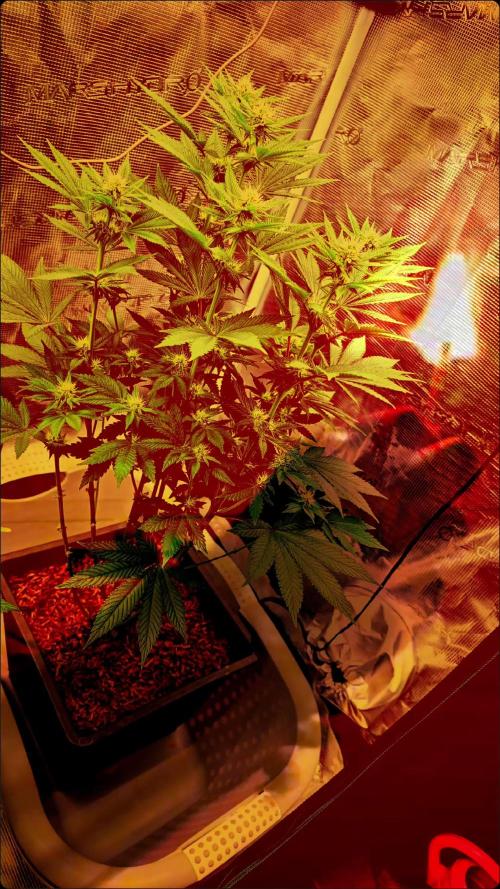
Inizio 4 settimana di fioritura 💪...gente è incredibile ma vero! Ho messo in terra un pezzo di piantina che mi s'è rotta(talea) ,senza radicante ne niente. Solo messa in terra...sono passati quasi 10 giorni ed è ancora viva e sta crescendo...vuol dire che ha attaccato con le radici.......non ci credevo nemmeno io, ma quando mi dicono che ho il pollice verde inizio a crederci😂🤣😉😂🤣💪✌️🕉️. W la ganja sempre.....la pianta sacra che salverà il mondo

Likes
17
Share


@Smokwiri
Follow
Plant is doing great, loving the nutrients, loving the light.
Grown under Mars TS600


Likes
15
Share


@902EastCoast
Follow
This strain was easy to grow right from seed. I think it will be one of my favourite strains this grow. Time to dry and cure. I will report the weight when dry. 💚✌️🏼

Likes
2
Share

@Mars8_8
Follow
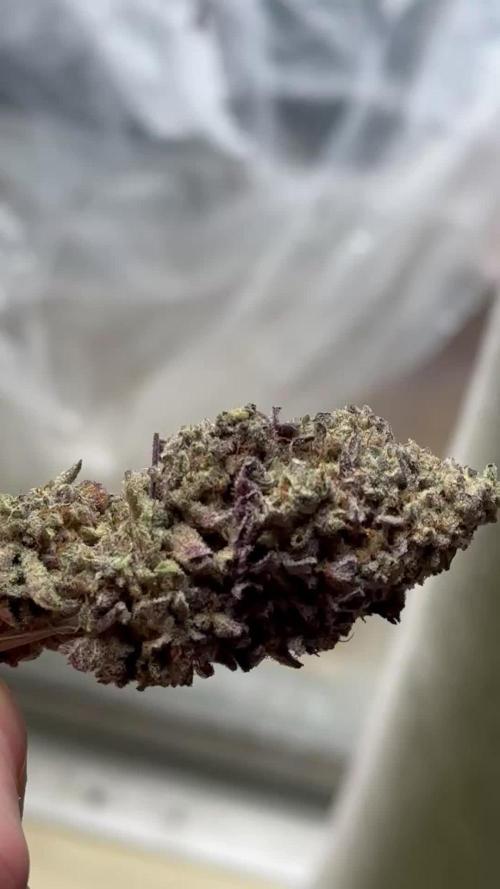
So first run back and we finished. Happy with the results but know I could have done a lot better. But overall like this strain. It puts out about .9 grams of rosin for every 7g smashed. Taste good and smooth. Burns white. Lower thc effects but I think having my lights to strong late harvest was more the issue.

Likes
4
Share


@Ageddd
Follow
This week, spent a little more time on the garden, Transplant, microbes on the soil, new 20 litres pot, and every day bending, to mantain an homogeneous canopy ...
Fed some Green Explosion again because i want a little more branching , but im switching next week to Flowering nutes, but imma keep Veg nutes because autos seem to keep growing more when switchin ... But heyy im new with autos hahaha lets see what happens.... The plant is soo healthy at the moment :)
---------------------
Micro Vita : Applied 6.60 grams for the 20 litres of soil, recommended is between 2-5g per 10l ....
TopVeg: 2,5 ml when applied alone and 2 ml/l when used with Deep Underground or Green Explosion.
Green Explosion: 0,5-1ml/l, always with TopVeg because of PH balance
Deep Underground : From 1ml/L first weeks, and until now, 2ml/l.
Irrigations : Everyday in the morning, alternating 1/2 with water and the other with nutes, but if the plan is dark dark green im irrigatin only water so id would be 1/3 in that case.
#####Top Veg always balances the PH so im never using boosters without it (they have high ph like 8 - 10 )
---------------------
Take care GD !!! Good vibez...

Likes
53
Share


@Roberts
Follow
Merlin Mintz Autoflower is growing great. She got lollipopped and a defoliation. She is ready for more stretching, and to do some budding. Everything is looking great. She took to the neem oil treatment last week good. Little Shiney from oil residue still. But I can live with it. Thank you Aeque Genetics, Spider Farmer, and Athena. 🤜🏻🤛🏻🌱🌱🌱
Thank you grow diaries community for the 👇likes👇, follows, comments, and subscriptions on my YouTube channel👇. ❄️🌱🍻
Happy Growing 🌱🌱🌱
https://youtube.com/channel/UCAhN7yRzWLpcaRHhMIQ7X4g
Likes
16
Share


@Dr_Rook
Follow
Qué largo se me está haciendo..
Pensaba dejarlas ya 3 días desde hoy a oscuras y posteriormente cortar, pero siendo sensato las dejaré otra semana más para que terminen de madurar los cogollos de abajo.
Claramente dejé de abonar demasiado pronto, podría haber dado 1 o 2 riegos más tranquilamente, pero bueno una cosa más que aprendo para las próximas. Van a estar 3 semanas sin abonar😅 aunque no han mostrado muchos síntomas de deficiencias
Likes
19
Share


@Ixnay
Follow
Couldn't help but take lots of photos this week..
Nuggets are really starting to fill out and the white hairs are beginning to brown.
Lots of new trichomes without heads and a few have turned milky.
Thought this would be done by now and I really need the space for my other girl thats currently stretching due to lack of light.
Considering that and also not wanting to harvest prematurely, I'm trying to decide when to start the 7-14 day flushing period, any advice would be HUGELY appreciated.
Thanks for stopping by 😎

Processing
Likes
16
Share


@Andres
Follow
they are 2 purple afghan kush and it shows the difference .. the second one measures 130 cm and started its flowering process ... they always feed organically .. as well as only with fish tank water...

Likes
30
Share


@ButterfliesLittleFarm
Follow
Hello Diary.
We have reached the 9th week, 6 weeks of flowering and I think we are nearing the end. My estimate is another week until harvest.
I look the situation with trichomes every day, most of them are milky, when I notice that some brown ones appear here and there, it is time to harvest.
Along with Sherbet Queen on the “Farm” are two Mimosa Auto, which have grown huge, over 110cm so it’s pretty crowded in the grow-box. That's why it became quite difficult for me to take them out of the grow box so as not to damage them.
The color of the leaves slightly takes on a lighter green color which slowly becomes yellowish, the flowers are nicely filled, they are big and heavy so I had to connect the plant a bit to the stick and fabric pot to stabilize it and prevent the branches from cracking.
The temperature was high this week, around 30 degrees, and this is caused by the great heat outside which was above average this week.
Humidity is a little above 50%, which is more than would be ideal, the cause is also heat, so the soil evaporates more and releases moisture.
I have two fans that blow for 24 hours and thus prevent the potential occurrence of mold or similar problems. Ventilation also works at maximum power.
Watering is still every two days, and more or less that’s all that happened this week, I’m patiently waiting for the harvest.
Here is a brief overview of the week.
11/07/2021 - Day 57.
Watering. I always prepare about 8 liters of water, p.H I adjusted to 6.4 and watered all three plants evenly.
Temp / Humidity on the farm - 30 degrees and 50% humidity.
13/07/2021 - Day 59.
Watering. Same procedure as two days earlier.
Temp / Humidity on the farm - 31 degrees and 55% humidity.
15/07/2021 - Day 61.
Watering. p.H - 6.2
Temp / Humidity on the farm - 30 degrees and 53% humidity.
17/07/2021 - Day 63.
Watering and photography.
Temp / Humidity on the farm - 30 degrees and 60% humidity.
That’s it for this week, a little more and there will be a harvest, I can’t wait for next week. Until then, enjoy.
Likes
14
Share


@Farmerted
Follow
So far she is staying small as I wished. Will start raising nutes little by little this week as more leaves come. At the third set of descent true leaves formed I plan to move her to the flower tent at 12/12 with more red spectrum. Attempting a candelabra trained tiny grow with one top and two side trained colas. I have to say this is the first time I ever strived for small. Usually I am trying to fill the tent.