Likes
Comments
Share
@Roberts
Follow
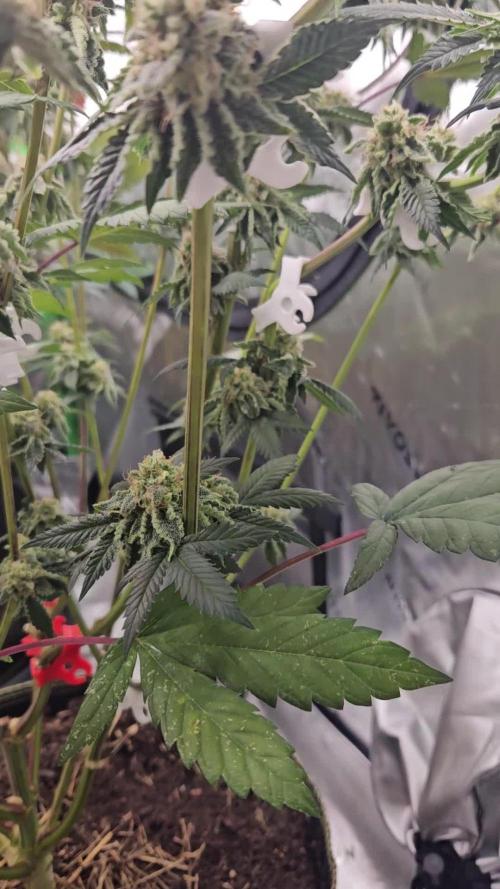
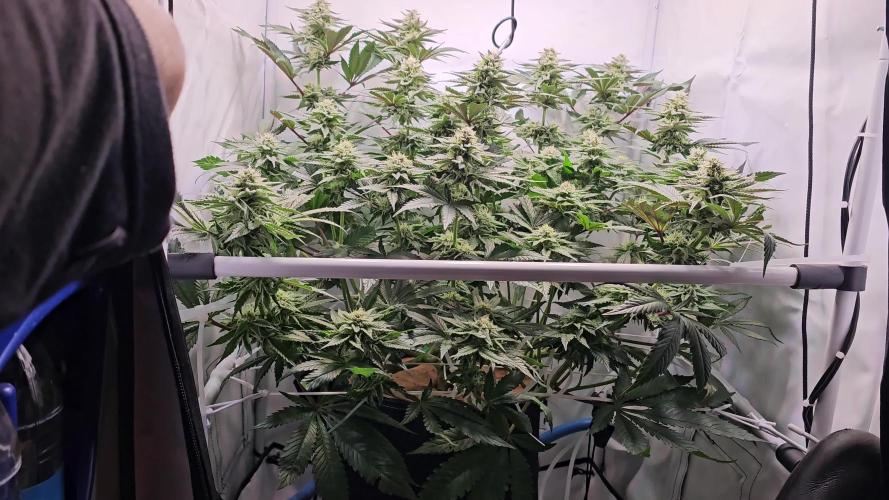
Grand Daddy Purple auto had a good growth spurt this week. She had her first lst and defoliation today. She has been growing vigorously this last week. This is a great sign and hopefully she keeps thriving. Everything is looking really good at the moment. Thank you Medic Grow, and ILGM. 🤜🏻🤛🏻🌱🌱🌱 Thank you grow diaries community for the 👇likes👇, follows, comments, and subscriptions on my YouTube channel👇. ❄️🌱🍻 Happy Growing 🌱🌱🌱 https://youtube.com/channel/UCAhN7yRzWLpcaRHhMIQ7X4g
Likes
7
Share
Likes
12
Share
July 11: Finally this week getting some heat with 25-30 deg C daytime highs. Plants are thriving with a lot of vertical growth and flowers starting to build. Resin is developing nicely. CBD Crack is a smaller plant comparatively, but the resin smells spectacular.
Processing
Likes
166
Share
@iMeus
Follow
~ Update ~ Hello my friends, welcome back to another weekly update. I have a few issues going on so I’ll put those below in the IPN. This has been a good week so far, the girls are very happy, except the bazar mazar… Other than that it’s exciting that I’m pretty much at the halfway point :) Anyways, enjoy the update and let me know what you think in the comments, I always appreciate feedback ~ Individual Progress Notes ~ [CBD] Notes: This is the healthiest of the bunch, nice rich green leaves and fluffy buds. I’m surprised the this little mutant is doing so well. As I said in the vlog GCS got back to me last week, I’ll keep them up to date with my grow so they know what’s going on with this girl. [Mazar] Notes: Burn! I’m noticing a lot of small but noticeable spots, leaf chattering, and slight yellowing at the tip of the leaves. I feel like I should just avoid feeding this girl though I’m not sure if that will help the situation. If you guys can take a look at this girl I’d really appreciate it :) Edit: I found out thanks to my friends here on GD that I burned my Bazar Mazar :( So time for water which I might only give her water and flower fuel then flush till harvest (might be my cleanest tasting and smelling afterwards). It's hard to feed 4 different metabolisms every watering, but hey I'm learning :) [Super Silver Haze] Notes: The beast of the grow! What a lovely plant. Even though this girl got really hungry and started cannibalizing the lower leaves her buds are massive! I’m impressed with the total growth of this beast. Honestly, I’m cheering this girl on, might be my favorite (don’t tell the others). [White Widow] Notes: More like purple widow, this dense girl is showing her dark side and I like it. I planned on the purpling, still surprising to see all this purple though. I like purple buds but I don’t want this (or any of the girls) getting shocked by the cold. Hoping the I can get a few more pieces of gear to help out the next grow. ~ Final Thoughts ~ What a week, some of the girls are rocking and the Mazar, not so much :) It’s a learning experience that will take some time for me to learn how to balance all (most) of the variables. Thank you guys so much for all the love and support, I always appreciate it :) Happy holidays and good grow’n fam, much love Meus <3
Processing
Likes
9
Share
@MG2009
Follow
03/27/2020 start of week #4 flower this girl is in full flower mode can't wait for next week. Did final defoiliating today. All is looking well should start filling out soon. Thank you for checking out my diary🙏 Going to raise lite to see if she will stretch more, pistils popping out like crazy can't wait for Calyxs to swell
Likes
6
Share
@MrPipi
Follow
Mr. Pipi has only friends with bad Noses. No one can smell the Wild Strawberries...nontheless... looks so gooood... Biggie, Biggie, Biggie can´t you see? Day89: What can Pipi say. Every other Day some Calmag... a little bittle topDress yesterday. Pipi´s thoughts are this is girl vegged 9 Weeks and is in an 8 Liter fabric Pot. Couldn´t transplant her, but Topped and trained her. So i want Biggie Buddies, so since she´s in Flower week 3/4 that´s my last Chance to enrich the soil with dry nutrients for them to dissolve mostly and i can 'flush'. So i wanna feed her more than the 8 Litres could hold, but carefully and step by step. And just a little. No Pipi was used on this plant.
Likes
23
Share
@Diips
Follow
day 43 - 25/12/2025 - Week 7. The canopy is really bulking and becoming fat as hell! gonna be interesting to see how it all turns out in the end. we still have many weeks to go! wanna make sure to build a-lot of rich amber resin, so we can make some good sleep aid. 🌞 had to feedings a little too close to each other, which might have made me burn a few tips.. but well mistakes do happen, looks like all the girls are taking it anyway, but i will be more gentle. did a little late defoliation at day 44. to help airflow and bulking
Likes
5
Share
6ª Settimana di Fioritura 💐💐💐💐💐💐 Guardate che bei colori che scoppiano nei fiori della bella Test A di SSSC 💜🐘 Iniziano ad ingolosirmi parecchio 😋
Processing
Likes
11
Share
Fed only distilled water every 2-4 days as needed. Trimmed off the clovers n alfalfa. They wer getting in the way of my watering n it also helped reduce the humidity . I also put a layer of perlite underneath the pots to help reduce trap water n circulate air below the pots..they are done strething n are well into blooming. The super skunk in the bak right corner is beginning to show some atumn colors n it's a sign it's nearing harvest. It's the densed one. Clearly it'll be the 1st one done. The others still got a few more weeks to go. Hopefullythey'll be done b4 thanksgiving. I look foward to see how they turn out. .will update next week on their progress. .
Likes
2
Share
Die Woche lief sehr gut, alle Pflanzen haben gute Fortschritte gemacht und sehen meiner Meinung nach auch gesund aus 😄 das Wachstum der beiden Z-ups ist nahezu identisch und wenn ich sie mit anderen diaries vergleiche, dann finde ich das Fastbuds mal wieder einen sehr soliden Strain rausgebracht hat. Von den Mandarin Panties gibt es wenig bildliche Dokumentationen, was einen Vergleich schwer zulässt, aber ich finde den Wuchs ganz schön. Mal sehen wann die Ladies in die Blüte kommen, ich gehe ja davon aus das sie diese Woche in die Transition gehen
Likes
5
Share
Shes definetly beginning to pre flower. I quickly got some LST in so at least the lower branches will get more light. I hope it continues to stretch and fill in. I'm sure that she still has a lot of stretching to do. Check back next week to see just how fast she buds & remember its 4:20 somewhere!!!!!
Likes
3
Share
Processing
Likes
7
Share
@V3N0M
Follow
Well... week 3 these babies are really taking off.. I started all 4 on 1/8th dose of foxfarms.. all 4 taking about 20oz water each.
Likes
124
Share
Hello growmies, welcome to week 3! 🍪 💜 Foliar sprayed with Nutrispray on day 20. 💦Potted later that day.. Watered on day 17 and after potting. 💧 Thanks @Green_Buzz_Nutrients for sponsoring my grow, those products really do their job! 💚 If you want to give them a try, there's a generous discount code in my setup description. ⬇️ Thanks @SensiSeeds for the opportunity, let's do this!! 🚀 💚 🖤 _______________________________________________________________________________________ Purple Cookie Kush Feminized Seeds [Girl Scout Cookies x Purple Kush] Purple Cookie Kush Feminized seeds come from two well-known strains, Girl Scout Cookies and Purple Kush. The 60% indica / 40% sativa heritage leads to a well-balanced hybrid flower. Flavours range from grapes to sandalwood, and the terpene profile is a concoction of many complimentary aromas. Purple Cookie Kush Feminized is a short plant with good yields. Bud formation is dense, similar to many Kush strains. About Purple Cookie Kush Feminized Purple Cookie Kush Feminized takes the hottest GSC genetics and mashes them with a Purple Kush cultivar that was hand chosen for this project. No corners were cut in creating and selecting the right breeding stock for this fantastic strain. The result is a well-balanced hybrid that retains key qualities from its lineage. The Purple Kush parent of Purple Cookie Kush Feminized has a lot to contribute, as evidenced by the plant morphology. The compact nature and sturdy branching can be attributed to those indica-dominant genetics. Another area that the indica influence is evident is in the terpene profile, which includes scents of spicy hashish and earthiness. GSC contributes selected indica traits to Purple Cookie Kush Feminized, but the sativa side of the genes also had an impact. Complex, fruity expressions are detectable in both the mouth and nose of this strain. Before harvesting, during the last few weeks of flowering, growers will notice pleasant scents with floral notes lingering in the garden area. Growth pattern of Purple Cookie Kush Feminized Purple Cookie Kush Feminized seeds grow into a plant that represents in appearance both sativa and indica inheritance. Because this is a feminized strain, growers will not need to sex the plants at the early stages of flower and can accurately anticipate yields knowing that all plants will be flower-producing. Purple Cookie Kush Feminized has sturdy branches, similar to its GSC parent. The strong branches can support the weight of flower growth through harvest. The plant itself is stocky with a compact stature. This is attributed more to the Purple Kush influence. Due to the lower profile and many branches, defoliation is beneficial at various stages of growth. Indoor growers with a controlled climate report final heights in the 120 - 140 cm range. Purple Cookie Kush Feminized finishes flowering in a quick 50-60 day window, which is a distinctly indica quality. Outdoor growers in temperate / Mediterranean climates have seen plants reach over 160 cm with ideal weather. The bud formation of Purple Cookie Kush Feminized is similar to the popular Kush structure. Flowers are dense and compact. The buds are a mixture of swollen, trichome-covered bracts with dark forest-green foliage below. During the last weeks of flowering, the GSC influence adds purple hues to the vegetation. Purple Cookie Kush Feminized is a solid-performing, easy-to-maintain plant with good yields. It is not difficult to achieve the optimal indoor climate, and yields of 425 - 475 grams per m² are possible in these conditions. The ideal outdoor environment will have moderately warm weather and a small percentage of rain within the growing season. Growers in those regions have reported yields reaching 550 grams per plant, sometimes even more! Common plant training techniques are not crucial to the success of this robust, sturdy plant, but some growers looking to maximize yields will use them. Techniques that have been used with great success in canopy control include SOG, SCROG, Supercropping, and Lollipopping. Purple Cookie Kush Feminized handles them all without skipping a beat. Effects, taste and smell of Purple Cookie Kush Feminized The effects of Purple Cookie Kush Feminized usher in a more relaxed and easy-going day than most. It has the benefit of merging both indica and sativa attributes. Euphoric and uplifting effects are associated with sativa cultivars, and these effects are precisely how the Purple Cookie Kush Feminized experience begins. Blissfully distracted from the fast-paced world, thoughts shift to creative endeavours and inspirational goals. As these feelings are front and centre, a mild buzz begins radiating from the inner core. Soon, the indica-leaning effects are felt. Effects turn towards the loosening of tense muscles, the easing of minor aches, and an embracing full-body stone. The flavour profile of Purple Cookie Kush Feminized is almost like a full-course meal. The pairing of flavours is unique and somehow works perfectly. The taste of fresh peeled grapes sits well with the coffee and caramel elements. The indica genetics once again show their dominance with undertones of earthiness and spicy sandalwood to complete the flavour profile. Purple Cookie Kush Feminized has an unmistakably loud grape smell. This trait is not commonly seen in cannabis, but it is fully displayed with this strain. The remainder of the terpene profile is what many would consider the finer aromatic qualities of the GSC strain. Scents of spicy hashish float through the air, complementing the grape aroma whenever the jar is opened. Background notes of earth and sandalwood add another enjoyable layer to the terpene profile. https://sensiseeds.com/en/research/purple-cookie-kush-feminized?sqr=purple%20cookie _______________________________________________________________________________________ Setup: 140x70x200 cm Spiderfarmer tent 2x Monkey 16W fans (not oscillating) 1x Secret Jardin 30W 1x box fan 50W oscillating (on lowest level) LED Full Spectrum 320W AGLEX AGL-320W-MA 5,6 kg foldable, dimmable 864 pieces Samsung LH301H 864umol/s 2,7umol/J full spectrum white + RED 660nm + IR 740nm wavelength range 380-780nm covering 3x4ft Green Buzz Nutrients https://greenbuzzliquids.com/ ❗ Use code GD42025 for generous 25% discount (for orders of minimum 75€) Biobizz Lightmix + coco + wormcastings + perlite Carbon Active Granulate Filter 125/360 cm³/h PrimaKlima exhaust EC 125-400/240 cm³/h
Likes
56
Share
What's in the soil? What's not in the soil would be an easier question to answer. 16-18 DLI @ the minute. +++ as she grows. Probably not recommended, but to get to where it needs to be, I need to start now. Vegetative @1400ppm 0.8–1.2 kPa 80–86°F (26.7–30°C) 65–75%, LST Day 10, Fim'd Day 11 CEC (Cation Exchange Capacity): This is a measure of a soil's ability to hold and exchange positively charged nutrients, like calcium, magnesium, and potassium. Soils with high CEC (more clay and organic matter) have more negative charges that attract and hold these essential nutrients, preventing them from leaching away. Biochar is highly efficient at increasing cation exchange capacity (CEC) compared to many other amendments. Biochar's high CEC potential stems from its negatively charged functional groups, and studies show it can increase CEC by over 90%. Amendments like compost also increase CEC but are often more prone to rapid biodegradation, which can make biochar's effect more long-lasting. biochar acts as a long-lasting Cation Exchange Capacity (CEC) enhancer because its porous, carbon-rich structure provides sites for nutrients to bind to, effectively improving nutrient retention in soil without relying on the short-term benefits of fresh organic matter like compost or manure. Biochar's stability means these benefits last much longer than those from traditional organic amendments, making it a sustainable way to improve soil fertility, water retention, and structure over time. Needs to be charged first, similar to Coco, or it will immobilize cations, but at a much higher ratio. a high cation exchange capacity (CEC) results in a high buffer protection, meaning the soil can better resist changes in pH and nutrient availability. This is because a high CEC soil has more negatively charged sites to hold onto essential positively charged nutrients, like calcium and magnesium, and to buffer against acid ions, such as hydrogen. EC (Electrical Conductivity): This measures the amount of soluble salts in the soil. High EC levels indicate a high concentration of dissolved salts and can be a sign of potential salinity issues that can harm plants. The stored cations associated with a medium's cation exchange capacity (CEC) do not directly contribute to a real-time electrical conductivity (EC) reading. A real-time EC measurement reflects only the concentration of free, dissolved salt ions in the water solution within the medium. 98% of a plants nutrients comes directly from the water solution. 2% come directly from soil particles. CEC is a mediums storage capacity for cations. These stored cations do not contribute to a mediums EC directly. Electrical Conductivity (EC) does not measure salt ions adsorbed (stored) onto a Cation Exchange Capacity (CEC) site, as EC measures the conductivity of ions in solution within a soil or water sample, not those held on soil particles. A medium releases stored cations to water by ion exchange, where a new, more desirable ion from the water solution temporarily displaces the stored cation from the medium's surface, a process also seen in plants absorbing nutrients via mass flow. For example, in water softeners, sodium ions are released from resin beads to bond with the medium's surface, displacing calcium and magnesium ions which then enter the water. This same principle applies when plants take up nutrients from the soil solution: the cations are released from the soil particles into the water in response to a concentration equilibrium, and then moved to the root surface via mass flow. An example of ion exchange within the context of Cation Exchange Capacity (CEC) is a soil particle with a negative charge attracting and holding positively charged nutrient ions, like potassium (K+) or calcium (Ca2+), and then exchanging them for other positive ions present in the soil solution. For instance, a negatively charged clay particle in soil can hold a K+ ion and later release it to a plant's roots when a different cation, such as calcium (Ca2+), is abundant and replaces the potassium. This process of holding and swapping positively charged ions is fundamental to soil fertility, as it provides plants with essential nutrients. Negative charges on soil particles: Soil particles, particularly clay and organic matter, have negatively charged surfaces due to their chemical structure. Attraction of cations: These negative charges attract and hold positively charged ions, or cations, such as: Potassium (K+) Calcium (Ca2+) Magnesium (Mg2+) Sodium (Na+) Ammonium (NH4+) Plant roots excrete hydrogen ions (H+) through the action of proton pumps embedded in the root cell membranes, which use ATP (energy) to actively transport H+ ions from inside the root cell into the surrounding soil. This process lowers the pH of the soil, which helps to make certain mineral nutrients, such as iron, more available for uptake by the plant. Mechanism of H+ Excretion Proton Pumps: Root cells contain specialized proteins called proton pumps (H+-ATPases) in their cell membranes. Active Transport: These proton pumps use energy from ATP to actively move H+ ions from the cytoplasm of the root cell into the soil, against their concentration gradient. Role in pH Regulation: This active excretion of H+ is a major way plants regulate their internal cytoplasmic pH. Nutrient Availability: The resulting decrease in soil pH makes certain essential mineral nutrients, like iron, more soluble and available for the root cells to absorb. Ion Exchange: The H+ ions also displace positively charged mineral cations from the soil particles, making them available for uptake. Iron Uptake: In response to iron deficiency stress, plants enhance H+ excretion and reductant release to lower the pH and convert Fe3+ to the more available form Fe2+. The altered pH can influence the activity and composition of beneficial microbes in the soil. The H+ gradient created by the proton pumps can also be used for other vital cell functions, such as ATP synthesis and the transport of other solutes. The hydrogen ions (H+) excreted during photosynthesis come from the splitting of water molecules. This splitting, called photolysis, occurs in Photosystem II to replace the electrons used in the light-dependent reactions. The released hydrogen ions are then pumped into the thylakoid lumen, creating a proton gradient that drives ATP synthesis. Plants release hydrogen ions (H+) from their roots into the soil, a process that occurs in conjunction with nutrient uptake and photosynthesis. These H+ ions compete with mineral cations for the negatively charged sites on soil particles, a phenomenon known as cation exchange. By displacing beneficial mineral cations, the excreted H+ ions make these nutrients available for the plant to absorb, which can also lower the soil pH and indirectly affect its Cation Exchange Capacity (CEC) by altering the pool of exchangeable cations in the soil solution. Plants use proton (H+) exudation, driven by the H+-ATPase enzyme, to release H+ ions into the soil, creating a more acidic rhizosphere, which enhances nutrient availability and influences nutrient cycling processes. This acidification mobilizes insoluble nutrients like iron (Fe) by breaking them down, while also facilitating the activity of beneficial microbes involved in the nutrient cycle. Therefore, H+ exudation is a critical plant strategy for nutrient acquisition and management, allowing plants to improve their access to essential elements from the soil. A lack of water splitting during photosynthesis can affect iron uptake because the resulting energy imbalance disrupts the plant's ability to produce ATP and NADPH, which are crucial for overall photosynthetic energy conversion and can trigger a deficiency in iron homeostasis pathways. While photosynthesis uses hydrogen ions produced from water splitting for the Calvin cycle, not to create a hydrogen gas deficiency, the overall process is sensitive to nutrient availability, and iron is essential for chloroplast function. In photosynthesis, water is split to provide electrons to replace those lost in Photosystem II, which is triggered by light absorption. These electrons then travel along a transport chain to generate ATP (energy currency) and NADPH (reducing power). Carbon Fixation: The generated ATP and NADPH are then used to convert carbon dioxide into carbohydrates in the Calvin cycle. Impaired water splitting (via water in or out) breaks the chain reaction of photosynthesis. This leads to an imbalance in ATP and NADPH levels, which disrupts the Calvin cycle and overall energy production in the plant. Plants require a sufficient supply of essential mineral elements like iron for photosynthesis. Iron is vital for chlorophyll formation and plays a crucial role in electron transport within the chloroplasts. The complex relationship between nutrient status and photosynthesis is evident when iron deficiency can be reverted by depleting other micronutrients like manganese. This highlights how nutrient homeostasis influences photosynthetic function. A lack of adequate energy and reducing power from photosynthesis, which is directly linked to water splitting, can trigger complex adaptive responses in the plant's iron uptake and distribution systems. Plants possess receptors called transceptors that can directly detect specific nutrient concentrations in the soil or within the plant's tissues. These receptors trigger signaling pathways, sometimes involving calcium influx or changes in protein complex activity, that then influence nutrient uptake by the roots. Plants use this information to make long-term adjustments, such as Increasing root biomass to explore more soil for nutrients. Modifying metabolic pathways to make better use of available resources. Adjusting the rate of nutrient transport into the roots. That's why I keep a high EC. Abundance resonates Abundance.
Likes
6
Share
Normally I allow two days in the paper towel germination. This one after only 24 hours.
Likes
17
Share
This week was really good. No compost tea, just top dress and watering ferments, Fish Sh!t, Recharge, Silica, and Sweet N Sticky. I did comfrey, dandelion, hemp, fish sh!t, and Silica once a week on Wed and insect frass, alfalfa, peach, Silica, and Recharge on Saturday. Any watering in between is plain water. PAR/PPFD; 1000 at the top and 800 at the lower parts of the canopee VPD-1.3 - 1.5 Tod dressed; Fish bone meal- 5 tsp Crab meal- 5 tsp Azomite- 3 tsp Greensand- 3 tsp Langbanite- 5 tsp Gypsum- 5 tsp Bokashi-~5 tsp Insect frass- 3 tsp Worm castings- 2 cups