


Likes
11
Share


@CocoLogic
Follow
August 30th: (F13)
Fertigation once a day with same recipe (1150 EC 6.1 PH) watered until 10-20% run-off
August 31th: (F14)
Fertigation once a day with same recipe (1150 EC 6.1 PH) watered until 10-20% run-off
Sept 1st: (F15)
Fertigation once a day with new recipe (Mid-Bloom)(1200 EC 6.2 PH) watered until 10-20% run-off
Screwed each QB Board to the roof of each tent to gain some height space
Supercropped two branches on the TUT
Sept 2nd: (F16)
Fertigation once a day with same recipe (1200 EC 6.2 PH) watered until 10-20% run-off
Sept 3rd: (F17)
Fertigation once a day with same recipe (1200 EC 6.2 PH) watered until 10-20% run-off
Sept 4th: (F18)
Fertigation once a day with same recipe (1200 EC 6.2 PH) watered until 10-20% run-off
Sept 5th: (F19)
Fertigation once a day with same recipe (1200 EC 6.2 PH) watered until 10-20% run-off
Defoliation on both plants
Note: Im happy the TUT stretch is finally over, we are on the extreme limit on the light distance from plant in the TUT tent, I don't see any stress sign so far, will have an eye on this for sure in the next week! :)


Likes
36
Share


@valiotoro
Follow
Super frosty & rock hard buds💥
Delicious terps🤤
Perfect buds leaf ratio

Processing
Likes
23
Share


@eldruida_lamota
Follow
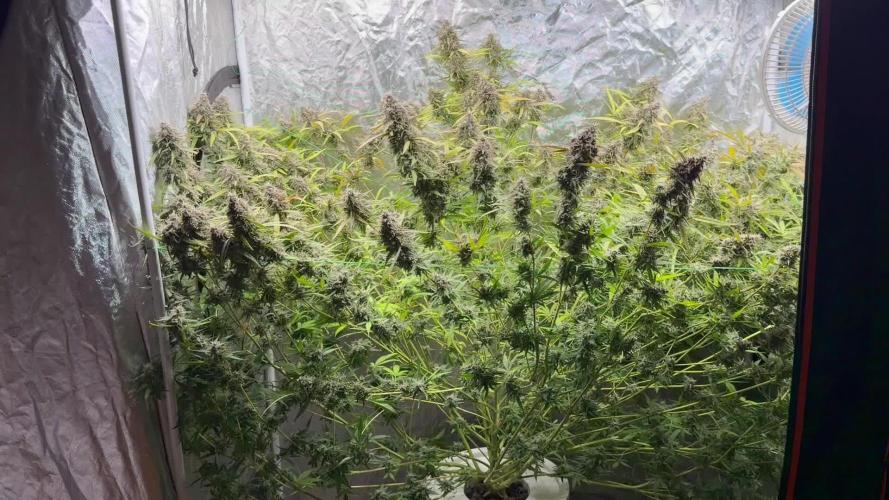
Hola familia, confieso, está genética es de mis favoritas, y no solo por lo fácil que es su cultivo.
Esta variedad con predominancia indica, se está comportando muy bien en nuestro interior.
Controlando el ph y alimentándolas bien, no tienen por qué suponer ninguna complicación en su ciclo.
En floración procuramos que jamas suba la humedad por encima del 50% ni que la temperatura sea muy elevada, podemos falicitar la formacion de hongos... y no queremos eso.
Resumiendo, bastante contento con la evolución de las Lemon kush.
Hasta la próxima semana familia.


Likes
6
Share


@IamCy
Follow
Rolling into week 7. Time to dial down the nutes and start my UVB regiment. I use Reptisun 10.0 bulbs due to LED UV's giving far less than optimal performance. Reptisun 5.0 bulbs work 2. I only run them from week 7 to flush and for only 3 hours a day within the current light cycle.
Update day 45: After doing a trichome check, it finished EARLY!! Time to do a quick flush then harvest. I was going to add the nutes to the fresh water today 😂😂
Likes
17
Share

@DogDoctorOfficial
Follow
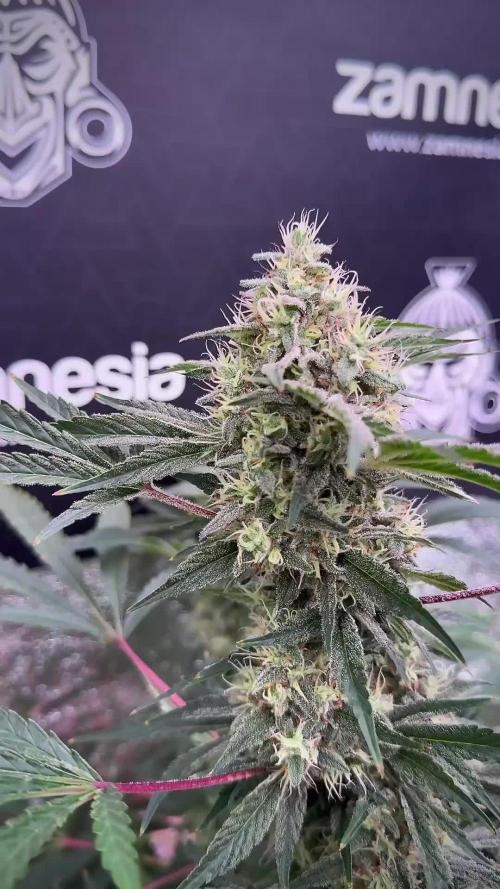
Week 12 | Animal Mints — Legends of the Frozen North
Week 12 and the room is doing exactly what we hoped it would do.
This is the part of the run where patience matters more than intervention.
The structure is built. The weight is there. The resin is there. The metabolism is still active.
Now the job is simple: maintain stability, reduce noise, and let the plants finish with calm.
And that is exactly where this room is right now.
A quick recap: 12/12 from seed
For anyone new joining the diary, this run was flowered under 12/12 from seed — meaning these plants were grown under a flowering light schedule from day one, instead of being vegged under 18/6 and flipped later.
That changes the entire architecture of the plant.
Instead of building wide, heavily branched bushes during a long vegetative phase, the plants stay more columnar, more direct, and more apically focused.
Less wasted lateral growth. Less unnecessary vegetation. More efficient top-to-bottom flower development.
That’s why this run looks like this.
Lean frames.
Stacked tops.
Excellent vertical flower distribution.
And dense, productive bud sites from upper canopy all the way into the lowers.
This style is not about brute force.
It is about efficiency, timing, and letting the plant express itself with less interruption.
Week 12: the room is finishing beautifully
This week the room feels exactly like a late flower room should feel.
Not loud.
Not explosive.
Just mature.
The flowers are dense and fully formed now, with visible weight from top to bottom and clear structural consistency across the canopy. The upper tops have finished stacking and are now settling into their final shape, while the lower and mid sites continue proving exactly why the undercanopy support mattered so much in this run.
That lower development is one of the biggest wins here.
The undercanopy lighting did exactly what it was supposed to do:
it kept the lower flower sites active, productive, and worth carrying to the finish.
Instead of soft lowers and wasted interior material, the plant continued producing meaningful flower mass deeper into the canopy. Combined with the top lighting, this created a much more even distribution of usable flower across the full plant.
And that shows clearly now.
The room is not just top-heavy.
It is productive throughout.
Resin, color, and late-flower expression
This week the visual changes are subtle, but important.
The pistils are darkening and receding.
The calyxes are swelling.
The resin heads are fully formed and standing dense across bracts, sugar leaves, and surrounding surfaces.
This is the part of flower where the plant stops trying to build and starts trying to finish.
You can see it in the way the flowers are tightening.
You can see it in the way the bracts are swelling.
You can see it in the color shift — greener tissue fading into softer lime tones, deeper pistil oxidation, and the first real signs of end-of-cycle maturity beginning to settle in.
Nothing dramatic.
Just the plant slowly shifting its priorities.
And that is exactly what we want.
Feeding strategy: now just enzymes
At this stage, we have stopped feeding base nutrients and are now running only Pure Zym with water.
That is intentional.
At week 12, the plant does not need more pushing.
It does not need more nitrogen.
It does not need more unnecessary input.
It needs space to finish.
By this point, the soil still holds more than enough residual nutrition to carry the plant through the last stretch. The goal now is not to keep forcing uptake — it is to let the plant naturally use what is already available, finish metabolically, and begin consuming what remains in the medium and in its own tissues.
That is why we simplify here.
No force.
No excess.
No chasing numbers.
Just enough enzymatic support to help keep the rhizosphere active, assist in breaking down residual organic matter, and keep the medium biologically functional while the plant finishes the job.
That is the role of the enzymes now.
Not feeding the plant harder.
Helping the system stay clean and available while the plant completes itself.
Water, EC, and why less is more now
Water remains simple.
We are running rainwater mixed with recovered humidifier water, plus enzymes only.
No pH correction.
No heavy EC.
No over-management.
Input EC is staying extremely soft, around 0.1–0.2, just enough to carry the enzymes without unnecessarily loading the medium this late in flower.
pH continues to land naturally around 6.8, and we are leaving it there.
At this point, we are not interested in forcing perfect numbers on paper.
We are interested in maintaining a stable root environment the plant is already happy in.
And the plant is clearly happy in it.
This is one of those moments where overcorrection usually creates more problems than it solves.
The room is stable.
The plants are functioning.
So we let stable stay stable.
Still drinking = still working
One of the clearest signs that the room is still metabolically active is water consumption.
Even this late, the plants are still drinking 1.7–1.8L per day, down slightly from the peak (~2L/day), but still very strong for this stage.
That matters.
Because even though the room looks like it is approaching the end, the plant is still moving water, still transpiring, still exchanging, still functioning.
That means metabolism is still active.
And active metabolism means the plant is still finishing properly.
They are not stalled.
They are not fading out prematurely.
They are simply slowing down the way mature plants should.
That is a very different thing.
Climate: stable beats perfect
Environment remains essentially unchanged because it does not need to change.
Day temps around 26°C
Night temps around 18°C
RH around 60%
Root zone around 21°C
CO₂ around 1000 ppm
Stable, predictable, and easy for the plants to work in.
Could we push harder? Probably.
Could we chase tighter numbers? Also yes.
But at this stage, the return is rarely worth the extra energy, extra complexity, or extra stress introduced into an already stable room.
Leaf VPD remains within a comfortable working range, the plants are responding well, and the room is balanced.
That is enough.
Not every decimal needs to be optimized into exhaustion.
Lowering PPFD for the finish
We are also beginning to reduce PPFD now as we move into the final stretch.
Again, this is intentional.
Late flower is not the time to keep pushing peak intensity into tissue that is already trying to mature.
The bulk is built.
The structure is set.
Now we shift from production pressure into finishing pressure.
Lowering PPFD slightly helps reduce unnecessary stress, lowers metabolic demand, and lets the plant focus more naturally on ripening rather than continued forced output.
At this point, we are no longer asking for more mass.
We are asking for completion.
That is an important difference.
Final thoughts
This week is one of my favorite moments in a run.
Not because it is flashy.
Because it is honest.
This is what the end should feel like:
less intervention, more observation.
less forcing, more trust.
less noise, more patience.
The work was already done.
Now we let the plant finish saying what it was trying to say all along.
Big love to everyone still following this one — the growers, the quiet readers, the long-timers, the curious ones, the skeptics, the supporters, the OGs, and even the haters.
Energy moves either way.
Might as well keep it good.
Big love as always to Zamnesia for the genetics, to GrowDiaries for the platform, and to everyone spending time here watching this run unfold.
We are close now.
One more calm week.
Maybe two.
Now we watch.
📡 DELETED @ 1K Please stay tuned.we never quit https://www.youtube.com/@TheDogDoctorOfficial NEW 🙏 Thank you for your patience and continued support.
FOR DISCOUNT CODES AND MORE JUST FOLLOW THE LINK https://website.beacons.ai/dogdoctorofficial
📲 Don’t forget to Subscribe and follow me on Instagram and YouTube @DogDoctorOfficial for exclusive content, real-time updates, and behind-the-scenes magic. We’ve got so much more coming, including transplanting and all the amazing techniques that go along with it. You won’t want to miss it.
GrowDiaries Journal: https://growdiaries.com/grower/dogdoctorofficial
Instagram: https://www.instagram.com/dogdoctorofficial/
YouTube: https://www.youtube.com/@dogdoctorofficial Deleted by Youtube - https://www.youtube.com/@TheDogDoctorOfficial NEW
Vimeo : https://vimeo.com/dogdoctorofficial Under construction stay tuned ⸻
Explore the Gear that Powers My Grow
If you’re curious about the tech I’m using, check out these links:
🔆 Lighting & Environmental Control
• Future of Grow — Advanced LED lighting technology
https://www.futureofgrow.com/
DISCOUNT CODE: DOG20
• Lumiflora — Under-canopy LED lighting
https://lumiflorade.com/
• TrollMaster — Environmental controllers and automation gear (past collaboration)
⸻
Genetics
• Zamnesia Seeds — Genetics used in this project
https://www.zamnesia.com/
⸻
🌱 Soil, Substrates, Boosters & Root Support
• Plagron — Substrates, bio mixes, and supportive products
https://plagron.com/en/
⸻
🎒 Storage, Curing & Preservation
• Grove Bags — Curing and storage solutions
https://grovebags.com/
⸻
📸 Photography Equipment & Tools
(Not sponsors, but part of my creative toolkit)
• Sony A6700
• Sony full-frame macro lens + few more
• Stacking photography workflow - learning
• iPhone (for behind-the-scenes shots)
We’ve got much more coming as we move through the grow cycles. Trust me, you won’t want to miss the next steps, let’s push the boundaries of indoor horticulture together!
As always, this is shared for educational purposes, aiming to spread understanding and appreciation for this plant. Let’s celebrate it responsibly and continue to learn and grow together.
With true love comes happiness. Always believe in yourself, and always do things expecting nothing and with an open heart. Be a giver, and the universe will give back in ways you could never imagine.
💚 Growers love to all 💚
📸 P.S. – The Eye Behind the Lens
All photos in this diary (for now — except for the ones showing the camera, which I took with an iPhone) are taken with a Sony A6700 paired with a Sony full-frame macro lens and a few more.
Photography is part of the story — it’s how we share the fine textures, the glow, and the quiet details that words can’t always capture.
I’ve also started experimenting with photo stacking — a technique where multiple images, each taken at a slightly different focus point, are layered together to create one perfectly sharp image from front to back.
It’s not digital enhancement or AI; it’s pure photography — a way to reveal the plant’s beauty in microscopic depth, from trichome to petal.
You’ll even see a few shots of "ghost me" capturing the shots — camera, lens, setup — because every grow deserves not just to be cultivated, but documented like art.
FOR DISCOUNT CODES AND MORE JUST FOLLOW THE LINK https://website.beacons.ai/dogdoctorofficial
NEW DISCORD - Official Server Invite Link : https://discord.gg/ksjAkA5T74

Likes
32
Share

@Dottgreenthumb
Follow
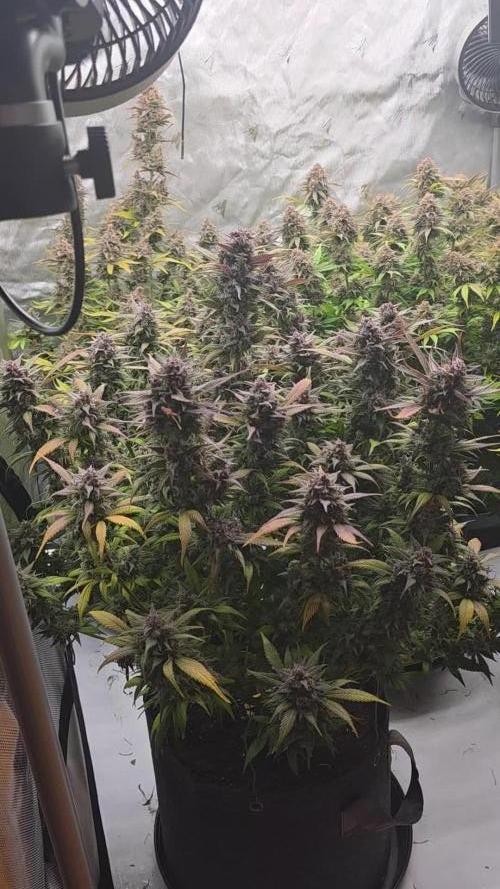
Gli strains hanno 88 giorni ho versato solo acqua con ph regolato I profumi dolci si fanno sentire una volta aperta la tenda Gli odori fruttati ti avvolgono immediatamente stanno raggiungendo la maturazione desiderata aspetto ancora qualche tricoma ambrato in piu per il taglio finale
Le piante stanno scaricando tutti i sali minerali il run off è sceso a 0.6 di ec con un ph di 6.8
Sempre molto positivo e contento del risultato con fast bud
Likes
2
Share


@Ganjagrandaddy
Follow
Hi GD Buddies. Another week down on this new strain for me to enjoy and wow am I enjoying watching theses gorgeous flowers flourish. They are creating very hairy and dense looking bud structures that have begun forming up into longer stem filling flowers that are also really kicking out a nice heavy scent of quailty Terps and aromas too. The glow space absolutely pongs of weed and my filters are throwing their hands up in the air in submission !!!. What a beautiful profile it is leaving behind too. One of the plants is beginning to show more colouring on the pistols now so I expect thosnwill begin a new flush of pure white ones to swrll the duds even more . The contrasts are so aesthetic looking over the buds and I can see why this strain was put forward by the guys at Exotic to try. A beautiful choice guys and i look forward to seeing this strain complete its processes and am excited to sample the finished result.

Processing
Likes
6
Share


@ganjaman24
Follow
She smells kind of Citriusy but I can definitely smell the blueberries and she’s loaded with resin n trichomes and still have at least 4 more weeks to go! Can’t wait till she swells up, already looking pretty good. Terpenator is really making a difference this run! Everything is a lot more frosty and smelly 😎


Likes
2
Share

@Borberad
Follow
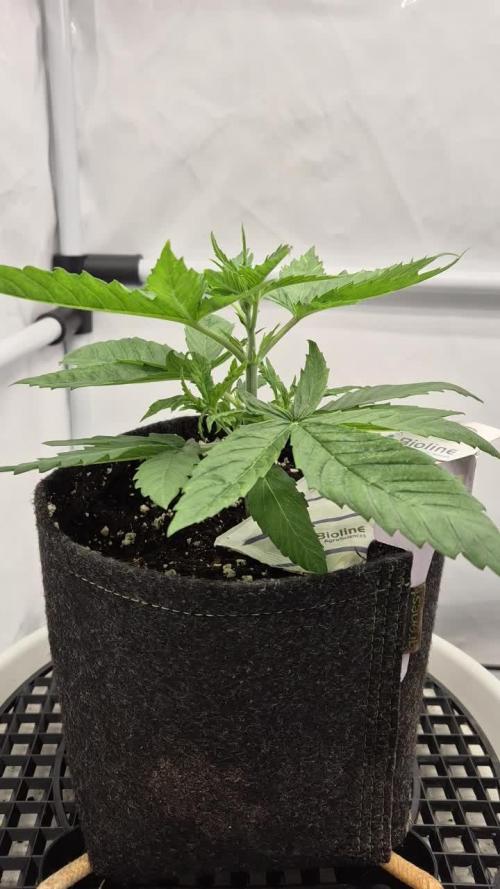
Woche 4
Topping und Blattschnitt.
Der Blattschaden wird wohl durch die zu abrupte Umstellung kommen. Etwas viel Licht und Wind im neuen Zelt der kleinen . 45. DLI (noch aus der letzten Blüte) wurde erstmal auf 35 DLI reduziert.


Likes
Comments
Share

@MindFlowers68
Follow
She dried in about 13 days. It was the third plant out of four I had to trim. She trimmed up pretty easily. It was a pleasant surprise. Got 12 oz total. She has some nice chunky, dense, terpene rich buds. That are also covered in frost top to bottom. She took a little longer to dry because buds were so dense I had to let sit out overnight in trim bin before jarring. My test press went very well and she yielded a little over 15 percent. I still am curing the rosin but had a little test of it and was very nice. The terps are very thick and mouth coating. The flower is burning fine before any curing and the flavor is already shining I cant wait to see how it is after a little cure.

Likes
85
Share


@BarrieGrower
Follow
Still see a few white hairs growing out and the buds look a bit bigger. Plants are fading and looking good.
The beginning of the week will be the last time I feed nutes. Straight PH'd water from now on.
Lookijg at the tric's a lot of clear ones still. I'm thinking it will still be another two weeks until harvest.
Thanks for looking.
Likes
29
Share


@JeyGanesha
Follow
8°settimana...gli do ancora 2 settimane di solo acqua,con un pochino di melassa,così la addolcisco un po'...ma sicuramente già sono super dolci al raccolto.......
Mah! Guardando le mi sa che una ultima settimana di flush andrà più che bene... Faccio l'ultima settimana, dandogli solo flawless Finish e via.......dopo sarà prontissima,😋🤤😜

Likes
7
Share


@FlavoursUk
Follow
So, very first run with the new set up which I'm excited for. Currently just getting the environment dialled in. Running a RDWC system, along with LEDs, the recipe for success.
Running some great genetics from seed stockers (purple punch).
Will be back with an update soon, for now enjoy the pictures and videos I upload. FlavoursUK
Day 6. Girls doing well. Roots hit the water so expecting some nice growth now. pH fluxing between 5.9/6.0 which is good as that's where I want it, especially for veg. Cant wait to see what I can do with this. Stay tuned.

Likes
12
Share


Likes
15
Share


@HollowSource
Follow
End of veg for this beast. Maybe not the most flattering term for a lady but that's what she is 😂. She has taking the training well and I can't wait to see what sort of canopy she will give.


Likes
12
Share


@SopChop
Follow
Barely did any training apart from position some leaves to allow light through some areas. took off some new growths and unwanted leaves but not much. was away for two nights so had no choice but to leave the lights on however leaves didn't scorch.
after topping during veg the tops next to main stem didn stretch as much as i though they would, I have pulled them apart with my fingers until main stem around topping site split slightly. see before and after
