


Likes
18
Share


@Wakesk8
Follow
One more week for Veg.
I will clone 1 Monster Zkittlez and 1 Strawberry Lemonade and I will put the clone in flowering stage as well let’s see the final result!
The count down is almost starting !
Happy Growing to everyone!!!


Likes
8
Share


@GREENPHOENIX6262
Follow
02/15 (M) - Prepping her to flip into flower within the next week or two - Weaved her under net for better light coverage - Running 8 drip emitters with a 5 gallon res - 45 sec feed every 8hrs.
02/15 (C) - Thus far all 15 are still kicking but they did take a hit - starter roots for all 15 have begun - I will update with pics within the next 2 weeks - Running high temps and high humidity during lights on.

Processing
Likes
23
Share


@eldruida_lamota
Follow
Ya en la recta final familia, están apuntito, solo unos días más.
Nuestras lemon kush ya recibieron su lavado de raíces , están sin productos ya solo AGUA.
Controlamos de todas formas el Ph igual y que no baje por debajo de 6,2.
Bestiales estás flores , un olor muy característico con tonalidades cítricas que recuerdan al limón.
Todo un clásico en verdad.
Estos ejemplares carecen de brazos laterales, son óptimas para un SOG desde semilla, pudiendo llenar 16 plantas en metro cuadrado.

Likes
3
Share


@High_Grade_Dadli
Follow
Moved dem girls into direct sunlight so they are getting more light coverage now....jus leave dem to do their
Likes
19
Share


@GermGrowFox
Follow
12. April
Eine weitere Woche beginnt und es sind noch Babys. Allerdings hat das gailen aufgehört und sie wirken stabiler.
Das growdiary wird um ein weiteres Projekt erweitert: Toleranzpause. Ich habe gemerkt dass mich der Konsum von Cannabis aktuell gerade sehr in meinem Sein aufhält! Daher heute day one: thc wurde durch cbd ersetzt.
Ziel ist es bis zum Ende der Ernte nüchtern zu bleiben! Ich werde ehrlich sein falls ich Rückfälle habe.
Rückfälle haben ist kein scheitern, aufgeben schon!
Update: es ist mittlerweile Abends und so langsam nervt mich diese Entscheidung.
CBD schafft gute Abhilfe. Ich weiß das die ersten drei Tage und vor allem Nächte hart sind.
13. April
Einen wunderschönen guten Morgen:
Erster Tag, erste Nacht rum. Leider nur semierfolgreich.
Ich habe den ganzen Tag meine zu erwartende Laune ausgehalten und bin nüchtern geblieben. Schlaf war wie zu erwarten eine große Herausforderung. Um 1:00 morgens habe ich dann etwas frustriert über den Schlafmangel/ bzw. Den Mabgel an Ruhe im Kopf mir 0,1gr Orion in den Vater gepackt und 2x gezogen. Hab mich danach echt schwach gefühlt. Aber das ist Teil des Prozesses und die Optimierung geht weiter. Der Tag wurde daher grob überschlagen nur mit 5% des sonst täglichen Konsums gedeckt. Quote ist gut, allerdings war es nicht das vereinbarte ziel.
Indemfall heute auf ein neues


Likes
47
Share


@Ultraviolet
Follow
What's in the soil? What's not in the soil would be an easier question to answer. 16-18 DLI @ the minute. +++ as she grows.
Probably not recommended, but to get to where it needs to be, I need to start now.
Vegetative @1400ppm 0.8–1.2 kPa 80–86°F (26.7–30°C) 65–75%, LST Day 10, Fim'd Day 11
CEC (Cation Exchange Capacity):
This is a measure of a soil's ability to hold and exchange positively charged nutrients, like calcium, magnesium, and potassium. Soils with high CEC (more clay and organic matter) have more negative charges that attract and hold these essential nutrients, preventing them from leaching away.
Biochar is highly efficient at increasing cation exchange capacity (CEC) compared to many other amendments. Biochar's high CEC potential stems from its negatively charged functional groups, and studies show it can increase CEC by over 90%. Amendments like compost also increase CEC but are often more prone to rapid biodegradation, which can make biochar's effect more long-lasting. biochar acts as a long-lasting Cation Exchange Capacity (CEC) enhancer because its porous, carbon-rich structure provides sites for nutrients to bind to, effectively improving nutrient retention in soil without relying on the short-term benefits of fresh organic matter like compost or manure. Biochar's stability means these benefits last much longer than those from traditional organic amendments, making it a sustainable way to improve soil fertility, water retention, and structure over time. Needs to be charged first, similar to Coco, or it will immobilize cations, but at a much higher ratio.
a high cation exchange capacity (CEC) results in a high buffer protection, meaning the soil can better resist changes in pH and nutrient availability. This is because a high CEC soil has more negatively charged sites to hold onto essential positively charged nutrients, like calcium and magnesium, and to buffer against acid ions, such as hydrogen.
EC (Electrical Conductivity):
This measures the amount of soluble salts in the soil. High EC levels indicate a high concentration of dissolved salts and can be a sign of potential salinity issues that can harm plants.
The stored cations associated with a medium's cation exchange capacity (CEC) do not directly contribute to a real-time electrical conductivity (EC) reading. A real-time EC measurement reflects only the concentration of free, dissolved salt ions in the water solution within the medium.
98% of a plants nutrients comes directly from the water solution.
2% come directly from soil particles.
CEC is a mediums storage capacity for cations. These stored cations do not contribute to a mediums EC directly.
Electrical Conductivity (EC) does not measure salt ions adsorbed (stored) onto a Cation Exchange Capacity (CEC) site, as EC measures the conductivity of ions in solution within a soil or water sample, not those held on soil particles.
A medium releases stored cations to water by ion exchange, where a new, more desirable ion from the water solution temporarily displaces the stored cation from the medium's surface, a process also seen in plants absorbing nutrients via mass flow. For example, in water softeners, sodium ions are released from resin beads to bond with the medium's surface, displacing calcium and magnesium ions which then enter the water. This same principle applies when plants take up nutrients from the soil solution: the cations are released from the soil particles into the water in response to a concentration equilibrium, and then moved to the root surface via mass flow.
An example of ion exchange within the context of Cation Exchange Capacity (CEC) is a soil particle with a negative charge attracting and holding positively charged nutrient ions, like potassium (K+) or calcium (Ca2+), and then exchanging them for other positive ions present in the soil solution. For instance, a negatively charged clay particle in soil can hold a K+ ion and later release it to a plant's roots when a different cation, such as calcium (Ca2+), is abundant and replaces the potassium. This process of holding and swapping positively charged ions is fundamental to soil fertility, as it provides plants with essential nutrients.
Negative charges on soil particles: Soil particles, particularly clay and organic matter, have negatively charged surfaces due to their chemical structure.
Attraction of cations: These negative charges attract and hold positively charged ions, or cations, such as:
Potassium (K+)
Calcium (Ca2+)
Magnesium (Mg2+)
Sodium (Na+)
Ammonium (NH4+)
Plant roots excrete hydrogen ions (H+) through the action of proton pumps embedded in the root cell membranes, which use ATP (energy) to actively transport H+ ions from inside the root cell into the surrounding soil. This process lowers the pH of the soil, which helps to make certain mineral nutrients, such as iron, more available for uptake by the plant.
Mechanism of H+ Excretion
Proton Pumps: Root cells contain specialized proteins called proton pumps (H+-ATPases) in their cell membranes.
Active Transport: These proton pumps use energy from ATP to actively move H+ ions from the cytoplasm of the root cell into the soil, against their concentration gradient.
Role in pH Regulation: This active excretion of H+ is a major way plants regulate their internal cytoplasmic pH.
Nutrient Availability: The resulting decrease in soil pH makes certain essential mineral nutrients, like iron, more soluble and available for the root cells to absorb.
Ion Exchange: The H+ ions also displace positively charged mineral cations from the soil particles, making them available for uptake.
Iron Uptake: In response to iron deficiency stress, plants enhance H+ excretion and reductant release to lower the pH and convert Fe3+ to the more available form Fe2+. The altered pH can influence the activity and composition of beneficial microbes in the soil. The H+ gradient created by the proton pumps can also be used for other vital cell functions, such as ATP synthesis and the transport of other solutes. The hydrogen ions (H+) excreted during photosynthesis come from the splitting of water molecules. This splitting, called photolysis, occurs in Photosystem II to replace the electrons used in the light-dependent reactions. The released hydrogen ions are then pumped into the thylakoid lumen, creating a proton gradient that drives ATP synthesis.
Plants release hydrogen ions (H+) from their roots into the soil, a process that occurs in conjunction with nutrient uptake and photosynthesis. These H+ ions compete with mineral cations for the negatively charged sites on soil particles, a phenomenon known as cation exchange. By displacing beneficial mineral cations, the excreted H+ ions make these nutrients available for the plant to absorb, which can also lower the soil pH and indirectly affect its Cation Exchange Capacity (CEC) by altering the pool of exchangeable cations in the soil solution.
Plants use proton (H+) exudation, driven by the H+-ATPase enzyme, to release H+ ions into the soil, creating a more acidic rhizosphere, which enhances nutrient availability and influences nutrient cycling processes. This acidification mobilizes insoluble nutrients like iron (Fe) by breaking them down, while also facilitating the activity of beneficial microbes involved in the nutrient cycle. Therefore, H+ exudation is a critical plant strategy for nutrient acquisition and management, allowing plants to improve their access to essential elements from the soil.
A lack of water splitting during photosynthesis can affect iron uptake because the resulting energy imbalance disrupts the plant's ability to produce ATP and NADPH, which are crucial for overall photosynthetic energy conversion and can trigger a deficiency in iron homeostasis pathways. While photosynthesis uses hydrogen ions produced from water splitting for the Calvin cycle, not to create a hydrogen gas deficiency, the overall process is sensitive to nutrient availability, and iron is essential for chloroplast function.
In photosynthesis, water is split to provide electrons to replace those lost in Photosystem II, which is triggered by light absorption. These electrons then travel along a transport chain to generate ATP (energy currency) and NADPH (reducing power). Carbon Fixation: The generated ATP and NADPH are then used to convert carbon dioxide into carbohydrates in the Calvin cycle. Impaired water splitting (via water in or out) breaks the chain reaction of photosynthesis. This leads to an imbalance in ATP and NADPH levels, which disrupts the Calvin cycle and overall energy production in the plant. Plants require a sufficient supply of essential mineral elements like iron for photosynthesis. Iron is vital for chlorophyll formation and plays a crucial role in electron transport within the chloroplasts. The complex relationship between nutrient status and photosynthesis is evident when iron deficiency can be reverted by depleting other micronutrients like manganese. This highlights how nutrient homeostasis influences photosynthetic function. A lack of adequate energy and reducing power from photosynthesis, which is directly linked to water splitting, can trigger complex adaptive responses in the plant's iron uptake and distribution systems.
Plants possess receptors called transceptors that can directly detect specific nutrient concentrations in the soil or within the plant's tissues. These receptors trigger signaling pathways, sometimes involving calcium influx or changes in protein complex activity, that then influence nutrient uptake by the roots. Plants use this information to make long-term adjustments, such as Increasing root biomass to explore more soil for nutrients. Modifying metabolic pathways to make better use of available resources. Adjusting the rate of nutrient transport into the roots. That's why I keep a high EC. Abundance resonates Abundance.


Likes
1
Share

@Stonie_Mahoni
Follow
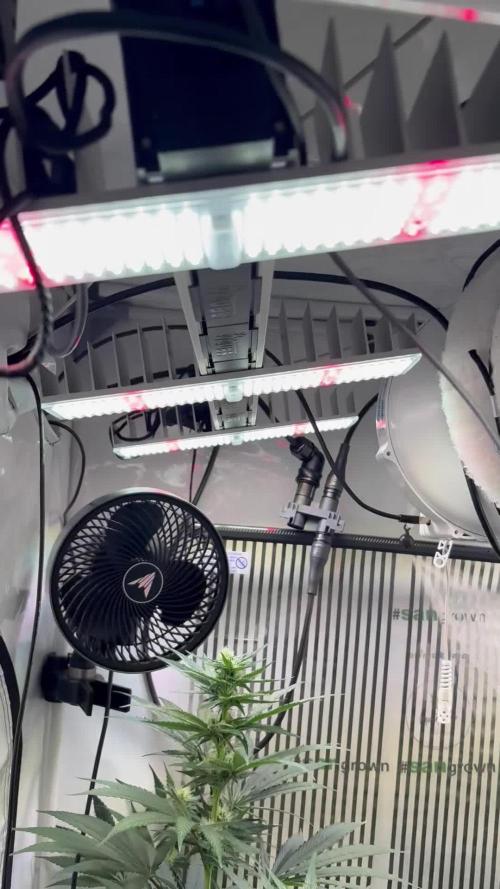
Jetzt ist endlich das richtige Bewässerungssystem verbaut, ist dicht und funktioniert so wie es soll .. ich hatte echt Probleme die ganzen Einzelteile zusammen zu bekommen, Bestellungen wurden Storniert, hab offene Verpackungen zugestellt bekommen, ewig auf die Rückzahlung warten müssen aber jetzt ist endlich alles da und ich konnte es Final verbauen und in Betrieb nehmen .. jetzt kann echtes Cropsteering verinnerlicht werden.. jetzt kann ich wieder dazu lernen


Likes
67
Share


@AwfulBuddy
Follow
Hi all buddies!
First crop from hydro nft growth.
Growth went well, I had some management problems in changing nutrients from veg to bloom which delayed the harvest for a week or two.
Sensi Seeds' Skunk # 1F is incredibly resistant to mold and insect attacks, very close internodes ensure low height and compact buds.
Unfortunately I chose the mother phenotype wrong, I found the lowest as I wanted but I lost the fatness of the buds present in other phenotypes, but the game was worth the same and I am very proud of it!
I collected after 94 days of flowering, the last 72h 20kg ice cubes in the tank and total darkness which the last 24h without irrigation.
After cutting I hung the whole plants in the tent for 24 / 48h 19 ° C 55% HR.
Two days of wet trim to 8 girls and I hung their colas in the tent to continue drying.
With a girl i tried dry trim but i will avoid next time.
After a week in the tent I cleaned the colas and removed all the sticks, I placed everything in airtight bags in the refrigerator for 5 days 12 ° C 65% HR (daily check).
Now dark storage room at a temperature of 18 ° C 65% HR.
At the last weighing a few days ago it was more than 500g, from now it does not lose any more weight.
Next week I will take pictures of the weigher and the finished harvest🍀🍀🍀
target!!🍀500g dry/cured🔥
Thank you GD community you are precious for everything, criticism, advice, curiosity, thanks 💚🌱✊🏼
Awesome people here on GD🔥🔥🔥

Likes
6
Share


@midnitrtoker
Follow
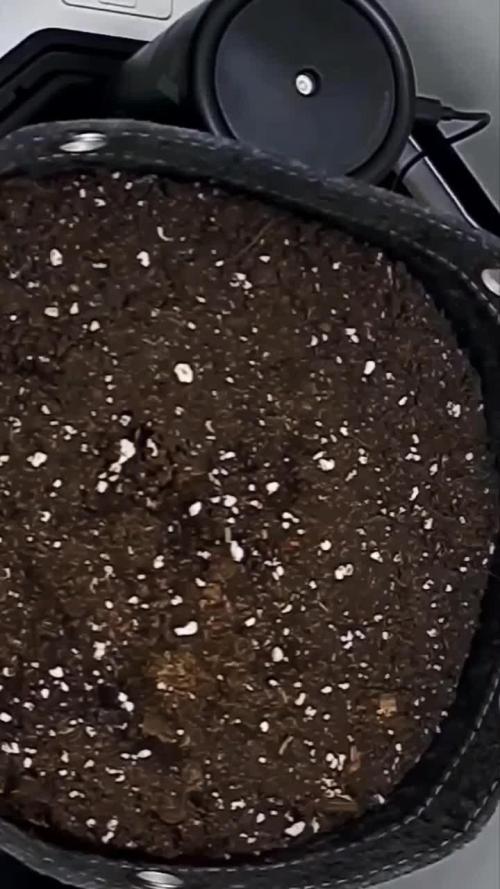
This 10gal reservoir has been a game changer!!! If you’ve been wasting/going through your nutrients fast I suggest you get one of these and in the comments add Midnitrtoker from IG sent me. Trying to get sponsored and give one of these systems away!! Like I said i filled up the res with 10gal and it has gone 4weeks!!! Today I empty out what’s left and change the feed to flower. That means we up the EC a tad and let it go. If 10gal lasted up 4 weeks we will be using 5gal this time and hope it lasts us the first 3 weeks of flower. I have not experienced any deficiencies the tips are turning purple but that’s because my night temps drop to the low 70s even to 69F. I took cuts of these girls again. Next round we will be using Floraflex or Athena. Same environment different nutrients we will see which company gives us the biggest harvest. See you all at the end of week 1 Flower.


Likes
Comments
Share


@BeggarsBelief
Follow
So everything took off in flower, I was super harsh with the defoliating which initially I regretted, but was surprised with how they packed out during the following weeks. In general it's impressive how hardy these plants are. Even the outdoor grows yielded some quality. Add some more nuets (overdrive and carbo load), before flushing about 14 days before harvest, next time I'll do this earlier and really the Runtz could have gone another week but my drying needs to happen in the same space as my growing for now. Apologies for the quality of image, I'm just using my phone and some bits I have to document, I collect records too, so expect weird noises lol. Build a rotating plat from a lazt susan I found, has been the best piece of kit added this season.
Likes
5
Share


@TJHeadley
Follow
I now see the issue of doing multiple strains under one diary. FB Cherry Cola and SS Bruce Banner have shot hairs everywhere while the RQS Weddding Cake is still verging. Top dressed everything with half a cup of worm castings and an eight cup of BAS Craft blend


Likes
17
Share


@Herbalize
Follow
Hello folks 😎
Welcome for the first week of flowering ( 45 days veg )✊
they reacted well to the transition to 12/12 day/night
just the little one begins to show signs of deficiency but it makes sense given the size of the pot ( 6L)
Still no nutrients, just rhizotonic with aprox 4.5 liters of water every 5/6 days
At the end of the week (day 7) I swaped the MH 400W with my new kit
the Hellion 600 / 750W DE-HPS, in my opinion it's a must have if you're a fan of HPS 💪
See you next week
Peace Love & Weed GD Fam😍👊
Likes
22
Share


@daggaDNA
Follow
Welcome to the first week of flowering in this run with BIG BLOCK by Cannabis Brothers. 7 days ago I took cuts and now I'm happy to show you the first shots of roots and also the amazing green canopy which I'm truly proud of.
Each plant is marked as pheno 1, 2, 3, ...and here is a cut of pheno #9 showing the great success. Soon others will follow and then we will see after 3 weeks how many males or females we have and then we can have a first selection of potential keepers. For now I'd keep them all as they grow all equally good but time will tell how many ladies we actually have.
Likes
81
Share


@Kitties_and_Colas
Follow
~_~_~_~_~_~_~_~_~_~_~_~_~_~_~_~_~_~_~_~_~_~_~_~_~_~_~_~_~_~_~_~_~_~_~_~_~_~_~_~_~_~_~_~_~_~_~_~_~_~_~_~_~_~_~_~_~_~_~_~_~_~_~_~_~_~_~_~_~_~_~_~_~_~_~_~_~_~_~_~_~_~_~_
💪😺 5th week of flower!!! Things are going great in this tent, a couple brown calcium def spots forming in a few areas and as it goes we're currently out of cal-mag lol, we should have more delivered in about 2 days...I really like the structure of these plants, a few long (fat) colas always make for easy cleaning/drying and the SP-3000 gets in there deep..we could never run this close together under our old LEDs or without bending them sideways but we've had no issues yet keeping everything vertical under the MarsHydro...The temps are a little high and we're still watering this tent more than the others but airflow is really good and the plants seem happy for now....we removed a bunch of lower growth from most of them this week so they'll put that energy towards the stuff on top and minimize "popcorn"..the smell is just amazing, this is a very hearty and beautiful strain..I'm happy we were able to grab a half dozen clones..all the Widow clones we took are well into veg at this point ...💪🐱🌱....we live in zone 5 (US) and are limited on what we can grow outdoors but I think with these being a "fast" strain we could flower them all outside..we'll play it by ear lol..well thanks for taking the time to read my ramblings, we'll update if anything exciting happens midweek...have a safe and happy Memorial Day (US) Growmies!!
❤️💡🌱😽💨
~_~_~_~_~_~_~_~_~_~_~_~_~_~_~_~_~_~_~_~_~_~_~_~_~_~_~_~_~_~_~_~_~_~_~_~_~_~_~_~_~_~_~_~_~_~_~_~_~_~_~_~_~_~_~_~_~_~_~_~_~_~_~_~_~_~_~_~_~_~_~_~_~_~_~_~_~_~_~_~_~_~_~_
Likes
2
Share


@lleuquino
Follow
Una semana desde que lavé raíces, realicé defoliación en las partes altas. Solo a esperar que maduren los tricomas.