


Likes
Comments
Share


@BigTuk420
Follow
Another week has gone not so long left with these ladys now im feeding them only water. Take it easy growers


Likes
5
Share


@Ensign420
Follow
Greetings fellow growers 🖖 and welcome to my first grow ever. This adventure actually started several months ago when I decided to stop buying flower from dispensaries and just grow my own bud. How hard can it be!?
This is actually my second seed of this strain. The first bean sadly died due to over watering (sorry girl, RIP). I was literally watering the cube to the point where water was dripping from the bottom, then heavily sprayed the humidity dome and tray with the vents completely closed. Everyday. Multiple times. I never let the dome or try dry out. So after about 8 days of not sprouting, there was a funky smell of rot. So that was that.
Later I learned that rockwool retains a lot of water and can easily drown seeds. So a wet/dry cycle is best for rockwool germination.
So even after hours of researching and digging through forums and tutorial videos, I was still under prepared for this journey. Did not consider how delicate the germination phase is. Oh well. Lesson learned. Reset and try again!
I hope everyone is safe and stoned during this corona crisis. Just like everyone else in the world, I want this pandemic to be over with. But in the meantime, let's grow some weed! 🖖
[START OF WEEK 01]
Day 01 - Monday - 08/03/20 - Total Days: 001
-----------------------------------
- [0830]: Light Schedule: 24Hrs/0
--- Soaked cube in 5.5 PH water for 10 min. Did not shake water out.
--- NO NUTES! Only PH'd down to control the PH levels.
--- Did not use the default hole (way too deep).
--- Flipped cube upside down and made a shallow hole for the seed (less than 0.25" deep).
--- Placed seed in and pinched hole close. No additional water added.
--- Sprayed the tray and dome with straight water (5.5 PH).
--- Vents are cracked opened a for ventilation (about 1/4 opened each).
--- Distance between the light and tray was 53"
--- AC was set to 80 °F
--- Exhaust fan was set to 86 °F
--- Room average temp was at 85 °F
--- Dome humidity was at 85-99% when sprayed.
--- Allowing to completely dry before respraying.
- [2200]: Dome and tray were completely dry! Sprayed only tray and dome with more water.
Day 02 - Tuesday - 08/04/20 - Total Days: 002
-----------------------------------
- [0845]: Sprayed dome and tray in the morning. Everything was dry.
--- Hoping for the best!
- [2130]: Everything was dry again, so sprayed dome and tray at night along with a light spray on the cube.
Day 03 - Wednesday - 08/05/20 - Total Days: 003
-----------------------------------
- [0830]: Everything was dry again. Resprayed dome and tray. Slightly sprayed cube.
- [2125]: Hooo damn!! She popped! Am little stub is visible! Resprayed dome and tray again.
--- Still going 24/0 for lights.
- [+0033]: Just checked up on her and I swear she grew a bit taller! Getting excited!
Day 04 - Thursday - 08/06/20 - Total Days: 004
-----------------------------------
- [0845]: Wow! Went from a little stub to fully sprouted overnight! Everything was pretty dry again so resprayed dome and tray.
- [2200]: Tap root is visible! Over 1" long too! Just resprayed dome and tray again.
-- Going to prep for hydroton transplant tomorrow!
Day 05 - Friday - 08/07/20 - Total Days: 005
-----------------------------------
- [0930]: She keeps growing!
-- Added a bit of CalMag to the spray bottle (8 drops to 650ml of distilled water). Resprayed dome and tray. Water was at a 5.4 PH with 141 PPM.
- [1045]: Prepped the bubble bucket with 4.5gal of water. Water is high enough to reach about 0.25" above the bottom of the net pot.
--- Added 3 drops of Superthrive
--- Added 3.5ml of CaliMagic
--- Added 2ml Hydroguard
--- Then PH'd down to 5.6
--- Solution Strengh: 120 PPM
--- Water chiller is set to 20 °C
- [1100]: Transplant time!
--- Filled the net basket 1/3 with hydroton. When placed in the bucket, air bubbles are not visible, but are slightly below the surface (slight digging will reveal the water/bubbles below).
--- Removed plastic on rockwool cube and placed in basket, then filled around and covered with hydroton. Making sure to block any light from passing through the net pot and into the nutrient solution.
--- Covered with a half-bottle dome sprayed with the CalMag water from earlier.
--- Hoping for the best!
- [1300]: Raised Bucket 5" higher. Now light distance is 48" to top of bucket.
- [1820]: Lowered tent exhaust temp to 76 °F
--- Lowered AC to 75 °F
--- Raised bucket even higher so light distance is 30" to top of bucket.
- [2300]: Looking good!
--- Sprayed dome and surrounding hydroton with more CalMag water.
--- Attached timer to light! So new 18 Hrs On/6 Hrs Off light schedule.
--- Lights On: [1600] (4pm)
--- Lights Off: [+1000] (10am the next day)
--- Decided to go with lights on during the evening/night and off during the later mornings/afternoon (the hottest part of the day) to see if temps can be controlled better.
--- Please survive girl!
Day 06 - Saturday - 08/08/20 - Total Days: 006
-----------------------------------
- [0800]: Everything was dry. Resprayed hydroton and dome.
- [2000]: Here first night cycle seemed to go well! Get'n taller!
--- Dry again. Removed the dome.
--- PH went up to 6.5 so PH'd down to 5.7
--- Ran the top feed drip ring for a bout a minute to wet the hydroton and rockwool with the nutient solution.
---Too scared to leave the top feed on 24hrs (I don't want over water her and cause dampening-off). Will let dry before re-watering.
- [2100]: After closer inspection, I think she's looking a bit yellow.
--- Decided to add a bit of grow nutes to the bubbler solution.
--- Added 2ml of Sensi Grow A
--- Added 2ml of Sensi Grow B
--- Solution strength after adding more nutes: 176 PPM
--- PH went up to 6
--- I hope that the extra chelating properties of the 'PH Perfect' solution is enough of a buffer for proper nutrient uptake.
Day 07 - Sunday - 08/09/20 - Total Days: 007
-----------------------------------
- [0800]: Water dropped a bit (mostly due to evaporation) so solution strength was at 190.
--- Checked PH again. Was still at 6, so PH'd down to 5.4
--- Ran the top feed for a minute to wet the hydroton a bit.
- [0915]: Since she's looking perky but still a bit yellow. So decided to up the nutrient concentration even more before lights out.
--- Added 2ml more of Sensi Grow A
--- Added 2ml more of Sensi Grow B
--- Solution strength after adding more nutes: 199 PPM
--- PH went up to 5.8
- [1700]: Checked nutrients.
--- PH: 5.9
--- Solution strength: 202 PPM
--- Added 4ml of Voodoo Juice
--- Added 4ml of B-52
--- PH after adding more nutes: 5.9
--- Solution strength after adding more nutes: 238 PPM
- [2130]: Decided to make a new foliar spray to address the continued yellowing.
--- Started with 500ml of distilled water.
--- Added 3 drops of CaliMagic
--- Added 3 drops of Sensi Grow A
--- Added 3 drops of Sensi Grow B
--- Added 3 drops of B-52
--- Added 1 drop of Superthrive
--- Solution strength: 164 PPM
--- PH was at 5.9 and did not adjust.
--- Gave her one spray.
--- Also sprayed the surrounding hydroton.
[END OF WEEK 01]

Likes
45
Share


@AlpineGoat
Follow
Salve a tutti e ben tornati :)
Questo sarà l'ultimo diario che aprirò quest'anno, l'ultimo che darà inizio ad un anno nuovo, con prospettive migliori, lasciandoci alle spalle tutte le disavventure che ci sono capitate durante questo ultimo brutto periodo..
Per cominciare, scopro le carte: io parlo italiano! Siccome sono stanco di scrivere tutto in inglese - sbagliando qualche volta - ho deciso di scrivere tutto usando la mia madrelingua. Ne vado fiero, perchè nasconderlo? ;D
Detto ciò, passiamo alla selezione di oggi. Poichè sono un paziente affetto da epilessia, necessito di qualcosa che mi faccia stare calmo, tranquillo. Qualcosa che mi aiuti a combattere gli effetti collaterali del farmaco, come l'insonnia o l'ansia di giorno. Per questo sono andato a caccia di qualche nuova strain, fuori da quelle comuni, che venisse più incontro alle mie esigenze.
Finalmente ho trovato! Tre strain davvero indicate per i miei bisogni :D
La DC#1 di Doctor's Choice è una strain bilanciata, per un uso diurno, che aiuta a socializzare e a combattere l'ansia e lo stress!
La Black Berry OG CBD della Emerald Triangle Seeds è quel che mi ci vuole per aiutare a distendere i nervi, un'indica con rapporto cbd:thc di 3:1 :D
La Banana Sherbet di South Seeds, una nuova strain davvero forte, indica, che ti stende, ottima per collassare la sera dopo una lunga giornata ;)
Questi semi mi sono stati donati da fantastici breeder che purtroppo non hanno tutta l'attenzione che meritano.. date un'occhiata alle loro seedbank, troverete delle gemme perfettamente compatibili con le vostre esigenze!
-
Adesso basta chiacchiere, è il momento di parlare di cose tecniche.
Germinazione!
Come da rito, sono solito lasciare immersi i miei semi per 24 ore nell'acqua. Dopodichè li tengo in un fazzoletto umido, chiuso, finchè non mostrano una buona radice - di solito 24-36 ore. Dopodichè li trapianto nel loro primo contenitore - un 0.8L - dove svilupperanno un bel sistema radicale prima di essere trapiantate nel loro contenitore finale!
Finalmente nel fine settimana sono riuscito a trapiantarle. Ho usato un po’ di root complex per stimolare le radici nel jiffy ;)


Likes
8
Share


@MadeInGermany
Follow
Hey guys :-)
They are developing very well :-) .
Was watered twice this week with 1 l each (nutrients see table above)
Maybe I'll train them this week.
But I'll think about that spontaneously for reasons of space :-) .
Otherwise everything is going according to plan and I wish you a lot of fun with the update and stay healthy 💚🙏🏻
👇🏼👇🏼👇🏼👇🏼👇🏼👇🏼👇🏼👇🏼👇🏼👇🏼👇🏼👇🏼
You can buy this Nutrients at :
https://greenbuzzliquids.com/en/shop/
With the discount code: Made_in_Germany you get a discount of 15% on all products from an order value of 100 euros.
👇🏼👇🏼👇🏼👇🏼👇🏼👇🏼👇🏼👇🏼👇🏼👇🏼👇🏼👇🏼
You can buy this strain at :
Clearwater Seeds
Water 💧 💧💧
Osmosis water mixed with normal water (24 hours stale that the chlorine evaporates) to 0.2 EC. Add Cal / Mag to 0.4 Ec Ph with Organic Ph - to 5.8 - 6.5
MadeInGermany

Likes
14
Share


@SebastianFastBuds
Follow
Here we go - My Grow on the Go. I am going to Germinate in the Canna Kan and then transfer directly into the final Pot in my Danf_Box

Processing
Likes
6
Share


@PoshGrow
Follow
Welcome to Auto Alaskan Purple Grow by PoshGrow!
🍀 Week #3 2020 August 6th - 13th.
General Info:
When planted: 2020 July 23th.
Week: 3
Days: 14 - 21
Last Update Day: 2020 August 10th.
Plants: 5 Alaskan Purple Auto.
Equipment:
Tent: MarsHydro 1mx1mx2m or 39"x39"x72".
Light: HLG 260w V2 Rspec QB Kit.
Exhaust: 4" 322 CFM fan + Viper Carbon Filter.
Intake: 4" 100 CFM Inline Fan.
Oscillating Fan:
Lower: 4" Ram Fan.
Upper: 16" Oscillating Ram Fan.
Humidifier: Taotronics TT-AH001.
Dehumidifier: Pavlit MD750.
Soil: NPK soil 40% Compost, 50% Peat Moss, 10% Agroperlite.
Pot: 7 gallon Fabric Pot x 5pcs.
Nutriens: Fox Farm Trio.
PH Correcton: Chemoform pH-Minus Granulat.
PH Pen: Cheap Chinese one, I callibrate it every time I use it.
Water pump:
Digital microscope:
Comment:

Likes
26
Share


@Ageddd
Follow
Whats up GD !!!
------------- GROWTH-------------
She is getting weight and finishing, leaves turned purple, red, and all the amazing colours you see in photos, she is almost ready and it is so frosty,
Smells like red licorice, and fruits.
Flushing last 7 days.
------------- IRRIGATION-------------
1,5l, watering each 3 days .
1 of 2 irrigations with nutes, and the other with water.
------------- NUTRIENTS-------------
Top Bloom (3ml/l)
Top Candy (2ml/l)
---------------------------------------
Good vibes !!
_29/06/2018_

Likes
9
Share

@DE_BW
Follow
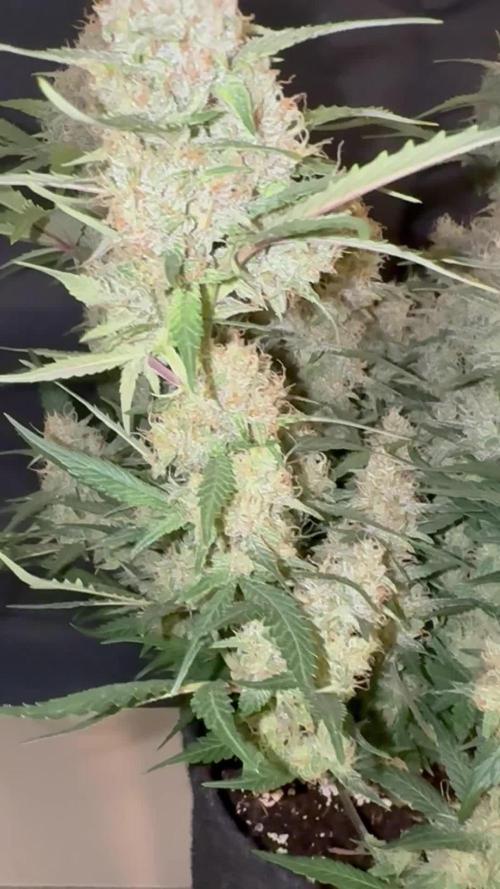
The buds are starting to bulk up noticeably now, and overall development is progressing rapidly. A strong, sweet strawberry(?!) aroma has emerged, becoming more intense with each passing day. The plant looks very healthy overall, with great vigor and no visible issues.
Likes
16
Share


@Mrg7667
Follow
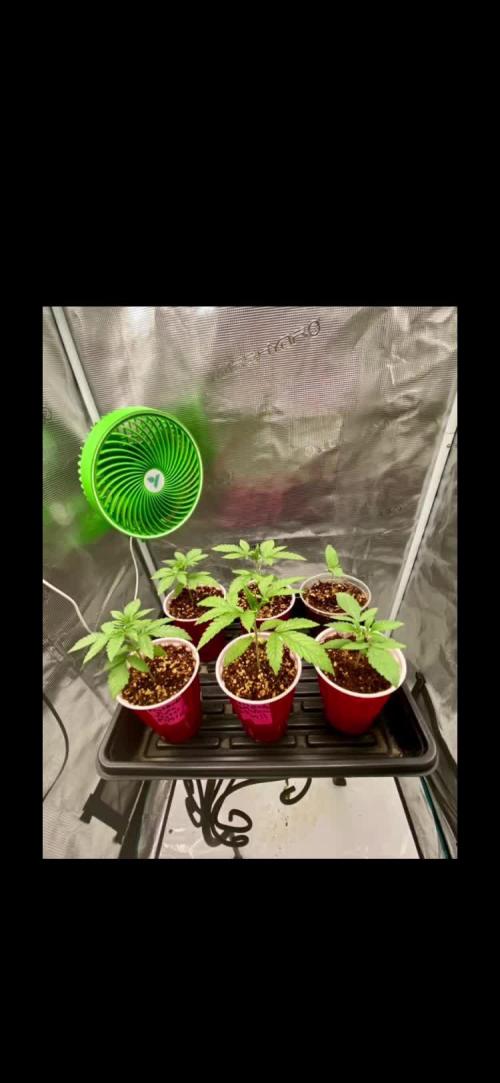
Bomb week!! All pictures/ video was takken on day 9 and i gotta say its looking wild. I Didnt expect them both to start growing so crazy. Lst really seemed to help some of these just explode with tops.
I feel like compared to my first indoor run these are like a week ahead, as far flowering goes. Wich is also interesting because Double Ds can go for 9-10 weeks! Cant wait to see how these babies do there thang
One problem actually i found a little bit of aphids nothing crazy but im going to continue using the growsafe insecticide/fungicide/pesticides.


Likes
18
Share


@xtchill
Follow
Hey guys.
Managed to get some pics.
Going to check the trichomes later to see where they are at.
Cant explain the smell its giving off

Likes
17
Share


@Naujas
Follow
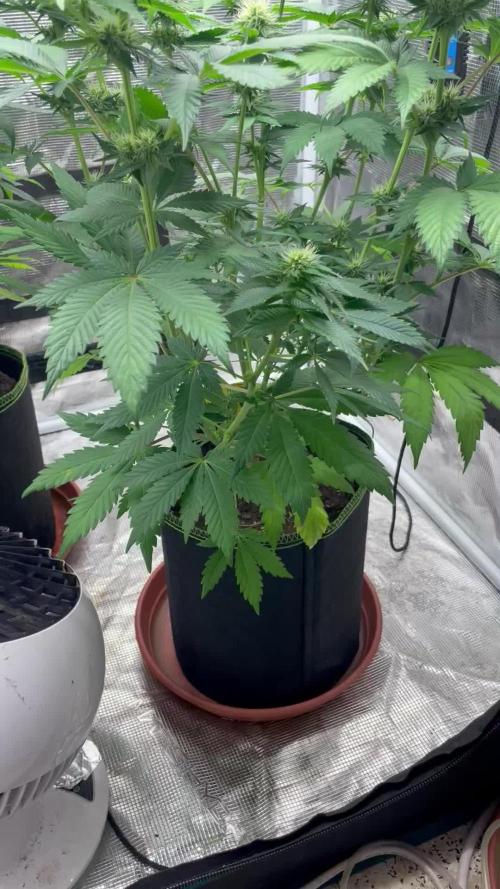
wow wow !!!! 404 gr ! from the suitcase!!!!!!!258 gr of wet dried buds!!!!!!! I am impressed with the result, and I don't really believe that I will ever be able to improve it :) It was a truly amazing journey with FastBuds Gorilla cookies auto, my house is filled with a wonderful sweet smell, the buds look really full and very very shiny :) I also collected a lot of sugar leaves from which I will make bubble hash:) the girl coped with high temperatures and high humidity throughout her growth, which is why I was afraid of rot, but everything went well!!!! She is amazing. smoke review and dry weight will be up very soon, good luck to everyone :)!!!


Likes
5
Share

@4hundert20
Follow
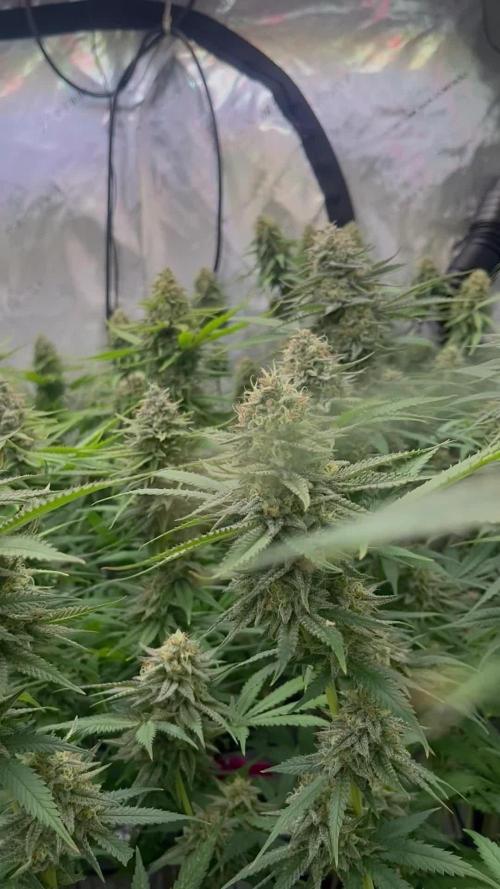
8. Woche, Endspurt.
Die Buds schwellen an, Düngung fahre ich allmählich runter. Bald dann nur noch Wasser

Likes
36
Share


@TheGreenLeopard
Follow
sound week on the soil. this grow is really lovely. starting to see some promising bud sites. I think i might trim too much but i want the buds to get the light.


Likes
5
Share


@CanadianFillmore
Follow
Start of week 8. Week 7 went well with this girl. Her nutrient consumption went down as she did not need extra feeding during the week. The buds on this girl are incredibly sticky, more sticky then the OG Kush, but she doesn't have much smell, just a little wiff of fruit. She'll be flushed in 5-7 days, depending on the trichomes. This appears to be another great grow with this strain, but will be the last I grow of her for a while.

Likes
3
Share


@Dairon
Follow
Cada vez me gusta más esta variedad, fácil de cultivar, muy ramificadas y acepta las podas muy bien, haciendo poda de bajos y poda apical, he conseguido, en algunas plantas no en todas, igualar las ramas en altura con facilidad.
Ya están apareciendo los primeros pistilos en 2 de las plantas, aspecto muy a tener en cuenta a la hora de seleccionar una madre, como ya comente cloné las 9 plantas (2 clones x planta) y me quedaré con una madre si me termina convenciendo su calidad.


Likes
1
Share

@JNSGenetics
Follow
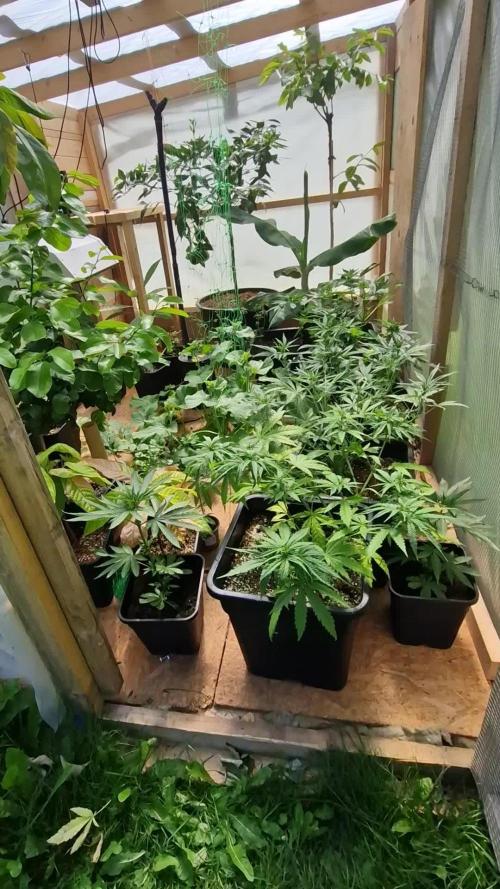
Day 8 into flower and day 43 from germination.
I dont know the night temperatures inside the tent.
I suspect it might be cold and it is very humid in there even with 2 fans blowing. 25 degrees celcius at the canopy with around 65 - 70% humidity during the day. At night i think 13 - 16 degrees celcius.
I need to lower the humidity now.
I tied all main branches down to the sides.

Likes
1
Share

@Pot_Portraits
Follow
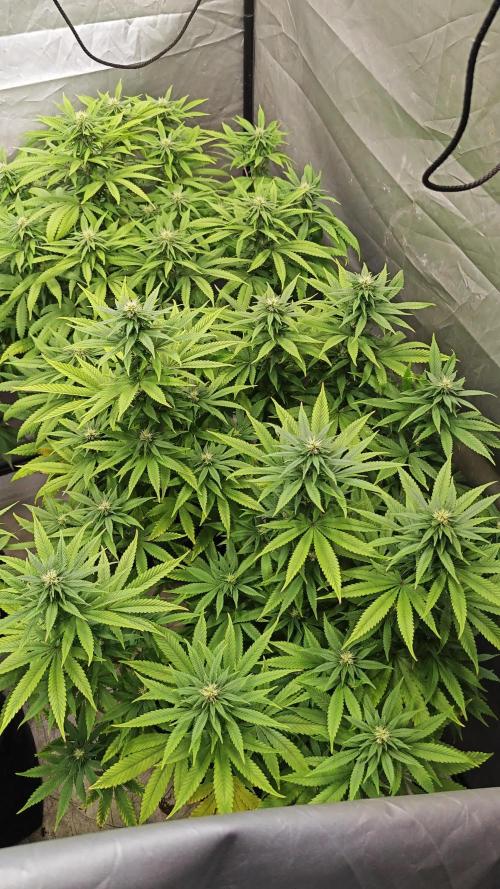
Royal moby is doing amazing, heat wave is hitting but she is not impressed, it's kind of hard to keep the soil moisture right with 33c in the tent but we are going on !