


Likes
Comments
Share


Likes
12
Share


@KenZo0
Follow
It was a great and enjoyable experience.
Although my light was low, I got a good result.
My light was 120 watts.
In the first week of growth, my plant was uprooted
It stopped growing for a week and then
Powerful continued to grow

Likes
5
Share


@LeedsCityFarmz
Follow
Nice strain to grow overall especially for the terps it produced, yield was more on the low side as expected from one for these "hype" strains or whatever you want to call them.
Likes
100
Share


@SensimillaP
Follow
The journey for this lady is over! She is huge and gorgeous, the buds seem rocks just by touching them!

Likes
22
Share


@Kloud9gardenz
Follow
Doubled the nutes this week, ive never followed the feeding chart because the regular feedings were enough. Since I'm outside and i figured I'd give it more to work with since I am trying to pull an obscene number with the size pot I'm working with and veg time. The nodes on the side branches are sort of reluctant to stretch out, same are big enough to train many aren't but nothing that should concern me. Had some crazy high winds today, I called that free training.

Likes
29
Share


@MadeInGermany
Follow
Info:
Unfortunately, I had to find out that my account is used for fake pages in social media.
I am only active here on growdiaries.
I am not on facebook instagram twitter etc All accounts except this one are fake.
Flowering day 58
since time change
to 12/12 h.
Hey guys :-) .
The lady is getting closer and closer to her end :-).
The next 7-14 days will be harvested :-).
The trichomes are now checked every day 👍.
This week she got a watering with GBL Clean Fruits (see nutrient table above) so much was poured that about 10% drain came out again.
Now she is allowed to use up her last available nutrients until the harvest.
Catching your leaves are very nice in autumn :-).
Have fun with the update 👍.
Stay healthy 🙏🏻
You can buy this Nutrients at :
https://greenbuzzliquids.com/en/shop/
With the discount code: Made_in_Germany you get a discount of 15% on all products from an order value of 100 euros.
You can buy this Strain at :
www.Zamnesia.com
Type:
Runtz
☝️🏼
Genetics:
Zkittlez x Gelato
👍
Vega lamp: 2 x Todogrow Led
Quantum Board 100 W
💡
Bloom Lamp : 2 x Todogrow Led
Cxb 3590 COB 3500 K 205 W
Soil :
Canna Coco Professional +
☝️🏼
Nutrients :
Green Buzz Liquids :
Organic Grow Liquid
Organic Bloom Liquid
Organic more PK
More Roots
Fast Buds
Humic Acid Plus
Growzyme Big Fruits
Clean Fruits
Cal / Mag
Organic Ph - Pulver
☝️🏼🌱
Water: Osmosis water mixed with normal water (24 hours stale that the chlorine evaporates) to 0.2 EC. Add Cal / Mag to 0.4 Ec Ph with Organic Ph - to 5.8 - 6.4

Likes
11
Share

@NidoR420
Follow
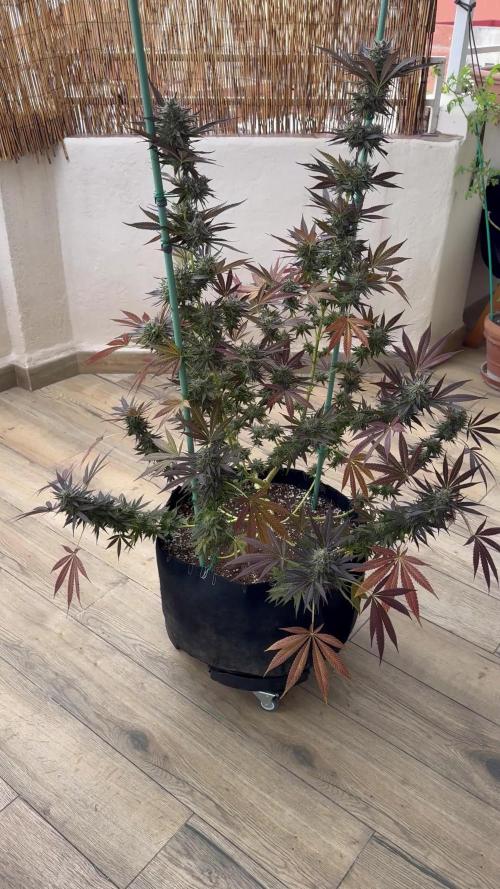
I harvested Dorel and will soon do #4 as well. I had to as I don’t have the space to dry all 3 at once. Tbh Dorel didn’t look so good today, although I couldn’t see much amber trichromes she looks a bit overdone. Will probably do #4 this weekend, and Ozz the 2 following weeks
Harvested both, now it’s just Ozz! Plenty of pictures and videos for this week :)) she’s nearly there, I will probably start the harvest next week. Had a few bud rots on #4 and Dorel, but overall they’re fine. Ozz looks beautiful on the other hand, she hadn’t any more bud rots for weeks


Likes
51
Share


@kansasscott725
Follow
Well, this is it. Wish I had bigger buds. Everything was moving in the right direction until the end. I switched the Mars Hydro 3000 out with two HLG 300s, so I could maintain the PAR just under 1000, but perhaps it wasn't enough.
G13 is definitely not ready, and could benefit for a couple more weeks, but like a store liquidation, THEY ALL MUST GO NOW
All in all, Learned a lot. No seeds, reveg, or signs of mold, so hopefully I'll make up for quantity with quality.
Only Dry Time will Tell...


Likes
2
Share


@Mitenslite
Follow
Esta primera semana se germinó y se plantó la semilla en el sustrato y el despunte de la planta. Semana tranquila, no hubo percances y germinó bien. La germinacion duró 3 días y al día siguiente de haberla puesto en sustrato salió a la superficie.

Likes
50
Share


@DogDoctorOfficial
Follow
Week 5: Transplant Time & Root Power!
Oh man, this was one of those weeks! We transplanted all five phenos into bigger pots, and let me tell you, they’re thriving! (Check out the complete video episode for all the details 😉).
The girls are looking amazing, all pretty much the same size for now, so I don’t have any favorites yet—but let’s see what the future holds!
For photos, I used both my Nikon P900 and Sony A6000, with a bunch of lenses and filters to preserve the true colors—these LEDs are powerful!
Current Setup & Conditions
This week, they’re still chilling with their sisters in the big tent, but in about a week, they’ll be moving into the TrolMaster ecosystem for even better environmental control.
Watering: pH 6.06, EC 0.96
Temperature: A bit cold , but it is what it is. We’re facing some freezing outdoor temps (as shown last week in the frosty veggie garden pics!), yet these Runtz are holding strong like true champions. 💪❄️
Nutrition: Still on the Aptus Clean Program, with:
Regulator
System Clean
RO Water Conditioner
All-in-One Liquid
Root Development: The Real MVP!
Let’s go deep on roots! The mycorrhizae in the Pro-Mix soil has been working its magic, and I’m still boosting them further with a touch of Aptus Holland Mycor Mix. The root development on this transplant was insane—super white, healthy, and ready to explode with growth.
What Are Mycorrhizae?
The word “mycorrhiza” comes from Greek:
• Myco- meaning fungus
• Rhiza- meaning root
Mycorrhizae are a type of beneficial fungi that form a symbiotic (mutually beneficial) relationship with plant roots. These fungi extend far beyond the root zone, creating an underground network that helps plants absorb water, nutrients, and improve overall health.
This is not a single species but rather a whole category of fungi, mainly divided into:
1. Ectomycorrhizae – Live on the outside of plant roots, forming a sheath around them. Common in trees like pines and oaks.
2. Endomycorrhizae (Arbuscular Mycorrhizae, AMF) – The most beneficial for most crops and cannabis. These penetrate root cells, forming structures inside the roots that exchange nutrients.
Where Are Mycorrhizae Found in Nature?
Mycorrhizae naturally occur in forests, grasslands, and undisturbed soils worldwide. They play a crucial role in maintaining ecosystem balance by helping plants access nutrients from the soil.
In a natural environment, plants are constantly forming relationships with these fungi. However, in modern agriculture, excessive tilling, chemical fertilizers, and fungicides have reduced their populations, making supplementation necessary in many cases.
How Do Mycorrhizae Work?
Once mycorrhizae colonize a plant’s roots, they start forming an underground fungal network called the mycelium. This network extends the plant’s reach into the soil, acting as a second root system.
Benefits of Mycorrhizae:
✅ Enhanced Nutrient Uptake – Mycorrhizae help plants absorb phosphorus, nitrogen, and micronutrients that would otherwise be unavailable.
✅ Improved Water Absorption – The fungal network can reach deeper into the soil than roots alone, helping plants survive drought conditions.
✅ Stronger, Healthier Roots – They promote thicker, more robust root systems, reducing transplant shock.
✅ Better Soil Structure – They produce glomalin, a protein that improves soil aggregation and helps retain moisture.
✅ Natural Pest & Disease Resistance – Healthy plants with strong mycorrhizal relationships tend to be more resistant to soil-borne pathogens.
How Mycorrhizae Help in Cannabis & Gardening
In controlled growing environments, using mycorrhizae is a game-changer. Since cannabis relies heavily on phosphorus, the enhanced nutrient uptake provided by mycorrhizae is especially beneficial.
Best ways to apply mycorrhizae:
• At transplant – Dust roots with mycorrhizae powder or mix into soil.
• As a soil drench – Some liquid formulations allow fungi to colonize even after planting.
• Mix into your growing medium – Using pre-amended soil like Pro-Mix HP Mycorrhizae ensures roots have early access.
Pro Tip: Mycorrhizae need living roots to survive! Avoid using synthetic fungicides or excessive chemical fertilizers, as they can kill the fungi.
Think of mycorrhizae as a natural root booster. They’ve been around for hundreds of millions of years, helping plants thrive in all conditions. By using them in cultivation, you’re mimicking nature, ensuring your plants grow stronger, healthier, and more resilient.
When used correctly, mycorrhizae can increase yields, improve plant health, and reduce the need for synthetic inputs—making them a must-have for any serious grower!
Can’t wait to see how they’ll look in the next transplant!
I made a few changes to my improvised photo studio, including a pink background for now—because why not? Let’s keep things fun and full of color! 🌸📸
Massive gratitude to all our sponsors and of course, a special shoutout to Zamnesia, Plagron, and Grow Diaries for making this amazing cup happen. 🙌
And to the community—followers, supporters, lovers, haters—I love you all! ❤️ Let’s keep pushing forward, learning, and making this grow legendary!
Stay Tuned for More!
Next week, i may be moving them into bigger pots and getting them into their final environment. You won’t want to miss this next stage!
See you all next week—stay tuned, keep growing, good luck to all and let’s make history together! 🚀🌱
Genetics - Runtz https://www.zamnesia.com/6000-zamnesia-seeds-runtz-feminized.html
Nutrients - Plagron https://plagron.com/en/hobby
- Aptus Holland https://aptus-holland.com/
Controls - Trol MAster https://www.trolmaster.eu/
LED - https://www.futureofgrow.com/en
LED - https://www.thinkgrowled.com
Soil - https://www.promixgardening.com/en
Germination - Cannakan https://cannakan.com/?srsltid=AfmBOopXr-inLXajXu3QFgKXCXXos4F1oEvScjMKIB5MR5dk8-GJ-F49
DOGDOCTOR 15% off
Smoking Papers - https://ziggioriginal.com/
Terpene saver - https://grovebags.com/
As always thank you all for stopping by, for the love and for it all , this journey of mine wold just not be the same without you guys, the love and support is very much appreciloved and i fell honored with you all in my life
With true love comes happiness Always believe in your self and always do things expecting nothing and with an open heart , be a giver and the universe will give back to you in ways you could not even imagine so
As always, this is shared for educational purposes, aiming to spread understanding and appreciation for this plant. The journey with nature is one of discovery, creativity, and respect. Let’s celebrate it responsibly and continue to learn and grow together!
Growers Love To you All 💚
#EternityGrowCup #RuntzHunt #GrowersLove #CannabisCommunity #AptusHolland #ProMixSoil #TrolMaster #Zamnesia #Plagron #ZiggiPapers #Grovebags

Likes
7
Share


@Cultivatorcarlos
Follow
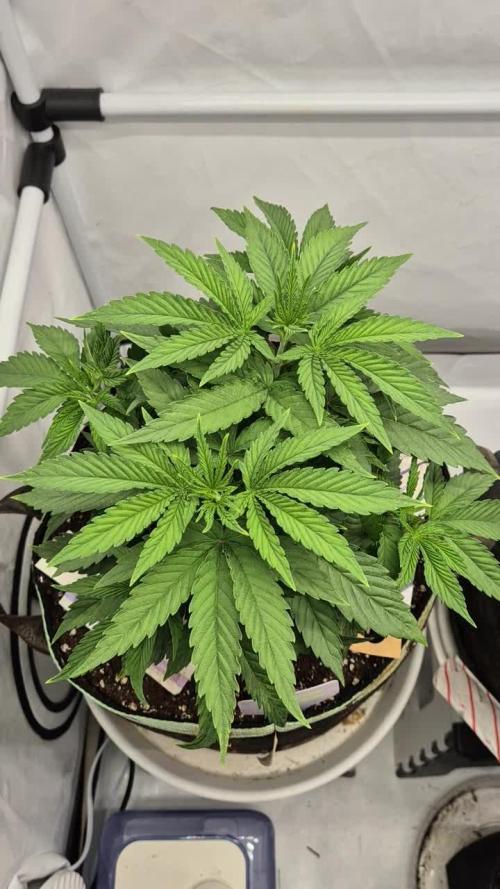
everything in the second week of flower went well. she really stretched and the buds quickly started getting fat. also every watering i would notice a very strong odor of weed.
december 22nd 2021: gaver her last half of gallon used in last feeding. also nothing was tested. ph tested at 6.6 last feeding and it usually comes out a little higher after a few days.
january 1st 2022 i noticed the first trichomes.



Likes
48
Share

@DogDoctorOfficial
Follow
Gather 'round, because it's time for the grand finale of my Tropicana Cookies Auto journey. Week 10 has arrived, and boy, oh boy, this gal has been an absolute delight from start to finish. Let's dive into the final chapter of this epic adventure!
I harvested my lovely lady at day 69 from seed, and let me tell you, it was a celebration of beauty and abundance. Picture this: a majestic all-girl harvest, suspended upside down for a glorious two-week drying extravaganza. At a temperature of 60 degrees Fahrenheit (15 degrees Celsius) and a relative humidity of 60%, the drying process unfolded like a symphony of perfection.
Now, let's talk trichomes, shall we? Oh, those glorious little resin factories! This Tropicana Cookies Auto has blown my mind with the sheer amount of trichomes it boasts. It's like a frosty wonderland, sparkling like a million tiny diamonds. I've never seen trichomes in such numbers, shapes, and colors before. It's a trichome party, and everyone's invited!
But let's not forget the benefits of the drying process. By allowing our precious buds to dry slowly and evenly, we're enhancing their flavors, aromas, and overall quality. It's like fine wine, my friends, getting better with age. Patience is the name of the game, and trust me, the reward is worth every second of anticipation.
Now, let me take a moment to give a big shout-out to @Fast_Buds. They've truly outdone themselves with this Tropicana Cookies Auto. It's like they sprinkled magical trichome dust all over these seeds, ensuring a frosty experience like no other. They've got the genetics game on lock!
So, my fellow cannabis enthusiasts, as we bid farewell to this remarkable journey, let's cherish the memories, the lessons learned, and the joy shared. From seed to harvest, this Tropicana Cookies Auto has captured our hearts and ignited our passion for the green wonders of the world.
May your drying process be smooth, your trichomes plentiful, and your buds burst with flavor. Thank you, Tropicana Cookies Auto, for gracing my garden with your extraordinary presence. You've left an indelible mark in my cannabis-growing adventures.
Keep cultivating with love, spreading the joy of this amazing and holy plant we all love so much, and remember, my friends, trichomes are like the glitter of the cannabis world—bright, beautiful, and absolutely fabulous!
As always thank you all for stopping by and for supporting me on this journey, i am super passion about growing and fell blessed to have you all with me on this new journey <3 <3 <3
Genetics - Fast Buds Tropicana Cookies Auto
Ligth - LUMATEK ZEUS 465 COMPACT PRO
Food - APTUS HOLLAND
Tent - MARS HYDRO
All info and full product details can be find in can find @
https://2fast4buds.com/
https://aptus-holland.com/
https://autopot.co.uk/
https://lumatek-lighting.com/
<3 <3 <3 Growers love to you all <3 <3 <3
Tropicana Cookies Auto is the perfect variety for growers of all levels, especially beginners as this strain performs very well outdoors and indoors, and can produce up to 500gr/m2 in 56-63 days without needing extra maintenance. Reaching up to 110cm, this strain grows fairly tall with medium-sized branching, showing its mixed heritage. Definitely the right choice for those with a high tolerance looking to get their hands on the strongest autoflowers out there. Thanks to the 27% THC, you can expect an extremely powerful and long-lasting high that’ll boost your mood and give you that extra push you need to start your days on the right foot. This variety offers the whole range of citrusy and woody flavors with a strong candy-sweet background that will keep you coming back for more and more.
Bud description
Tropicana Cookies Auto produces gorgeous dark purple flowers, so expect really dark buds with gorgeous hues of pink, purple and blue, and thick dark-orange hairs that get completely covered in resin by harvest time, giving them an almost shiny-white appearance.
This variety develops a typical Indica-like structure and very few sugar leaves that will make your trimming sessions a breeze. But make sure to store your trimmings as the gorgeous flowers reek of a mouth-watering blend of lemon peels, orange juice, and sandalwood that gives it almost a citrus candy-like flavor that makes for the most aromatic hash and extractions.Smoke report
Thanks to the 27% THC, Tropicana Cookies Auto’s effect starts with an energizing head rush that gets your mind up and running while leaving you in a nice calm state. As the Indica-dominant side kicks in, the powerful cerebral effect gradually moves downwards and hits your whole body with a deep relaxation that leaves you with a joyful stoney sensation that alleviates chronic pain while leaving you in an overall happy and positive state of mind.
It’s the perfect daytime and nighttime strain as it can boost your mood and enhance a night out with friends but can also quiet your mind as you get ready for a good night of sleep. No matter the scenario, expect a powerful high that lasts for hours on end.Plant appearance
Tropicana Cookies Auto reaches up to 110cm and develops a tall main cola with shorter side branches, typical of hybrid strains. You can expect a stocky yet tall main cola with medium-sized side branches and thin fan leaves that fade into a yellowish hue with a beautiful dark purple tint. Thanks to the excellent selection, this variety develops a short internodal spacing that makes the medium-sized flowers look like they’re growing stacked on top of each other. It’s the ideal choice for growers who want to get big yields without having to deal with huge plants, as this monster yielder can produce up to 150g per plant while growing relatively short.
Grow tips
This variety grows super dense buds so make sure to space out the branches by tying them down, this way you improve airflow which helps prevent mold and other pests. Tropicana Cookies auto reek of a delicious sweet and sour smell so make sure to flush thoroughly to enhance the aromas even more. This terpene heavyweight finishes with lots of resinous sugar leaves that make for fantastic hash and extractions so remember to have your trim bucket ready!Flavor
Tropicana Cookies Auto boasts remarkably sweet flavors that resemble a blend of lemon peels and fresh orange juice, with subtle floral undertones that make it the perfect choice for extractors looking for unique terpene profiles.
Expect an overall citrusy zest that’ll coat your whole mouth and leave a delicious tropical candy-like flavor aftertaste. The sweet and sour flavors get balanced out with a herbal background that gets stronger as you exhale and gradually opens up, bringing out the whole range of woody, floral, and spicy flavors, making it the perfect choice for the most flavorful extracts
Likes
13
Share


@goeser
Follow
Doing a bit of defoliation thats it
Giving all the plants more clear water because i overfeed them. Next time definitely with scrog . Good genetics love it

Likes
43
Share


@MrGrow
Follow
10.06.2023
RACCOLTO_RED HOT COOKIES
Sweet Seeds
🌱 142 giorni dal seme
🌼 70 giorni fioritura
⚖️ 2895 grammi non secchi totale di 4 piante
Tutto è andato per il meglio in questa corsa. Le 4 piante di Red hot cookies si sono dimostrate veramente forti.
Colori stupendi a fine fioritura, non rossi come speravo, profumo di terra, dolcezza e aspro mescolati con note di gas, un profilo terpenico molto interessante. Lo scrog effettuato da me, non credo abbia dato il massimo potenziale di queste piante, con il tempo migliorerò anche questo aspetto, ma spero di stare su 1 hg a pianta di media. Aggiornamento a breve con peso a secco, foto dei fiori ripuliti e rapporto sulla potenza di questa varietà.
Ringrazio tutti quelli che sono passati a vedere il mio diario, a tutti i like i commenti e ai consigli.. un grande love a tutta la community di growdiaries 💚🙏

Likes
12
Share


Likes
30
Share


@MrGoonai
Follow
11/21/24 Short facts:
- Watered: 1 x 0.75L, 1 x 0.75L, 1 x 1.5L, 1 x 1.75L — 4.75L
- VPD @ 1.4 — raised by 0.1
- Light @ 80% ~700 to 1050 PPFD
- BioBizz Bio-Bloom increased to 3ml/L
- BioBizz Bio-Grow increased to 3ml/L
- Getting colder! At night between 18 to 19°C
---------------------------------------------------------------------------------
There isn’t much to report this week. She’s doing fine, buds are getting bigger and thicker!
Since the weather is getting quite cold for the region - and we’ve already had a bit of snow - the cellar where my grow tent is set up is cooling down, with nighttime temperatures dropping to 18–19°C. Therefore, I’ve ordered some heat mats, which should arrive tomorrow. I’m aiming to stabilize the root temperature at around 22°C consistently, so the nights won’t be too cold anymore. I’ll go into more detail in next week’s update.


Processing
Likes
12
Share


@Tazard
Follow
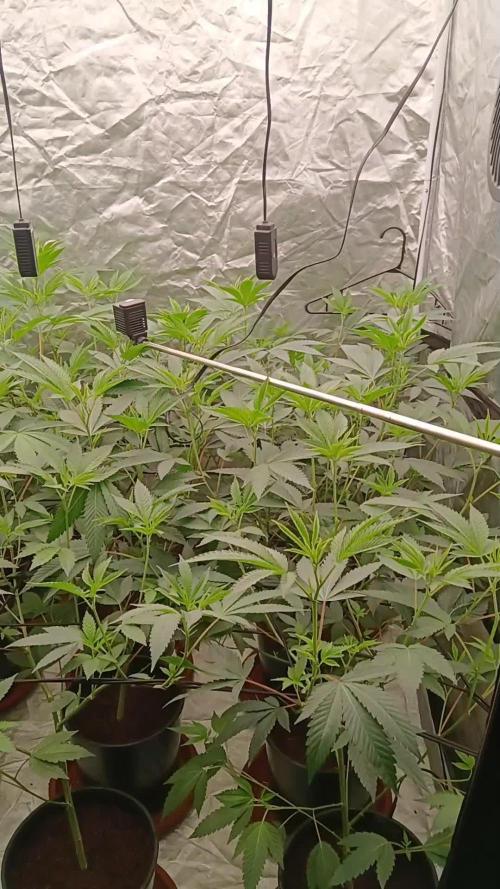
These are clones that I managed to take from my summer garden that became a disaster due to a heat wave that we had breaking 100 year records. I expect everything to be 48” in height at maturity.