


Likes
Comments
Share


@NAS_Garden
Follow
Week 6 Report
The plants are thriving with strong growth and great color.
Day 39: The last feed of the vegetative phase—1L of water per plant. At this stage, they’ve absorbed everything really well, and this marks the final watering before transitioning to the flowering phase.
Day 40: Defoliation day! I decided to give the 3 FullGas plants a proper trim, removing excess foliage to improve airflow and light penetration. These are the only plants that haven’t been topped so far, and they're responding well to this treatment.
Day 41: Final day of the vegetative phase. All the plants have grown beautifully and are ready for the next chapter. They look healthy, strong, and vigorous.
The plants are growing at a good pace, with no major issues. The Athena nutrients continue to work wonders, really boosting their health and growth. Some of the leaves are showing signs of thrips, but it’s nothing to worry about. Overall, everything looks great.


Processing
Likes
229
Share


@DadasGrow
Follow
Well I got my Scrog screen installed on Saturday and I remembered to Ph my Mix this week. The girls look healthy, and from Monday to Today they have shown Growth!! YAY I'm so excited. I know Im so far away.

Likes
15
Share


@ThickFreakness
Follow
I bumped light up to 80% (PPFD 700-400 on edges). Observation weekend
Noticed a bit taco / clawing raised light to 22”.
Coconut oil infusion experiment
Mini crock pot / warm / 2C coconut oil / 24g of Blueberry cupcake / 6hrs stirring once an hour / strained with cheese cloth

Likes
5
Share


@Mr_nugs_lover_David
Follow
Super sweet aroma 😋🍭 very nice surprise, I was expecting something more citric, beautiful cbd strain, can't wait to try those buds. She's producing quality resin, very sticky, could be a thc strain without a problem if you would tell me she is thc rich I would believe you, very recomended if you like sweet flavors. 💚✌️

Likes
10
Share


@Grey_Wolf
Follow
This Mexican Airlines Plant is developing nicely after the initial stretch , I gave her 1/3rd of a cup of Mr B's Green Trees Bloom Mix plus a qtr tspoon of Great White.
It is fairly easy to apply you simply sprinkle the Bloom mix and Great white across the soil around the base of the plant and water it in well.
Thankyou for checking out my diary once again Happy New Year From grey Wolf

Likes
2
Share

@IslandTerps
Follow
Strain: Fast Buds – Mendo Guava Auto
Grow Type: Indoor
Pot Size: 3 Gallon Pot
Medium: Peat Moss & Perlite
Nutrient Line: Athena
Week 5 Update
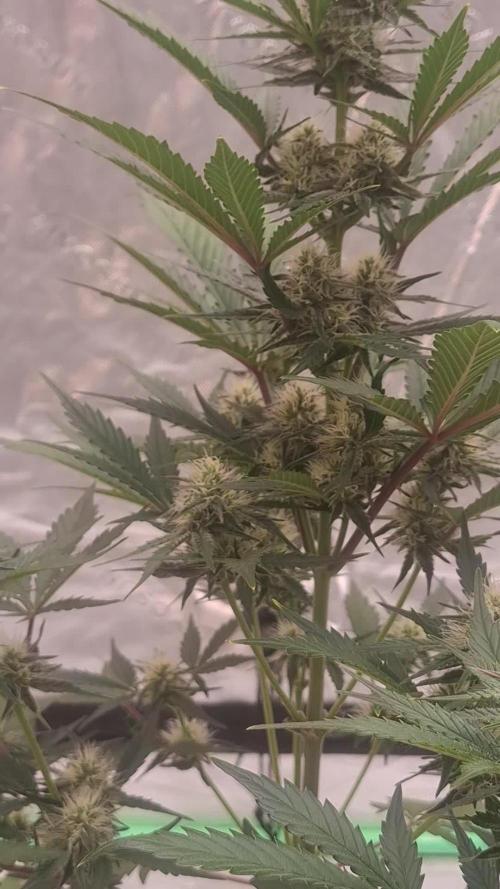
This plant is coming along really nicely and the buds are definitely starting to swell . There's been some noticeable growth in the flowers this week, and she's looking healthy from top to bottom.
No issues or deficiencies to report, so I'll be keeping things consistent with the regular feeding schedule and letting her continue doing her thing. So far, I'm liking what I'm seeing 😏.
Feeding
Volume: 1.5L
Athena Bloom: 45ml/gal
Athena Core: 25ml/gal
pH: 6.2
PPM: 800–900 ppm
Frequency: As needed
Indoor Climate Conditions (Flowering)
🌡️ Temperature: 20–25°C
💧 Humidity: 45–55%
📈 VPD: 1.2–1.4 kPa
ISLANDT – 15% off Fast Buds strains 🌿🔥


Likes
6
Share


@Kirsten
Follow
Orion F1 Organic dry amendments.
She has grown well for the first time, after I topped her, she has taken to it very well. I topped the plant on the 14th. 😊
The leaves are looking a luscious, vibrant green. Overall, I'm very pleased with this recent progress.
14.6.25:
I top dressed the plant today with the following amendments;
☆ 1 Tbs Ecothrive Life Cycle
☆ 1 Tbs Ecothrive Charge
☆ 1 Tbs Ground Cinnamon
☆ 1 Tbs Diatomaceous Earth
☆ 1.5 Cups Worm Castings.
This will hopefully tide me over until the end of the month, when I will top dress again.
I have just been watering with plain, dechlorinated water, PH'd to between 6.1-6.5.
☆ Xpert Nutrients PH down, up to 1ml.
☆ Ecothrive Neutralise 1 drop per litre from the 1ml pipette, which is attached.
This is my dechlorinator.
I'm watering approximately 2ltrs twice a week or as necessary. She has started to drink more.
Thank you for checking out my diary and hanging out 😊💚✌️🍃🤞

Likes
21
Share


@BigDripFelgo
Follow
Big beautiful frosty buds, the smell is kicking up and I’m starting to believe these carbon filters are not so effective. Trichomes are mostly cloudy but no amber. One of the Sour Diesel plant is my favorite bud structure and scent from the whole tent. The tall OG Kush in the center of the tent got some photobleaching which I took care of with dimming the light intensity! Have some Super Buff Cherry cuttings in the CloneKing rooting while these finish up to move into the tent already!

Likes
27
Share


@Smokepurple137
Follow
All are going strong, zkittles OG auto is nearly 30cm bigger than the rest and has started showing bud sites, the rest are not far behind at all. I think they will be into flowering stage at the end of next week and by then hopefully 30-40cm taller. Do si dos is very different, looks short and stout so will be doing some LST on her. Seems to be happy with the nutrients and strengthening nicely. Added another 600w light on 11/12/20 so 3 600w lights in now.

Likes
4
Share


@SakuraAsa
Follow
10/14
#1 Day156 23Week Outdoor(Guerilla) Harvest&Drying
#3 Curing Day31 @boveda62%
#4 Curing Day34 @boveda62%
#Clone☓1 Curing Day26 @boveda62%
#Clone☓3 Curing Day14 @boveda62%
#Clone☓5 12/12
#Clone☓4 12/12 short-day Day37
#Clone☓3 short-day Day4
Likes
13
Share


@Paultemp
Follow
Hi all!👊😊
Week 4 of veg
he love LST
I got 2 new lights Aelius led 300gh
😍

Processing
Likes
154
Share


@CBD_Sweden
Follow
@FAST_BUDS,
Hi all the happy people here in GrowDiaries.
This is my second cultivation ever and it will be fun to try a bigger space than my closet grow.
First, I'm just going to say I'm done with the construction of my new growroom.
I put some pictures on the construction here in week one.
The room is 2.14 meters by 1.7 meters and has a ceiling height of 2 meters.
It provides a floor area of 3.6 square meters.
I use a 54 Watt Lightwawe T5 for germination and 2 Pcs 400 Watt HPS lamps.
I have a channel fan that replaces the room air about 40 times an hour to get a comfortable environment in the room, the air enters a fresh air intake from the outside.
The air is purified through a carbon filter to then leave the room to the rest of the basement.
Then I use that heat to heat the rest of the basement.
I will use 8 pcs 15 liter Autopots to grow with and a 100 liter water tank that supplies the pots of water and nutrition.
I will grow completely organically in soil and will watercure my buds to get the best possible medicine for me.
But there are no cultivation rooms to be displayed here, so I continue with what is most important.
Today I have put my seeds in my moisture dome and hope the seeds have germinated within a few days.
I am very excited to see how the new growroom will work and how this new secret CBD plant from @FAST_BUDS, will turn out.
..............................................................................................................................................................................................................................................................................................................................................
Update 2017-08-15. Both seeds have germinated and planted in small pots inside the humidity dome.
I'm so glad it worked so well and now it's just hoping they'll start growing and become 2 big healthy girls :)
...............................................................................................................................................................................................................................................................................................................................................
Update 2017-08-16. I have mixed my own soil today. Its 40% sieved peat harrow H2-H4 0-30 mm, 45% sieved peat harrow H4-H6 0-30 mm. 5% sand and 10% of compost soil. And i use 15% of perlite and mix it all together.
....................................................................................................................................................................................................................................................................................................................................................
2017-08-21 The 2 sisters are doing great, Nr2 is a bit after Nr1 . Some new pics.
............................................................................................................................................................................................................................................................................................................................................................................
2017-08-23. Transplanted from humidity dome and the small germinating pots to 15 liter autopots.
................................................................................................................................................................................................................................................................................................................................................................................
2017-08-27. The girls have settled in to there new home of the 15 liters autopot after a little transplant chock. Now the real week 1 starts for me and the girls. 4 new pics.
---------------------------------------------------------------------------------------------------------------------------------------------------------------------------------------------------------
2017-08-29. New movie of the girls. Its no water for 3 days now so the roots develop more and match the plant above the soil. The temp controlled fan is awesome, its easy to set what temp you like to have in the room. Right now its 28 celcius. And humidity is 56%.
--------------------------------------------------------------------------------------------------------------------------------------------------------------------------------------------------------------------------------------------------
2017-08-29.
Hello to you who read my diary, I just want to say that I am pleased that you have chosen to check in with me and in my diary.
I just want to say that I do this for myself and for a steady flow of my medicine.
Everything you read and see in my diary is 100% honest and I will never distort or beautify anything here.
I document my crops so that I can learn from my mistakes and also to look back at those different crops.
I try to update with pictures every day and with text if something special has happened in the garden.
This is my strainhunt for the best medicine and the beginning of my journey with cannabis and the cultivation of it.
-----------------------------------------------------------------------------------------------------------------------------------------------------------------------
2017-08-30. Cleaned the room this morning, just vacuuming and cleaning with chlorine solution. Im testing the fan to control temp and humidity, it works great.
Added some pics with measurements and a movie. Everything is looking great right now.
-----------------------------------------------------------------------------------------------------------------------------------------------------------------------------
2017-08-31. New video of the girls.
-------------------------------------------------------------------------------------------------------------------------------------------------------------------------------
2017-09-01. New pics and videos. Gave each of the girls with 2 ml Alg-A-Mic, 4ml Bio-Grow, 4ml Bio-Heaven and 10 ml Formulex mixed in 2 liters of water.
I hope they like it :)
-------------------------------------------------------------------------------------------------------------------------------------------------------------------------------------------------------------------------------------------
2017-09-02. New pics and the girls liked the water and nutrients yesterday.
-----------------------------------------------------------------------------------------
2017-09-03. Video of the girls this morning.
Kl 16.00. Did some defoliation on the girls. Videos added.
KL. 23.00. New video.
Likes
3
Share


@Ieiogrow94
Follow
Eccoci qui...
Tutto va per il meglio, questa settimana si inizia a vedere la resina e ora si inizieranno a formare le cime, per questo aggiungo Sugar Shot di @xpertnutrients vedremo l'evoluzione settimana prossima.
Questa piccola ha un numero di cime veramente clamoroso, sono soddisfatto di come è cresciuta ora però mi aspetto molto da lei....
Grazie a tutti per il supporto🔥🌲❤️

Likes
25
Share


@Young_agronomist
Follow
24.11.23- 116 день (56 дней 12/12)
Рост почек медленно продолжается , а листва теряет цвет . Размер почек маленький, но запах потрясающий, пахнет сладкими ягодами и лимоном !
Завтра начинай 10 дней рипена

Likes
9
Share


@KarlysCannabis
Follow
She got new boots this week!! Found an 8gal pot at the grow store, it was that or 13gal. She should take off nicely with lots of room to grow!
@Grove Bags, @Fishshit, @SoHumSoils, @KindwayFarms @KindwayConsultationsLLC @nutetools, @mjarsenal, @ElevatingTravel, @IntegraProducts @AyaofAfrica @WaxyBrownsFlowerPowerHour-Interactive @BowlBuddy, @cannakamp, @HoneycombHydroLLC @ChillZHQ @TheCannaCoaches, @VibesByDesignLLC @CryptoCannabisClub, @REALMetaMinds @SeattleHempfest @Buttheadz @SwadeSoul @abagaletv, @abagoldcoin, @Idonfts, @ASRG
#wegrowstrongertogether #mocannacup #LFG #letsfngrow #jawwbreaker #danmccann #jawwbreakerbreath #jackterror #legaladultuse #getmoftomyourgrow #honeycombhydrollc #heropackz #nft #crypto #blockchain #metaverse #seedtheworld #greenfarmy #drugsdontmakeseeds #NFSOT


Likes
16
Share


@Right2Flower
Follow
Day 100 - All ladies looking good at this point in the grow. Noemi's pistil hairs have mostly all curled up and turned amber in color. Also her trichomes are starting to appear amber in color. Will flush her pot with about 5 gallons of pH'd water soon. Natalia's pistils are about half curled up/amber and half white. Her buds still appear to be packing on trichomes and weight.

Likes
8
Share


@SmallCannabisDojo
Follow
Day 49: She is back on
Day 51: She keeps pushing strong. Ive used some LST to even out her height. Also defolaited a bit every day and removed some lower bud shoots.
Summary of how I got her back:
The problem I have identified was slight overwatering and too high temperatures. Thats why her leafs hang down in veg, and are now cupping a bit in flower. Unfortunately I cant get the temperatures down much. When possible, im decreasing the lights during the day, and increase them at night while pulling cold air. Current night temperatures are around 15C, but I only reach arround 23C with 60% rh in the tent. This should be fine, but the leaf temperatures are probably a bit higher. I also hang the light as low as possible right now since that also helps with the temps. I keep the lights at about 45%, which results at 20h at a dli at roughly 38. A bit of an increase in the night times will hopefully push this to 45 overall.
Also fed her today with 1 silica | 1,5 calmag | 2 grow | 1,5 micro | 1,5 bloom. She took 2,5 l of water.

Likes
1
Share


@Hombahaze
Follow
Germinating 14 seeds and I think I killed some because of very high humidity over 4 days in the dome.
One little guy/girl has double cotyledons on both sites and one has it on one side.
Start 07.03.2023


