Likes
Comments
Share


@Ultraviolet
Follow
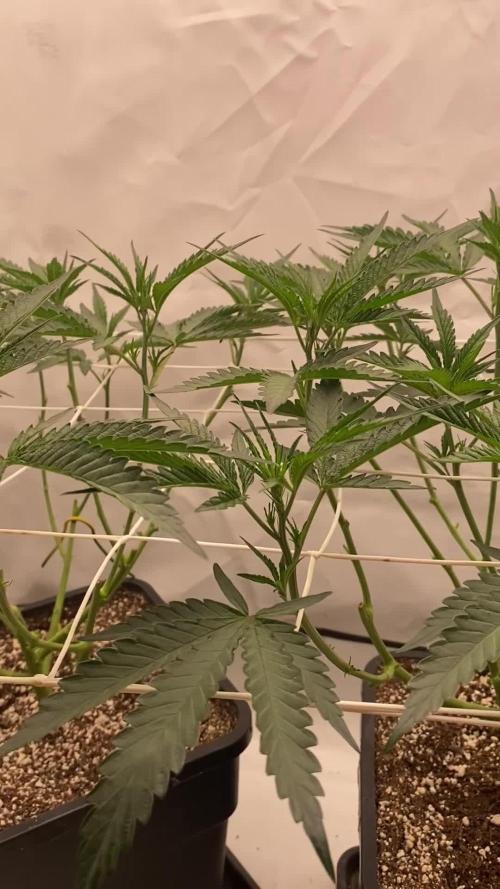
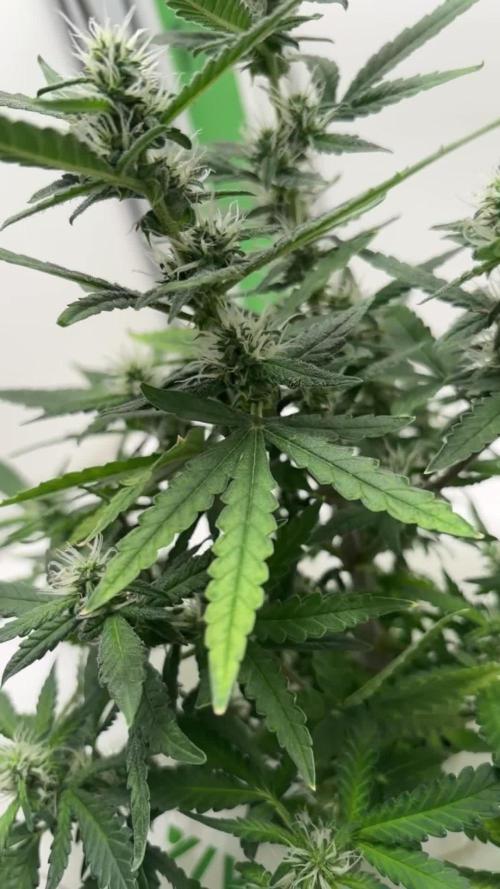
Still got some slight burning of leaf tips more so on the right side of the tent. Otherwise, growth is good.
Stratiolaelaps scimitus are now abundant in the soil. Pretty neat.
GIBBERELLIN:
Note: As gibberellic acid is not soluble in water you need to dissolve in alcohol first,
Mixed 0.75g Gibberellic Acid 90% with 50ml of 99% Isoprponal alcohol , (Any alcohol will do but a higher % works better) also warmer alcohol helps dissolve the gibberellin.
Mixed with 1000ml =1L of distilled water, bringing the concoction to 400ppm. 2000ml = 200ppm etc
Every plant has a different threshold required to elicit a response, 400ppm is on the high end of the scale I've read to be careful with dosage as it's easy to over-apply, let's find out if it does anything like it described.
Added bunch of enzymes, aminos, 5 or so different kelp.
Can be kept for 1 week in the refrigerator.
Nutrients for the week are recipe foliar application. The speaker (containing a 3 KHz signal and nature sounds) is played at high volume with high treble and medium bass for 10 minutes before spraying the plants. The plants are then sprayed while it's playing and the sound is continued for another 20 minutes after spraying. Both sides of the leaves should be saturated. Treatment is best performed early in the morning/daylight, preferably in foggy 65+RH% dew. On cold mornings, spraying should be delayed until late afternoon if outdoors. Do not spray plants when the temperature falls below 50o F. The formula also can be administered in the regular weather supply, by drip-feeding, hydroponics, etc.. The nutrient solution should be applied once somewhere in first 4 weeks, then twice weekly thereafter.
https://biologydictionary.net/gibberellin/
Once a plant has sprouted past the surface of the soil, the endosperm is long gone. The plant must now rely on photosynthesis for food. However, the role of gibberellin does not stop at the seed. Gibberellin is responsible for many aspects of plant development. Further, plants produce many forms of gibberellin molecules, which act on different parts of the plant. In the image below, you can see the effects of a specific gibberellin applied to a plant.
In number 1, no gibberellin was applied. Plants 2 and 3 both had gibberellins applied, with plant 3 receiving the highest dose. Gibberellin here encourages the plants to increase their internode length or the length between their leaves. In many plants, the regulation of gibberellin is an important natural process that regulates their height due to this process. At the cellular level, gibberellin is influencing the balance of proteins. In doing so, it encourages cell growth and elongation in the stems and between nodes.
In some species of plants, gibberellin is involved in many more processes. These include flowering, fruiting, and senescence, or the natural death of leaves and other plant parts. Interestingly, many genes that regulate and adjust gibberellin levels are influenced by the temperature. Thus, when the temperature changes during seasonal change, the plants react to this as gibberellin levels change. This starts off many processes such as flowering and fruiting.
Gibberellin molecules are involved with and interact with other plant hormones. The auxin level, for example, is directly related to the gibberellin level, and the two complement each other. Ethylene, on the other hand, tends to degrade gibberellin levels. Plants use these hormones, which respond to different inputs, to balance and react to inputs from the environment. These inputs signal various environmental conditions, which the plant is keen to take advantage of.
Gibberellin Structure
Gibberellin molecules of different types are synthesized in many different parts of the plant. Currently, there are over 100 uniquely identifiable gibberellin molecules. These molecules are synthesized in many cells of the plant, but tend to be concentrated in the roots. This is different from auxin, which tends to concentrate at the apex.
Gibberellin is a diterpenoid, which is a familiar and highly represented molecule in biochemistry. It forms the basis of molecules like Vitamin A and Vitamin E. Seen below is Gibberellin A1, which was the first identified gibberellin.
Other gibberellins have the same basic structure, but have various side groups attached. These groups affect where and how the gibberellin acts, which is how gibberellin can have so many diverse and unique functions in different tissues

Likes
16
Share


@Naujas
Follow
The girl is getting lighter little by little, but at the same time her flowers are getting fuller :) very aromatic variety!!! She drinks 3 liters every other day, today I increased the light efficiency to 85%. She looks beautiful to me :) good luck everyone :).

Likes
16
Share


@DonKrika
Follow
I'm starting to see top leaves starting to change colour on the plant to the right, I hope the progression of this problem does not kill the plant.
DAY 116
PH - 6
Solution Temp - 17.5
PPM-1705
Watering Volume per plant - 4L
DAY 119 - Molasses
PH - 6.08
Solution Temp - 19.7
PPM-573
Watering Volume per plant - 4L

Likes
47
Share


@Smithsgrow420
Follow
Veg: She got a long 5 months 1 weeks of growing and growing so big. Kept the feeds up and she drunk everything she got given to her, kept drinking and drinking them foods. I gave her the growth technology grow for the first 4 months of veg and the last month I gave her both growth technology grow/bloom, hydro Coco grow for the last month of veg stage.
Gave her so much HST in month 3-4, just kept topping wherever I could, bending her over wherever I could. Really trying the stress her out to make her stretch and stretch.
Started to see some real growth in her in the last month of veg stage, just seeing her doubling in size every week till we got in to some true flowering.
Flowering: so we got about 8 1/2 weeks of flowering which was amazing.
At the beginning of week one we saw some little flowers and by the end of that week we had some beautiful flowers starting to appear. I start pumping as much bloom feed in as I could I was still giving her the grow feed, but slowly bring them down by the end of week 2. We got some amazing weather other these weeks of flowering were we saw these bud truly start to go bigger and bigger, maybe the weather was a bit to hot for the plant at some points in the early flowering as we got some leafs burn from intends sunlight in the greenhouse. In week 3 we had a weekend of extreme heatwave over the country hitting highs of 34c witch in the greenhouse was getting up to 45-50c too hot!!! The water system failed on this weekend as well, what really hit her hard. I did think we was going to loose her that day when I went to see her. From that day I think we all realized that we have to keep a good check on the watering if the days were going to be so hot. I took all the small stems off the plant and really open up the bottom so we could get some more airflow over these really hot weeks we had, it was amazing to get this weather in the UK. Week 4 we did really start to see them buds coming everywhere, the middle of the plant was stretching. By the end of week 4 I think she did stop stretching and started to fatten up. I cut the growth feed out in the end of week 2 but I think I should of kept it up with the bloom feed till we got in to week 4. We was loosing a lot of leaves all over the plant when we got to the end of the stretch, so I pumped her some growth feed with all the same feeds she was on at the beginning of week 5. We did see a lot of leaf improvement all over the plant, with new growth on all the main clones. This played a big part in getting them buds fatter and fatter. Getting to the end of week 5 I stop the growth feed and just gave her more bloom and pk boost double. We really did see some buds popping up everywhere which was amazing and we had no real popcorn corn buds cause of opening her up. Week 6 she was drinking and drinking up everything we would give her no problem, got to get so much food in to her. She must of drunk over 30l of feed mixture doubled in this week. Started to look a lot bushy all over. When we hit week 7 them buds were fat and starting to lean around everywhere so had to give a bit more support, I tide the main clone to the four main canes and then tide all the side clones to wherever I could. She still drunk 25l of double mixture over this week and the temperature in the nights was getting so low this week it would of been getting to 8-14c, then greenhouse did still get nice and hot during the day up to 18-26c


Likes
12
Share


@Bud_vista
Follow
Welcome to week 14 of my white truffle grow ?
Last week went smooth. No signs of any lack of nutrients. Still nice green leafs. Don't know if I'm wrong but it seems that some parts of the plant turning purple-ish, especially at the top leafs.
Buds are still bulking up and also the smaller lower buds are getting bigger.
Likes
3
Share


@Samsationalseeds
Follow
Almost all the tiny autos have entered bloom or the early stage of bloom and have already produced.The first white hairs i'm looking at a hundred percent feminization rate. .
The small autos will be harvested and allowed the photos to grow a little larger
Likes
9
Share

@DerEkstaseHase
Follow
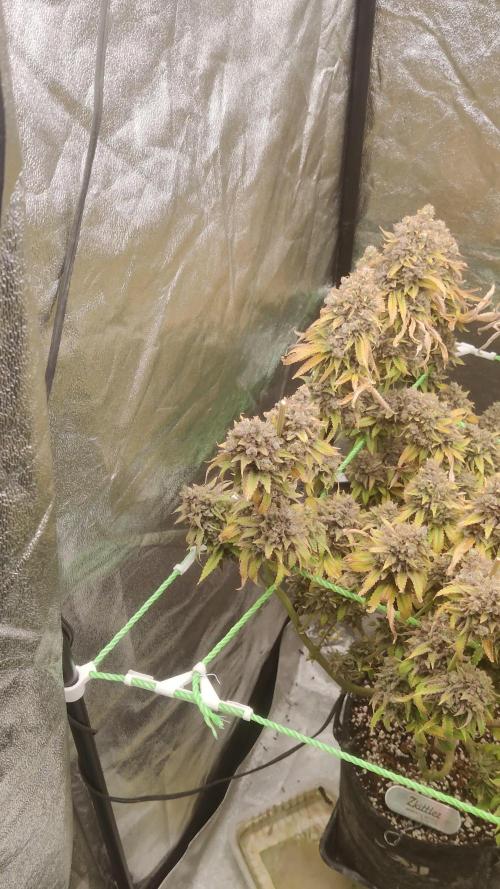
3 Headies haben angefangen zu Schimmeln, ich hab sie dann sofort entfernt.
Schade, aber ist ja noch n Haufen dran.
Dann Daumen drücken und hoffen das die Pflanze die paar Tage noch übersteht.
Ich habe den Luftentfeuchter aufgestellt!

Likes
Comments
Share


@MrStarOn3
Follow
At the end of week 3 I topped one of the strawberry cough they are all looking good and starting to veg I’m all caught up with the grow diary’s and will add at the end of every week. I’m in Australia and did start a little late into the season but hope to get a decent grow in they will be at my brothers once transplanted and he has a few aswel that I will add into the grow log nothing but sun and water only use a little thrive that’s from Bunnings that I get from my pops shed. They will be in a nicer cleaner soil when transplanted into veggie beds and will have chicken poo as a nutrient source first time ever using chicken poo so see how it goes. Will keep the grow log updated and hopefully everything goes all well for the travel and transplant for the plants in the next few days


Likes
35
Share


@Reyden
Follow
Come già ho accennato purtroppo non ho avuto tempo per stare dietro a tutto e chiedo scusa a tutti per la mia assenza sul forum 🙈
Sono sempre più convinto che questo sarà il mio lavoro perché è L unica cosa che riesce a darmi soddisfazioni e buon umore quando lo faccio,oltre che benefici perché ovviamente sono un fumatore e lo sarò per sempre 🐮🐒🐶🦑
Infatti sto valutando di poter andare in USA California per poter fare L università e poter lavorare in questo settore che sarebbe il mio sogno!!!
Voglio poter aiutare le persone con questa pianta magica come lei ha aiutato me per tante cose…
Purtroppo in Italia è repressa ma stiamo piano piano andando nella giusta direzione almeno per ambito terapeutico e farmaceutico ( bedrocan,bedica,bediol,bedrolite ecc…)
Tornando a noi voglio ringraziare SS per L ottimo lavoro che fate e spero di poter presto fare un ordine con le vostre nuove genetiche e provare la linea Red e fast version!!!


Likes
24
Share


@nonick123
Follow
Día 9 (10/06) N/A
Día 10 (11/06) N/A
Día 11 (12/06) Llueve mucho. Humedad alta por aquí. Eso les favorece
Día 12 (13/06) Se empiezan a desarrollar las hojas verdaderas a una buena velocidad! Todo en marcha! 💨
Día 13 (14/06) Riego ligero 100 ml sólo H20 EC 0,5 en previsión del trasplante en el día 15 de la planta
Día 14 (15/06) Se nota que estamos en el día 14 desde germinación y la mayoría de las plántulas van viento en popa!
Día 15 (16/06) Hoy procedemos a trasplantar a las chicas a su maceta intermedia de 6,5 litros
Se prepara con 5,5 Litros (85%) de sustrato PRO-MIX HP BACILLUS+MYCORRHIZAE + 1 Litro de Insect Frass (15%) + 65 gramos de Earth Vibes Super Soil (10 g/L substrato)
Se llena la maceta de sustrato con las manos (limpias) y rompiendo los trozos más gruesos, para que el sustrato esté aireado y esponjoso, sin presionar
Se coloca una maceta vacía de 1L para que quede la forma perfecta de la maceta donde están las plántulas (ver fotos)
Se espolvorea la parte proporcional de la probeta de microorganismos sobre el agujero de trasplante
Se saca la plántula de su maceta actual (bonitas raíces 😍) y se coloca en la maceta final
Se riega muy lentamente hasta percolación profunda con H2O EC 0,5 pH 6,5
Se coloca mulch (acolchado) de paja para evitar traspiración excesiva y cuidar a los microorganismos del suelo
A ver como reacciona al trasplante!
💦Nutrients by Lurpe Solutions - www.lurpenaturalsolutions.com
🌱Substrate PRO-MIX HP BACILLUS + MYCORRHIZAE - www.pthorticulture.com/en/products/pro-mix-hp-biostimulant-plus-mycorrhizae

Likes
1
Share

@Fyno_TH
Follow
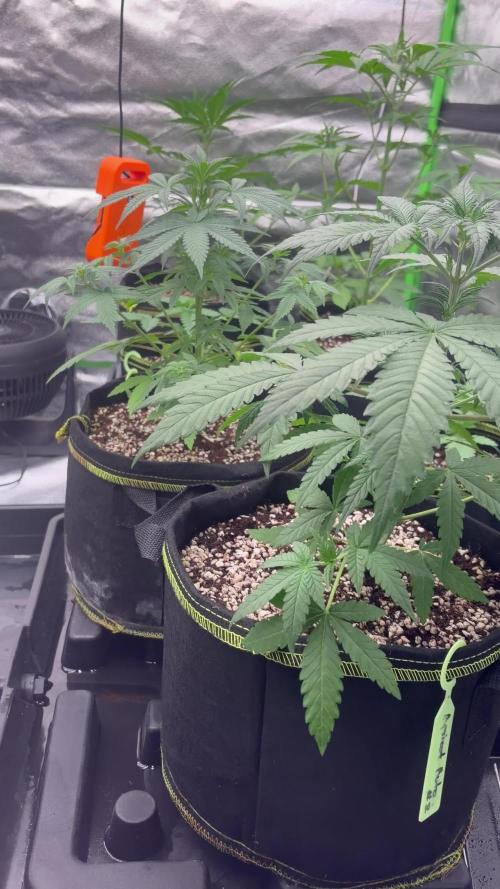
Noticed Magnesium deficiency on lower leaves. Increased dosage in this week’s feeding and monitoring pH to ensure recovery. New growth looks stable.

Likes
6
Share


@Da-weed
Follow
Čau Growers 💚 Máme tady třetí týden, holky jsou zdravé a parádně jedou. O týden mladší Almond Milk x Fizzy bubblegum jede též obstojně. Dámy dostaly zvýšenou dávku Alga Grow 4ml/L a přidal jsem Sugar Royal 1ml/L, zálivka zvýšena na 4L na holku. Teplo je mrcha, ale daří se nám to zvládat. Ať se daří, ať to roste, konec hlášení.
Likes
12
Share


@Bunterbiber
Follow
We just pushed through another absolute beast of a week, and the first half of it was pure survival mode. The temperatures peaked at a jaw-dropping 39°C, and even the nights offered zero relief, staying at a sticky 26°C minimum. It’s been an intense endurance test for an outdoor grow!
The Daily Hydration & Feeding Strategy: 💧
To keep them from turning into crisp, dry twigs, I had to switch to a strict every-single-day watering schedule. Missing even one day in that kind of heat wave would have been catastrophic.
Amazingly, the ladies are showing incredible resilience—they haven’t displayed any noticeable signs of distress or major issues so far. Development is moving along beautifully, though I'm keeping my fingers crossed that there won't be any delayed fallout from the extreme heat stress. Nutrient-wise I'm feeding them at about 75% of the recommended dosing plan to keep them happy without overdoing it in this heat.
The Strain Breakdown: 🌿
Lemon Cherry Cookies Auto: This girl is absolutely crushing the game right now. She is already stacking up some seriously decent, chunky buds, and the aroma is getting beautifully pronounced and loud! Every breeze brings a sweet whiff of what's to come. 😉
Amnesia Haze Auto: She has turned into an absolute monster! She’s gotten incredibly big and wide, taking full advantage of her outdoor space. You can definitely see that Sativa heritage shining through—judging by her progress, she’s definitely going to take a bit longer to cross the finish line compared to the quicker, Indica-dominant ladies like the Lemon Cherry Cookies.
Bruce Banner Auto & Banana Purple Punch Auto: These are the two shorter ladies of the group, but what they lack in raw height, they make up for in sheer health. Size aside, they are doing exceptionally well, looking super vibrant, healthy, and stacking their own flowers nicely.
All in all, I’m incredibly proud of how these genetics are handling a brutal summer. Now that the worst of the heatwave seems to be behind us, I can’t wait to watch these buds really start to swell!

Likes
11
Share


@CityFarmer
Follow
Hello everyone,
These girls are doing good, only 3 left the others where boys so they had to go, but these are starting flowering, getting tall not so bushy, lets see how they go...
See you guys next week🤘🤘👊👊👊

Likes
2
Share


@Ultraviolet_
Follow
The main purpose of chlorophyll is to capture photons of energy. When growth is no longer a priority for a plant in nature, it will naturally sink its "no longer needed" nitrogen and switch pigments to carotene and anthocyanin, which are better-suited pigments for environmental protection rather than capturing photons (growth). This is because of all nutrients used by a plant, nitrogen in its nitrate form is highly stable and required for the rigours of electron capture, ammoniacal nitrogen readily evaporates into the air during cure/dry. The ripening stage is no longer about growth, but the main priority is protecting trichomes and opening up the oxidative capacity of the plant so it can focus 100% of filling those trichomes. Nitrogen in its elemental nitrate form is no longer required during ripening to the same degree as it was; the vast majority of growth is over. Understanding when to shift a plant's focus from rapid growth to maturation is the key to maximizing the trichome quality and terpene profile of the final product. That is the single most important decision you will make during a grow in terms of dictating smoothness, taste, and smell, I have found from my limited years of dedicated and driven study into the matter.
Synthetic nutrients maintain a near full nitrate ratio comparable to ammoniacal nitrogen, whereas organic nutrients maintain a supply of ammoniacal and convert only to nitrate what is needed. This is far more beneficial for organic growers when it comes to smoke smoothness, as the higher levels of ammoniacal nitrogen are far easier to dispose/convert than nitrates come harvest, cure/dry with far more efficient margins held within leaf/bud when it comes to conversion to aminos. A good dry and cure can go a long way to a quality smooth smoke, but without a proper senescence sequence or triggered autophagic sink of nitrogen, then you will be asking far more than can be expected from a dry/cure. It's one thing to sink the last 5-10% and convert the last drips to amino acids during the dry and cure, but leaving the plant fully charged with nitrogen in the form of nitrate is simply not going to taste good, no matter how much smoke you blow up your own ass or how long you have been growing. Means nothing. Smoke quality relies on pre-harvest physiology, not just the dry and cure! The dry and cure cannot fix poor pre-harvest metabolic states. A high-quality, smooth smoke requires correct signalling before harvest. While a proper dry and cure can gently soften the edges and convert the last 5-10% of sugars into amino acids, it fundamentally cannot perform magic on a fully fertilised plant. You cannot oxidise stable nitrates (+5 charge) into a smoother state during drying. Ultimately, accept it's going to be a heavy smoke and be grateful, onwards upwards!
The way in which ammoniacal nitrogen reacts to carbon sugars is critical in how it acts during oxidation and is responsible for oxidizing leftover sugars that can make the buds smoke harshly. Limited ammoniacal equals limited oxidation of excess carbons held within tissues. Just so you know, it's not an anecdotal rule that's unresolved and unsubstantiated. It's called the Maillard reaction. Signal triggers and stressors. Normally, you can only use 10-30% ammoniacal nitrogen, but as harvest closes, it is beneficial to increase this ratio 50% of ammoniacal as it assists in steering the plant towards maturation. Rather than running 50% ammoniacal nitrogen continuously until harvest, use it in short, targeted flushes/additions (e.g., 7 days) to slow internode elongation and hasten maturity. Use alongside forced larger "dry backs" (allowing the root zone to dry out significantly between watering events). Raising the Electrical Conductivity EC of the medium to create mild osmotic stress. Widening the day-to-night temperature difference and increasing the vapour pressure deficit VPD.
How would you like your cola's sir? Arm length, please, no gaps with trichomes as thick as snow.
Likes
16
Share


@DaddyPrime2
Follow
7/10/24
testing testing. can i post updates now?
beautiful buds. the leaves are changing into a blue color. it reminds me of some of the blue city diesel i got from a buddy back in the medical days.
Likes
31
Share


@JeyGanesha
Follow
Questa gorilla cookie cresce ben forte..spero arrivi al termine senza nessun intoppo....
Siamo arrivati alla fine della3 settimana. Tt procedere alla grande
Likes
Comments
Share