


Likes
Comments
Share


@I_Identify_As_A_Dan
Follow
Day 21
Shes looking a little better as her new growth is much better but shes still lacking some colour hopefully soon she will full take off.
Turned the auto-pots + air-domes on to get water and oxygen directly to the roots 3 days ago.
Feeding Cropsalt at 5.8ph, really enjoying it atm just look at their colour😍

Likes
4
Share


@OrganicCannabisConnoisseur
Follow
The beginning of her tenth week! Wow, this has been a long one, but we figured that we want to get the best yield that we can from this plant and for grow scheduling, we don't mind letting this one veg out a little longer anyways. We really wanted to see what we could do with this plant and if we could in any way, reverse the stunted growth, but it seems to be a mixture of stress/genetics. We aren't fussing though, it has definitely been an interesting learning experience as we have gone along. Much earlier in the plants life, after topping, one of the nodes had been accidentally broken off and the plant seemed stressed out by that, as well as a transplant to a larger pot, only to find out it was too large for what we wanted to grow. At the end of the day though it has all been a fun learning experience and this is definitely a seed we would like to try and grow again. We have another Ice Wreck plant currently vegging (about two weeks) and if we like the pheno, we plan to keep it as a mother plant.
Feb 26 - Ice wreck has shown some decent growth over the last few days so we figure that its time to stop vegging this one out, after 10 long weeks, and this sunday, at the beginning of her 11th week, we will be throwing her in the flower tent, to start the next part of her journey. We can't wait to watch this plant stretch during flower and see just what she is fully capable of. We expect a decent amount of growth, but nothing too crazy as she is a small plant to begin with.
Likes
8
Share


@Kawannabic
Follow
Esta ha sido una semana de intenso trabajo para las plantas a las que realicé poda apical y lst con un espacio de tiempo corto para la recuperación, pero respondieron genial. Parece que a esta variedad le puedes hacer cualquier cosa. Ni excesos ni carencias de nutrientes


Likes
30
Share


@DrewbieDoobieNoobie
Follow
I had to transfer to the bigger pots the week. There was a lot of stretch in the cups and they were falling over. so will see how it goes this week. Coco with the Azomite and a little clone x myco powder at the root base, Just a baby feeding 1 mil/gal of the three part Emerald Harvest and Cal Mag in a 5 gallon bottle. PH at 6.1, then another 5 gallons of plain PH 6.2 water no food to get run off from the pots. The runoff was PH 5.8 so in happy with that. I got the time-lapse running so I will post it at the end of each week moving in to the next one. waiting on a green filter for the camera to help adjust the color so everything will not look blurpule. Cheers.

Likes
74
Share


@Mr_Maes
Follow
Nothing but colas on all 3 this is going to be a big harvest. Another 2 or 3 weeks max.


Likes
49
Share

@cangrowz
Follow
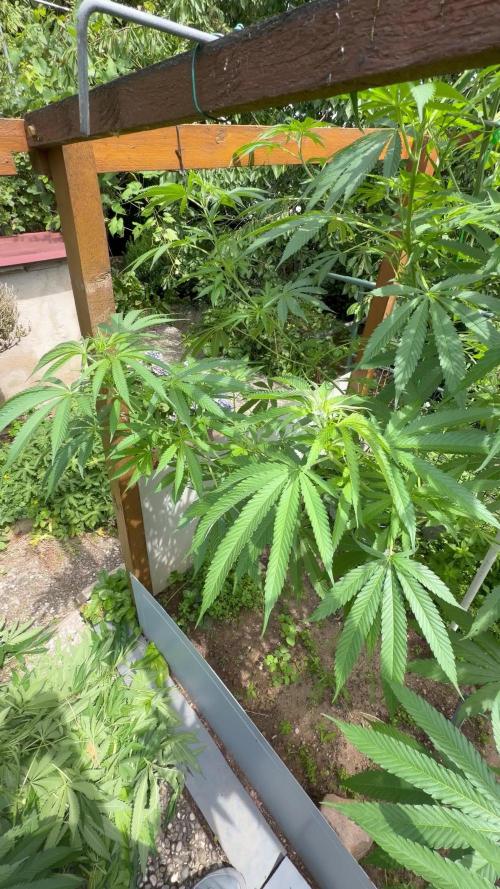
🍋🍇 Air Lemon x Shishkaberry – Anfang Woche 14 🍇🍋
Die beiden entwickeln sich weiterhin richtig stark und wachsen gefühlt von Tag zu Tag. Ich finde es mittlerweile viel spannender, sie nicht täglich anzuschauen, sondern ihnen ein paar Tage Zeit zu geben. So erkennt man den Fortschritt jedes Mal deutlich besser.
In den letzten Tagen habe ich bei beiden Pflanzen einen ordentlichen Lollipop durchgeführt. Kurz hatte ich überlegt, sie noch zu toppen, mich dann aber dagegen entschieden. Da sie sich zu Beginn der Blüte ohnehin noch einmal ordentlich strecken werden, erschien mir das als die bessere Entscheidung. Aktuell dürften die beiden inzwischen ungefähr 2,30 bis 2,40 m hoch sein.
Jetzt liegt ungefähr noch einmal die gleiche Zeit vor ihnen, bis die Ernte ansteht. Damit ist mit diesem Update offiziell Halbzeit erreicht. Das Wetter spielt momentan ebenfalls perfekt mit. Tagsüber liegen die Temperaturen zwischen 26 und 32 °C, nachts bei angenehmen 18 bis 20 °C. Lange wird das vermutlich nicht so bleiben, denn nächste Woche sollen die Temperaturen wieder in Richtung 40 °C gehen. Ich bin gespannt, wie viel Fortschritt die beiden bis zum nächsten Update noch machen werden.
Vielen Dank an alle, die mein Grow Diary verfolgen und immer wieder vorbeischauen. Ein großes Dankeschön geht natürlich auch an Green House Seeds für das Sponsoring der Seeds.
Viel Spaß weiterhin beim Growen!
Happy Growing Growmies 🌱?💚
Euer Cangrowz

Likes
26
Share


@Targona
Follow
10/10/2022 - 64 days since my little girl sprouted from seeds🌱
Fifth week of flowering for my Bruce Lemon Diesel 🍋⛽🌻
Nutrients:
Jungle Indabox - this week I keep serving and adding Jungle Indabox Environ X - bud stimulator 🌼🌸🌼
Advanced Nutrients - Big Bud - I canceled the bud stimulator mix and stayed with Jungle Indabox because the girls got a little burnt, the classic brown color appeared on the tips of the leaves 🍃🍂
I stuck with Bud Candy, all my girls need plenty of carbs 🍭🍭
Atami - ATA Calmag - when growing under LED lights it is recommended to use Calmag and Atami is an excellent brand
Training:
With Orange Sherbet, I didn't do as much defoliation as with BCN, it wasn't necessary, I mainly cut off the large leaves that shade the light 🍃🍃
LST: some of the strings I used to attach the twigs to the edge of the flower pot loosened, so I had to re-tie them 🌴🌴
Light: Believe - the best light of sponsor Mars Hydro TS 1000 💡💡
In general:
The plant is strong, manages nutrients well, absorbs as needed.
The buds form along the entire length of the branches, they are dense and it is already clear that there will be many of them. All branches are full of buds and already form a big "Hammer" ⚒️😁😁
She Is in full bloom, I expect her to bloom for at least another two weeks 🏵️💮
It smells really wonderful, she revealed her typical sweet smell with a hint of diesel 🍇⛽🍬
Thanks for the likes and you can follow me on Twitter 🐦: @ Targona666
See you soon 😍

Likes
119
Share


@DogDoctorOfficial
Follow
my fellow cultivators and Power Buds enthusiasts! It's time to dive into the much-anticipated Week 2 Veg Report for my ever-charming companion, Jelousy. And oh boy, we've got some exciting news to share! Jelousy has been thriving and strutting her stuff with absolute finesse. Those once-freaky leaves have now transformed into fabulous five-fingered beauties. It's safe to say she's becoming a real head-turner in our little green world!
As we venture into the exciting world of nutrient management, I've been providing our leafy superstar with Plagron Sugar Royal at a modest 1ml per liter. Jelousy seems to have quite the appetite, slurping up around 150ml of this delightful concoction every two days. It's like she's sipping on the elixir of life, and I can practically hear her say, "More, please!"
Now, let's delve a bit into the science of it all. Plagron Sugar Royal is a rich source of essential nutrients and sugars, ensuring that our Jelousy gets the royal treatment she deserves. With this specially crafted elixir, we're not just feeding a plant; we're nourishing a green goddess.
Now, before we wrap up, let's raise a virtual toast to the ever-generous Zamnesia and Plagron for making our Power Buds journey a reality. Their support is like a guardian angel watching over our botanical endeavors.
And of course, a big shout-out to the fantastic Grow Diaries community. You're the wind beneath our leaves, the light in our grow rooms, and the heart of this passionate community.
To all the fellow contestants and growers out there, keep nurturing those dreams and tending to your leafy companions with care. Here's to a week of growth, joy, and a sprinkle of laughter as we continue our adventure with Jelousy in the Power Buds contest. Stay green, stay inspired, and keep the good vibes growing!
As always, thank you all for stopping by, for the love and for it all. This journey of mine would just not be the same without you guys. The love and support are very much appreciated, and I feel honored and blessed with you all in my life !!!
With true love comes happiness. Always believe in yourself and always do things expecting nothing in return, with an open heart. Be a giver, and the universe will respond in ways you can’t even dream of .
Friendly reminder: all you see here is pure research and for educational purposes only.
Genetics - Jelousy @Zamnesia
Nutrients @Plagron
Light - @viparspectra P2000
Room size - 3x3 - 0,9x0,9

Likes
14
Share


@SBCannabisCo
Follow
Enjoyed this run. Ready to harvest in about 1 and a half weeks, I actually have seeds in a couple of the plants. It happens, this is my first indoor grow so, need to get my hand on some new genetics
Likes
Comments
Share


@morg0Th
Follow
mimosa has become very big, I can clearly smell the orange. I will harvest next week, this week I cut off all the food flow, only water will be given 3 times,, I will leave the blue gelato 41 for 1 week longer.

Likes
Comments
Share


@ramofre98
Follow
i Think the best weed i ever smell so goodness ♡
i Think 1 week more and i cut main bud
the aroma is Amazing like stawberry cola


Likes
4
Share


@Greenbum
Follow
This was a solid week but my PH keeps dropping. PPM dropped from 780ish to 560 so I know she's eating. Buds are forming nice and compact for their first week of actually forming. Other than the PH problem that I'm correcting daily until my fresh res change, my tallest stalk in the back grew into the light so hopefully those buds don't bleach!
Open to constructive criticism btw!
Likes
Comments
Share


@Odins_Farmer
Follow
Overall happy with the outcome, really aesthetically pleasing plant but I've never been a big fan of cookie based strains and probably wouldn't do it again. It did produce some male flowers late into flowering. It's a nice plant to grow though from the always dependable Sensi.


Likes
10
Share


Likes
43
Share

@Growbody
Follow
Hallo und herzlich willkommen zu meinem Growbericht Outdoor 2025 mit den Sorten Power Flower Feminized, Royal Medic Feminized und Special Kush #1 Feminized, alle 3 von Royal Queen Seeds. Es ist das erste Mal, das ich Töpfe für den Outdoor grow verwende, bisher waren alle Gorilla grows und direkt in die Erde gepflanzt.
Die URL der Power Flower Feminized: https://www.royalqueenseeds.de/feminisierte-hanfsamen/120-power-flower.html
Die URL der Royal Medic Feminized: https://www.royalqueenseeds.de/cbd-samen/148-royal-medic.html
Die URL der Special Kush #1 Feminized: https://www.royalqueenseeds.de/feminisierte-hanfsamen/138-special-kush-1.html
Die Planung für den Grow ist, die Samen in easyplug Anzuchtwürfeln keimen zu lassen und danach in 0,6L und 2,2L Plastiktöpfen, dann letztlich in die neuen komplett doppellagigen ROOTIES 15 Liter Wide Version Stofftöpfe umzutopfen. Sobald die Witterung es zuläßt, sollen die Pflanzen an die frische Luft.
Es ist schon eine Weile her, das der Grow losging, die Bilder sind jetzt aktuell.
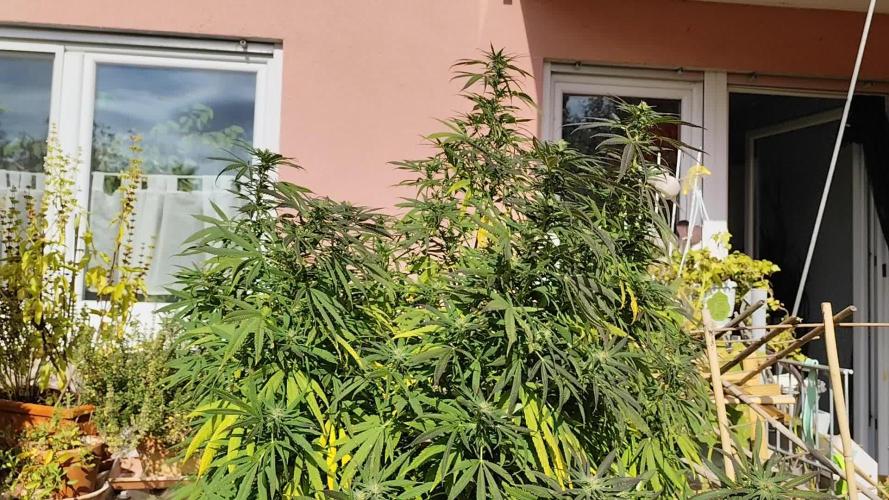
Tag 211: Für heute waren 20°C vorhergesagt, tatsächlich steckt die Sonne hinter dickem Hochnebel und es sind gerade mal 14°C. Heute Nacht geht's mit 2 °C Richtung Gefrierpunkt. Alle drei Ladies purpeln im Laub. Sie bekommen nur noch pures Brunnenwasser. Der abgebrochene Ast der Special Kush ist wieder komplett angewachsen.
Tag 215: Endlich mal wieder ein Sonnentag, Die Power Flower fem. hat sehr schöne Farben bekommen.
Tag 217: Auch heute hat es wieder bis nach Mittag gedauert, bis der Nebel weg war. In der Sonne kommen die Farben der drei Großen voll zur Geltung und die Trichome glitzern um die Wette.
Wenn's dir gefallen hat, schau wieder vorbei ✌️😎