


Likes
Comments
Share


@cubansoldier
Follow
So far the girls are doing okay. I had a little problem with stretching at the beginning which is why you see me supporting them with the yoyos. Next grow I will start with the fluorescent light extremely close. I will grow 2 of these plants with only organic nutrients n the other 3 with synthetic to see which comes out better.


Likes
74
Share


@KrautFabrik
Follow
Day 60: flush 💦
Pictures are taken on day 62📸
--------------------------------------------
I found again some bud rot 😑 cutted the hole bud 😑 (last pictures)
Happy growing 🍧🌱

Likes
11
Share


@kauilmayel1996
Follow
engordando y que hermoso
con poco espacio estás automáticas producen mucho
muy feliz
seguimos aprendido y cualquier comentario es bueno...


Likes
49
Share


@masterofsmeagol
Follow
8/22 Defoliated what needed it.with all the rain I had to remove some yellow leaves. The container plants are affected the most as the wind drys those bags out in like a day. I'll have to check twice a day. Watered a gallon a plant yesterday before going to the hospital, then went back over after and gave everything at least another half gallon. I'm pretty sure everything got their 10%. Yesterday I upped the feeding regimen to 2.5 pints a plant. A little more on the ones that looked like they needed it most. I took some pretty good pictures. I hope that's not septoria on the leaf that I took a picture of in the fire pit. Glad I sprayed that BT. I'll have to keep up with it. I'm also considering an application of plant doctor just in case. I don't SEE anything fungal bur that would suck. Flowers arecexploding in growth. Just got a text from my father telling me how my plants are "budding big time" lol. I have the bamboo I need but there are still a few individual HUGE branches that will soon need more support.
Update: Wife felt A LITTLE better so I went to check the girls around 6pm. I found my canary starting to droop. I'm not sure If I gave a full two gallons to everything yesterday. One or two may have only gotten one and a half. I compared the weight with the weight of a 22 gallon bag of dry soil and realized it was definately time to water even though only one plant was drooping they were all dry. It may have been okay to leave it but i've let them dry out far too often already so I made sure EVERY PLANT got it's 10% of water (except containers) and I watered slower. I don't see any negative effects from the B.T. but i'm noticing some older leaves turning yellow on a couple plants as this explosive flowering continues. I"m just going to continue monitoring it. I hope I did the right thing and watered. If it was going to rain tonight I might have held off but they were super light. I also took a video and some pictures but my wife is using my phone to listen to music and calm down so i'll need to upload those pictures and videos tomorrow. I finished my defoliation right before dark. Good night guys. I took a nice 3 minute te video this morning but it won't upload or send to anyone.
UPDATE: BAGS HELD THERE WEIGHT!!! YES!! WE'LL GET A TINY BIT OF RAIN IF ANYTHING TONIGHT AND NOTHING TOMMOROW UNTIL THE NIGHT AND RAIN THE NEXT DAY SO ITS LOOKING PRETTY GOOD FOR MY WATERING. ID PREFER TO WATER IN MORNINGS BUT IVE HAD TO KINDA PLAY IT BY EAR. PLANTS LOOK AWESOME. IM SUPER EXCITED. SOME LEAVES ARE DROPPING BUT THAT'S TO BE EXPECTED. IT SEEMS LIKE BUDS DOUBLE IN SIZE ALMOST EVERYDAY!!!
8/23 Noticed damage on a lower branch that looks like earwig damage. I put sluggo plus pellets on the ground between the pallets but I don't think that will help much if they're in the soil. If they are there their aren't many. Or it could be some other pest. It's the very bottom branch that should've been pruned already anyway. Didn't water today as we are supposed to get an inch of rain between tonight and tomorrow. My canary was sagging but it was wet? The soil was definately heavier than the 22gallon bag I use to compare. It just dries out so fast in those bags. I'll check them throughout the day. Oh and I forgot that I only have the 3 10th planet's. I kept referring to another as a "different phenome" so i dug down and found the tag and it was a blueberry cheese. Since the light dep went bad almost half the garden is blueberry cheese. The flowers look much more saliva dominant then the tenth planet or the purple punch. The BIG CHEESE in the 50 in the back had really long saliva looking leaves which is much different than some of her sisters. Anyway things are still doing good. I hope the girls csn make it the day without water. I don't want to water a day before we get an inch of rain. It is sunny and 80 though so I'll play it by ear.
UPDATE: STOPPED AT THE GROW AROUND ONE. MY CANARY LOOKED DROOPING. I BROUGHT THE VIDEO AND PICTURES TO MY COMMERCIAL BUDDY. I DIDN'T WANT TO WATER BECAUSE WE ARE GETTING A HALF IN OF RAIN TOMM AND ANOTHER HALF IN THAT NIGHT. WE WERE ON THE SAME PAGE AND FIGURED TO SPLIT THE DIFFERENCE AS TWO PLANTS WERE SUBSTANTIALLY LIGHTER THAN THE REST. THE CANARY GOT A GALLON. I USED ABOUT 8 GALLONS OF WATER. THE 50 GOT ABOUT A GALLON AS IT WAS DRY AND DROOPING. PROBABLY SHOULDVE GAVE IT MORE. I USED A SMALL WATER CAN TO WATER THIS TIME. THE BAGS WEREN'T SUPER LIGHT BUT THE BREEZE IS PICKING UP AND NOW IT SAYS NO RAIN UNTIL 6AM. I HOPE THIS WAS THE RIGHT DECISION. THEY PROBABLY WOULD'VE MADE IT. A COUPLE MIGHT'VE TOTALLY DRIED OUT AND DROOPY. I WANT TO AVOID THAT AS I DONT WANT TO STRESS THE PLANTS. THE BUDS ARE REALLY EXPLODING! IM LOVING THIS LIQUID KOOL BLOOM! OH, I FOUND ANOTHER APHID AN AND ANTS ON MY PLANTS. FOUND "WHAT LOOKS LIKE EARWIG DAMAGE" ON SMALL LOWER BRANCHES THAT SHOULD'VE BEEN PRUNED ALREADY. IM PLANNING TO GO AT NIGHT WITH A SPRAY BOTTLE AND ALCOHOL AND SEE IF THAT'S THE DEAL. IF NOT THE PILLARS JUST ATE A BUNCH OF BT.
8/24 It was pouring this morning so I just ran down and shook off my plants. Didnt take any pictures or do a video as it was raining pretty hard. IT is now 11am and the rain has stopped. I did not go at night to check for earwigs due to my wife needing me do to her medical illness. I've been through a lot this week. That's why I asked my buddy before I DID ANYTHING. It's a GOOD thing my bags dry out so tast but it means I REALLY need to keep on top of it. I'll make sure I get sleep and a decent meal and I'll check things out later on today. If I see cause for alarm I'll come back at night. I'll go over to shake things off anyway.
UPDATE: Went over after the rain slowed and shook things off. The wind came up and I remembered I had a few plants that were only supported on the main stem. Those plants are strong as hell and have branches the diameter bigger than the main stalk of an indoor plant. Still, I used the fence and the stake that was securing the main stalk and made like a triangle of string attached to the fence and the garden stake. Essentially it just makes a large triangle of string (loose) around this strong compact plant so if the wind blows to hard during the storm it will give it some more support. That was my big purple punch. I added another stake to a blueberry cheese that I FIMed with those huge colas and made sure all the nail branches were tied up. I SHOULD go check for earwigs to tonight but I need sleep. If they're there, there aren't many. I think I used the correct "their's" lol I didn't mean to. I'm losing leaves that are turning yellow and falling off. I think a few may be hungry. I'll check the diary and feed again. I'll try my ph meter as well but I really don't trust it. Everything going in is good and when I phed the rainwater it was much lower.
8/25 RAINED ALL DAY OR MOST OF IT. FOR SOME REASON MY COMMENT IS GONE.
8/26 FED 3 GALLONS TO GARDEN EVERYBODY GOT 1.75 PINTS AT LEAST. Defoliated what needed it after the storm and fed three gallons to the garden of nutrient mix. Each plant got at least a powerade bottle (1.75 pints), the big cheese in the fifty got over two as did the two other 30s. I spread around what was left after and ended up with one powerade bottle of mix left. I should've just gave it to them but hindsight is 20/20. Some plants are yellowing up a little bit and it's climbing the plant. Sunny out today. Plants are exploding in flower and we've experienced some rain but it still concerns me. I'm also concerned about earwigs. Haven't seen any and actually (happily) found a couple aphids and ants. If the earwigs were bad there wouldn't be a single aphid around. I've seen ants on the plants so I'm sure there are some more aphids. The tiny branches that should've been pruned have damage that looks like previous years from earwigs. On one branch it looks like they chewed the stem of a secondary branch and it was just hanging there. I thought I killed all those bastards but if a couple got IN the grow bags it will be much harder to catch them. The damage isn't severe and it's on a branch I was going to prune anyway. It's just the point. They seem to love any plant with "blueberry" in it. They also seem to stay totally away from any thick indica buds though and prefer longer less dense buds. That's my take from dealing with earwigs for several seasons in a row. Even if present in small numbers I think I did enough so they won't have much of an impact even if they are there but I'm going to go check anyway. Boy things are looking good!
UPDATE: Went back over and it seems like a bunch of leaves yellowed on my "big cheese." I hope it's not leaf septoria. I also found one piece of bedroom on the very bottom of a plant. Just shit I shouldve pruned but still. I noticed some ants and a few aphids as well. I'm going to have to watch the yellowing and consider using plant doctor preventatively in case of fungal.
8/27 After that increased feeding I defoliated a shit ton of yellow leaves. The big cheese has lost quite a few fan leaves. It's not just fan leaves though. It seems some newer growth yellows on that plant too. I have a couple blueberry cheese that may have septoria. Or it could be overwater with all this rain. Considering a treatment of plant doctor. Buds are EXPLODING in growth.
UPDATE: Super sunny day spent in the E.R. Went back and checked the girls and they looked even BIGGER!!! I'm super stoked for this fall. Wondering if the leaves dropping from my big cheese is normal. I hope it's not fungal. If it is I have several products to treat it. I might throw a question up and see what ppl think. I've tried to upload this video three times!!! I hope it gets through this time. Won't go past 14% amd I've tried four times. It's a good video too! I'll upload tomorrow when I have better service. FINALLY!
8/28 Bags were wet and heavy as hell. It should be easy to tell when its time to water but my anxiety still fucks around with me. Showed my buddy a bunch of pictures and videos and addressed all my concerns. Mainly septoria. He doesn't think I've got it. He looked through everything and made me feel a lot better. Just senescence and maybe a little over watered from the rain. He said many growers cut the nitrogen right off at the stage of flower where some of my plants are at. That made me feel much better. The sun is out and it's upper 70s at 11. Plants are exploding in growth. Lighting was good this'll morning g so I took numerous photos and videos. I uploaded one but then I deleted all my large files which apparently included tge ones I did today. During my evening check up I'll take a couple more and upload them. Boy things are looking good. Knock on wood but this is looking like my best year ever!
UPDATE: WENT OVER ROGHT BEDORE DARK TO CHECK THE GIRPS. DEFOLIATED A SHIT TON OF LEAVES. IT WAS LIKE 80 TODAY. BAGS ARE STILL HEAVY HAS HELL. BUDS ARE REALLY EXPLODING. THEY LOOK BIGGER TONIGHT THEN THEY DID THIS MORNING AND IM GETTING A REALLY NICE SWEEET SKUNKY SMELL. FOUND A COUOLE APHIDS AMD I COULD DUE TO CLEAN OUT THE INTERIOR OF SOME OF TGE PLANTS. I SHOULD ALSO DO ANOTHER APP OF BT. IVE NOTICED THAT I HAVE SOME PEST ISSUES. NOT BAD ONES BUT STILL.

Likes
9
Share


@SzkolaZiola
Follow
Getting there. Not as fat as I'd wish, but very terpy - all smell amazing.
It's week 7.5 now. Probably gonna harvest Purple Majik in a week and the rest in about 10-14 days - they need some more time but are fading fast.
Now they only get pH'd water.


Likes
24
Share


@Basementganja
Follow
Week6 of bloom, feeding Cal-mag+Floranova Bloom, both at 1tsp/gal. Each plant receives a glug or two from a 1gallon mixture. Runoff is removed.
New Clones of different phenos have entered the arena!
Happy growing!
Likes
7
Share


@GanjaFarmar
Follow
Day 50 from seed and this plant has exploded compare to the slow growth at the start. I doubt its ready for harvest by week 8 like it states on the brand. But a few more weeks and should be good.
I hope i can get a few ounces of this.
Ill update by week 8!
One love

Likes
132
Share


@Crashoverite
Follow
Hi all👨🌾👋
Welcome to my another week update
Hope everyone doing well 🧑🌾🤤
Week 3
Feb 16 - Feb 22
It was a very easy week. Both baby girls are growing steady but not in rapid speed yet. 2 waterings of 500 ml each on Feb 17th and Feb 22nd alongside with foliar feedings(100ml water and fish mix) both looking healthy and happy. LST is coming next 😁🧑🌾✨🍀
Wishing you all a wonderful week✨🍀
Much appreciate all your likes, follows and comments. 🙏💚❤️💜
Peace and love brothers and sisters 👨🌾✌️💚
Links
https://2fast4buds.com/seeds/TROPICANA-COOKIES-AUTO
https://www.biobizz.com/
https://fishheadfarms.com/
Likes
3
Share


@Doobster42
Follow
Cookie back under the net and a new 300W led and loving the all the room. Cherry still doing good in 2x2 but still has shown no white pistols yet.
Likes
7
Share

@3rnest
Follow
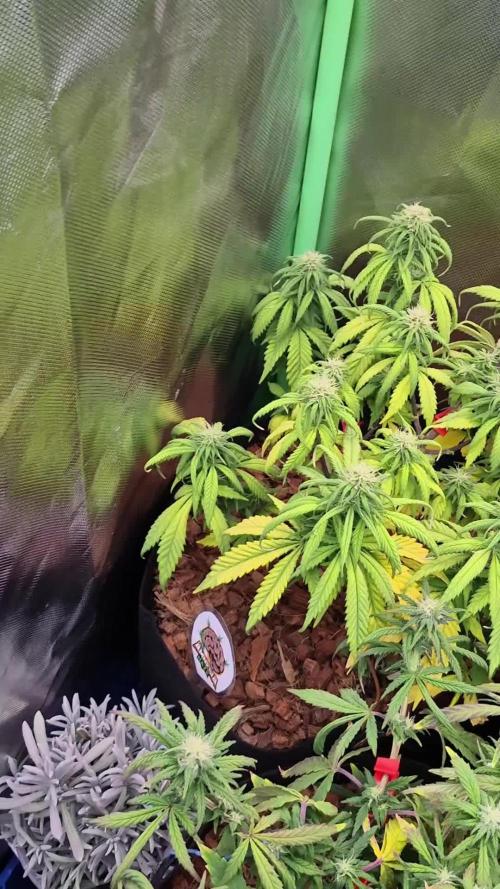
Leider habe ich noch nicht das optimale Setup gefunden, da die Pflanzen nach meinem Geschmack noch etwas zu klein sind und die Blätter sich zu früh verfärben.
Ich habe sie diese Woche noch mal gut gegossen und den pH-Wert etwas erhöht. Ich hoffe sie legen jetzt noch etwas zu und wachsen etwas besser.

Likes
22
Share


@herbalistssword
Follow
Uploaded pics from yesterday (day 25/21 - week 4).
Tent layout from top left:
Sugar Mama
Candy Kush #2
Bubble Kush
Candy Kush #1
Fastberry
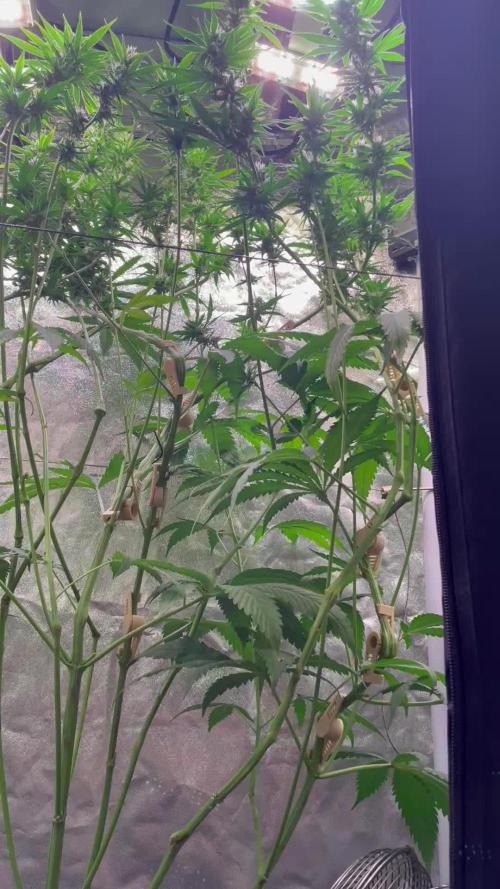
All the girls showing good progress. The sugar mama has lots of catching up to, at least she is growing fine now. No idea about that fastberry and what it is doing.
I've pegged the Candy Kush #1 down some more and removed the leaves that are covering new grow or touching soil. Lots of branches coming up, albeit slow :)
Candy Kush #2 and the Bubble Kush are just a sight to behold, lots of branches and quite big for their age. The Bubble Kust is only 21 days from seed in that picture! Amazing! I've only been tucking the fan leaves to give more exposure to the new grow, seems to have been working well so far. I think I will need to train them this week, just a little LST bending the top cola down.
All 3 Kush's are big enough now to handle some nutrients so I've them for the first time today. The little ones will need to wait.
I've found some White Powder Mildew on my outdoor plants, so just in case I've sprayed these girls with Neem Oil, never liked the smell of it :( but I am going to be using it every week or so as a preventative measure.
I'll update again in a couple of days for the end of week 4 (this is mid week update, kind of)
-------------
End of week 4 update.
Candy Kushs and Sugar Mama at day 28, Bubble Kush and Fastberry are 24 days.
All the girls are looks really well, showing slight signs of magnesium deficiency, I'll be giving them biobizz calmag with next watering.
The fastberry is finally starting to look like a normal plant. Still perplexed by the top bud growing sideways/downward.




Processing
Likes
6
Share


@Alejangrow
Follow
These plants are starting to blow up. 💣
These are some very healthy looking plants but what else can be expected from such stable genes.🤷♂️🏽 just removed some lower most branches, everything below where o first topped really. ✂️ just a few more weeks before the flip to flower.🌺

Likes
17
Share


@OKushoma
Follow
Stomp my feet for this one but I did not weigh it. Nope, I smoked it. My bad. I started out only smoking a small bud and then one led to another and I got busy, yadda yadda LoL Go to plant #2 for better details.


Likes
62
Share


@nonick123
Follow
Día 71 (30/12) Christmas holidays. Only watering
Día 72 (31/12) He recibido mi nueva lampara Mars Hydro FC1500 EVO Led Grow Light (2024 NEW FC 1500-EVO Samsung LM301H 150W LED) - https://marshydro.eu/products/fc1500-evo-led-grow-lights/ - https://www.amazon.de/dp/B0CSSGN5D8?ref=myi_title_dp
Procedo a instalarla, de modo que tengo la tienda de 120x60 cm perfectamente cubierta con las DOS (2) lámparas FC1500 EVO
Es ideal tener dos lámparas, porque así puedo ajustar la distancia a la lampara en función de la altura de capa planta
Ajusto ambas lámparas al 75% de potencia (Total 225W), que es más que suficiente para cubrir el área de 120x60 cm
Día 73 (01/01) CBD Auto 20:1 #1 - Muestra una ligera deficiencia con algunas puntas de las hojas dobladas hacia arriba y clorosis... Creo que le voy a dar otra ración de BIO PK 5-8
OG Kush Auto - Está apilando cogollos de forma brutal. Increíble el olor y la cantidad de tricomas que está formando 😍
Día 74 (02/01) CBD Auto 20:1 #1 - Se empiezan a formar tricomas entre los incipientes cogollos
OG Kush Auto - Una pena que se haya intensificado la deficiencia de CalMag... en las hojas, porque los cogollos son gordos y densos, y cubiertos de tricomas
Día 75 (03/01) CBD Auto 20:1 #1 - Voy a darle un boost para las 4 semanas que le quedan hasta la cosecha con SILICIUM FLASH
Hago un pequeño agujero cerca del tallo, espolvoreo 25g de SILICIUM FLASH en el agujero, lo cubro de tierra.
Riego con una solución de 2g de BACTREX por litro de agua.
OG Kush Auto - Impresionante densidad de los cogollos que empieza a doblar las ramas 😍 La ventana de cosecha se acerca! 💥
Día 76 (04/01) CBD Auto 20:1 #1 - Investigando me doy cuenta de que lo que le pasa es quemadura de luz, ya que la parte externa de la planta sufre clorosis, y la parte interna (donde no alcanza la luz) está completamente verde
Ajusto la lampara sobre esta planta para 40 DLI
OG Kush Auto - Sigue poniendo los cogollos duros como rocas y muy llenos de tricomas! 😍💥
Día 77 (05/01) CBD Auto 20:1 #1 - On going
OG Kush Auto - Empieza la senescencia en las hojas de abanico, acelerada por la deficiencia de CalMag... que ha tenido.
💦Nutrients by Bio Tabs - www.biotabs.nl/en/
🌱Substrate PRO-MIX HP BACILLUS + MYCORRHIZAE - www.pthorticulture.com/en-us/products/pro-mix-hp-biofungicide-plus-mycorrhizae
"GDBT420" 15% DISCOUNT code for the BIOTABS Webshop https://biotabs.nl/en/shop/
With 2 x Mars Hydro FC1500 EVO Led Grow Light (2024 NEW FC 1500-EVO Samsung LM301H 150W LED) - https://marshydro.eu/products/fc1500-evo-led-grow-lights/ - https://www.amazon.de/dp/B0CSSGN5D8?ref=myi_title_dp
Likes
11
Share


@Skunkiest_bender39
Follow
War ein Fest🤙 hat wirklich Spaß angemacht die Damen haben alles gegeben und sind mega resistent gegenüber Mehltau und Kälte. Generell begeistert von OGStrains aber dieses Kultivar ist on point ☮️


Likes
2
Share

@Ninjabuds
Follow
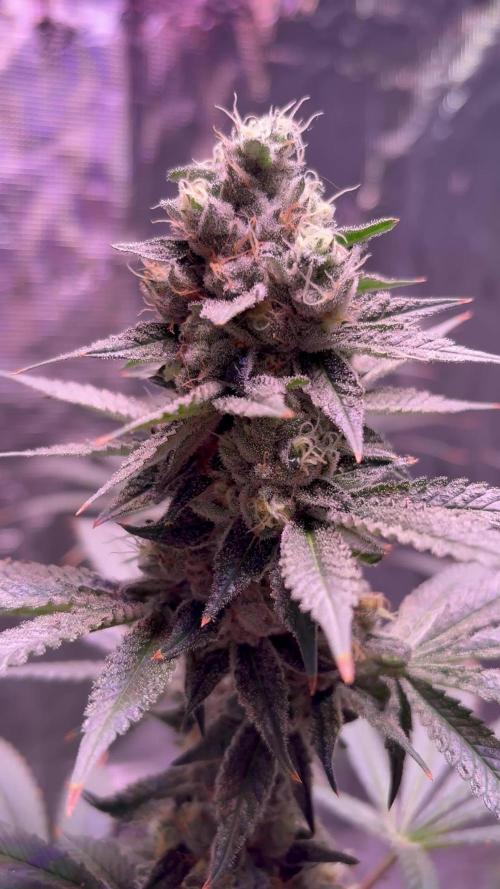
Getting closer and closer to the final days it’s the last plant and I have it under my new phovivis opticgrow x240 I felt it was a decent test to throw a plant under the light for the last week just to make sure plant do like the specific spec it puts off. All in all this plant is some gas and still looks healthy
Likes
1
Share


@mrgreen81grower
Follow
Big Fir Fast, Frisian Dew & Critical Skunk Buds in den letzten Zügen!


Likes
71
Share


@Roberts
Follow
I have not done much, but change the solution. I plan to switch to flowering hours next update. She is in a New Level Hydro bucket, under a Spider Farmer SE5000 light at 50 percent. Thank you Spider Farmer, Amsterdam Marijuana Seeds, and New Level Hydro. 🌱🤜🤛🌱
Http://amsterdammarijuanaseeds.com
Thank you grow diaries community for the 👇likes👇, follows, comments, and subscriptions on my YouTube channel👇. ❄️🌱🍻 Happy Growing 🌱🌱🌱
https://youtube.com/channel/UCAhN7yRzWLpcaRHhMIQ7X4g
SE5000
https://amzn.to/3qFpAML
Spider Farmer Official Website Links:
US&Worldwide: https://www.spider-farmer.com
UK: https://spiderfarmer.co.uk
CA: https://spiderfarmer.ca
EU: https://spiderfarmer.eu
AU: https://spiderfarmer.com.au
Coupon Code: saveurcash
Www.newlevelhydro.com
Www.hygrozyme.com
