The Grow Awards 2026 🏆
Likes
Comments
Share
@Hashy
Follow
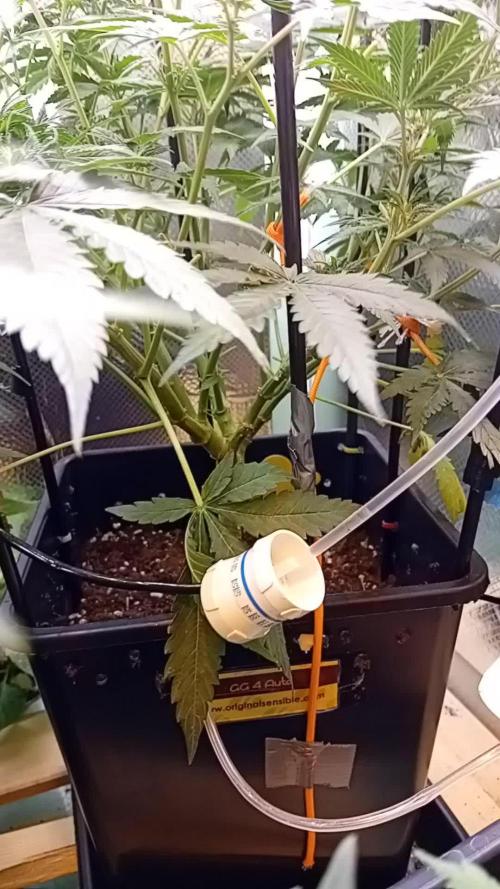
******************************************** Week 15 Start of Fade(flower week 9) ******************************************** Light cycle=12/12 Light Power=125w 52% Extractor controller settings High temp= Day 26c, Night 20c Low temp= c Temp step=0c High Rh= Day 50%, Night 55% Low Rh= % Rh step=0% Speed max=10 Speed min=2 Smart controller settings (during lights on). Lights on=9.00am Top fan on=+22.5c Top fan off=-22.0c Dehumidifier on=+50% and -26c Dehumidifier off=-50% or +26c Smart controller settings (during lights off). Lights off=9.00pm Dehumidifier on=+55% and -20c Dehumidifier off=-55% or +20c VPD aim=0.6-1.3 DLI aim=30-45 EC aim=0.2-0.5 PH aim=6.0-6.5 NPK(0/0/0) 💧💧💧💧💧💧💧💧💧💧💧💧💧💧💧💧 Method= Autofeed 6 drippers. Feed=Flushing Nutes. Flawless finish=2ml/L Volume=8L Easy Ph down= 0.02ml/L ( 4 drop total) Ec=0.4 PH=6.5/6.5 Runs=16 Run times=5min (250ml each) Gap times=15min×14, 45min×2 Total runtime=80mins (4.0L each) Total flowrate= 100ml/min (50ml/min each) Auto start time=10.00am Auto stop time=4.05pm 💧💧💧💧💧💧💧💧💧💧💧💧💧💧💧💧 ******************************************** ******************************************** 📅25/8/24 Sunday (day 99, day 57 flower) 📋 Sad day my cat passed away. 📅26/8/24 Monday (day 100, day 58 flower) 📋 💧 Method= automatic Feed=Flushing Nutes Volume=8.0L Easy Ph down= 0.02ml/L Ec=0.4 PH=6.6/6.6 Volume left=4L Volume used=4L (50ml/min) Volume each=4L (50ml/min) Runoff. Runoff=0.4L Ec=3.1 PH=/6.4 💧 📅27/8/24 Tuesday (day 101, day 59 flower) 📋 📅28/8/24 Wednesday (day 102, day 60 flower) 📋 Inspection, she is coming on fine, trichomes are clouding over, she still has some bulking up to do yet, I'd guess she has another 10-14 days left before harvest. 📅29/8/24 Thursday (day 103, day 61 flower) 📋 Bit of a fuck up on watering and she got about 1.5L-2L of water when she didn't need it. 📅30/8/24 Friday (day 104, day 62 flower) 📋 📅31/8/24 Saturday (day 105, day 63 flower) 📋 💧 Method= manual Feed=water Ec=0.2 PH=6.5/6.5 (PH D=0.02ml/L) 3d Volume used=3.5L Runoff. Total runoff=1.0L Ec=2.7 PH=/6.2 💧 ******************************************** Weekly roundup. 📋 She's doing OK, I think I have overwatered her and she's slowed down a bit. She probably has another 10 days to 14 days left and she'll be perfect. Take it easy. Back soon. ********************************************
Likes
1
Share
@Naujas
Follow
so without waiting for anything, I harvested on day 63 :) although the girl suffered for a long time from overfertilized soil, which did not allow her to grow properly, she died from excess food, but we learn from mistakes :) but despite all this, the flowers ripened just perfectly, they are quite firm and full of trichomes :) and the smell is such that it is impossible to describe in words, amazing!!!!!! good luck to everyone :)
Likes
93
Share
@DrJones
Follow
The stench coming off this plant is unbelievable. When I open the tent, the smell slaps me in the face and instantly fills the room with funky sweet goodness. 😆 RQS says this strain takes 9 weeks of flower but she had a major defoliation during early bloom so we’ll see. Maybe I’ll give her an extra week. Thanks for stopping by growmies 🙏 Have a good week 🙌💥
Likes
13
Share
@DonKrika
Follow
Continue with the LST this week, plant canopy is looking good and very bushy, I was forced to defoliate harder this week because the new growth was being blocked by the big fan leaves Overall a good week without any problems. DAY 59 - Water PH - 5.99 PPM- 567 Solution Temp - 21.4 Watering Volume - 3L DAY 63 - Nutes PH - 5.85 PPM- 2080 Solution Temp - 23.2 Watering Volume - 3L Foliar Spray PH - 6.71/5.55 PPM- 2090/2390 Solution Temp - 21/20.7 Watering Volume - 100 mL
Likes
22
Share
Day 22 girls got watered today with double nutrition and are doing great Day 23 we had a few without yellow tips so we thought they could use a flush but some to realize it’s probably low on something so normal water tomorrow Day 24 today we found out we were not putting enough cal mag the instructions said 2ml for one liter not gal. So today we hooked them up and started some LST Day 25 we started LST on all the girls Day 27 still working on LST I over watered the girl yesterday so today the got a day off Day 28 girls got watered today bottom was a little dry everyone is handling LST well so happy to see all the bud sights
Likes
Comments
Share
Likes
5
Share
@Bryankush
Follow
Proseguendo... Giorno 3 annaffiata con 2L di acqua
Likes
52
Share
@GrowZex
Follow
This was a pretty good grow despite having to fight off trips. The end product is rly dank af. Rly looking forward to make extract with the cuttings.
Likes
11
Share
Let’s Go!! What another great week it’s been, all babies have got there tops an looking super healthy!
Likes
12
Share
@Flavors
Follow
Watered today everything is looking good! All strains developing distinct scents now. Fat Banana has a Sprite like candy smell. The Blueberry Swirl has more of a lemon zest smell, was hoping for blueberry scent but hopefully it will come later. Tropical Cooler has the smell of a rotten fruit salad. Lemon Haze x Garypayton has more of a berry scent. Defoliated Blueberry Swirl, their were too many popcorn bud sites so I cut the branches off.
Likes
34
Share
Yellow butterfly came to see me the other day; that was nice. Starting to show signs of stress on the odd leaf, localized isolated blips, blemishes, who said growing up was going to be easy! Smaller leaves have less surface area for stomata to occupy, so the stomata are packed more densely to maintain adequate gas exchange. Smaller leaves might have higher stomatal density to compensate for their smaller size, potentially maximizing carbon uptake and minimizing water loss. Environmental conditions like light intensity and water availability can influence stomatal density, and these factors can affect leaf size as well. Leaf development involves cell division and expansion, and stomatal differentiation is sensitive to these processes. In essence, the smaller leaf size can lead to a higher stomatal density due to the constraints of available space and the need to optimize gas exchange for photosynthesis and transpiration. In the long term, UV-B radiation can lead to more complex changes in stomatal morphology, including effects on both stomatal density and size, potentially impacting carbon sequestration and water use. In essence, UV-B can be a double-edged sword for stomata: It can induce stomatal closure and potentially reduce stomatal size, but it may also trigger an increase in stomatal density as a compensatory mechanism. It is generally more efficient for gas exchange to have smaller leaves with a higher stomatal density, rather than large leaves with lower stomatal density. This is because smaller stomata can facilitate faster gas exchange due to shorter diffusion pathways, even though they may have the same total pore area as fewer, larger stomata. Leaf size tends to decrease in colder climates to reduce heat loss, while larger leaves are more common in warmer, humid environments. Plants in arid regions often develop smaller leaves with a thicker cuticle and/or hairs to minimize water loss through transpiration. Conversely, plants in wet environments may have larger leaves and drip tips to facilitate water runoff. Leaf size and shape can vary based on light availability. For example, leaves in shaded areas may be larger and thinner to maximize light absorption. Leaf mass per area (LMA) can be higher in stressful environments with limited nutrients, indicating a greater investment in structural components for protection and critical resource conservation. Wind speed, humidity, and soil conditions can also influence leaf morphology, leading to variations in leaf shape, size, and surface characteristics. Small leaves: Reduce water loss in arid or cold climates. Environmental conditions significantly affect gene expression in plants. Plants are sessile organisms, meaning they cannot move to escape unfavorable conditions, so they rely on gene expression to adapt to their surroundings. Environmental factors like light, temperature, water, and nutrient availability can trigger changes in gene expression, allowing plants to respond to and survive in diverse environments. Depending on the environment a young seedling encounters, the developmental program following seed germination could be skotomorphogenesis in the dark or photomorphogenesis in the light. Light signals are interpreted by a repertoire of photoreceptors followed by sophisticated gene expression networks, eventually resulting in developmental changes. The expression and functions of photoreceptors and key signaling molecules are highly coordinated and regulated at multiple levels of the central dogma in molecular biology. Light activates gene expression through the actions of positive transcriptional regulators and the relaxation of chromatin by histone acetylation. Small regulatory RNAs help attenuate the expression of light-responsive genes. Alternative splicing, protein phosphorylation/dephosphorylation, the formation of diverse transcriptional complexes, and selective protein degradation all contribute to proteome diversity and change the functions of individual proteins. Photomorphogenesis, the light-driven developmental changes in plants, significantly impacts gene expression. It involves a cascade of events where light signals, perceived by photoreceptors, trigger changes in gene expression patterns, ultimately leading to the development of a plant in response to its light environment. Genes are expressed, not dictated! While having the potential to encode proteins, genes are not automatically and constantly active. Instead, their expression (the process of turning them into proteins) is carefully regulated by the cell, responding to internal and external signals. This means that genes can be "turned on" or "turned off," and the level of expression can be adjusted, depending on the cell's needs and the surrounding environment. In plants, genes are not simply "on" or "off" but rather their expression is carefully regulated based on various factors, including the cell type, developmental stage, and environmental conditions. This means that while all cells in a plant contain the same genetic information (the same genes), different cells will express different subsets of those genes at different times. This regulation is crucial for the proper functioning and development of the plant. When a green plant is exposed to red light, much of the red light is absorbed, but some is also reflected back. The reflected red light, along with any blue light reflected from other parts of the plant, can be perceived by our eyes as purple. Carotenoids absorb light in blue-green region of the visible spectrum, complementing chlorophyll's absorption in the red region. They safeguard the photosynthetic machinery from excessive light by activating singlet oxygen, an oxidant formed during photosynthesis. Carotenoids also quench triplet chlorophyll, which can negatively affect photosynthesis, and scavenge reactive oxygen species (ROS) that can damage cellular proteins. Additionally, carotenoid derivatives signal plant development and responses to environmental cues. They serve as precursors for the biosynthesis of phytohormones such as abscisic acid () and strigolactones (SLs). These pigments are responsible for the orange, red, and yellow hues of fruits and vegetables, while acting as free scavengers to protect plants during photosynthesis. Singlet oxygen (¹O₂) is an electronically excited state of molecular oxygen (O₂). Singlet oxygen is produced as a byproduct during photosynthesis, primarily within the photosystem II (PSII) reaction center and light-harvesting antenna complex. This occurs when excess energy from excited chlorophyll molecules is transferred to molecular oxygen. While singlet oxygen can cause oxidative damage, plants have mechanisms to manage its production and mitigate its harmful effects. Singlet oxygen (¹O₂) is considered a reactive oxygen species (ROS). It's a form of oxygen with higher energy and reactivity compared to the more common triplet oxygen found in its ground state. Singlet oxygen is generated both in biological systems, such as during photosynthesis in plants, and in cellular processes, and through chemical and photochemical reactions. While singlet oxygen is a ROS, it's important to note that it differs from other ROS like superoxide (O₂⁻), hydrogen peroxide (H₂O₂), and hydroxyl radicals (OH) in its formation, reactivity, and specific biological roles. Non-photochemical quenching (NPQ) protects plants from damage caused by reactive oxygen species (ROS) by dissipating excess light energy as heat. This process reduces the overexcitation of photosynthetic pigments, which can lead to the production of ROS, thus mitigating the potential for photodamage. Zeaxanthin, a carotenoid pigment, plays a crucial role in photoprotection in plants by both enhancing non-photochemical quenching (NPQ) and scavenging reactive oxygen species (ROS). In high-light conditions, zeaxanthin is synthesized from violaxanthin through the xanthophyll cycle, and this zeaxanthin then facilitates heat dissipation of excess light energy (NPQ) and quenches harmful ROS. The Issue of Singlet Oxygen!! ROS Formation: Blue light, with its higher energy photons, can promote the formation of reactive oxygen species (ROS), including singlet oxygen, within the plant. Potential Damage: High levels of ROS can damage cellular components, including proteins, lipids, and DNA, potentially impacting plant health and productivity. Balancing Act: A balanced spectrum of light, including both blue and red light, is crucial for mitigating the harmful effects of excessive blue light and promoting optimal plant growth and stress tolerance. The Importance of Red Light: Red light (especially far-red) can help to mitigate the negative effects of excessive blue light by: Balancing the Photoreceptor Response: Red light can influence the activity of photoreceptors like phytochrome, which are involved in regulating plant responses to different light wavelengths. Enhancing Antioxidant Production: Red and blue light can stimulate the production of antioxidants, which help to neutralize ROS and protect the plant from oxidative damage. Optimizing Photosynthesis: Red light is efficiently used in photosynthesis, and its combination with blue light can lead to increased photosynthetic efficiency and biomass production. In controlled environments like greenhouses and vertical farms, optimizing the ratio of blue and red light is a key strategy for promoting healthy plant growth and yield. Understanding the interplay between blue light signaling, ROS production, and antioxidant defense mechanisms can inform breeding programs and biotechnological interventions aimed at improving plant stress resistance. In summary, while blue light is essential for plant development and photosynthesis, it's crucial to balance it with other light wavelengths, particularly red light, to prevent excessive ROS formation and promote overall plant health. Oxidative damage in plants occurs when there's an imbalance between the production of reactive oxygen species (ROS) and the plant's ability to neutralize them, leading to cellular damage. This imbalance, known as oxidative stress, can result from various environmental stressors, affecting plant growth, development, and overall productivity. Causes of Oxidative Damage: Abiotic stresses: These include extreme temperatures (heat and cold), drought, salinity, heavy metal toxicity, and excessive light. Biotic stresses: Pathogen attacks and insect infestations can also trigger oxidative stress. Metabolic processes: Normal cellular activities, particularly in chloroplasts, mitochondria, and peroxisomes, can generate ROS as byproducts. Certain chlorophyll biosynthesis intermediates can produce singlet oxygen (1O2), a potent ROS, leading to oxidative damage. ROS can damage lipids (lipid peroxidation), proteins, carbohydrates, and nucleic acids (DNA). Oxidative stress can compromise the integrity of cell membranes, affecting their function and permeability. Oxidative damage can interfere with essential cellular functions, including photosynthesis, respiration, and signal transduction. In severe cases, oxidative stress can trigger programmed cell death (apoptosis). Oxidative damage can lead to stunted growth, reduced biomass, and lower crop yields. Plants have evolved intricate antioxidant defense systems to counteract oxidative stress. These include: Enzymes like superoxide dismutase (SOD), catalase (CAT), and various peroxidases scavenge ROS and neutralize their damaging effects. Antioxidant molecules like glutathione, ascorbic acid (vitamin C), C60 fullerene, and carotenoids directly neutralize ROS. Developing plant varieties with gene expression focused on enhanced antioxidant capacity and stress tolerance is crucial. Optimizing irrigation, fertilization, and other management practices can help minimize stress and oxidative damage. Applying antioxidant compounds or elicitors can help plants cope with oxidative stress. Introducing genes for enhanced antioxidant enzymes or stress-related proteins over generations. Phytohormones, also known as plant hormones, are a group of naturally occurring organic compounds that regulate plant growth, development, and various physiological processes. The five major classes of phytohormones are: auxins, gibberellins, cytokinins, ethylene, and abscisic acid. In addition to these, other phytohormones like brassinosteroids, jasmonates, and salicylates also play significant roles. Here's a breakdown of the key phytohormones: Auxins: Primarily involved in cell elongation, root initiation, and apical dominance. Gibberellins: Promote stem elongation, seed germination, and flowering. Cytokinins: Stimulate cell division and differentiation, and delay leaf senescence. Ethylene: Regulates fruit ripening, leaf abscission, and senescence. Abscisic acid (ABA): Plays a role in seed dormancy, stomatal closure, and stress responses. Brassinosteroids: Involved in cell elongation, division, and stress responses. Jasmonates: Regulate plant defense against pathogens and herbivores, as well as other processes. Salicylic acid: Plays a role in plant defense against pathogens. 1. Red and Far-Red Light (Phytochromes): Red light: Primarily activates the phytochrome system, converting it to its active form (Pfr), which promotes processes like stem elongation and flowering. Far-red light: Inhibits the phytochrome system by converting the active Pfr form back to the inactive Pr form. This can trigger shade avoidance responses and inhibit germination. Phytohormones: Red and far-red light regulate phytohormones like auxin and gibberellins, which are involved in stem elongation and other growth processes. 2. Blue Light (Cryptochromes and Phototropins): Blue light: Activates cryptochromes and phototropins, which are involved in various processes like stomatal opening, seedling de-etiolation, and phototropism (growth towards light). Phytohormones: Blue light affects auxin levels, influencing stem growth, and also impacts other phytohormones involved in these processes. Example: Blue light can promote vegetative growth and can interact with red light to promote flowering. 3. UV-B Light (UV-B Receptors): UV-B light: Perceived by UVR8 receptors, it can affect plant growth and development and has roles in stress responses, like UV protection. Phytohormones: UV-B light can influence phytohormones involved in stress responses, potentially affecting growth and development. 4. Other Colors: Green light: Plants are generally less sensitive to green light, as chlorophyll reflects it. Other wavelengths: While less studied, other wavelengths can also influence plant growth and development through interactions with different photoreceptors and phytohormones. Key Points: Cross-Signaling: Plants often experience a mix of light wavelengths, leading to complex interactions between different photoreceptors and phytohormones. Species Variability: The precise effects of light color on phytohormones can vary between different plant species. Hormonal Interactions: Phytohormones don't act in isolation; their interactions and interplay with other phytohormones and environmental signals are critical for plant responses. The spectral ratio of light (the composition of different colors of light) significantly influences a plant's hormonal balance. Different wavelengths of light are perceived by specific photoreceptors in plants, which in turn regulate the production and activity of various plant hormones (phytohormones). These hormones then control a wide range of developmental processes.
Likes
10
Share
Bewässerung: 1000 ml jede 5 tage in der vierten Woche pH-Wert: 6,2 EC-Wert: 1,3 Temperatur: 28ºC Luftfeuchtigkeit 80% Schädlingsbekämpfung: PPFD: 200 µmol/m²/s DLI Düngemittel: mineralischer Dünger NPK 7-3-5 Besonderheiten: wir versuchen bei diesem Grow Effektive Mikroorganismen aus. Die Opfer Linsen sind wieder da 😜 -Tag 22 der Mutti scheint es gut zu gehen --Tag 7 das erste Kind sieht lebendig aus aber etwas krank, bis heute hat es keine Wurzeln, wir vermuten dass es es nicht schaft😞 ---Tag 1 für die Neulinge, dieses mal wollen wir testen mit welches Wasser es besser funktioniert (destilliertes, gekochtes, brittakane), wir haben alle mit Clonex Gel eingeschmiert und sie sind in Kokos Tabs eingepflanzt. Diesmal haben wir auch kein Schnitt gemacht sondern wir haben sie von der Pflanze abgezwickt. Wir hoffen dass es dieses mal etwas besser lauft 😰 -Tag 23 die Mutti hat heute etwas Dünger bekommen --Tag 8 das erste Kind ist definitiv krank XD und wir nehmen ihn aus dem Projekt 😪 ---Tag 2 die Neulinge sehen alle gut aus, außer der mit dem gekochtes Wasser -Tag 25 die Mutti hat heute etwas Wasser bekommen --Tag 4 die Neulinge haben noch keine Anzeichnen von Wurzel Bildung 😰 -Tag 28 Da wir wieder etwas Probleme mit den Klonen hatten, und im Moment wenig Zeit um uns intensiv mit ihnen beschäftigen haben wir uns entschlossen das wir das Projekt auf ein anderes mal Verschieben. Wir werden sie nun zusammen mit einer White Rhino im Kleinen Zelt, trainieren und dann in ein paar Wochen in die Blüte Schicken. Zu einem Späteren Moment werden wir es dann nochmals mit den Klonen probieren. Wir haben sie dazu in einen Größeren Topf umgepflanzt.
Likes
13
Share
Bestva Quantum Board LM301B / Mr Hide seeds Semana 8 desde germinación Semana 4 de floración En 6 plantas tengo 3 tiempos diferentes. Dos empezaron a engordar de forma veloz y se les ha aplicado PK durante la semana. Dos están un poco más retrasadas, tal vez el equivalente a una semana. Hoy se empezará con PK para ellas. Dos están aún más atrás. Se ven sanas. Buenos humos
Likes
5
Share
@Krissci
Follow
Day 1 -BP1 to be cut down due to it staying in veg.. It may turn into a monster but I don't have the space or time...
Likes
8
Share
@TSXpress
Follow
Og kush auto - 420fastbuds Harvested! Super awesome strain!
Processing
Likes
7
Share
Beautiful pair of phenos of Badaz og cheese very excited about what strain is gonna offer me in terms of quality buds, so excited to see what is every of this 2 phenos gonna be like, I really hope that both of them have the exact terpenes profile and the same potency! Let's keep on working! We'll the ladies have been Transplanted on February 2nd after 17 days since planted, they were very big and the pot was completely conquered by strong roots as you can see, now both of them are in their new 11l pot home let's see how they keep developing! 💛❤️💚🔝💎
Processing
Likes
47
Share
I managed to turn the negative heat temperature in to something positive by introducing co2 to the environment. As a result of the diy co2 method some of branches grew up by 1.5 inches in 2days! Will continue to utilise co2 in the box for now. I also had to adopt the defoliation method Way to many leaves could cause problems by raising the moisture level in the box. As a result of the defoliation a lot of light is reaching the bottom of the box. Which means I can grow other small plants in the box. I switched to bloom NPK ratios. Slowly introducing the raw mix. It’s doing fine and as allways no tip burns
Likes
175
Share
@yan420
Follow
🌸🍊✨🍭🌸🍊✨🍭🌸🍊✨🍭🌸 Back at it with Kannabia — huge thanks for the NEW EXCLUSIVE Upcoming Kannabia's seed Launch 🙏🍨🍊 Grateful for the trust and for everyone following along, I’ll run her clean and showcase what she can do. Dessert-party goals: berry–citrus sherbet terps, creamy finish, tight stacks, easy trim, zero drama. Veg 24/0, clean manifold + LST, flip on a happy, even canopy. Coco’s fresh, seed goes in now. 🚀 Added on 12.10.2025 🌞 Light conditions: Limited direct light for the first 4 weeks — ~4 h/day on weekdays and ~10–11 h on weekends due to tent sharing and work schedule. 🌸🍊✨🍭🌸🍊✨🍭🌸🍊✨🍭🌸 💭❗💭❗💭❗💭❗💭❗💭❗💭 ❗Events & thoughts worth noting❗ 💭❗💭❗💭❗💭❗💭❗💭❗💭 10.08.25 GW1 Sowed seed, soaked starter pot with #1 12.08.25 GW1 Seed popped hip hip hurray 28.08.25 VW2 Stopped using GreenBuzzBloom, took it out of the schedule. 01.09.25 VW3 TriPartMicro 10→30ml, TriPart bloom 10→30ml 12.09.25 VW4 Applied nemadodes against thrips and fungus gnats. 20.09.25 VW6 topped and trained for first time, decided against a full manifold as I lost a few weeks already. 26.09.25 VW7 Topped her one more time for 8 mains 27.09.25 VW7 Topped up the pot with perlite instead of clay pebbles this time, just trying things out, TriPartMicro 30→40ml , TriPartBloom 30→20ml 10.10.25 VW9 have her a haircut, umm be trimming the side shoots tomorrow, rest in the video 📹 12.10.25 VW9 done some extra trimming to clean up a bit and chose two extra side shoots to nurture info mains, so kept the 8 original mains plus 2 rest in the video 📹 17.10.25 VW9 FfJ/fpj fish mix 30 → 60 ml 20.10.25 VW10 Feed tweak: added 3 g Calcium Nitrate/ 30 L (≈ 15 ppm N + 10 ppm Ca) 24.10.25 VW11 did a defoliation and trimming session 📹 27.10.25 VW11 Epsom Salt 0 → 2.5, Calcium Nitrate 3 → 9 g 01.11.25 VW12 CalMag 60 → 30ml, TriPartBloom 20 → 30ml, Magnesium 2.5 → 3.5g 02.11.25 VW12 Did a cleanup in preparation for flowering, rest in the video 📸 12.11.25 VW13 Did another cleanup in the tent 🎥, also switched to the FERMAKOR PK Micro schedule, (10.11.25) added Phosphoric acid as a pH down in preparation for flowering 14.11.25 FW1 FERMAKOR PK Micros 40 → 50 ml 05.12.25 FW3 about 2 weeks ago Calcium Nitrate 35 g → 25 g, FERMAKOR PK Micros 50 ml → 60 ml 🌱💦🌱💦🌱💦🌱💦🌱💦🌱 🌿 Day to day tasks & actions 🌿 🌱💦🌱💦🌱💦🌱💦🌱💦🌱 05.12.25 FW3 – Fed 5l of #1 → 2l runoff (*RUNOFF reused for tomato plants) 💧💦💧💦💧💦💧💦 🌱 Nutrients in 30 L #1 Veg – FERMAKOR 💧💦💧💦💧💦💧💦 Calcium Nitrate (Calcinit / Nitcal): 45 → 40 g → 35 g → 25 g = 1.50 g/L → 1.33 g/L → 1.17 g/L → 0.83 g/L = 207 ppm N / 253 ppm Ca → 184 / 225 → 161 / 197 → 115 / 141 PK Concentrate (FERMAKOR Base): 30 → 40 ml → 50 ml → 60 ml = 1.00 → 1.33 ml/L → 1.67 ml/L → 2.00 ml/L → balanced 1:1 P:K + light micros (from extract) Home-made FFJ/FPJ (Fish + Veg): 30 ml = 1.00 ml/L Epsom Salt (MgSO₄·7H₂O): 8 g = 0.27 g/L → ~26 ppm Mg + ~35 ppm S Fetrilon Combi 1 (Micros): 0.5 g = 0.017 g/L → Fe 0.7 ppm · Mn 0.7 ppm · Zn 0.3 ppm · Cu 0.3 ppm · B 0.1 ppm · Mo 0.02 ppm Phosphoric Acid (pH down) + Citric Acid (chelation): as needed → First set pH with phosphoric acid, then add a little citric only if you want extra chelation Target pH: 5.8 – 6.0 (drop test yellow-green) 📦 TOTAL: Liquids: 60 → 70 → 80 → 90 ml per 30 L = 2.00 → 2.33 → 2.67 → 3.00 ml/L Solids (CaNO₃ + Epsom + Fetrilon): 53.5 → 48.5 → 43.5 → 33.5 g per 30 L = 1.78 → 1.62 → 1.45 → 1.12 g/L 💧💦💧💦💧💦💧💦 ⚙️✂️⚙️✂️⚙️✂️⚙️✂️⚙️ ✂️ Tools & equipment ✂️ ⚙️✂️⚙️✂️⚙️✂️⚙️✂️⚙️ ✂️ 2× MarsHydro SP3000 ⚙️ MarsHydro 150mm ACF Ventilator ✂️ Trotec dehumidifier (big unit) ⚙️ Mini no-name dehumidifier ✂️ Kebab skewers (LST – stainless) ⚙️ Wire + roast skewers (LST assist) ✂️ Scissors (HST) ⚙️ Vacuum (for spills & cleanup) ✂️⚙️✂️⚙️✂️⚙️⚙️✂️⚙️✂️⚙️✂️⚙️ --- 🍊🍧🌬️🍬🍊🍧🌬️🍬🍊🍧🌬️🍬 Mystery seed (Kannabia Seeds) — NEW EXCLUSIVE 🍊🍧🌬️🍬🍊🍧🌬️🍬🍊🍧🌬️🍬 Species: Hybrid (GF / swift-flowering line) Genetics: TBA (breeder sheet pending) THC: TBA Effect: Euphoric, relaxed, creative (target profile) Flavor: Berry–citrus sherbet, sweet candy, creamy finish Flowering (indoors): ~6–7 weeks target (GF) Resistance: High (aim: no drama) Indoor yield: TBA Outdoor yield: TBA Structure: TBA Notes: Brand-new exclusive from Kannabia’s GF line — I’ll update specs when the breeder card drops. Goal is rich sherbet terps (berry–citrus + cream), low leaf-to-calyx, easy trim. Stage harvest stays on the table if tops finish early. YouTube Link: https://youtube.com/-m8h?si=A7x4Zlr2kj-_ga31
Likes
7
Share
@Hawkbo
Follow
On cruise control now, done some defoliation here and there but that's it, feeding every 2-3 days and they are swelling up very nicely. I took a nice slow video instead of photos of each plant individually below is the order they appear in the video. 1st is 31? 2nd is #29 3rd is #35 4th is Orange Sherbert 5th is #33 6th is Wedding Cheesecake 7th is Wedding Cheesecake #2 8th is #37 REMEMBER , IF YOUR SHOPPING FOR GEAR YOU CAN USE THE CODE “BANGDANG” FOR 10% OFF YOUR ENTIRE PURCHASE FROM ANY OF THE FOLLOWING COMPANIES. @greenbuzzliquids @rainscience_growbags @gorilla_grow_tent @growlightscience.led NEW* @Rocbudinc Seeds on his website * *****Gorilla grow tent discounts extend to all companies affiliated with grow strong industries which include..***** @super.closet Lotus Nutrients Kind LED grow lights