


Likes
Comments
Share


@pifflestikkz
Follow
Day 99
09/10/24 Wednesday
De-chlorinated tap water pH 6 with Plagron PK13-14 today to give her the extra boost they need. I will continue flush at end of week and next week.
Day 101
11/10/24 Friday
De-chlorinated tap water pH 6 only today.
Day 103
13/10/24 Sunday
De-chlorinated tap water pH 6 only today again.
Day 104
14/10/24 Monday
Picture update 😎💚
Day 105
15/10/24 Tuesday (End of week)
Gave them all another 0.5L of de-chlorinated tap water with Plagron PK13-14 PhD to 6.3.
Update on strains:
DS- Auto Kabul is a robust, hardy little plant. Not many lateral sides bud it has bid sites climbing throughout main colar and it has a heavy top 🙌💚
Light green in colour and smelling like a zesty gas.
DG/GF- Auto XXL Ammo -
She is such a tall, stretchy plant, with alot of leaf to bud ratio! I won't do this one again as she requires alot of height space I don't have. She has a garlic, ammonia pungent smell to her.
DG/GF- Auto lemon zkittles 🍋-
This is A typical Christmas 🎄 tree shape plant, beautiful strong structure, resilient to pest. And has nice lateral sides with a bit of LST it would Unlock her true potential. She has a heavy main colar. Light green in colour dripping in trichomes, and smells like candy/ Z terps.


Likes
31
Share


@XperencdGmanXG
Follow
Hi Cannafam, its all about the microbes! Brewed a tea for 24hrs, of the soil activator 2.6g, fresh organic kefir 100g, EM1 4ml, aquaponics microbes (fresh semi solid fish waste) 100g. and molasses at a rate of 20g per gal. or 5g per Litre. Once brewed add yucca at a rate of 1ml per gal, then use as a foliar spray and root drench. Just thinking I should have added some worm castings to the mix as well. That's next for next week I guess.

Likes
2
Share

@ShinWeed
Follow
.
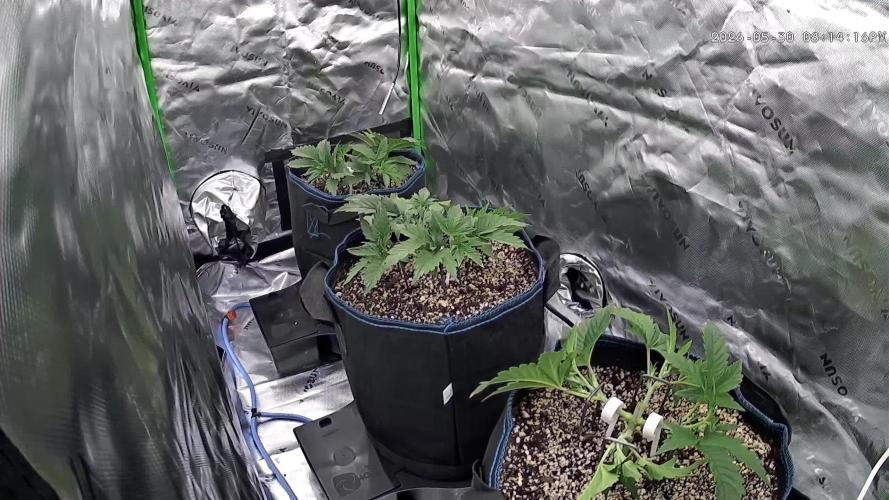
🌱 Tag 28 - Eine Woche, die sich endlich wie Routine anfühlt
Seit dem letzten Update ist eine Woche vergangen und trotz kleiner Unruhe in den letzten Durchgängen hat sich das Setup diesmal deutlich stabilisiert. Kein pH-Chaos, keine Mischfehler im Tank, einfach konstante Versorgung und gleichmäßiges Wachstum.
Wir merken deutlich, dass sich unser Wachstum gerade verändert. Es geht nicht mehr nur darum, größer zu werden, sondern darum, Struktur aufzubauen. Die ersten Anzeichen der Blütephase sind da und der ganze Rhythmus verschiebt sich langsam in diese Richtung.
Noch ist es kein kompletter Wechsel, eher ein Übergangszustand. Aber wir arbeiten sichtbar anders weiter als noch vor einer Woche.
Wir wachsen weiterhin gleichmäßig und ohne Stresssignale. Die Blätter werden dichter, die Struktur klarer und intern passiert deutlich mehr, als man von außen direkt sieht. Diese Phase fühlt sich ein bisschen so an, als würden wir uns neu sortieren, bevor es richtig losgeht.
Das Wasser und die Nährlösung passen aktuell gut zu uns. Der pH wird konsequent auf 5,7 eingestellt und driftet über ein bis zwei Tage auf etwa 6,3, wo er sich dann stabilisiert. EC liegt konstant im Bereich 1,6–1,8.
Bisher kommen wir damit sehr gut klar und zeigen keine negativen Reaktionen.
👨🌾 Gärtner:
Diese Woche war unangenehm unspektakulär.
Ich hab mittlerweile den Dreh mit dem Wasser wirklich raus. pH-Management läuft inzwischen bewusst und reproduzierbar, nicht mehr nach Gefühl und Hoffnung. Die anfänglichen Probleme durch Hydrogencarbonate im Leitungswasser sind jetzt eingeplant statt überraschend.
Wichtigste Erkenntnis der letzten Tage:
Wenn man den pH sauber auf 5,7 einstellt und die EC-Spanne 1,6–1,8 hält, ist das System deutlich weniger anfällig.
Der leichte pH-Anstieg über 1–2 Tage auf ~6,3 ist inzwischen kein Problem mehr, sondern einfach ein bekanntes Verhalten des Systems. Nichts, was Panik auslöst. Eher so ein: „Ja gut, du bist halt so“-Moment gegenüber dem Wasser.
Und das eigentlich Beste:
Die Pflanzen reagieren darauf bisher stabil und ohne Beschwerden.

Likes
20
Share



Likes
20
Share


@AdamCajda
Follow
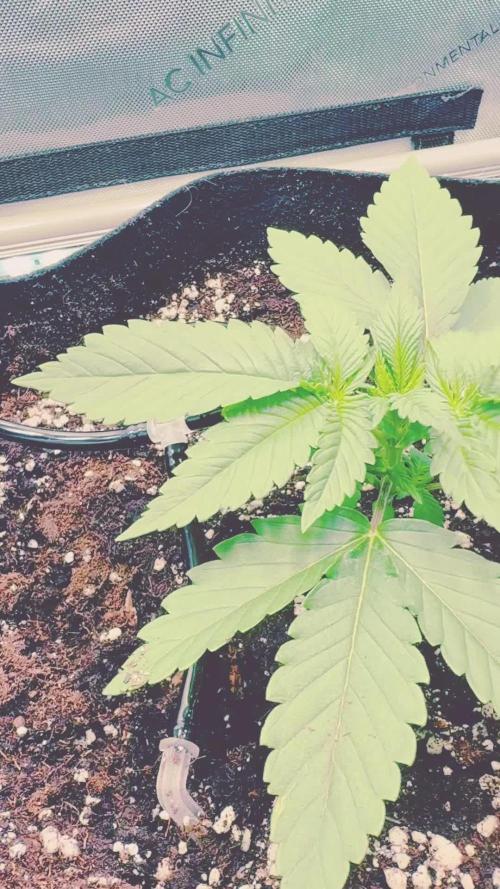
Week 7. All good. Even temperature outside dropped so girls are not boiling inside the tent. So far these plants look so different to anything i have ever grown. It Looks very promising so darn :)

Likes
18
Share


@HandsomeTerpz
Follow
🇺🇲 WEEK 7
-----------------------
Skywalker is definitely leading the pack in this grow. 🌱🚀
✔️ Very fast growth
✔️ Strong aroma
✔️ Vigorous structure
✔️ Excellent recovery after LST and defoliation
There’s a little excess nitrogen, but it doesn’t seem to bother her – she just keeps pushing! 🌿💪
🔄 This week included:
Two defoliation sessions
Lots of LST (bending & straightening)
Only watered with plain water, following the BioTabs feeding schedule
💡 Next week, I’m planning to switch to a 12/12 light cycle and send her into flowering. She looks ready, and the timing feels just right! 🌸🕛
🇩🇪 Woche 7
-----------------------
Die Skywalker entwickelt sich in diesem Grow aktuell am besten. 🌱💪
✔️ Schnelles Wachstum
✔️ Sehr gute Erholung
✔️ Starker Wuchs
✔️ Angenehmer Geruch
Bis jetzt läuft bei ihr wirklich alles perfekt. Ein bisschen viel Stickstoff ist derzeit in der Pflanze, aber das scheint sie nicht im Geringsten zu stören sie wächst weiter wie verrückt. 🌿💚
Diese Woche ist einiges passiert:
🔹 2x entlaubt
🔹 Viel LST – gebogen, begradigt
🔹 Nur mit Wasser gegossen, ganz nach dem BioTabs-Schema
Der Dünger macht seinen Job sehr gut – ich hoffe, das bleibt so! 🙏🌞
💡 Nächste Woche werde ich voraussichtlich das Licht auf 12/12 umstellen und die Pflanze in die Blüte schicken. Ich denke, sie ist bereit – das Timing passt! 🌸🕛
Likes
2
Share


@eldruida_lamota
Follow
Que pasa familia, vamos con la novena semana de floración de estas Orange Sherbet Fast Flowering, de FastBuds.
Agradezco a Agrobeta todos los kits obtenidos de ellos 🙏.
Vamos al lío, El ph se controla en 6.2 , la temperatura la tenemos entre 22/24 grados y la humedad ronda el 50%, añadimos ya varios productos de la gama de Agrobeta.
Las próximas semanas veremos cómo avanzan.
Agrobeta:
https://www.agrobeta.com/agrobetatiendaonline/36-abonos-canamo
Hasta aquí todo, Buenos humos 💨💨💨
Likes
18
Share


@tomerakoo
Follow
buenas pues seguimos con la floracion donde van maravillosamente os hice videos para que lo viereis como evolucionas esta excelente marca todas van genial donde no da aun ningun sintoma pero ahora empieza los grandes problemas donde hay que controlar todo en general can comiendo muy bien pero ahora es cuando empieza lo bueno de verdad donde igual el minimo despiste te lleva al desastre
espero que os guste buenos humos gente

Likes
9
Share


@DaisyNabis
Follow
25 son mis bellas, el dia de hoy nacio la ultima guerrera, humificador encendido las 24 hrs del dia, mi oasis sera abonado con linea mineral de green house feeding

Likes
18
Share


@Ultraviolet
Follow
Green light is radiation with wavelengths between 520 and 560 nm and it affects photosynthesis, plant height, and flowering. Plants reflect green light and this is why they appear green to our eyes. As a result, some growers think that plants don’t use green wavelengths, but they actually do!
In fact, only around 5 – 10% of green light is reflected from leaves and the rest (90 – 95 %) is absorbed or transmitted to lower leaves [1].
Green wavelengths get used in photosynthesis. Chlorophyll pigments absorb small amounts of green wavelengths. Light that doesn’t get absorbed is transmitted to leaves that are shaded out from direct light. This means that leaves at the bottom of the canopy get more green light than leaves at the top. A high proportion of green wavelengths compared to other colors tells lower leaves that they are being shaded out, so they are able to react accordingly. Lower leaves may react by opening or closing their stomata or growing longer stems that help the leaves reach brighter light [1, 2, 3].
When it comes to growing cannabis, many cultivators are interested in the quality of light used for the flowering stage. In many plants, flowering is regulated by two main photoreceptors: cryptochrome and phytochrome. Both photoreceptors primarily respond to blue light but can also respond to green, although to a lesser extent. Green can accelerate the start of flowering in several species (although cannabis has yet to be tested) [1, 4, 5]. However, once flowering has begun, it’s important to provide plants with a “full spectrum” light that has high amounts of blue and red light, and moderate amounts of green, in order for photosynthesis to be optimized.
Green light mediates seed germination in some species. Seeds use green wavelengths to decide whether the environment is good for germination. Shade environments are enriched in green relative to red and blue light, so a plant can tell if it is shady or sunny. A seed that senses a shaded environment may stay dormant to avoid poor growing conditions [1]. Some examples of plant species where researchers have documented this response are: ryegrass (a grass that grows in tufts) and Chondrilla (a plant related to dandelion) [1, 6].
Although green wavelengths generally tell plants NOT to germinate, there are some exceptions! Surprisingly, green wavelengths can stimulate seed germination in some species like Aeschynomene, Tephrosia, Solidago, Cyrtopodium, and Atriplex [1, 6, 7].
Of course, light is not the only factor affecting seed germination – it’s a combination of many factors, such as soil moisture, soil type, temperature, photoperiod, and light quality.
When combined with red and blue light, green can really enhance plant growth [1, 8]. However, too much green light (more than 50% of the total light) can actually reduce plant growth [8]. Based on the most current research, the ideal ratio of green, red, and blue light is thought to be around 1:2:1 for green:blue:red [9]. When choosing a horticultural light, choose one that has high amounts of blue and red light and moderate amounts of green and other colors of light.
Not many studies can be found about the effect of green light on cannabis growth or metabolism. However, if one reads carefully, there are clues and data available even from the very early papers.
Mahlberg and Hemphill (1983) used colored filters in their study to alter the sunlight spectrum and study green light among others. They concluded that the green filter, which makes the environment green by cutting other wavelengths out, reduced the THC concentration significantly compared to the daylight control treatment. It has been demonstrated that green color can reduce secondary metabolite activity with other species as well. For example, the addition of green to a light spectrum decreases anthocyanin concentration in lettuce (Zhang and Folta 2012).
If green light only reverses the biosynthesis of some secondary metabolites, then why put green light into a growth spectrum at all? Well, there are a couple of good reasons. One is that green penetrates leaf layers effectively. Conversely red and blue light is almost completely absorbed by the first leaf layer.
Green travels through the first, second, and even third layers effectively (Figure 2). Lower leaf layers can utilize green light in photosynthesis and therefore produce yields as well.
Even though a green light-specific photoreceptor has not yet been found, it is known that green light has effects independent from the cryptochrome but then again, also cryptochrome-dependent ones, just like blue light. It is known that green light in low light intensity conditions can enhance far red stimulating secondary metabolite production in microgreens and then again, counteracts the production of these compounds in high-intensity light conditions (Kim et al. 2004). In many cases, green light promoted physiological changes in plants that are opposite to the actions of blue light. In the study by Kim et al. blue light-induced anthocyanin accumulation was inhibited by green light. In another study it has been found that blue light promotes stomatal opening whereas green light promotes stomatal closure (Frechilla et al. 2000). Blue light inhibits the early stem elongation in the seedling stage whereas green light promotes it (Folta 2004). Also, blue light results in flowering induction, and green light inhibits it (Banerjee et al., 2007). As you can see, green light works very closely with blue light, and therefore not only the amount of these two wavelengths separately is important but also the ratio (Blue: Green) between these two in the designed spectrum. Furthermore, green light has been found to affect the elongation of petioles and upward leaf reorientation with the model plant Arabidopsis thaliana both of which are a sign of shade avoidance symptoms (Zhang et al. 2011) and also gene expression in the same plant (Dhingra et al. 2006).
As mentioned before, green light produces shade avoidance symptoms which are quite intuitive if you consider the natural conditions where the plants grow. Not all the green light is reflected from the highest canopy leaves in nature but a lot of it (50-90%) has been estimated to penetrate the upper leaves at the plant level ((Terashima et al., 2009; Nishio, 2000). For the plant growing in the understory of the forest green light is a signal for the plant of being in the shade of a bigger plant. Then again, the plants growing under unobstructed sunlight can take advantage of the green photons that can more easily penetrate the upper leaves than the red and blue photons. From the photosynthetic pigments in higher plants, chlorophyll is crucial for plant growth. Dissolved chlorophyll and absorb maximally in the red (λ600–700 nm) and blue (λ400–500 nm) regions of the spectrum and not as easily in the green (λ500–600 nm) regions. Up to 80% of all green light is thought to be transmitted through the chloroplast (Terashima et al., 2009) and this allows more green photons to pass deeper into the leaf mesophyll layer than red and blue photons. When the green light is scattered in the vertical leaf profile its journey is lengthened and therefore photons have a higher chance of hitting and being absorbed by chloroplasts on their passage through the leaf to the lower leaves of the plant.
Photons of PPFD (photosynthetic photon flux density) are captured by chlorophyll causing an excitation of an electron to enter a higher energy state in which the energy is immediately passed on to the neighboring chlorophyll molecule by resonance transfer or released to the electron transport chain (PSII and PSI). Despite the low extinction coefficient of chlorophyll in the green 500–600 nm region it needs to be noted that the absorbance can be significant if the pigment (chlorophyll) concentration in the leaf is high enough.
The research available clearly shows that plants use green wavelengths to promote higher biomass and yield (photosynthetic activity), and that it is a crucial signal for long-term developmental and short-term dynamic acclimation (Blue:Green ratio) to the environment. It should not be dismissed but studied more because it brings more opportunities to control plant gene expression and physiology in plant production.
REFERENCES
Banerjee R., Schleicher E., Meier S. Viana R. M., Pokorny R., Ahmad M., Bittl R., Batschauer. 2007. The signaling state of Arabidopsis cryptochrome 2 contains flavin semiquinone. The Journal of Biological Chemistry 282, 14916–14922.
Dhingra, A., Bies, D. H., Lehner, K. R., and Folta, K. M. 2006. Green light adjusts the plastic transcriptome during early photomorphogenic development. Plant Physiol. 142, 1256-1266.
Folta, K. M. 2004. Green light stimulates early stem elongation, antagonizing light-mediated growth inhibition. Plant Physiol. 135, 1407-1416.
Frechilla, S., Talbott, L. D., Bogomolmi, R. A., and Zeiger, E. 2000. Reversal of blue light -stimulated stomatal opening by green light. Plant Cell Physiol. 41, 171-176.
Kim, H.H., Goins, G. D., Wheeler, R. M., and Sager, J. C. 2004.Green-light supplementation for enhanced lettuce growth under red- and blue-light emitting diodes. HortScience 39, 1617-1622.
Nishio, J.N. 2000. Why are higher plants green? Evolution of the higher plant photosynthetic pigment complement. Plant Cell and Environment 23, 539–548.
Terashima I., Fujita T., Inoue T., Chow W.S., Oguchi R. 2009. Green light drives leaf photosynthesis more efficiently than red light in strong white light: revisiting the enigmatic question of why leaves are green. Plant & Cell Physiology 50, 684–697.
Zhang, T., Maruhnich, S. A., and Folta, K. M. 2011. Green light induces shade avoidance symptoms. Plant Physiol. 157, 1528-156.
Wang, Y. & Folta, K. M. Contributions of green light to plant growth and development. Am. J. Bot. 100, 70–78 (2013).
Zhang, T. & Folta, K. M. Green light signaling and adaptive response. Plant Signal. Behav. 7, 75–78 (2012).
Johkan, M. et al. Blue light-emitting diode light irradiation of seedlings improves seedling quality and growth after transplanting in red leaf lettuce. HortScience 45, 1809–1814 (2010).
Kasajima, S., et al. Effect of Light Quality on Developmental Rate of Wheat under Continuous Light at a Constant Temperature. Plant Prod. Sci. 10, 286–291 (2007).
Banerjee, R. et al. The signaling state of Arabidopsis cryptochrome 2 contains flavin semiquinone. J. Biol. Chem. 282, 14916–14922 (2007).
Goggin, D. E. & Steadman, K. J. Blue and green are frequently seen: responses of seeds to short- and mid-wavelength light. Seed Sci. Res. 22, 27–35 (2012).
Mandák, B. & Pyšek, P. The effects of light quality, nitrate concentration and presence of bracteoles on germination of different fruit types in the heterocarpous Atriplex sagittata. J. Ecol. 89, 149–158 (2001).
Darko, E. et al. Photosynthesis under artificial light: the shift in primary and secondary metabolism. Philos. Trans. R. Soc. B Biol. Sci. 369 (2014).
Lu, N. et al. Effects of Supplemental Lighting with Light-Emitting Diodes (LEDs) on Tomato Yield and Quality of Single-Truss Tomato Plants Grown at High Planting Density. Environ. Control Biol. 50, 63–74 (2012).


Likes
2
Share


@outdoor_grow_420
Follow
I really like create this budzai auto plant. Don't grow as I expect. But a really beautiful plant. And create two nice buds.
The smoke is amazing.
Likes
19
Share


@Little_E
Follow
Day- 22
Repotted and fed them ph water that read 6.35. Fed 1ml of ph down with 1 gallon of water. Gave each plant a half gallon of the ph water.
Day- 23
Added another half gallon of ph water to both plants. I think they were being underwatered. Or not watered thoroughly. We will see how they look tomorrow at 3. Expecting a big growth spurt. May have to look into topping them.
Day- 24
I’ve topped both plants. I assume I did it correctly so we will see how that goes. Blacked out the windows in the room. Opened the door and now have a fan blowing all the hot humid air out. I’m thinking that will cool the room a lot and bring down internal tent temps.
Day- 25
Ended up trying to do some LST got the biggest leaves on the bottom tied back and the top main two where I topped them. I’m going to water them again today. 1/2 gal each of ph water. Waiting to see how much run off I get. If not enough, I will do another half gallon.
Day- 26
Soil is still moist so I will not be watering today.
Day- 28
Last day of veg week 3! Video will speak for itself 😎

Likes
6
Share


@StoneyMelony
Follow
Overview of my grow:
Tent: Secret Jardin DS120 4 x 4 (120 cm by 120 cm)
Lights: 2 x 120 Watt CTlite c4 clusterled
Climat: Trotec Dehumidifyer 240 watt- 10L/24h
Filter: Prima Klima carbon filter PK2600
fan: 2 x Secret Jardin 20watt osc. fan
Pots: Gronest 4 x 11 liter airpots
Water : automated water system
PH: bluelab
Nutrients: Plagron cocos A + B
Plagron PK 13/14
ATA cal/mag
Epsom salt
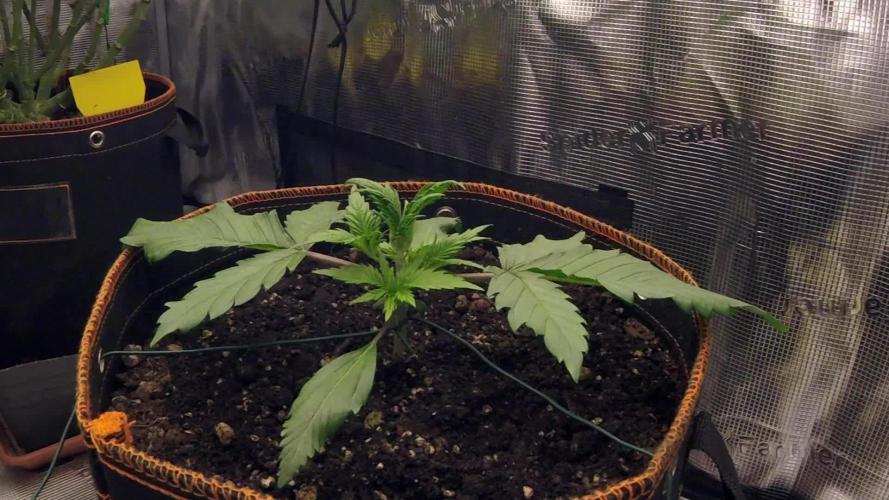
Week 10 the strawberry cheescake is very frosty it look really like a layer of snow on this plant. i started to flush her. very nice for a free seed. smeel is also amazing. i dont smell any strawberry yet but maybe it is in the taste. 😋



Likes
49
Share


@LockDownGrow
Follow
Ok just finnished a blunt of this a out an hour ago, and I do not smoke blunts lol
But it seems only right too do a real smoked reveiw ,
So the fbt7 has been dry now for about 2 weeks and in a jar and today was the day too take the first bud too try so I rolled a fat one " fat one in photos lol ,
So for me the flavour just isn't there yet and am hoping that will come after a cure ,
So I smoked this all too my self and qiukly ,
Within a few minutes I went white as a ghost as was twitching the the corner hehehe,
This is very strong bud and I would go as far as saying it's probably the strongest bud I've had in years ,
I am what I would describe as a joker smoker , as I turn my bud into oils and do not smoke it ,
But any serious cannabis smoker will absolutely love this strain ,
Well done fast buds and thank you :)
Likes
Comments
Share


@Kannisho
Follow
Logramos mucho esta semana y eso nos tiene felices, hemos reforzado la estructura del scrog y realizamos la última defoliación antes de comenzar la floración.
Esta es la última semana que usamos nutrición para vegetativo y comenzaremos a usar C21 Nutrients Flores Parte A + Parte B