


Likes
Comments
Share


@Roberts
Follow
Deep Forest Auto is moving along. She is starting to really shoot pistils now, and bulk. Everything has been doing good. She has a piney citrus aroma that smells really good. Thank you again, Gen1:11, Medic Grow, and Doctor's Choice. 🤜🏻🤛🏻🌱❄️
Thank you grow diaries community for the 👇likes👇, follows, comments, and subscriptions on my YouTube channel👇.
❄️🌱🍻 Happy Growing 🌱🌱🌱
https://youtube.com/channel/UCAhN7yRzWLpcaRHhMIQ7X4g

Processing
Likes
3
Share


@BlueDream17
Follow
When I attempted to defoliate her I guess I got too close to the main vein and killed the 8th branch, shitty. 7 tops it is
The only video for all my diaries, don't have the time to wait for it to upload the video to every diary. Pretty disappointed in my strawberry but maybe she just wasn't the gal for me. She has one branch that never fully recovered from defoliating her. I'll try again next grow but maybe super-cropping and topping her is a better training route. I'm excited and kind of worried to see what kind of colas I get from a 9 week old plant plant with only 2 nodes on each branch. Please stretch...
Likes
2
Share


@GhostBlvckPhant0m
Follow
“The Wock” 7 Weeks🤙🏾 Ladies are crushing its! I’ve for sure found 2 phenols I want to keep going based on structure and growth. The first was actually going to be a throw away. I didn’t like how lanky she was in her solocup stage. I instead topped her to slow down lateral grown and threw her in a 2 gallon bag to do her thing. She is now in a 7 gallon bag and has the best structure of them alll IMO. My 2nd pheno is a Tri-leaf mutation and it throws tops like no other! The perfect mother plant and is why I chose her as pheno #2. The 2 plants that were topped at the 5th node are bushing out more and more, just like it like it. There are 2 natural growing plants are doing great as well. They have nice bushing with one main cola. All plants will be defoliated 5 days before flip. The nose coming from these ladies is LOUD and I mean LOUD! Sour Candy and Burt Fuel! I’ll be taking cuts and flipping these ladies soon! Happy Growing PSGX Family! 🚀PSGX to the 🌕 #Phant0m
Likes
15
Share

@NoProbation4Weed
Follow
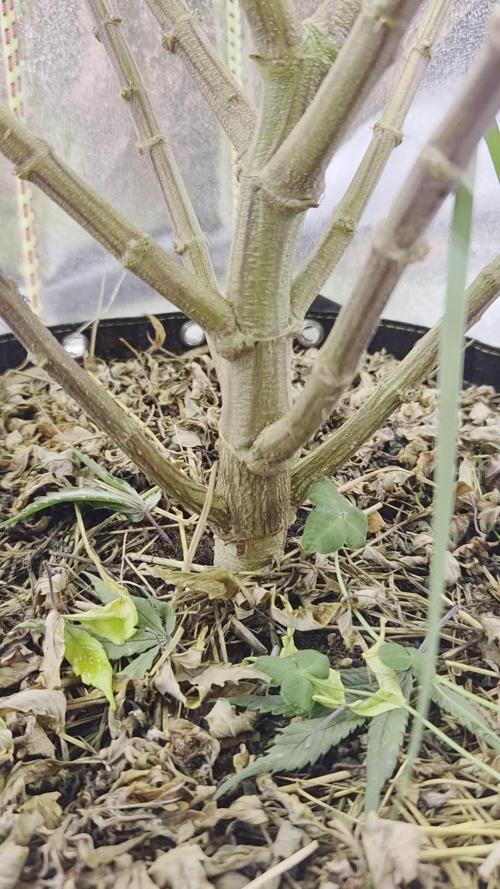
This week, the weather outdoors was very hot and dry. The outdoor plant is looking healthy and vigorous, but it has not yet started showing any signs of flowering.
Indoors, the plant is now on Day 35 since the light cycle was switched to 12/12. It is already producing a very sweet, grape-muffin-like aroma. I really like this strain, as it performs exceptionally well both indoors and outdoors.
Likes
6
Share

@Pompeyblue
Follow
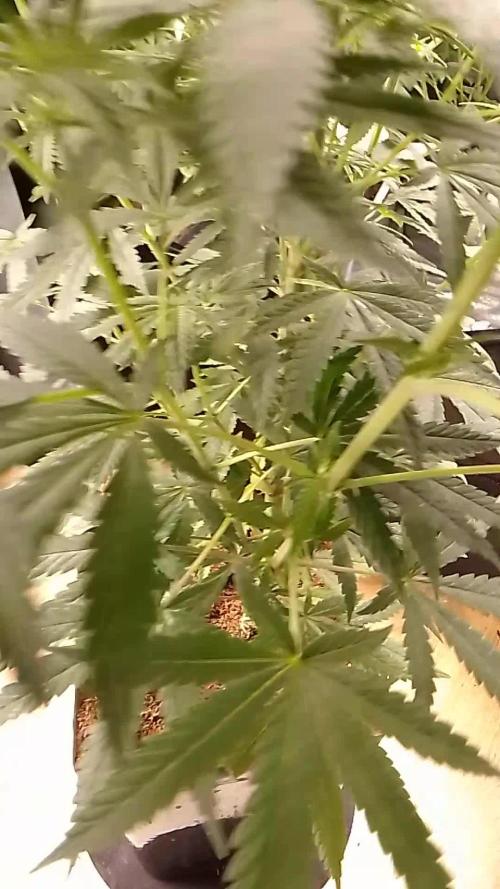
11days now in flower got some love per-flower pistols
These are having a nice little stretch and still few days then their burst into bloom a show their true beauty

Processing
Likes
2
Share


@Cannatech
Follow
First week of flower not much to do, defoliate few leaves and leave the plant to do its thing. As far as training most of it is already done now so just letting plant stretch up and get some decent height.

Likes
7
Share


@B4niTa
Follow
Harvest after 77days, before harvest she get 8 days only water and 1time flush 60l. Easy grow, and she have a nice smell
Soon update

Likes
21
Share


@m0use
Follow
***Sponsored Grow*** = Medic || https://medicgrow.com || Grow = ***Sponsored Grow***
Not a whole lot is happening this week, still having some PH issues in the medium, I believe this is from the microbial mass I added a while back. A microbe product, PH going into the medium is around 6.5-6.8 and coming out is between 5.5-5.8, so something is acidifying it up. Also noticed the runoff last week was a bit higher at times. So lowered the feed down quite a bit, going in at 1.4EC vs 1.8 will bump it up to 1.5 and 1.6 in the next few weeks. I also added in a bit of a PK booster. nothing to crazy only 60ppm worth on a total allowance of 700PPM
Lights now running at 100% with V1 spectrum, decided to go with 100% now vs after stretch, will see how it works out.
Till next week.
***Sponsored Grow***
Official Website: https://medicgrow.com/
Facebook:
https://www.facebook.com/medicgrowled
Twitter:
https://twitter.com/medicgrow
Instagram:
https://www.instagram.com/medicgrow420/
YouTube:
https://www.youtube.com/channel/UCNmiY4F9z94u-8eGj7R1CSQ
Growdiaries:
https://growdiaries.com/grower/medicgrowled
https://growdiaries.com/grow-lights/medic-grow

Likes
22
Share


@smoker420
Follow
guna see how she is in a couple of days thinking of giving her plain water soon then chop realy fast flower this one

Likes
17
Share


@RDWCGrowing
Follow
Week 1 Day 1 - 8/12/2023
1st Water change Day! Such a special time it is when you remove the little bit of Nutes that you gave them as an appetizer and you give them their first real meal.
Added
39 Gallons of Water to my system
SILICA= .5mil/Gal = 19.5 = 20mil
Root Drip = 1mil/Gal = 39mil
Cal Mag= .25mil/Gal = 9.75 = 10mil
FLoraMicro= 3.0mil/Gal = 114mil
FloraGro = 2.0mil/Gal = 78mil
FloraBloom = 2.0mil/Gal =78mil
ORCA= .5mil/Gal = 19.5 = 20mil
Week 1 Day 2 - 8/13/2023
Everything is looking good the roots are making their way to the water and the new grow is looking nice and green.
Week 1 Day 3- 8/14/2023
Everything is right on track, they are looking beautiful and in the praying position all leaves happily lifting towards the light.
Week 1 Day 4- 8/15/2023
A little worried today her birth Twin the BA I am growing out is looking great and is raised towards the light and this one is just slightly under.. Will keep an eye on Her.
Week 1 Day 5- 8/16/2023
Walked in and the humidity was under 60.... ohh noooooo.. So I added 2 humidifiers to the tent and attached them to my InkBird controller which is set to 62.
Also looking at the roots and she has some poking out the bottom but just not in the water yet.. Luckily we are set for 14 days before next water change so the system will stay stable and her sister already has roots in the water so she should only be a day or two behind.. we will just keep tracking but she is delayed.
Week 1 Day 6- 8/17/2023
Roots in the Water!!! Huston, we have a successful launch. This grow is on!
Humidity was a little low this morning so I refilled the humidifiers. Other than that the temp looks great, the PH looks good, the PPM looks good the plant is in the praying position and all damage from the little drowning from over filling the cloning machine seems to have been fixed. Happy Happy.
Week 1 Day 7- 8/18/2023
Yay.. week 1 in the books, roots in the water growth has started. Everything for growth and environment is looking good and on track, there are a couple of mutations with this Lady will keep an eye on those leaves.
IMO this grow is going A lot during this week 1 then week 1 of the last grow when I had them drowning.
Really excited on how this grow is going to come out.
Likes
29
Share


@AlbaDiary2
Follow
Buenos humos queridos jardineros!!💚
Espero que la semana fuera bien!
Yo aquí, con las Novarine que no paran de crecer y crecer, son altísimas!
(Casi más que yo, para ser sincera😂)
Están muy olorosas y sacando bellos cogollos!
Nos vemos para la siguiente semana con más!
A pensar en verde💚💚💚💚💚😘😘😘😘😘

Likes
19
Share


@Comfrey
Follow
Day 80
This morning I started defoliating Tropicana. She will be in the darkness for the next days. I already harvested a part of the head flower and let it dry trimmed. Because of extreme weather conditions and very high humidity I got a little bud rott. I found it out quit early I think. So I hope nothing will not happen any more. Just harvesting relaxed and drink a Tropicana tee.
Day 81
I decided to cut her down in the evening. The humidity in the basement room is high and I don‘t want to risk here anything anymore. Waiting for my first homegrown weed to be vaped.
Day 82
Tropicanas flowers hanging to dry in my basement. I check them once per day with a strong light.
Day 83
Same same. The smell is wonderful like a bit of gas combined with a fruity flower bouquet. Our neighbors in the house like the smell, too. 🙏
Day 84
I could try my first homegrown weed. It‘s absolutely tasty and have a very smooth vape. I was very surprised cause it‘s not cured yet. A longer vape report will follow when it‘s dried and cured.
Day 88
All flowers, sugar- and tee leafs are trimmed and filled in glasses for curing. I open twice per day for 20 minutes. Boveda packs 58% inside.
I will fill out the rest of the diarie when my buds are dried, cured and vaped. So far this was a very exciting journey for me. Growing cannabis and even legal on our balcony. Feels still a bit unreal, but it’s real!
Thank you for reading my diary! Thanks to all the people who worked on legalizing cannabis in Germany, especially to the „Deutscher Hanfverband (DHV)“!
I will give more updates and write a vape report after curing several weeks. Maybe with some Tropicana Cookies baked in Comfreys garden kitchen.

Processing
Likes
10
Share


@PisBaked
Follow
Changed a couple things up with the nutes after noticing some cal/mag. def... Everything is looking amazing. Pre flower has officially begun. Looking to get some Liquid KB in here pretty soon too.
Starting to stink insanely bad (but great

Likes
Comments
Share


@Cultivandomedicinanatural
Follow
En esta semana ya cortamos algunas de las pequeñas que tenemos fotografiadas arriba. Ahora subiré sus cosechas y el resto de las pequeñas empezamos a regarlas sólo con agua, pure zym y Sugar royal de nuestros amigos de Plagron para que den el último estrujón y pasarlas por peluquería. Es una auténtica pasada los resultados de estas preciosidades 😍😍😍😎😎😎😋😋😊😊
Likes
161
Share


@FrontRowAG_BrianG
Follow
Entered diary of the month for the first time here on GD. It’s been a good run thanks to Ethos Genetics and Front Row AG Nutrients.
Grow diaries has been kinds shitty lately. I’ve tried my best to upload as many good photos as possible.
I know I grow a little differently than most here on grow diaries. Push the plants as hard as you can, lots of heat/humidity/co2 and high EC. My motto, if you’re gonna grow, harvest as much as you can with the space you have.
Overall this was one of my best runs in a while. Deep orange and cream/cake smells and vigorous growth made this a great strain.

Likes
23
Share


@Horseluisweed
Follow
Esta semana más de lo mismo aunque aún no ha terminado...jeje, le tuve que quitar el poso de café xq se le puso una pelusilla un tanto sospechosa(y mejor prevenir que curar ☝️)voy a hacerle un té de hummus, al volver el último fin de semana la he visto con los colores ligeramente más claros en algunas hojas(no sé si falta de nitrógeno o si es un problema de Ph)🤔, estoy planteandome poner mas luz y poner ventilación,🧐 al final de esta semana además quizá empiece a oler a ortiga en la habitación (ojalá 🎃☝️🕺)
🙌👌Quiero que crezca como la levadura!!!!🌵😋


Likes
38
Share


@MadeInGermany
Follow
Info:
Unfortunately, I had to find out that my account is used for fake pages in social media.
I am only active here on growdiaries.
I am not on facebook instagram twitter etc All accounts except this one are fake.
Have fun with the update.
Hey everyone 😃.
The lady grows exactly as she should 😍.
She looks beautiful and her growth is strong 👍.
I think that I will pot in 11 liters in the next few days.
Until then, I wish you lots of fun and all the best 😊
You can buy this Strain at :
https://www.zamnesia.com/de/4532-zamnesia-seeds-gorilla-glue-feminisiert.html
Type:
Gorilla Glue
☝️🏼
Genetics:
Chem's Sister x Chocolate Diesel
50% Sativa/50% Indica
👍
Vega lamp:
2 x Todogrow Led
Quantum Board 100 W
💡
Bloom Lamp :
2 x Todogrow Led
Cxb 3590 COB 3500 K 205W
💡💡☝️🏼
Soil :
Canna Coco Professional +
☝️🏼
Fertilizer:
Green House Powder Feeding
☝️🏼🌱
Water:
Osmosis water mixed with normal water (24 hours stale that the chlorine evaporates) to 0.2 EC. Add Cal / Mag to 0.4 Ec Ph with Organic Ph - to 5.5 - 5.8 .

Likes
13
Share


@Oyziphar
Follow
GROW 😁
As you may already know, I have 2 varieties in my growroom. 👍
I have 4 pots of each species with 4 plants in each pot. So 16 plants Mother Gorilla and 16 plants Triple G. 👽
In the first weeks, the Triple G plants were the fastest growers. But since flowering, the Mother Gorilla plants have taken over. Most Mother Gorillas are now higher in length than the Triple Gs. They clearly have more Sativa influences than the Triple G. 💪
The 16 Mother Gorilla plants differ greatly in length.
On DAY 26 these are the various lengths (in cm) : 63, 67, 83, 83, 95, 99, 107, 110, 110, 111,, 114, 116,117, 126, 130, 134
The drastic pruning in week 2 has stimulated the plants enormously. The plants have been multiplied by 2 to 3 times in height since flowering
--------------------------------------------------------------------------------------------------------------------------------------------------------------------------------------------------
BLOOM 😍
The plants are now busy making new flowers. The plants with the most Sativa genes do not yet have that many flowers. But the plants with more Indica genes are already working hard to string the flowers together to thick buds. The scent of the flowers is fantastic.
--------------------------------------------------------------------------------------------------------------------------------------------------------------------------------------------------
WATER / HUMIDITY 😰
I have lowered the desired humidity again this week by 5% 👇 and the temperature is increased by 1 degree. 👆👇
The plants have made many new leaves. Every day (24 hours) the 4 pots (16 plants) get about 7 liters of water to drink. 😂
The '1.75 liter watering volume per plant' stated in 'Grow conditions' is therefore actually '1.75 liter watering volume per autopot'
Most of the water evaporates through the leaves and therefore the humidifiers evaporate less and less water. At the beginning of the week, I had to fill the two humidifiers with 7 liters of water every 24 hours, now every 40 hours. 👌
Likes
42
Share


@GODSGIFT_2005_JM
Follow
⛺️ MARSHYDRO
💡VIPARSPECTRA
🍼GREENHOUSE FEEDING BIO GROW
🌱 WEEDSEEDEXPRESS

Processing
Likes
16
Share


@Divs_darkroom
Follow
Been feeding the nectar for the gods sample pack. Plus impello biologics inoculant. Experimenting with lst. Hasn't been topped or defoliated at all. Just tying down and tucking leaves. I cut my pot as well to allow more lower air circulation. There are 9 visible "tops" at the top of the canopy. And a couple more that are underneath. Day 32 and everything is looking good to me.
