


Likes
Comments
Share


@kissrubb
Follow
continuamos la semana apunto ya del final del ciclo de estas maravillosas geneticas, ya hemos cortado una fruit gum y esperamos a que se seque para hacer una cata

Processing
Likes
24
Share


@DaddyPrime
Follow
8/18 pistols everywhere. Lost quite a bit of leaves due to heat stress I believe. Shes looking hungry for nitrogen. Sugar leaves are already looking super frosty 😍
8/22 been slacking on taking pictures ever since I started working again, but I stopped by last night and gave her a sniff test outta curiosity and its insane the amount of blueberry smell she has already💚💚

Likes
33
Share


@Roberts
Follow
Jack Herer is growing really slow. The nutrition was initially too strong. I think she just grew into it. Hopefully she makes a lot of growing progress soon. I can't do much but wait at this point. Thank you Athena, and ILGM. 🤜🏻🤛🏻🌱🌱🌱
Thank you grow diaries community for the 👇likes👇, follows, comments, and subscriptions on my YouTube channel👇. ❄️🌱🍻
Happy Growing 🌱🌱🌱
https://youtube.com/channel/UCAhN7yRzWLpcaRHhMIQ7X4g

Likes
28
Share


@GrowInger420
Follow
This week was good, she grow nice, but very slow...have a nice week✌️✌️

Processing
Likes
27
Share


@Silverback_Guerilla
Follow
2/17:
I spent a little time rearranging today. I bought some 32" x 14" plastic ventilated storage shelves and cut the legs down on two of them so I have some different-height platforms for the shorties in the garden. I should also be able to easily flush 6 plants in 5 gallon pots, or 9 plants in 3 gallon pots at a time now, that's a win!👈
2/18:
I debated whether to feed or not, and settled on watering them with about 1/2 gallon each. including bembe, cal-mag, signal, humic acid, and a little beastie bloomz.
The new dehumidifier is pulling about a gallon and a half per day from the air, so I should be able to feed them in a coupe of days.
I've reached the ceiling again with my lights and the tall one is still stretching a little bit. I sure hate to have to supercrop her too...my garden is looking so wild and untamed already...😳
2/19:
Rainy day outside, so I'm pulling in 99% humidity, plus the pots are still petty saturated, but the new dehumidifier is keeping up. RH is holding at about 45% today.👍
2/20:
Day 31 of flower...the taller plant grew another couple of inches overnight! Damnit!😟 After emptying the closet (again) today and supercropping more branches (and some of the same branches again), a semi-solution occurred to me that allowed me to raise the lights another 3-4 inches! Now I'm truly maxxed out...
These two plants couldn't be more different.
One twisted-leaf 2-footer that started budding up in the first week of flower, and one beautiful 4-footer that's been very slow to flower..
The structure on the taller/sativa-looking plant is very promising, though...many long colas, and stacking up well...👌
I really needed everybody to finish in the same week so I could get my Spring autos going...😶
I'm still hoping that the big one will hurry the fuck up and finish by the EHD(3/11), but it's not looking possible at this point...
I took photos and videos of all the plants today since I had to empty the closet and it wasn't a feeding day.
2/21:
I fed them today with about 3/4 gallon each including beastie bloomz, tiger bloom, big bloom, signal, bembe, and cal-mag...no grow big this time.
2/22:
The tall one grew another inch...i threatened to bind her up like one of Silky_Smooth's plants if she didn't stop growing immediately.
If she doesn't start budding up with serious urgency, she's gonna piss me off...my Spring auto grow must not be postponed!
2/23:
I ordered some terpinator because I'm not so sure about Signal's efficacy at this point....I'm usually dealing with odors more by now..


Likes
1
Share


@Olduffybastard88
Follow
Nice and frosty next to no effort was put into tbis plnt just let her do her thing and she turned out a beauty really easy to grow and no problems so far
Likes
3
Share


@Vincentsta7
Follow
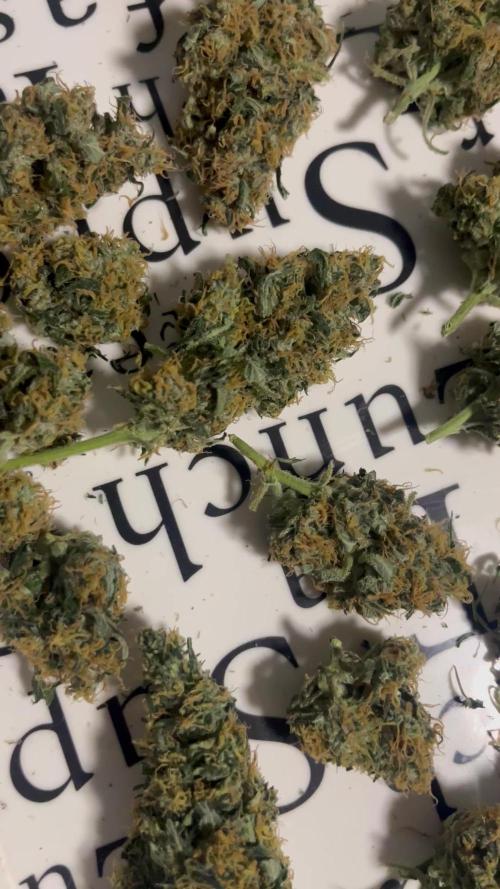
Super sour grape(small it was stunned early )
Bruce strawberry Fumes
Watermelon Zkittles Fumes


Processing
Likes
15
Share


@Luv2Grow
Follow
Day 36 - Starting week 6 and she’s starting to blow up. She’s showing a bunch of pistils now so I’m gonna day this is the first week of flower. I went ahead and gave her one last feed of veg nutes and next feeding, I’ll start bloom nutes. My pH pen is recalibrated and checked runoff after the feed and still a little high, 7.1 but nothing like the initial 8.3 it was reading the other day so I’ll lower the pH a bit for next watering and hopefully square everything away.
Day 37 - This girl is really taking off with some explosive growth. I didn’t do any LST today and gonna let her go for a bit and see how she starts to develop. She’s gotta get a little more stretching going on and might continue some more.
Day 38 - This girl is blowing up and looking great. Going to hold off on anymore LST for awhile so she can get a bit of vertical growth going on and hopefully by the time she’s ready for more, I’ll have one girl in the tent ready for harvest so I’ll have more room to spread her out. She’ll get some water in the next day or two.
Day 39 - She’s still exploding with growth right now but not really into full flower mode yet but throwing more pistils each day. Will be giving her some water tomorrow.
Day 40 - All is Loki g great and it’s looking like this is going to be a very big girl. She was thirsty today so gave her a full 1 1/4 gallon of plain pH’d water without cal-mag and pH’d to 6.4. I added a second 1000W LED light to the tent for now to give this girl and my other some more light since my bigger two are taking up some space. Once those two are harvested I’ll cut back to just one because my normal 76 degree temps are up to 81 now.
Day 41 - Almost the end of week 6 and damn this girl is just blowing up. Will be harvesting my Blue Dream soon so it will open up some soace for her to really go. Next feeding I’ll give her her first feeding of bloom nutes, plribably sometime this weekend.

Likes
14
Share


@Joutu
Follow
Me encanta la estructura conseguida en estas plantas.
Ramas robustas y nudos cortos.
Se viene una buena prefloración.
Un saludo GanjahFamily.💚


Likes
32
Share

@Skunky420
Follow
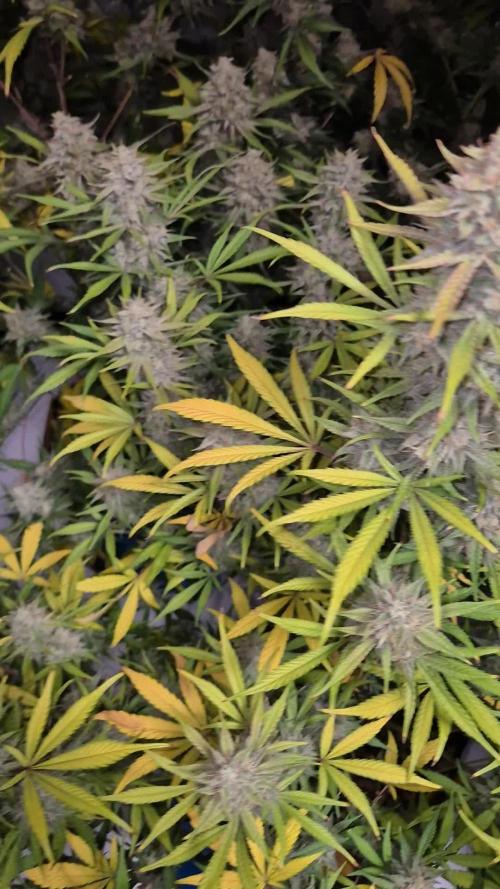
➡️ Harvest day ✂️ for the Dosidos Autos! 68 days total from seeds to harvest, and what a smell! The buds are magnificent and bursting with trichomes. I am always impressed by the speed and yield at which autoflowering plants complete their cycle. Whole plants are drying, hanging from hangers, except for one of the three where I had to cut the plant in two so the buds wouldn't touch.
With the air conditioning and a duct running from the unit to the tent's air intake, the air temperature is 20-21°C and between 55 and 60% humidity—the only way to achieve these drying conditions right now with the heatwave.
No deficiencies from start to finish. I'm a big fan of Biotabs and its ease of use, and I can't wait to try it with photoperiod strains.
Mia from Biotabs also gave me great advice when I had a question, so really top-notch service from the brand.
I can only recommend their products! :D
In the last photos, you can see my summer 2025 harvest with the same Barney's Dosidos auto strain grown outdoors, in 11L pots and using BioCanna fertilizer.

Likes
5
Share

@Rare_Terps_5280
Follow
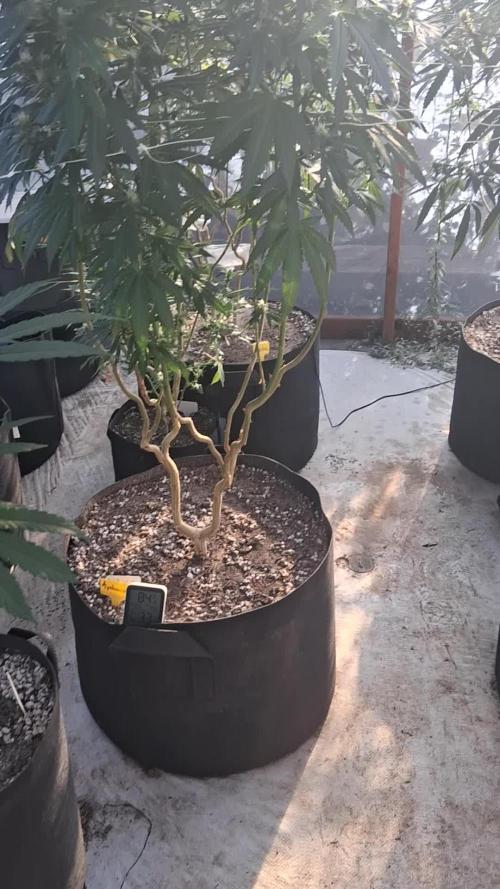
This beauty flipped to flower few weeks back and is just now picking up momentum and building hairs and tricomes. Shes about 5ft tall. She gets super fussy on hot days like in pic but she is looking and smelling great so far. Only gets better from here!!!
Processing
Likes
31
Share


@Peeman
Follow
I am at a loss with HSO blue fire. First of all the germination rate was poor and now my only blue fire plant has gone Herme. I removed her from the tent and put her in the corner of the room under a separate light which is going to cost me more money in the long run. I should probably just get rid of her but I don’t have the heart to. I’m not the only grower that has had this problem with blue fire. Very disappointed


Likes
26
Share


@Growin_it
Follow
Defoliation on lower branches to improve air flow and future larf.
Going into 12/12 for flowering, next week.


Processing
Likes
58
Share


@Dahoola
Follow
-----------------------
Update start week 4:
-----------------------
We entered the first week of bloom for MBAP. Have had a perfect run-up and you notice that. She is ready to bloom abundantly. Besides the usual leaftucking, I also did some defoliation of the lower leaves and shoots. I have reduced the humidity in the room and we are now around 60%. New update later this week!
--------------
End week 4 :
--------------
End of the first week of flowering behind us. Everything is going well, good growth and budsites continue to develop. I further removed the lower shoots and did some leaftucking where necessary. She has developed into a beautiful, large and open plant. Ideal for her future bud development. On to the 2nd week of flowering. Until next week everyone!

Likes
2
Share

@all_about_420
Follow
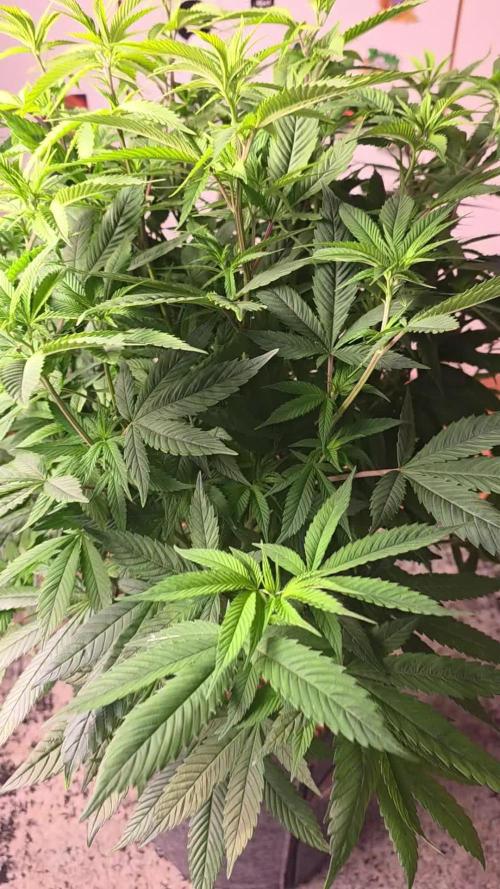
Das Zelt ist mittlerweile randvoll, und vor dem Wechsel des Lichtzyklus war Handlungsbedarf angesagt. Um bei der dichten Struktur der RS11 von Traphouse Genetics eine optimale Lichtdurchdringung und Luftzirkulation zu garantieren, stand in dieser finalen vegetativen Woche eine großzügige Defoliation an. Bei dem extrem buschigen Wuchs im Inneren der Pflanze war dieser Rückschnitt bitter nötig, um verdeckte Triebe freizulegen und potenziellen Hotspots für Feuchtigkeit vorzubeugen. Neben dem Ausdünnen der Blätter musste die Lady auch in der Höhe um gute 20 cm gestutzt werden, um den anstehenden Stretch im Zaum zu halten. Nach diesem radikalen, aber notwendigen Cut ging sie schließlich mit einer optimalen Gesamthöhe von 55 cm ins Finale. Sie hat den Eingriff dank ihrer robusten Gene gewohnt gelassen weggesteckt. Mit einer perfekt vorbereiteten Basis, freien Lichtbahnen für die künftigen Bud-Sites und maximaler Energie im 15-Liter-Topf schließt dieses Kapitel nun ab. Das Fundament steht, die Struktur ist sauber ausgeschnitten – die Blütephase kann endlich kommen!
Likes
3
Share

@PlantMike
Follow
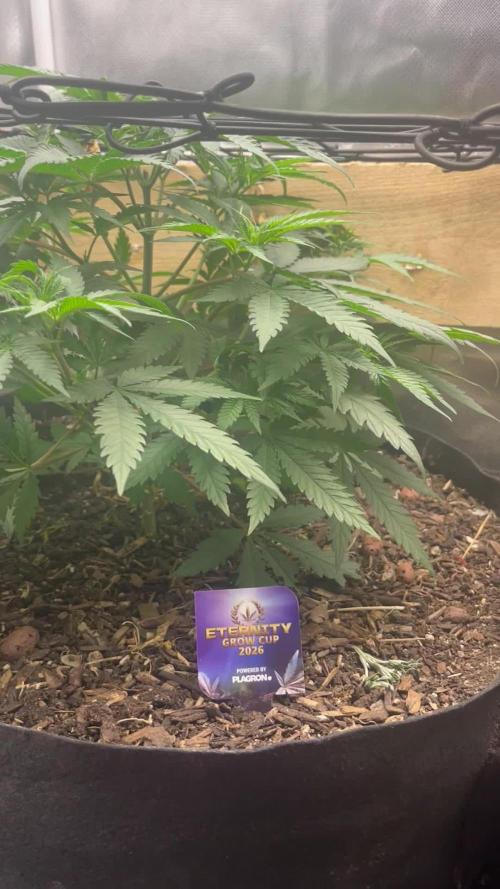
Nothing new to report with sticky broccoli. She got a topping and a light defoliation of some of the megs fan leaves so she could clear lateral growth. Growth is steady and with these established pots there isn't much need for intervention by me while in veg. Flipped to flower 2/17. Here we go for flower!