


Likes
Comments
Share


@I_Identify_As_A_Dan
Follow
Day 35
Shes really stepped up in the last week... look at her size😅 If i had some more space in the tent i think shes get even wider.
Shes starting to show some pistils, wonder how much more she will stretch.

Likes
17
Share


@Naujas
Follow
She is much prettier than she was a week ago :) I remembered that I have my first grow light, which is more compact and it will give me more space, so I changed my light, now the girl's side branches get light too:) I add a lot of video memes, because I really want to win Iphone16 pro ;) and those who don't take risks don't drink champagne:) good luck to everyone.

Likes
35
Share

@SundancerS
Follow
Soooo... Wir realisieren endlich unser erstes Outdoor-Diary und haben uns für die Green Crack F1 Auto von Zamnesia entschieden. Diesen Strain kennen wir bereits aus einem Indoor-Grow und sind vom Geschmack und Ergebniss absolut überzeugt.
Nun geht es allerdings in den Outdoor-Bereich, also auf "unbekanntes" Terrain.
Wir verwenden für diesen Grow zu 100% gebrauchte (wiederverwertete) Erde. Wir haben sie mit ca. 5% Wormhumus von Biobizz aufgewertet und nach Düngerplan von Greenhouse Feeding die Erde mit BioGrow Pulver gedüngt.
Für den Outdoor-Grow haben wir uns für diese "einfache" Düngervariante entschieden denn wer will schon ständig mit zig Flaschen auf der Terasse rumhantieren.. :)
Wir hoffen auf gutes Wetter, ein sonniges Frühjahr und sind sehr gespannt, vor allem weil wie den Strain schon kennen, dieses mal aber unter gänzlich anderen Vorraussetzungen.
Auf geht´ts Green Crack :D

Likes
13
Share
@ThatsmyGrow
Follow
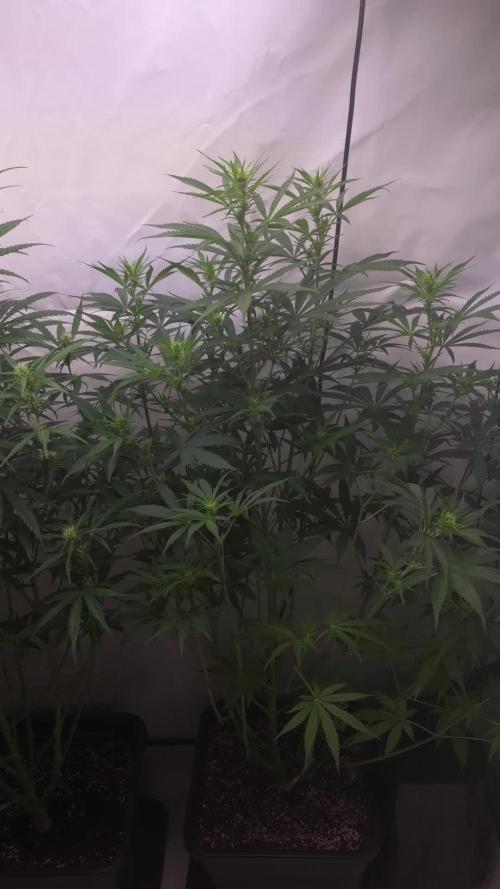
🌸 Week 7 – Gorilla Cookies Auto Pheno Hunt
Another week has passed and flowering is now in full swing across all 6 phenos 👀🔥
The differences between the plants continue to grow, and it’s becoming easier to see which phenos have the potential to become real standouts by harvest time.
📈 Current observations:
Pheno #1 and #6 have finally started to catch up and are now slowly building buds as well 🌸
Pheno #5 continues to dominate the tent and has stretched to an impressive 130 cm
The flower development on Pheno #5 is especially promising, with some bud sites already suggesting the potential for 25 cm+ colas if everything continues as planned 🔥
Pheno #2 and #6 are being overshadowed by the larger phenos and are clearly falling behind in overall size and vigor
The structural differences between the phenos are now more obvious than ever, with some focusing on height while others remain more compact and bushy
💡 Environment & setup:
The grow has now reached its current limits in terms of space and lighting:
Light fixture raised to its maximum height
Light intensity increased to 80%
Summer temperatures pushing the tent up to around 32°C ☀️
Relative humidity averaging around 67%
Despite the higher temperatures, the plants are still pushing forward and stacking flowers nicely. The next few weeks will be all about bud development, density, and resin production.
🏆 At the moment, Pheno #5 is definitely demanding attention, but there is still plenty of time for surprises. Sometimes the biggest plant doesn't end up being the best one, and that's exactly what makes a pheno hunt so exciting.
💬 Which pheno do you think will come out on top when harvest day arrives?
Processing
Likes
34
Share


Likes
22
Share


@Knert
Follow
D35: gave her 30 grams of organic granular phosphorous grains (6-16-0) and gave her a thorough watering untill it reached runoff.
D37: Days were with intense sunlight and a lot of wind. Gave her another good watering and 30g of organic granular potassium grains (2-0-20). Given that the days are all sunny the last days and they're bound to stay that way, I think I'll water her every 2 days as she's using a lot of water these days and that way the granular feeder gets dissolved more quickly into the soil.
D40: She's looking absolutely great. Really enjoying the sunshine and warm weather of the past week (she did get some really minor sunburn spots on +-4 fan leaves, but she did't seem stunted by it). She keeps on growing every day and she has a lot of promising tops. The LST has been working out really well! I'm doing my best trying to tuck away as many leaves blocking the sunlight from the bud sites, but there's starting to get a lot of them so I don't really know what I should do. Should I trim the ones that are in the way of the bud sites and that I can't really tuck away or should I leave them on for photosynthesis? The flowers are also really developing and she's really starting to give a good smell. Looking forward to the following days/weeks!
D42: I watered her again, around 3l, and added another 20g of potassium grains. That's going to be the final amount of fertilizer she's getting. First gave her 1,5l of plain tap water and then another 1,5l which was 50% tap water and 50% sparkling water, mixed with a teaspoon of molasse.
The overall nutrient scheme was thus:
* D20: 25g organic granular fertilizer (6-3-3)
* D28: 35g organic granular fertilizer (6-3-3)
* D35: 30g organic granular phosphorous grains (bone meal) (6-16-0)
* D37: 30g of organic potassium grains (2-0-20)
* D42: 20g of organic potassium grains (2-0-20)

Likes
19
Share


@Unpluggy
Follow
Hi there Friends🕊️
The Purple Lemonade is doing really well. Ill let her Grow a Bit Now and you guys get more footage in week 5😁
I will Switch to a bigger tent in a few days.
Likes
100
Share


@MadeInGermany
Follow
Hi growers :-)
It smells better every day, and looks more delicious 😍.
There is not much to say this week.
They are still blooming 10 to 38 days. The 3 Victory Kush F1 and the Zkittlez in front were rinsed, and are still around 10-14 days.
The rest needs a bit :-)
Until then everyone have a nice weekend and let it grow 😎


Likes
293
Share


@Ju_Bps
Follow
Hello growmies 👩🌾👨🌾🌲🌲,
👋 Girls keep maturation, End is very close, Harvest in few days 💜🌲✂️🏁🏁
Flush Started
💧 Give water each 2/3 day
2l Water + Flash Cleaner (3 ml/l)
2l Water + Flash Cleaner (3 ml/l)
PH @6
💡Mars Hydro - FC 3000
50% 13 cm
Mars Hydro Fan kit
Setting 9
Have a good week and see you next week 👋
Thanks community for follow, likes, comments, always a pleasure 👩🌾👨🌾❤️🌲
Mars Hydro - Smart FC3000 300W Samsung LM301B LED Grow Light💡💡
https://www.mars-hydro.com/fc-3000-samsung-lm301b-led-grow-light
Mars Hydro - 6 Inch Inline Fan And Carbon Filter Combo With Thermostat Controller 💨💨
https://www.mars-hydro.com/6-inch-inline-duct-fan-and-carbon-filter-combo-with-thermostat-controller
Fast Buds - Gorilla Cookies FF🌲🌲
https://2fast4buds.com/us/seeds/gorilla-cookies-fast-flowering
Likes
46
Share


@Mr_Motalovah
Follow
Hello growers and tokers! 👋 👩🌾 🧑🌾.🔥💨
It's my first harvest on this community and I'm loving it.
Everyone always ready to help each other and have great feedback.
Tracking my grow on here has made it way easier.
There were times that I misplaced notes or forgot what I did or when with a certain strain and all I had to do was come on here and check it.
Also motivated me take more pictures and do more logs. All out great site. Don't know how I haven't found it earlier.
HIGHLY recommend for all growers.
The grow cycle went pretty smooth.
She's easy to grow and flowers early so you can't do much training. That being said it's great for beginners. 👌
Had no problems with pests on these, while on the other plants (none cannabis) in the balcony I had issues with spider mites.
They grew better than expected given the few hours of direct sunlight they received.
Results were good, I was expecting 10-15 grams per plant and ended up with a tad bit more.
Drying went a bit fast because there were few buds.
I probably could have took it down a few degrees as well.. my fault on that part.
They dried in 4 days, they've been curing for 10 days.
I normally test them after 15 days but they smelled so good I had to try them.
Smell: Lovely earthy, woody, slightly like diesel. Quite pungent for being autos.
Taste: Just as it smells.. leaving a nice after taste of diesel.
Touch: Very sticky, dense buds.
They break down finely in the grinder.
Cleaned the grinder before testing and after 4 joints ( 2 grams or so)
I already have a good amount of kief collected in the bottom. (Check photo)
Might grow this one again just to make some bubble hash.
The high is awesome nice uplifting, long lasting energetic but without a heavy euphoric rush.
Reminds me of a smooth haze high, although if you smoke a lot even being an experienced smoker, she'll get to you.
Only down side is dry mouth, very dry mouth!
Have some water on hand because your mouth will transform into a desert. 😂
Great strain to kick start the day.
Beginner smokers take it easy with this one. She hits hard! 👊

Likes
9
Share
@Naujas
Follow
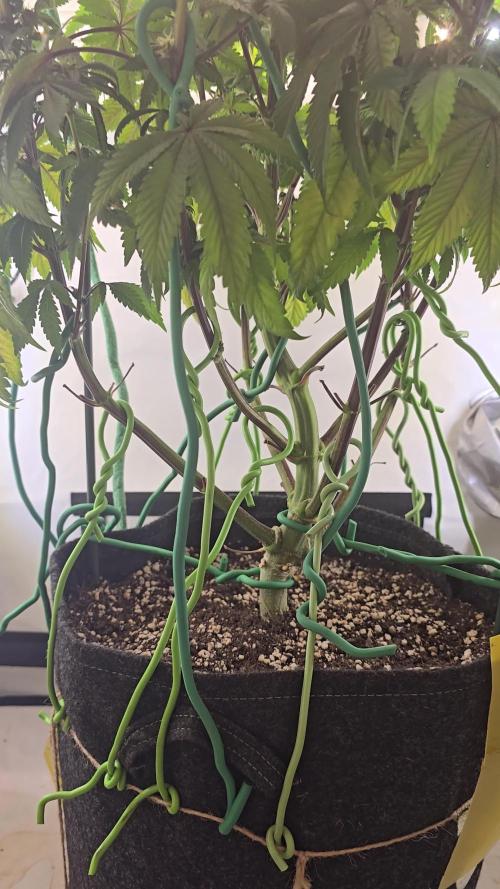
84 dienos!!!! Mergaitė atrodo gražiai ir laiminga:) O jei ji laiminga, tai ir aš laiminga:) Taigi, kol kas viskas klostosi gerai, jau jaučiu ateinantį kvapą, tai puiku:) Ji bus tikrai šaunu:).

Likes
44
Share


@PotCasso
Follow
Week 9:
Watering in at 700ml
Finishing beautifully. The smells are intense, fantastic senescence (fall colors),
Getting their swell on, trichomes are all cloudy.


Likes
25
Share

@Doofy
Follow
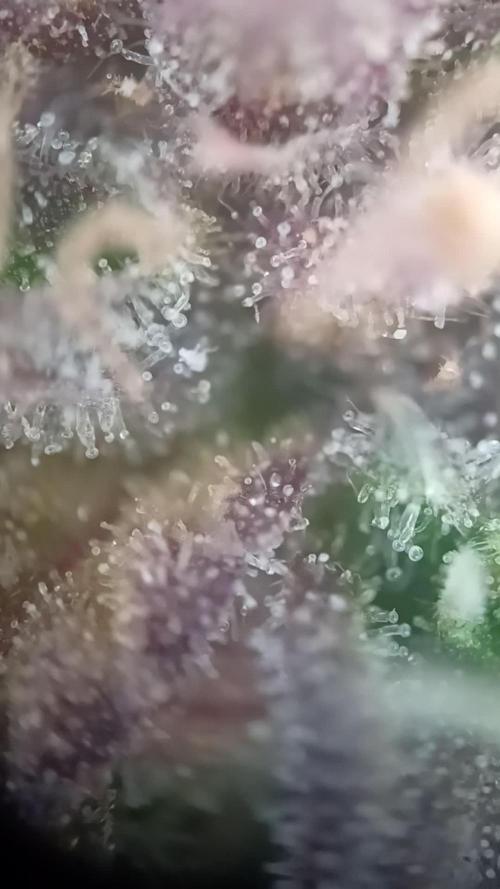
Keepin an eye on the trichomes of the first plant, cause imo her main top is ripe
A bit purple both... gettin close!
Nutrients up untill flowering
Trichomes still white, her top looks ready. As long she doesn´t turn amber, I´m lettin them grow 👐👍 I'm thinkin about lettin the thin one just trun amber... it's such a small and thin plant. Doesn't matter if the CBD drops, I want more harvest!
The thin one smells like candy and flowers 😛🤩 she´s also very white and frosty
Likes
4
Share


@Lazuli
Follow
It took its time to fmower but damn what a tree.. the big bud and overdrive really helped push the weight
Likes
82
Share


@BigBadLion
Follow
Heeeere we go! Sorry for the late update!
This is when I start the flush! I believe the plants are pretty much ready at this point and doing this will just improve the final product!
Doing this took me a good chunk of time, mostly because I didn't know exactly how much of water I was going to need (it was a loooot 😫) and how hard/tiring it was to pH it as well. In the end my calculations were off, as I needed far more water than what I had (lol) so I didn't manage to do a full flush... but I still managed to lower the amount of salts and residues to a "decent" level (around 850 to 1500 ppm). I also used flawless finish so I suppose than even when I didn't use enough water that solution alone was enough to help!
Besides that the rest of the week was quite calm and relaxing.
Thanks everyone for reading! 😍
Likes
63
Share


@Wicked_Stix
Follow
Shes big
Shes beautiful
Shes a beast!
Shes my winner. The last plant standing of this run and she is getting flushed with ro water. I have taken late flower clones of this girl because it would be inhumane to let her die. I will reveg them if they root and dose one with silver to make a lot of beans. Beaming her with 720 watts of light her last week of life just because I can.
Ps. If she dont win diary of the month then its rigged🤣🤣
Likes
18
Share


@KEGrow
Follow
Into flower we go and so far she looks really damn fine! I keep her very low whit lst because my grow space doesn’t allow high plants right now 😂 But I love lst, it gives me time to sit beside my tent and just play with my girls 😂
Likes
2
Share


@HIAZ_urbanbudfarmer
Follow
Back 2 are on week 5 day 34 of flowering & front plant Orange sherbet clone is week 8 day 54 & very close to harvest, changed her over & flushing with water & Rezin only. Awaiting delivery of a new 60x microscope lense to view trichomes but the buds look like their just about done. Calyx closed & swollen, amber pistils curling in, they are nice & dense buds.
Likes
5
Share


@Mr_nugs_lover_David
Follow
This amnesia pro has peformed amazing, both phenos #1 and #2 have produced beautiful hard dense colas, full of citric lemony terps, ideal to use for daytime, very nice cerebral buzz. Hope you guys have enjoyed my work! Peace 💚💛❤️👨🌾
