Likes
Comments
Share
Hello Diary, White Widow has completed the third week of vegetation and is entering the flowering stage. This week the White Widow grew 15 cm, got a bunch of new leaves and started to form flowers. The leaves are a nice green color and generally White Widow looks healthy. It is really developing very nicely, which makes me super happy. The summer heat is still present which affects the temperature in the grow box, this week the average was 29 degrees although sometimes the temperature rises to over 31 degrees. But I don't notice that it is harming them, I make sure to water them regularly, so that the soil does not remain too dry although that sometimes happens. Every week, as the plants grow, I increase the amount of water when watering. I continue to add Bio Grow Fertilizer and CalMg with each watering. pH I drop to 6.0 with Plagron's Lemon Kick. At the end of the week, more precisely after taking photos for day 21, I increased the power of the led lights to 80%. Here is a quick overview of the week: 10/08/2024 - Day 17. Watering. I prepared 8 liters of water, added Bio Grow Fertilizer and CalMg. With that amount I evenly watered all three plants on the farm. 13/08/2024 - Day 20. Watering. I repeated the same procedure as the three days before. 14/08/2024 - Day 21. Photographing and measuring the height of the plants. Official end of the vegetation phase. White Widow - Day 21. - 29. cm That's all from me for this week, thanks to everyone for the comments and see you soon.
Likes
18
Share
sound week on the soil. this grow is really lovely. starting to see some promising bud sites. I think i might trim too much but i want the buds to get the light. the Pineapple Kush is sadly a bonsai in all of this lol. you will see it in the video. will just let it grow.
Likes
7
Share
No complaints, I like just letting the plant do what the plants wants to do. She lets me know when to feed her. She has been drinking close to a gallon of water a day.
Likes
77
Share
I love the sativa shaped nug-towers! When my plants grow big, I like to grow them until the very end of their cycle! That's why the extended flower period. Video of Measurement of yield: T=Tops(92grams), M=Mids(59.1 grams), L=Lowers(58.6grams) Total: 209.7 grams (1-2 grams worth, was taste-tested prior to scaling.)
Likes
8
Share
@Froggman
Follow
The ICE is almost done; the NL doesn’t even seem close. Interesting since ICE sprouted a day later than the NL.
Likes
11
Share
Plants kept growing and didn't die lol were not healthy the whole way through but im yet to have a always healthy 100% no leaves dying off plant. She smokes and smells sooooo good though the bag appeal is there for sure
Processing
Likes
19
Share
Hi everyone :-) This week she was repotted, just like the other Wonder Pie Phenotype from the GHSC Cup in the other diary :-). I am excited to see how it will develop with canna bio in contrast to Grennhouse Feeding 😊👏🏻. I wish you all a nice weekend, stay healthy 🙏🏻 and let it grow 👏🏻😎
Likes
13
Share
@Farmerskr
Follow
Este es el avance finalizando la 3ra semana, tienen 21 días, ahora les haré una defoliación y una poda de bajos, van maravillosas las Gorilla Banana de BSF Seeds. Planeo pasarlas a floración el día 31 para cerrar con 30 días de vegetación. Saludos @farmer.skr 🤙
Likes
3
Share
Harvested two of the plants for fresh frozen bubble hash. Total for the hash wash is 900 grams of starting material so I should get about 30 grams of high quality rosin. The third and biggest plant has yet to be weighed but will update once the dry?cure is finished
Likes
Comments
Share
I got busy and missed my week 2 of flower update. But here’s week three. This strain has been putting in work. The stretch is decent and I feel like they still have a little more stretch in them. I did a little leaf stripping but planning on doing a lot more in the next day or so. There is a decent amount of tops coming through the first layer of trellis. I’ll keep the girls happy and hopefully she’ll make me happy on harvest day. All in all no complaints about this strain as of yet.
Likes
2
Share
Topped once, turned off IR @ nights, slowed vertical growth back down, and took off both of the very lowest internodes on each plant. Eisenia fetida Stratiolaelaps scimitus Armadillidium vulgare Red wigglers (Eisenia fetida) are highly beneficial. They are considered an ideal choice for "no-till" or container-based organic growing because they live in the upper layers of soil, feeding on organic mulch rather than the plant's root system. Red wigglers accelerate the breakdown of organic amendments and produce high-quality, nutrient-dense worm castings directly in the root zone. Clover is another exceptional component of an organic rhizosphere, offering a sustainable, self-sustaining alternative to synthetic nitrogen fertilizers produced via the energy-intensive Haber-Bosch process. By forming a symbiotic relationship with Rhizobia bacteria, clover converts atmospheric nitrogen N2 into ammonium NH4, providing a steady, slow-release nutrient source that enhances soil health and reduces environmental impacts. Red clover offers superior nitrogen fixation and biomass production compared to white or yellow clover, making it the premier choice for maximum soil vitality, particularly for improving soil structure and providing a high-volume nitrogen credit for subsequent crops. If it is fully functional and efficient soil, the rhizophagy cycle is superior long-term than any synthetic delivery when it comes to preventing deficiencies, not because it's "better," per se. The medium will require a very high CEC to make it to harvest without re-fertilization. The rhizosphere acts as a dynamic, interactive exchange where plants and soil microbes trade resources based on immediate needs. When a plant lacks a specific nutrient, it changes its physiology and releases specialized chemical cocktails—root exudates—into the surrounding soil. These exudates, which include sugars, amino acids, and organic acids, serve as a "shopping list" to attract specific microorganisms, which in turn return higher levels of desired nutrients. There is nothing in comparison when using synthetic delivery, which can cause plants to stop producing exudates, effectively "starving" the beneficial soil life, over time turning the soil barren and void of microbial life. Responsible use, applying the right amount at the right time, can minimize these negative effects. Relying solely on synthetic fertilizers without replenishing organic matter is what typically leads to exhausted soil. The use of synthetic fertilizers can utilize the Cation Exchange Capacity (CEC) of the soil, but without a robust rhizosphere and active microorganisms, the efficiency of this process is significantly reduced. This makes synthetic growing more difficult to prevent deficiencies overall compared to an efficient organic living soil with a robust rhizophagy cycle, as there is no "one size, fits all" when it comes to different nutrient profiles of strains/genetics, making it trickier to "guess" and prevent creeping deficiencies. CEC does not contribute towards EC. Add more CEC using biochar, problem solved. If you keep pH between 6.3 and 6.7, hydrogen is exudated to cycle the medium's CEC for its needs. Keeping the pH between 6.3 and 6.7 creates an environment where plants release H+ to displace positively charged nutrients (like Ca2+, Mg2+, K+ held on soil particles or within artificial media this cycle through nutrients via the medium's Cation Exchange Capacity (CEC) Microorganisms generate a stable potential of approximately 0.5 V EC. The rhizosphere creates its own food, similarly to chelation, using 1000's of varying combinations to create its own food. Start to finish, just add water. Eventually, more materials will need to be added at the beginning of each new grow, but very attainable to go from seed to harvest without ever fertilizing. ATP is important when it comes to biomass accumulation. Cellular root respiration and cellular respiration are essentially the same biological process, the breakdown of glucose to create usable energy (ATP) in the presence of oxygen, just taking place in different parts of the plant. Synthetic (salt-based) grows have significantly lower levels of total rhizosphere respiration, often referred to as root-zone activity, compared to organic living soil grows. While the plant roots themselves may respire in both systems, the surrounding soil ecosystem in a living soil setup is vastly more active, teeming with bacteria, fungi, and beneficial microorganisms. 2 pools of ATP, it won't double in growth buuuut, but improving root respiration by ensuring high oxygen in the soil is crucial. Good aeration ensures roots can fully utilize glucose to generate the ATP necessary for nutrient uptake, leading to healthier and more productive plants, even if growth isn't exactly doubled. The ATP created using root respiration is dedicated to rootzone growth; the ATP created using regular cellular respiration in a synthetic system would have to dedicate a lot of ATP to the roots when there is little or no root respiration. It's true that there is less of an initial ATP cost in breakdown when nutrients are already in their final form (synthetic), but you lose a solid chunk of ATP when the entire plant is reliant on cellular respiration alone; a large portion of ATP is dedicated to root zones for "forced" nutrient uptake rather than traded. Making it overall less efficient, even if the initial cost of breakdown is higher. Not sure if I butchered that but one can hope It makes sense. Oxygen is of critical importance when growing in living soil compared to synthetic soil because it supports the metabolic needs of the microbial, fungal, and insect ecosystem, rather than just the root respiration required by the plant itself. While synthetic grows can survive in lower-oxygen environments with precise mineral feeding, living soil systems rely on aerobic microbes to decompose organic matter (microbial mineralization) to create plant-available nutrients, which is an oxygen-intensive process. While a specific fair percentage is difficult to guess, my experience points to a massive, compound difference between the two methods and the amount of oxygen required. All the ATP spared is used on more biomass, not only that, but the extra root respiration can achieve a much higher CO2 compensation point naturally than you could with synthetic and atmospheric CO2 alone. As a plant grows faster and increases in size, its demand for nutrients to support that growth increases, requiring a higher rate of nutrient uptake. As plants enter phases of rapid vegetative/floral growth, their metabolic demand for nutrients increases exponentially. Without a robust buffer zone—whether in the soil (cation exchange capacity) or in a hydroponic reservoir—deficiencies will occur rapidly because the instantaneous demand for specific nutrients can quickly exceed the rate of supply. A growing body of evidence suggests that organic living soil provides superior long-term soil health and environmental benefits compared to synthetic fertilizers, which are often criticized for promoting a cycle of dependency and degradation. While synthetic fertilizers offer short-term convenience and high yields, they often come at the expense of long-term soil health, sustainability, and increased corporate control over growers/ farmers. Organic living soil, while slower and requiring more care to establish, creates a sustainable, resilient, and, ultimately, more fertile environment. We don't really grow; we facilitate energy conversions, and energy is just numbers. Because the universe works the same way today as it did yesterday, there is a single, fundamental mathematical quantity that remains constant. We call this quantity energy. You cannot put "energy" under a microscope. You observe matter and forces (like heat, motion, or light), but energy is just a scalar number calculated to help predict how these things will change and interact. When an object falls, or when a battery powers your phone, matter shifts and changes form. Through it all, the universe ensures the "total score" of the numbers remains exactly the same. Once all water is removed, approximately 95% to 97% of a plant’s dry matter consists of carbon, oxygen, and hydrogen. These three elements form the structural backbone of all plants. NPK & all the rest 3-5%. Indigenous Amazonians created, or at least significantly enhanced, the fertile, dark soil known as Terra Preta de Índio (Portuguese for "Indian Black Earth") by incorporating biochar and other organic materials into the soil. This anthropogenic (human-made) soil technique, which dates back roughly 2,500 to 8,000 years, allowed ancient civilizations to flourish in regions with naturally poor, acidic, and nutrient-poor tropical soils.
Likes
57
Share
behold the epic conclusion of my Medusa F1 odyssey! Week 11 brings us face to face with an absolute masterpiece – our mighty Medusa in all her glory. She has blossomed into a cannabis goddess, and I can't help but feel a mix of pride and hilarity. So, picture this: with scissors in hand and a grin on my face, I bravely took the plunge and performed the cosmic haircut of the century. I snipped the entire girl, leaving her looking like a botanical version of a cool, upside-down pineapple cake! It was a sight to behold, and I couldn't help but laugh at the quirky transformation. With our Medusa delicately suspended upside down, she's now getting ready for her final act of drying. It's like she's doing an acrobatic performance, waving her buds at us from above. Who knew cannabis cultivation could be so entertaining! In all seriousness, though, our Medusa's buds are absolutely mesmerizing. They've reached their peak density and glisten with an abundance of trichomes. The colors are a true botanical wonder, like a vibrant firework display against a night sky. Speaking of trichomes, I continue my daily trichome investigation with the precision of a detective. Each day, I observe those tiny resinous diamonds, searching for the magical moment when they're just right – cloudy with a hint of amber. And the aroma, oh the aroma! Terpenes fill the air with an intoxicating fragrance that makes my nose dance with joy. If only we could bottle this cosmic perfume! Before I conclude, I must extend my heartfelt gratitude once again to Royal Queen Seeds. Their Medusa F1 genetics have granted us this cannabis goddess, and I can't thank them enough for this delightful journey. As we prepare for the final chapter, drying and curing our Medusa to perfection, I invite you all to join me in celebrating the whimsy and wonder of cannabis cultivation. Let's cherish this upside-down adventure, savor the captivating colors, and delight in the celestial magic of our Medusa F1. As always thank you all for stopping by and for supporting me on this journey, i am super passion about growing and fell blessed to have you all with me on this new journey <3 <3 <3 Genetics - RQS MEDUSA F1 Ligth - LUMATEK ZEUS 465 COMPACT PRO 
Food - APTUS HOLLAND 
 
All info and full product details can be find in can find @ https://www.royalqueenseeds.com 

https://aptus-holland.com/
 
https://autopot.co.uk/ 

https://lumatek-lighting.com/ With true love comes happiness <3<3<3 Always believe in your self and always do things expecting nothing and with an open heart , be a giver and the universe will give back to you in ways you could not even imagine so <3<3<3 <3 <3 <3 Growers love to you all <3 <3 <3 Medusa F1 Medusa is a true F1 hybrid created from pure, inbred cannabis lines. She boasts uniform grow traits, mouthwatering aromas and flavours, and plenty of potency. If you're looking to bring stable, elongated plants into your room, tent, or garden, look no further. Mouthwatering Aromas, High Potency, and Mid-Size Plants Though she won't turn you to stone like the mythical goddess after which she's named, Medusa F1 is bound to get you plenty stoned in her own special way. Combining genetics from inbred lines deriving from Sugar Magnolia, a thick and sweet indica, and American Beauty, a fast, fruity hybrid loved for its well-balanced, positive high, the result is an autoflowering F1 variety that produces fresh flavours, a unique cannabinoid profile, and large yields. A very aromatic cultivar with a vibrant concentration of terpenes bearing notes of fresh mint alongside an upfront peppery kick, backed up by hints of fresh fruit, berries, and tangy fuel. Her thick, frosty flowers consistently produce high levels of THC and CBG, as well as high concentrations of myrcene, ocimene, farnesene, and caryophyllene. As a result, Medusa F1 has strong effects that relax and stone the body from head to toe (brought on by particularly high concentrations of myrcene and farnesene) while motivating the mind with an uplifting, creative, and motivating kick (thanks to high concentrations of ocimene). Medusa F1 seeds produce elongated autoflowering plants with long, strong branches and well-spaced internodes. Plants regularly grow up to 80–85cm tall and boast a fast flowering time of just 42–45 days (72 days from germination to harvest). Thanks to her genetics, Medusa F1 produces plenty of thick flowers with big, swollen calyxes that make for very easy trimming. Medusa F1 is very stable, handling stress and unfavourable growing conditions with ease, though she is somewhat susceptible to Botrytis, so make sure to keep tabs on the humidity in your grow room/garden
Likes
8
Share
Están formando sus preflores y se les ve buen color, no presentan carencias,el agua 💧 de tiego tiene un ph 6 .
Likes
8
Share
@Kaia108
Follow
You can see the nute burn here from the first and only feeding earlier in the grow. Just a tad too much fertilizer.
Likes
7
Share
Week 6 for Lemon OG by SSSC, Lemon OG...my runtz of this year😂 Just seem to be a struggle train with this girl, really slow growth never seems happy but i will not give up on her😂 She was topped again half way through last week. Really hoping when shes a little older & her roots are striving that she will start pulling her own in the garden.
Processing
Likes
27
Share
Day 35: The weeks seem to be flashing past now we have some buds to admire. Wedding Cake is storming the field in this tank and without doubt the leader of the pack. She feeds really well and shows no sign of slowing down at all. she is beginning to give of a really nice biscuit smell up close and touched and her sticky buds are certainly pushing oils out. She has a good deal of space to keep growing out and up into so heres to a 5-tier wedding cake at harvest. Black Ghost O.G is certainly a tryer and is putting some very frosty trichs and pistils out now to make up for her lack of size. I dont think it is an impressive grower but i dont doubt the hit that she will give from the building up of these trichs . Gorilla Glue#4 is being a typical GG#4 I am happy to say. she is falling under her oily buds weight on her skinny limbs and need a pinochio conversion to keep her upright so i got bits with the yo-yo's to keep her up. She smells so nice when touched but is so sticky she doesnt want to let go !. Now that her roots are not submerged entirely , her leaf colour has come back to a beautiful green again. She has a fairly decent size but I think quality over quantity will be a mantra I use for her yield. . Have a fun week until next time . keep it green and mean.
Likes
13
Share
48 hrs. of dark are up and its time to chop. pots have dried from the last flush. These did not stretch as much as I would have liked I will have to adjust my light better next time and there was a lot of lower development near the media, hence not enough air flow. when I flushed the pots the water level went up to the lower growth on the Think different and the bottom was wet and rotted the bottom half. I did a mild lollypop on them I'm early flower it just was not enough, LESSON LEARNED. Chopped on 2/8/20 whole plant drying low and slow 54% RH 68F for 10-14 days then will trim and jar. 981 grams wet with the lumber. lets see how they dry. I got a rosin press coming today I will squeeze all the trim and larffy buds into dabs yummy! All in all I recommend these genetics I will try the think different again I'm sure I just got a recessive dwarf gene. I have seen other grows of this same strain same breeder that are huge and stacked. thanks again to Fast Buds 420 and Green Buzz Nutrients for suppling the goods for the grow. Stay tuned for the harvest pics and vids along with the rosin squish. Be cool to one another we could really use it these days.👏 please fell free to comment on the grow as this is my first true auto flower grow. If any one out there is experienced with rosin pressing and you have any tips for beginner's let me know I will incorporate them in the next videos. thanks
Likes
28
Share
Flowering day 25 since time change to 12/12 h. Hey guys :-) . The ladies are developing more and more beautiful and fat week after week 😊. The tent fills up perfectly 👌. I removed the bottom shoots to allow the energy to flow to the top buds. This week it was watered 3 times with 1.3 l each (nutrients see table above) Otherwise everything was cleaned and checked. Have fun and stay healthy 💚🙏🏻 👇🏼👇🏼👇🏼👇🏼👇🏼👇🏼👇🏼👇🏼👇🏼👇🏼👇🏼👇🏼 You can buy this Nutrients at : https://greenbuzzliquids.com/en/shop/ With the discount code: Made_in_Germany you get a discount of 15% on all products from an order value of 100 euros. 👇🏼👇🏼👇🏼👇🏼👇🏼👇🏼👇🏼👇🏼👇🏼👇🏼👇🏼👇🏼 Water 💧 💧💧 Osmosis water mixed with normal water (24 hours stale that the chlorine evaporates) to 0.2 EC. Add Cal / Mag to 0.4 Ec Ph with Organic Ph - to 5.8 - 6.4 MadeInGermany
Likes
9
Share
@Chubbs
Follow
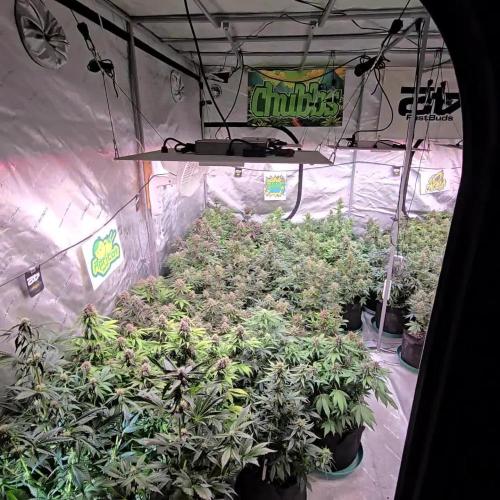
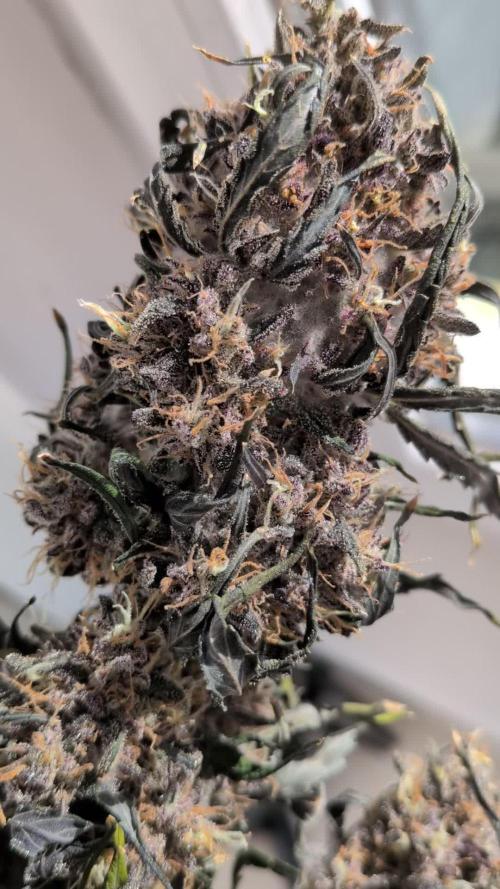
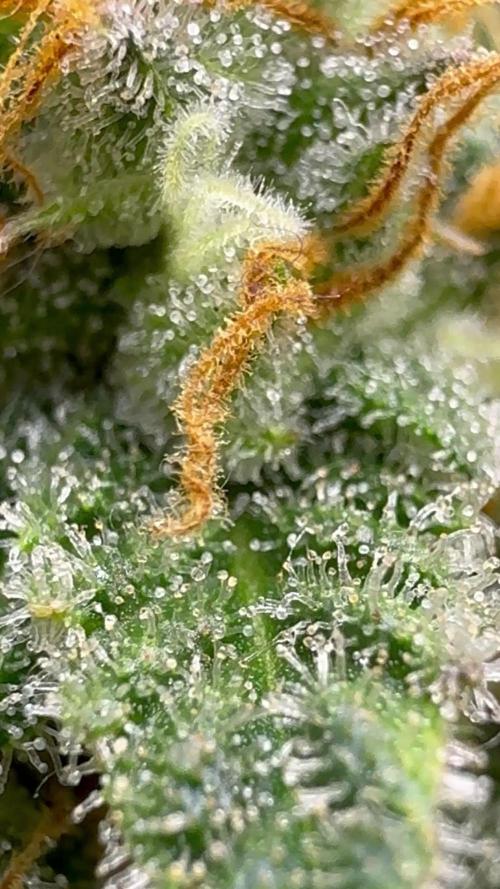
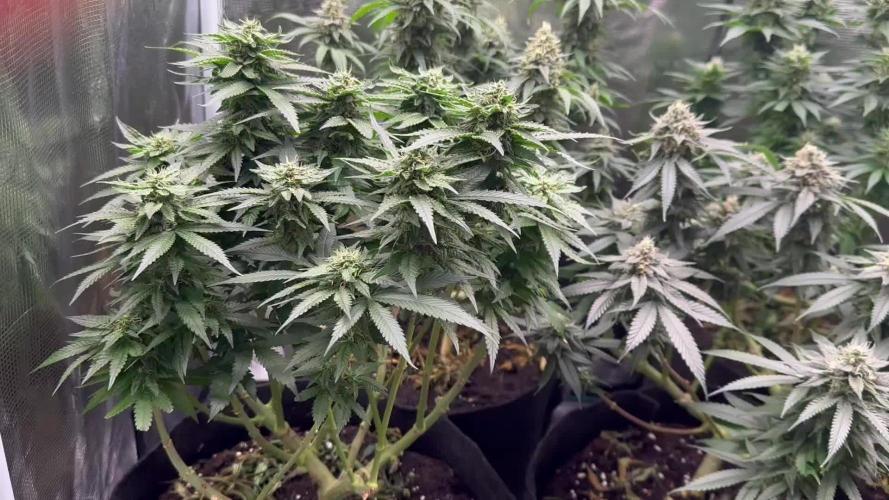
420Fastbuds FBT2308/Week8 What up grow fam. I hope all is good with everyone. Week 8 update on these absolutely stunning girls. They're definitely progressing nicely with the flower sites swelling up. Super frosty and beyond sticky when you happen to touch them. Over all Happy Growing
Likes
11
Share
@OleGrow
Follow
Cherry A causing me all sorts of issues. She's falling on top of Cherry B. And in turn, Cherry B is hitting into my other plants (Grandpa Stash). Also noticed what looks like pollen sacs on day 78.