


Likes
Comments
Share


@Horticulturehobbyists
Follow
First week of flower is in the books. I posted my feeding schedule in the pics above. If you find yourself looking at it wondering why you're seeing back to back feeds with mycos or teas its because with organics you never want to let your pots dry out. You obviously dont want to waterlog the pots but you need to find that balance with watering so as to keep your ecosystem happy and active. It's not a feed/water/water system where you're watering every other day as you do with salt based bottled nutrients. Always remember you're feeding the microboes/fungi/bactria and they are feeding your plants. If you dry your pots out with organics those elements become dormant and or die off which will lead to deficiencies and a weakened immune system.
The week was going smoothly until last night. The timer for whatever reason didnt kill the lights after 12 hrs had past so they got a little over an hr of extra light. To help maintain consistency with the plants I just altered on/off times to make sure they still recieved 12 hrs of darkness. So I was running 6pm-6am now with the overage last night I'm running 730pm-730am. I have heard some horror stories about how something like this has affected people's plants but they are few and far between. I'm not overly worried about it as a plant thats growing outdoors never gets a true 12/12 lighting period. I caught it early, adjusted my lighting schedule to accommodate a 12 hr off period, and being so early in the flowering stage I should be ok. Obviously it goes without saying but this is taboo and not something you want to be making a habit of with photoperiod plants. My dehumidifier also decided to do it's own thing last night and didn't shut off as per the settings (set to 45%) and as a result it pulled my humidty down to 39% down from the 45%-47% that the room usually runs at. As a result my temps rose into the 28-29 Celsius range overnight up from the 25-26 Celcius (my preferred flowering temps) that the room usually sees. So she was quite the party downstairs while I was sleeping. To my surprise when I turned the lights on the plants looked very happy and healthy and immediately started praying to the sun gods. I got lucky here with respect to what I was speaking about above with watering practices and organics. As I keep my pots in the sweet spot with daily waterings this didnt negatively affect the plants.
I've prepped and am bubbling a compost tea (posted a video) which will be fed tomorrow. I also through some organic popcorn seeds and organic mung bean seeds in the seed sprouter (pic posted above) to make a popcorn/mung bean SST for the plants that's loaded with all kinds of enzymes and goodness. It's also pretty sweet to be able to say you feed your plants popcorn. Like I mean really though 😁. I'll talk a little more about SSTs next week but if your curious about it there are many websites about this topic, homesteadandchill.com would be a great place to start. They lightly touch on topic without diving to deep into the science behind it so it's easy reading to help introduce you.

Likes
32
Share


@MadeInGermany
Follow
Unfortunately, I had to find out that my account is used for fake pages in social media.
I am only active here on growdiaries.
I am not on facebook instagram twitter etc All accounts except this one are fake.
Flowering day 42
since time change
to 12/12 h.
Hi everyone :-)
The buds will certainly develop further :-).
They keep getting thicker and smell more delicious :-).
This week there was 3 watering with 1.2 l each time and the whole tent was cleaned.
Otherwise everything was cleaned and checked again.
I wish you a lot of fun.
Stay healthy 🙏🏻
You can buy this Strain at :
www.Zamnesia.com
Type:
Runtz
☝️🏼
Genetics:
Zkittlez x Gelato
👍
Vega lamp: 2 x Todogrow Led
Quantum Board 100 W
💡
Bloom Lamp : 2 x Todogrow Led
Cxb 3590 COB 3500 K 205 W
💡💡☝️🏼
Soil : Bio Bizz Coco
☝️🏼
Nutrients : Green House Seeds Company Powder Feeding Bio
☝️🏼🌱
Water: Osmosis water mixed with normal water (24 hours stale that the chlorine evaporates) to 0.2 EC. Add Cal / Mag to 0.4 Ec Ph with Organic Ph - to 5.8

Likes
1
Share

@Bdog7878
Follow
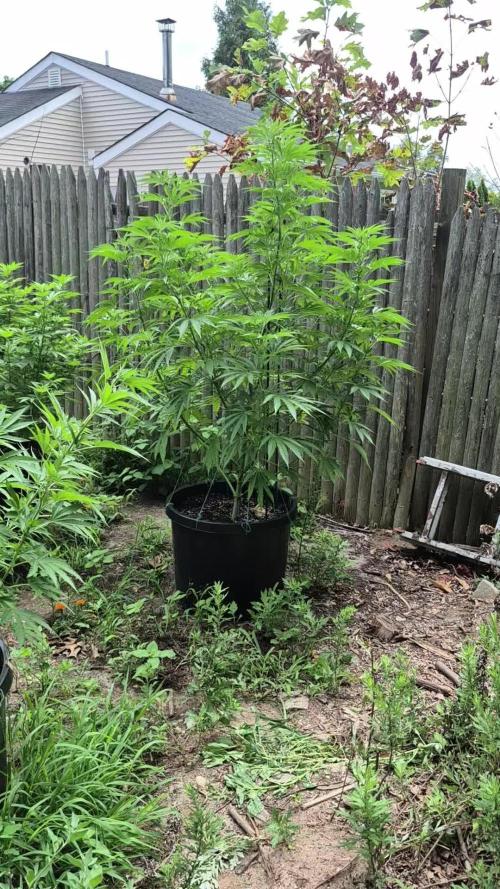
Flowering has started on the skunk and white widow and the end games are looking like any day now. All are healthy and doing well. They been needing water every two days so ive been feeding flora grow 3 part at 2 teaspoon grow 2 micro 2 bloom,than plain water than recharge at 1 teaspoon per gallon. The one end game is about 6 feet without the pot as of today and it just started the stretch. The other plants are about 3. 5 to 4.5 feet and bushy wider than a hula hoop for sure. I had some trouble at the beginning of the grow with low soil ph and some over watering on my part and from all the rain in the beginning but seems ive got it under control as they are looking and growing great. I did a little lst to open up the canopy and get some light down in there.



Likes
35
Share


@Santica_Garden
Follow
Everyone is in flush mode..... Just waiting for the fan leaves to turn yellow then its time for the ladies to hang to dry.
Really can't wait to have a try of this, especially the Gelato Dream, smells absolutely beautiful, plus 33% THC!
Any questions guys just ask but most of the info is on the video which I have uploaded!
Happy Growing guys 👍🏾🔥


Likes
35
Share


@Canadian
Follow
From beginning to end this girl has been a pleasure to grow I will update the last information taste high and final bag appeal Thank you for reading have a happygrow. Updating this girl smokes as exotic as she looks she has a fruity almost perfume smell to it and the high last at least for 3 hours or more very strong but not overpowering allows you to enjoy friends and activity with no problems I must be honest this is a very impressive plant with incredibly large yield . Density is typical for a hybrid but it’s such a remarkable colour and smell +the high that is a must Try for any cannabis grower sweet seeds definitely score a very rare plant here AAAAA+
Cannabis grower

Likes
6
Share


@GoldenWeedGrower
Follow
Legend
Timestamp: 📅
EC - pH: ⚗️
Temp - Hum: 🌡️
Water: 🌊
Food: 🍗
pH Correction: 💧
Actions: 💼
Thoughts: 🧠
Events: 🚀
Media: 🎬
D: DAY, G: GERMINATION, V: VEGETATIVE, B: BLOOMING, R: RIPENING, D: DRYING, C: CURING
______________
📅 D15/V11 - 30/04/24
⚗️ EC: 0.7 pH: 6.0
🌡️ T: 21 °C H: 50%
🌊
🍗
💧
💼
🧠
🚀
🎬 1 TL video
______________
📅 D16/V12 - 01/05/24
⚗️ EC: 0.7 pH: 6.0
🌡️ T: 21 °C H: 50%
🌊
🍗
💧
💼
🧠
🚀
🎬 1 TL video
______________
📅 D17/V13 - 02/05/24
⚗️ EC: 0.6 pH: 5.8
🌡️ T: 20 °C H: 50%
🌊
🍗
💧
💼
🧠
🚀
🎬 1 TL video
______________
📅 D18/V14 - 03/05/24
⚗️ EC: 0.8 pH: 5.6
🌡️ T: 22 °C H: 60%
🌊
🍗
💧
💼
🧠
🚀
🎬 1 TL video
______________
📅 D19/V15 - 04/05/24
⚗️ EC: 0.8 pH: 5.5
🌡️ T: 22 °C H: 60%
🌊
🍗
💧
💼
🧠
🚀
🎬 1 TL video
______________
📅 D20/V16 - 05/05/24
⚗️ EC: 0.7 pH: 5.5
🌡️ T: 22 °C H: 60%
🌊
🍗
💧
💼
🧠
🚀
🎬 1 TL video
______________
📅 D21/V17 - 06/05/24
⚗️ EC: 0.7 pH: 5.3
🌡️ T: 22 °C H: 50%
🌊
🍗 Calmag, Grow A-B
💧5L
💼
🧠
🚀
🎬 1 TL video

Processing
Likes
23
Share


@HanzGrowz
Follow
Amazing progress across the board in the tent the last week. Development has been positive for The New and Black Dog, Bubba has swollen up bud wise, and it’s still another week away or so (flowering is supposed to be 50-55 and we’re at 50 today). Chemdawg smell is getting stronger but not too aggressive, and it’s fate king nicely on most colas. Even at the bottom of the plant the buds look nice. It’s an amazing strain, can’t wait to smoke it.

Processing
Likes
52
Share


@CBD_Sweden
Follow
@MephistoGenetics,
Hi all the happy people here in GrowDiaries.
This is my second cultivation ever and it will be fun to try a bigger space than my closet grow.
First, I'm just going to say I'm done with the construction of my new growroom.
The room is 2.14 meters by 1.7 meters and has a ceiling height of 2 meters.
It provides a floor area of 3.6 square meters.
I use a 54 Watt Lightwawe T5 for germination and 2 Pcs 400 Watt HPS lamps.
I have a channel fan that replaces the room air about 40 times an hour to get a comfortable environment in the room, the air enters a fresh air intake from the outside.
The air is purified through a carbon filter to then leave the room to the rest of the basement.
Then I use that heat to heat the rest of the basement.
I will use 10 pcs 15 liter Autopots to grow with and a 100 liter water tank that supplies the pots of water and nutrition.
I will grow completely organically in soil and will watercure my buds to get the best possible medicine for me.
But there are no cultivation rooms to be displayed here, so I continue with what is most important.
Today I have put my seeds in paper towel and hope the seeds have germinated within a few days.
I am very excited to see how the new growroom will work and how this Stilton Special will turn out.
Strain Name: Stilton Special F1
Genetic heritage - Sour Livers F3 x Northern Cheese Haze F3
Strain behaviour - Stilton grows well from the off, and develops into a stout but branchy specimine that leads to a fine yield of awesome flowers. She's not too stretchy but also is sizeable enough with good growth, to train and shape to your liking. Flowers develop pretty fast and grow to a good size, it may to advised to clear out some undergrowth and if needs be a very gentle defoliation mid-way through the grow, although leaf tucking may suffice well enough.The end product is of top shelf quality and she doesn't lack in yield either.Give your garden, nose, and body a treat and be sure to indulge in a slice of Stilton this year, You won't regret it.
Size - 50 - 70 cm
Structure - Medium height but bushy
Flower Density - 9/10
Indica/Sativa - 65/35
Cycle Time - 65 to 70 days from sprout
Yield - 90 to 140 grams as a single plant
Best Method for overall high yield - 9-12 per 1,2m x 1,2m sq in 10-15 Liter pots (Soil)
Aroma - Very strong, Cheesey/fruity/sour/spicey/ with a dash of coffee.
Taste - Dank berries
Effect - Good hybrid powerful but balanced effect
Medicinal Benefits - TBA
Best Grown - Indoor/Greenhouse
Cannabinoids - TBA
Extract information - Ideal extract candidate - High in resin, oil and terps.
.................................................................................................................................................................................................................................................................................................................................................
2017-08-21. Started to germinate the seed.
.....................................................................................................................................................................................................................................................................................................................................................
2017-08-23. Seed germinated and put in small pot in the humidity dome.
.........................................................................................................................................................................................................................................................................................................................................................
2017-08-27. Slow and steady she grows.
----------------------------------------------------------------------------------------------------------------------------------------------------------------------------------------------------
2017-08-28. Transplanted to the 15 liter autopot.
--------------------------------------------------------------------------------------------------------------------------------------------------------------------------------------------------------------
2017-08-29. New movie of the girl and a new pic of the grow room from now.
-------------------------------------------------------------------------------------------------------------------------------------------------------------------------------------------------------------
2017-08-29.
Hello to you who read my diary, I just want to say that I am pleased that you have chosen to check in with me and in my diary.
I just want to say that I do this for myself and for a steady flow of my medicine.
Everything you read and see in my diary is 100% honest and I will never distort or beautify anything here.
I document my crops so that I can learn from my mistakes and also to look back at those different crops.
I try to update with pictures every day and with text if something special has happened in the garden.
This is my strainhunt for the best medicine and the beginning of my journey with cannabis and the cultivation of it.
-----------------------------------------------------------------------------------------------------------------------------------------------------------------------
2017-08-30. Cleaned the room this morning, just vacuuming and cleaning with chlorine solution. Im testing the fan to control temp and humidity, it works great.
Added a movie. Everything is looking great right now.
------------------------------------------------------------------------------------------------------------------------------------------------------------------------------------------
2017-08-31. 3 new pics.
--------------------------------------------------------------------------------------------------------------------------------
2017-09-01. New pics and a video of the room from today.
-----------------------------------------------------------------------------------------------
2017-09-02. New pic
----------------------------------------------------------------
2017-09-03. Video of the girl this morning.
----------------------------------------------------------------------------------------------------------------------

Processing
Likes
22
Share


@eldruida_lamota
Follow
Esa familia, ya actualizo última semana de crecimiento, la verdad y siendo sinceros, da igual que compres semillas de marca que de granel si tienes conocimientos , sacarás buena yerba, veréis.
A llegado el otoño y lo notamos a bajado la temperatura entre 20/22 grados ya sea de día o de noche.
.
La humedad anda entre 55% la temperatura está entre 22/23 grados , y como siempre el ph , ya que es de lo más importante,está en 5,8/6,0.
.
AgroBeta:
1 ml x L Growth black line , vía radicular.
0,2 ml x L Tucán , vía radicular.
0,2 ml x L Flash Root , vía radicular.
0,05 ml x L Gold Joker, vía radicular.
.
Hasta aquí es todo familia, espero que os vaya gustando el proceso tanto de crecimiento como la futura floración 💨💨💨 buenos humos.


Likes
7
Share


@Stickygreens420
Follow
11/21/2022: plants are all still extremely healthy, and the buds keep putting on more weight. Only problem has been a small fungas gnat outbreak. So far it has been manageable with sticky traps, but I have some neem cake on the way. Also, top dressed all three plants late last week and watered again today 1 liter each. The fresh worm casting hold the moister more, so I lowered the amount of water today. Watered at 6.8 ph, using the normal ThermX-70 and coconut powder. Also added a 1/2 teaspoon of BuildABloom and 2 tsp of Yah-Whey Thrive, which is a probiotic whey made from fermented Kefir grains. Saw a lot of good reviews, so figured I'd give it a try.
11/22/2022: the fungas gnat issue is getting worse, so I made some neem cake tea and watered each plant about 1/3rd of a liter. We'll see how this works and how the plants respond.
11/23/2022: did a full watering today about 1 liter per plant. Made an alfalfa sprouted seed tea, and added about 1/4 cup of the Yah-Whey Thrive, and some ThermX-70. Fungas gnats are still an issue, so the jury is still out on the neem cake tea. Ordered some Dr. Zymes to change it up, but it's back ordered until Dec. Hopefully the neem cake tea is killing the eggs and larva. The sticky traps are keeping them under control as well. It looks like the Strawberry Gushers and Newberry are beginning to show the first signs of a fade. It's only on a few leaves, so it makes me think it's not a nutrient issue.
11/24/2022: made another round of neem cake tea. Added powdered coconut, BuildABloom, and ThermX-70. Added about 1.3 liters to each plant.
11/25/2022: I'm in an all out war with the fungas gnats and I seem to be gaining ground (for now). Wanted to switch it up, so I made mosquito bit tea and gave about .5 liters to each plant. Mainly trying to get the first couple inches of the soil. The sticky traps are catching the adults, so hopefully the neem and B.t.i will kill the eggs and larva. Buds are continuing to swell, and the aroma is amazing. The Strawberry Gushers is like a sweet funk. The Orange Bubblegum definitely has an orange scent, and the Newberry smells like fruity pebbles. All plants are still looking healthy and I continue to see some mild fading. The Newberry has one branch that is fading more than the others which is strange. Not sure if it has something to do with the super cropping, or something else, but there is a noticable difference compared to the rest of the plant. The leaves and buds still look healthy, so I'm not too worried for now, but will continue to monitor.
11/26/2022: DAY 60!! Decided to get a little crazy today. This will probably be one of the last times I add microbes to the plants, other than one more late flower compost tea, so I wanted to get as diverse as possible. Added 1/4 teaspoon of the BuildASoil Big 6 micro nutrients, Bio-Phos, TeaCo Super Tea blend, and Recharge, plus 4 ml of FishShit. There is definitely some overlap between these, but they each contained several microbes the others didn't, so I liked the extra diversity. I also added the coconut powder and ThermX-70, which I use for every watering at this point. Gave each plant about 1 liter of this microbe tea. I'm sure the extra watering lately is not helping my fungas gnat issue, but the plants are drinking it up.
Avg. VPD:1.5
PPFD: 700
DLI: 45

Likes
17
Share


@420DeepGrow
Follow
Gracias al equipo de Zamnesia, Marshydro, XpertNutrients y Trolmaster sin ellos esto no sería posible.
💐🍁 Frosted Guava:
La Frosted Guava es una cepa índica dominante y súper resinosa, que es un cruce de la Guava y la Frosted Skywalker. Con unas características de cultivo muy versátiles, un aroma exótico y afrutado, y un subidón relajante y lúcido, la Frosted Guava es ideal para cualquier plantación de marihuana.
🌻🚀 Consigue aqui tus semillas:
Código Descuento 20%: ZAMMIGD2023
💡TS-3000 + TS-1000: se usaran dos de las lámparas de la serie TS de Marshydro, para cubrir todas las necesidades de las plantas durante el ciclo de cultivo, uso las dos lámparas en floracion para llegar a toda la carpa de 1.50 x 1.50 x 1.80.
https://marshydro.eu/products/mars-hydro-ts-3000-led-grow-light/
🏠 : Marshydro 1.50 x 1.50 x 1.80, carpa 100% estanca con ventanas laterales para llegar a todos los lugares durante el grow
https://marshydro.eu/products/diy-150x150x200cm-grow-tent-kit
🌬️💨 Marshydro 6inch + filtro carbon para evitar olores indeseables.
https://marshydro.eu/products/ifresh-smart-6inch-filter-kits/
🍣🍦🌴 Xpert Nutrients es una empresa especializada en la producción y comercialización de fertilizantes líquidos y tierras, que garantizan excelentes cosechas y un crecimiento activo para sus plantas durante todas las fases de cultivo.
Consigue aqui tus Nutrientes:
https://xpertnutrients.com/es/shop/
💻 Trolmaster Tent-X TCS-1 como controlador de luz, optimiza tu cultivo con la última tecnología del mercado, desde donde puedes controlar todos los parametros.
https://www.trolmaster.com/Products/Details/TCS-1
📆 Semana 6:
Esta semana ha explotado 💣, los cogollos comienzan a tomar densidad y llenarse de resina, me hubiera gustado aplicar algo mas de nutrientes en la fase vegetativa, la próxima vez será.
Likes
20
Share


@Spudz
Follow
Day 70 — Cruising right along with the grow. Can’t say enough about the Sensi Bloom. I will definitely be using it for the next grow. Both Veg and Bloom. Buds are really filling on the short LB. Getting fat and sticky. Smell is really nice as well. Remind me of the pot from the 70’s. I’m starting to stress a bit about when to harvest. I don’t have a magnifying glass strong enough to see the trichromes. Is there another telltale sign the plant is ready? I’m starting to see the red hairs so is that an indication flowering is winding down? I still think I have a couple weeks, but will be watching them closely. Thanks for reading.

Likes
30
Share


@WeWantItToGrow
Follow
This week has been such a gift! I have learned so much about proper care for a plant I had no idea how little I knew sitting down and observing these majestic trees produce such a potent flower has really humbled me. Premium cultivars strain has shown resilient and self sustaining easy to grow traits that it is hard to mess up. (Which I’ve done a few times lol) Notice the trichomes (I put the zoom lens on and got up in there so they could be better seen the bud itself is slathered in them ! This is going to be an amazing smoke! Also looking at the structure of the bud it’s self it has volume very full bodied bracts with pistils throughout It’s just an all-around beautiful thing to observe

Likes
24
Share


@Greensoul920
Follow
Fist day 12/12. Lady’s react very well after putting the net that’s why I decided to put them in flower. I top dress with
Worm casting
50/50 of 444 and 284 -1Tbsp per gallon
Rock dust -1Tbsp per gallon
Mineralised phosphate-1teaspoon per gallon
I sprinkle the rootball with myco and water with compost the of warm casting and molasses. This week I’ll defoliate the fun leaves and lollipop the bottom of all plant to increase air flow.


Processing
Likes
12
Share


@Therbalist
Follow
Coming along, got the temperature down by moving the schedule more into the night and morning. Hopefully have it down enough to get some colour towards the end!
Processing
Likes
2
Share

@eldruida_lamota
Follow
Esa familia, finalizamos la 3 semana de floración la verdad que poco cambios en la flor, en verdad odio la autoflorecientes en indoor, me parece que son mejor opción os un Exterior o un balcón pero, ante todo os tengo que mostrar la experiencia con autos también y que mejor genética que la misty gorilla autofloreciente de Zambezaseeds.
Y es que entre la variedad y la alimentación que estamos aportando, gracias a AgroBeta están respondiendo bastante bien, en las próximas semanas imagino que empezaré a notar diferencias ya.
Ph regulado en 6.2 temperatura entorno a los 26.5 grados y la humedad está en 50%.
Sufro de una pequeña placa de mosca del sustrato, a estas alturas poco afectará pero vaya, que sepan que con el calor del verano pues también sufrí algún problema respecto a esto anterior.
Me despido entre buenos humos, hasta la próxima semana.

Likes
10
Share


@Hoso_sake1
Follow
Settimana della Distruzione!
Tanto training per le nostre Pies, che sicuramente ripagherà alla fine del ciclo 💪
Dopo 25 giorni iniziano a presentarsi anche i primi pistilli dai nodi, quindi a breve avremo già i segni di sviluppo floreale.
Nel frattempo aspettiamo l'arrivo della nuova
Spider Farmer SF4000 per avere una fioritura esplosiva!
