


Likes
Comments
Share


@CalGonJim
Follow
11/4 130am Lights up to 77 watts 4.3 grams Maxi-Grow powder this week. Using mix from last week. Will probably switch to Bloom by Wed.
11/5 12am Canopy Creations LST things are great resistance training builds huge branches!!!
They are amazing. 10am growing fast and big after today’s watering!!!
Garlic muffin and fatso have the thickest branches that I’ve ever seen the side branches are thicker than what I got when I was growing in bigger containers so these nutrients and the soil and this light wattage seems to be a good formula I have to save this and work on it And stressing with the Canopy Creations has doubled the diameter of the branches that I have been stressing. Just great results.
11/6 Galic is the strongest so far her branches are THICK, a perfect 4 cola grow. Each of the 4 branches are as thick as the main stem on my first few tries at this.
12am They were all dry gave water probably last week using Grow switching to Bloom nutrients. Extremely strong plants from Seedsman!!!! When I finally got them going I found using Maxi-Grow & Rapid Start made a huge difference!!! Only Rapid Start for the first week.
11/7 1am GM & CA are huge now!!
lights up 89W as the leaves fold up a little for the heat I will raise them an inch or so. 1pm did water today. They are starting to flower
11/8 12:30am Switched to Bloom nutrients yesterday after the last feeding with Grow they all went to sleep right away after that and are waking up now with flowers forming. I will use 4grams Bloom, 0.4 Purpinator, 0.5 Rapid Start, 0.4 Silica, 0.4 Cal/Mag. Silica causes fluctuations in pH.
2am Galic is a MONSTER, and Seedsman is out of them. Fatso is next for size. I can not believe how huge the branches are this technique of 4 colas in a small 1 gallon container. These plants will be perfect for this
9am LST crazy day!!! I have never been able to train the small set of first branches that come off the first node on plants before until seedsmen Faso and garlic🤩🤩🤩🤩🤩🤩🤩🤩😍😍😍😍😍😍😍😍😍😍😍😍
11/9 1am flowering I might have to split them up into 2 tents they are all getting bigger than I thought they could, this is just great! after 20 fails I think im getting this small grow style worked out.
1:30pm moved the RSQ's into tent 3. Tent 2 not big enough but I'll make it work. Once I harvest the plants from the 🎃 Halloween All the Darkness grow it will be easier. Galic & Fatso by Seedman are HUGE very thick branches, thick side branches responds to training extremely well. Strongest F1's!


Likes
16
Share


@nurari
Follow
Неделя прошла хорошо. Одно не удачное растение думаю срублю в середине недели, очень мелкие бутоны но зато с фиолетовым оттенком. Не могу сказать что сорт стабильный так как в одинаковых условиях два растения показывают не лучший результат.
В целом думаю подержу еще 10 дней и буду собирать урожай.
Самое не удачное растение перевел на воду...

Likes
70
Share


@Roberts
Follow
Big Fat Wedding Cake is growing great under the Spider Farmer G5000/UVR40 lights, in the Athena blended line nutrition. She got lollipopped today, and a defoliation. She is also showing her first pistils. Thank you Spider Farmer, Athena, and DutchFem Seeds. 🤜🏻🤛🏻🌱🌱🌱
Thank you grow diaries community for the 👇likes👇, follows, comments, and subscriptions on my YouTube channel👇. ❄️🌱🍻
Happy Growing 🌱🌱🌱
https://youtube.com/channel/UCAhN7yRzWLpcaRHhMIQ7X4g
Spider Farmer Official Website Links:
US&Worldwide: https://www.spider-farmer.com
CA: https://spiderfarmer.ca
UK: https://spiderfarmer.co.uk
EU: https://spiderfarmer.eu
AU: https://spiderfarmer.com.au
G5000 Light Amazon Link:
amzn.to/4643esa
UVR 40:
https://www.amazon.com/dp/B0BR7SGTHS
Discount code: saveurcash (Stackable)

Processing
Likes
62
Share


@OwlGang_Uk
Follow
Week 6 - The Purple Power Is No Longer The Tallest In The Forest But It’s Still The Prettiest. The Purple Power Has Been Dethroned By 4 Of The Other Plants. Everyone Except For The Gorilla Glue Is On Bloom Nutrients.
Height:
Gorilla Glue: 19 Inches
Purple Power: 28 1/2 inches
Girls Scout Cookies(3gal): 30 inches
Lemon OG: 34 1/2 inches
Girls Scout Cookies(5gal): 34 1/2 inches
Stardawg: 33 1/2 inches
These Plants Are All Correct Measurements Size May Look Different In Picture Because Of Pot Size.


Likes
2
Share


@salesman
Follow
Drop the useless fan leaf
keep it well ventilated
Apply LST HST
Do not touch it after the next week.
lay the foundation here


Processing
Likes
3
Share


@KcKush
Follow
*Vam Doesnt seem to increase root size. Looked identical to no Van control.
*increased PPM To 350
*Transplanted to 1Gallon pots using HappyFrog
Likes
1
Share

@MrHazeAmaze
Follow
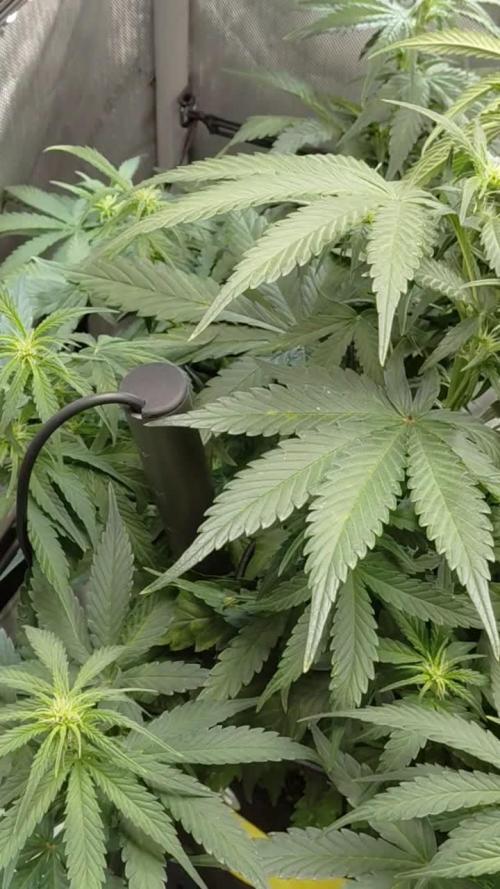
I know I still should treat her better, but I just don't got the time ^^
BUT hey she is in flowering, already producing some smell and got really strong mainstem
Let's see how it goes
Likes
7
Share


@Makers_Mark12
Follow
Twelfth week and now this is the end. I decided to harvest these days because two weeks have passed since I have increased the amount of water and because the peaks now seem to be in a very good development point.
The plant is really spectacular. The flowers are very compact and voluminous, they give off a really intense, citrusy and orange scent. The two main buds are completely equal and measure entirely 50cm. All the rest of the buds have not developed badly either. The amount of pollen is moderately high and you can notice very well a compact layer on all the flowers.
As I said I watered the plant with just water all week, increasing the dose more and more to wash the roots completely and be able to harvest the plant.
I cut everything and hung it all up in a cabinet where I control the humidity and temperature values and try to keep them stable through an air recirculation system.
I hope to have everything almost dry and ready within 10 days to be able to participate in the competition.
I really thank Zamnesia very much for the opportunity it has given me and for this wonderful genetics that has made me known. I am very excited about what I have achieved from this growth and what I have learned in all this time. All I need now is to try this wonder!

Likes
11
Share


@Paradox_1ste1
Follow
Stardog room it is looking pretty good and is thriving. Hopefully get the results we asking for.
Aya room up to now is giving pretty impressive results and it looks like they like the enviroment even tho its not fully equiped.
After adding the c4 neet to celan the insides a little bit more and see how it will react.
Likes
2
Share


@ChiTaN
Follow
The girls are fine 👍 We're starting a flush before harvest soon 💪 The smell coming from the tent is really awesome :)


Likes
34
Share

@Hempcules
Follow
WEEK 9
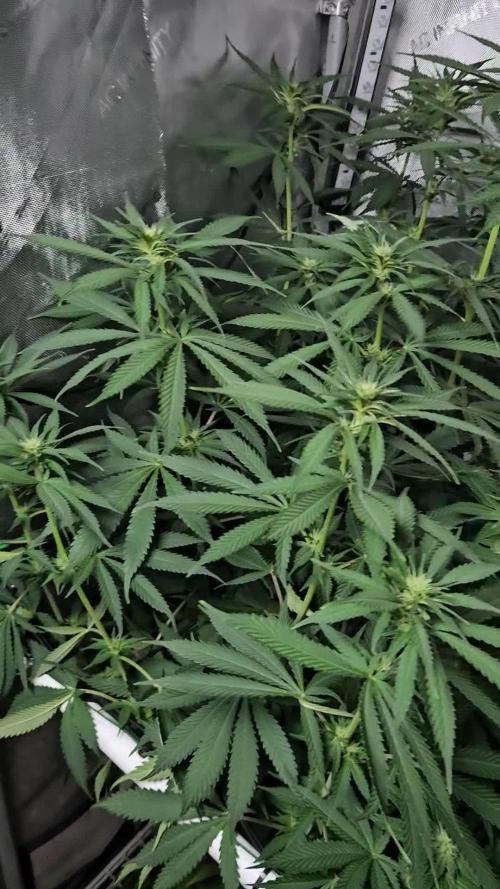
The first week of flowering went very well for my plant. So far, it has stretched strong and is slowly beginning to add fullness to the buds.
I’m quite happy with the plant’s overall shape — it has developed a fairly even canopy with many strong shoots. The leaves have a rich, deep green, and overall the plant appears to be very healthy. All in all, another truly great week.
PPFD: 800µmol/m²/s
Water: 2x water, 2x nutrient solution
With this code, you will receive a 20% discount on your next Zamnesia order:
ZAMMIGROW2024
Likes
7
Share


@Unkraut
Follow
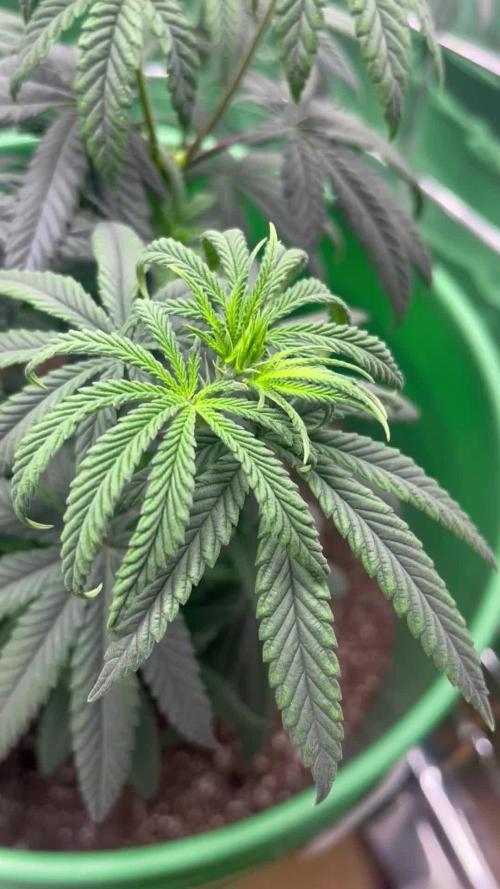
such an beautyful strain! the colors are really outstanding and the scent is incredible!
loads of resin production on this one, not the highest yield but insane quality!


Likes
19
Share


@ScrogFreak
Follow
I finally broke a pound with a single autoflower! Couldn’t have done it without AGLEX cob led’s, Remo Nutrients, and coco coir. They’ve changed my game completely!
This grow started off as a pretty standard grow. I did absolutely no training until the veg period was winding down, and pre-flower was beginning.
As the SCROG net went in, a little later than planned, numb fingers due to cervical spinal issues, and a poorly time muscle spasm, I snapped the main stalk...disaster right? Apparently not! They’re tough plants! Within a day or so she was perked up and sending up new colas from all the growth nodes now exposed to the 2000w AGLEX cob led’s. These lights have transformed my grow process, and increased my yields by over 300% compared to my old led’s, and only draws 408w from the wall. 1.23g/w is quite satisfactory
I didn’t have much tucking to do this grow after the original SCROG. Due to the fact I was a little late getting the SCROG net in place, she didn’t have too much stretch left in her, she certainly fattened up quite nicely though, almost too much so in places. The front left side of the SCROG net got awfully crowded with huge buds packed tightly together. Lesson learned...keep the branches spaced apart slightly further, and maybe allow slightly more vertical growth of the colas to allow slightly better light, and air flow penetration. My issue is I only have 6 foot ceilings in my tents. The ceiling in my grow room is only a little over 6’2”. I managed, through SCROG techniques, without topping or fimming, to keep the top of my canopy 24” from the floor. This allows plenty of space above for the AGLEX cob, and exhaust fan.
After last feeding I flushed with just Ph’ed water for 5 days, then gave the plant 48 hours of darkness, to rid itself of chlorophyll before harvesting on November 4th and hanging in a drying rack. It’s still curing in jars but after trying a few samples, it’s an awesome strain, and hits hard.
It’s not as hard as it sounds to fill a 4x4 tent with a single autoflower, and still pull 18 ounces (504g) out of that tent. With simple SCROG technique, defoliation, quality grow medium you can achieve the same results. Of course you’ll need an AGLEX 2000w cob, but for an 18 ounce return on a $300CAD light, in 3 months, it’s a no brainer folks! You won’t find a better light under $300 Canadian. You’ll also need a quality nutrient line, and it’s hard to go wrong with the Remo Supercharged Kit. The proof of those 2 products quality are in my harvest.
I hope this has helped improve your own grows somehow :) Head over to YouTube and visit my channel, just search for Scrog Freak, or click the link below. Drop a like and subscribe, more videos and logs to come! Recently entered a Gelato OG Grow Off and will be posting updates and instructional videos there. Check it out! Thanks and good growing!
ScrogFreak
https://www.youtube.com/channel/UCDFY6EjqIMqv2peq1d1eM1Q


Likes
30
Share


@RakonGrow
Follow
Note :
+ jegliches Zubehör wird in der GermniationsWoche aufgelistet .
Ich hab keine Ahnung was es wiegt , da ich keine Zugwage hatte. Warten wir also ab was es an trockengewicht wirklich wird. Aber da ist viel Drann , bei 116cm größe ist selbst der kleinste Bud noch groß :))
Es sind nach 5 Tagen Trocknung bei 22°C und 55%rH genau 204g
Likes
28
Share


@TeamQuality420
Follow
As you can see the white powdery mold is starting to lose my thoughts were getting a HEPA filter into the room .
2) because this mold mostly lives on leaves what I did is I locked out the soil. This was a technique passed on by a legacy grower in my area.The way it was explained is by making the pH higher than seven the plant would no longer be able to receive nutrients through the soil and it would have to eat whatever nutrients are left in the leaves. This woukd change the pH of the leaves aswell to help kill the mold .
Lastly I greatly increased my wind movement so that air would be continuously moving no matter what it was a little bit hard on the leave tips that burnt a little bit but at this point windburn on leaves is pretty irrelevant when you're looking at the whole picture.
I don't think this would have worked with any other genetics but exotic seeds mostly because from what I've seen with them is a very high resistance to mold and I think that played a huge part of the process.
Also having diablo nutrients monster wash, without that I do not think I would have won this battle

Likes
35
Share

@wolfvb
Follow
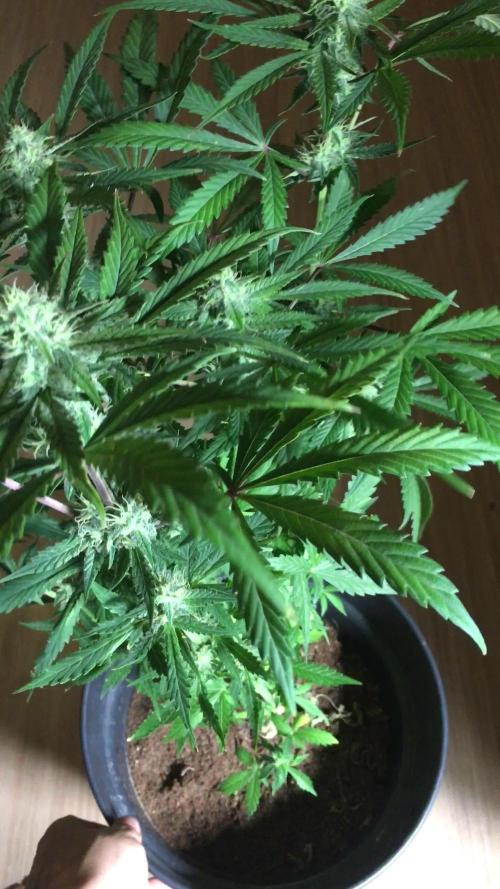
Week 8: The Bakery is Open! 🎂👃
The Update: We are officially in full bloom mode! If last week was about the frost starting, this week is all about the bulk. The Wedding Cake is living up to her name the smell is getting sweeter, heavier, and definitely more pungent.
Bud Development: The PK 13-14 is doing its magic. The colas are visibly swelling day by day, and the calyxes are stacking up beautifully. The "popcorn" buds lower down are hardening up thanks to that defoliation last week. Most pistils are still white, but I'm spotting a few starting to turn amber/orange as she matures.
Nutrients & Care: Continuing with the "heavy hitter" mix:
Bio-Bloom & Top-Max: keeping the sugars high.
PK 13-14: pushing that density.
Environment: Temps are steady at 25°C. I'm keeping a very close watch on humidity (aiming to drop it slightly below 65% if possible) to keep mold away from these chunky flowers.
Next Steps: Just letting her bake! The structure is set, now it's just a waiting game for them to ripen. ⏳
Likes
Comments
Share

@jeffbudger
Follow
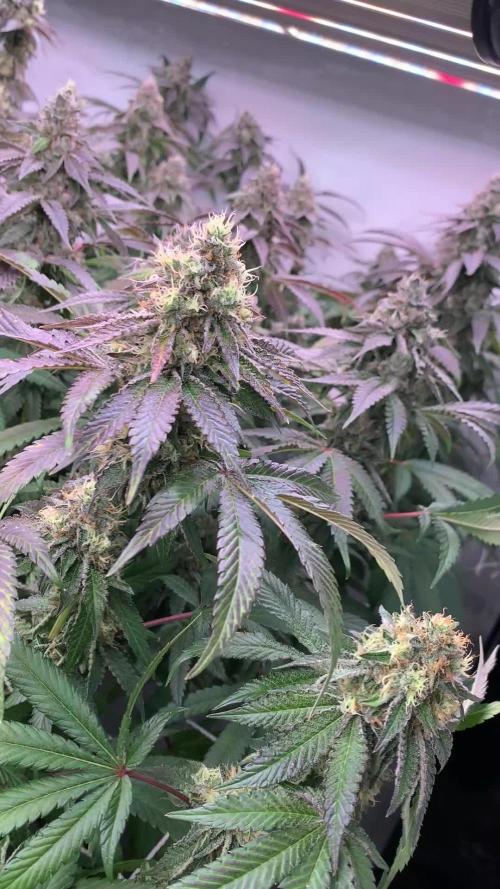
week 8 i harvested yesterday on Week 8 Day 4, they are now drying so i will update in around two weeks after the first puff for each, thanks for following guys and ill see you next grow👉

Likes
19
Share


@eldruida_lamota
Follow
Vamos familia cuarta semana de floración de estás apollo black cherry de SeedStockers.
Que ganas tengo de ver el progreso de esta variedad, las plantas están sanas, se ven con buen color.
La cantidad de agua cada 48h entre riegos.
Esta semana añadimos nutrientes de la gama Agrobeta.
Las plantas están bastante bien subió algo la temperatura esta semana pero por el momento no les afectó, a ver si consigo bajar un poco la temperatura estas próximas semanas y acabamos todo bien.
Estas próximas semanas veremos como avanzan y como engordan las flores.
Mars hydro:
Code discount: EL420
https://www.mars-hydro.com/
Agrobeta:
https://www.agrobeta.com/agrobetatiendaonline/36-abonos-canamo
Hasta aquí todo, Buenos humos 💨💨