


Likes
Comments
Share


@PW216
Follow
Update in progress...
11/23/24 - Chopped and hung whole in closet.
11/29/24 - Trimmed and jarred. Early samples detect incredible taste and smell. The high is immediate and very energetic. Felt up front and in the face. Very pleased with the initial weights, although I will make certain they are accurate and final before posting numbers.
12/11/24 - No clue why it only gives me an option to log the wet bud weight but I put 3.55 oz for my final weight and that is dry.

Processing
Likes
8
Share


@CanadianFillmore
Follow
Start of week 8. Week 7 went very well, the buds on this GG#4 really blew up/out, incredible size increase and they look really dense, with red hairs mixed in. The leaves have some nice purple colors as well as the stems.

Likes
40
Share


@Mr_und_Ms_Lue_Roots
Follow
Bisher können wir sagen, dass Sie sich wirklich gut macht.
Trotz den strapatzen und dennoch so viel Liebe, macht es den anschein, als würde die Pflanze wieder ihren normalen Lebensweg aufnehmen und auch ihr Lebensziel verfolgen.
Die Blütenvorbereitung ist voll im gange, lilafarbende Stämme wie jetzt auch aktuell an den Blattstielen sind augenscheinlich Sichtbar.
Dennoch ist es ziemlich kühl geworden. Was für unsere Pflanze natürlich nicht schlecht ist, da wir sie auch so, hoffentlich eher zum Purpeln bewegen können.
Das Giesverhalten hat sich halbiert sprich wir Gießen im moment alle 2 Tage ca. 4 Liter und ohne die vorherigen Zusätze von Juice, Co2, Acti- Vera, Heaven.
Weitere Beobachtung dazu, läuft trotzdem.
Wer bis hierher gelesen hat darf sich jetzt schon anfangen auf die nächste Woche zu freuen 😋
Denn unser neues Equipment ist solangsam eingetroffen.
Das heißt: Das 80er Indoor Zelt wird durch ein 1,5x 1,5x 2 m ersetzt.
Die 600 W. Keramiklampe die in dem kleinen Zelt nur auf erster Stufe (ca. 480 W.. lief, wegen wärmentwicklung) wird durch eine neue Lazerlite LED 720 Watt ersetzt.
Ein großer Aktiv- Kohlefilter wie auch der große Abluftventilator, stehen schon in den Startlöchern 😎
Somit wird die Lady ab ca. Mitte bis Ende dieser Woche, einen mega schönen und warmen Platz im innenbereich bekommen.
Allen growern eine bezaubernde Woche gewünscht! 😉

Likes
16
Share


@Oldwied
Follow
I am super happy with the harvest.
Unfortunately, the grow was not a brilliant performance. But MimosaEvo is always a great choice.
Processing
Likes
15
Share


@vibealive
Follow
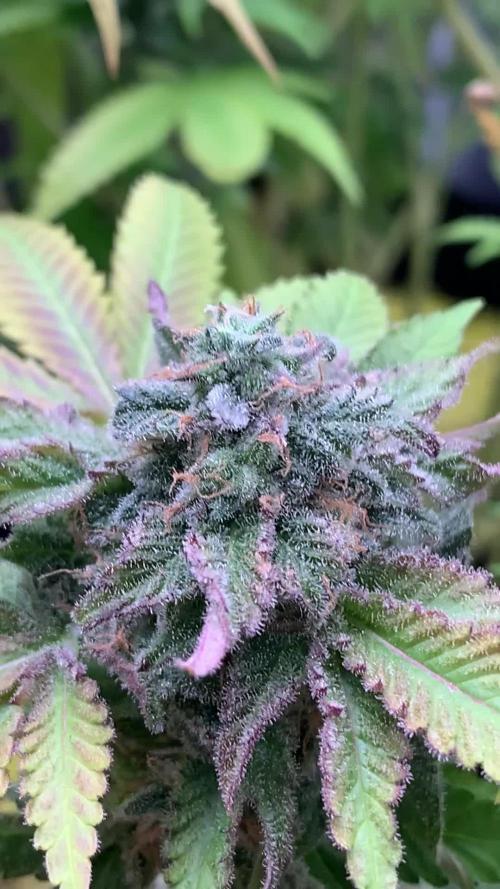
Man... What a week!
So we closed in on week 6.
I JUST moved all of my stuff across town! Went well!
I FINALLY got everyone setup where they belong...



Likes
18
Share


@Grower_Of_Persia
Follow
my dry and cure style is this:
4 days of hanging upside down to get water activity lower to around 0.6 in 50% humidity and 26 C temp (i know its a little high but we are in a hot summer right now and i cant get it lower even with air conditioner) and then after 4 days of drying i remove leaves and stalks, trim buds and move them to jar for the rest of their life :D . and in the first 4 days of curing i open the jar door and let hem get some fresh air in the jar for about 5 minutes and close the jar door again, after 4 days of curing like that buds are smokable but they will get better as they getting cured about 1 month.
buds are one of the hardest as fucking rocks type of buds! very dense , compact , sticky , smelly , amazing at every aspect
growing stage was 56 days and flowering stage was 75 days total (harvested tops at day 64th)
the total weight of dry buds was : (plant #1 & #3 top buds 56 G + lower buds 22 G ) 78 G + (plant #2 top buds 47 G + lower buds 18 G ) 55 G + (plant #4 top buds 120 G + lower buds 67 G ) 187 G = 367 G

Likes
7
Share

@Kumba1190
Follow
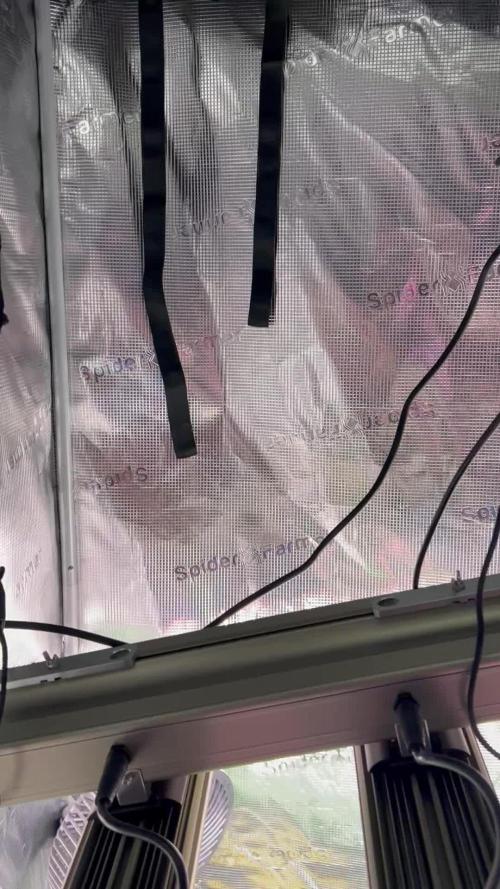
Blüte würde eingeleitet.
Der Stretch beginnt.
KPA Wert= 1,3
PPFD Wert= 600

Likes
101
Share


@DogDoctorOfficial
Follow
OMG the smells are becoming so intense, from lemon to the sweet caramel mix with chilies and a touch of pine trees, i think i cant put in words what im smelling and were is taking my mind, but i can tel this, what an amazing combination of fragrances that are flying around
The tricomes are shouting up as they become fatter and frostier, all cristal clear so far, i think i still have 3 mb 4 more weeks to harvest, lets see 😜
Just calculate my VPD and it’s 0.98 kPa need to increase this up to 1.2 for now s i’m moving my ligth up a bit and see if it works 🙏🤓🙏
Thank you all for following, comment, like and all 🙏 100 likes 😅🙏 🙌🙌🙌🙌🙌🙌🙌🙌 ❤️❤️❤️❤️
Loving this LED Tec 😍
Girls:
1-BlueBerry
2-Alaskan Purple
3-Poyote Gorilla
4-Hindu Kush
5-Whitw Mango
6-Super Glue
7-Badazz Cookies
8-S.A.D.
tent -8x8 / 2.4x2.4 but i'm only using 1/2 so 4x4 / 1.2x1.2
Led - Lumatek 465w Compact Pro at 100%
All i Grow is medicine for myself,
Stay safe, stay tuned and B Happy
Peace out
D


Likes
10
Share


@teabee
Follow
So far so good, changed the fan in the tent, Gotta make a better mount for it before i have it oscillating. Not sure if im gonna get those long dense colas yet or not, Its starting to fill in pretty nice so far tho

Likes
2
Share


@BenDidKnEe
Follow
It’s more like week 7 of flower I was slack keeping up with updating my grow diary so I’ll try and fill in the missing time.

Likes
15
Share


@fungiiiiiii
Follow
6/15/2021 Girls looking nice, I'm planning on vegging for this week and depending on growth scroging and switching to flower by week 6. Mazar looks a bit behind, all because that starting hinder from having a cotiledon break.
Likes
44
Share


@SooSan
Follow
12/12 + 102 jours
Vu qu’il y a 16 plantes mais que sur growdiaries on ne peut mettre que 8 variétés j'ai divisé en 2 diaries pour le bas de la tente
1️⃣
🏠 90x60x90
☀️ FC-E 4800 => puissance a 75%
🍁
1x Black Bomb / Philosopher Seed
2x Amnesia Lemon / PEV Seeds
1x Blueberry / PEV Seeds
1x Blueberry / 00 Seeds
1x Wappa / Paradise Seed
1x Dark Phoenix / Green House Seed
1x Quick Sherbet / Exotic Seeds
1x Mango Cream / Exotic Seeds
1x Banana Frosting / Sensi Seed
1x Hindu Kush / Sensi Seed
4x Fast Mix / Sweet Seed
📎 https://growdiaries.com/diaries/122084-grow-journal-by-soosan
📎https://growdiaries.com/diaries/124052-grow-journal-by-soosan
2️⃣
🏠 30x60x50
☀️TS1000 => 100w = 54g
🍁
Quick Sherbet - Exotic Seed = 12g
Quick Sherbet - Exotic Seed = 12g
Quick Sherbet - Exotic Seed = 17,5g
Quick Sherbet - Exotic Seed = 12,5g
📎 https://growdiaries.com/diaries/122080-grow-journal-by-soosan

Likes
13
Share


@StickyThumbz94
Follow
I’m Missing a lot of pics but so far the grow has been great. This is my second grow and first organic grow. Started in early feb. vegged for almost 9weeks. I haven’t had any major issues with this strain whatsoever, will definitely grow again. Has a sweet fruit, gassy and earthy smell. Smells amazing can’t wait. Hoping to yield a few ounces hopefully she bulks up some more before harvest.


Likes
8
Share

@GREENPHOENIX6262
Follow
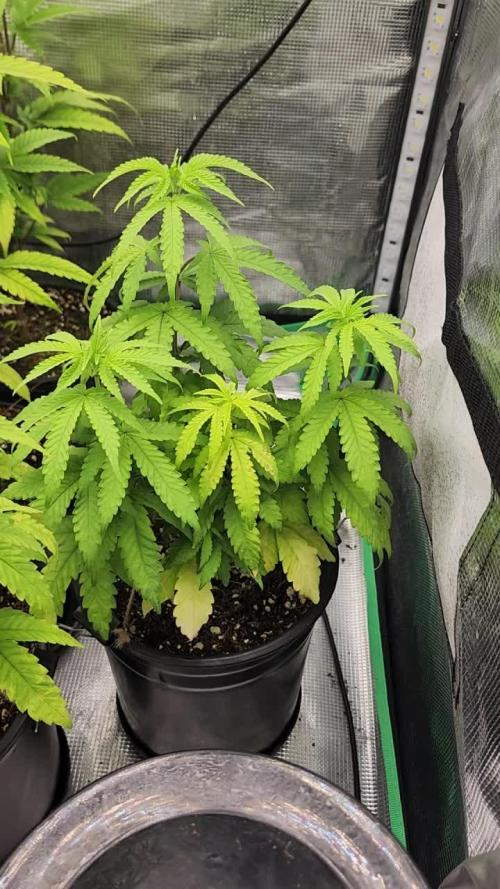
04/11 - Both plants are coming along accordingly on time - As stated previously I got careless with the PH and they suffered a harsh PH burn - Since then they have been flushed and nutes in coco stripped - Began introducing nute in micro-dosing stages.
Likes
2
Share


@51sGarden
Follow
Posting this as I’m on the last few days of the 3rd week from germination
Great progress, a lot of roots for such a short period but not too much plant growth, will start watering daily instead of watering every 2-3 days
Topped the girls today (Day 18 from germ) and starting to do mainline on all the Bubba kush.
Likes
8
Share


@Igrowan88
Follow
The fourth week started and it is the first time the lady’s are not welcoming me with a wonderful green color… instead all of them have some nutrients deficiency. On top of that I found leave septoria on the euphoria#1 yesterday. I defoliated every leave with signs of the fungus. Today I just had to remove one extra leaf. Let’s hope I’m lucky 🍀 The RH is not possible to control, because of the weather in 🇩🇪. I forgot to make pictures about the fungus… sorry for that.
The problem with the nutrients deficiency is a little bit annoying, because I did the grow with GreenHouseFeeding. Marketing told me that it gives enough nutrients for 8 weeks. After 2 weeks signs of N deficiency is not what I hoped to see.
So I had to decide to go with GHF again or switch to BioBizz nutrients. I choose the Biobizz option.
I changed the Ca/Mg in the water to 100/33.
Day 4
I added a support net, because some of the upper bud sites are not looking very stabel.
Better safe than sorry


