The Grow Awards 2026 🏆
Likes
Comments
Share
@Ninjabuds
Follow
Bubble og I still have 4 of these guys going. A few of them are still dark green and pretty decent growers they have thiner leaves. I'm sure a few of these will be on the chopping block later down a few of them just have crappy start growth and they need the humidity at 75% or above 100% the time with the light lower than normal or they start to shrivel up. That's not all of them just a couple. Also I am only going to flower 8 plants out if the 12 seedling and I have 5 strains going so can't have half my plants bubble og (wish I had room to grow the full 12 plants at a time) It's looking like a good start to a week the plants are strong they are getting to the point I can let the dried dry out completely. I'm thinking by the end of this week the plants will be starting to be sold. Last week I put all the plants into my bigger 2x4 tent with my medicgrow mini sun 2 the 500w version. Only a few of the plants were ready for that light. Seems like the only plants that really have good resistance and have a strong start are the weedseedsexpress.com seeds. Shout out to weedseedsexpress.com for the strong plants. I ended up putting all the plants back into my 2x2 tent with the 55w amazon light it has alot more blue light in its spectrum. It's kinda weird b4 I switched the plants to the 2x4 tent they were getting 220umol under my amazon 55w led then when I put them under the 500w light 25% strength about 50in from plants and they were getting only about 195umol in that tent but it was stressing most the plants. I assume a larger light has more side lighting hitting the plants. I think when useing larger lights it's good to measure umols from the top but also coming from the sides. I think durring seedling stage they only need about 50% the umols coming from the side the plants as the top is receiving. When I put the plants back in the small tent about the same umols as they were getting b4 the switch and they were still a little stressed. So for a few days I put the small light at the top the tent giving them 100umols for a few hrs then 130umols the rest the day.
Likes
29
Share
@SAC87
Follow
Day 30: The Fastbuds seeds have turned around and are coming along nicely. I moved both vivosun 600w leds to the top of the tent and that is helping them to stretch and create bud sites. I put tomato cages to open up the side branches and they responded very well to it. Would you growers who are experienced with autos defoliate some of the leaves or let them do their thing? The plants will soon be starting to preflower. I don’t want to stunt them, but if it will benefit like it does to photos, I’m game. These plants are getting watered about 1-1.5 L per day, I have been feeding about 500-625 ppm and a ph of 5.3-5.6, which seems to be working for them. There is noticeable daily growth from most plants. The plants in the 7 gal fabric pots of coco are just showing their first pistils at node sites and clustered leaves at tops while the 5 gal plastic pots of soilless are already showing numerous pistils at the tops. The OG is the smallest, but broke ground 2-3 days after the Critical, White widow and Northern Lights. It seems to require less light, so it is moved to the corner as best as I can. It is starting to stretch out a little bit more, but is very leafy. I’m glad to see that these plants are doing better than 2 weeks ago and looking forward to see what happens next. Happy Growing 🌱
Likes
8
Share
It's week 01 Day 02 Of 12/12 For My 02 Kombucha Cream By atlasseed . And For My Snow White & SpliffStrawberry By Spliff Seeds Amsterdam . So Yesterday All 4 Lady's Received there Transition Feed. And Prep For Flower. The Kombucha Cream 3-Part And Snow White. Received 4ml Of Emerald Harvest Nutrients Grow, Micro,Bloom,6ml of Emerald Goddess, 4ml Of King Kola, 4ml of Honey Chome And 4ml of Quad.AG Products Fulonic. pH at 6.3 ppm at 766. On Runoff. My Kombucha Cream 3-Part as a pH of 6.5 and ppm at 932. My Snow White as a pH of 6.4 and ppm is at 723. The Kombucha 2-Part and SpliffStrawberry Received 5ml of Emerald Harvest Cali Pro Grow A&B,6ml Emerald Goddess, 4ml King Kola,4ml Honey Chome And 4ml Of Quad.AG Fulonic. I pH the Kombucha Cream 2-Part at 6.2 Ppm at 613. On Runoff pH is at 6.3 ppm is at 833. My SpliffStrawberry I pH at 6.5 the pH was a little low on my last feed. Ppm is at 613 l. On Runoff pH is at 6.0 ppm is at 756. I like a pH of 6.2 in Flower I will work on getting the pH at 6.2 on the next few feeds.The Plants are really Loving Life Very happy and Perky This Morning. Happy Growing Growmies 🤘🏻
Likes
5
Share
The plant’s staying super strong and resilient. Did another pruning today, and it’s looking like we’ve got another beast in the making! I think she’ll be back in her proper spot in about 10 days, tops.
Likes
8
Share
@phobic94
Follow
This week I defoliated the plants a bit. The plants have burnt leaf spots so I am going to give them a few watering sessions without feeding them with a PH of 6 next week I plan to switch them to 12-12.
Likes
17
Share
Week 6 successful 🌱 one panty punch is done harvested this beauty on day 40 . Pictures coming with the harvest of panty punch. Beanz 4 Locoz looks crazy .
Likes
2
Share
Starting of the stretch getting way too tall lol
Likes
11
Share
Gießen - 💦 Week 6: P-K 7-5 Boost! 1,0 Liter je Lady / Tag Düngen 1x pro Woche gem. angegebenen Schema. Die letzte Düngung 🌺🍁 anschließend lediglich Osmosewasser PH 6,5 mit 1,2 ml/l Calmag. Sanlight Evo 3-60 100% (1000-1200 PPFD) Temperatur: 23-25 grad Celsius r.Lf.: 50-55%
Likes
24
Share
@nonick123
Follow
Día 37 (08/07) Ajustes de LST en todas las plantas! 🚀 Día 38 (09/07) Ajustes de LST en todas las plantas. Las ramas inferiores están creciendo como un cohete! 🚀😍 Riego con 250 ml H2O pH 6,5 Día 39 (10/07) Las plantas se muestran sedientas! Creo que el cepellón está lleno de raíces y piden el trasplante! El crecimiento no se ha visto afectado de momento Riego con 500 ml H20 pH 6,5 Día 40 (11/07) Paso a regar con 500 ml / día, ya que hace mucho calor (30 ºC) y efectivamente las plantas ya han copado la maceta de raíces OnionOG y KS1: Las ramas de nodo inferior se han quedado enanas tras el entrenamiento, de modo que las elimino y aplico canela en polvo en los cortes Riego con 500 ml H20 pH 6,5 Día 41 (12/07) Riego con 500 ml H20 pH 6,5 Clones! Mi experimento vuelve a demostrar que NO necesitas complejos productos de clonación ni sistemas para obtener clones! Hace 15 días puse 2 clones con el tallo sumergido en miel durante 5 minutos en una maceta de 400 ml con PRO-MIX HP BACILLUS + MYCORRHIZAE He mantenido la humedad alta con una cúpula de humedad casera hecha con una botella de agua PET de 5 litros cortada por la mitad y pulverizando a diario. Han estado los 15 días en mi terraza con luz indirecta, y temperaturas que rondan los 30 - 32ºC durante las horas centrales del día Hoy los he trasplantado a una maceta de 1 litro porque ya habían formado raíces y empezaban a formar nuevas hojas! 🐥🐥🚀🐥🐥 Día 42 (13/07) Riego con 500 ml H20 pH 6,5 Día 43 (14/07) Trasplante a maceta definitiva de 21 litros de ROOTPLUS Pot de GSKOREA GLOBAL! Estas macetas son una maravilla! Proceso de trasplante: Se prepara con 17,85 Litros (85%) de sustrato PRO-MIX HP BACILLUS+MYCORRHIZAE + 1,05 Litros de Humus de Lombriz (5%) + 2,01 Litros de Insect Frass (10%) + 210 gramos de Earth Vibes Super Soil (10 g/L substrato) Se llena la maceta de sustrato con las manos (limpias) y rompiendo los trozos más gruesos, para que el sustrato esté aireado y esponjoso, sin presionar Se coloca una maceta vacía de 6,5L para que quede la forma perfecta de la maceta donde están actualmente Se espolvorea la parte proporcional de la probeta de microorganismos sobre el agujero de trasplante Se saca la planta de su maceta actual (bonitas raíces 😍) y se coloca en la maceta final Se riega muy lentamente hasta percolación profunda con H2O EC 0,5 pH 6,5 Una vez asentada, complemento con un riego de 500 ml con 25 ml/L de Humus de Lombriz Liquido Se coloca mulch (acolchado) de paja para evitar traspiración excesiva y cuidar a los microorganismos del suelo A ver como reacciona al trasplante! Aplicación foliar Kelp hidrolizado de Lurpe Solutions a 0.25 ml/l Realizo ajustes de LST aprovechando el trasplante a la nueva maceta. De momento tienen una canopia muy bien formada! 💦Nutrients by Lurpe Solutions - www.lurpenaturalsolutions.com 🌱Substrate PRO-MIX HP BACILLUS + MYCORRHIZAE - www.pthorticulture.com/en/products/pro-mix-hp-biostimulant-plus-mycorrhizae
Likes
22
Share
Hello Diary. The second week of flowering is behind me. 💪 As I announced last week, this week I did my first defoliation. I removed all the leaves from the lower branches and thus allowed her better airflow since there are three plants in the box. It was getting a little crowded already. 😏 As can be seen in the pictures, the flowers are developing nicely and have started to take on a fruity scent. 😋 Watering is every third day, when each plant in the box receives approximately 2.5 liters of water. I started adding CalMg preventively, 1.5 ml / lit and continuing with BioBizz, I will add it by feeling. I will see how the plants will react to this. Here's what the week looked like: 23/10/2020 - Day 29. Watering. This time I only added CalMg without BioBizz. p.H I regulated to 6.4 and the temperature of the water I water with is always around 20 degrees. Temp / Humidity on the farm - 26.5 degrees and 51% humidity. 24/10/2020 - Day 30. Defoliation. As I wrote earlier, I cleaned the leaves on the lower branches and allowed better airflow and easier watering. 👍 26/10/2020 - Day 32. Watering. I always prepare about 8 liters of water with which I water all three plants. This time I added both CalMg and BioBizz. p.H. - 6.4 Temp / Humidity on the farm - 25.4 degrees and 44% humidity. 29/10/2020 - Day 35. Photographing and watering. I took photos for this week just in the box. I think I will only take photos on a black background for the last two weeks of flowering so as not to disturb them too much. I then watered the plants only with water with regulated p.H at 6.4. That's all for this week, so far everything is great and I hope it will continue that way. See you soon. 🙌
Likes
23
Share
This week went very well! One will be getting cut an hung to dry while the rest finish up with one more week of flush ! These ladies are smelling so lovely I hope you all enjoy! Stay tuned for next week! Cheers 😤💨💨💨💨💨
Processing
Likes
1
Share
@steff
Follow
PPM Week 2 = 1.2 ec 0.2calMag - 0.8 NPK - 0.2 tap water PH: 5.8 ------ Plant did stretch too much due to light distance pot took way too long to dry out. Nutrient too low PH imbalance
Likes
12
Share
Wow 😲 I was thinking this was going to be a total runt. As if turns out I am starting to think of it as having a lowryder auto. I know I know 🤣 it's not a lowryder. She's actually a Northern light crossed with Big Bud Auto from Seedsman. This little lady was barley 3 weeks old when I noticed her transitioning to flower. I was about to pull the plug and decided otherwise. I mean what could it hurt to grow her out. Anyway she's more than doubled in size and her bud sites are well formed, stacked up and just looking good. Question? Would it be better to turn my 250 true watt down and move the light closer?,or run it full power and set it higher ?
Likes
43
Share
@Coopmc
Follow
Good for sure Might be 7 week flower to finish such great indoor plants!! The shortest FruitWalker I have found with s Short SVF !!
Likes
6
Share
@KivzBudz
Follow
Der Stretch geht langsam so richtig los! Sie machen Meter und sind happy :) Am Samstag wurde lollipopping betrieben.
Likes
4
Share
@rkomaaa
Follow
Lack of space I had to move two plant to other tent Honestly there is no room for 6 plants Another problem is that they stretched a lot, but rly a lot.
Likes
19
Share
Yellow butterfly came to see me the other day; that was nice. Starting to show signs of stress on the odd leaf, localized isolated blips, blemishes, who said growing up was going to be easy! Smaller leaves have less surface area for stomata to occupy, so the stomata are packed more densely to maintain adequate gas exchange. Smaller leaves might have higher stomatal density to compensate for their smaller size, potentially maximizing carbon uptake and minimizing water loss. Environmental conditions like light intensity and water availability can influence stomatal density, and these factors can affect leaf size as well. Leaf development involves cell division and expansion, and stomatal differentiation is sensitive to these processes. In essence, the smaller leaf size can lead to a higher stomatal density due to the constraints of available space and the need to optimize gas exchange for photosynthesis and transpiration. In the long term, UV-B radiation can lead to more complex changes in stomatal morphology, including effects on both stomatal density and size, potentially impacting carbon sequestration and water use. In essence, UV-B can be a double-edged sword for stomata: It can induce stomatal closure and potentially reduce stomatal size, but it may also trigger an increase in stomatal density as a compensatory mechanism. It is generally more efficient for gas exchange to have smaller leaves with a higher stomatal density, rather than large leaves with lower stomatal density. This is because smaller stomata can facilitate faster gas exchange due to shorter diffusion pathways, even though they may have the same total pore area as fewer, larger stomata. Leaf size tends to decrease in colder climates to reduce heat loss, while larger leaves are more common in warmer, humid environments. Plants in arid regions often develop smaller leaves with a thicker cuticle and/or hairs to minimize water loss through transpiration. Conversely, plants in wet environments may have larger leaves and drip tips to facilitate water runoff. Leaf size and shape can vary based on light availability. For example, leaves in shaded areas may be larger and thinner to maximize light absorption. Leaf mass per area (LMA) can be higher in stressful environments with limited nutrients, indicating a greater investment in structural components for protection and critical resource conservation. Wind speed, humidity, and soil conditions can also influence leaf morphology, leading to variations in leaf shape, size, and surface characteristics. Small leaves: Reduce water loss in arid or cold climates. Environmental conditions significantly affect gene expression in plants. Plants are sessile organisms, meaning they cannot move to escape unfavorable conditions, so they rely on gene expression to adapt to their surroundings. Environmental factors like light, temperature, water, and nutrient availability can trigger changes in gene expression, allowing plants to respond to and survive in diverse environments. Depending on the environment a young seedling encounters, the developmental program following seed germination could be skotomorphogenesis in the dark or photomorphogenesis in the light. Light signals are interpreted by a repertoire of photoreceptors followed by sophisticated gene expression networks, eventually resulting in developmental changes. The expression and functions of photoreceptors and key signaling molecules are highly coordinated and regulated at multiple levels of the central dogma in molecular biology. Light activates gene expression through the actions of positive transcriptional regulators and the relaxation of chromatin by histone acetylation. Small regulatory RNAs help attenuate the expression of light-responsive genes. Alternative splicing, protein phosphorylation/dephosphorylation, the formation of diverse transcriptional complexes, and selective protein degradation all contribute to proteome diversity and change the functions of individual proteins. Photomorphogenesis, the light-driven developmental changes in plants, significantly impacts gene expression. It involves a cascade of events where light signals, perceived by photoreceptors, trigger changes in gene expression patterns, ultimately leading to the development of a plant in response to its light environment. Genes are expressed, not dictated! While having the potential to encode proteins, genes are not automatically and constantly active. Instead, their expression (the process of turning them into proteins) is carefully regulated by the cell, responding to internal and external signals. This means that genes can be "turned on" or "turned off," and the level of expression can be adjusted, depending on the cell's needs and the surrounding environment. In plants, genes are not simply "on" or "off" but rather their expression is carefully regulated based on various factors, including the cell type, developmental stage, and environmental conditions. This means that while all cells in a plant contain the same genetic information (the same genes), different cells will express different subsets of those genes at different times. This regulation is crucial for the proper functioning and development of the plant. When a green plant is exposed to red light, much of the red light is absorbed, but some is also reflected back. The reflected red light, along with any blue light reflected from other parts of the plant, can be perceived by our eyes as purple. Carotenoids absorb light in blue-green region of the visible spectrum, complementing chlorophyll's absorption in the red region. They safeguard the photosynthetic machinery from excessive light by activating singlet oxygen, an oxidant formed during photosynthesis. Carotenoids also quench triplet chlorophyll, which can negatively affect photosynthesis, and scavenge reactive oxygen species (ROS) that can damage cellular proteins. Additionally, carotenoid derivatives signal plant development and responses to environmental cues. They serve as precursors for the biosynthesis of phytohormones such as abscisic acid () and strigolactones (SLs). These pigments are responsible for the orange, red, and yellow hues of fruits and vegetables, while acting as free scavengers to protect plants during photosynthesis. Singlet oxygen (¹O₂) is an electronically excited state of molecular oxygen (O₂). Singlet oxygen is produced as a byproduct during photosynthesis, primarily within the photosystem II (PSII) reaction center and light-harvesting antenna complex. This occurs when excess energy from excited chlorophyll molecules is transferred to molecular oxygen. While singlet oxygen can cause oxidative damage, plants have mechanisms to manage its production and mitigate its harmful effects. Singlet oxygen (¹O₂) is considered a reactive oxygen species (ROS). It's a form of oxygen with higher energy and reactivity compared to the more common triplet oxygen found in its ground state. Singlet oxygen is generated both in biological systems, such as during photosynthesis in plants, and in cellular processes, and through chemical and photochemical reactions. While singlet oxygen is a ROS, it's important to note that it differs from other ROS like superoxide (O₂⁻), hydrogen peroxide (H₂O₂), and hydroxyl radicals (OH) in its formation, reactivity, and specific biological roles. Non-photochemical quenching (NPQ) protects plants from damage caused by reactive oxygen species (ROS) by dissipating excess light energy as heat. This process reduces the overexcitation of photosynthetic pigments, which can lead to the production of ROS, thus mitigating the potential for photodamage. Zeaxanthin, a carotenoid pigment, plays a crucial role in photoprotection in plants by both enhancing non-photochemical quenching (NPQ) and scavenging reactive oxygen species (ROS). In high-light conditions, zeaxanthin is synthesized from violaxanthin through the xanthophyll cycle, and this zeaxanthin then facilitates heat dissipation of excess light energy (NPQ) and quenches harmful ROS. The Issue of Singlet Oxygen!! ROS Formation: Blue light, with its higher energy photons, can promote the formation of reactive oxygen species (ROS), including singlet oxygen, within the plant. Potential Damage: High levels of ROS can damage cellular components, including proteins, lipids, and DNA, potentially impacting plant health and productivity. Balancing Act: A balanced spectrum of light, including both blue and red light, is crucial for mitigating the harmful effects of excessive blue light and promoting optimal plant growth and stress tolerance. The Importance of Red Light: Red light (especially far-red) can help to mitigate the negative effects of excessive blue light by: Balancing the Photoreceptor Response: Red light can influence the activity of photoreceptors like phytochrome, which are involved in regulating plant responses to different light wavelengths. Enhancing Antioxidant Production: Red and blue light can stimulate the production of antioxidants, which help to neutralize ROS and protect the plant from oxidative damage. Optimizing Photosynthesis: Red light is efficiently used in photosynthesis, and its combination with blue light can lead to increased photosynthetic efficiency and biomass production. In controlled environments like greenhouses and vertical farms, optimizing the ratio of blue and red light is a key strategy for promoting healthy plant growth and yield. Understanding the interplay between blue light signaling, ROS production, and antioxidant defense mechanisms can inform breeding programs and biotechnological interventions aimed at improving plant stress resistance. In summary, while blue light is essential for plant development and photosynthesis, it's crucial to balance it with other light wavelengths, particularly red light, to prevent excessive ROS formation and promote overall plant health. Oxidative damage in plants occurs when there's an imbalance between the production of reactive oxygen species (ROS) and the plant's ability to neutralize them, leading to cellular damage. This imbalance, known as oxidative stress, can result from various environmental stressors, affecting plant growth, development, and overall productivity. Causes of Oxidative Damage: Abiotic stresses: These include extreme temperatures (heat and cold), drought, salinity, heavy metal toxicity, and excessive light. Biotic stresses: Pathogen attacks and insect infestations can also trigger oxidative stress. Metabolic processes: Normal cellular activities, particularly in chloroplasts, mitochondria, and peroxisomes, can generate ROS as byproducts. Certain chlorophyll biosynthesis intermediates can produce singlet oxygen (1O2), a potent ROS, leading to oxidative damage. ROS can damage lipids (lipid peroxidation), proteins, carbohydrates, and nucleic acids (DNA). Oxidative stress can compromise the integrity of cell membranes, affecting their function and permeability. Oxidative damage can interfere with essential cellular functions, including photosynthesis, respiration, and signal transduction. In severe cases, oxidative stress can trigger programmed cell death (apoptosis). Oxidative damage can lead to stunted growth, reduced biomass, and lower crop yields. Plants have evolved intricate antioxidant defense systems to counteract oxidative stress. These include: Enzymes like superoxide dismutase (SOD), catalase (CAT), and various peroxidases scavenge ROS and neutralize their damaging effects. Antioxidant molecules like glutathione, ascorbic acid (vitamin C), C60 fullerene, and carotenoids directly neutralize ROS. Developing plant varieties with gene expression focused on enhanced antioxidant capacity and stress tolerance is crucial. Optimizing irrigation, fertilization, and other management practices can help minimize stress and oxidative damage. Applying antioxidant compounds or elicitors can help plants cope with oxidative stress. Introducing genes for enhanced antioxidant enzymes or stress-related proteins over generations. Phytohormones, also known as plant hormones, are a group of naturally occurring organic compounds that regulate plant growth, development, and various physiological processes. The five major classes of phytohormones are: auxins, gibberellins, cytokinins, ethylene, and abscisic acid. In addition to these, other phytohormones like brassinosteroids, jasmonates, and salicylates also play significant roles. Here's a breakdown of the key phytohormones: Auxins: Primarily involved in cell elongation, root initiation, and apical dominance. Gibberellins: Promote stem elongation, seed germination, and flowering. Cytokinins: Stimulate cell division and differentiation, and delay leaf senescence. Ethylene: Regulates fruit ripening, leaf abscission, and senescence. Abscisic acid (ABA): Plays a role in seed dormancy, stomatal closure, and stress responses. Brassinosteroids: Involved in cell elongation, division, and stress responses. Jasmonates: Regulate plant defense against pathogens and herbivores, as well as other processes. Salicylic acid: Plays a role in plant defense against pathogens. 1. Red and Far-Red Light (Phytochromes): Red light: Primarily activates the phytochrome system, converting it to its active form (Pfr), which promotes processes like stem elongation and flowering. Far-red light: Inhibits the phytochrome system by converting the active Pfr form back to the inactive Pr form. This can trigger shade avoidance responses and inhibit germination. Phytohormones: Red and far-red light regulate phytohormones like auxin and gibberellins, which are involved in stem elongation and other growth processes. 2. Blue Light (Cryptochromes and Phototropins): Blue light: Activates cryptochromes and phototropins, which are involved in various processes like stomatal opening, seedling de-etiolation, and phototropism (growth towards light). Phytohormones: Blue light affects auxin levels, influencing stem growth, and also impacts other phytohormones involved in these processes. Example: Blue light can promote vegetative growth and can interact with red light to promote flowering. 3. UV-B Light (UV-B Receptors): UV-B light: Perceived by UVR8 receptors, it can affect plant growth and development and has roles in stress responses, like UV protection. Phytohormones: UV-B light can influence phytohormones involved in stress responses, potentially affecting growth and development. 4. Other Colors: Green light: Plants are generally less sensitive to green light, as chlorophyll reflects it. Other wavelengths: While less studied, other wavelengths can also influence plant growth and development through interactions with different photoreceptors and phytohormones. Key Points: Cross-Signaling: Plants often experience a mix of light wavelengths, leading to complex interactions between different photoreceptors and phytohormones. Species Variability: The precise effects of light color on phytohormones can vary between different plant species. Hormonal Interactions: Phytohormones don't act in isolation; their interactions and interplay with other phytohormones and environmental signals are critical for plant responses. The spectral ratio of light (the composition of different colors of light) significantly influences a plant's hormonal balance. Different wavelengths of light are perceived by specific photoreceptors in plants, which in turn regulate the production and activity of various plant hormones (phytohormones). These hormones then control a wide range of developmental processes.
Likes
105
Share
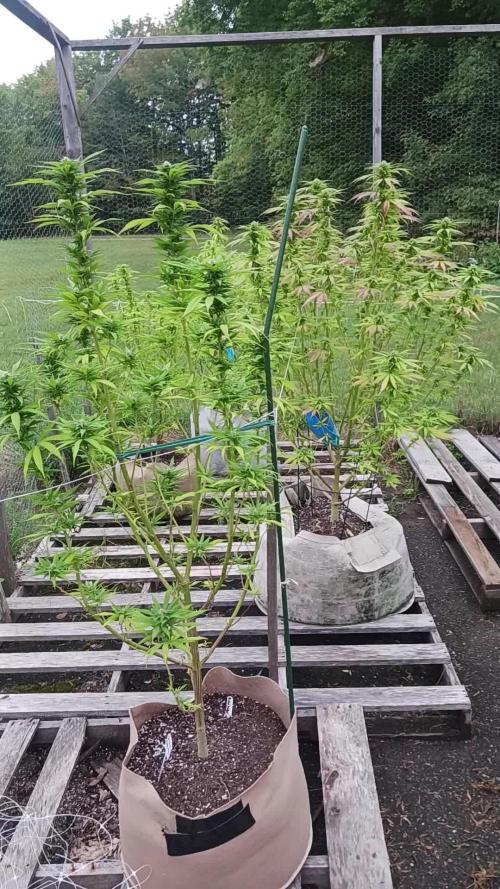
💩Holy Crap Growmies , we are outdoors and in the Ground and there Doing Great💩 👉It's been another full week and she's almost ready to be chopped down , just a few more days 👈 So due to horrific weather as of late , I've had to deal with some slight bud rot 👈 removed it , and hopfully we are good to go 👊 I GOT MULTIPLE DIARIES ON THE GO 😱 please check them out 😎 👉THANKS FOR TAKING THE TIME TO GO OVER MY DIARIES 👈 👉NutriNPK NUTRIENTS USED FOR FEEDING 👈rain water to be used entire growth👈
Likes
Comments
Share