The Grow Awards 2026 🏆 






Likes
Comments
Share
@Naujas
Follow
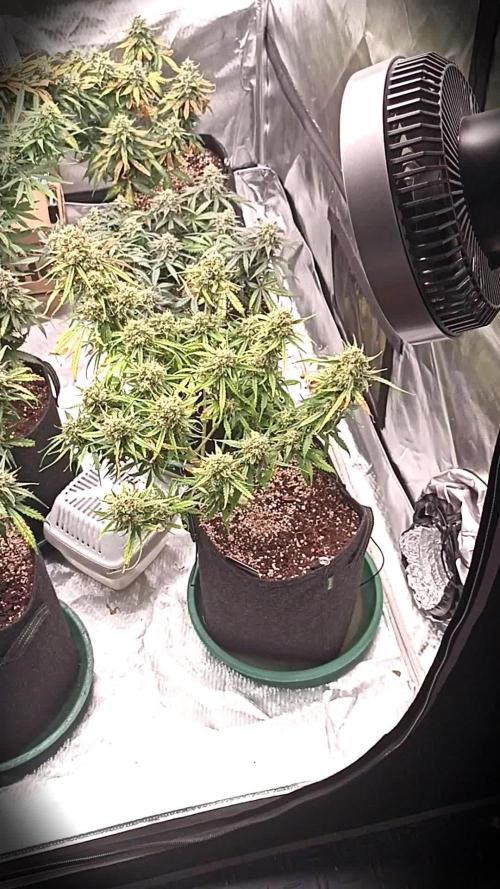
To tell the truth, I am very surprised myself, how amazing she is FastBuds Gorilla cookies, she copes well with a small space:) she drinks 1 liter every day :) everything looks better than expected:) good luck to everyone.

Likes
1
Share
@auto_cultivo420
Follow
En 75 días estuvo lista para cortar
A la hora de fumarla tiene unos toques brutales a naranja que te queda el regusto en el paladar durante un buen rato y entra muy suave y fresca

Likes
20
Share
@BigDripFelgo
Follow
Dolato is finishing up nicely and bulking up pretty well, buds are falling over so I tied most of them to hold them up right but there were a few I couldn’t reach which are still down. Scent on her is very Gelato like but not as fruity or creamy nor is she very strong scented. Calyx swelled up but some pistils seem to have more time to darken and recede. Been flushing for a week now just waiting for more trichomes to get cloudy before harvesting!

Likes
1
Share
@420Cannaking
Follow
Vegetation cycle starts.
Light intensity 50% @ 16 inches
Nutrient program starts at 50% Green Planet Easy Feed and Week 2 begin Green Planet Pro Feed @ 50%.
Abit too much light for the plants finding the sweet spot on a 480watt LED,they recovered well.
Still battling high humidity and high temps. 28-31'C 65%-90%. Introducing a new dehumidifier as of next week.
Have turned AC on High between 11am-5pm (hottest part of the day) Summer only!

Likes
52
Share
@DogDoctorOfficial
Follow
Let's realign our cosmic compass and embark on a harvest report for our magnificent Cosmos F1, a pure CBD strain that has taken us on an extraordinary journey. Brace yourself for cosmic revelations and interstellar delights!
After an impressive 11 weeks from seed and 7 weeks of flowering, the time has come to witness the cosmic culmination of our efforts. I carefully hung the entire Cosmos F1 plant to dry, allowing the cosmic energy to infuse every inch of this botanical marvel. It's a sight to behold, with majestic branches reaching for the cosmos, reminiscent of a cosmic dancer frozen in time.
As our cosmic queen gracefully dries, her vibrant hues continue to amaze. The shades of green, intertwined with delicate hints of purple and gold, are a testament to her genetic splendor. It's as if she has absorbed the cosmic essence of the universe, transforming it into a visually stunning spectacle.
Now, let's talk about the cosmic power of CBD. Our pure CBD strain holds the key to a transformative experience. With minimal psychoactive effects, this cosmic treasure offers a realm of therapeutic benefits. It's like a cosmic massage for the mind and body, soothing and relaxing, allowing us to explore the depths of cosmic tranquility.
The decision to hang the entire plant for drying is a testament to our dedication to preserving the cosmic integrity of our harvest. By allowing the branches to hang freely, we encourage a slow and controlled drying process, ensuring that the cosmic essence remains intact. It's a ritual that honors the plant's journey, preserving its cosmic magic for us to enjoy.
As we eagerly await the cosmic transformation, let us express our gratitude to the celestial forces that have guided us on this cosmic odyssey. The cosmos has aligned to bring us the extraordinary Cosmos F1, a gift from the cosmic garden gods themselves. We extend our heartfelt appreciation to the cosmic harmony orchestrated by @James and Royal Queen Seeds.
In the coming days, our dried cosmic buds will be ready for the next stage of our journey. From cosmic concoctions to cosmic culinary delights, the possibilities are infinite. Imagine infusing the cosmic power of CBD into soothing teas, cosmic creams, or cosmic confections. The universe is our canvas, and with our cosmic harvest, we can create cosmic masterpieces.
As we bid farewell to our Cosmos F1, let us cherish the cosmic memories we've shared. The vibrant colors, the pure CBD power, and the cosmic connection we've established with the universe. May our future endeavors be as cosmic and awe-inspiring as this one.
Until we meet again, my cosmic friends, lets keep exploring the cosmic wonders, nurturing our cosmic gardens, and let the cosmic energy guide our cosmic creations. May our harvest be abundant, our cosmic experiences be enlightening, and our cosmic journey be filled with celestial blessings.
As always thank you all for stopping by and for supporting me on this journey, i am super passion about growing and fell blessed to have you all with me on

Likes
168
Share
@Still_Smoq
Follow
📆 Week 14, 5-11 August 2024
5-11 Aug - Observed and let the plant grow.
📑 Pablo continues to grow! She has not slowed down in water consumption so she may need more time than expected. I’ll have to observe for another week before a decision can be made when to harvest. Being 90% sativa this is not unusual. Pistil hairs are about 75% brown (with new ones developing). Buds are bulking out, continuing to grow and swell, and trichomes are building. The smell keeps intensifying with that of a lemony sour pine.
🍶 6, 10 Aug nutrient solution changed
🍽️ 6, 10 Aug feeding schedule updated
💧 Using reverse osmosis water with EC/TDS at 0
🐉 Nutrient Solution EC 2.0 at 75 degree F
🔆 Light power at 65%, DLI 40 canopy coverage at 12hrs
😤 Using PYPABL, Air Pump, 400GPH
That is it for this week. Thanks for the look, read and stopping by.


Likes
11
Share
@madlangs
Follow
Dehumidifier in lung room been going all week to help with temps
All going extremely well. Not one leaf has any burn or deficiencies. Purple punch at the back looking a bit light green could just be the pheno. Flower sooner next time. They are taking over the room. Finally stopped stretching now.
Mont Blanc 61cm
Blue sherbet 97 +86
Purple punch 99+ 102
kush mints 110cm
Lights
465w 26cm
Dli 800ish
300w 21-32cm
Ppfd 750-950
Dli 32.4-41
Pineapple chunk outside
All going well with it. Putting it in the shed at 8.30pm and taking it back out 8.30am
Giving plain water every day in the tray
31.3.23
1L
10ml pk 5-8.
Ec4.5
5ml bio heaven
Ec4.7
3ml Acti Vera
Ec 4.7
3ml Alg a mic
Ec4.9
Ph 5.9
Added another 0.5L water
Ec 3.5
Ph5.9. Brought up to 6.3 8ish drops
Gave 1L bottom and half litre top watered


Likes
20
Share
@JohnnyCash420
Follow
6.4. Die 3 Babys wurden jeweils in 15l Stofftöpfe von Zamnesia 1,5cm unterhalb Erdfläche eingelegt und mit Erde bedeckt.
Als Erde wird die 420Grow Erde von Gardenboss verwendet und es wurden jeweils 10gramm von Rhizobacter (RQS) der Erde beigefügt.
Im untersten Teil der Stofftöpfe wurden Blähtonkugeln ausgelegt.
Die ersten 2-3 Wochen sollen die Pflanzen auf der Fensterbank zur Südseite wachsen und dann in einem Foliengewächshaus (Kesser) auf dem Balkon (ebenfalls südliche Ausrichtung) bis zur Ernte bleiben.

Likes
1
Share
@Diariesweed
Follow
188g wet I hope to dry between 40 g we will see plant easy to grow. sincerely expected more from this sepa

Likes
5
Share
@GrowGuy97
Follow
This lady got cut down on day 64, she has some beautiful colors & a very distinctive smell! The buds are all around good size nugs and very hard, can’t wait to see how she turns out! I definitely recommend going to check out Bomb seeds & getting yourself some fire genetics! Will do a harvest post as soon as she is finished drying & I get a weight! Thanks for following & happy growing!

Likes
3
Share
@Ninjabuds
Follow
Sticky Rice is still a little on the small side, but it has this awesome glossy shine to its leaves. I think it has the potential to really take off. Maybe it'll even live up to its name and produce some super sticky buds. We'll see!
Last week was awesome! I finally got around to giving all my plants a little upgrade – I repotted them into some bigger homes. They're all looking so happy and healthy now, it's crazy. I can't wait to see how much they grow this year!

Likes
7
Share
@Marijuanaut
Follow
We´re getting there! 😉
Took the week for flushing, net removed for easier handle/access and thricome check.. 😋
I think this one is about ready and we´ll be the first one to go down! 😊
Not the biggets yeld but those buds look mighty fine 😍


Likes
19
Share
@creichs
Follow
still have slow bud growth from the PF. Holy Punch is still getting fatter and taller colas. stopped giving nutes at the end of this week as harvesting is expected in 2


Likes
80
Share
@OrganicNature420
Follow
• New release Cali Crasher by Doctor's Choice
• Kali Mist x Ak47 x Colombian Gold
• Satvia (mostly)
• THC high
• Yield 400 - 600gs indoors
Nutrients • GreenBuzzNutrients
(DISCOUNT CODE • GD42025) %25
I use the whole product range and this stuff is a game changer. I've not had one bad grow with this company and it hasn't let me down once. Terps and taste are through the roof. No need for run off in coco only during flush week. Hands down the best nutrients on the market
YOU GORGEOUS GROWERS CAN NOW GET A WHOPPING %25 OFF ALL PRODUCTS USING THE NEW CODE ABOVE
LIGHT/TENT • Mars Hydro FC-E6500 5x5 tent
Flush week. 5days and then back onto a light feed. She actually smells really nice for a lemon scented gir. Super oily to touch and has plenty of frost on her ❄️👍🏻

Likes
20
Share
@French__flair
Follow
Dernière semaine de croissance.
Changement de solution fait le dimanche 22/11 car le ph commençait à descendre en dessous de 6.2 et cela faisait 1 semaine que j'avais fais le précèdent changement.
Le PH lors du changement était de 6,8. Il est monté jusqu'à 7.5 mais je laisse le filtre faire son oeuvre. Il est actuellement à 7.1 et continue de descendre naturellement.
carence en fer. Ajout d'une dose supplémentaire de Sensi CalMg
Edit au 25 :
Malheureusement ce que je sentais venir est arrivé, saturation en N.
Le Ph et l'EC continuaient de baisser tous les deux. Les parties basses des plantes étant sombre et ayant une carence en fer sur la partie haute (puisque élément mobile), j'en ai déduit que c'était une carence en fer induite par une surfertilisation en N. J'étais à un EC de 1, je suis revenu à 0,8 le mardi 25 au soir. La bioponie est très capricieuse au niveau de l'azote. Le mercredi 26 le ph remonte ce qui signifie qu'on a stopé le processus de dégradation du N. Je devrais changer la solution mais je dois passer bientôt en flo donc j'ai enlevé de l'eau et rajouter, histoire de tenir jusqu'au prochain changement de solution qui est prévu samedi sauf si la situation dégénere de nouveau avec le PH.
Last week of growth.
Change of solution made on sunday 22/11 because the ph was starting to drop below 6.2 and it's been 1 week since I made the previous change.
The PH at the time of the change was 6.8. It went up to 7.5 but I let the filter do its job. It is currently at 7.1 and continues to drop naturally.
iron deficiency. Addition of an extra dose of Sensi CalMg
Last update :
Unfortunately what I felt was coming has happened, N saturation.
Ph and EC both continued to drop. As the lower parts of the plants were dark and iron deficient (on top because is mobil nutrient), I deduced that it was an iron deficiency induced by N overfertilization. I was at an EC of 1, I came back to 0.8 on Tuesday evening the 25th. Biopony is very capricious in terms of nitrogen. On Wednesday the 26th the ph goes up which means that we stopped the N degradation process. I should change the solution but I have to float soon so I removed some water and added more, to hold until the next change of solution which is planned for Saturday unless the situation degenerates again with the PH.
Ultima semana de crecimiento.
Cambio de solución hecho el domingo 22/11 porque el ph empezaba a bajar de 6.2 y ha pasado 1 semana desde que hice el cambio anterior.
El PH en el momento del cambio era de 6,8. Subió a 7.5 pero dejé que el filtro hiciera su trabajo. Actualmente está en 7.1 y sigue bajando naturalmente.
deficiencia de hierro. Adición de una dosis extra de Sensi CalMg
Ultima hora :
Desafortunadamente lo que sentí que venía, la saturación de N.
El pH y la EC continuaron bajando. Como las partes inferiores de las plantas eran oscuras y con deficiencia de hierro, deduje que se trataba de una deficiencia de hierro inducida por la sobrefertilización de N. Estaba en un EC de 1, volví a 0.8 el martes 25 por la noche. La bioponía es muy caprichosa en términos de nitrógeno. El miércoles 26 el PH sube, lo que significa que detuvimos el proceso de degradación del N. Debería cambiar la solución pero tengo que flotar pronto así que saqué un poco de agua y añadí más, para mantenerlo hasta el próximo cambio de solución que está previsto para el sábado a menos que la situación degenere de nuevo con el PH.

Likes
27
Share
@GrowersParadise
Follow
Heat mat, rapid rooters, propagation light
Easy and very successful over the years


Processing
Likes
3
Share
@XxBILLZAxX
Follow
Buds looking alright. Leaves have seen better days & I feel like she's dying on me... Swapped the light because my friend who 'claims he's an expert' told me too.
Flushed 20th will go for a 2-week flush even with this flawless finish. (if they make it that long)
My tap water is 360ppm & runoff is 415 after flush (30+L of PH'd water)
I am definitely going to do a 48-hour dark period before harvest with no watering.
Anything I'm doing wrong let me know!