


Likes
Comments
Share


Likes
7
Share

@LittleBigTrees
Follow
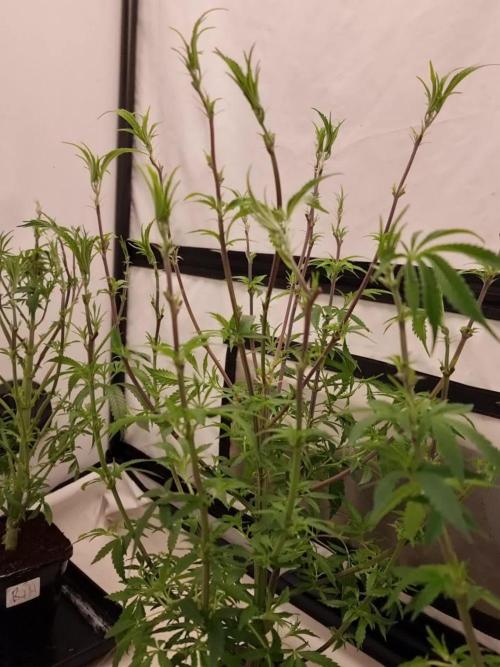
Cut the centre out of 2 of them, also defoliated them heavily as I'm switching to flower at the end of today.
I will start feeding power buds from tomorrow as well.




Likes
49
Share

@DogDoctorOfficial
Follow
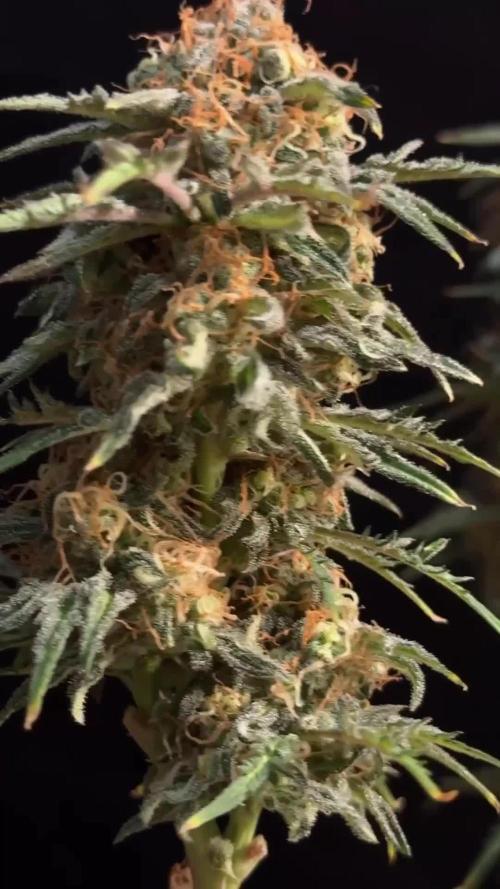
Mentha de Croco – Week 18 from Seed | Week 7 Flower By Terpyz Mutant Genetics
We’ve entered the final chapters of this mutant tale, and what a phenomenal story it has become. These girls are now drinking only water as they near the end of their flowering cycle, and they are doing so with elegance, uniqueness, and a presence that’s hard to put into words.
Their structure is wild and bold, true to the mutant spirit, and this week we’ve witnessed them begin to cannibalize themselves, pulling in all internal resources as they approach harvest readiness. Their colors are shifting, their leaves are curling with purpose, and their energy is focused deep within the buds.
Each phenotype continues to express in its own voice — no two look alike, and yet they sing together in perfect harmony. 🌿
And then there’s the terpene profile, absolutely outrageous! A heavy chemical note that feels like fresh nail polish, with a twist of gassy sharpness that fills the tent with that unforgettable “mutant funk.” It’s strange, beautiful, pungent, and… perfect.
We’re not harvesting just yet, maybe next week, but the excitement is undeniable. This is the moment where patience and vision meet, and where every subtle change is a whisper from the plant saying: “It’s almost time.”
📣 Shout outs & gratitude:
Infinite thanks to:
🌱 @terpyz_mutant_genetics for the freaks and the fun
💧 @aptus_holland for the precision and clean nutrition
💡 @futureofgrow for lighting up our garden
📊 @trolmaster.agro for full control and peace of mind
💚 And of course, all of YOU — the GrowDiaries fam, the supporters, the curious minds, the haters, the lovers. You are all part of the story, and we grow stronger together.
Follow along for more content and behind-the-scenes:
📲 IG | YT – always something weird and wonderful going on.
⸻
Let’s close this week in gratitude, patience, and awe. One more deep breath and soon we harvest.
Growers love, always.
DD
💚
#MenthaDeCroco #MutantGenetics #Week6Flower #AptusHolland #TerpyzGenetics #Trolmaster #FutureOfGrow #GrowDiariesUpdate #MutantGarden #PhenotypeHunting #GrowersLove #MutantsInBloom
Genetics - Mentha De Croco
Nutrition - @aptusholland
https://aptus-holland.com/
Led Power @ F.O.G. Future Of Grow
https://www.thefuturofgrow.com/en/online-store/BLACK-SERIES-600-p489093171
Controls @ TrolMaster
https://www.trolmaster.eu/tent-x
Let’s see what next week brings! 🚀
As always thank you all for stopping by, for the love and for it all , this journey of mine wold just not be the same without you guys, the love and support is very much appreciloved and i fell honored with you all in my life
With true love comes happiness Always believe in your self and always do things expecting nothing and with an open heart , be a giver and the universe will give back to you in ways you could not even imagine so
As always, this is shared for educational purposes, aiming to spread understanding and appreciation for this plant. The journey with nature is one of discovery, creativity, and respect. Let’s celebrate it responsibly and continue to learn and grow together!
Growers Love To you All 💚

Likes
16
Share


@Rungood
Follow
Floraison +18 jours . Le stretch est plus important que sur le pied mère 😍 bizarre mais tant mieux 😍
Likes
4
Share


@MadeInGermany
Follow
Flowering day 22
since time change
to 12/12 h.
Hey guys :-)
Another great week that is over.
They all develop exactly as it should be 💚.
Since the last leaf and substrate application against tripse, I finally haven't seen any of the little biters 👍.
Watering was done twice this week with 1.3 l each time (see table above for nutrients).
The lowest shoots were removed so that the energy is not wasted in the lower part :-) .
Otherwise, as always, everything was cleaned and checked.
Fresh osmosis water was filled with stale tap water in a 100 L tank for the coming week 👍.
Have fun and stay healthy 💚🙏🏻
👇🏼👇🏼👇🏼👇🏼👇🏼👇🏼👇🏼👇🏼👇🏼👇🏼👇🏼👇🏼
You can buy this Nutrients at :
https://greenbuzzliquids.com/en/shop/
With the discount code: Made_in_Germany you get a discount of 15% on all products from an order value of 100 euros.
👇🏼👇🏼👇🏼👇🏼👇🏼👇🏼👇🏼👇🏼👇🏼👇🏼👇🏼👇🏼
You can buy this strain at :
Clearwater Seeds
Water 💧 💧💧
Osmosis water mixed with normal water (24 hours stale that the chlorine evaporates) to 0.2 EC. Add Cal / Mag to 0.4 Ec Ph with Organic Ph - to 5.8 - 6.5
MadeInGermany

Likes
18
Share


@Luv2Grow
Follow
Day 65 - Starting week 10 and she’s definitely starting to fatten up a bit since lowering the lights for her. Already getting close to another round of water so most likely tomorrow, she’s drinking quite a bit lately.
Day 66 - She was just about dried up already so gave her 2 gallons of plain pH’d water. Gonna start checking out the trichs soon, I’m thinking she’s down to about 2-3 weeks left but when the trichs tell me she’s done, I’ll chop her.
Day 67 - Not much to do with her today, just some updated pictures and checked out the trichs for the hell of it and still mostly clear with a few milky scattered throughout.
Day 68 - She’s gonna be ready for some water tomorrow, other than that, just been checking the trichs and tucking some leaves when I put her back in the tent.
Day 69 - She was ready for water today and thinking she’s got about 10-14 days left, I went ahead and started the flush according to the Technaflora schedule. So mixed 5ML of MagiCal and 80ML of Sugardaddy with 2 gallons of water.
Day 70 - Ending week 10 and she’s getting down to the wire. Still looking at about 7-10 days and everything is on track. Very few clear trichs in there, most are cloudy with a few amber scattered throughout.
Likes
15
Share


@SmokingBrownAndTalkingBrown
Follow
Last week of the vegetation stage for the ladies.
I added some urb to the nutrient mix and gave the plants two measuring spoons each of the bat guano as a top dress on 17/01/21.
I defoliated the plants and flipped the switch to 12/12 on 17/01/21.

Likes
40
Share


@Red_Rockst4r
Follow
45 grams total dry ;-)
She is clipped and is now lying to dry, there was 211 grams of wet plant material so I expect to have about 50 grams dry - i will update this part later!
I have cheated a little, and tasted a bit of the scissors hash and I can seriously relate to the taste of watermelon.
Looking forward to tasting her dried flowers so far it promises well ;-)
Likes
32
Share


@LapsekiliTayfur
Follow
Day in and exit fan 15 min off 15 min on Van is full on
Night in and exit fan 30 min off 15 min on Van is off
Day 43 Short Flowering 2gr/L Booster 1gr/L Big Bud 1ml/L Humic And Fulvic Acid 1ml/L
Day 46 Short Flowering 2gr/L Booster 1gr/L Big Bud 1ml/L Humic And Fulvic Acid 1ml/L
Day 49 Short Flowering 2.33gr/L Booster 1gr/L Big Bud 1ml/L Humic And Fulvic Acid 1ml/L
1Liter Per Pot


Likes
47
Share


@Betagemini
Follow
10.10.2021 DAY 160 On this beautiful date I harvested a plant Bruce Banner #3 Fast that had survived the tremendous winds of the last few days. I sheltered it from the wind and rain so that the resin didn't wash away. It was a great grow and I am very happy with the genetics and natural fertilizers from biocanna, having doubled the dosage the last few weeks. See you soon.

Likes
33
Share


@Weird_Jimmy
Follow
Cream Auto Summary
Wk 1: Germination, game plan, equipment, and prepping the room.
Wk 2: Germination progress, fertigation, and a new light.
Wk 3: Two phenotypes.
Wk 4: Woe and wonder, nutrients, and water source.
Wk 5: Growing like a weed, and max power.
Wk 6: Soaking up rays and consuming the nutrients. Algae remediation and proactive pest control.
Wk 7: Will the size difference begin to fall in line with the predictions, and rearranging the wind.
Wk 8: Time slows down, as buds build and plants are thirsty.
Wk 9: A cone shaped bush, and trichome hunting season begins.
Wk10: Playing the guessing game and learning is doing.
Wk11: Escaping from Distancing.
Wk12:Trichome Hunting and Changes in diet.
Wk13:Lessons
Wk14:When will it be the ‘right’ time?
Wk15: This is the right time.
Wk16: Harvest time and Summary.
Final Weights:
Cream 1gallon 157g (5.5oz); Cream 3gallon 299g (10.5oz); Combined 456g (16oz) ((Individual plant weight logs in pix))
New names for the Jars, 1 Cream for the 1 gallon plants buds and 2 Cream for the 3 gallon plants buds.
👉The 1 gallon plant was harvested the 3rd day of the week, It had only a couple of white pistols on each bud and wasn’t producing anymore fresh calixs. There was still very few amber trichomes, but the majority were definitely milky. Very frosty sugar leaves, and overall the buds are mega frosty and remind me of the Gorilla Glue I grew. However the buds are more airy. I started trimming from the top, and worked my way down. I recorded the wet weight for each bud and placed it on a clip with a number that corresponded to the order it was removed. I do this to monitor the % of weight loss due to moisture loss and aim for 20-25%. I did a partial dry trim and left all the frosty sugar leaves to be dry trimmed before going into jars. It had minimal actually larfy buds. I trimmed those not part of the main cola group for each branch and placed them on the rack for drying. The process went fairly easy and I might have spent 3hrs total. The sweet smell of sweet creamy citrus and the overwhelming funky stank was very fun.
👉After 2 1/2 days I placed the buds in paper bags, each cola in its own bag. The main cola was too long so reluctantly I cut it down so it would fit. After another 2 days I placed in jars, some with hygrometers and moisture packs. The overnight humidity in the jars was on average 52%. I added some damp paper towels hung off the lids to restore a bit of the humidity. This worked well and the humidity is now average 62%. I added moisture packs to some of the jars. The jar aroma is sweet cream orange zest and funky stank.
👉I had expected to harvest the one gallon plant during week 16. Given the way the 3 gallon was going, I figured the 3 gallon had another week or so. I assumed that because it had been so slow to develop in all of its phases. After I had harvested the 1 gallon I finally had a chance to really inspect the 3 gallon really closely. I couldn’t inspect it as closely as I had been the 1 gallon because it was further back in the tent and the 1 gallon hindered access. I didn’t think it was a big deal. I hadn’t rotated the 3gallon for two weeks I think. So during my close inspection, I was rotating the plant and it actually took me a while to notice…a dried up tip of a cola. This cola had been sitting on the far side. It hadn’t been against the tent wall. As soon as I saw it it was like a slap in the face…its what I feared would happen to this plant since the buds were so fat and dense….botrytis. Budrot. Nasty, grey fuzziness. My heart sunk as my fears were realized. How many more buds would be affected? Will it be like my Critical Purple and all the best big buds have this hidden scourge? I immediately inspected a few of the bigger buds. I didn’t see any. But there are over 20 colas. The only way to know for sure is to harvest. I didn’t have time to harvest the whole plant right then, so I had to wait for the next evening after work.
👉I took off work a little early to get a head start. The buds were full of sugar leaves still a lot of fan leaves so lots of trimming to do. It took a total of 6 hours from start to finish. I started doing a partial wet trim leaving the smaller frosty sugar leaves to be trimmed dry. I experimented with full wet trim on some of the smaller buds that ended up on the drying net and not left on the branch. I needed the buds to dry slow enough not to taste like hay, and fast enough the botrytis gremlin wouldn’t pay a visit. A close thorough wet trim seemed to look like it could be optimum for these buds. On the 7th branch I started giving the buds a meticulous wet trim. I took the liberty to enjoy some of my Tangerine Dream from a year ago. I listened to Physical Graffiti, Animals, Frank Marino Live, Foxtrot, and some dead air when the album ended and I needed to pick another one. I scrutinized each bud closely for any signs of the evil spores. But I saw none, such a relief after each buds inspection to see nothing but happiness.
👉I had 28 total branch end colas. Most were chunky pine cones. I recorded each branch in the order it was removed. I started at the bottom and labeled them alphabetically. 4 of the branches were smaller near the top in the middle of the canopy and one branch had the bud-rot. I trimmed the buds off the branches but left the bud group forming the cola intact. I put small larfy buds on a separate rack from the good buds trimmed of the branches, I didn’t weigh the larf, and had 72g of good chunky branch buds. The colas when dried to approx 22% weighed in at 227g. The total in the jars is 299g. Very happy! The chunky colas were slow to dry on the interior. I took special care to monitor the buds, not let them get too dry and would spread the buds open a bit to prevent wet spots that could turn into botrytis. When they got a little dry to the touch I would place them in paper bags. That slowed the drying down and allowed the moisture to equalize on the bud. I would weigh the buds and calculate the % of weigh left to help determine how dry they were. When they were below 25% of its wet weight I placed them in jars with many of them getting a hygrometer to monitor the humidity in the jars. I had to take them back out of the jars after one day and back into paper bags because the humidity climbed as high as 80% in some fo the jars. This meant the interiors were still moist. The bigger the buds the longer they needed to stay in the paper bags. The final weights on the buds were after they were dry enough to be at 62% or lower humidity in the jars wish was still around 20% of the wet weight. The jar aroma is not very strong. The aroma is a light sweet orange zest. It should improve over time. The buds are dense and sticky. Not all the colas got their own jars unless they were big enough. Some of the colas I separated from the branches and placed in smaller jars, even combining some of them. The intact colas got the large jars and some were combined in those as well.
👉I have one of those Trim-trays with the screen in the bottom with a tray underneath to catch keif. I trimmed off fans leaves and leaves with no fuzziness on them. I trim the fuzzy leaves over the tray. I did this for both plants. When doing the 3 gallon plants trimming I also snipped up some of the larf and small buds into small pieces to add to the pile. I let the trim sit in the tray till it was crispy dry. I then used my hands to grind the trim into smaller bits. I used a plastic card to scrape the pile back and forth across the screen. I continued to grind up the trim with my hands and alternately scrape the screen and sift the pile. It was hard to tell how much I had got till I used the plastic card to scrap the catch tray. I was pleasantly surprised to see a nice pile form. I made 4 pucks.
👉The bud is cured and stable humidity in jars. I’m doing the typical jar burping and inspection daily for another few days. I have tested both plants and am extremely pleased! Both have a sweet creamy orange zest like aroma (but not like an orange creamsicle). The 1gallon, now called 1Cream, is the strongest jar aroma. When hit on the bong both have a sweet creamy smooth after taste, and again the 1Cream is the strongest flavor. Both are very sticky when pinching off a bit for the bong, and the 1 gallon is the stickiest. Both pass the one hit test with flying colors! Hard to tell the difference between the two as far as the high goes, creeper buzz, with a nice uplifting energy, settling into couch lock and sleep-inducing trail-off. Perfect for night time use. I’m surprised at how nice it is already. The typical 6 week cure review will be updated in the review. If its anything like the other plants Ive grown so far 6 months is when it really hits its stride and is at its best flavor and effect.
👉Methodology Summation: I am really happy with the fruits of my labor. Its not perfect, and I believe I have learned a lot of knowledge and insight. All my grows so far have been in 3 gallon cloth pots with coco coir mixed with 30% total volume of expanded clay pebbles for hydro. The one gallon plant got bigger than I expected it could. I believe that’s due to frequent fertigation I the coco/cloth pot. The problems of being in an undersized pot were somewhat mitigated but not eliminated. The 3 gallon was also showing some of the issues of an undersized container but not as severe as the one gallon. Knowing this will help if I choose to grow in a smaller pot again. Obviously the draw backs to the under sized pots is the issues show up during flower when the plant is at its biggest. Maybe next time I wont exacerbate the issues by chasing my tail. But the drawbacks are not enough to say its bad news to grow good big buds in undersized pots. There is a drawback to frequent fertigation method, the amount of time spent tending to the plant. Two times a day, every day. That is actually the minimum recommended. If I could have automated it I would have done 3 times a day. I am curious what my results might be if I was able to fertigate 3xs a day. I chose this method so I would be spending a lot of time tending my plants anyway, and with coco I avoid the pitfalls of over watering soil when you’re an overzealous gardener.
👉Growing Summary: The 3gallon was actually the second seed to germinate. The first seed petered out, and the 1 gallon was put in four days after the 3gallon had germinated. The 3 gallon was slow to straighten and open its cotyledons up. The cotyledons had a yellow tinge to part of them. It was slow grow for the rest of the grow when compared to the 1 gallon plant which started flowering 12 days before the 3 gallon and seemingly was always almost 2 weeks ahead of the 3 gallon. The trunks of both plants became very stout. I was wondering if somehow I had been given mismatched seed pack, but in the end I think they are the same strain due to the similarities such as aroma and high. The leaves were identical. Both had fat stout trunks, and both had super sturdy branches. I didn’t use one support for the 3 gallon plant, a first for me, and the buds were very dense and heavy. I put some on the 1 gallon plant but that was for its protection from me since it was at the front of the tent. Both plants also smelled similar, sweet caramel cream when sniffed up close. But different in the natural canopy both made around its queen cola, and in the structure of the flowers. Its been very fun and interesting watching these plants grow and seeing two phenotypes of the same strain!😻

Likes
13
Share


@SillyTrippyHippy
Follow
Flipped today currently in the Floral Transition stage.
Watered with a Cytokinin dominant SST.
Top dressed some bloom fertilizer with ewc and biodiverse compost. Cut down all the cover crop.

Likes
26
Share


@MG2009
Follow
03/05/2021
Beginning of week 4 looking good, I think she will start flowering in week 5-6, so I might top her, she is growing fast so I hope it will not harm flowering time.
Ps.
I did top
And 24 hours later I can see all is well, where I topped her is healing, and side branches responding! I know she will be ready for flowering.
Check out video and see.
Likes
6
Share


@TherealNICOGREEN
Follow
Har det super godt efter været blevet, flyttet uden dørs, til resten af familien 🧑🧑🧒🧒💚☮️😇🤩glæder mig til at se hvor hurtigt de nu vokser, jeg har beholdt en indendørs. For at kunne sammenligne dem senere :) Men jeg ved jo næsten godt hvad det er der bliver bedst;) 🧡🖤💚🤩🤩😇

Likes
20
Share


@Stickybudz420
Follow
Right so I’ve been pretty slack with these girls an very slack on my diaries so sorry to anyone who was checking in regularly, heads been a bit fried but I’m back and this girl is weird asf but I love it the whole thing is like twisted an super stinky now too 🤩
Likes
23
Share


@goeser
Follow
Now we are in week 8.
Plants stopped growing.
I will let them grow two more weeks and then I will at least harvest two of them.
Depending on the trichomes I will keep the other two for 4-5 weeks more, because I will be away ... traveling
lets hope that the sun is coming out again and that the buds get bigger and bigger in the last two weeks.
BTW I stopped giving any type of nutrients, just water.
Likes
28
Share

@Luv2Grow
Follow
Day 57 - Starting week 9 today and she’s stacking up beautifully and already layered with frost. I really don’t want to do much defoliating right now but it’s looking like she might need a little bit soon but will just keep everything as tucked as I can. She got 2 gallons of plain water today and will get a dose of nutrients next feeding.
Day 59 - Looks like feeding her a bit more and stronger seems to of helped cause the leaves color seems to be much better now and not noticing any new yellowing, so hopefully the deficiency is fixed. Other than that, her flowers are stacking beautifully and she’ll probably need some water in another day or two.
Day 60 - Everything is going good overall still and no more real yellowing of the leaves. She’ll be ready for some water and nutes tomorrow.
Day 61 - All still looks good with this girl and she was definitely ready for some water. Gave her 2 gallons of water and nutes today.
Day 62 - All is well with this girl and enjoy watching the flowers stack up on her. Nothing much going on with her so just took her out for updated pictures and tucked the leaves when I put her back in the tent, might do a light defoliating in a couple days.
Day 63 - The end of week 9 and though she’s got a couple weeks left, she’s finishing up pretty quickly. All kinds of frost on her and buds are getting nice and plump. She’s good on water and should be for another couple of days. Might do a little defoliating on watering day as well.


Likes
76
Share


@Canna96
Follow
Hey now, this week went pretty good, she is stretching but not too much, she went from 28 to 34 inches, but the past couple days she seems to be slowing down with vertical growth. I started the transition today over to bloom nutrients, so I gave her half Veg and half Bloom nutes today, and I will have her all the way switched over by the end of the week. I figure I will probably get a couple more inches which would put her at 3 foot tall. I am definitely seeing pistils start to form all over her. I have been defoliating her about every other day, but I will stop this week and pretty much let her do her thing. I now have her running under a Mars Hydro 300 watt, and a Vipar Spectra 240 watt light. My planl was to fill a 4X4 with a single main-lined plant, and she has almost done that as she is touching the walls on all four sides. There are pretty many tops on her, so hopefully they turn into alot of flower but I will find out soon. I hope everyone had a nice weekend, stay safe, and Blaze On!
