


Likes
Comments
Share


@BlaBlaGrower
Follow
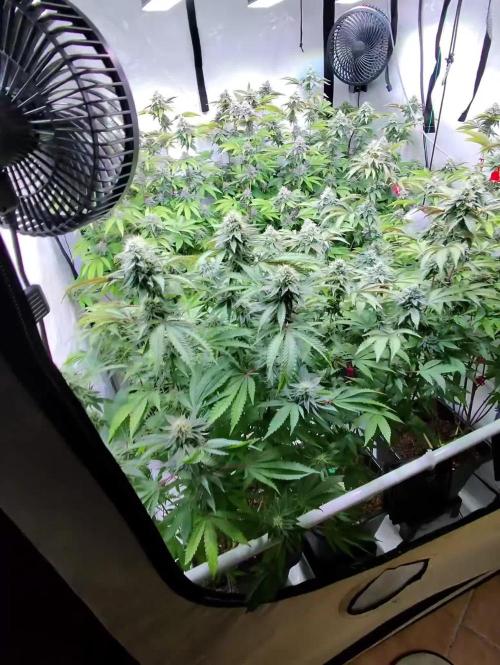
Es gab Probleme mit der Osmoseanlage. Ich musste die Lösung mit Wasser aus der Stadtleitung verdünnen, was sich negativ auf die Pflanzen auswirkte. Heute ist alles repariert und ich spüle es mit klarem Wasser ab.


Likes
1
Share


Likes
7
Share

@DogDoctorOfficial
Follow
🌿 Nectar Drip – Week 4 Report
Early Vegetative Phase (12/12 from Seed)
Zamnesia Seeds x TICAL – Pack #268
🌱 Growth Overview – Entering Structure
This week marks Week 4 since germination (often considered Week 3 in growth rhythm), and the plants are now clearly transitioning from early establishment into structural development.
All plants are healthy, vibrant, and responding beautifully to the environment. Growth remains steady rather than explosive — exactly what’s expected when running 12/12 from seed. What’s most exciting this week is that we’ve officially begun training, and with it, the first real divergence in plant architecture.
⸻
🌡️ Environment – Gradual Shift, No Shock
We’ve started to gently guide the environment toward a more “grown” climate, without rushing anything.
• Relative Humidity: ~65% (slowly lowered from previous weeks)
• Day Temperature: ~26 °C
• Night Temperature: ~18 °C
• CO₂: ~666 ppm
• Lamp Distance: ~1.70 m from canopy
• Substrate Temperature: ~22 °C
• Solution Temperature: ~22 °C
Airflow is still kept soft, but this week we’ve begun increasing movement slightly. The goal is to start encouraging stem strength and plant responsiveness, preparing them for the phases ahead while keeping stress close to zero.
⸻
💡 Lighting – Raising the Bar, Naturally
Light intensity continues its progressive increase, following plant demand rather than forcing development.
• Previous Weeks: ~400–500 PPFD
• Current Week: moving from ~500 toward 600 PPFD
The plants are clearly growing into the light, which is exactly what we want to see. This gradual ramp-up will continue week by week, allowing the canopy to adapt naturally as structure and leaf mass increase.
⸻
Substrate & Containers
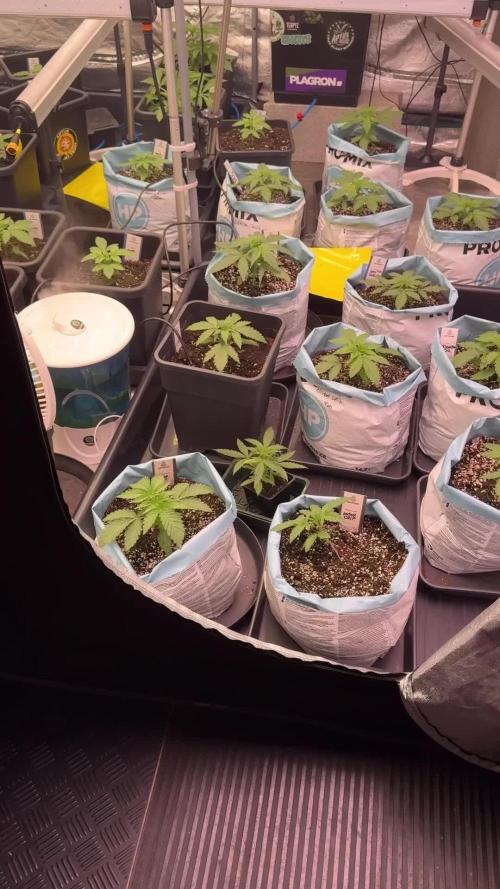
• Medium: ProMix
• Containers: 15 L plastic bags
Root activity is clearly accelerating now. Even though top growth remains compact, internal development is well underway — something that becomes very apparent once training begins.
⸻
Nutrition – Consistency Over Reaction
Nutrition remains unchanged and stable, reinforcing the idea that plants don’t need constant adjustments when they’re already happy.
Current inputs:
• Plagron Terra Grow
• Power Roots
• Pure Zym
• Sugar Royal
• Vita Race (foliar application)
This balanced organic–mineral approach continues to deliver excellent results: lush green color, healthy leaf posture, and no signs of deficiency or excess.
As always, the philosophy here is simple:
don’t fix what isn’t broken.
⸻
✂️ Training Focus – Low Stress, High Intention
This week, we introduced Low Stress Training (LST) on one selected plant.
Using long clips, the main stem is gently bent and guided almost parallel to the ground, opening the plant structure and allowing light to reach the lower growth sites. Leaves are carefully repositioned to expose side branches without damaging tissue or creating stress points.
This technique:
• Breaks apical dominance
• Encourages lateral branch development
• Keeps the plant shorter and wider
• Promotes a more even canopy later on
The trained plant is currently the shortest of the group, but already showing strong response. She’s entering her fourth node, and lower branches are clearly waking up and pushing upward.
The other plants remain untrained for now, growing naturally. This will allow us to directly compare structure, stretch, and expression later on — same genetics, same environment, different guidance.
What to Expect:
• Slower vertical growth on the trained plant
• Increased side branching
• A more compact, bushy structure
What Not to Expect:
• Immediate explosive growth
• Stress reactions
• Delays in overall health
This is guidance, not force.
⸻
🍃 General Observations
• Leaf color remains deep, healthy green
• Growth is compact and intentional
• Plants are calm and responsive
• Training response is already visible
• No signs of stress or imbalance
Videos included this week show the entire room and all plants, giving a full-picture view of how the Nectar Drip is progressing as a group.
⸻
🔮 Reflections on 12/12 From Seed
This week reinforces why I’m really enjoying the 12/12 from seed approach. Growth may be slower on the surface, but structure, balance, and root development feel extremely solid. The plants are building themselves quietly — and that patience usually pays off later.
⸻
🤝 Gratitude & Community
Huge thanks once again to:
• Zamnesia Seeds
• TICAL
• Plagron
• Future of Grow
for supporting this run and making this collaboration possible.
And thank you to the community — supporters, critics, newcomers, and long-time followers alike. Everything shared here reflects my personal experience and opinion, including my choices, lessons, and mistakes. It’s a privilege to share this journey openly so we can all learn together.
⸻
🌟 Week 4 Summary
• Environment gently shifting
• Light intensity rising naturally
• First training introduced
• Plants healthy and responsive
• Structure beginning to form
The Nectar Drip is no longer just settling in — it’s taking shape.
More to come.
Growers love always 💚
FOR DISCOUNT CODES AND MORE JUST FOLLOW THE LINK https://website.beacons.ai/dogdoctorofficial
📲 Don’t forget to Subscribe and follow me on Instagram and YouTube @DogDoctorOfficial for exclusive content, real-time updates, and behind-the-scenes magic. We’ve got so much more coming, including transplanting and all the amazing techniques that go along with it. You won’t want to miss it.
GrowDiaries Journal: https://growdiaries.com/grower/dogdoctorofficial
Instagram: https://www.instagram.com/dogdoctorofficial/
YouTube: https://www.youtube.com/@dogdoctorofficial
⸻
Explore the Gear that Powers My Grow
If you’re curious about the tech I’m using, check out these links:
🔆 Lighting & Environmental Control
• Future of Grow — Advanced LED lighting technology
https://www.futureofgrow.com/
DISCOUNT CODE: DOG20
• Lumiflora — Under-canopy LED lighting
https://lumiflorade.com/
• TrollMaster — Environmental controllers and automation gear (past collaboration)
⸻
Genetics
• Zamnesia Seeds — Genetics used in this project
https://www.zamnesia.com/
⸻
🌱 Soil, Substrates, Boosters & Root Support
• Plagron — Substrates, bio mixes, and supportive products
https://plagron.com/en/
⸻
🎒 Storage, Curing & Preservation
• Grove Bags — Curing and storage solutions
https://grovebags.com/
⸻
📸 Photography Equipment & Tools
(Not sponsors, but part of my creative toolkit)
• Sony A6700
• Sony full-frame macro lens + few more
• Stacking photography workflow - learning
• iPhone (for behind-the-scenes shots)
We’ve got much more coming as we move through the grow cycles. Trust me, you won’t want to miss the next steps, let’s push the boundaries of indoor horticulture together!
As always, this is shared for educational purposes, aiming to spread understanding and appreciation for this plant. Let’s celebrate it responsibly and continue to learn and grow together.
With true love comes happiness. Always believe in yourself, and always do things expecting nothing and with an open heart. Be a giver, and the universe will give back in ways you could never imagine.
💚 Growers love to all 💚
📸 P.S. – The Eye Behind the Lens
All photos in this diary (for now — except for the ones showing the camera, which I took with an iPhone) are taken with a Sony A6700 paired with a Sony full-frame macro lens and a few more.
Photography is part of the story — it’s how we share the fine textures, the glow, and the quiet details that words can’t always capture.
I’ve also started experimenting with photo stacking — a technique where multiple images, each taken at a slightly different focus point, are layered together to create one perfectly sharp image from front to back.
It’s not digital enhancement or AI; it’s pure photography — a way to reveal the plant’s beauty in microscopic depth, from trichome to petal.
You’ll even see a few shots of "ghost me" capturing the shots — camera, lens, setup — because every grow deserves not just to be cultivated, but documented like art.
FOR DISCOUNT CODES AND MORE JUST FOLLOW THE LINK https://website.beacons.ai/dogdoctorofficial
NEW DISCORD - Official Server Invite Link : https://discord.gg/ksjAkA5T74

Likes
90
Share


@CRiSPrGrow
Follow
Fucking chem og how resilient is she, for sure, she's a fighter, came back as determined as ever to pack it in some more, she didnt mind the dark, was a bit scared about the mold, so far no signs of it so let's all make a prayer for chem og, hope the taste is what i enjoy kinda fun flying blind ... but even a blind person would notice what an indica this is 😅 last week of smart proteins no nutrients added yet, just plain water and one point four bricks of shitting in my pants what a shake down my leg ! I'm smoking Dr. Grinspoon rn, and i've listened all i can to cypress hill's dr. green thumb and they say
"I never grow at my home" but what they dont say is all about the rest of it lol abricots? peaches ? 🚀
dropped her down to 10/14 so she's got plenty of time for resin production now she's a stinker smells like citrus and indica, or more like indica citrus, does that make sense ? 👊

Likes
8
Share


@Meechnmerchfarms
Follow
We got roots, I had a brief PM scare but it ended up being just a salt buildup from spraying the clones with light GH nutrients.

Likes
7
Share


@TJHeadley
Follow
Everything is going good so far. Plant started shooting hairs as of 11/9/23. Top Dressed with half a cup of worm castings and 1/8 cup of Craft blend

Likes
Comments
Share

@Mr175budman
Follow
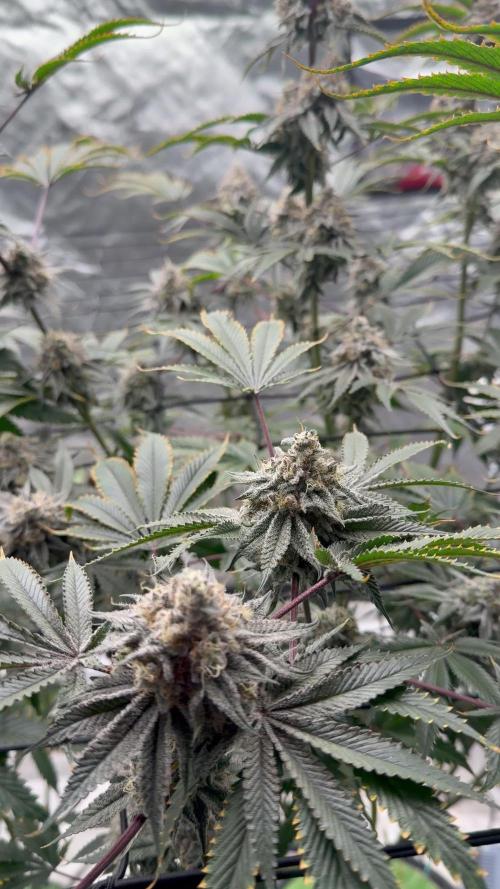
This was my first DWC grow and these STRNG SEEDS genetics was very easy to grow I also leaned on chatgtp for assistance and I really killed it
Likes
7
Share


@BushDoctor740
Follow
Jan-9-2025 So I decided to harvest lemon cherry cookies,Ztrawberriez,and Cherry cola.The Papaya cookies,Strawberry pie,and Pound cake are still going strong as they need some more time maybe another week or two before they are ready.
Likes
5
Share


@Ninjabuds
Follow
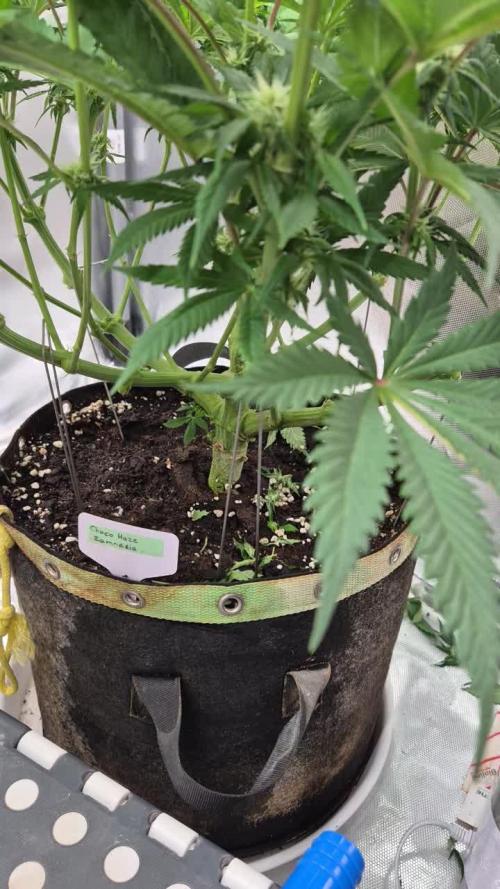
My gas tax plant is looking absolutely incredible right now. It's got these massive buds that are super dense and have this awesome dark color to the leaves. I'm so excited to see how it turns out when it's finally ready to be harvested. I've been checking the height, the thickness of the stem, and the density of the buds to get an idea of how much longer I have to wait. I think I might start flushing it soon.
The past few weeks have been so beautiful, watching the plants grow and change. It's amazing how something so small and fragile can turn into something so strong and vibrant. Now that they're getting ready to bloom, it feels a little bittersweet. I'm so excited to see the finished product, but I'll definitely miss having them around while they're growing.


Likes
1
Share


@Weedwithwes
Follow
Day 25
Did a single topping on one of the Pineapple Express Phenos.
Just feed water ph to 6.00 area.
Light is around 450-550 par


Likes
45
Share


@Secretflower
Follow
Hello my friends,
...June 24, 2022.. Day N°105...
...Flowering day N°49...
My three Feminized Bubblegum are beautiful. The buds are awesome and smells very strong.
I feed them with the Hybrid Powder and some Booster from Green House Feeding Nutrients,
I also give them some CalGreen from Metrop, the best Cal-Mag of the market.
They are under a MarsHydro TS 3000 at 80% of power and at 30cm of the canopy.
www.00seeds.com
www.mars-hydro.com
Thanks a lot for passing through here.
Wish you the best with your green projects, peace.
See you soon 💨💨💨

Likes
5
Share


@tNASTY3k
Follow
After toping the plant I started a Main-line technique to build the plant outward and aim to develop 16 main stems prior to flowering stage.
I do not see any major genetic issues with this plant. She Has had a few deformed fan leaves and one of the 4 main-lines grew a node from a node. This was not going to be used in my training technique plan so I have since removed it.
watering has stepping up to 28oz of distilled water pH balanced to 6.0~ (no higher than 6.5pH) I will also begin feeding the plant using the General Hydroponics Flora Series products. I don't think I'll need Cal-Mag so I'm watching closely for signs of deficiency before I opt in to purchase the nutrient.
Likes
5
Share


@TegridyCal
Follow
We wanted to try to experience the effects of global warming. We are from a Mediterranean area that has made it possible to grow the oudoor up to the winter, they are not as big as the summer ones but very very frozen and of a purplish color that they take with the evening swings that you cannot get in the summer. It looks like a Smoothie but it's a gorilla glue.
Likes
76
Share


@DogDoctorOfficial
Follow
🌸 Week 8 Flower – The Trichome Symphony Begins 🌸
Eternity Grow Cup
This week… it’s all about the frost. ❄️
We are diving deep into the universe of trichomes, those magical crystal-like structures that define potency, aroma, and visual beauty. Each pheno this week is presented with its own dedicated video — so everyone can witness the uniqueness and evolution of these genetics firsthand. The photos? Focused close and true on the trichomes and their stalks, the very essence of the plant’s protective and expressive language.
💎 What Are Trichomes?
Trichomes are tiny resin glands that cover the surface of cannabis flowers and sugar leaves. They’re responsible for producing and storing cannabinoids (like THC and CBD), terpenes, and flavonoids — the compounds that create the plant’s effects, scents, and flavors.
They act as the plant’s natural defense — from UV rays, pests, and environmental stress — and in return, they gift us with beauty, medicine, and art.
Why So Many Trichomes Here?
This room has turned into a crystal forest thanks to a harmonious mix of tech, care, and nature:
🔹 Spectrum Tunings:
Using the TrolMaster system, we’ve dialed in a spectrum rich in reds, far-reds, and UV at precise times to stimulate trichome production. The plants are responding in full.
🔹 Lighting:
The under-canopy power of the ICL 300s, combined with the canopy-level intensity of the Model 1s, is creating full-spectrum saturation from top to bottom. Buds are stacked, frosty, and glowing from every angle.
🔹 Nutrition Synergy:
The tag-team of Aptus Holland and Plagron has been flawless. The clean base, balanced micro and macro elements, and biostimulants have driven these girls into full expression mode. You can see the nutrition working in every crystal.
🌿 Where Are We Now?
We’re likely one week to ten days from harvest, but of course we’ll follow the plants’ signals. They’re still swelling and building — it’s the final stretch, and they’re sprinting.
Nerdy Note:
Trichomes can be bulbous, capitate-sessile, or capitate-stalked — and in this run, the capitate-stalked ones are standing tall and loaded. Expect a full cannabinoid and terpene profile when it’s time for analysis.( bro talk not lab hihihihi)
🌟 Let’s take a moment to recognize that we’re witnessing the peak of this cycle. This is living art, frozen in time by a camera lens but alive in scent and energy.
This Week’s Feeding Program
To support this explosive trichome production in Week 8 Flower, we’re feeding with precision and purpose. Every drop counts now, and here’s the clean, efficient mix we’re running:
• Aptus Holland – Regulator: 0.15 ml/L
• Aptus Holland – System Clean: 0.25 ml/L
• Aptus Holland – RO Water Condition: 0.8 ml/L
• Aptus Holland – All-In-One Liquid: 1.25 ml/L
• Plagron – Green Sensation: 1 ml/L
• pH set at 6.2
💧 We’re keeping it clean, clear, and consistent. No extra PK boosters or unnecessary additives. Just smart nutrition, tuned spectrum, and stable conditions to let the plants express themselves naturally. The synergy between Aptus Holland’s Clean Program and Plagron’s Green Sensation is clearly showing in every frosty bud.
This week, we’ve fine-tuned the spectrum to push the plants into full resin-production mode. I’ve reduced the white light intensity to 40% while keeping the reds and UVs running at 100%. This shift focuses energy on the wavelengths that directly stimulate secondary metabolite production—especially trichomes. Red light enhances flower development and density, while UV exposure encourages plants to produce protective compounds, like cannabinoids and terpenes, as a natural defense. This balance between lower photosynthetic pressure and high-spectrum stimulation is helping the girls finish strong, frosty, and full of character.
🙏 Massive thanks to all sponsors, followers, friends, and growers in the community. To the ones competing, to the ones just watching — THANK YOU. This is almost the end of the road, and every diary, every plant, every effort deserves respect.
💬 Don’t forget to follow the full 4K experience on YouTube, and for behind-the-scenes action and updates, join us on Instagram.
With Grower’s Love,
DD 🌱
Genetics - Runtz https://www.zamnesia.com/6000-zamnesia-seeds-runtz-feminized.html
Nutrients - Plagron https://plagron.com/en/hobby
- Aptus Holland https://aptus-holland.com/
Controls - Trol Master https://www.trolmaster.eu/
LED - https://www.futureofgrow.com/en
LED - https://www.thinkgrowled.com
Soil - https://www.promixgardening.com/en
Germination - Cannakan https://cannakan.com/?srsltid=AfmBOopXr-inLXajXu3QFgKXCXXos4F1oEvScjMKIB5MR5dk8-GJ-F49
DOGDOCTOR 15% off
Smoking Papers - https://ziggioriginal.com/
Terpene saver - https://grovebags.com/
As always thank you all for stopping by, for the love and for it all , this journey of mine wold just not be the same without you guys, the love and support is very much appreciloved and i fell honored with you all in my life
With true love comes happiness Always believe in your self and always do things expecting nothing and with an open heart , be a giver and the universe will give back to you in ways you could not even imagine so
As always, this is shared for educational purposes, aiming to spread understanding and appreciation for this plant. The journey with nature is one of discovery, creativity, and respect. Let’s celebrate it responsibly and continue to learn and grow together!
Growers Love To you All 💚
#EternityGrowCup #RuntzHunt #GrowersLove #CannabisCommunity #AptusHolland #ProMixSoil #TrolMaster #Zamnesia #Plagron #ZiggiPapers #Grovebags
Likes
42
Share


@MadeInGermany
Follow
Info:
Unfortunately, I had to find out that my account is used for fake pages in social media.
I am only active here on growdiaries.
I am not on facebook instagram twitter etc All accounts except this one are fake.
Hi everyone :-) .
This week she continued to develop very well 😊.
It was poured twice with 1 l each time.
She got training again (topping) and will get it a few more times so that she becomes a real bush :-).
Otherwise everything was cleaned and checked.
Have fun and stay healthy 🙏🏻
You can buy this Nutrients at :
https://greenbuzzliquids.com/en/shop/
With the discount code: Made_in_Germany you get a discount of 15% on all products from an order value of 100 euros.
You can buy this Strain at :
https://sweetseeds.es/de/cream-caramel/
Type:
Cream Caramel
☝️🏼
Genetics:
Blue Black
x
Maple Leaf Indica
x
White Rhino
👍
Vega lamp:
2 x Todogrow Led
Quantum Board 100 W
💡
Bloom Lamp :
2 x Todogrow Led
Cxb 3590 COB 3500 K 205W
💡💡☝️🏼
Soil :
Canna Coco Professional +
☝️🏼
Nutrients :
Green Buzz Liquids :
Organic Grow Liquid
Organic Bloom Liquid
Organic more PK
More Roots
Fast Buds
Humic Acid Plus
Growzyme Big Fruits
Clean Fruits
Cal / Mag
Organic Ph - Pulver
☝️🏼🌱
Water:
Osmosis water mixed with normal water (24 hours stale that the chlorine evaporates) to 0.2 EC. Add Cal / Mag to 0.4 Ec Ph with Organic Ph - to 5.8 .

Likes
Comments
Share


@ShiokaraiGenetics
Follow
Week two of flower nothing exiting happening yet. The plants are very healthy and happy for the most part. The Purple Shah #2 has a slight mag def I have not been able to keep up with but nothing major.



Likes
18
Share


@Yasyjlakh
Follow
This will be the last week before the probably harvest, I’m really happy for the colored buds
She’s smelling really strong and had heavy resin over.
This is the best that I was expecting 😎🤪🤤