




Likes
23
Share

@MyWetPussy
Follow
The plant was harvested on the 73rd day. It was hung not as a whole plant but by separate bud sites. Bud sites had the larger fan leaves removed before the drying process. Temps for the drying were 62F 55%RH for 10 days. She then had a quick cleaning of sugar leaves and jarred for cure. Final report will be coming shortly.😍
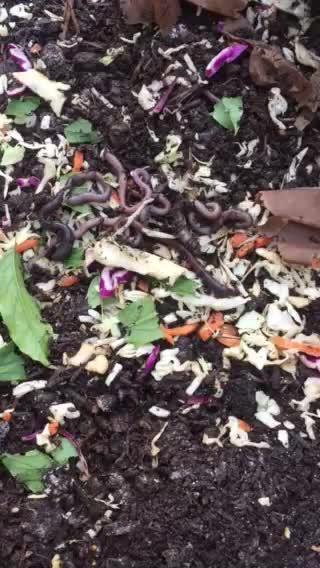
Final report: (Smoke report not loading comments) After months cured in a jar I rolled up a joint and smoked it. It had a nice smooth smoke with the flavor of vanilla cake/cookie . She also had a hint of citrus. After the harvest was done I prepped the area for next year's outdoor grow. I will continue to prep the area for the next few months by adding goodies to the area to bring in the worms.😍

Processing
Likes
6
Share


@CzAlmighty
Follow
Ahoooj 🍀
Další týden za mnou. Řekl bych ze bez nějakých vaznch problému.( Aspoň doufám )😅 jinak u předchozího modelu co tu mám “TheNew” . Mám nejaky (problémy) ,tak jestli mate čas. Napište mi k tomu jestlinse tím mate nějaký zkušenosti. A zda je to velký. Peoblem . Jsem linej to vše zase předělávat a lepit to u bodu kde je to rozlomene. 😅🤦♂️🏼
Problém : po zastrihnuti jsem naplnul hlavní tepny a po čase se mi roztomily trošičku na místech kde byly zastrihnute.
Příjemný den BRATŘI .🍀

Likes
15
Share


@Cultivators_Dream
Follow
Day 9: installed this Pro Co2 bucket in my grow tent 2 days ago. Really looking forward to see what this addition brings and if Co2 can really improve a run. Only time will tell
Day 12: Everything is going good.. Added Foxfarm Acid Lovers dry fertilizer, scratched it into the top inch of soil about a tbsp and a half and watered good. I checked ph the other day and somehow soil ph was all the way up to 7.0 hopefully this FFAL will drop that a little. Also got some trifold poster boards and stapled sheets of mylar to them to reflect more light.
12/2 Ending week 2 gotta say everything is going as good as I could hope this lady is in full affect first time ever growing this strain and I can tell its a good one. Great genetics can't wait to see end result

Likes
9
Share


@Siriuz
Follow
Ok guys so she was bushy again and so we did defoliation again.
You can see the difference and then after that started flowering even more
Plus the fact we are increasing the amount of molasses added to the soil plus the floranova bloom nutes.
They are very thirsty girls, taking around 1.5-2lts per 48 hrs
So almost like a 1 liter per 24 hrs
Very good SoG to make them feel even more comfortable
Going to change schedule from 24/0 to 19/5 and see if they evolve!
Thinking about adding some humus to the soil as well, other than that they have been under good conditions
Temp is steady at day time around 24C top and night time is 18-19C minimum
RH around 45-60%
Mostly 45% control environment with AC
Cant wait to see big colas coming soon!
Have fun enjoy the videos!


Likes
11
Share


@thevaporino
Follow
Entramos en la 9 semana y seguimos con heladas en el exterior , las mínimas con luces apagadas son de 15º y las máximas con luces encendidas


Likes
18
Share


@maneaura
Follow
i went on vacation like 10 mins after this. i dont have any pics of the painkiller for this week.

Likes
11
Share


@Young_agronomist
Follow
03.08.23-Рост продолжается , цвести еще не собирается и это хорошо !
Продолжаю тренировки лст постепенно увеличивая ппм каждые 3-4 дня . Растет низким и очень кустистым. На данный момент получает раствор на вегетацию greenhouse feeding 1000 ppm, ph 6 , выход стабильный.


Processing
Likes
120
Share


@CBD_Sweden
Follow
2017-09-11. Kl 12.00. Week 4 starts. I have cleaned the whole room for the new week and gave the girls water and nutes. Added videos and pics. Girl is 21 cm high.
----------------------------------------------------------------------------------------------------
2017-09-12. Kl 10.00. New pics and video. She has grown from 21 cm to 25 cm in 23 hours.
-------------------------------------------------------------------------------------------------------------------------------------------------------
2017-09-15. KL 10.00. New pics and video. The girl is 30 cm high and has grown 9 cm the last 4 days.
----------------------------------------------------------------------------------------------------------------------------------------------------
2017-09-16. Kl 10.00. She is growing like crazy and needs to get defoliated every morning. I added 2 new videos and gave her 2 liters of water and nutes.
----------------------------------------------------------------------------------------------------------------------------------------------------------------------------------
Likes
3
Share


@cmstacker01
Follow
Good yielder, give them least 9 week flowering.
Can take a good feed, i suggest to cut of N last 2 weeks.
Had 2 pheno. 1 is very bubblegum type of smell and the other is just slight fruity.
Harvested 3 plants.
1 was 56.20 dry at 52%RH
2 was 52.33 grams dry at 52%RH
3 was 80.23
grams dry at 55%rh
Total=188.76 grams for
3 plants
All the plants Peyote critical Orange SHerbert Candy Dawg where flowered under 300W Led
Organic way.
Total sum of grams for all plants 401.32 grams
= 1.3333gram per watt
Will i be growing this for the future? Nope, i'm looking for something more unique for my taste.
Imo pretty generic kind of weed.
Will update later for taste after 4 week cure

Likes
Comments
Share

@DogDoctorOfficial
Follow
🌱 8×8 Adventure – Chem Brûlée (Plant B) | Week 4
A Different Sister, A Different Strategy
Welcome back to another chapter of my 8×8 Adventure, a project dedicated to exploring how different genetics—and even different phenotypes from the same cultivar—express themselves when grown under identical conditions.
Each plant receives the same environment, nutrition, lighting, and care, allowing their natural characteristics to shine without outside variables influencing the results.
Today’s update focuses on Chem Brûlée – Plant B, and she’s already proving that even sisters can choose very different paths.
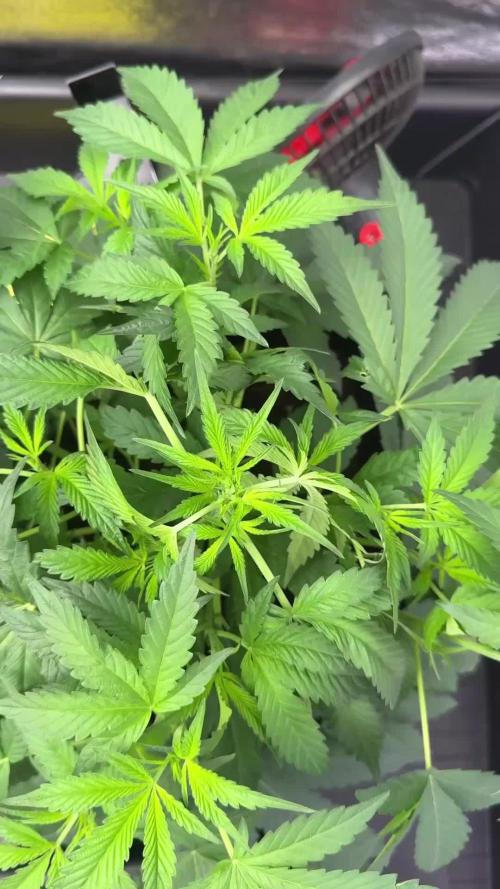
While her sibling has been building a strong upright structure, this beautiful lady has embraced training remarkably well, opening herself into a wider, flatter canopy that promises excellent light distribution for the weeks ahead.
Watching these individual personalities emerge is exactly why I love phenotype hunting.
⸻
🌿 Life Inside the 8×8 Garden
The entire room continues thriving under stable environmental conditions.
Current room parameters:
🌡️ Temperature: 33.3°C
💧 Relative Humidity: 63%
⚡ Nutrient Solution EC: 1.36 mS/cm
pH: 6.12
💦 Reservoir Temperature: 25.7°C
Although temperatures remain on the warm side, constant air circulation keeps fresh air moving throughout the canopy, helping every cultivar continue vigorous growth while maintaining healthy transpiration.
It’s always fascinating seeing twelve different cultivars respond to exactly the same environment, each revealing its own unique blueprint.
⸻
💧 Feeding Program
Chem Brûlée continues receiving the same nutrition as the rest of the 8×8 project.
This week’s feeding includes:
• Plagron Terra Grow
• Plagron Power Roots
• Plagron Pure Zym
• Plagron Vita Race (foliar application)
Everything appears perfectly balanced.
Healthy green foliage, steady development, and vigorous new shoots suggest she’s making excellent use of every feeding.
⸻
🌿 Growth & Development
This phenotype has really begun showing her own identity.
Instead of pushing strongly upward, she’s naturally spreading her energy across multiple growing tips, creating a much broader plant than her sister at the same stage.
The most striking feature remains those gorgeous oversized fan leaves.
They’re broad, healthy, beautifully coloured, and already acting like efficient solar panels, capturing every available photon while fueling explosive vegetative growth.
The newest growth emerges vibrant lime green before gradually darkening as the leaves mature, a classic sign of healthy development.
Every node appears active, with numerous secondary shoots beginning to accelerate now that the canopy has opened.
She’s becoming increasingly bushy without ever looking crowded.
The structure feels balanced, vigorous and full of potential.
⸻
✂️ Low Stress Training
This week the focus has been gentle Low Stress Training (LST).
Rather than removing the main growing tip, the stem has been carefully bent and secured to encourage the plant to redistribute its growth hormones naturally.
By lowering the dominant shoot, the plant begins directing energy into multiple side branches instead of concentrating everything into one central cola.
The results are already becoming visible.
Several new tops are racing upward together, creating a much flatter canopy that should make far better use of the available light during flowering.
LST remains one of my favourite training techniques because it shapes the plant without slowing her down.
Minimal stress.
Maximum opportunity.
Watching these secondary branches wake up over the coming weeks should be incredibly rewarding.
⸻
🚀 Looking Ahead
Chem Brûlée Plant B is setting herself up beautifully for the next stage of development.
As the secondary branches continue catching up, the canopy should become increasingly even, giving every future flowering site access to strong light.
The plan remains simple:
Continue guiding the branches gently through LST.
Allow the canopy to expand naturally.
Maintain environmental stability.
Then simply let the genetics do what they do best.
Every day she’s becoming wider, fuller, and more balanced.
⸻
💚 Final Thoughts
One of the greatest lessons this project continues teaching is that no two plants—even sisters—tell exactly the same story.
Chem Brûlée Plant B has embraced training with incredible enthusiasm.
Her open structure…
Those beautiful oversized fan leaves…
The explosion of new growing tips…
Everything points toward a plant that’s preparing to fill her space with an abundance of healthy flowering sites.
She’s elegant.
She’s vigorous.
And she’s making every adjustment look effortless.
I can’t wait to see how this beautifully trained structure develops once flowering truly begins.
⸻
A huge thank you to Plagron for providing the nutrition that keeps this entire garden thriving, Zamnesia for the fantastic genetics and equipment making this project possible, and of course to the amazing GrowDiaries community for following every step of this journey.
Growers love and thank you all for the your encouragement, advice and support that continue making this adventure even more enjoyable.
See you all in the next update, where Chem Brûlée Plant B will continue writing her own unique story inside the 8×8 Adventure. 🌱💚

Likes
1
Share


@Ninjabuds
Follow
It's been a great week for the seedlings! They've really taken off and are looking strong. I'm planning to transplant them into larger pots in the next few days, so next week's photos should show some impressive growth. I'm so excited to see how they thrive in their new homes! I've been giving them distilled water from the start, and I'm still doing that, but I just started adding 10 milliliters of Fox Farm Big Bloom and 1 milliliter of Fox Farm Grow Big. All of the seedlings are doing really well, and there's not really any visible difference between all the ten strains. I started all ten packs of each strain and kept all the best seedlings, so that's why they're all doing so well.
Likes
17
Share


@rockbo47
Follow
SUMMARY: Still on Mid Bloom strength nutes this week (+ 1 tablespoon of molasses per 5L). Irrigating once every 24hrs as always with her taking in about 2.2L average per day and always aiming for 20-30% runoff. Whilst she has many tops, they're very skinny and I'm not sure they are going to fill out to be honest.
DAY 58
------
Friday 19th February 18:30
I found the tent at 28% RH. No idea how that's occurred but I did notice it was hotter then usual this morning. I turned the dehumidifier of for a couple of hours and it jumped back up to 61% and so I will just set it to 55% RH.
I fed Jesus 2.2L of early bloom nutes which produced 195ml runoff (9%). Will up this back to 3L tomorrow. I adjusted a couple of ties to expose more bud sites. [24°C/52%]
DAY 59
------
Saturday 20th February 11:30
The tent temp has been sat at around 23°C overnight somehow. The dehumidifier keeping the humidity around 45-50% seems to also keep the temps between 23-27°C.
Saturday 20th February 18:30
I fed Jesus 3L of mid bloom nutes which produced 1050ml runoff (34%). Looks like i have a humidity problem and so ive reluctantly removed some more leaves from Jesus as she is bushy again after a week or perhaps I didnt defol enough. If I have the dehumidifier off the humidity is in the low 60s but if I lower it to like 45-50% then the temps stays too high between 24°C-33°C. [22°C/64%]
DAY 60
------
Sunday 21st February
11:30
I made 5L of early bloom nutes at a pH of 5.8 and 5L of mid bloom nutes at a pH of 5.6, both made with tap water.
Sunday 21st February 18:30
I fed Jesus 2.5L of mid bloom nutes which produced 825ml runoff (33%). [22°C/49%]
DAY 61
------
Monday 22nd February 11:45
I made 5L of mid bloom nutes with rain water at a pH of 5.9. I am adding half a tablespoon of molasses to every 5L now by adding just enough boiling water to liquify the molasses and then pour it into the feed.
Monday 22nd February 18:30
I fed Jesus 2.5L of mid bloom nutes with molasses which produced 710ml runoff (28%). [22°C/55%]
DAY 62
------
Tuesday 23rd February 18:30
I fed Jesus 2.3L of mid bloom nutes which produced 640ml runoff (28%). With the dehumidifier set to 50% RH it seems to keep it at around 50% RH though the temps between 25-30°C. If I turn the dehumidifier off the RH climbs to 60-64%. Removing more leaves will lower the humidity and I do pluck the odd one every day that is blocking light (I rotate the plants daily 25° per day to ensure all sides get a fair share of light). [25°C/50%]
DAY 63
------
Wednesday 24th February 18:30
I fed Jesus 2120ml of mid bloom nutes with molasses which produced 200ml runoff (10%). The temps have risen to 30°C due to the dehumidifier. It is currently set to 50% RH which keeps the temps around 28-30°C and the RH at around 38-40%. I have increased the setting to 65% to see if that helps lower the temp and increase the RH up to 45-50%. [30°C/40%]
DAY 64
--------
Thursday 25th February 11:30
I made 10L of mid bloom nutes with rainwater and molasses (level tablespoon per 5L). 5L at a pH of 5.9 and 5L at a pH of 5.8
Thursday 25th February 18:30
I fed Jesus 2.4L of mid bloom nutes which produced 700ml runoff (29%). [22°C/55%]
Likes
87
Share


@JKent19
Follow
Great week! Explosive growth was the theme, and over the past 3 days they've gained 4 inches. I was inspired by a few growers on here to do more lst this round, we will see if it pays off or not. Finicky is still doing very well, I would say she's outpacing the other plant at this point. Started my bloom nutrients, and began to wean them off the veg nutes. There are plenty of nodes for buds, but a lot of them haven't shot up yet like some of the main stalks. The right plant was looking a little droopy this morning, realized they were probably an inch too close to the light. Hoping to get another week of stretch out of them, but I could see them shifting into bud production mode soon. Excited to see what's coming up over the next few weeks, stay tuned ladies and gentlemen!
Likes
13
Share


@DrDuhboto
Follow
Trying to learn what plants I like to grow the most. This run is a test of each strain I ordered from seedsman.
Blueberry is a clone from a seed, As I only had one of these seeds I didnt want to risk flowering it and losing a good pheno, So instead I grew that seed and cloned off of it.
Maui Waui is from seed, and looks pretty wonky here, it got a bit out of hand during veg as I didn't have a screen in there. The seed has been vigourous though and I have high hopes for it being the only pure sativa in the bunch,
Cheese is a clone taken from my last grow. I cloned it off the seeded plant before they went into flower. My last run with cheese went well with dense buds and good potency.
Buttercream gelato is from a seed and has pretty interesting growth. It has been hard to keep nitrogen up in it and pales to lime much quicker than the other plants around it.
Buttercream and Maui waui have been vegging for 2 months.
Blueberry and chees have been vegging for 6 weeks


Likes
11
Share


@Jeremi420
Follow
Giorno 42. Ciao a tutti. Profumi intenti anche questa settimana. In attesa che gonfino ancora un po'. Credo 2 settimane e saranno pronte per il taglio. Un saluto a tutti ✌️💚.

Likes
97
Share


@Kitties_and_Colas
Follow
~_~_~_~_~_~_~_~_~_~_~_~_~_~_~_~_~_~_~_~_~_~_~_~_~_~_~_~_~_~_~_~_~_~_~_~_~_~_~_~_~_~_~_~_~_~_~_~_~_~_~_~_~_~_~_~_~_~_~_~_~_~_~_~_~_~_~_~_~_~_~_~_~_~_~_~_~_~_~_~_~_~_~_
❤️💡🌱😽💨
Its been a great week! Everyone has fully recovered and buds are covered in frost..at this rate they may end with more crystals than Bruce Banger..all plants are eating trace amounts with every watering. We stopped giving them vit-B but are continuing with a few ml/gal of calmag..I think we found the sweet spot with the SP-3000, these plants pray hard most of the day..we're not cut out for these long flowering strains but I really think these will be worth the wait..thanks as always for dropping by, we'll be sure to update if anything changes..happy harvests everyone!! 💡🌱
⚡Mars Hydro/SP-3000⚡ Specifications ⚙️:
Diodes: Samsung LM301B / Osram 660nm (960 total!)
Driver: Meanwell 300watt 🔌 (300W±5% @AC120V-277V)
PPF: 824umol/S ☢️
PPE: 2.8 µmol/j 〰️〰️
Lifespan: 50k+ hrs ⌛
Weight: 10.1 lbs (4.6kg)
Veg Coverage: 3 x 5 ft 🌱
Flowering Coverage: 2 x 4 ft 🌼
-The SP-3000 uses an aluminum heatsink (no fan) and the driver can be placed outside the tent 🌡️⬇️
-IP65 waterproof ratings, tolerant to high humidity grow environments 💦 ..
-Up to 15 can be daisy-chained together and all controlled from a single light! 💡~💡~💡~💡~💡
~_~_~_~_~_~_~_~_~_~_~_~_~_~_~_~_~_~_~_~_~_~_~_~_~_~_~_~_~_~_~_~_~_~_~_~_~_~_~_~_~_~_~_~_~_~_~_~_~_~_~_~_~_~_~_~_~_~_~_~_~_~_~_~_~_~_~_~_~_~_~_~_~_~_~_~_~_~_~_~_~_~_~_


