The Grow Awards 2026 🏆
Likes
Comments
Share
Likes
8
Share
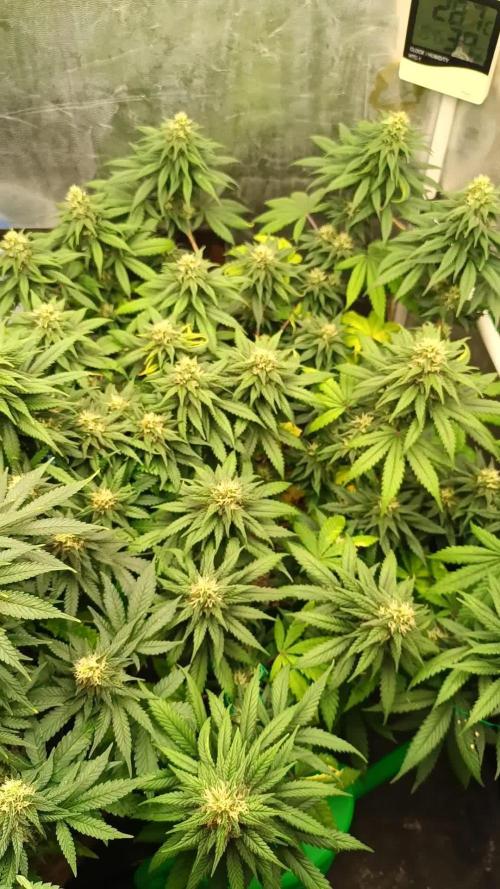
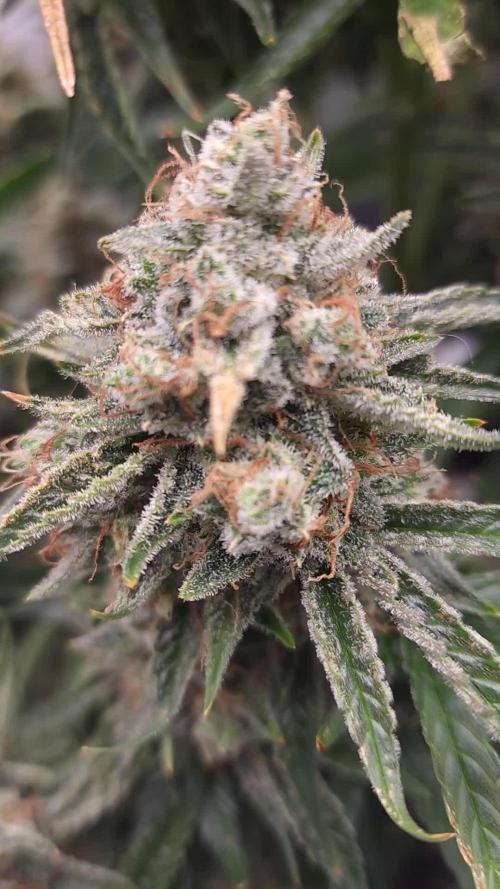
It's Week 01 Flower. For My 2 Kombucha Cream by atlasseed . And For My Snow White & SpliffStrawberry by Spliff Seeds Amsterdam . Today was Feeding Day and I also did a small Defoliation and LST all 4 Plants . My Kombucha Cream 3-Part And Snow White Received 4ml Of Emerald Harvest Nutrients Grow, Micro, Bloom, 6ml Of Emerald Goddess, 4ml Of King Kola, 4ml Honey Chome and 4ml Of Quad.AG Products Fulonic. Ph at 6.0 Ppm at 686. On Runoff My Kombucha Cream 3-Part Ph is at 6.3 and the Ppm is at 1004 I will keep a eye on the ppm on this one for the next few feeds. My Snow White Ppm Runoff is at 696 and Ph is at 6.2. My Kombucha Cream 2-Part & SpliffStrawberry Received 5ml Of Emerald Harvest Nutrient Cali Pro Grow A&B, 6ml Emerald Goddess, 4ml King Kola, 4ml Honey Chome And 4ml Of Quad Ah Fulonic Ph at 6.0 Ppm at 553. On Runoff My Kombucha Cream 2-Part Ph is at 6.5 Ppm is at 657. My SpliffStrawberry had a Ph of 6.1 Ppm is at 756. On my next feed I will ph at 6.2. All 4 Plants had there last transition feed. Next feed I will feed the Roots and give them a nice Flower Feed 😁 Happy Growing Growmies 🤘🏻
Likes
35
Share
I'm going to need to transplant this gal! Already roots poking out the bottom so I'm prepared to get her in a bigger pot soon! Probably this week.-- update, she's loving Life in a larger pot! Smells incredible already 👍
Likes
22
Share
@DankBudz
Follow
Well tying down is no longer an option, now the fight is to get them to stand up!! #shittyproblems No let up on white hairs yet!! It makes me sad and happy at the same time lol
Likes
8
Share
Already flowering, can’t wait 🎆🔮💜
Likes
44
Share
@Growshh
Follow
Chop Day Today....66 days and I feel the runts and Mac could have gone longer but the godfather is crossings 30% ambs and the stash is almost empty!
Likes
28
Share
Started out the week with a mini flush and nutrient change. The plants are doing great, the buds are filling out and leaves are beginning to get frosty.
Likes
17
Share
@volcanic
Follow
Had someone to come over and fill the tank, you can clearly see the difference in pictures! ahah Things are looking great for sure, can't wait to get back🔥
Likes
10
Share
Que pasa familia, vamos con la décima y última semana de floración de estas Lemonpaya feminizadas de fastbuds. Vamos al lío, de las 3 plantas, me quede con 2 por espacio, siempre pongo alguna semilla de más por si no abriese alguna por no perder ese hueco del indoor. También se trasplantaron a su maceta definitiva, en este caso de 7 litros que además provocó un shock que también solucione. El ph se controla en 6.2 , la temperatura la tenemos entre 20/24 grados y la humedad ronda el 50%. Las flores están bien prietas y sacan unos aromas cítricos bien llamativos, que locura como se han puesto. Hasta aquí todo, Buenos humos 💨💨💨
Likes
Comments
Share
Week 5 and this is where the f@#k ups really start to and the error of my ways are are to show bigs time.. ps at this time I dont realise but through the stress she started to pre-flower and I just kept on going
Likes
17
Share
@Targona
Follow
Technical and general parameters of the breeder: Sativa dominant citrus terps that hash makers and extractors will love. An excellent autoflowering hybrid that boasts an impressive 24% THC to match her amazing flavor with potency. Well recommended for novice growers looking for a low maintenance, yet extremely productive cultivar that will flower from seed to harvest in 9-10 weeks. This strain can grow to become one of the larger autoflowering hybrids, making it a wise choice for commercial growers looking for something special. Technical Specifications: Taste: Orange, Sweet, Sour, Creamy THC: Up to 24% CBD: < 1% Indoor harvest EU: 500 – 650 gr/m2 Indoor yield US: 1.6 – 2.1 oz/ft2 Harvest outside EU: 60 – 300 gr/plant Outdoor harvest US: 2 – 11 oz/plant Size: XXL Height: 110-150 cm Height US: 43 – 59 inches Flowering: 9 – 10 weeks Room: Indoor/Outdoor Gender: Feminized Genes: Sativa 70%/Indica 30% Genetics: Orange Sherbet Auto Autoflowering. Yes For cultivation I used: Cultivation area: 80x80x180cm 1x circulation fan: 15W LED lighting: Mars Hydro TS 1000 - 150W - vegetation and flowering 💡💡 Exhaust: pipe fan - RAMTT100 Odor filter: PRO-ECO HF carbon filter 160-240m3/h - 100mm - maximum air flow up to 240m3/h 4x textile flower pots 11l Substrate: Plagron Lightmix perlite coco coir Thank you to all my friends who support me in growing, who give me advice - @Happy_Rakosnicek, thank you to my friends from Grow Diaries for likes, advice and support 😍❤️❤️ Many thanks to the Fast Budsb team especially @fast_buds_jessie for providing the sponsor seeds 🌱🌱😍 Thanks for the likes and you can follow me on Twitter 🐦: @ Targona666 Many thanks to Mars Hydro, specifically @Coco_Pan2022 for providing the Mars Hydro TS1000 sponsor light💡💡😉 Smoking Review: I will add the buds after about 10-15 days of drying 💨💨
Likes
14
Share
*********************************************************************************************************** START OF WEEK The Hawaiian Lion (right) and Tricho Jordan (left) are the two plants that dominate the face-on tent photos, and for good reason. Each of those plants is twice the mass of either Chimera. The HL is superior in bud sites, resin, and terp intensity, but the Tricho and the good Chimera #3 are both not too far off in resin production and aroma profiles. The weird runt is frosting up too, so we're looking at getting something unique and quality from each. That is, if I don't muck this up. I fed last night, and as part of that process, I mix my nutrients in a four gallon batch at a double(ish) strength. I then add that to my reservoir, which is shut off at that time. This allows me to work in the res, to both get the ppms right and the ph within range. I just use plain water to level off the ppms and then I adjust for ph. What I didn't do last night is TURN back on the flow of water from the reservoir. However, you wouldn't have guessed it from how the plants woke up today (see first image). I normally check the bases of each plant daily, and in doing so today, I noticed that one felt slight dry. All tanks were empty, but all plant bases were somewhere between wet to moist. This is how I spot check, and it's worked in the past. This isn't the first time these tanks have had a catastrophic issue leading to an unexpected no flow sitch. There's a filter that sits between the reservoir tank and the primary feed line. That has unexpectedly clogged on me in the past, but with no deleterious effect to the grow. That was caught within a day as well by testing the plant bases. I don't blame autopot for either event. Obviously, last night I was a baked potato and just forgot a step. The clog is because I use yucca in my mix, which is an organic material that over time in the reservoir leads to build up. I'm afraid to introduce hydrogen peroxide into the set-up, so I'm just maintaining my reservoir by cleaning it fully every other week for now. I don't want to kill off the bacteria in the environment. I'm also using some fungus, too, so I'd rather promote coexistence of a microbiome than serialize it, especially considering the plants seem to be on pace. **************************************************************************************************************************************************************** END OF WEEK Shit! I've got a herm. I've found four nanner clusters this week, all on the lower third-ish of the Hawaiian Lion. Someone, thankfully, spotted it in the purple flower pics. Turns out, while super fun to look at, those sweet violet flowers turned into harbingers of mother fucking doooooommm. I've never seen this before. I guess I've been fortunate, but I've also never had a camera this capable before either. I had no idea how small these pee pee's were. I guess I was expecting girth, but shame on me for not knowing. I rapidly learned as much as I could over the last two days, and I've come to the conclusion that I may or may not be screwed. The consensus on my situation ranges from either burn my tent down to thank ja for the blessings of feminized seeds. We're riding this baby out. I think I have fifteen to twenty days left and I think these little nanners might have been in action for ten days, hopefully less. I don't know what kind of damage will be done in that time, but honestly, I'm not too worried. While disappointing, my use case is a personal supply of bubble hash and flower rosin. If it's seedy, I'll wash most of it. I don't know what caused it, but I'm thinking a light leak or genetics. The environment is dialed and that plant hasn't shown one sign of anything less than vigor throughout. The spots that developed the purple flowers (lower bottom half to bottom quarter) are all in the vicinity of where I found the herms (four locations) and these locations are close to the edge of the tent along the zipper. I'm vigilant about keeping my tent and grow space in order, but a light leak can't be ruled out. I'll have to test that after the harvest. The herm flowers are minuscule and I'm surprised I found them. The camera was a great tool in this case. I sprayed the areas that I removed the nanners and then dried it, but for what it's worth, I think the damage was already done. That water bit felt more like ritual, but I'm still feeling optimistic that I'm not totally hosed.
Likes
91
Share
@CANNASIM
Follow
Expecting a awesome top shelf smoke from this girl, smell is mid way, a lot less than other strains, so it make a good option to stealth, but not the best. Superb strain, will update on the effects after dry and fully cured, high is supposed to be mild and functional, this is my first medical strain with high CBD, super curious. ---WET WEIGHT--- 421G ---DRY WEIGHT--- 95G just flowers000 ---UPDATE 2 . After harvest--- -A -Jaring After drying till the stems almost snap, in a rack, I separed the flowers, weighted and jared for cure. -B-Vape report. Vaped with a Davinci IQ, about .5 from the uncurred buds, from 350f to 430f max temp. Since the begging of the session you feel this is a special strain, taste is 5/5 vapor production is insane 5/5, and the effect as discribed by RQS, a stress killer that allows you to funcione normally, think it as a mild relaxant, is what i was looking for so super satisfyed! As you increase the vaping temps you feel the effects stronger, basically is a good body sensation and head tranquility, no paranoia, no confusion, no psychoactive stone. The side effects i feel is the classic dry mouth, not too strong though. -C-Joint smoke. Nice and smooth it hits with a mild sensation, very relaxing, no couch lock, mental trip or anything, i’m certain is similar to canna-tonic some how, very enjoyable, sweet taste tones of citrus earthy and woody. -D-Bong hit. Not a fan of bongs, i feel vaping gives a better overall experience, though for the sake of the diary, i did a bong hit to check, filled a full bowl and hitted mutiple times, the smoke is smooth, no harshness, though is a bit more intense than smoking a joint. ---UPDATE 3 . Final— Well guys, this concludes my diary, with this final update. After two weeks cure, i feel is already cured for the most part, one more week and all the cruise part will be done, after that it continues but slowly. It was fun to grow, and top shelf smoke. Note that is not a recreative smoke, is functional and enjoyable, i feel that if you have a super strong strain you can dilute in to this one and have a more controlled high. Smoking, vaping in multiple temperatures and i could still function, work, speak on the phone and think clear. Looking for a Stress Killer, high in CBD, that will melt your stress and concerns so you can go on with your duties and enjoy a nice smoke, give this strain a go, and let me know so i can follow your diary and know your opinion. Cheers everyone and thanks for those who contributed to the diary in any manner, or passed by. Happy growing always. 00
Likes
91
Share
@DreamIT
Follow
🌵🐵 PEYOTE GORILLA BY SEEDSMAN 🐵🌵 🌵 19.3... 🌵 20.3 ... 🌵 21.3 ... 🌵 22.3 ... 🌵 23.3 ... 🌵 24.3 ... 🌵 25.3 Beautiful, healthy and strong, I can't wait to smell the scents it releases ____________________________________________________________________________________________ 📜 A look at the details of what I'm growing 📜 🌵🐵 Peyote Gorilla🐵🌵 ⚧ Gender ▪️ Feminised ➰ Genes ▪️ 60% Indica / 40% Sativa 🎄 Genetics ▪️ Gorilla Glue #4 (Chem Sister x Chocolate Diesel) x Peyote Purple (Bubba Kush purple pheno) 🚜Harvest ▪️ 600 g/m² 🌷Flowering ▪️ 65 - 70 days ✨THC ▪️ 26.0% ✅CBD ▪️ 1.0% 🏡Room Type ▪️ Indoor 🌄Room Type ▪️ Outdoor 🕋Room Type ▪️ Greenhouse 🎂Release Year ▪️ 2019 __________________________________________________________________________ 📷🥇 Follow the best photos on Instagram 🥇📷 https://www.instagram.com/dreamit420/ 🔻🔻Leave a comment with your opinions if you pass by here🔻🔻 🤟🤗💚Thanks and Enjoy growth 💚🤗🤟
Likes
56
Share
What's in the soil? What's not in the soil would be an easier question to answer. 16-18 DLI @ the minute. +++ as she grows. Probably not recommended, but to get to where it needs to be, I need to start now. Vegetative @1400ppm 0.8–1.2 kPa 80–86°F (26.7–30°C) 65–75%, LST Day 10, Fim'd Day 11 CEC (Cation Exchange Capacity): This is a measure of a soil's ability to hold and exchange positively charged nutrients, like calcium, magnesium, and potassium. Soils with high CEC (more clay and organic matter) have more negative charges that attract and hold these essential nutrients, preventing them from leaching away. Biochar is highly efficient at increasing cation exchange capacity (CEC) compared to many other amendments. Biochar's high CEC potential stems from its negatively charged functional groups, and studies show it can increase CEC by over 90%. Amendments like compost also increase CEC but are often more prone to rapid biodegradation, which can make biochar's effect more long-lasting. biochar acts as a long-lasting Cation Exchange Capacity (CEC) enhancer because its porous, carbon-rich structure provides sites for nutrients to bind to, effectively improving nutrient retention in soil without relying on the short-term benefits of fresh organic matter like compost or manure. Biochar's stability means these benefits last much longer than those from traditional organic amendments, making it a sustainable way to improve soil fertility, water retention, and structure over time. Needs to be charged first, similar to Coco, or it will immobilize cations, but at a much higher ratio. a high cation exchange capacity (CEC) results in a high buffer protection, meaning the soil can better resist changes in pH and nutrient availability. This is because a high CEC soil has more negatively charged sites to hold onto essential positively charged nutrients, like calcium and magnesium, and to buffer against acid ions, such as hydrogen. EC (Electrical Conductivity): This measures the amount of soluble salts in the soil. High EC levels indicate a high concentration of dissolved salts and can be a sign of potential salinity issues that can harm plants. The stored cations associated with a medium's cation exchange capacity (CEC) do not directly contribute to a real-time electrical conductivity (EC) reading. A real-time EC measurement reflects only the concentration of free, dissolved salt ions in the water solution within the medium. 98% of a plants nutrients comes directly from the water solution. 2% come directly from soil particles. CEC is a mediums storage capacity for cations. These stored cations do not contribute to a mediums EC directly. Electrical Conductivity (EC) does not measure salt ions adsorbed (stored) onto a Cation Exchange Capacity (CEC) site, as EC measures the conductivity of ions in solution within a soil or water sample, not those held on soil particles. A medium releases stored cations to water by ion exchange, where a new, more desirable ion from the water solution temporarily displaces the stored cation from the medium's surface, a process also seen in plants absorbing nutrients via mass flow. For example, in water softeners, sodium ions are released from resin beads to bond with the medium's surface, displacing calcium and magnesium ions which then enter the water. This same principle applies when plants take up nutrients from the soil solution: the cations are released from the soil particles into the water in response to a concentration equilibrium, and then moved to the root surface via mass flow. An example of ion exchange within the context of Cation Exchange Capacity (CEC) is a soil particle with a negative charge attracting and holding positively charged nutrient ions, like potassium (K+) or calcium (Ca2+), and then exchanging them for other positive ions present in the soil solution. For instance, a negatively charged clay particle in soil can hold a K+ ion and later release it to a plant's roots when a different cation, such as calcium (Ca2+), is abundant and replaces the potassium. This process of holding and swapping positively charged ions is fundamental to soil fertility, as it provides plants with essential nutrients. Negative charges on soil particles: Soil particles, particularly clay and organic matter, have negatively charged surfaces due to their chemical structure. Attraction of cations: These negative charges attract and hold positively charged ions, or cations, such as: Potassium (K+) Calcium (Ca2+) Magnesium (Mg2+) Sodium (Na+) Ammonium (NH4+) Plant roots excrete hydrogen ions (H+) through the action of proton pumps embedded in the root cell membranes, which use ATP (energy) to actively transport H+ ions from inside the root cell into the surrounding soil. This process lowers the pH of the soil, which helps to make certain mineral nutrients, such as iron, more available for uptake by the plant. Mechanism of H+ Excretion Proton Pumps: Root cells contain specialized proteins called proton pumps (H+-ATPases) in their cell membranes. Active Transport: These proton pumps use energy from ATP to actively move H+ ions from the cytoplasm of the root cell into the soil, against their concentration gradient. Role in pH Regulation: This active excretion of H+ is a major way plants regulate their internal cytoplasmic pH. Nutrient Availability: The resulting decrease in soil pH makes certain essential mineral nutrients, like iron, more soluble and available for the root cells to absorb. Ion Exchange: The H+ ions also displace positively charged mineral cations from the soil particles, making them available for uptake. Iron Uptake: In response to iron deficiency stress, plants enhance H+ excretion and reductant release to lower the pH and convert Fe3+ to the more available form Fe2+. The altered pH can influence the activity and composition of beneficial microbes in the soil. The H+ gradient created by the proton pumps can also be used for other vital cell functions, such as ATP synthesis and the transport of other solutes. The hydrogen ions (H+) excreted during photosynthesis come from the splitting of water molecules. This splitting, called photolysis, occurs in Photosystem II to replace the electrons used in the light-dependent reactions. The released hydrogen ions are then pumped into the thylakoid lumen, creating a proton gradient that drives ATP synthesis. Plants release hydrogen ions (H+) from their roots into the soil, a process that occurs in conjunction with nutrient uptake and photosynthesis. These H+ ions compete with mineral cations for the negatively charged sites on soil particles, a phenomenon known as cation exchange. By displacing beneficial mineral cations, the excreted H+ ions make these nutrients available for the plant to absorb, which can also lower the soil pH and indirectly affect its Cation Exchange Capacity (CEC) by altering the pool of exchangeable cations in the soil solution. Plants use proton (H+) exudation, driven by the H+-ATPase enzyme, to release H+ ions into the soil, creating a more acidic rhizosphere, which enhances nutrient availability and influences nutrient cycling processes. This acidification mobilizes insoluble nutrients like iron (Fe) by breaking them down, while also facilitating the activity of beneficial microbes involved in the nutrient cycle. Therefore, H+ exudation is a critical plant strategy for nutrient acquisition and management, allowing plants to improve their access to essential elements from the soil. A lack of water splitting during photosynthesis can affect iron uptake because the resulting energy imbalance disrupts the plant's ability to produce ATP and NADPH, which are crucial for overall photosynthetic energy conversion and can trigger a deficiency in iron homeostasis pathways. While photosynthesis uses hydrogen ions produced from water splitting for the Calvin cycle, not to create a hydrogen gas deficiency, the overall process is sensitive to nutrient availability, and iron is essential for chloroplast function. In photosynthesis, water is split to provide electrons to replace those lost in Photosystem II, which is triggered by light absorption. These electrons then travel along a transport chain to generate ATP (energy currency) and NADPH (reducing power). Carbon Fixation: The generated ATP and NADPH are then used to convert carbon dioxide into carbohydrates in the Calvin cycle. Impaired water splitting (via water in or out) breaks the chain reaction of photosynthesis. This leads to an imbalance in ATP and NADPH levels, which disrupts the Calvin cycle and overall energy production in the plant. Plants require a sufficient supply of essential mineral elements like iron for photosynthesis. Iron is vital for chlorophyll formation and plays a crucial role in electron transport within the chloroplasts. The complex relationship between nutrient status and photosynthesis is evident when iron deficiency can be reverted by depleting other micronutrients like manganese. This highlights how nutrient homeostasis influences photosynthetic function. A lack of adequate energy and reducing power from photosynthesis, which is directly linked to water splitting, can trigger complex adaptive responses in the plant's iron uptake and distribution systems. Plants possess receptors called transceptors that can directly detect specific nutrient concentrations in the soil or within the plant's tissues. These receptors trigger signaling pathways, sometimes involving calcium influx or changes in protein complex activity, that then influence nutrient uptake by the roots. Plants use this information to make long-term adjustments, such as Increasing root biomass to explore more soil for nutrients. Modifying metabolic pathways to make better use of available resources. Adjusting the rate of nutrient transport into the roots. That's why I keep a high EC. Abundance resonates Abundance.
Likes
35
Share
Likes
234
Share
@BigDaddyK
Follow
ABout 900 grams of wet lovely buds, LED s take longer ,and the buds are not as big as HPS,but there does seem a uniform quality about the flowers,there was very little waste,you know the shitty popcorn bits, but i cant help but think had i used an HPS i would have cleared over 10 ounces dry, i havent weighed it yet, but i reckon its 6 Ounces. I have put as many pictures as possible,just for reference, A very nice smoke. Dry Pictures at the end.
Likes
12
Share
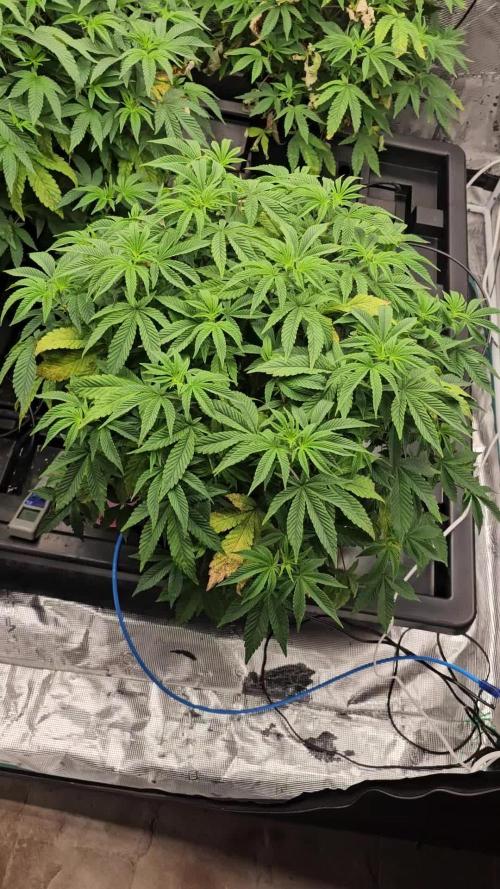
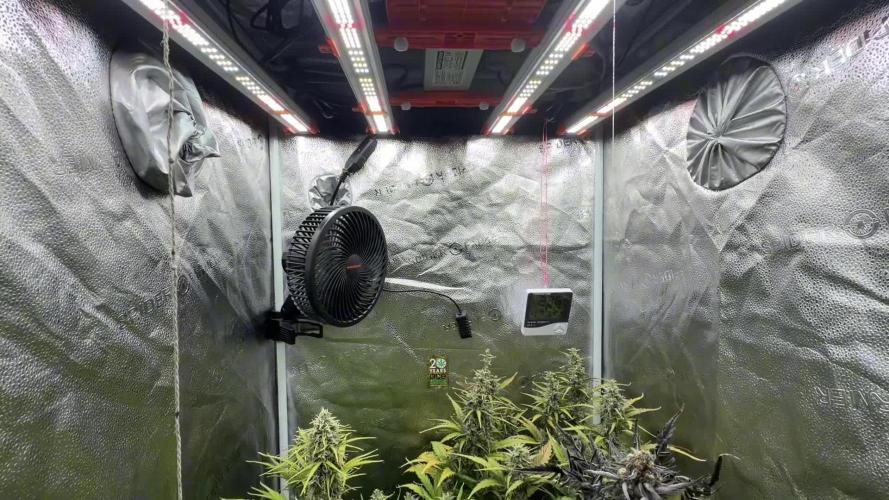
29.6 I missed one week. But girls growing nicely. These maybe slowest in tent but looking good still. Other has craAaAzZZYy FAT leafs. Not letting much light thru. Funny looking one. Gonna keep her and see how she'll turn out. These are starting to smell clearly and these most inside my tent. And these are smallest. Gonna start flowering after 2 weeks or 10 days I think. 3.7 Flipped to flowering today. These girls got big enough they got last germinated so smallest ones in this batch. They both so different. Other has these crazy broad leafs and the other one is more normal shape. Next update week from today (10.7.) first week of flowering Happy growing!