Likes
Comments
Share
@sa2_gr
Follow
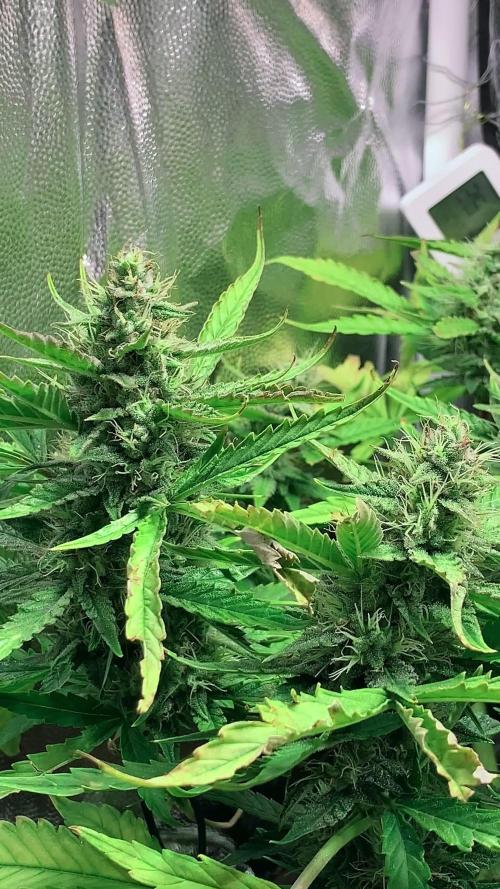
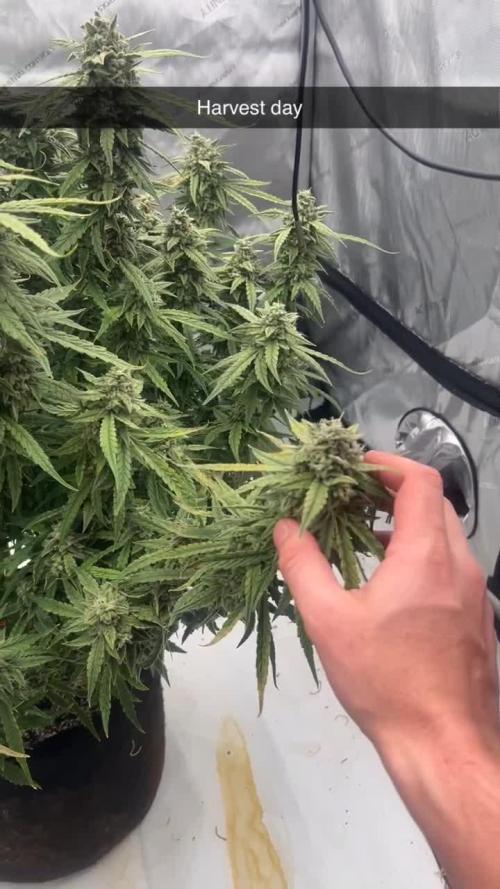
Hey guys ! finaly half/one more week to go, i'll push them into 61 days of flowering The Zake#1 is already done (30% amber), but i have to cut the whole squad since im drying inside the growbox. See you in 1 week for the last half flowering week ✌️ Happy Christmas to everyone
Processing
Likes
10
Share
Bienvenidos Farmers! Estamos de vuelta a la carga con muchas novedades, una de ellas es que ahora todo es 100% Bio , complementando con unas Bacterias que enseguida iremos desvelándoselas! Puedes ver mucho avanze de nuestro trabajo en IG @Barcelona_Farmers710 espero que lo disfrutéis. Salut y força al canut 🍁
Likes
2
Share
67 days since April 16th, 2026 We become aware at such times of man's wonderful ability to bring seemingly unrelated elements into harmonic balance, and receive a glimpse into a world where everything exists in conscious sympathetic attunement to everything else. When we listen to a piece of music that seems to strike a beautiful chord somewhere inside us, or view a painting that simply glows with harmonic awareness well executed, we probably do not spare much time to contemplate the wonderfully intricate combination of vibrations that our sensors make it possible for us to perceive. We tend to appreciate the relationship between the parts of something by an awareness of the harmony or dissonance of the whole. This ability enables us to say "what a beautiful house!" instead of "analysis has proven that this collection of building materials exhibits certain elements of harmonic proportion." While this ability to instinctively appreciate the beauty of true harmony has an important role to play in evolution, a more analytical understanding of the laws involved can be most useful. This is especially so if we wish to create works of art where each part exists in true harmony, not only with the other part of that particular whole, but with the universe within which the creator and the created exist. Everything vibrates. From the most dense matter to the most subtle cosmic rays, everything which our senses allow our thoughts to become aware of, can be specified in terms of wavelength or frequency of vibration. These two terms define the same thing, but from different points of view. The following are the approximate wavelengths of various energy carriers: Cosmic rays 0.000,000,001 mm Gamma rays 0.000,000,1 mm X rays 0.000,500 mm Ultraviolet rays 0.003 mm Visible light 0.006 mm Infrared 0.01 mm Sound waves 1 meter Radio waves 300 meters Violet light 400 nm to 450 nm Blue light 450 nm to 500 nm Green light 500 nm to 570 nm Yellow light 570 nm to 590 nm Orange light 590 nm to 610 nm Red light 610 to 700 nm 1 nanometer (nm) = 0.000,000,1 cm = 1/10,000,000 cm If a guitar string is plucked and we hear a sound, it is not too difficult for the human mind to associate this sound with the vibration of the guitar string. With color it is quite different. It is difficult for us to conceive that the color of a substance is not an inherent property of the substance itself, but an indication picked up by our senses of that substance's ability to absorb or reflect the light which happens to be shining on it at that moment. Neither the matter nor the light is colored. What happens is that the brain learns to differentiate between the frequencies reflected or transmitted by the substance the eyes are focused on. The same thing happens with sound. When we say "Oh! Listen, they're playing my favorite song," what we really mean is: "My brain has stored within it a particular pattern of frequencies. I have compared the new information being received with this stored pattern and have deduced the answer that the two patterns are similar within certain specified tolerances." The 'pleasure' involved could have something to do with our running the pre-recorded pattern at the same time, in 'sympathy' with the new pattern as it is received. The word sympathy describes very well our ability to appreciate color and sound. It also describes the reason behind certain elements of harmony. For instance, if a substance vibrating at 100 cycles per second (tone 1) is in the proximity of another substance vibrating at 200 cycles per second (tone 2), we could perceive, if we had the right equipment, a certain sympathetic relationship between the two. We will see from this that there is a uniform doubling of the first tone seen in the second. At various points along the waves, the two are the same in amplitude. At other points, they are at opposite poles to each other. This doubled frequency has more points of similarity to the original than any other frequency except the original itself. If the equipment we had available for measuring these two frequencies was a soundboard amplifier and a pair of ears, then we would hear what would sound to us like one tone. If we had the opportunity to hear one at a time, we would hear that although they sound the same, one is higher in pitch than the other. This characteristic of 'the same but different in pitch', musicians have called the octave. Any two tones produced where one has exactly doubled the frequency of the other is called an octave. Speaking in ratios, an octave would appear then as the ratio 2:1 or 1:2, depending on whether we are talking of an octave up or down. A single note produced by almost any instrument will contain more than one wavelength or frequency. It will have a dominant frequency, the wavelength of which we would call the note's 'fundamental' or 1st harmonic. It will also have a varying number of upper harmonics, gradually fading in intensity into infinity or silence. Natural harmonics always have the same pattern of intervals between them. The interval between the 1st and 2nd harmonic is a perfect octave; between the 2nd and 3rd a perfect fifth; between the 3rd and 4th a perfect 4th; and so on, the intervals becoming smaller and smaller until they lose any relationship with the western 12 tone scale as it exists at the moment. Just as an octave has certain elements of sympathy with its fundamental, so some intervals have been noted to be more perfectly in sympathy with the fundamental than others. The ratio of the 'perfect 5th' or interval of 7 semitones, as it occurs in the harmonic series, is 3:2 or 2:3, while that of the 'perfect fourth" is 4:3 or 3:4. All the tones in the western 12 tone scale can be expressed in terms of the ratio between the upper tone and its fundamental. This would seem to be an ideal way of generating a scale from any given fundamental and several attempts have been made to do this, the Pythagorean system being probably the most well known. Although when working with a single tone instrument playing on its own, the Pythagorean formula works wonderfully well, if we had several instruments tuned this way together and asked them to play almost any western music, we would find that at times they sounded quite out of tune to each other. The lack of flexibility of the various scale systems based on the harmonic series has led to what is known as the 'tempered' scale. This uses as its primary unit of interval the ratio of the octave or 2:1. It then proceeds to divide the interval between any fundamental and its upper octave into 12 smaller intervals by applying the ratio: two to the one-twelfth power, to one (21/12:1). This equals 1.059463094, so by multiplying any frequency by this number, we will obtain the tempered semitone next up from our fundamental. We will also find that any tone twelve semitones up from any other tone, in a scale generated in this way, will have exactly double the frequency. If we took the note middle C on a piano and halved the wavelength, we would have the note C one octave above. If we halved this, we would have the C above, and so on. However, within about 6 octaves, we would find that although a 'sound' was being produced, no human ear could perceive it. If we kept on going, halving and producing upper octaves of our fundamental C, we would proceed through the infrared band, into the visible light spectrum. If we happened to be outside during the day, we would, for one octave only, see the note C with our eyes. The next octave above would already be in the ultraviolet band, and outside the eye's sensitivity range. If we can think of color as being an indication of a substance's vibratory rate or wavelength, we may begin to see a relationship that could exist between the color and sound spectrums. The logical extension of what has so far been said is that there exists a scale in the color spectrum that corresponds exactly to the scale in the sound spectrum, each color tone being an octave of the equivalent note in the sound range. This is not the end of the story but only the beginning. If we can for the moment accept that any wavelength in one band has upper and lower octave stretching out to infinity, then the next question is 'fine, but what shall we use as our fundamental? A particular color? A particular sound frequency?' The musicians among us will probably say 'A 440'. This means that the note A should vibrate at 440 Hertz, or 440 times per second. They would tell us that this is standard pitch has been adopted by most orchestras around the world; pianos are tuned to it, instruments are constructed to formulas based on it, and so to them it would probably seem the most appropriate place to begin. Some of these musicians may know of the battle that is still raging with regards to this being the standard, but few would know why A = 440 Hz was chosen except that it worked when it was set to be a suitable compromise between the many different pitches in use at the time. 432 Hz is said to be mathematically consistent with the patterns of the universe. Studies reveal that 432 Hz tuning vibrates with the universe’s golden mean PHI and unifies the properties of light, time, space, matter, gravity, and magnetism with biology, the DNA code, and consciousness. When our atoms and DNA start to resonate in harmony with the spiraling pattern of nature, our sense of connection to nature is said to be magnified. Another interesting factor to consider is that the A=432 Hz tuning correlates with the color spectrum, while the A=440 Hz is off. Audiophiles have also stated that A = 432 Hz music seems to be non-local and can fill an entire room, whereas A=440 Hz can be perceived as directional or linear in sound propagation. Once you adopt the idea that sound (or vibration in general) can have an equalizing and harmonizing effect (as well as a disturbing effect), the science of harmony can be applied to bring greater harmony into one's life or tune to specific energies. There is a form of absolute and relative harmony. Absolute harmony can, for example, be determined by the tuning of an instrument. The ancients tuned their instruments at an A of 432 Hz instead of 440 Hz - and for a good reason. There are plenty of music examples on the internet that you can listen to in order to establish the difference for yourself. Attuning the instrument to 432 Hz results in a more relaxing sound, while 440 Hz slightly tenses up the body. This is because 440 Hz is out of tune with both macro and micro cosmos. On the contrary, 432 Hz is in tune. To give an example of how this is manifested microcosmically: our breath (0,3 Hz) and our pulse (1,2 Hz) relate to the frequency of the lower octave of an A of 432 Hz (108 Hz) as 1:360 and 1:90. It is interesting to note that 432 Hz was the standard pitch of many old instruments and that it was only recently (19th and 20th century) the standard pitch was increased. This was done in order to be able to play for bigger audiences. Bigger audiences (more bodies) absorb more of the lower frequencies, so the higher pitch was more likely to “cut through”. One of the oldest instruments of the world is the bell ensemble of Yi Zeng (dated 423 BC), tuned to a standard F4 of 345 Hz, which gives an A= 432 Hz. The frequency of 345 Hz is that of the platonic year! Similarly, many old organs are tuned in A=432 as well; for example, St. Peter’s Capella Gregoriana, St. Peter’s Capella Giulia, S. Maria Maggiore in Rome. Maria Renold’s book “Intervals Scales Tones and the Concert Pitch C=128 Hz” claims conclusive evidence that 440 Hz and raising concert pitch above scientific “C” Prime=128 Hz (Concert A=432 Hz) disassociates the connection of consciousness to the body and creates anti-social conditions in humanity. The difference between concert pitch A=440 Hz and Concert A=432 Hz is only 8 cycles per second, but it is a perceptible difference of awareness in the human consciousness experience of the dream we share called existence.
Likes
78
Share
This is my second time growing a Girl Scout Cookies autoflower! She turned out amazing! She showed signs of high potency, from early on in flower!
Processing
Likes
2
Share
@Luv2Grow
Follow
Day 44 - The pot this morning was light as a feather so gave her a gallon of water and nutes today. Overall, she still stretching quite a bit each day. Other than that, just tucked some leaves again and letting her go. Day 45 - All is looking good and still no real issues going on. I did remove a few lower fan leaves that were dead but other than that, just put her back in the tent and tucked the leaves again. No need for water yet, will be another couple of days. Day 46 - All still looking good with her. She’s still stretching about 1/2” everyday so should be decent sized by the time stretching stops. She’ll need some water tomorrow or Sunday. Day 47 - Gave her a gallon of water and nutes today and I’m gonna see how long it takes for her to drink it up. I might have to up the intake to a gallon and a half depending. Other than that, I removed a couple big fan leaves in the way and placed her back in the tent for the evening. Day 48 - Seems like she budded up quite a bit after the watering and feeding yesterday. Maybe the stretching has slowed down a bit cause she only stretched a little less than half an inch. Hopefully now she’ll really start packing on and frosting up. I did remove quite a few fan leaves as well today. Day 49 - Ending week 7 and she’s coming along beautifully. Checked my intake and outtake exhausts and were pretty dusty so took all the plants out of the tent and did a complete cleaning of everything. Removed the humidifier to give a little more room in the tent and temps are rising a bit but sitting at 82. I’ll leave it alone for now but if it gets too much warmer, I’ll have to figure something out but humidity is right around 36 and buds are starting to boom now.
Likes
5
Share
@Ensign420
Follow
Greetings fellow growers 🖖 and welcome to my first grow ever. This adventure actually started several months ago when I decided to stop buying flower from dispensaries and just grow my own bud. How hard can it be!? This is actually my second seed of this strain. The first bean sadly died due to over watering (sorry girl, RIP). I was literally watering the cube to the point where water was dripping from the bottom, then heavily sprayed the humidity dome and tray with the vents completely closed. Everyday. Multiple times. I never let the dome or try dry out. So after about 8 days of not sprouting, there was a funky smell of rot. So that was that. Later I learned that rockwool retains a lot of water and can easily drown seeds. So a wet/dry cycle is best for rockwool germination. So even after hours of researching and digging through forums and tutorial videos, I was still under prepared for this journey. Did not consider how delicate the germination phase is. Oh well. Lesson learned. Reset and try again! I hope everyone is safe and stoned during this corona crisis. Just like everyone else in the world, I want this pandemic to be over with. But in the meantime, let's grow some weed! 🖖 [START OF WEEK 01] Day 01 - Monday - 08/03/20 - Total Days: 001 ----------------------------------- - [0830]: Light Schedule: 24Hrs/0 --- Soaked cube in 5.5 PH water for 10 min. Did not shake water out. --- NO NUTES! Only PH'd down to control the PH levels. --- Did not use the default hole (way too deep). --- Flipped cube upside down and made a shallow hole for the seed (less than 0.25" deep). --- Placed seed in and pinched hole close. No additional water added. --- Sprayed the tray and dome with straight water (5.5 PH). --- Vents are cracked opened a for ventilation (about 1/4 opened each). --- Distance between the light and tray was 53" --- AC was set to 80 °F --- Exhaust fan was set to 86 °F --- Room average temp was at 85 °F --- Dome humidity was at 85-99% when sprayed. --- Allowing to completely dry before respraying. - [2200]: Dome and tray were completely dry! Sprayed only tray and dome with more water. Day 02 - Tuesday - 08/04/20 - Total Days: 002 ----------------------------------- - [0845]: Sprayed dome and tray in the morning. Everything was dry. --- Hoping for the best! - [2130]: Everything was dry again, so sprayed dome and tray at night along with a light spray on the cube. Day 03 - Wednesday - 08/05/20 - Total Days: 003 ----------------------------------- - [0830]: Everything was dry again. Resprayed dome and tray. Slightly sprayed cube. - [2125]: Hooo damn!! She popped! Am little stub is visible! Resprayed dome and tray again. --- Still going 24/0 for lights. - [+0033]: Just checked up on her and I swear she grew a bit taller! Getting excited! Day 04 - Thursday - 08/06/20 - Total Days: 004 ----------------------------------- - [0845]: Wow! Went from a little stub to fully sprouted overnight! Everything was pretty dry again so resprayed dome and tray. - [2200]: Tap root is visible! Over 1" long too! Just resprayed dome and tray again. -- Going to prep for hydroton transplant tomorrow! Day 05 - Friday - 08/07/20 - Total Days: 005 ----------------------------------- - [0930]: She keeps growing! -- Added a bit of CalMag to the spray bottle (8 drops to 650ml of distilled water). Resprayed dome and tray. Water was at a 5.4 PH with 141 PPM. - [1045]: Prepped the bubble bucket with 4.5gal of water. Water is high enough to reach about 0.25" above the bottom of the net pot. --- Added 3 drops of Superthrive --- Added 3.5ml of CaliMagic --- Added 2ml Hydroguard --- Then PH'd down to 5.6 --- Solution Strengh: 120 PPM --- Water chiller is set to 20 °C - [1100]: Transplant time! --- Filled the net basket 1/3 with hydroton. When placed in the bucket, air bubbles are not visible, but are slightly below the surface (slight digging will reveal the water/bubbles below). --- Removed plastic on rockwool cube and placed in basket, then filled around and covered with hydroton. Making sure to block any light from passing through the net pot and into the nutrient solution. --- Covered with a half-bottle dome sprayed with the CalMag water from earlier. --- Hoping for the best! - [1300]: Raised Bucket 5" higher. Now light distance is 48" to top of bucket. - [1820]: Lowered tent exhaust temp to 76 °F --- Lowered AC to 75 °F --- Raised bucket even higher so light distance is 30" to top of bucket. - [2300]: Looking good! --- Sprayed dome and surrounding hydroton with more CalMag water. --- Attached timer to light! So new 18 Hrs On/6 Hrs Off light schedule. --- Lights On: [1600] (4pm) --- Lights Off: [+1000] (10am the next day) --- Decided to go with lights on during the evening/night and off during the later mornings/afternoon (the hottest part of the day) to see if temps can be controlled better. --- Please survive girl! Day 06 - Saturday - 08/08/20 - Total Days: 006 ----------------------------------- - [0800]: Everything was dry. Resprayed hydroton and dome. - [2000]: Here first night cycle seemed to go well! Get'n taller! --- Dry again. Removed the dome. --- PH went up to 6.5 so PH'd down to 5.7 --- Ran the top feed drip ring for a bout a minute to wet the hydroton and rockwool with the nutient solution. ---Too scared to leave the top feed on 24hrs (I don't want over water her and cause dampening-off). Will let dry before re-watering. - [2100]: After closer inspection, I think she's looking a bit yellow. --- Decided to add a bit of grow nutes to the bubbler solution. --- Added 2ml of Sensi Grow A --- Added 2ml of Sensi Grow B --- Solution strength after adding more nutes: 176 PPM --- PH went up to 6 --- I hope that the extra chelating properties of the 'PH Perfect' solution is enough of a buffer for proper nutrient uptake. Day 07 - Sunday - 08/09/20 - Total Days: 007 ----------------------------------- - [0800]: Water dropped a bit (mostly due to evaporation) so solution strength was at 190. --- Checked PH again. Was still at 6, so PH'd down to 5.4 --- Ran the top feed for a minute to wet the hydroton a bit. - [0915]: Since she's looking perky but still a bit yellow. So decided to up the nutrient concentration even more before lights out. --- Added 2ml more of Sensi Grow A --- Added 2ml more of Sensi Grow B --- Solution strength after adding more nutes: 199 PPM --- PH went up to 5.8 - [1700]: Checked nutrients. --- PH: 5.9 --- Solution strength: 202 PPM --- Added 4ml of Voodoo Juice --- Added 4ml of B-52 --- PH after adding more nutes: 5.9 --- Solution strength after adding more nutes: 238 PPM - [2130]: Decided to make a new foliar spray to address the continued yellowing. --- Started with 500ml of distilled water. --- Added 3 drops of CaliMagic --- Added 3 drops of Sensi Grow A --- Added 3 drops of Sensi Grow B --- Added 3 drops of B-52 --- Added 1 drop of Superthrive --- Solution strength: 164 PPM --- PH was at 5.9 and did not adjust. --- Gave her one spray. --- Also sprayed the surrounding hydroton. [END OF WEEK 01]
Likes
3
Share
- Day 50 The stretch seems to be slowing down a bit now, also seems like she is drinking just a bit less now, so hopefully we see those buds develop nicely from now on. Day 51 Renewed the reservoir today. Starting to get difficult with how big the roots have gotten 😅. I reduced the amount of T.A. tri-part I'm giving as I'm starting to add Big Bud from Advanced Nutrients from now on for the next 2-3 weeks. Day 52 pH got up to 6.4, I Added 1.5 liters of pH 5.5 water, which brought it the pH down to 6.2. Starting to see the bottom fan leaves slowly yellowing as she is using up all those stored nutrients to build the flowers. Day 53 I've noticed the nutrient burn on the leaf tips have gotten a bit worse. I've decided to fill the reservoir with just plain 6.0 pH water for a day to flush out the overload of nutes and will give a lighter mix again tomorrow. Day 54 After having given her just plain water yesterday I've given her a new reservoir with a lighter nutrient mix. Hopefully this will help with the nutrient burn. Day 55 Topped up the reservoir again with 1.5L pH 6.1 water. Seems like the nutrient burn is stable for now. Day 56 I noticed some brown spots on a few leaves on top, I figure they look like calmag deficiency due to the light being to strong. Noticed I was giving 50+ DLI so I reduced light intensity to 45 DLI, see if it stops the spots from spreading. Had to fill up the reservoir again with 1.4L. pH'd water to 6.3 as the water in the reservoir got down to 5.7, which brought it back up to 6.0.
Likes
44
Share
This will be the ladies last week of Veg, they will be flipped to flower at the end of the week. I have been increasing the nutrients steadily, and rotating between heavy, light and low nutrient mixes. They have been steadily getting taller and bushier. Temps have remained steady in the high 70’s and low 80’s while RH has come down a bit to between 55 and 60%. I won’t be doing much training for these girls, and I won’t be running a SCROG this time around. I’ll need to make another custome size for my tent now that I have a much larger setup. Happy Gardening 😊👊❤️
Likes
6
Share
End of week # 6 , nutrient change today and this will be the last week for heavy feed , next week I will reduce the feed to 50% and the last week will be rinse , shut my CO2 off for the last 2 weeks , nice to get the fungus gnat problem under control , they did some damage but the girls are still chunking up , have a great x mas everyone
Likes
6
Share
AutoFlowers/Outdoor Vine plants, at 8 weeks of Bloom and Outdoor Flowers Blooming Update! Everything looks Gorgeously Great and looking Beautifully Grown at their 8th Week of Flower! Outdoors Update! 4th Feed of #HumboldtCountysOwn #AutoWhiteRussian and #AutoMontreal *Fems* breed by Team #DivineSeeds #DivineSeedsSquad #DivineSeedsBreedingCompany Looking Magnificent and Amazingly Great in thier 8th week of Flowers! Thier Growing under the #Growatt600w and in my #TopoLite 24×24×48 Grow Tent! I'm also using #TNBNaturals #TheEnhancer Co2 Despersal Canister and using thier Ph⬆️⬇️ for my Decolinated Tap Water! #AutoWhiteRussian breed by Outstandingly Awesome Team #DivineSeeds #DivineSeedsSquad #DivineSeedsBreedingCompany Yo!!! This Lil Beauty popped open in under between 16-18 hours of Germination using this Wet Papertowel Method, this New Heat Mat, Baked potato ToGo Container and Regular Tap Water Helped Tremendously! Heck Yeah Growmies and Growmets!!! Let's Grow!!! DivineSeeds: #AutoWhiteRussian Origin:Afghanistan Type:Indica/ Sativa/ Ruderalis Flowering:65 days THC:24 % Harvest:400-600 g/m2 Height:100-150 cm #AutoMontreal breed by Top of The Line Team #DivineSeeds #DivineSeedsSquad #DivineSeedsBreedingCompany Yo!!! This Lil Beautiful Bean Popped under between 20 hours of Germination using this Wet Papertowel Method, this New Heat Mat, Baked potato ToGo Container and Regular Tap Water Helped Tremendously! Heck Yeah Growmies and Growmets!!! Let's Grow!!! DivineSeeds: #AutoMontreal Origin:Canada Type:50% Indica/ 40% Sativa/ 10% Ruderalis Flowering:65 Days THC:23% Harvest:550-750 g/m2 Height:120-160 cm https://divineseeds.net/ https://instagram.com/divine.seeds?igshid=osxe2v7en33v HumboldtCounty'sOwn: Email: [email protected] Phone: (707) 725-4119 Toll free: (866) 872-9434 Humboldt Bottling Po Box 429 · Fortuna, CA 95540 HumboldtCounty'sOwn Website Link: https://humboldtcountysown.com/ HumboldtCounty'sOwn Instagram Link: https://instagram.com/humboldtcountysown?igshid=1qj809qkkwych I love and Appreciate Everyone!!! Thanks Again Teams! Cheers Famz!!! Much Props and Much Topz!💯
Likes
33
Share
@McManus
Follow
Merry christmas everyone 🎉🎉🎉🛍️🎁🎊🎊🌲🌲🌲🌲
Processing
Likes
2
Share
@Ld966
Follow
Well she seems to be getting along very well for her 4th week in flower. Nothing exciting done this week i keep feeding her about 5 litres of water with 30ml canna A and 30ml canna B with a ph of 6.3 on average water schedule about every 24hours.
Likes
3
Share
@Promi
Follow
the 3 smallest plants are a bit ahead and I think I take em earlier as day smoke and see the effects on 10% and 50% The black phases in the video are power outages... called here load-shedding 😁 One more reason to love Autos 😉
Likes
2
Share
@MG2009
Follow
07/02/2019 Calyxs swelling and new pistils popping out everywhere smell is sweet candyish like not floral, and some feulienes as well.some leaves fading and defoiliating as needed. Did reservoir change and added overdrive, I will use week 5 and week 6, and then taper off on nutes week 7, 8, and flush on week 9 and then compare to my last harvest see if I did better. Thank you for dropping in hope to see some impressive results next week wish me luck 👍 Ps not sure what happend to my nutes but they are as follows PH Perfect G,M,B, plus Overdrive for week 5,6. 07/06/2019 Mid week had to add 2 liters of nutes to top off reservoir GMB,And Overdrive.
Likes
37
Share
This one is a wrap… Hang Dry for as long as possible and well be testing later 🚀🚀🚀 GHL
Likes
41
Share
Things are going pretty well. Running out of headroom so I may have to rig my light a bit higher before long. The buds are starting to fatten up and in seeing more trichromes each week.
Likes
14
Share
@MG2009
Follow
05/04/2022 Glad I waited she did bulk up buds very hard going to give 36 hours of darkness before I cut her and weigh results, She has been dark for 18 hours and starting to smell of moth balls and burnt rubber scent seems to be stronger than usual. Still some clear trichomes maybe L5 percent at most. I've never tried this darkness period before but seems to have a increase in smells at least. I have been trying to keep soil at about 60℅ of its water capacity (feel of pots weight) in anticipation of the dark period in fear of moulding while in the dark so I think I got it right. Besides mild drought stress from lack of water has been linked to higher THC Levels in end product. See you in 18 hours 😀✌️🏻 05/11/2022 7 days and 18 hours lol She is dry enough to snap stem so onto glass for curing, not much of a yield but thats partly my fault . But will try again In a better grow space. My last harvest for a while so I be back when smoking them up 05/28/2022 Deepest Purple buds testing on guest tonight.🙏🏻
Processing
Likes
9
Share
Estas chicas son un experimento. Puse cuatro de ellas en una sola macetera y les di únicamente 2 semanas de vegeta. Por lo general hago un crecimiento de meses y nunca había hecho una planta con tan poco crecimiento.... , y por lo que proyecto, también vale la pena hacer cultivos rápidos. Es impresionante lo que han crecido en esta semana. Se ven sanas. Buenos humos
Likes
8
Share
Welcome to Flower Week 1 of my Tiny Pot Journey! Pistols are shooting out of all nodes. I started the week off by adding a pinch of Gaia Green's All Purpose & Power Bloom to the top layer. After that, topped up Herbie with a couple finger fulls of living soil. 😉