





Likes
Comments
Share

@Dottgreenthumb
Follow
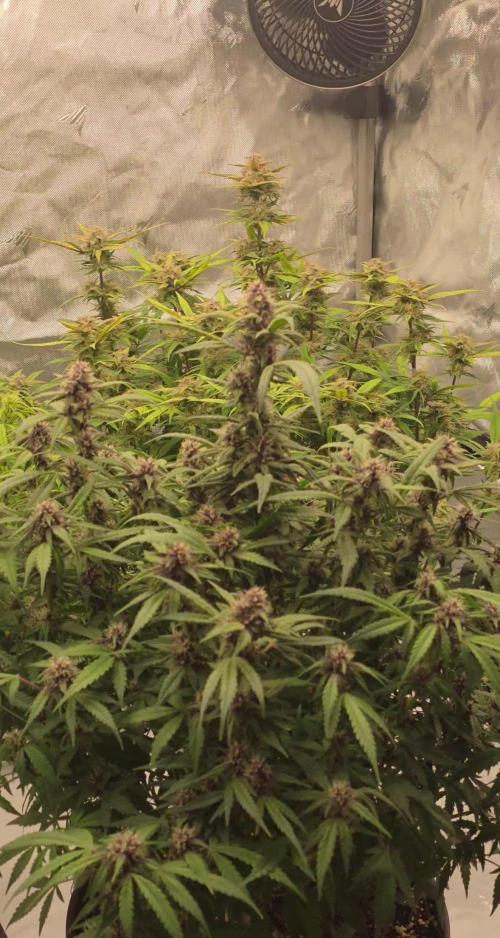
La fioritura avanza gli strains gonfiano a vista d occhio la papaya cookies è leggermente piu avanti rispetto alle altre piante
la banana purple puch rf3 inizia a produrre antociani e la colorazione purple si vede sempre di piu
La gelato sembra finalmente di essere entrata in flow
run off 1.8 ec
ph 6.1

Likes
14
Share

@Chuckwaggon420
Follow
This week starts flush its week 7 of flower i think I feel behind a little on here maybe a day here and there.
But anyways those week has been awesome. I don't think these things can get any heavier! They weigh a ton literally i bounce a leaf and its gana pop it off its so heavy!
They smell like a hawian fruit punch. Not lemony like most weed and not going funky kinda exciting!! Like a bowl 🥣 of fruit 😋. They are so strong smelling its nuts had to get a gigantic carbon filter i swear u could smell it down the ROAD!!!
Insane sticky i don't touch the buds but on a stem rub my fingers stick to the stem. Lol so that's exciting. I have almost done a week of flush today is day 5 I am gana do lil over 2 weeks so I can harvest on a Friday when I am off.
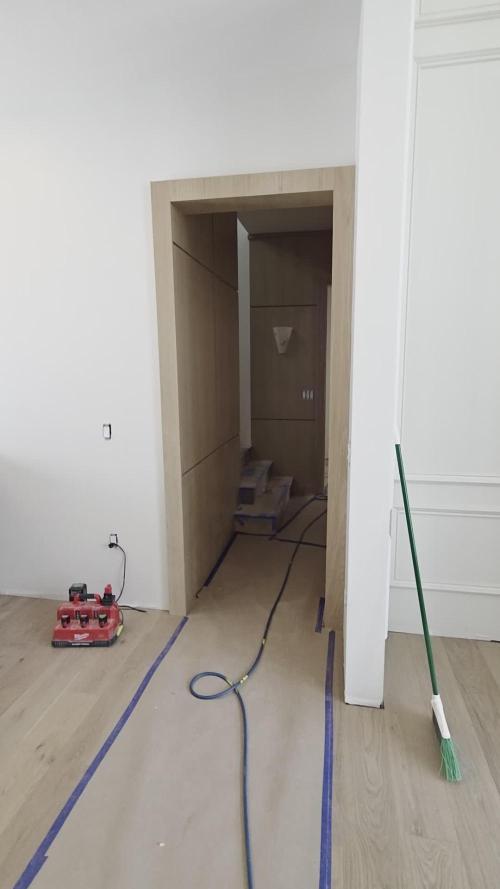
I have put up pics of my life to share. Some of the things I have been doing at work. On a normal day wherein a 3 -5million $$$ house. Do some really awesome stuff sometimes like that hidden door made out of oak. It's still in work but will take a video when done to show off.
Got me a new/ old vintage skateboard a California free former its about the size of my foot! It's from the 70s. Also am trying to grow me some peyote again last time was a fail. Wish me some luck.
Love yall
Thanks for checking in
Stay up
Peace
Likes
5
Share

@Mrdub
Follow
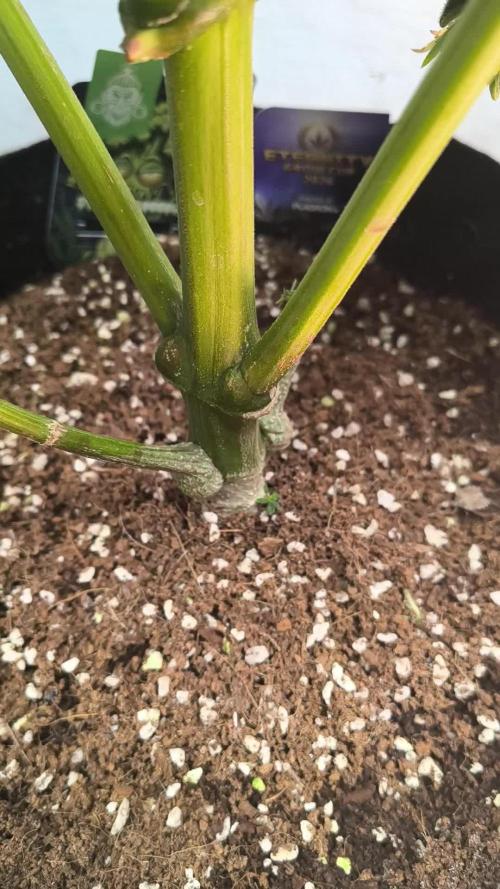
Had a blast growing this girl not a whole lot of veg but real nice colas with purple tips under canopy has these lower colas looking like top buds she has soapy citrus smell nice thick stalk and branches and she jus flexes hard trichome coverage is real thick looks like a glitter bomb went not a whole lot of pistols but the ones she has are fire orange curled into the cola nicely sucks I had to restart cause my original froze but she came out looking gorgeous can't wait to get her dry and trimmed and into the cure bag came out to 36 grams wet weight so I'll prob get a 1 oz to 1 oz and half of dry flower so here's to another harvest lfg

Likes
89
Share


@Gunnen
Follow
So another week and some more thickening and ripening. The smell is like blueberry on one and the others are sweet as well. Slightly different smell to each. Watering when dry still at pH 6-6.6 and monitoring overall plant trichomes. At this point it's autopilot to the end. No more feeding with slow release and will slowly flush the remaining food out next few weeks. I like my trichomes to have some amber, not too much but mostly cloudy with some amber. Seems like most will be dense, except one plant I've called corona virus. It has smaller buds but are really resinous and smelly. Cheers and happy growing!


Likes
111
Share


@Herbalize
Follow
Hello folks 😎
7th week of flowering and the heat is still here 😔I hope to have cooler temperatures quickly, otherwise, the drying phase will be complicated...
Because of that, I noticed the beginning of a little foxtailing on some buds ! but nothing serious
At the beginning of this week, I gave them their last watering with nutrients ( about 520 ppm ) and in the middle of the week, I started the flush 👌
For the trichomes, many are milky but there is still time left 😊
Good news, I will completely change my tent and my equipment for the next crop, bigger tent, better light etc. ( soon ™️)
But that's another story ! 😁
Anyway Stay tuned and see you next week guys 😘
I also have another diary with one Pineapple kush from RQS if you want to see
Peace Love & Weed GD Fam😍👊
Likes
6
Share


@BrgOriginals
Follow
The Girlscout cookie is soon finish. its in week 7 in flower, I over feeded her alittle but its all good now, i think it was to much calsium or maybe a mix of everything..😂
Likes
3
Share


@Bluemels
Follow
Tag 46: Malsehen wie lange die Pflanze mit den doch schon recht hellen Blättern durchhält.
Likes
17
Share


Likes
7
Share


@Squaregrouper
Follow
I never really seen any video showing seeds so I figured I'd make one..Lol! I'm sure it's done here but I just started doing the Diaries I never thought to.

Likes
5
Share


@Ninjabuds
Follow
I got me a new 2025 ELUFAH UAP-1500 for my 2x2 tent. This light has all kinds of cools features for a small 150watt light. It has a switch to change the spectrum and when you flip the switch the color of the light changes so much you can easily tell with your eyes that it changed a lot
Likes
13
Share


@SkunkyDog
Follow
Hallo zusammen 🤙.
Sie wächst sehr schön und macht keine Probleme.
Das war die letzte Woche mit Dünger.
Sie erhalten 25 Prozent Rabatt in unserem Shop
Mindestbestellwert beträgt 75 Euro
https://greenbuzzliquids.com/en/shop/
Code: GD42025
Sie bekommen 20 % Rabatt bei Zamnesia und der Code lautet GROWITGD.
Likes
21
Share


@GRow_M8s
Follow
-🚿 Start "fast track" flushing in the bathroom, with the 2 plants in airpots (had the first signs of amber trichomes) + defoliation.
ℹ️ After the first drainage the TDS was 1600ppm & 1800ppm (second lemon).
- It took 30 min flushing and the final check (soil drainage) was at 600ppm & 700ppm.
- The other 2 plants are few days behind, flushing at the end of the week.
⚠️ Update week end
- 🚿 Flushed the other two plants at the last day of week.
ℹ️ Firat drainage for the big lady at the simple pot was 1750ppm, after the flush went under 600ppm, the plant in fabric was 1800ppm and went under 700ppm.
- Temps higher the last days (+30 C°) humidity 40% - 50%.
Likes
3
Share


@Chubbs
Follow
420Fastbuds: Germination Week
Kamala Og Auto
This grow, I decided to grow a strain I never have before. I started 14 seeds by soaking them in a glass of water for 48-72hrs then planting directly into the soil. Within 48 hours, all 14 sprouted and emerged into their journey of life. Super excited for these and to see how they'll grow into what they'll become. All in all, Happy Growing
Likes
41
Share


@gottagrowsometime
Follow
Both plants grew very differently. The organic grew like a normal indica based plant. Decent sized main cola that was surrounded by shorter side nodes that still had some pretty sized buds. She had an overall lovely structure. Took to LST like a champ. And was 1 of my most trouble free auto grows to date. She's a beginners delight. Her bounty was 69g on harvesting. And 3g in test I took last week. She grew to 58cm. Vegged out at 25 days, and took another 50 to flower. As I kept a steady temperature throughout their entire life(s), (especially pre flower) there was no unwanted stretching in all my plants. She was very compact allowing the light to reach every part of the plant, done some light lollipoppoing during and before pre flower, not much, as there was no need. She took a lovely natural shape, and with LST. It allowed me to put all buds into the light. And she gave me some seriously lovely bud. I've no doubt when I run them again in coco I'll get a much bigger yield. But 10☆ all the way.
The Synthetic. She grew totally differently, she acted as though she was topped and grew all nodes pretty much the same size. Wasn't as dense as the organic but there was a lot of the bud was pretty much the same size buds. She never really grew beyond 42cm. She picked up a pigment mutation and was a little more demanding feeding this girl on Synthetic nutrients. Whereas the organic was apply powder twice to soil and then bioenhancer feeds (every 2 weeks). But, every week she got a low ppm feed never exceeding 700ppm (the Synthetic). Learning to grow more with less nutrients.. gave no trouble really. Had no hard defs/toxs..picked up what I thought was early fade during flowering, just turned out to be wanting a little bit more P and she settled down. Again, Took to LST really well. And was no trouble. Really easier growers, both girls.
ROUND UP OF BOTH PHENOS (Organic
Synthetic)
Both girls, may have differed in the way they grew. But, if you put both strains together, as they are, (uncured) there is no way I'd be able to tell the difference if I done a blind taste/smell test. Both girls gave roughly 115g in 75 days. They both have deep long orange pistils with very tight buds that are packed with flavours galore, and very sticky and stinky. Mainly berries (blackcurrant) at the moment has a grip on them with hints of pine with a citrus undertone. We will see if their profile changes much with a nice long cure. I should have a smoke report in before contest closes to give a true measure of these ladies. Shows how solid and steady these phenos are, as they are so closely in smell, taste and so on. Is a testament of good genes and Dutchs hard work to make all phenos more or less be similar.
So, any beginner would have a very good experience growing these type of auto. Can't wait to try more from Dutch-Passion. And, you can get the same results, or near the same tasres/smells and big quality.
EQUIPMENT USED.
I used a 100w mainly to do these girls. I was swapping around in their early stages of life, trying to give them a higher ppfd. But, been hit with fungus gnats hampered me, by doing this. So, sadly they were only given a 100w mainly for most of their flowering life. They did get a dose of my FC 3000 from marshydro but, not enough time under it to do anything substantial. But, I'm sure it did have some impact on these. As most of my autos came out a little airy whereas these 2 phenos are nice and dense.
The Synthetic was dry after 7 days. The organic took a day longer to be fully dry. Everything has been put to the cure. And smoke reports will soon follow with pictures of cured bud.


Likes
3
Share


@rihaksi
Follow
Grow is on cruise control plants are doing well. 4 of the 5 should flower out it 2 weeks but the fifth is only in week 2 of flower. Will just be watering plants for the remainder of the grow to flush out the last of the nutrients in the coco. Colas are starting to pack on some size and smell and look great. Mid week a few of the plants have started to turn purple and red and have added some color to the tent!


Likes
6
Share


