


Likes
Comments
Share


@eldruida_lamota
Follow
Venga familia que ya viene la cosecha de esta Panty Punch de Seedstockers, que ganas que tenia ya de darles machetazo.
No veas que pinta que tienen estas plantas.
Las flores aparte se ven bien resinosas, y son bien prietas, aparte son súper aromáticas huelen mucho.
(COLOQUEN UN BUEN FILTRO PARA EL OLOR).
a sido una genética con la que disfruté mucho cultivarla, la genética es perfecta para SOG y es bien vigorosa, es muy fácil cultivarla y muy resistente merece la pena si eres cultivador principiante.
Hasta aquí es todo, espero que lo disfrutéis, buenos humos 💨💨.

Likes
321
Share


@Tropicannibis_Todd
Follow
🤔🤔🤔🤔🤔 HAPPY GROWING 🤔🤔🤔🤔🤔
Looks like I've can upload short videos 👉 so I will do what I can my friends
We are now 35 Days in and everything is going great 👍 👈 We now Flip To Flower 👌
👍 decided to showcase the Mini BigBand , was a extra seed that germed so I kept it as a Mini Me 😊
Day 39 and all is well 👈
Except for some watering it's been pretty smooth I've done a little maintenance and manipulation of the canopy 👈
Might do a slight defolation later in the week 🤔
👉Soil Medium Provided by ProMix.ca
👉Nutrients Provided by Agrogardens
👉Lighting Provided by MarsHydro.ca
I would like to thank the many growmies for support throughout the years 🙏 So Let's Do This 👊👊👊 Happy Growing

Likes
5
Share


@Deltatigrou0169
Follow
Bonjour à tous, voici quelques vidéos de mes fifilles pour l'instant elles poussent bien. Après j'en n'ai qui pousse bizarrement à voir par là suite. Bonne journée à tous 😉


Likes
2
Share

@Organic473
Follow
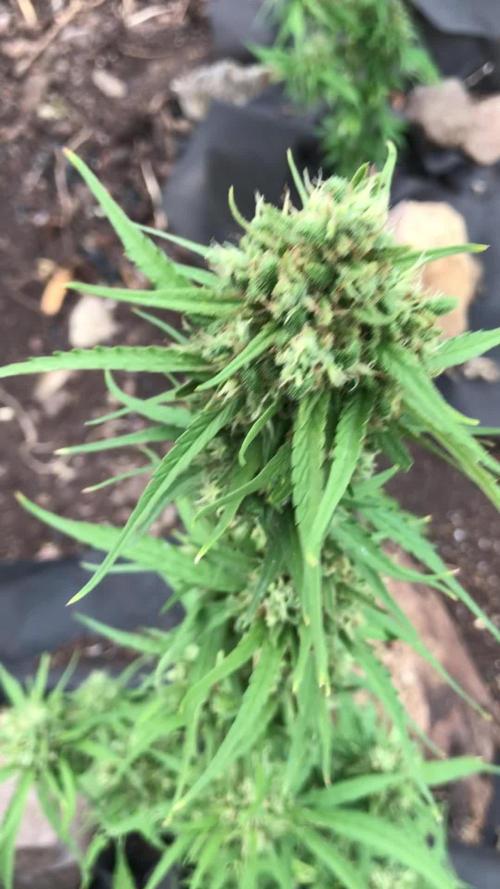
Just been feeding her water once a week..she continues to swell I will give her some molasses one for the road and just water until week 8.
Likes
42
Share


@KrautFabrik
Follow
Day 28: nutrients like plan
---------------------------------------------
Not much to say, we are in bloom now.
Happy growing 🦍✌️

Likes
24
Share


@BillMonroe
Follow
More hairs are coming. Everything looks good to me.
The temperatures sure are getting high, but the plant is doing well.
I'm not sure if the twisted new growth was a problem. The leaves turned out fine.


Likes
10
Share


@HegauHillsFarmers_M11
Follow
Tag 42 - Ende der 6. Woche.
Der Stretch ist beendet und die Pflanze konzentriert sich auf die Buds. Deshalb habe ich in dieser Woche den Dünger etwas erhöht und die Menge an Litern die ich gieße.
Ich bin gespannt wie sie sich in der nächsten Woche entwickelt.
An Tag 36 wurde die Pflanze gedüngt.
Nährstofflösung:
2 ml/l - Voodoo Juice Advanced Nutrients.
4 ml/l - pH Perfect Sensi Bloom Part A
4 ml/l - pH Perfect Sensi Bloom Part B
2 ml/l - Bud Candy Advanced Nutrients.
2 ml/l - Big Bud Advanced Nutrients.
Davon hat die Pflanze 1l an Tag 36 erhalten.

Likes
33
Share


@MrFink
Follow
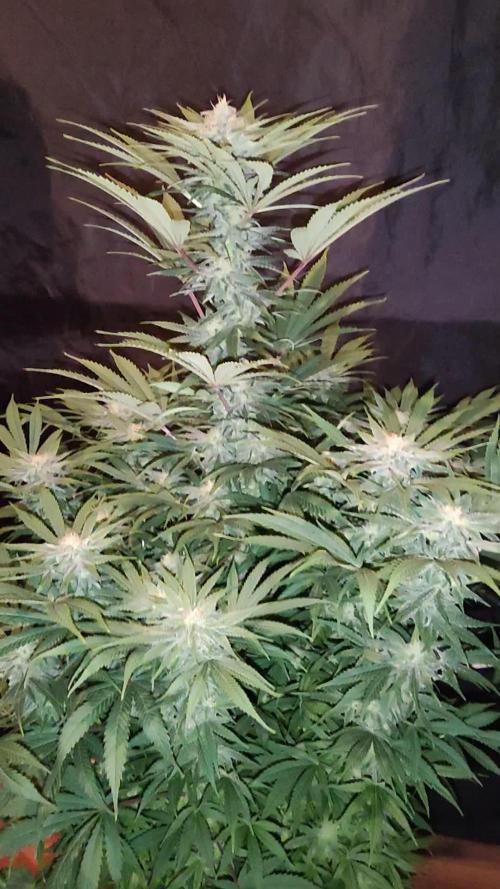
Last leg of the race for some of these girls! Excited to harvest and trim and cure them. Everything went fairly smoothly this week, looks like some serious burn on the one, but she is towards the end anyways. I started flushing some of them a week ago, and the one furthest along about 2 weeks ago. I’m glad because I’ll save on nutrients as a bonus! I’m excited for my next run, I think things have gone really well with this first grow despite all of the complications. Anyways I should have some harvest pictures next week, thanks for following my grow!


Likes
4
Share


@Forrbiddenterpz
Follow
Switched the autoflowers to another tent to give them 300 watts of led everything is growing fine


Likes
1
Share

@Walachiangrowdiary
Follow
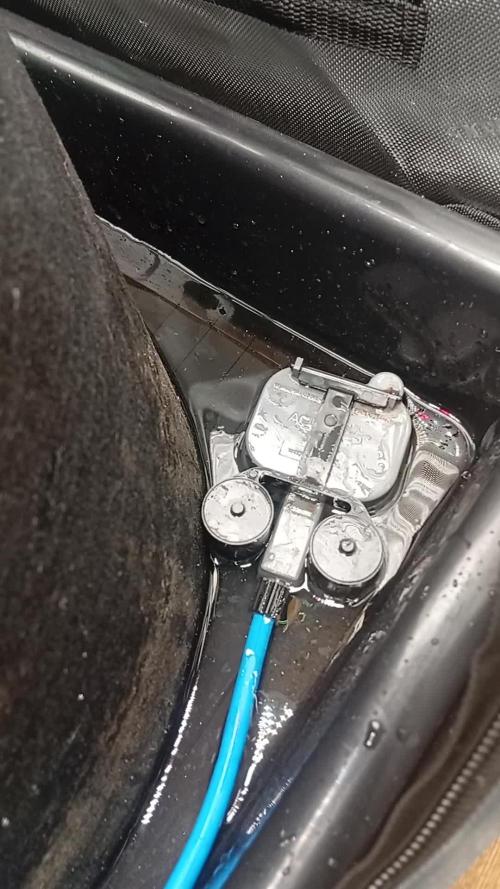
Every two weeks using BioEnhancer,wormhumus and homemade compost tea
Likes
6
Share

@Paying_Customer
Follow
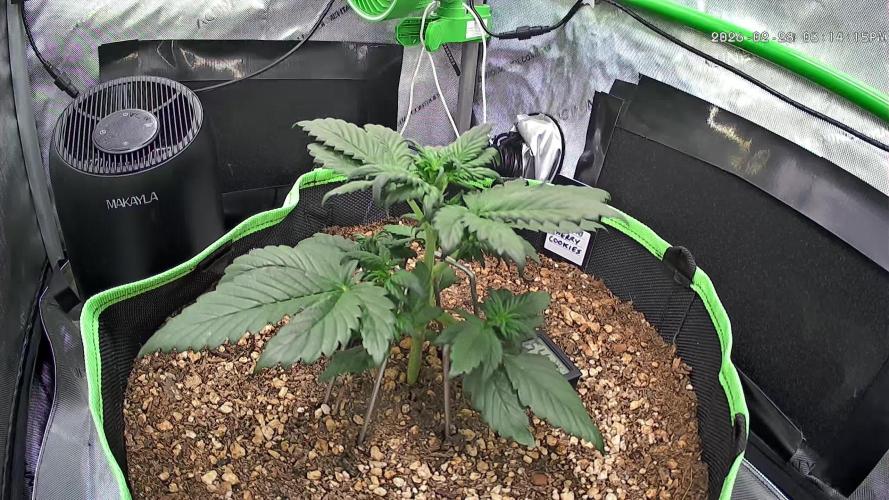
Started flowing after about 25 days in Veg. She stayed very compact but all the sudden she’s growing rapidly bumped up the lighting to 600 ppfd and have side lights on full getting about 550 ppfd under the canopy which is better than 150 ppfd without the side lights. The leaves have a curl on the ends I think maybe it had too much Nitrogen in early veg leaves were extremely dark green. I'm still learning this is only my 3rd grow hopefully I keep learning from my mistakes. Accidentally broke one branch that had multiple bud sites I think it snapped while plant kept getting taller and the pressure made it break and me not knowing this broke it the rest of the way when resetting the metal stakes. Hopefully it doesn't affect it too much, I know I should've just left it alone.


Likes
18
Share


@VI_Cannabis
Follow
First day went as expected. I put the paper towel in a small see-thru plastic container and put it on the table. With a bit of water and the seeds in side, the germination has now started!
Day 2 no progression, moved the tray into my furnace room (pitch black and warm)
Day 3 major progression. I got them out and started to prep the jiffy pellets. Shortly after I transferred the roughly half inch tarp roots with seeds into the jiffy pellets, root down, seed up, slightly covered with dirt. I soaked them in water (like a beginner i overwatered heavily knowing what I know now). I placed them back in the tray and put them at a window for light.
(Note) the plan was to do outdoor so no light or tent was ordered at this point.
Day 4-7 not much progression seeing as the clouds and rain showed up...
Processing
Likes
4
Share


@OttomanGrow
Follow
End of week 5 flowering.
Frosty frosty frosty, even on fun leaves have trichomes.
Stay tuned

Likes
29
Share


@DreamIT
Follow
-Sponsored by:
ORIGINAL SENSIBLE SEEDS-💡VIPARSPECTRA💡-💐GREEN BUZZ LIQUIDS💐-🛠️WEDRYER🛠️
🏁18/6 hello growerz, with today I start the resumption of diaries on GD. I have 13 new genetics in germination and as many diaries. I start by putting the seeds in water for 24 hours, after a day I will put the two seeds in two different jiffies, one with humic acid from greenhouseseeds and the other with just plain water. Get comfortable and follow the updates 😉👋🦄
19/6 The seeds were divided and placed in two different jiffies, one with humic acid and one with water only.
21/6 after another 24 hours in the dark the jiffies were moved under the lamp. let's start the dances!
23/6 The seed in the humic acid jiffy has already sprouted and is about to open, the brother in the water still nothing visible
24/6 we await the release of the seed in water only
25/6 still nothing on the second suit, I'm starting to worry
30/6 the seed born goes well, the day after tomorrow it will be removed if it is not decided to sprout
__________________________________________
Personal advertising (contains affiliate links)
__________________________________________
🦄Highest quality seeds since 1992, a real guarantee! (no affiliate link)
✅https://bit.ly/Originalsensibleseeds
__________________________________________
Did you know that Green Buzz Liquids fertilizers are 100% vegan? A complete line of products ready to give the best to each of your plants! Visit the site and see my journals to see how they work 🦄
🤯 And with the code "dreami t" you will immediately receive a 15% discount on your purchases
✅https: //bit.ly/GreenBuzzLiquidsPro
__________________________________________
👀 Are you looking for a good lamp to start with? 👀
🌞Viparspectra has something more than the others, take a look at their site.
⏩ Use "GDVIP" for an extra discount or "DREAMIT3" for an extra 5 %% discount
👀 Search for it on Amazon
✅Amazon USA: https://amzn.to/30xSTVq
✅Amazon Canada: https://amzn.to/38udUVe
✅Viparspectra UE: bit.ly/ViparspectraUE
✅Viparspectra USA: bit.ly/ViparspectraUS
______________________________________________
🌈 Tired of blowing on your weed hoping it dries quickly? Check out the Wedryer website! You will find a well-made accessory that will help your weed dry in just 8-10 days without the annoying risk of finding mold or other annoyances! (no affiliate links)
✅https: //bit.ly/Wedryer_
______________________________________________
📷🥇Follow the best photos on Instagram 🥇📷
https://www.instagram.com/dreamit420/
Backup
https://www.instagram.com/dreamit4200/
🔻🔻Leave a comment with your opinion if you pass by here🔻🔻
🤟🦄💚 Thank you and good growth 💚🦄🤟

Likes
15
Share


@OGgrows
Follow
Great strain! Very simple at all levels and with great results. I harvested 2 plants with 79 days and 2 plants with 83 days. I trim with little work due to the small amount of leaves. uniform, fat and crystallized buds. 505gr of wet buds. they are drying, as soon as they are dry I will update again.After 12 days of drying, 166gr of dried buds. Happy Growings to all 💚🌱💪🙏

Likes
Comments
Share


@Cannajo
Follow
Plant continues to show growth , slow and steady but maybe it will bust with growth one day, but otherwise I noticed to leaves kind of twisting and curling and such not sure why I barely water them to keep from being overwatered because I noticed the soil does retain water a LOT plan to transplant them in coco coir 50/50 mix fox farm cream of the crop but till then they will remain in Fox farm ocean forest( maybe the soil is overloaded with nutes for this strain) 😬(and me amending not making it any better)
Likes
16
Share


@Andres
Follow
they are taking shape in their flowering but one of them requires urgent nutrients ... tomorrow comprare.biobizz ... although I am finding that I only use organic material ... she needs it .. I hope that my work trips do not affect my babies.... the other pack its height is 160 cm

Likes
48
Share


@xbrico
Follow
D57/FD29 - So, at the last few days of week 4, the SCP had a good push to itself...put on about 6-9" so had to do some bending/leaning of some pretty stiff stems. Unfortunately the only way for them to go was towards the tent walls so drops the light but they're getting WAYYYY over the DLI they should be getting without supplementation of CO2 but its not doing them too much harm.
They're drinking a ton but not taking on as much feed (as I've come to expect now in flower) so dropped the base and bloom by 10% (same recommended ratio of 1:1) and kept the PK9/18 booster in there at (what would be recommended) strength for this week...its the same as last week but week 1 (week 4 of flower) of PK9/18 should have been double...didn't want to overdo it as when I used recommended strength 1st time I got it, it created some serious root zone acidification (Which could have been all the K getting used up but was a mare getting the pH up from 4.something every day!!!). Did my usual root flush/wash before adding feed as the EC had crept up to 2.2 (and I know from experience, that starts messing with your numbers if you don't wash that out right) and took about 50L-60L to get the tank to 0.3EC (base is 0.2) was was a lot of salt sitting on/in the roots.
Had a ton of underscreen dead leaf to pick up and just cut some wee straggly offshoots (I know, bad idea in flower but they were basically dead/no nutritional value left so basically a bug magnet).
Still waiting on Bluelab to send me the RMA approved pH pen...been 2 weeks now since the RMA was approved and still no postage - using an "essentials" pH meter and just dipping in Calibration Fluids between each feed add to ensure some accuracy (As you can see from my recipe page, I like to know what the feed does to the pH - also gives an idea on what they're feeding on when you see pH swings in a different direction that expected).
Geekbeast also got back to me. In all fairness, I've been dealing with them direct (Got the light fixture from Alibaba, direct from China - big gamble, right???) and they have been more than helpful. I have been telling them about the light randomly coming on at 5% (lowest brightness) and provided evidence; turns out someone else now noticed the same issue with the Remote App controlled variant and they believed it was a loose control board/wire. They said they did some stuff and that fixed it but I also thought mine was fixed by forcing the dimmer to 0% and it still randomly happened (even though it didn't do it for weeks) so the other person may still get a surprise!! 😋 So, I took out the driver today, pulled out the control board and all wires seemed good and no looseness in the control board (although it does look slightly bent as the Spade for the IR/UV switch isn't fully bedded in). But, like I say, in all fairness to Geeklight, they're posing me a new control board tomorrow from China AND giving me the longer driver cables so as I can put the driver outside of the tent! Give me a bit more room for my Flower Initiator and great to see them honouring the Warranty.
Apart from that, wish the SCP would start to set flowers better, they're still looking a bit weak up top but stems appear to be stacking. Hopefully now that last push happened (and hopefully all pushed out!!!!), they will concentrate on buds only...this may be a 10+ week-er - which again, cant really afford as growing tent is drying tent!!! Its supposed to be a 75% indica so would expect bigger/quicker flowering but not showing too many symptoms of being mostly indica...maybe not quite a fully stable genetic line yet?? I dunno but its running slower like a sativa - even with the flower initiator and the late push would maybe imply that too??? Funnily, its tent mate, Red Hot Cookies is 60% sativa and has set flowers quite well so far - showing colour to the tips of the pistils...just wish it would start turning pink!!!
Anyway, think that's enough s**te chatted by me!!! Happy growing all!!! 💪